

President Zelenskyy: Leading Ukraine Through War and the Cost of Peace
In this episode of The Diary Of A CEO, Steven Bartlett sits down with Ukrainian President Volodymyr Zelenskyy to discuss Ukraine's fight for sovereignty against Russian aggression. Zelenskyy provides historical context for the conflict, tracing Putin's imperial ambitions back to the 2014 annexation of Crimea and explaining how miscalculations led to Russia's 2022 full-scale invasion. He details critical early battles, the defense of Kyiv, and the war crimes discovered in liberated towns like Bucha.
The conversation covers the profound personal toll leadership takes on Zelenskyy—from extreme sleep deprivation to emotional encounters with bereaved families—and explores the current military situation, Russian occupation of Ukrainian territory, and the challenging path toward peace. Zelenskyy discusses security guarantees, NATO membership, international diplomatic efforts, and his perspective on negotiations with Russia. The episode offers insight into Ukraine's struggle for survival and the complex geopolitical dynamics shaping the conflict's resolution.
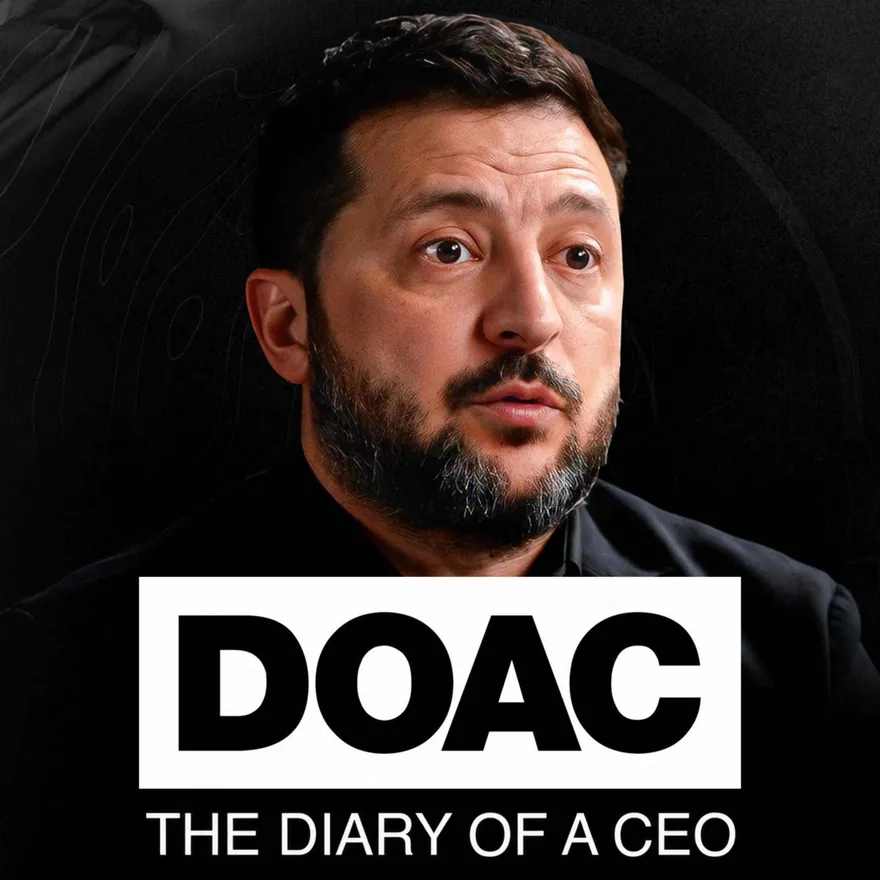

This is a preview of the Shortform summary of the Oct 22, 2026 episode of the The Diary Of A CEO with Steven Bartlett
Sign up for Shortform to access the whole episode summary along with additional materials like counterarguments and context.
1-Page Summary
Historical and Geopolitical Context
The Soviet Union's Legacy and Putin's Imperial Ambitions
Vladimir Putin, shaped by his KGB career and Soviet upbringing, considers the Soviet Union's collapse the greatest tragedy of the 20th century. His statements and actions reveal a deep ambition to restore Soviet-era influence, particularly focused on reclaiming Ukraine. Putin seeks to resurrect the empire's power and reach, mirroring Soviet strategies of information control—the "Iron Curtain" that sealed citizens off from the outside world.
Ukraine holds special importance for Putin's vision of imperial restoration. It was the Soviet Union's intellectual, scientific, and industrial heart, producing scientists, engineers, and leaders vital to making the USSR a global power. As the "forge of talent," Ukraine is central to rebuilding the empire Putin seeks.
Ukraine's Distinct National Identity and Sovereignty
Despite Putin's aspirations, Ukraine possesses a distinct national identity with a thousand-year history, unique culture, and language that predate Russia's formation. President Volodymyr Zelenskyy emphasizes that Ukraine is not Russia, rejecting Putin's narrative. Zelenskyy belongs to a generation that witnessed both Soviet rule and an independent Ukraine, an experience that profoundly shaped Ukrainian values and patriotism, especially after Russia's 2014 occupation of Crimea and Donbas.
Putin's denial of Ukrainian sovereignty directly fuels the ongoing conflict. Claiming to "liberate" Ukraine from fascism, he misrepresents the nation's past—Ukraine itself suffered devastating Nazi occupation in World War II. Zelenskyy points out that Moscow continues to refuse recognition of Ukraine as a separate, sovereign entity, a key factor driving Putin's aggressive policies.
The Timeline of Russian Aggression Against Ukraine
Russian aggression dates back to 2014, when Russia annexed Crimea through a calculated military operation disguised as protecting Russian-speaking populations. Unmarked Russian soldiers—the "little green men"—entered Crimea with virtually no resistance from Ukrainian authorities. Zelenskyy reflects that this ease of occupation, involving only dozens or hundreds of Russian personnel against a population of 3 million, emboldened Putin and gave him dangerous confidence about further expansion.
Zelenskyy argues that if Ukraine had forcefully resisted in 2014, the 2022 invasion might have been deterred. Demonstrating consequences for Russian aggression by defending Crimea could have changed Putin's calculations. The failure to push back during Crimea's occupation was a critical juncture that affected the trajectory of the conflict. For Zelenskyy, this period underscored the hard lesson that failing to resist aggression only invites greater threats in the future.
Russian Invasion: Context, Tactics, Key Battles
Strategic Miscalculations and Initial Invasion Plans
On February 24, 2022, Russia launched a large-scale invasion deploying between 150,000 and 200,000 troops across the Ukrainian border. Russian strategy focused on quickly surrounding and capturing Kyiv, with significant forces advancing from Belarus. Russian planners expected a swift victory, bringing only enough rations for three to ten days and carrying ceremonial dress uniforms for a victory parade on Kyiv's Independence Square within days.
Putin and his high command fundamentally misjudged the situation, assuming Zelenskyy would flee, the Ukrainian government would collapse, and the population would not resist. They failed to anticipate Ukraine's determination and the force of civilian and military mobilization.
The Critical Battle For Hostomel Airport
A vital Russian objective was capturing Hostomel Airport outside Kyiv, which would have allowed Russia to airlift additional forces to encircle the capital. Ukrainian National Guard units and special operations forces launched an immediate counterattack, destroyed the runway, and shot down several Russian helicopters. Zelenskyy underscores that had Russia succeeded in controlling Hostomel, they could have captured Kyiv.
Kyiv's Successful Defense Through Mobilization and Popular Resistance
Crucial to Kyiv's defense was rapid mobilization—Ukrainian forces swelled from 200,000 to 800,000 as volunteers lined up to defend their country. Civilians hindered Russian advances with improvised weapons, even setting Russian armor aflame in Kyiv's streets. Russian forces lacked the numbers to simultaneously advance on Kyiv, control occupied towns, and hold captured territory, especially facing widespread resistance.
Zelenskyy's decision to remain in Kyiv—publicly refusing evacuation offers and appearing on the streets daily—served as a potent symbol of resilience. His leadership motivated both military and civilian defenders and countered Russian disinformation claiming he had fled.
Defeat of Russian Forces and Liberation of Areas
The combination of determined resistance, military mobilization, and civilian action caused Russian forces to lose momentum. Their inability to seize critical objectives like Hostomel Airport forced them to abandon initial ambitions. Ukrainian counteroffensives successfully liberated Kyiv, Chernihiv, and surrounding regions, permanently altering Moscow's calculus and the broader course of the war.
War Crimes: Bucha and Other Towns
Mass Graves Discovered and Systematic Torture Evidenced
After the liberation of Bucha, Zelenskyy describes dead bodies lying everywhere—children, adults, elderly people, all brutally killed. Many victims showed signs of extreme torture, with hands tied and bodies butchered. Hundreds of people were discovered in mass graves, with estimates reaching around 500 buried in a single grave. Zelenskyy emphasizes that these acts constituted genocide. One elderly survivor who had endured Nazi occupation recounted that the fascists "never treated people like that," saying what Russian forces did far exceeded even past brutalities.
Pattern of Deliberate Civilian Targeting and Looting
The pattern extended beyond murder to systematic criminality. Russian troops looted homes, stealing basic appliances while torturing residents. The violence included sexual assault used as a tactic of terror. Russian forces were observed hunting civilians for sport—shooting at fleeing residents from military vehicles "just for fun." Zelenskyy describes the occupying forces as treating civilian lives with utter dehumanization and sadism.
Zelenskyy's Personal Witness and Emotional Response
Upon liberation, Zelenskyy visited Bucha and invited the world's journalists to witness the aftermath directly, instructing that no bodies be moved before the press arrived to expose Russian war crimes and deny propaganda claims that atrocities were staged.
For Zelenskyy, the discovery of mass graves and evidence of torture transformed his view from seeing it as a war to seeing it as genocide, obliterating any possibility of forgiveness. He admits that the desire for vengeance stems directly from the horror inflicted on civilians. Zelenskyy notes that no one can ask parents whose children were tortured and killed to forgive.
Implications For Peace Negotiations and Justice
The scope of these war crimes has created deep wounds that challenge the very possibility of reconciliation without genuine justice. Zelenskyy insists that a peace deal without accountability for Russian atrocities is unacceptable to the Ukrainian people. He emphasizes that "just peace" requires the prosecution of Russian leaders responsible for these crimes, repeatedly telling international leaders that Ukrainians demand justice, not compromise. Zelenskyy concludes that the only temporary compromise possible is a ceasefire to stop the killing—but true peace requires acknowledgment, prosecution of the perpetrators, and a clear path toward justice.
The Human and Personal Toll of War
Zelenskyy's personal reflections reveal the profound human costs of prolonged conflict, illustrating how war exacts a relentless toll on leaders and their families.
Zelenskyy's Complete Sleep Deprivation and Constant Alert State
For nearly five years of war, Zelenskyy endures extreme sleep deprivation, sometimes going days without rest. He explains, "I'll be honest, I don't sleep. It's a huge terrifying pain that I wouldn't wish on anyone." At the invasion's onset, he slept just 15 minutes at a time, consumed by coordination with air defense and world leaders. The crisis's constant pressure means he sees sleep almost as a moral failure, stating, "You've not earned the right to sleep," as long as his country remains under attack.
Emotional Burden: Meeting Bereaved Parents and Awarding Soldiers
The emotional impact intensifies during ceremonies where Zelenskyy presents the Hero of Ukraine award to the parents of fallen soldiers. He describes how, in those moments, he "ceases to exist" in the face of their profound grief—an experience that brings him "terrifying pain." Sometimes bereaved parents simply ask for a hug, shattered by loss beyond words.
Zelenskyy's Transformation as a Person and Father
Zelenskyy says the war fundamentally transforms his identity. He once thrived as a comedian and businessman, but now regards career and politics as secondary to human life. He faces worry about how wartime has changed his role as a father and husband, noting his wife's observations about his shifting personality. He mourns for his children's lost childhoods, lamenting that all Ukrainian children have matured too quickly, never knowing peace.
Separation From Family and the Costs of Leadership
Leadership has led to profound separation from family. During critical periods, Zelenskyy's children and wife evacuated to safety, making long-term reunification almost impossible. Despite the ability to connect through technology, he confesses to feeling their emotional absence: "I miss them constantly. And it feels like that even when they're right next to me." His mother, still in Ukraine, calls him daily—sometimes over a dozen times—always asking if he's safe and when the war will end.
Family as Emotional Anchor and Motivation
Through this turmoil, family remains an emotional anchor and source of motivation. Zelenskyy's children inspire him to be strong and brave but also emotionally honest about pain. His wife Alina provides emotional support amid chaos: "We support each other… we have real feelings, we have love and respect." Their mutual interest and warmth transcend the demands of wartime leadership, sustaining him through the gravest difficulties.
Current Military Situation and Path to Peace
Geographic Distribution of Russian Occupation
Russia currently controls approximately 18–19% of Ukrainian territory, concentrating on eastern regions including Donetsk, Luhansk, Crimea, and the Azov Sea coasts. Zelenskyy details that Russia first seized Crimea, then moved to dominate the Azov, transforming it into an inland sea under their control. Strategic cities like Mariupol now lie within occupied territory, denying Ukraine access to key ports and maritime routes.
Ukrainian forces have managed to liberate cities such as Kherson, though the region remains divided by the Dnipro River. Russian forces still threaten cities like Kramatorsk and Sloviansk and aim for further territorial gains, endangering Ukraine's industrial heartland and core economic infrastructure.
Russian Demands and Refusal to Negotiate
Russia explicitly demands Ukrainian withdrawal from eastern territories, specifically targeting Sloviansk, Kramatorsk, and areas leading to the Dnipropetrovsk region. Zelenskyy highlights that surrendering these areas would constitute an economic capitulation for Ukraine, as these regions underpin the country's industry and economy.
While Ukraine demonstrates willingness to compromise with a ceasefire to halt the war, Russia continuously increases demands for more territory and security concessions. Russia outright rejects energy truces and continues to wage attacks on Ukrainian cities with missiles and drones. Putin consistently demands Ukraine's territorial surrender and escalates military aggression instead of seeking negotiations.
Trump Administration's Energy Deal and Its Implications
The Trump administration has engaged Russia over diesel exports and pressured Ukraine to refrain from attacking Russian energy infrastructure, attributing rising energy prices to Ukraine's defensive actions. Zelenskyy flatly rejects this narrative, clarifying that Russian diesel exports are too minimal to influence U.S. energy prices. He explains Ukraine only retaliates against Russian energy assets after Russia assaults Ukraine's own energy grid, leaving millions without vital utilities.
Zelenskyy accuses Trump of deflecting responsibility for high energy prices away from genuine causes—mainly supply disruptions in the Middle East—and unfairly blaming Ukraine instead of addressing Russian aggression. He asserts this is both factually incorrect and personally unfair, given Russia's ongoing offensive and refusal to even discuss an energy ceasefire.
Security Guarantees and NATO Membership
Ukraine urgently seeks robust security guarantees or NATO membership to deter further invasion and secure its sovereignty long-term. Zelenskyy indicates openness to diplomatic solutions but stresses that Western partners remain hesitant due to fears of angering Russia. He underscores that any peace deal ceding territory without concrete and enforceable security guarantees would only leave Ukraine exposed to renewed Russian aggression.
The Nuclear Question
Zelenskyy acknowledges global anxiety over potential nuclear escalation but voices his belief that Putin will not risk using nuclear weapons. He reasons that such a move would cost Russia the support of key allies, including China, and render ties with America irretrievable. Zelenskyy observes that if Russia were to break the nuclear taboo, it would embolden other nuclear powers in future crises, dramatically increasing the risk of escalating nuclear exchanges worldwide.
The Path to Resolution
Zelenskyy believes a resolution may depend either on the West pressuring Putin through diplomacy and economic sanctions or on the Russian military exhausting its capacity for aggression. He suggests Trump could influence Putin to negotiate by combining sanctions with diplomatic efforts, but notes Trump's current approach is unfavorable for Ukraine. A just and lasting peace requires enforcement of Ukraine's territorial integrity, meaningful security guarantees, and accountability for war crimes. Zelenskyy asserts that Ukraine's persistent openness to dialogue and reliance on international support offer the strongest path toward a peaceful, just resolution.
1-Page Summary
Additional Materials
Counterarguments
- Some historians argue that while Putin laments the Soviet collapse, his actions are more motivated by Russian nationalism and security concerns than a literal desire to restore the Soviet Union.
- The characterization of Ukraine as the sole "intellectual, scientific, and industrial center" of the USSR can be challenged; other Soviet republics, including Russia itself, also played significant roles in these fields.
- The assertion that Ukraine's national identity and language predate Russia's formation is debated among scholars, as the histories of Kievan Rus', Ukraine, and Russia are deeply intertwined and subject to differing interpretations.
- Some analysts contend that Russia's actions in Crimea and Donbas were partly responses to perceived threats to Russian-speaking populations and geopolitical shifts, rather than purely imperial ambitions.
- The claim that forceful Ukrainian resistance in 2014 would have deterred the 2022 invasion is speculative; increased resistance could also have led to greater violence or earlier escalation.
- While atrocities in Bucha and elsewhere are well-documented, the legal classification of these acts as "genocide" is debated among international legal experts, with some preferring terms like "war crimes" or "crimes against humanity."
- Some critics argue that both sides in the conflict have engaged in actions that may violate international law, though the scale and intent differ.
- The view that peace is impossible without prosecution of Russian leaders may be challenged by those who argue that negotiated settlements sometimes require compromises on justice to achieve an end to violence.
- The assertion that Western partners hesitate to provide security guarantees solely due to fear of angering Russia may overlook other factors, such as concerns about escalation, alliance commitments, or domestic politics.
- Some analysts believe that the risk of nuclear escalation, while low, cannot be entirely dismissed, and that overconfidence in deterrence could be dangerous.
- The claim that Ukraine's actions have no effect on global energy prices is contested; disruptions in the region can have indirect impacts on markets, even if Russian diesel exports to the U.S. are minimal.
- Some observers argue that the Trump administration's approach to energy and Ukraine reflects broader U.S. policy debates about involvement in foreign conflicts and energy security, rather than personal animus or deflection.
- The idea that a just and lasting peace requires full restoration of Ukraine's territorial integrity is debated; some propose that compromise solutions, while imperfect, may be necessary to end the conflict.
Actionables
- you can create a personal timeline that tracks major historical events in Ukraine and Russia alongside your own life milestones to better understand the impact of national identity and sovereignty on individual experiences; for example, note where you were or what you were doing during key events like the annexation of Crimea or the invasion of Kyiv, and reflect on how these events might shape your views on independence and resilience.
- a practical way to recognize the importance of justice and accountability is to write a letter to a policymaker or organization advocating for transparent investigations into war crimes, emphasizing the need for justice as a foundation for lasting peace; even if you don't send it, the act of articulating your stance reinforces your commitment to ethical leadership and the value of accountability in conflict resolution.
- you can strengthen your awareness of information control and propaganda by setting a weekly reminder to compare news coverage of the same event from at least three different international sources, noting differences in language, framing, and facts; this habit helps you develop critical thinking skills and resist manipulation, mirroring the importance of information sovereignty discussed in the context of modern conflicts.
Get access to the context and additional materials
Historical and Geopolitical Context
The Soviet Union's Legacy and Putin's Imperial Ambitions
Vladimir Putin, deeply shaped by his upbringing and career in the Soviet Union—particularly his time with the KGB—views the collapse of the Soviet Union as the greatest tragedy of the 20th century. His statements and actions reveal a deep ambition to restore Soviet-era influence, with a clear focus on reclaiming former imperial territories, especially Ukraine. For Putin, modern Russia alone is not enough; he seeks to resurrect the empire that was lost, aiming to bring back the power and reach of the Soviet Union.
A defining feature of the Soviet empire was the "Iron Curtain," a system of strict information control and societal isolation. This prevented citizens from seeing or understanding life in the West or elsewhere outside the USSR. The state monopolized television and communication so thoroughly that the Soviet Union was likened to a massive fish tank—sealed off and self-contained. Putin's Russia echoes this reliance on information control, mirroring the old Soviet strategies of restricting public awareness and debate to maintain authoritative rule.
Ukraine holds special importance for Putin's vision of imperial restoration. It is not simply another territory, but the Soviet Union's intellectual, scientific, and industrial heart. Ukraine produced numerous scientists, engineers, and leaders who were integral to the top echelons and ministries of the Soviet regime. Its factories, universities, and intelligentsia were vital in making the USSR a global power—especially in rocket manufacturing and nuclear technology. As the so-called "forge of talent," Ukraine is central to the idea of rebuilding the empire Putin seeks.
Ukraine's Distinct National Identity and Sovereignty
Despite Putin's aspirations, Ukraine possesses a distinct national identity, with a thousand-year history, unique culture, language, music, and traditions that predate the formation of Russia. Ukrainian President Volodymyr Zelenskyy underscores this point by emphasizing that Ukraine is not Russia, rejecting Putin’s narrative that Ukraine is simply part of the Russian nation.
Zelenskyy highlights that he belongs to a generation that witnessed both life under Soviet rule and the emergence of an independent Ukraine. While he was born in the Soviet Union, he grew up in a sovereign country—an experience that profoundly shaped his values and those of the new generation, who are unequivocally Ukrainian patriots. The change in mentality and the embrace of national identity became especially strong after Russia’s occupation of Crimea and Donbas, fostering unity and a deeper awareness of what it means to be Ukrainian.
Putin’s denial of Ukraine’s sovereignty and unique history directly fuels the ongoing conflict. Claiming to "liberate" Ukraine from fascism, he misrepresents the nation's past—Ukraine itself suffered devastating occupation by fascists in World War II and deeply understands the cost of such regimes. Zelenskyy points out the absurdity of Russian propaganda, clarifying that while Ukraine fought against fascists, Moscow continues to refuse recognition of Ukraine as a separate, sovereign entity. The refusal to accept Ukrainian nationhood is a key factor driving Putin's aggressive policies.
The Timeline of Russian Aggression Against Ukraine
Russian aggression against Ukraine dates back to 2014, when Russia annexed Crimea. The occupation of Crimea was a calculated military operation disguised as the protection of Russian-speaking populations. Russian soldiers, unmarked yet heavily armed—the so-called "little green men"—entered Crimea with little resistance from Ukrainian ...
Here’s what you’ll find in our full summary
Historical and Geopolitical Context
Additional Materials
Counterarguments
- While Putin has expressed regret over the Soviet Union's collapse, some analysts argue that his actions are motivated more by pragmatic security concerns and geopolitical strategy than by a desire to fully restore the Soviet empire.
- The assertion that modern Russia is insufficient for Putin may overlook the complexities of Russian domestic politics, where economic stability and regime survival are also key priorities.
- Information control in Russia, while significant, is not as absolute as it was in the Soviet era; Russians have greater access to the internet and foreign media, despite state efforts to restrict it.
- Ukraine's importance to Russia is not only historical or imperial but also strategic, given its geographic location, economic ties, and shared history, which complicates the narrative of purely imperial ambition.
- Some Russian-speaking populations in Crimea and eastern Ukraine have expressed support for closer ties with Russia, suggesting that local dynamics are more nuanced than a simple narrative of external aggression.
- The lack of Ukrainian military resistance in Crimea in 2014 was influenced by a range of factors, including the state of the Ukrainian military, political instability, and concerns about civilian casualties, rather than just a lack of will or patriotism.
- The idea that forceful resistance in 2014 would have deterred further Russian aggression is debated; some experts argue that it could have led to greater loss of life or a more rapid escalation of conflict. ...
Actionables
- you can strengthen your own sense of identity and resilience by creating a personal timeline that highlights moments when you or your community faced outside pressure or misinformation, then noting how you responded or could respond differently to protect your values and autonomy; for example, jot down times you encountered misleading information online and how you verified the truth, or recall moments when you felt pressured to conform and how you asserted your individuality.
- a practical way to recognize and resist subtle forms of manipulation is to keep a weekly log of news stories, social media posts, or conversations where you notice attempts to control narratives or deny group identities, then write a short reflection on how you might counteract these tactics in your daily interactions, such as by asking clarifying questions or sharing accurate information.
- you ca ...
Get access to the context and additional materials
Russian Invasion: Context, Tactics, Key Battles
Strategic Miscalculations and Initial Invasion Plans
On February 24, 2022, Russia launched a large-scale invasion of Ukraine, deploying between 150,000 and 200,000 troops across the Ukrainian border. This force closely matched the size of Ukraine's active military at the time. Russian strategy focused on a multi-directional assault aimed at quickly surrounding and capturing Kyiv, with significant forces advancing from Belarus toward the capital. The Russian command believed Ukraine's main combat units were fixed in the east, defending the Donetsk and Luhansk regions, so the path to Kyiv would meet only limited resistance.
Russian planners expected a swift victory, bringing only enough rations for three to ten days of combat. Some Russian units carried ceremonial dress uniforms, intending to hold a victory parade on Kyiv's main square, Independence Square, within days. This confidence was echoed in Russian state media, which prematurely released a prepared statement declaring triumph on the third day of the invasion.
President Vladimir Putin and his high command fundamentally misjudged the situation, assuming President Volodymyr Zelenskyy would flee, the Ukrainian government would rapidly collapse, and the population would not resist occupation. They failed to anticipate Ukraine's determination, the challenges of occupying hostile territory, and the force of civilian and military mobilization.
The Critical Battle For Hostomel Airport
A vital Russian objective in the initial phase of the invasion was the capture of Hostomel Airport, strategically located outside Kyiv. Control of the airport would have allowed Russia to fly in additional airborne and mechanized forces, creating an "air bridge" to encircle and potentially seize the capital. Russian paratroopers assaulted and temporarily seized the airport.
However, Ukrainian National Guard units and special operations forces launched an immediate counterattack. In the ensuing battles, Ukrainian forces destroyed the runway to prevent its use by Russian heavy aircraft and shot down several Russian helicopters, aggressively contesting the airspace and retaking control. Throughout the fighting, Hostomel changed hands multiple times, but Ukrainians ultimately denied Russia the ability to establish an operational airhead. Zelenskyy underscores that, had Russia succeeded in controlling Hostomel, they could have airlifted additional troops into the capital and potentially captured Kyiv.
Kyiv's Successful Defense Through Mobilization and Popular Resistance
Crucial to Kyiv’s defense was the rapid mobilization and growth of Ukrainian forces. From a prewar force of about 200,000, the military swelled with volunteers to 800,000, as people lined up to defend their country. Civilians also played a vital role, hindering Russian advances by destroying vehicles with improvised weapons, such as burning debris, even setting Russian armor aflame in the streets of Kyiv.
Russian forces lacked the numbers required to simultaneously advance on Kyiv, control occupied towns, and hold captured territory. Garrisoning each town depleted Russian offensive capacity, especially in the face of widespread resistance from both the civilian population and regular forc ...
Here’s what you’ll find in our full summary
Russian Invasion: Context, Tactics, Key Battles
Additional Materials
Counterarguments
- While Russian planners underestimated Ukrainian resistance, some analysts argue that Western intelligence also overestimated Russia’s initial capabilities and underestimated the logistical and operational challenges Russia would face.
- The narrative emphasizes Ukrainian civilian resistance, but independent reporting suggests that the scale and effectiveness of improvised civilian attacks, while significant, may have been less decisive than the actions of regular Ukrainian military units.
- The focus on Zelenskyy’s personal leadership as a decisive factor is widely accepted, but some military experts contend that prewar reforms, Western training, and intelligence support played equally critical roles in Ukraine’s defense.
- The text attributes Russian failure primarily to miscalculation and Ukrainian resistance, but logistical failures, poor command structure, and inadequate coordination within Russian forces were also major contributing factors.
- The assertion that Russian control of Hostomel Airport would have likely led to the fall of Kyiv is debated; some military analysts argue that even with the airport, Russia lacked the logistical capacity and t ...
Actionables
- You can prepare for unexpected challenges by keeping a small, easily accessible emergency kit at home or in your car, stocked with essentials for three days, to ensure you’re not caught off guard by sudden disruptions. For example, include water, snacks, a flashlight, a power bank, and basic first aid supplies so you can act quickly if normal routines are interrupted.
- A practical way to strengthen your resolve in difficult situations is to write a short personal statement about why you choose to stay and face challenges rather than avoid them, then keep it somewhere visible as a reminder. For instance, jot down a sentence about your commitment to your family or community and place it on your fridge or workspace to reinforce your determination when things get tough.
- You can practice rapid decisio ...
Get access to the context and additional materials
War Crimes: Buche and Other Towns
Mass Graves Discovered and Systematic Torture Evidenced
After the liberation of Buche by Ukrainian forces, a horrific scene revealed the scale of Russian war crimes. Volodymyr Zelenskyy describes dead bodies lying everywhere: children, adults, elderly people, all brutally killed. Many victims showed signs of extreme torture—hands tied, bodies butchered, some reduced to what Zelenskyy calls “chopped meat.” Hundreds of people were discovered in mass graves, including tortured children and the elderly, with estimates reaching around 500 buried in a single grave. Zelenskyy emphasizes that these acts constituted genocide, recognized by the world. The evidence included not just mass executions but evidence of deliberate torture prior to execution. Survivors of the occupation provided chilling accounts; one elderly man, who previously endured the town’s Nazi occupation, recounted that the fascists, despite being enemies, “never treated people like that.” According to this survivor, what Russian forces did far exceeded even the brutalities of the past.
Pattern of Deliberate Civilian Targeting and Looting
The pattern of abuse extended beyond murder to systematic criminality in occupied towns. Russian troops looted homes, stealing basic appliances such as microwaves, refrigerators, and TVs, while also torturing residents. Zelenskyy notes that this behavior went beyond warfare—it was pure looting, with Russian soldiers acting as scavengers. The violence included sexual assault; Zelenskyy recounts that sexual violence was used as a tactic of terror and subjugation and that people were buried in gardens and yards. In addition, Russian forces were observed hunting civilians for sport—shooting at fleeing residents from military vehicles “just for fun.” According to Zelenskyy, the occupying forces treated civilian lives with utter dehumanization and sadism, treating people as if they were “playing games,” reminiscent of slavery.
Zelenskyy's Personal Witness and Emotional Response
Upon liberation, Zelenskyy visited Buche, determined to document the atrocities and ensure international awareness. He invited the world’s journalists to witness the aftermath directly, instructing that no bodies or evidence be moved before the press arrived. The sight of dead bodies—kids, adults, the elderly—lying untouched on the streets aimed to expose Russian war crimes to the worldwide audience and deny propaganda claims that such atrocities were staged.
For Zelenskyy, the discovery of mass graves and the evidence of torture and murder, especially of children, profoundly altered his understanding of the conflict. What he witnessed in Buche transformed his view from seeing it as a war to seeing it as genocide, obliterating any possibility of forgiveness. He admits that the desire for vengeance and the inability to reconcile with Russia stem directly from the horror inflicted on civilians. Zelenskyy notes that no one can ask parents whose children were tortured and killed to forgive, and that the emotional wounds left on Ukrainian society by these crimes are imposs ...
Here’s what you’ll find in our full summary
War Crimes: Buche and Other Towns
Additional Materials
Counterarguments
- While there is substantial evidence of atrocities in Buche, some international investigations and independent organizations have called for further verification and forensic analysis to conclusively attribute responsibility for every specific crime to Russian forces, emphasizing the importance of due process and impartial investigation.
- The legal classification of the events as "genocide" is debated among international legal experts; some argue that while war crimes and crimes against humanity are evident, the threshold for genocide under international law requires specific intent to destroy a national, ethnic, racial, or religious group, which may not be universally agreed upon in this context.
- Not all international observers or governments have formally recognized the events in Buche as genocide, reflecting differing legal interpretations and political positions.
- The comparison between Russian actions and Nazi occupation is based on survivor testimony and personal perception, which, while powerful, may not be universally applicable or accepted as a historical equivalence.
- The demand for justice and accountability b ...
Actionables
- You can keep a personal justice journal to document instances where you see or hear about injustice, reflect on your emotional reactions, and write down what accountability would look like in each case, helping you clarify your own boundaries for forgiveness and justice in your daily life.
- A practical way to support accountability is to research and share verified information about war crimes or human rights abuses with friends or family who may be exposed to misinformation, focusing on calmly correcting false narratives when you encounter them in conversation or online.
- You can create a s ...
Get access to the context and additional materials
The Human and Personal Toll of War
Volodymyr Zelenskyy’s personal reflections reveal the profound human costs of prolonged conflict, illustrating how war reaches far beyond politics and battlefields, exacting a relentless toll on leaders and their families. His experience underscores both the psychological burden of leadership in wartime and the irreplaceable value of human connection amid devastation.
Zelenskyy's Complete Sleep Deprivation and Constant Alert State
For nearly five years of war, Zelenskyy endures extreme sleep deprivation, sometimes going days without rest. He explains, “I’ll be honest, I don’t sleep. It’s a huge terrifying pain that I wouldn’t wish on anyone.” At the onset of the full-scale invasion, he describes sleeping just 15 minutes at a time, his nights consumed by ceaseless coordination with air defense and communication with domestic and world leaders. Even with the war’s ongoing intensity, he maintains that sleeping for as much as eight hours straight is completely unfamiliar to him. The crisis's constant pressure means he sees sleep almost as a moral failure, stating, “You’ve not earned the right to sleep,” as long as his country remains under attack.
Emotional Burden: Meeting Bereaved Parents and Awarding Soldiers
The emotional impact intensifies during ceremonies where Zelenskyy presents the Hero of Ukraine award to the parents of fallen soldiers. He describes how, in those moments, he "ceases to exist" in the face of their profound grief—an experience that brings him “terrifying pain.” Sometimes these bereaved parents simply ask for a hug; their grief is so deep they seem to disappear as people for a time, shattered by loss. Zelenskyy notes that while soldiers accept military risks, the difference between a life lost in battle and a civilian killed at random brings equally devastating pain to families and to himself. He expresses his respect for these families but admits it is almost unbearable to witness their suffering.
Zelenskyy's Transformation as a Person and Father
Zelenskyy says the war fundamentally transforms his identity and priorities. He once thrived as a comedian, businessman, and political figure, but now regards career and politics as secondary to human life. He faces worry about how wartime has changed his role as a father and husband, noting his wife’s observations about his shifting values and personality. “I don’t know. She definitely says I’ve changed a lot.” He mourns for his children’s lost childhoods, lamenting that all the children of Ukraine have matured too quickly, never knowing peace. These realizations highlight how impossible it is to shield loved ones from the impacts of war, clouding memories and distorting normal family life.
Separation From Family and the Costs of Leadership
Leadership has led to profound separation from family. During critical periods, Zelenskyy’s children and wife evacuated to safety, making long-term reunification almost impossible. Despite the ability to connect through calls and technology, he confesses to feeling their emotional absence: “I miss them constantly. And it feels like that e ...
Here’s what you’ll find in our full summary
The Human and Personal Toll of War
Additional Materials
Counterarguments
- While Zelenskyy’s personal suffering is significant, focusing primarily on his experience may overshadow the broader suffering of millions of ordinary Ukrainians and civilians affected by the war.
- The portrayal of sleep deprivation as a moral stance could be criticized for potentially glorifying self-sacrifice to an unhealthy degree, which may set unrealistic expectations for leadership and undermine the importance of self-care.
- Emphasizing the emotional toll on leaders might inadvertently minimize the experiences of frontline soldiers, displaced persons, and bereaved families who face more immediate and life-threatening hardships.
- The narrative centers on Zelenskyy’s transformation and personal growth, but some may argue that effective leadership also requires maintaining boundaries and delegating responsibilities to prevent burnout and ensure sound decision-making.
- High ...
Actionables
- you can schedule a weekly “family presence hour” where everyone puts away devices and simply shares space together, even in silence, to reinforce the value of genuine connection and emotional anchoring during stressful times; for example, sit together in the living room with no agenda, allowing comfort and presence to be the focus rather than conversation or activity.
- a practical way to honor the emotional impact of loss and separation is to keep a private journal where you write letters to loved ones (living or lost), expressing gratitude, pain, or hopes, which helps process complex feelings and strengthens your sense of connection even when apart.
- you can create a “resilience reflect ...
Get access to the context and additional materials
Current Military Situation and Path to Peace
Geographic Distribution of Russian Occupation
Russia currently controls approximately 18–19% of Ukrainian territory, concentrating its occupation on the eastern regions, including Donetsk, Luhansk, Crimea, and the coasts of the Azov Sea. Zelenskyy details that Russia first seized Crimea, then moved to dominate the Azov, transforming it into an inland sea under their control. Strategic cities like Mariupol, Berdyansk, and Kerch on the Black Sea now lie within occupied territory, denying Ukraine access to key ports and maritime routes. This control extends Russia’s grip over crucial industrial and economic centers.
Despite these setbacks, Ukrainian forces have managed to liberate cities such as Kherson, reclaiming portions of the region divided by the Dnipro River, with Ukrainian presence on one bank and Russian shelling from the other. Similarly, Ukrainian control remains in Zaporizhzhia and from Kharkiv to Zaporizhia, while Kramatorsk and Sloviansk remain under Ukrainian defense in the east. However, Russian forces still threaten these cities and aim for further territorial gains, endangering Ukraine’s industrial heartland and core economic infrastructure.
Russian Demands and Refusal to Negotiate
Russia explicitly demands Ukrainian withdrawal from the eastern territories, specifically targeting Sloviansk, Kramatorsk, Drushkiivka, and areas leading to the Dnipropetrovsk region, including vital industrial hubs. Zelenskyy highlights that surrendering these areas would constitute an economic capitulation for Ukraine, as these regions underpin the country's industry and economy.
While Ukraine demonstrates willingness to compromise with a ceasefire to halt the war, Russia continuously increases demands for more territory and security concessions. Meanwhile, Russia outright rejects energy truces and continues to wage attacks on Ukrainian cities with missiles and drones, harming civilian infrastructure and maximizing social suffering. Putin consistently demands Ukraine’s territorial surrender and escalates military aggression instead of seeking negotiations.
Trump Administration's Energy Deal and Its Implications
The Trump administration has engaged Russia over diesel exports and exerted pressure on Ukraine to refrain from attacking Russian energy infrastructure, attributing rising energy prices to the conflict and Ukraine’s defensive actions. Zelenskyy flatly rejects this narrative, clarifying that Russian diesel exports are too minimal to influence U.S. energy prices. He explains Ukraine only retaliates against Russian energy assets after Russia assaults Ukraine’s own energy grid, leaving millions without vital utilities.
Zelenskyy accuses former President Trump of deflecting responsibility for high energy prices away from genuine causes – mainly supply disruptions in the Middle East, such as the blocked Strait of Hormuz – and unfairly blaming Ukraine instead of addressing Russian aggression. He asserts this is both factually incorrect and personally unfair, given Russia’s ongoing offensive and refusal to even discuss an energy ceasefire.
Security Guarantees and Nato Membership
Ukraine urgently seeks robust security guarantees or NATO membership to deter further invasion and to secure its sovereignty long-term. Zelenskyy indicates openness to diplomatic solutions and security frameworks but stresses that Western partners remain hesitant due to fears of angering Russia or direct confrontation. He underscores that any peace deal ceding territory without concrete and enforceable security guarantees would only leave Ukraine exposed to renewed Russian aggression once Ukrainian forces are exhausted.
The debate over security assurances revolves around how the West can deter Russia without provoking greater conflict or violating longstanding reluctance to defend former Soviet territori ...
Here’s what you’ll find in our full summary
Current Military Situation and Path to Peace
Additional Materials
Counterarguments
- Some analysts argue that the percentage of Ukrainian territory under Russian control is disputed and may fluctuate depending on sources and definitions, especially regarding contested frontlines.
- Russia maintains that its actions in Crimea and eastern Ukraine are justified by referendums and the protection of Russian-speaking populations, though these claims are widely rejected by the international community.
- There are perspectives that suggest Ukraine’s attacks on Russian energy infrastructure could contribute to broader regional instability and have unintended consequences for global energy markets, regardless of the scale of Russian exports.
- Some Western policymakers believe that offering NATO membership or robust security guarantees to Ukraine could escalate tensions with Russia and risk a wider conflict, rather than deter aggression.
- Critics of continued military support to Ukraine argue that prolonged conflict may lead to greater humanitarian suffering and economic disruption, and advocate for negotiated settlements even if they involve territorial concessions.
- Certain voices in international relations suggest that sanctions and diplomatic pressure have limited effectiveness in changing Russian policy, pointing to Russia’s adaptatio ...
Actionables
- you can track and visualize shifting territorial control in Ukraine using free online mapping tools to better understand the impact of occupation on economic and industrial centers, then share your annotated maps with friends or on social media to raise awareness about the strategic importance of these regions.
- a practical way to support robust security guarantees for vulnerable countries is to write concise, informed messages to your elected representatives, urging them to advocate for enforceable international agreements that protect national sovereignty and deter aggression.
- you can create a personal checkl ...
Get access to the context and additional materials


Create Summaries for anything on the web
Download the Shortform Chrome extension for your browser
