

Dana White: This Generation Thinks You Can Build A Business From Home, It's Impossible!
In this episode of The Diary Of A CEO with Steven Bartlett, UFC President Dana White shares the philosophy and business strategy behind building the UFC from a $2 million acquisition into a multi-billion dollar empire. White discusses how his difficult upbringing shaped his relentless work ethic, his decision to quit drinking at 21, and his forward-focused mindset that rejects regret and victimhood.
White explains his approach to entrepreneurship, emphasizing the importance of trusting instinct over consensus, maintaining focus on core priorities, and building tight teams of highly driven individuals. He distinguishes his leadership style through genuine team loyalty, contrasting it with transactional corporate cultures. The conversation covers White's views on manifestation paired with persistent effort, his philosophy that "killer instinct" is an innate trait, and the strategic decisions that differentiated the UFC from boxing's promotional model to create a brand that now competes with established sports leagues.
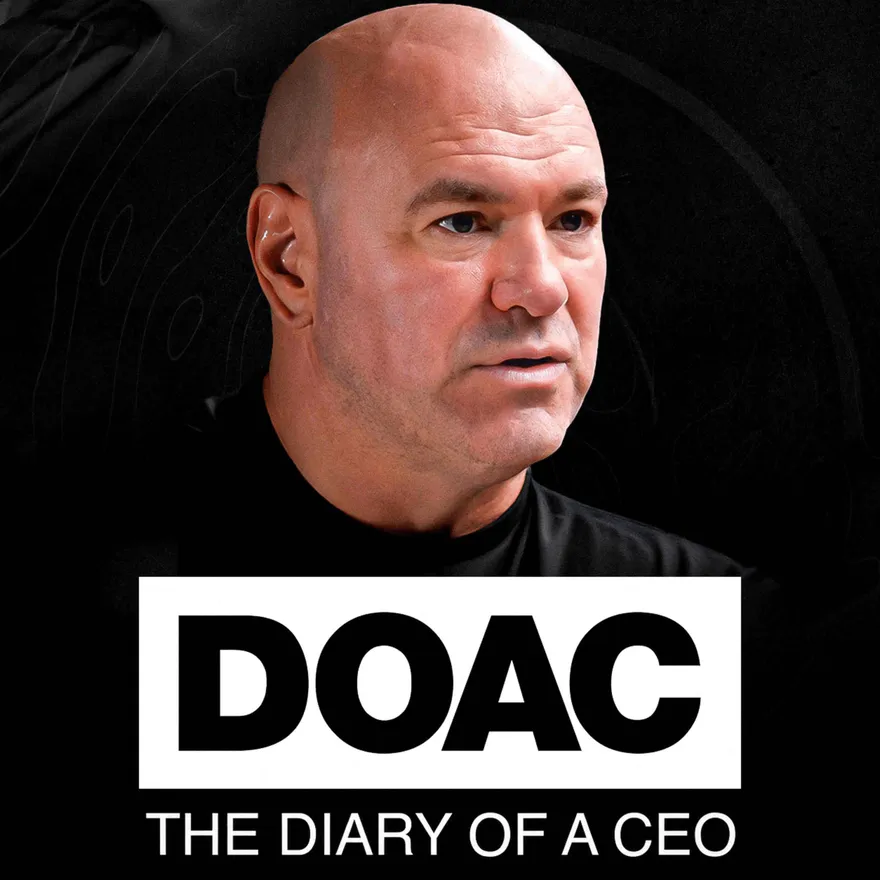

This is a preview of the Shortform summary of the Oct 5, 2026 episode of the The Diary Of A CEO with Steven Bartlett
Sign up for Shortform to access the whole episode summary along with additional materials like counterarguments and context.
1-Page Summary
Dana White's Philosophy and Business Strategy
Dana White's success building the UFC into a multi-billion dollar empire stems from a philosophy rooted in his tough upbringing, an addiction to hard work, fearless risk-taking, and unwavering team loyalty.
Personal Philosophy & Work Ethic
White's childhood—marked by his parents' divorce, an absent alcoholic father, and a hardworking single mother—taught him resilience and discipline early on. He credits both positive and negative family influences as role models, learning what to emulate and what to avoid. White quit drinking at 21 after witnessing alcohol's destructive impact on his father and others, believing this decision was crucial to his long-term success. He firmly rejects victimhood, insisting that past trauma should inform but never define one's potential.
White maintains a strictly forward-focused mindset, viewing past experiences solely as learning opportunities. He emphasizes that "whatever happened yesterday means nothing today," and his only question is always "What's next?" This philosophy of avoiding regret drives bold decisions, like overspending on his Las Vegas home to prevent future second-guessing.
Despite tremendous wealth, White works as intensely as ever and cannot envision retirement. He admits to being "addicted to chaos," finding fulfillment in the daily grind of solving problems and running multiple companies rather than in wealth accumulation or leisure.
Entrepreneurship & Business Principles
White insists that meaningful accomplishment requires embracing risk. He left a stable, well-paying hotel job at 19 because he refused to live with the regret of wondering "what if." For him, trying and failing is preferable to never having tried at all, and he believes the worst-case scenario isn't business failure but never taking the chance.
White attributes his success to trusting his instinct over research or consensus. Innovations like the UFC and Power Slap drew widespread skepticism, which he views as validation that a project is genuinely different and possibly groundbreaking. He relishes when critics claim something is impossible, seeing it as motivation rather than a warning.
White credits ruthless focus on three core priorities for the UFC's success, deliberately filtering out distractions and "noise" from media critics and side projects. He values direct feedback from authentic fans over so-called experts, stating, "I want to hear what the real fans think."
Crucially, White makes clear that money was never his primary driver. If financial security were his motivation, he would have stayed in his lucrative hotel job. Instead, he contends that successful entrepreneurs are driven by obsession to build and innovate, asserting bluntly, "If you're only in it for the paycheck, you've already lost."
Leadership & Team Building
White describes his ability to identify and retain talent as his "superpower." Starting as "the everything guy" with one employee, he built expert teams over 25 years by recognizing aligned vision and cultural fit as the most critical selection factors. He prefers a tight team of "killers"—elite and driven individuals—over a large staff with mixed dedication.
White distinguishes his leadership from transactional company cultures, genuinely caring about his team and prioritizing reciprocal loyalty. During COVID, while many executives laid off employees to preserve profits, White vowed to prevent layoffs at all costs, holding weekly FaceTime calls and offering personal support. No one was let go despite the uncertainty, exemplifying his "family" approach as more than rhetoric.
While the organization includes people with various commitment levels, only the most driven work closely with White. His hands-on management style is exemplified by the "red phone"—a direct line during events to provide immediate feedback. He trusts his top performers implicitly, consulting them on major decisions well beyond their technical domains.
For White, firing is reserved for misalignment or betrayal, not temporary setbacks. This culture of protection fosters extraordinary team commitment and willingness to operate at full capacity, sustaining the organization through challenges.
Manifestation & Relentless Ambition
White insists that "killer instinct" is an all-or-nothing trait—you either have it or you don't. He points to fighters like Conor McGregor, Khabib Nurmagomedov, and Ronda Rousey as examples of those who possess it. When White first met McGregor, the fighter's conviction and clarity made such an impression that White immediately predicted massive stardom.
White distinguishes between passive visualization and active manifestation. True manifestation requires unwavering conviction paired with persistent daily effort. He likens passive dreaming to programming a GPS without pressing the gas pedal, stating, "If you lay out your plan, you know who you are, you know what you want to do, it's impossible to fail."
According to White, success invites constant attacks—legal threats, competitors, critics, and opportunists. He describes the business world as warfare where every proven enterprise must endure this siege. His "battleship strategy" means he and his team go to war together, with their fates bound—they either all succeed or fail as one.
Building World-Class Brands
When White and his partners purchased the UFC for $2 million, the sport was widely dismissed as barbaric and believed to have no chance against boxing. Rather than copying boxing's promotional model, White prioritized three key areas: matchmaking, live event production, and delivering television experiences with the highest production value.
Over 25 years, these principles transformed the $2 million acquisition into an organization worth an estimated $50 billion—comparable to century-old franchises like the Lakers. White built trust with fans, sponsors, and networks, creating an unassailable brand moat. He ensured every attendee leaves thinking "That was incredible," and cultivated sponsor relationships based on mutual benefit rather than mere logo placement. When Paramount signed an $8 billion media deal, it was because the network believed the UFC could drive genuine business impact.
In contrast, White criticizes boxing's decline, attributing it to promoters' short-term focus on extracting maximum profit then exiting. This bred adversarial relationships with networks and sponsors, causing the sport to lose leverage and major deals.
White notes that the UFC's Paramount deal even prompted reactions from the NFL, demonstrating that the UFC now competes for consumer attention at the same level as America's largest leagues. His ambition is clear: to create an unrivaled combat sports brand that stands among the icons. White asserts that UFC's dominance results from strategic timing, obsessive focus on improvement, and a culture that never accepts complacency, emphasizing that being "an absolute savage in business" is essential to maintaining their lead.
1-Page Summary
Additional Materials
Clarifications
- Dana White is the longtime president of the Ultimate Fighting Championship (UFC), a leading mixed martial arts (MMA) organization. He played a crucial role in transforming the UFC from a niche, struggling promotion into a global sports powerhouse. White is known for his aggressive business tactics and innovative marketing strategies that expanded MMA's mainstream appeal. His leadership helped elevate the UFC to compete with major sports leagues worldwide.
- The UFC (Ultimate Fighting Championship) is a premier organization for mixed martial arts (MMA), a full-contact combat sport combining techniques from various martial arts. It features professional fighters competing in weight classes under unified rules. The UFC has grown into a global sports brand, rivaling traditional sports leagues in popularity and revenue. It is known for high-intensity events broadcast worldwide, attracting millions of fans.
- "Killer instinct" refers to an intense, relentless drive to win and dominate opponents, both in fighting and business. It involves decisiveness, fearlessness, and a refusal to back down under pressure. In business, it means aggressively pursuing goals and overcoming obstacles without hesitation. This trait separates top performers who consistently achieve success from those who do not.
- Manifestation involves actively working toward a goal with consistent effort and belief, not just imagining success. Visualization is mentally picturing a desired outcome without necessarily taking action. Manifestation combines mindset with deliberate steps to achieve results. It requires persistence beyond mere daydreaming.
- The "battleship strategy" metaphor likens a business team to a battleship crew, emphasizing unity and shared fate. In this approach, all members must work cohesively, as the success or failure of one affects the entire group. It highlights collective responsibility, mutual support, and coordinated action under pressure. This strategy fosters strong loyalty and resilience in leadership and team dynamics.
- The $8 billion media deal with Paramount signifies a massive financial commitment, reflecting the UFC's high value and broad appeal. It provides the UFC with extensive exposure through Paramount's platforms, increasing viewership and fan engagement. This deal also secures long-term revenue stability, enabling further growth and investment in the sport. Such a partnership elevates the UFC's status, positioning it alongside major sports leagues in media influence.
- Boxing's decline is linked to fragmented promotion, where multiple promoters compete rather than collaborate, weakening the sport's overall market power. Unlike UFC's centralized ownership and unified brand strategy, boxing relies on individual promoters who prioritize short-term profits over long-term growth. This leads to adversarial relationships with broadcasters and sponsors, reducing lucrative media deals. Consequently, boxing struggles to maintain consistent fan engagement and commercial appeal compared to UFC's cohesive approach.
- Major sports leagues like the NFL dominate American sports entertainment with massive fan bases and lucrative media deals. The UFC's growth challenges these leagues by attracting similar audience attention and sponsorship dollars. This competition pushes leagues to innovate and protect their market share. The UFC's rise signals a shift in consumer interest toward mixed martial arts as a mainstream sport.
- A "brand moat" refers to a company's ability to maintain a competitive advantage that protects it from rivals. It includes factors like strong customer loyalty, unique products, or exclusive partnerships that are hard to replicate. This makes it difficult for competitors to erode the brand's market share. Essentially, it acts as a barrier that sustains long-term business success.
- In UFC, "matchmaking" refers to the process of selecting and pairing fighters for bouts. Effective matchmaking balances competitiveness, fighter styles, and fan interest to create exciting, meaningful fights. It shapes event narratives and can build future stars by strategically advancing fighters' careers. Good matchmaking enhances viewer engagement and overall event success.
- Power Slap is a combat sports entertainment show created by Dana White that features contestants competing in slap fighting matches. It is a newer venture outside of the UFC, aiming to capitalize on the popularity of combat sports with a unique and controversial format. The show has drawn skepticism and criticism, aligning with White's pattern of pursuing bold, unconventional projects. Power Slap represents White's willingness to innovate and take risks beyond traditional mixed martial arts.
- Describing a leadership style as "addicted to chaos" implies thriving in unpredictable, high-pressure environments where constant change and challenges occur. Culturally, it suggests valuing adaptability, resilience, and rapid problem-solving over stability and routine. In business, this mindset can drive innovation and quick decision-making but may also risk burnout or organizational instability if unmanaged. It reflects a preference for dynamic growth rather than cautious, incremental progress.
- The phrase "absolute savage in business" means being extremely aggressive, relentless, and fearless in pursuing success. It implies a no-nonsense attitude, where one is willing to take bold risks and outwork competitors. This mindset values toughness and resilience in overcoming challenges. It reflects Dana White's approach to dominating the market without hesitation or mercy.
- Reciprocal loyalty in a corporate team means mutual trust and commitment between leaders and employees. It involves leaders supporting and valuing their team, while employees show dedication and reliability in return. This creates a strong, cooperative culture where both sides invest in each other's success. Such loyalty enhances morale, retention, and overall performance.
- The "red phone" is a metaphor for a direct, immediate communication line used during live UFC events. It allows Dana White to quickly relay instructions or feedback to his team without delay. This system ensures rapid decision-making and coordination in a fast-paced environment. It symbolizes White's hands-on leadership and real-time involvement.
Counterarguments
- White's emphasis on instinct over research or consensus can lead to avoidable mistakes and missed opportunities for informed decision-making.
- The glorification of "addiction to chaos" and nonstop work may promote unhealthy work-life balance and could contribute to burnout, both for White and his team.
- The belief that "killer instinct" is an all-or-nothing trait may overlook the value of growth, learning, and development in individuals who do not initially display such qualities.
- Prioritizing only the most driven individuals and dismissing those with different working styles may limit diversity of thought and exclude valuable contributors.
- White's rejection of victimhood, while empowering for some, may minimize the real and lasting impacts of trauma or systemic barriers faced by others.
- The focus on loyalty and a "family" approach can sometimes blur professional boundaries and make it difficult for employees to voice dissent or leave the organization.
- White's hands-on, centralized management style (e.g., the "red phone") could potentially stifle autonomy and innovation among team members.
- The assertion that money should not be a primary motivator may not reflect the realities of many workers who need financial security.
- White's criticism of boxing's business model does not account for the complexities and historical context of the sport's structure and challenges.
- The claim that failure is impossible with the right mindset and effort may not acknowledge external factors and luck that also play significant roles in business outcomes.
Get access to the context and additional materials
Personal Philosophy & Work Ethic
Dana White’s personal philosophy and relentless work ethic are deeply rooted in a tough upbringing, a rejection of victimhood, forward-focused thinking, and an addiction to hard work and daily challenges well beyond any need for financial compensation.
Tough Childhood Built Resilience, Rejected Victimhood
Absent Father, Hardworking Mother: Dana's Lessons in Role Models
Dana White’s childhood was marked by his parents’ divorce when he was eight, an absent and alcohol-dependent father, and a mother who worked tirelessly as a nurse while attending school. Dana and his sister spent much of their time alone, tasked with chores like mowing lawns and cleaning, instilling discipline and responsibility early on. White credits both good and bad influences in his family as role models, using examples of what to follow or avoid. He highlights his mother’s determination, moving the family from Boston to Las Vegas and raising two kids on her own, often with help from her extended family. Despite estrangement later in life, Dana and his sister ultimately respected their mother for her sacrifices and perseverance. He also learned from his Irish grandmother’s toughness and his uncles’ mistakes, viewing each figure as a valuable teacher in some way.
Quitting Alcohol At 21 After Witnessing Its Destructive Impact Enabled Dana to Maintain Discipline For Long-Term Success
Dana chose to quit drinking at 21, having witnessed the destructive toll of alcohol on his father and other talented family members. He firmly believes abstaining from alcohol removed a major barrier to accomplishing his ambitions, maintaining discipline crucial for his long-term success.
Dana Refused to Be Defined by Family Dysfunction, Believing Past Trauma Should Inform but Not Define Future Potential
White outright rejects victimhood, insisting that everyone has role models and that it’s up to each individual to learn from their experiences rather than be diminished by them. Even after public family strife, including an unauthorized book his mother published about him, he refuses to dwell on grievance or portray himself as a victim. Dana argues that while family dysfunction and past trauma are significant, they should inform future decisions but never define one’s potential or destiny. He acknowledges failures and disappointments but refuses to use them as excuses, crediting his tough upbringing for building resilience essential for his life and career.
Rearview Mirror Won't Drive Future Success
Dana Views Past Experiences, Mistakes, and Grievances As Learning Opportunities
Dana White is adamant that the past—whether mistakes, personal hardships, or successes—should be viewed only as a source of lessons. He resists nostalgia and refuses to let past grievances or experiences influence his future. He believes everyone endures difficulty, and what matters is how one responds rather than what happened previously.
Dana Maintains Forward Momentum By Focusing On What's Next, Potential Challengers, and how to Build Bigger
White explains that his focus always remains on what’s next: future opportunities, upcoming competition, and strategies for scaling bigger and better goals. He doesn’t reflect on past achievements, stating that “whatever happened yesterday means nothing today.” For Dana, the only relevant question is, “What’s next?”
Avoiding Regret Drives Dana's Bold Decisions, Like Overspending On His House to Prevent Future Second-Guessing
Avoiding regret is a major driver behind Dana’s decisions. He emphasizes making bold choices to prevent looking back with “what ifs”—a philosophy illustrated by his willingness to overspend on his Las Vegas home so he’d never wake up wishing he had done more. He encourages risk-takin ...
Here’s what you’ll find in our full summary
Personal Philosophy & Work Ethic
Additional Materials
Counterarguments
- While rejecting victimhood can foster resilience, it may also risk minimizing the real impact of trauma or discourage seeking help when needed.
- The glorification of relentless work and addiction to chaos may contribute to unhealthy work-life balance and could be unsustainable or detrimental to mental and physical health over time.
- Viewing vacations as distractions rather than necessary rest may undervalue the importance of downtime for creativity, well-being, and long-term productivity.
- The belief that past experiences should only inform but never define future potential may overlook how deeply formative experiences can shape identity and ongoing challenges.
- Surrounding oneself only with similarly driven and tough colleagues could limit diversity of thought and exclude valuable perspectives from those wit ...
Actionables
- you can set up a weekly “challenge calendar” where you deliberately schedule one uncomfortable or unfamiliar task—like negotiating a bill, learning a new skill for 30 minutes, or volunteering for a tough assignment at work—to build resilience and keep your focus on growth rather than comfort.
- a practical way to avoid letting past setbacks define you is to keep a “lesson log” where, after any disappointment or mistake, you write down one actionable takeaway and one concrete step you’ll take next time, then physically close the log and move on to your next goal.
- you can create a “future re ...
Get access to the context and additional materials
Entrepreneurship & Business Principles
Dana White, reflecting on his own journey and observations, shares principles underpinning meaningful entrepreneurial success: fearless risk-taking, trusting instinct over consensus, unwavering focus, and prioritizing passion over financial reward.
Fearless Risk-Taking Is Key To Building Meaningful Things
Dana White insists that meaningful accomplishment is impossible without embracing risk. He describes risk as essential, stating, "Do not be afraid to take the risk... You will never accomplish or achieve anything that you want out of life if you're not willing to take the risk." From his perspective, the true worst-case scenario isn’t business failure, but never trying—living with the regret of untapped potential.
White recounts leaving a stable, well-compensated hotel job at age 19, where he enjoyed a paycheck, 401k, and full benefits, because he felt constrained and disrespected in that environment. He emphasizes that returning to such a job if his entrepreneurial ambitions failed was tolerable compared to a lifetime of wondering "what if." He views trying and failing as preferable to never having tried, stating, “What's the worst thing that can happen? You end up back at work. That's not a bad worst case scenario.”
White also believes younger entrepreneurs are best positioned to take risks before responsibilities like marriage and children increase the stakes, but he advises never letting fear of risk become paralyzing at any stage in life.
Instinct and Vision Trump Research and Consensus
White believes entrepreneurial success depends primarily on intuition, not on research, focus groups, or consensus. He attributes his business achievements to trusting his gut, explaining, “Everything that I've ever done has been based off my gut and what I felt.”
Innovations such as UFC and Power Slap drew skepticism and warnings from critics who saw them as foolhardy or legacy-ruining. White relishes this skepticism, seeing it as validation that a project is genuinely different and possibly groundbreaking: "Anything new that people don’t understand or don’t get, they attack and go after. But again, that’s the fuel that I love." When confronted with claims a venture is impossible, White sees that as motivation—“Nothing is impossible. And literally, at UFC headquarters, the only thing you can’t say is no. I don’t accept no.”
He finds further affirmation in pursuing opportunities or ideas that others dismiss as impossible. For White, creating something unprecedented or disruptive is proof of vision, not a cause for retreat.
Focus On Core Priorities Prevents Distraction
White credits much of his success to ruthless focus, stating that he filters out distractions to keep the UFC at its best. He reveals that he maintains laser focus on three core priorities within the business—details he keeps undisclosed to preserve the UFC's competitive edge.
Requests for movies, interviews, and other side projects are filtered out as “noise.” White is especially wary of mainstream sports media, asserting that most critics and so-called experts don’t understand the sport or business, so he blocks out their opinions entirely. Inst ...
Here’s what you’ll find in our full summary
Entrepreneurship & Business Principles
Additional Materials
Clarifications
- Dana White is the longtime president of the Ultimate Fighting Championship (UFC), a leading mixed martial arts organization. He transformed the UFC from a struggling promotion into a global sports powerhouse. His entrepreneurial relevance comes from his innovative leadership and risk-taking in building a major sports brand. White's experience exemplifies principles of vision, focus, and passion in business.
- The UFC (Ultimate Fighting Championship) is a premier mixed martial arts (MMA) organization that popularized a new, intense combat sport worldwide. Power Slap is a competitive slap fighting league that gained attention for its raw, unconventional format. Both ventures were initially doubted by critics for their unconventional nature. Their success illustrates Dana White's principle of trusting instinct over consensus.
- A 401(k) is a retirement savings plan sponsored by an employer that allows employees to save and invest a portion of their paycheck before taxes. "Full benefits" typically include health insurance, paid time off, and other employee perks provided by the employer. These benefits offer financial security and support beyond just the salary. In the context of a hotel job, they represent stable, long-term employment advantages.
- Younger entrepreneurs often have fewer financial and family obligations, allowing them to take bigger risks without severe consequences. They typically have more time to recover from failures and learn from mistakes. Additionally, youth often brings energy, adaptability, and a willingness to challenge norms. These factors collectively create a safer environment for risk-taking early in life.
- Mainstream sports media refers to large, established news outlets and broadcasters that cover popular sports widely. Their coverage often focuses on traditional sports and may lack deep understanding of niche or emerging sports like UFC. Opinions from these media can be influenced by ratings, trends, or limited expertise rather than insider knowledge. Entrepreneurs like Dana White may disregard them to avoid biased or uninformed criticism.
- Authentic fans are individuals who genuinely follow and support the sport or product, often with personal experience and emotional investment. Self-proclaimed experts or business critics may lack deep knowledge or firsthand experience but offer opinions based on limited understanding or external analysis. Fans provide insights rooted in passion and direct engagement, while critics often focus on theoretical or commercial aspects. Dana White values fan feedback because it reflects the true audience's perspective rather than detached or superficial judgments.
- "Ruthless focus" means deliberately prioritizing the most important tasks and goals while ignoring distractions. In business, it involves saying no to opportunities or requests that do not align with core objectives. This approach helps conserve time, energy, and resources for what truly drives success. It requires discipline to consistently filter out noise and maintain clari ...
Counterarguments
- While risk-taking is important, excessive or poorly calculated risks can lead to significant financial loss, personal hardship, or harm to others, and not all risks are worth taking.
- Many successful entrepreneurs rely heavily on research, data analysis, and market validation rather than intuition alone; gut feelings can be biased or misinformed.
- Focus groups and consensus can provide valuable insights into customer needs and market trends, helping to avoid costly missteps.
- Not everyone has the safety net to return to a stable job after failure; socioeconomic background, age, or industry can make recovery from failure much more difficult.
- Older entrepreneurs often bring valuable experience, networks, and resources that can offset increased responsibilities and make them well-positioned for success.
- Dismissing all criticism or expert opinion can lead to echo chambers and missed opportunities for improvement.
- Passion alone does not guarantee business success; practical skills, financial management, and adaptability are also crucial.
- Financial motivatio ...


Get access to the context and additional materials
Leadership & Team Building
Dana White shares a blueprint for building high-performing teams rooted in trust, cultural fit, and reciprocal loyalty. His experience demonstrates the necessity of surrounding oneself with exceptional talent, fostering a culture that values people over transactions, and protecting the team as one would family—especially through times of adversity.
Talent Identification and Retention: A Business Success Superpower
Team Building Is Dana's Key Advantage
Dana White describes his early days with the company, emphasizing that he started as “the everything guy” with only one other employee. In the beginning, he wore all the hats and did every job. As the company grew, he began building a team, recognizing that success ultimately depends on finding and keeping the right people. He states his superpower is his ability to pick and retain the right people to surround himself with.
Dana's Journey From "the Everything Guy" To Creating Expert Teams Shows the Need For Surrounding Oneself With Talent
Dana recounts challenges hiring talent, especially as people preferred cities like New York or Los Angeles over Las Vegas. Despite this, he attracted top-tier professionals like Craig Borsari from Fox, who joined because he believed in Dana’s vision. Dana acknowledges that not everyone is the right fit and emphasizes the importance of quickly identifying who works and who doesn’t. This discernment extends to making decisive firings when vision or culture did not align. Over 25 years, building teams of talented, hard-working individuals who embrace the company vision has been central to his success.
Recognizing Aligned Vision and Cultural Fit Versus Friction and Resistance
White repeatedly returns to alignment with the company’s vision and cultural fit as the most critical selection factors. He asserts that talent and hard work alone are not enough; everyone must be on the same page and share the organization’s drive. Dana recalls knowing immediately when someone wouldn’t fit, preferring a tight team of “killers”—elite and driven—over a large staff with mixed dedication.
Culture Should Value Genuine Care Over Transactional Relationships
Dana Believes In Reciprocal Loyalty Over Transactional Company Culture
Dana distinguishes his leadership from companies where employees feel expendable and replaceable. He rejects the notion of a purely transactional relationship, asserting that he genuinely cares about his team and would never prioritize profit over people. For him, loyalty is precious; if you don’t have loyalty, you have nothing. He values a culture where mutual commitment drives individuals to great lengths for one another.
During Covid, While Many Executives Laid Off Employees to Preserve Profit Margins, Dana Vowed to Prevent Layoffs, Prioritizing Business Continuity and Job Security
Dana’s leadership during Covid exemplifies his philosophy. While many executives prioritized profit and laid off employees, Dana vowed to find any alternative to layoffs. He saw his responsibility as CEO as taking care of his people and finding a way to keep the business running and jobs secure, no matter how daunting the challenge. He called all employees together, offered support for personal or family hardships, and no one was let go despite the uncertainty. Weekly FaceTime calls and personal offers of help reinforced the message of unity and protection.
Dana's Team Loyalty: Extreme Hours, City Moves, and Unclear ROI Projects
Dana notes that his most loyal team members have demonstrated their commitment through personal sacrifices: relocating to Las Vegas, working extreme hours, and pouring energy into initiatives where returns were uncertain. This kind of loyalty and shared struggle cements the team’s bond, creating a culture where people are motivated to “run through a wall” for each other.
Elite Performance Required For Proximity to Leader
Dana Insists That While the Organization Needs People of all Types and Commitment Levels, Those Close to Him Must Possess Killer Instinct and Operate At Maximum Intensity
Dana emphasizes that his leadership style and expectations are not for everyone. Although the organization includes people with various commitment levels, only the most driven, relentless, and high-performing individuals work closely with him. His inner circle comprises “killers”—people who share his intensity and ambition.
The Red Phone Exemplifies His Hands-On Approach: Immediate Feedback For Excellence or Eliminating Unfit Ideas
Dana’s hands-on management is epitomized by the “red phone,” a direct line during events to the production truck. He uses it to provide real-time feedback, immediately praising ...
Here’s what you’ll find in our full summary
Leadership & Team Building
Additional Materials
Clarifications
- Dana White is a prominent business leader known for his expertise in team building and leadership. He has a reputation for transforming organizations by focusing on talent, culture, and loyalty. His approach emphasizes trust and long-term commitment over transactional relationships. White is recognized for leading companies through challenging times while maintaining strong team cohesion.
- In a professional context, “killer instinct” refers to a person’s strong drive to achieve goals aggressively and decisively. It implies being highly competitive, focused, and willing to take bold actions to succeed. Leaders with killer instinct push themselves and their teams to perform at peak levels without hesitation. This trait often involves resilience, confidence, and a relentless pursuit of excellence.
- The “red phone” symbolizes a direct, immediate communication line used by leaders to give real-time instructions or feedback during critical moments. In event management, it ensures swift decision-making and quick corrections to maintain quality and control. This tool helps prevent delays and misunderstandings by enabling instant responses. It reflects a hands-on leadership style focused on precision and accountability.
- Geographic preferences impact talent hiring because major cities like New York and Los Angeles offer more established industries, networking opportunities, and lifestyle amenities. These cities often have larger pools of specialized professionals and higher visibility for career growth. Las Vegas, while growing, may lack the same industry infrastructure or cultural appeal, making it harder to attract top talent. Additionally, relocation involves personal and financial considerations that influence candidates' willingness to move.
- Cultural fit refers to how well a candidate's values, beliefs, and behaviors align with a company's core values and work environment. It is assessed through interviews, behavioral questions, and observing how candidates interact with current team members. Employers look for shared attitudes toward work ethic, communication style, and collaboration. A strong cultural fit promotes team cohesion, productivity, and long-term retention.
- Transactional relationships in the workplace focus on exchanges where each party gives something with the expectation of receiving something equivalent, often limited to job duties and pay. Reciprocal loyalty involves mutual commitment beyond formal obligations, where both employer and employee invest in each other's long-term success and well-being. This loyalty fosters trust, emotional connection, and a willingness to support each other during challenges. It creates a deeper bond that encourages employees to go above and beyond typical job requirements.
- Operating at maximum intensity often means long hours and high stress, which can strain personal time and relationships. Employe ...
Counterarguments
- Prioritizing cultural fit and alignment with vision over talent and hard work can risk creating a homogenous team, potentially limiting diversity of thought and innovation.
- A leadership style that favors a small, elite, highly driven team may inadvertently exclude valuable contributors who do not fit the “killer instinct” mold but offer other important skills or perspectives.
- Rapid and decisive firings for misalignment, while efficient, can create a culture of fear or reduce psychological safety, discouraging dissent or constructive criticism.
- Emphasizing reciprocal loyalty and family-like protection may blur professional boundaries and make it difficult to address underperformance or necessary organizational changes.
- Rejecting transactional relationships entirely may not be realistic or desirable for all employees, some of whom may prefer clear, professional boundaries and expectations.
- The expectation of extreme personal sacrifices (such as relocation or long hours) can contribute to burnout and may not be sustainable or inclusive for employees with different life circumstances.
- While Dana White’s refusal ...


Get access to the context and additional materials
Manifestation & Relentless Ambition
Killer Instinct: An Intangible Quality That Exists or Not
Dana White insists that the "killer instinct" is an all-or-nothing trait—you either have it, or you don’t. This mentality separates champions from contenders, regardless of talent, resources, or opportunities. White cites Ian Garry’s performance in a recent championship bout as illustrative: Garry fought well for four rounds, enduring visible damage, yet, when he had a five-minute window in the fifth round to seize everything he’d ever worked for, he instead opted for sportsmanship—shaking hands and embracing his opponent rather than displaying ruthless ambition. White says this is not the moment for niceties, but for total focus and aggression, suggesting that Garry either lacks killer instinct or couldn’t show it when it mattered most.
White is adamant that killer instinct is inherent. In over 25 years, he has rarely seen anyone develop it if it is not already present. He points to figures like Conor McGregor, Khabib Nurmagomedov, and Ronda Rousey as people who have it, and recounts meeting McGregor for the first time. The conviction, clarity, and ambition McGregor demonstrated at dinner made such an impression that White immediately called Lorenzo Fertitta, saying McGregor would be a massive superstar if he could fight at all.
Visualization and Conviction Manifest Reality When Paired With Action
Dana White draws a distinction between passive vision-board mentality and active, genuine manifestation. While many people simply imagine their future achievements without taking concrete steps, White likens this to programming a GPS destination in a car without ever pressing the gas. He believes true manifestation requires unwavering conviction in your destination and persistent, daily effort until you arrive. "If you lay out your plan, you know who you are, you know what you want to do, it's impossible to fail," White states.
This conviction is what White noticed in Conor McGregor during their first meeting—someone who didn't just visualize outcomes but articulated goals with unshakeable belief and took decisive action. For White himself, this mentality began as a teenager with a clear sense of identity and purpose: he knew early on that he wanted to be in the fight business. This clarity and willingness to take action brought about critical encounters, as when White attended the wedding of a high school friend out of loyalty—a decision that led to reconnecting with Frank and Lorenzo Fertitta and ultimately to the purchase of UFC.
Success Requires Accepting Everyone Will ...
Here’s what you’ll find in our full summary
Manifestation & Relentless Ambition
Additional Materials
Clarifications
- "Killer instinct" refers to an intense, innate drive to win at all costs in competitive situations. It involves decisiveness, aggression, and the ability to capitalize on critical moments without hesitation. This trait often distinguishes top performers who consistently seize opportunities from those who hesitate or show mercy. In sports and business, it is seen as essential for achieving ultimate success.
- Dana White is the longtime president of the Ultimate Fighting Championship (UFC), a leading organization in mixed martial arts (MMA). He played a key role in popularizing MMA worldwide and turning the UFC into a major sports brand. His insights come from decades of experience managing fighters and the business side of combat sports. White is known for his straightforward, no-nonsense approach to leadership and competition.
- Conor McGregor, Khabib Nurmagomedov, and Ronda Rousey are highly successful mixed martial artists known for their dominance in the UFC. McGregor is famous for his striking skills and charismatic personality, becoming the first UFC fighter to hold two titles simultaneously. Nurmagomedov is renowned for his undefeated record and exceptional grappling ability. Rousey was a pioneer for women in MMA, known for her quick finishes and Olympic judo background.
- Ian Garry is a professional mixed martial artist competing in high-stakes fights where aggression and seizing opportunities are crucial. In championship bouts, fighters are expected to capitalize on any advantage to secure victory, especially in the final round. Garry’s choice to show sportsmanship instead of pressing his advantage was seen as a lack of ruthless ambition. This behavior contrasts with the typical mindset of fighters who prioritize winning above all else in critical moments.
- Manifestation is the process of turning desires into reality through focused belief and consistent action. Visualization is imagining or mentally picturing a desired outcome without necessarily taking steps to achieve it. Manifestation requires both a clear mental image and persistent effort toward goals. Without action, visualization remains a passive exercise and does not produce real-world results.
- Lorenzo Fertitta is a businessman and former CEO of Zuffa, the company that owned UFC. He and his brother Frank Fertitta III purchased UFC in 2001, rescuing it from financial trouble. Dana White was a longtime friend of the Fertitta brothers and became UFC's president after their acquisition. Their partnership was crucial in transforming UFC into a global sports powerhouse.
- The UFC (Ultimate Fighting Championship) is the largest and most prestigious mixed martial arts (MMA) organization globally. It popularized MMA by promoting fights that combine various martial arts disciplines under unified rules. The UFC has transformed MMA from a niche sport into a mainstream global phenomenon with millions of fans. Its success has significantly shaped the fight business, influencing training, promotion, and athlete car ...
Counterarguments
- Psychological research suggests that traits like "killer instinct" or competitiveness can be developed or enhanced through training, experience, and environment, rather than being strictly inherent or all-or-nothing.
- Many successful athletes and leaders have demonstrated growth in ambition, aggression, or competitive drive over time, challenging the idea that these qualities are fixed from the outset.
- Sportsmanship and respect for opponents are widely valued in many sports and can coexist with ambition; moments of empathy or restraint do not necessarily indicate a lack of competitive drive.
- The assertion that failure is "impossible" with a clear plan and conviction overlooks the role of external factors such as luck, systemic barriers, and unforeseen circumstances.
- Some leadership philosophies prioritize collaboration, empathy, and adaptability over relentless aggression or a "warfare" mentality, and have also produced successful organizations.
- Viewing business exclusively as warfare may foster a toxic or adversaria ...
Get access to the context and additional materials
Building World-Class Brands
The meteoric rise of the UFC under Dana White’s leadership exemplifies the transformation of an undervalued asset into a global juggernaut through relentless focus, strategic decisions, and an understanding of brand value on par with the world's most powerful sports.
$2 Million Acquisition Transformed Into $50 Billion Empire Through Early Strategic Decisions
Dana White recalls that when he and his partners purchased the UFC for $2 million, the sport was widely dismissed as barbaric, shunned by networks, and believed by conventional wisdom to stand no chance against established giants like boxing. The public and media both doubted that mixed martial arts could gain mainstream acceptance. In those early days, few were interested in hosting UFC events, and skepticism abounded about building a viable business.
Rather than copying the boxing promo model, White prioritized three key areas: matchmaking (ensuring compelling, competitive fights), live event production, and delivering television experiences with the highest production value. White was determined to innovate how combat sports were presented rather than just replicate boxing’s longstanding paradigms.
Over a span of 25 years, these principles established the UFC as a brand trusted not only by consumers but also by sponsors and television networks. This trust laid the groundwork for billion-dollar deals and transformed a $2 million acquisition into an organization worth an estimated $50 billion—comparable to or even surpassing the valuations of century-old sports franchises like the Lakers.
Consumer Trust, Sponsor, and Network Alignment Defend Brand Moat
White asserts that building trust with fans, sponsors, and networks created an unassailable brand moat. He made sure that every UFC attendee, who spends significantly more than television viewers on travel, accommodations, and dining, leaves events thinking, “That was incredible,” and eager to return. The fan experience at live events became as important as the televised spectacle, increasing loyalty and repeat attendance.
For sponsors, White insisted on relationships based on mutual benefit rather than mere “logo slapping.” He wanted brands to feel that their partnership delivered real returns, so much so that sponsors would be grateful for their investment in the UFC. This approach cultivated long-term loyalty, differentiated the UFC from other sports, and kept partnerships productive.
When Paramount signed an $8 billion media deal, it was not because Dana asked for the money, but because the network believed the UFC could drive genuine business impact. White says his responsibility is then to create value that justifies Paramount’s investment, driving him to keep improving and innovating.
Boxing's Decline From Short-Term Focus Over Long-Term Branding
In contrast, White criticizes boxing’s shift from institution to what he calls a “going out of business sale.” Promoters increasingly focused on extracting maximum, short-term profit, then exiting the sport, which bred adversarial relationships with networks and sponsors. The resulting lack of long-term commitment caused networks and sponsors to move away from boxing in favor of more stable properties or streaming platforms. Boxing promoters, now divided and lacking leverage, struggle to secure the kinds of major network and sponsorship deals that once defined the sport.
White now seeks to rebuild boxing’s infrastructure, relationships, and reputation using the same brand-building principles that made the UFC dominant. Having landed the only global television deal in boxing with Paramount, White believes he knows how to fix the sport’s credibility and business model.
Elite Competition Means Competing Wi ...
Here’s what you’ll find in our full summary
Building World-Class Brands
Additional Materials
Counterarguments
- The UFC’s valuation of $50 billion is an estimate and not a confirmed sale price; actual market value may differ significantly.
- While the UFC has achieved mainstream success, it has also faced criticism for fighter pay, labor practices, and lack of a fighters’ union, which some argue undermines its reputation as a model sports organization.
- The claim that boxing’s decline is solely due to short-term promoter focus overlooks other factors such as regulatory fragmentation, changing consumer preferences, and the rise of alternative entertainment options.
- The UFC’s dominance in combat sports does not mean it has surpassed the global popularity or revenue of sports like soccer or cricket, which remain larger in many international markets.
- Some critics argue that the UFC’s matchmaking and promotional strategies sometimes prioritize marketability over sporting merit, leading to controversial title shots or matchups.
- The assertion that the UFC’s approach is impossible to replicate ignores t ...
Actionables
- you can build trust and loyalty in your personal or professional relationships by consistently delivering more value than expected, such as following up after commitments with a small, thoughtful gesture or update that shows you care about the outcome and the relationship, not just the transaction.
- a practical way to create a strong personal brand moat is to identify one area where you can innovate how you present yourself or your work—like designing a unique, memorable resume format or sharing regular, high-quality insights on a topic you care about—so others see you as reliable and distinct. ...
Get access to the context and additional materials


Create Summaries for anything on the web
Download the Shortform Chrome extension for your browser
