

Shawn Ryan: There's A Battle For Your Soul, It's Happening Right Now
In this episode of The Diary Of A CEO, Shawn Ryan shares his journey from former Navy SEAL and CIA contractor to his recent spiritual awakening. Ryan describes traumatic psychedelic experiences that he interprets as spiritual warfare, followed by months of supernatural occurrences and Catholic exorcism procedures. His renewed faith has led him to shift his podcast toward religious content, despite losing major advertisers.
Ryan also discusses his perspective on information warfare, detailing how he believes intelligence agencies embed operatives within media platforms and plant guests to shape narratives. The conversation covers his transition from adrenaline-seeking military and contracting work through a dangerous period in Colombia, his recovery through therapy and Ibogaine treatment, and his current efforts to balance entrepreneurial ambitions with family life. Ryan expresses growing disillusionment with U.S. politics and foreign policy, announcing plans to document domestic poverty and reduce political coverage in favor of faith-based content.
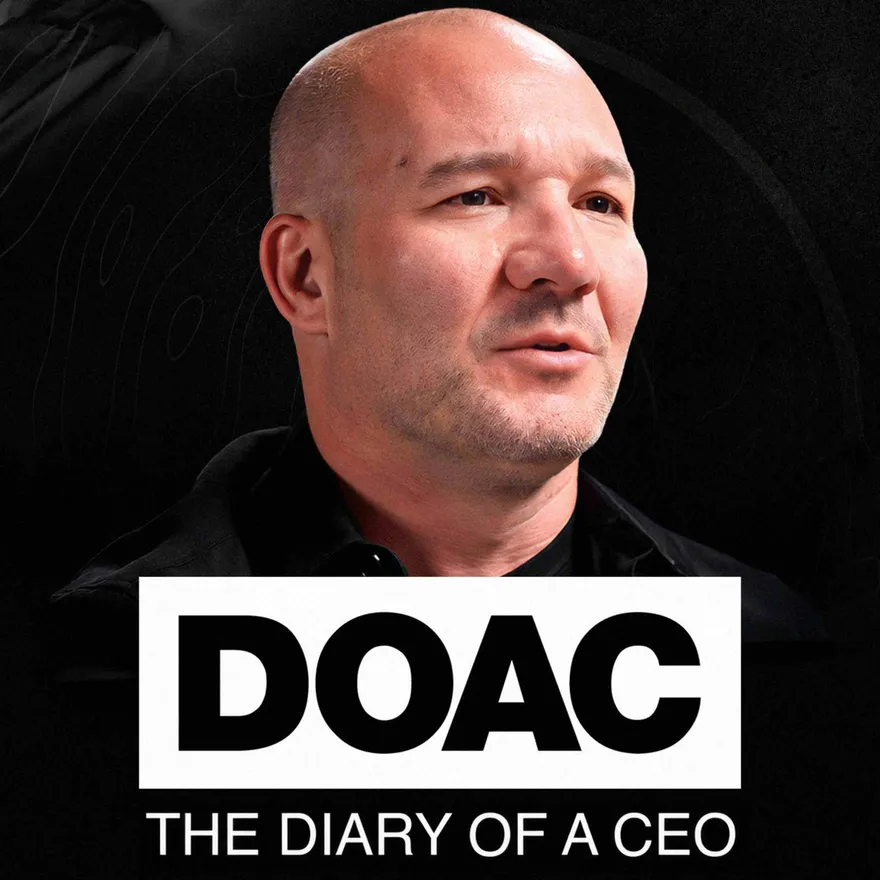

This is a preview of the Shortform summary of the Oct 1, 2026 episode of the The Diary Of A CEO with Steven Bartlett
Sign up for Shortform to access the whole episode summary along with additional materials like counterarguments and context.
1-Page Summary
Spiritual Transformation and Supernatural Experiences
Shawn Ryan recounts a profound spiritual transformation involving traumatic psychedelic experiences, persistent supernatural occurrences, Catholic exorcism, and renewed faith.
Sean's Psychedelic Journey Interpreted As a Hellish Encounter
Ryan describes undertaking potent psychedelic rituals using Ibogaine and 5-MeO-DMT in Gabon, Africa. Unlike earlier beneficial experiences, this journey was deeply traumatizing—a ninety-minute visit to what he characterizes as hell: boundless emptiness, overwhelming terror, and complete abandonment by God. During this episode, Ryan's body contorted uncontrollably in ways his Marine Corps veteran friend found shocking and unnatural. Ryan felt as if an intense exorcism was occurring within him, with spirits battling but refusing to depart. He suggests that powerful psychedelics render users spiritually vulnerable, exposing them to realms humanity shouldn't access.
Supernatural Occurrences and Demonic Oppression
Following the psychedelic experience, Ryan reports months of supernatural phenomena: relentless nightmares, uncanny synchronicities, picture frames flying off walls, and an inexplicable allergic reaction immediately after communion. Ryan interprets these patterns as spiritual warfare—hostile forces wreaking havoc on his family, finances, health, and faith. Catholic priests describe his condition as oppression rather than possession: external evil forces attacking him without taking control of his person.
Multiple Exorcism Procedures
Two Catholic priests, also spiritual mentors, have performed a series of exorcism prayers on Ryan in Latin and English, observing reactions to diagnose his spiritual affliction. The priests consistently identify oppression, with Ryan retaining his agency despite external attacks. Ryan admits the process is ongoing and open-ended, requiring daily prayers at prescribed times, though he trusts it will be apparent when the battle concludes.
Renewed Catholic Faith
These tumultuous experiences have led Ryan to embrace Catholicism, which he sees as uniquely equipped to address the spiritual realm. After growing up Catholic but drifting from active faith, Ryan was baptized on Easter 2024 and now follows Catholic spiritual discipline, including the Libra Christo prayer regimen. His journey has taken him from agnostic to committed believer in heaven, hell, and ongoing spiritual warfare.
Consequences of Faith-Based Content
Publicly sharing his faith journey has brought immediate consequences. Key advertisers, including a long-time life insurance company, pulled support after Ryan shifted his podcast toward spirituality. He views these withdrawals as both worldly pressure and spiritual test but insists commitments to faith outweigh monetary concerns. Ryan intends to create a podcast series analyzing every book in the Bible, starting with Cardinal Burke, and regards the intensification of supernatural occurrences the night before this interview as spiritual confirmation of his calling.
Information Warfare and Media Manipulation
Ryan discusses the pervasive influence of intelligence agencies in modern media, detailing covert tactics he believes are used to shape public discourse and manipulate content creators.
Intelligence Infiltration and Platform Suppression
Ryan asserts that intelligence operatives are embedded inside major tech platforms like YouTube, Meta, and TikTok, working to suppress certain content and amplify others. Despite his podcast generating 150 to 200 million views monthly and ranking highly on Spotify, his show never appears in YouTube's "Popular Podcasts" section—an omission he attributes to deliberate suppression because he discussed sensitive subjects early on.
Planted Guests and Manufactured Narratives
Ryan describes how certain guests with no prior public history suddenly gain outsized traction, indicating they may be planted to deliver coordinated propaganda. These guests often insert specific predictions or viewpoints—sometimes just a single sentence in a multi-hour conversation—designed to be clipped and go viral, shaping public narratives. Ryan also discusses how operatives invite podcasters to political events and photograph them with power players, creating public perception of tribal alignment that erodes the influencer's independence. He frequently receives invitations to the White House and other events but always declines, recognizing them as capture attempts.
Personal Experiences and Withheld Episodes
Ryan recounts interviewing a guest claiming to be a former CIA asset who suddenly inserted a statement about Russians smuggling nuclear warheads into the US—completely unrelated to the previous discussion. Ryan challenged the guest on-air, suspecting he'd been planted to insert that narrative. Ryan sometimes withholds entire episodes if he suspects manipulation, citing examples involving misleading Covid vaccine patent discussions and a guest who only wanted to discuss polygraph testing while hiding behind classification on substantive topics.
Life Journey From Adrenaline-Seeking to Purpose-Driven Living
Military Service and Contracting Career
Ryan enlisted in the Navy at 17, completing nine months of BUD/S training (after being rolled back), then earning his SEAL Trident. His deployments included Haiti, Afghanistan, and Iraq. After five and a half years in the Navy, disillusioned that his expectations didn't match reality, Ryan left and struggled with civilian life. Briefly attempting real estate unsuccessfully, he turned to government contracting, moving from the State Department to CIA contract work. His special operations background left him highly capable but addicted to adrenaline and the culture around it, including heavy drinking and fighting.
Colombian Drug Networks Spiral
Ryan's adrenaline addiction persisted post-contracting. Eventually moving to Medellín, Colombia, he became involved in drug trafficking networks—not as a dealer but for the rush of danger. He routinely visited violent neighborhoods and orchestrated stunts like throwing cash from bridges. After one such escapade, his doorman alerted him that police had collected his passport copies, bugged his apartment, and were surveilling him. Recognizing the imminent threat, Ryan disposed of evidence, bought tickets to various destinations from different internet cafes, and fled Colombia within twelve hours.
Turning Point Through Purpose and Accountability
A turning point came when Ryan committed to helping a best friend overcome opioid addiction, giving him a sense of purpose. His wake-up call arrived when he called his mother on Mother's Day believing he was overdosing. This frightening moment led him to seek therapy, despite the blow to his ego. Therapy provided objective questioning and accountability, helping Ryan process his struggles and make meaningful changes.
Ibogaine Therapy Success and Risk
Ryan pursued healing through psychedelic-assisted therapy, seeking Ibogaine to find clarity and be present with his young son and wife. The first treatment was a breakthrough—afterward, Ryan effortlessly gave up alcohol, all sleep medications, and [restricted term], reporting over four years of complete sobriety. However, seeking deeper insight three months before this interview, Ryan tried Ibogaine again paired with 5-MeO-DMT. This time, the experience was traumatic—a descent into hell rather than healing, showing both the immense power and potential risk of such interventions.
Balancing Entrepreneurial Ambition With Family and Integrity
Ryan and Steven Bartlett discuss the internal conflicts arising from juggling entrepreneurial drive with family responsibilities and personal values.
Balancing Media Empire and Parenthood
Ryan admits feeling guilt in choosing work over quality time with his children. Even when physically present, he struggles to fully engage, as his mind often remains occupied by business. He observes that children sense whether a parent is truly present and that genuine undivided attention is essential. Ryan expresses the sobering realization that if he isn't everything to his kids, someone else could fill that role.
Parental Modeling Over Instruction
Both men reflect on how the deepest lessons are learned from witnessing their parents' work ethic and character rather than from planned activities. Bartlett recalls his mother sleeping on rice bags in her shop to ensure survival, learning striving and resilience through her actions. Ryan acknowledges that while Bartlett's mother's sacrifices stemmed from necessity, his own workaholism arises from opportunity and ambition, not survival.
Strategic Business and Reduced Podcast Output
Ryan now centers his ambition on aligning ventures with his values rather than pursuing lucrative deals. With his latest venture, Glacier—a mobile privacy and digital security app—Ryan focuses on solving real problems rather than chasing profits. To better balance entrepreneurship with family life, Ryan plans to reduce his podcast output from two episodes per week to one, creating bandwidth for ventures like Glacier while preserving his wellbeing and family time.
Political Disillusionment and Shifting Worldview
Ryan recounts an intense political evolution marked by growing disillusionment with U.S. leadership and a commitment to refocus on domestic issues.
Initial Trump Support Followed by Perspective Shift
Ryan initially supported Trump and attempted to create open political dialogue, inviting both Trump and Harris on his podcast. Harris's team declined unless guidelines were set, while Trump appeared without restrictions. Over time, Ryan's perspective changed dramatically. He states he's "not really happy about anything that's happening right now" and believes Trump "totally gone against what he said he was going to do."
Foreign Policy Concerns and Declining Superpower Status
Ryan observes that many U.S. foreign policy actions seem to benefit allies like Israel rather than American interests. He criticizes unpredictable and contradictory U.S. actions that strain relationships with close allies, citing the Keystone Pipeline cancellation and subsequent Canadian tariffs as examples of "schizophrenic" policy. Ryan warns that America's superpower status is at risk due to China's expanding nuclear capabilities, indecision on energy policy, and a weakening petrodollar. He expresses interest in interviewing historians about Britain's transition after World War II to understand what losing superpower status could mean for America.
Documentary Project and Retreat From Political Content
Frustrated with prioritizing international spending over domestic needs, Ryan plans "50 States in 50 Days," a documentary documenting severe poverty in each state's poorest areas. He intends to confront politicians directly about their failure to address domestic poverty while authorizing massive foreign aid. Increasingly disillusioned by what he views as pervasive dishonesty among politicians from both parties, Ryan explains his decision to withdraw from political coverage. Without viable, trustworthy candidates, Ryan prefers to focus on faith-based content ahead of the 2028 election, seeking truth and transparency rather than contributing to deceptive political theatre.
1-Page Summary
Additional Materials
Counterarguments
- The interpretation of traumatic psychedelic experiences as literal spiritual warfare or demonic oppression is subjective and not universally accepted; many mental health professionals would attribute such experiences to psychological or neurochemical effects rather than supernatural causes.
- Claims of supernatural phenomena (e.g., objects moving, allergic reactions after communion) lack empirical evidence and could be explained by psychological, environmental, or coincidental factors.
- The assertion that psychedelics inherently make users spiritually vulnerable is debated; many users and researchers report positive, therapeutic, or neutral experiences, and negative outcomes are not universal.
- Catholic exorcism and spiritual oppression are religious frameworks that may not be recognized or validated outside specific faith traditions.
- The idea that Catholicism is uniquely equipped to address spiritual realities is a faith-based perspective; other religions and secular approaches also address existential and psychological struggles.
- Loss of advertisers after sharing faith-based content may reflect business decisions based on audience demographics or brand alignment rather than "worldly pressure" or spiritual testing.
- The claim that intelligence agencies systematically embed operatives in tech platforms to suppress or amplify content is difficult to verify and is disputed by the platforms themselves.
- Exclusion from YouTube's "Popular Podcasts" section could be due to algorithmic factors, content guidelines, or business decisions rather than deliberate suppression.
- The suggestion that certain podcast guests are "planted" to deliver propaganda is speculative without concrete evidence.
- Declining invitations to political events as a means of maintaining independence is a personal choice; other podcasters may attend such events without compromising their integrity.
- Withholding episodes due to suspected manipulation is a form of editorial control, but it may also limit exposure to diverse viewpoints or critical discussion.
- The risks and benefits of psychedelic therapy are still being studied; while some report adverse effects, others experience significant therapeutic gains, and outcomes can vary widely.
- Work-life balance challenges are common among entrepreneurs and not unique to Ryan; many strategies exist to address these issues.
- The effectiveness of parental modeling versus planned activities in child development is debated among psychologists, with both approaches offering value.
- Criticisms of U.S. foreign policy and superpower status are widely discussed, but interpretations of specific events (e.g., Keystone Pipeline, Canadian tariffs) may differ among experts.
- Disillusionment with political leaders and parties is common, but some observers argue that engagement and reform, rather than withdrawal, are more effective responses.
- Focusing exclusively on faith-based content may limit the diversity of perspectives and audience reach, especially in a pluralistic society.
Actionables
- you can create a daily check-in ritual to intentionally notice and record moments when you feel spiritually, emotionally, or physically vulnerable, then reflect on what boundaries or practices help you feel protected and grounded
- This could be as simple as jotting down a few sentences each evening about any unsettling experiences, odd coincidences, or moments of fear, and then noting what actions (like prayer, meditation, or reaching out to someone) helped you regain a sense of safety or agency.
- a practical way to strengthen your sense of presence with loved ones is to set a recurring, device-free time each week where you focus entirely on shared activities, then ask for honest feedback about how present you seemed
- For example, you might play a board game, cook together, or go for a walk, and afterward, invite your family or friends to share whether they felt truly seen and heard by you, helping you adjust your habits for deeper connection.
- you can experiment with tracking your exposure to news, social media, and political content for a week, then intentionally curate your information sources to prioritize transparency and minimize manipulation
- Keep a simple log of what you consume, how it makes you feel, and whether it seems agenda-driven; at the end of the week, unsubscribe or mute sources that leave you feeling misled or anxious, and replace them with outlets or formats that encourage critical thinking and honest dialogue.
Get access to the context and additional materials
Spiritual Transformation and Supernatural Experiences
Shawn Ryan recounts a profound spiritual transformation marked by harrowing psychedelic experiences, persistent supernatural occurrences, engagement with Catholic exorcism, reconciliation with faith, and personal sacrifices connected to sharing his journey publicly.
Sean's Psychedelic Journey Interpreted As a Hellish Encounter
Ibogaine and 5-Meo-dmt: Sean's Hellish Experience of Emptiness, Terror, and God's Absence
Shawn Ryan describes undertaking potent psychedelic rituals using Ibogaine and 5-MeO-DMT, citing a group in Gabon, Africa that administers these substances. Unlike his earlier psychedelic experiences, which he recalls as transformative and beneficial, his most recent journey was deeply traumatizing. He characterizes it as a visit to hell—not a fiery landscape, but a boundless, all-consuming emptiness. Over approximately ninety minutes, he felt overwhelming terror, anxiety, and an acute sense of abandonment, devoid of God or Christ. The sensation was "more real than anything" he has ever experienced.
His Body Contorted Inhumanly, a Friend With Military Experience Noted
During this episode, Ryan's body contorted uncontrollably in ways his friend, a battle-hardened Marine Corps veteran, found shocking and unnatural, saying he "had never seen a human body doing what you were doing." The intensity of the experience left Ryan severely shaken and withdrawn, communicating only with his wife, a spiritual mentor, and priests for weeks.
An Intense 90-minute Exorcism Experience
Through the ordeal, Ryan felt as if an intense, supernatural exorcism was occurring, as though spirits were battling within him but refused to fully depart. He suggests that powerful psychedelics render users spiritually vulnerable, exposing them to realms humanity is not meant to access.
Supernatural Occurrences and Demonic Oppression Following the Experience
Supernatural Events After Psychedelic Experience
Supernatural Patterns in Religious Events: Allergic Reactions to Communion
Following the psychedelic event, Ryan reports numerous supernatural phenomena over a period of months. He describes a relentless string of nightmares and uncanny coincidences, which he views as synchronicities rather than random chance. He recounts a specific incident in Maine: after a disturbing dream that made him hate Catholicism and a subsequent prayer, a picture frame flew off the wall at his in-laws' home. Not long after, Ryan experienced an unexplainable allergic reaction immediately after taking communion at mass with his spiritual mentor Hendo—his face burned and veins bulged within seconds, an implausibly rapid onset for a physical allergy.
Sean Sees Supernatural Phenomena As Spiritual Warfare and Demonic Oppression, Viewing Them As External Forces Causing Havoc Without Full Loss of Bodily Control Rather Than Mere Coincidences
Ryan interprets these patterns—objects moving, nightmares, health episodes, and attack-like misfortunes—as spiritual warfare, a battle over his soul. He stresses that, despite the turmoil, he's never lost control of his mind or body, which Catholic priests describe not as possession but as oppression: hostile supernatural forces wreaking havoc around him (family, finances, health, faith), but not taking over his person. He maintains that praying several times daily is necessary to strive for spiritual relief.
Multiple Exorcism Procedures Conducted by Catholic Priests
Sean's Exorcisms Involve Catholic Priests Using Latin and English Prayers to Identify Reactions For Diagnosing Spiritual Affliction
Ryan says that two different priests, also spiritual mentors, have performed a series of exorcism prayers on him in both Latin and English. These sessions aim to observe any reactions to specific prayers to diagnose his spiritual affliction and tailor ongoing treatments.
Priests Identify Sean's Oppression: Control Retained Amidst Supernatural Attacks on Family, Finances, Health, and Faith
The priests have consistently identified what he experiences as oppression: a variety of attacks from external evil forces, but with Shawn always retaining his agency and self-awareness.
Sean's Ongoing Exorcism Treatments Persist Without Clear Endpoint
Ryan admits the process is ongoing and open-ended. He does not know how long he must continue the prayer regimen or how he’ll know the battle is concluded, but trusts it will be "very apparent" when it is finally over.
Renewed Catholic Faith and Spiritual Commitment
Sean's Return to Catholicism Through Supernatural Encounters
These tumultuous spiritual and supernatural experiences have led Ryan to a renewed embrace of Catholicism, which he now sees as uniquely equipped to understand and address the spiritual realm.
Baptized ...
Here’s what you’ll find in our full summary
Spiritual Transformation and Supernatural Experiences
Additional Materials
Counterarguments
- The interpretation of psychedelic experiences as literal spiritual warfare or demonic oppression is subjective and not universally accepted; many psychologists and neuroscientists attribute such phenomena to the effects of powerful psychoactive substances on the brain.
- Physical reactions during religious rituals, such as communion, can sometimes be explained by psychological factors like anxiety, expectation, or psychosomatic responses rather than supernatural causes.
- The claim that psychedelics expose users to realms "humanity is not meant to access" is a matter of personal belief; others view these experiences as valuable for psychological insight or healing.
- Reports of supernatural events (e.g., moving objects, nightmares) following traumatic experiences can be interpreted as manifestations of psychological distress or heightened suggestibility rather than evidence of external spiritual forces.
- The Catholic framework for interpreting spiritual experiences is one of many religious perspectives; other faiths or secular viewpoints may offer different, non-supernatural explanations for similar phenomena.
- The loss of advertisers after shifting to faith-based content may reflect standard busin ...
Actionables
- you can create a daily log to track any unusual experiences, emotional shifts, or patterns that feel spiritually significant, then review your notes weekly to identify recurring themes or triggers that might suggest areas for focused prayer or reflection
- By keeping a simple notebook or digital journal, you can spot connections between your daily life and moments that feel spiritually charged, such as sudden anxieties, vivid dreams, or odd coincidences. This helps you become more aware of possible spiritual influences and gives you a practical way to respond intentionally, like adjusting your prayer routine or seeking support.
- a practical way to strengthen your sense of spiritual protection is to set aside a few minutes each morning and evening to recite or write your own personalized prayers or affirmations for yourself and your loved ones
- You might write a short prayer asking for peace, guidance, and protection, then repeat it daily. Over time, this can help you feel more grounded and resilient, especially if you notice patterns of stress or negativity that seem to come ...
Get access to the context and additional materials
Information Warfare and Media Manipulation
Shawn Ryan discusses the pervasive influence of intelligence agencies in modern media, particularly podcasts and digital platforms, detailing several covert tactics he believes are used to shape public discourse, suppress certain narratives, and manipulate influencers and content creators.
Intelligence Agencies Infiltrating Podcast Networks and Platforms
Ryan asserts that intelligence operatives are embedded inside major tech platforms like YouTube, Meta, and TikTok. He believes these operatives work to suppress certain content and amplify others, often without the direct knowledge of the platforms themselves. According to Ryan, these agency moles pose as regular employees whose primary cover tasks obscure their real mission: influencing algorithms from within to control which narratives reach mass audiences.
For example, Ryan points out that despite his podcast having massive viewership—150 to 200 million views a month, and consistently ranking highly on Spotify and at times on YouTube—his show never appears in YouTube’s “Popular Podcasts” section. He attributes this omission to deliberate platform manipulation, suggesting that because he discussed sensitive subjects early on, his content has been suppressed or shadow banned.
Planted Guests and Manufactured Narratives On Podcasts
Ryan describes how certain guests with no prior public history suddenly gain outsized traction on podcasts, indicating a possibility they were planted to deliver coordinated propaganda. These guests often use midstream shifts in terminology or specific predictions about geopolitical events to build credibility in the eyes of the audience, before dropping a key sentence or viewpoint that is designed to be clipped and go viral, shaping public narratives.
He explains that these insertions are subtle—often just a single sentence in a multi-hour conversation—yet designed for maximum impact once extracted and circulated widely. This kind of manipulation occurs with such coordination that the general public remains unaware of the back-end orchestration.
Political Figures and Influencers Captured Through Power
Ryan also discusses the strategy by which operatives invite podcasters and other influencers to political events or high-visibility moments, photographing them with political power players. This, he argues, creates the public appearance that these influencers or podcasters are part of a particular political tribe, even if unwillingly. The resultant images erode the influencer’s independence, as the perception of alignment can cause them to self-censor or conform to the group’s narrative to maintain access or reputation.
Ryan cites the example of people being photographed during the release of the first Epstein files—holding up binders and appearing to be in unity with the administration. He notes that, from that moment, the public perceives those individuals as captured or tribally affiliated, potentially limiting their freedom of thought. Ryan says he is frequently invited to such events—including the White House and football games—but always declines, recognizing these invitations as attempts to capture him for narrative purposes.
Sean's Own Suspicious Interview Experience
Ryan recounts a specific experience interviewing a guest who claimed to be a CIA asset, formerly imprisoned, who infiltrated terrorist organizations. During a long and detailed conversation focused on terrorist networks and weapons, the guest suddenly inserted a stat ...
Here’s what you’ll find in our full summary
Information Warfare and Media Manipulation
Additional Materials
Counterarguments
- There is limited publicly available evidence to substantiate the claim that intelligence agencies have systematically embedded operatives within major tech platforms specifically to manipulate algorithms and suppress or amplify content at scale.
- Algorithmic suppression or shadow banning can result from automated moderation systems, community guidelines, or platform policies rather than covert intelligence operations.
- The absence of a podcast in a platform’s “Popular Podcasts” section may be due to opaque or proprietary ranking algorithms, not necessarily deliberate suppression by intelligence operatives.
- The rise of previously unknown guests on podcasts can be attributed to viral trends, audience interest, or effective marketing, rather than coordinated planting by intelligence agencies.
- Invitations to political events and subsequent photographs with public figures are common networking practices and do not inherently indicate ...
Actionables
- you can keep a private log of subtle or out-of-place statements you notice in podcasts or social media, then periodically review them to spot patterns or repeated narratives that might indicate coordinated messaging; for example, jot down phrases or topics that seem oddly emphasized or disconnected from the main discussion, and see if they recur across different sources.
- a practical way to protect your own narrative independence is to avoid sharing or reposting photos of yourself with political figures or at political events, even if you attend as a guest, to minimize the risk of being associated with specific agendas or pressured to align with certain ...
Get access to the context and additional materials
Life Journey From Adrenaline-Seeking to Purpose-Driven Living
Military Service and Contracting Career Fueled by Adrenaline
Enlisting In the Navy At 17, Sean Spent Nine Months In Basic Underwater Demolition/Seal Training, Was Rolled Back, and Earned His Seal Trident After Additional Qualification Training
Sean Ryan enlists in the US Navy at age 17, going straight into the rigorous Navy SEAL program. He spends nine months in Basic Underwater Demolition/SEAL (BUD/S) training, having been rolled back, then completes jump school and SEAL Qualification Training (SQT), after which he earns his SEAL Trident. After a year or more of further training at his SEAL team, he deploys for active operations. His training includes diving, jumping, demolition, small unit tactics, desert, winter, and jungle warfare.
His Military Service Included Haiti, Afghanistan, and Iraq Combat Zones
During service, Sean is deployed to conflict zones including Haiti—witnessing post-coup chaos and extreme poverty—then Afghanistan, arriving just after Operation Red Wings, where the SEALs suffered massive losses. Many missions there are unsuccessful “dry holes.” In Iraq, Sean works with conventional units, teaching them critical skills such as surveillance, sniper positioning, and mission planning, then joins their hunts for those targeting US forces. Disillusioned, Sean realizes that his expectations of service do not match reality and decides to leave the Navy.
Sean's Transition From Active Duty to Cia Contractor Roles
After five and a half years in the Navy, Sean struggles with civilian life. Briefly trying real estate, inspired by “how to get rich” books—which ends in failure—he turns to government contracting. Starting with the State Department, he moves to CIA contract work via Blackwater, then Socked, and finally becomes a direct CIA contractor. His time in special operations leaves him highly driven and adept at high-stress environments, but addicted to adrenaline and the culture around it, including heavy drinking and fighting.
Boredom and Recklessness Lead to Colombian Drug Networks Spiral
Post-Contract Work: Sean's Move to Medellin and Involvement in Drug Trafficking Networks
Sean’s adrenaline addiction persists post-contracting. After cleaning up some aspects of his life, including mostly quitting cocaine, he seeks thrills by traveling to dangerous places such as Panama, Costa Rica, Honduras, and especially San Pedro Sula. Eventually, he moves to Medellín, Colombia. Not wanting to engage with American society or opinions, Sean becomes involved in Colombian drug trafficking networks—not as a dealer, but as someone establishing and infiltrating the networks for the rush of danger and challenge.
Activities in Colombia Included Visiting Violent Neighborhoods to Meet Dealers, Throwing Cash To Homeless People For Thrills, and Living With the Threat of Arrest or Death
In Colombia, Sean routinely visits violent neighborhoods to seek out drug connections. He experiences the rush of navigating the criminal underworld and orchestrates stunts like throwing wads of cash from a bridge into camps of homeless people—actions that bring both excitement and grave risk. He acknowledges he places little value on his own life, not feeling suicidal, but willing to die for the thrill and believing he would rather die in Colombia than return to a “normal” existence if excitement waned.
Narrow Escape From Arrest in Colombia
After Throwing Money At Homeless People On a Bridge, Sean Learned From His Doorman Freddy That Colombian Police Photographed and Surveilled Him
Following one of his money-throwing escapades, Sean is alerted by his doorman Freddy that local police are after him. They collect Sean’s passport copies, bug his apartment’s light fixture, and surveil him from a building across the street. Freddy reveals the police have photographic evidence of Sean’s actions from the bridge, confirming the seriousness of Sean's situation.
Realizing the Police Operation's Seriousness, Sean Executed Surveillance Detection, Purchased Multiple Airline Tickets to Confuse, and Fled Colombia Within Twelve Hours, Leaving That Chapter Behind
Recognizing the imminent threat, Sean disposes of all incriminating evidence and checks his surroundings for surveillance, using techniques from his covert training. He does not spot surveillance but covers his tracks by buying tickets to various international destinations from different internet cafes. Within twelve hours, he leaves Colombia and does not return. Despite this close call, he doesn’t immediately stop using drugs or seeking danger, continuing risky travels around Latin America but gradually reducing his extreme activities.
Turning Point Through Purpose and Accountability
Sean Finds Purpose Helping Friend Overcome Opioid Addiction, Motivating His Own Recovery
A turning point comes when Sean commits to helping a best friend overcome severe opioid addiction. Supporting his friend gives Sean a sense of purpose and forces him to clean up as well. Though his friend ultimately loses the battle against addiction, the experience is pivotal in Sean’s journey.
Realizing He Might Die During a Mother's Day Call When He Thought He Was Overdosing, Sean Sought Help and Began Therapy, Admitting He Needed Mental Health Support Despi ...
Here’s what you’ll find in our full summary
Life Journey From Adrenaline-Seeking to Purpose-Driven Living
Additional Materials
Counterarguments
- The narrative may unintentionally glamorize dangerous and illegal behaviors, such as involvement in drug trafficking networks and thrill-seeking in violent environments, which could be seen as irresponsible or potentially harmful messaging.
- The text presents psychedelic-assisted therapy, particularly Ibogaine, as highly effective based on one individual's experience, but does not address the lack of large-scale clinical evidence or the significant risks and legal issues associated with such treatments.
- The account focuses heavily on individual agency and personal transformation, potentially overlooking the broader systemic and societal factors that contribute to addiction, mental health struggles, and difficulties transitioning from military to civilian life.
- The story centers on a single, exceptional case, which may not be representative of the typical experiences of veterans or individuals struggling with addiction and recovery. ...
Actionables
- you can create a personal risk inventory to identify and track the high-adrenaline or impulsive behaviors you engage in, then experiment with replacing one risky habit each week with a challenging but safe activity, like learning a new skill or tackling a physical fitness goal, to channel your need for excitement into healthier outlets.
- a practical way to build accountability and structure into your life is to set up a weekly check-in with a trusted friend or family member, where you both share one struggle and one success from the past week, helping each other stay honest and supported as you work through personal challenges.
- you can design a self- ...
Get access to the context and additional materials
Balancing Entrepreneurial Ambition With Family and Integrity
Navigating the demands of building a successful business empire while striving to be a present, engaged parent and partner is a challenge recognized by both Shawn Ryan and Steven Bartlett. Through candid reflection, they highlight the internal conflicts that arise from juggling entrepreneurial drive with family responsibilities and personal values.
Balancing Media Empire and Parenthood
Shawn Ryan openly admits to feeling guilt in choosing work over proximity and quality time with his children. He confesses that although he is close to his kids, he could be even closer, noting the distance created when business obligations pull him away. Even when physically present, he struggles to fully engage during moments of play, as his mind often remains occupied by business considerations. Ryan observes that children can sense whether a parent is truly present and that genuine undivided attention is essential to deepening family bonds. The “always switched on” mindset of entrepreneurship makes it difficult to shift gears and be fully available for things as simple as playing trains with his two-year-old.
Ryan expresses the sobering realization that if he isn’t everything to his kids, someone else could fill that role. The awareness of how important it is to create lasting memories with his wife and kids sits in tension with the relentless pace and creative demands of his business empire.
The Value of Parental Modeling Over Direct Instruction
Both men reflect on how the deepest lessons aren’t learned from planned family activities, but from witnessing the work ethic and character of their parents. Steven Bartlett recalls his mother’s unwavering dedication—sleeping on rice bags in her shop to ensure her family’s survival—and how she never complained. Through her actions, rather than words or play, he learned the value of striving and resilience.
Shawn Ryan highlights the distinction between the necessity-driven sacrifices made by previous generations and the abundance-based work commitments he faces. While Bartlett’s mother’s hard work stemmed from a drive to put food on the table, Ryan acknowledges that his own workaholism arises from opportunity and ambition, not survival. Both agree that children learn the most from observing how their parents conduct themselves—modeling work ethic, sacrifice, and integrity—rather than direct instruction or even the amount of time spent together.
Strategic Business Selection and Power Play Focus
Ryan’s ambition now centers on aligning ventures with his values over simply pursuing lucrative deals. He cites countless offers he has turned down because they didn’t feel right, emphasizing that sometimes the best business decision is to say no. With ...
Here’s what you’ll find in our full summary
Balancing Entrepreneurial Ambition With Family and Integrity
Additional Materials
Counterarguments
- While modeling work ethic and integrity is important, research consistently shows that the quantity and quality of time spent with children also significantly impacts their emotional development and well-being.
- The idea that children primarily learn through observation may underplay the value of direct engagement, communication, and shared experiences in building strong family relationships.
- Reducing podcast output from two episodes to one may not be sufficient to meaningfully increase family engagement if other business ventures continue to demand significant time and attention.
- Prioritizing business ventures that align with personal values is commendable, but it does not inherently resolve the underlying work-life balance challenges if overall workload remains high.
- The narrative frames entrepreneurial ambition as inherently in conflict with family life, but some entrepreneurs successfully integrate their families into their work or find creative solutions to ba ...
Actionables
- you can set a recurring “device-free hour” each week where you and your family put away all screens and intentionally do a simple activity together, like cooking, drawing, or walking, to practice undivided attention and presence; this helps reinforce the value of quality time and models mindful engagement for your children.
- a practical way to align your work with your values is to create a personal “values checklist” and review it before accepting new projects or tasks, only moving forward with those that match your core principles; this helps you make decisions that reflect integrity and shows your family how to prioritize what matters most.
- you can keep a “family i ...
Get access to the context and additional materials
Political Disillusionment and Shifting Worldview
Shawn Ryan recounts an intense political and personal evolution marked by growing disillusionment with U.S. leadership, skepticism toward American foreign policy, and a commitment to refocus attention on domestic American issues.
Initial Trump Support Followed by Significant Perspective Shift
Shawn Ryan initially supported Donald Trump and hoped for a Trump victory in 2024. He clarifies that while he didn’t offer an explicit endorsement, his public stance placed him within Trump’s sphere. Ryan attempted to create an open political dialogue, offering invitations to both sides; he reached out to Kamala Harris’s team to have her as a guest, expressing willingness to structure the conversation around topics of her choosing. However, Harris’s team declined unless guidelines were set. Ryan notes this contrasted with Trump’s appearance, where there were no restrictions or topics deemed off-limits.
After the election, Harris eventually appeared on other platforms without restrictions, presenting a more candid demeanor. Ryan regrets that a more unfiltered exchange with Harris did not happen before the election, believing it could have provided voters with clearer insights. Over time, however, Ryan’s perspective on Trump changed dramatically. He recounts growing unhappy with Trump’s governance and disappointed by decisions that contradicted campaign promises, stating, “I’m not really happy about anything that’s happening right now. I think he’s totally gone against what he said he was going to do.”
Concerns About American Foreign Policy and Superpower Status
Ryan observes that many U.S. foreign policy actions, particularly in regions like Iran, seem to benefit allies such as Israel rather than serving America’s best interests. He relates conversations with military colleagues who share this perspective, indicating a broader dissatisfaction within veteran communities.
Ryan criticizes unpredictable and contradictory U.S. actions that strain relationships with close allies. He cites the cancellation of the Keystone Pipeline and subsequent tariffs on Canada’s China trade as examples of erratic policy, describing U.S. behavior as “schizophrenic,” which undermines trust and makes collaboration difficult for countries and business partners. He laments that such “bully” behavior contrasts with the foundational principle of “peace through strength” that cemented America’s superpower status. This loss of credibility leads allies to question their security under U.S. leadership and, increasingly, to consider forming alternative alliances, as seen in Europe’s response to U.S. actions in the Iran conflict.
Decline of American Superpower Status and Future Implications
Ryan warns that America’s superpower status is at risk due to multiple factors, including China’s expanding nuclear capabilities, American indecision on energy policy, and a weakening petrodollar. Citing Professor Cheung’s analysis, he explores the potential consequences if the U.S. cedes its dominant position in global affairs.
Ryan speculates that losing superpower status could reduce the influence of political action committees (PACs) in Washington and force politicians to concentrate more on domestic issues rather than on costly global interventions. To understand what such a transition could mean for the U.S., Ryan expresses an interest in interviewing historians about Britain’s experience after World War II, when it lost its superpower status to America. He wants to know whether the feared consequences materialized or if the transition co ...
Here’s what you’ll find in our full summary
Political Disillusionment and Shifting Worldview
Additional Materials
Counterarguments
- While Ryan criticizes U.S. foreign policy as benefiting allies over American interests, many analysts argue that supporting allies can serve long-term U.S. strategic and economic interests, including stability and global influence.
- The assertion that U.S. “bully” behavior undermines alliances overlooks instances where U.S. leadership and intervention have been welcomed by allies and have contributed to global security.
- The claim that unpredictable U.S. policies are unique to recent years can be challenged by historical examples of policy shifts and reversals under previous administrations.
- The idea that losing superpower status would necessarily reduce PAC influence or improve domestic focus is debated; domestic political dynamics are complex and influenced by many factors beyond international status.
- While Ryan expresses frustration with foreign aid, some economists and policymakers argue that international spending can yield significant returns for the U.S. in terms of security, trade, and global stability.
- The belief that trustworthy political candidates do not exist is a broad genera ...
Actionables
- you can track and compare your local representatives’ voting records on domestic versus foreign aid, then write a short, personalized letter or email to each one asking them to explain their priorities and how they plan to address poverty in your area; this helps you hold leaders accountable and encourages transparency.
- a practical way to understand the impact of shifting global power is to keep a simple monthly journal noting news about international alliances, energy policy changes, and currency developments, then jot down how these might affect your daily life, such as prices, job opportunities, or community resources.
- you can invite friends or family to join you in a “d ...
Get access to the context and additional materials


Create Summaries for anything on the web
Download the Shortform Chrome extension for your browser
