

Rick Rubin: What Jay-Z Did in 30 Minutes Left Me Speechless!
In this episode of The Diary Of A CEO, Steven Bartlett speaks with producer Rick Rubin about the foundations of authentic creativity. Rubin emphasizes trusting one's internal compass over external validation, market data, or commercial considerations, arguing that this approach leads to more original and enduring work. He discusses how meditation and spiritual practice enable deeper creative access, and why revolutionary art always involves risk and "indefensible" choices that defy rational justification.
The conversation covers Rubin's perspective on the creative process, including the four distinct phases of creative work and how great art emerges from combining technical mastery with a unique point of view. Rubin also addresses how societal conditioning—particularly through educational institutions—systematically suppresses natural creativity, and offers his view that everyone possesses creative capacity. Throughout, he advocates for making choices based on authentic self-expression rather than seeking approval or following predetermined paths.
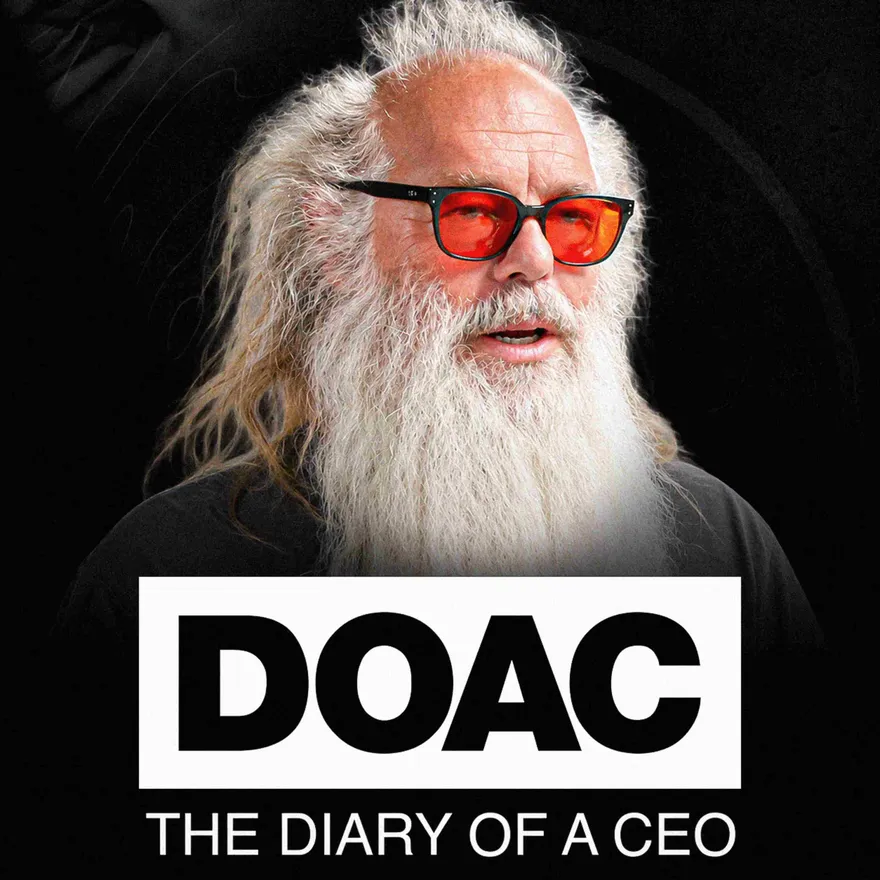

This is a preview of the Shortform summary of the Sep 21, 2026 episode of the The Diary Of A CEO with Steven Bartlett
Sign up for Shortform to access the whole episode summary along with additional materials like counterarguments and context.
1-Page Summary
Trusting Internal Intuition Over External Validation
In conversation with Steven Bartlett, Rick Rubin emphasizes that authentic creativity emerges from listening to one's internal compass rather than seeking external approval, data, or market validation. This approach, he argues, preserves the creative process's purity and leads to more original, enduring work.
The Internal Compass as Primary Decision-Making Tool
Rubin cautions that focusing on anything besides the act of creation undermines the process itself, asserting, "The creative process is a pure, delicate process to be protected." He discourages artists from considering market fit or whether something sounds like a "single" while in the studio, instead centering his process on making "the best thing we can make" and striving toward "greatness, timeless greatness."
Rubin also warns that advice is only ever someone's personal perspective, not a prescription. He encourages artists to absorb input but ultimately "listen to what's going on in you" and trust their internal compass. If an artist loves their creation enough to show it to anyone, Rubin believes that justifies sharing it with everyone—self-satisfaction is the sole necessary validation. He views everything an artist makes as a "diary entry," meaningful simply because it reflects their worldview. Public approval or alignment with trends is unnecessary, and Rubin's role as producer is merely to help remove roadblocks stopping creators from making what they truly want.
Market Success as Secondary, Not Primary Driver
Rubin denounces making art for commercial success or imitation, discouraging creators from making "things to go on the radio that sound like everything else on the radio." When artists make decisions to serve short-term goals, the work's long-term value is compromised. He gives examples of unconventional releases that faced initial resistance but succeeded because they were true to the artist's vision—System of a Down's "insane" record, Jay-Z's "99 Problems," Radiohead's "Kid A," and Kanye West's "Yeezus." Revolutionary work is often rejected at first, Rubin observes, because audiences "don't have any context for it."
Distinguishing Between Personal Taste and External Pressure
Rubin describes how people often can't distinguish their own desires from those inherited from parents, culture, or social media. He recommends practices like meditation or therapy to help creators locate their true selves and separate genuine preferences from societal expectations. Rubin likens discerning creative satisfaction to tasting food—rather than asking what someone else might prefer, artists should ask "What lights you up?" Ultimately, Rubin's philosophy is that "the main idea really is don't listen to what anyone tells you. Be true to yourself. Work hard. Never give up."
The Spiritual Foundation For Creativity
Creativity, as Rubin and Bartlett discuss, emerges from a profound spiritual base where meditation, intuition, and spiritual connection enable artistic breakthroughs.
Meditation as Essential Practice For Accessing Deep Creativity
Rubin emphasizes Transcendental Meditation as the most profound influence on his creative life, practicing 20 minutes daily since age 14. This discipline allows access to intuition and deeper creativity beyond intellectual analysis. He explains that meditation accumulates benefits—"depositing in the bank"—creating a reserve of calm and clarity that persists even during breaks from practice. This deeper perception moves artists from intellectual understanding to discovering intuitive insights inaccessible through analysis alone.
Spiritual Connection as the Source of Artistic Vision
Rubin asserts that creativity is fundamentally a spiritual practice, describing a "higher creative intelligence" that can be accessed. Many visionary artists maintain meditation or spiritual practices at their core, helping them connect to themselves, others, and a greater creative force. Rubin realized that creating art as an offering to God lifts work above commercial concerns—success becomes measured by sincerity and quality of offering, not audience size or sales.
Intuition and Energetic Awareness as Valid Decision-Making Methods
Rubin trusts intuition—an "internal antenna"—over data-driven or logical decision-making. Reason, he says, is just a "tiny sliver of how decisions get made." He notices that persistent energetic cues are often invitations from the universe, recounting how he followed "too much energy" behind "vibe coding" even when it seemed illogical. Rubin credits many creative breakthroughs to synchronicity and "miracles"—unexpected outcomes that defy standard cause-and-effect logic, appreciating Carl Jung's view that the world works through mysterious, interconnected patterns.
Embracing Risk and "Indefensible" Choices
Rubin's creative process emphasizes embracing risk, trusting intuition over logic, and accepting the prospect of failure as essential to achieving artistic greatness.
Necessity Of Taking Creative Risks For Greatness
Rubin insists that all revolutionary art involves risk. In his forty years of making things, he always takes the risk, contending that "it's only through risk that greatness is shown." He rejects the idea that producing more of the same can be great, arguing that safe, predictable work is forgettable while rule-breaking transforms fields. When Linkin Park faced a decision between repeating their successful sound or pursuing a new direction, Rubin encouraged the latter—alienating part of their existing audience but opening doors for new fans and a more genuine artistic journey.
Following Calls That Defy Rational Justification
Rubin introduces "indefensible" as a positive creative notion—taking choices to an extreme beyond reason or logic. He describes his "vibe coding" book project as following an indefensible calling, responding to overwhelming energetic invitation despite having no logical justification. When the book was nearly complete, Rubin insisted on exactly 78 topics (significant in tarot) simply because his intuition demanded it. Creators must heed energetic invitations even if they don't make sense at the time.
Accepting That Failure Is Part of the Process
Bartlett observes that many shy away from risk due to fear of failure. Rubin acknowledges that following one's creative compass does come with risks—sometimes pursuing what feels right doesn't succeed externally. But playing it safe or producing predictable work simply isn't interesting or artistically meaningful. "If you're looking for greatness," he tells Bartlett, "sometimes eggs get broken, but that's just... that's how it works."
Understanding the Creative Process
The Four Distinct Phases of All Creative Work
Rubin outlines four key phases in creative work. The Seed Phase involves freely exploring initial ideas without deadlines or commercial pressure—discovery is the goal. The Experimentation Phase follows, testing these seeds and allowing ideas to evolve naturally; a project may transform unexpectedly, like starting with a statue and ending with a painting. The Crafting phase begins once the work's direction becomes clear, involving iteration and refinement. Finally, Completion occurs after these phases, though the outcome often remains unpredictable.
The Unpredictability Of How Greatness Manifests
Rubin and Bartlett discuss the inherent uncertainty of creativity—even after diligently moving through all phases, artists can't predict reception or success. Commercial success is unreliable because external factors beyond talent must align. Sometimes pieces languish for years before finding success, while talented people are never recognized. Rubin notes that unfinished or casual versions sometimes hold more magic than polished ones, as happened with Johnny Cash and Neil Young's recordings.
How Great Work Reveals Its Own Direction
Rubin asserts that feedback is rooted in intuition rather than analysis. Artists may enter with one intent, only for the work to transform—a loud song becomes quiet and intimate. Artists must listen closely to the material, responding to what feels honest and alive, searching for authenticity that can be enhanced through subtle adjustments rather than overhauls.
Greatness as Mastery Plus Point of View
According to Rubin, the greatest artists combine technical skill, relentless work ethic, and crucially, a unique point of view. Technical talent and practice—exemplified by artists like Eminem—are foundational but insufficient. What sets great artists apart is their distinct perspective, their capacity to notice and express what others don't. Jay-Z distinguishes himself through a singular process: internalizing and performing from memory rather than laboring over written lyrics. Additionally, authenticity is more lasting than polish—Adele's personal songwriting infuses her performances with sincerity listeners can feel. Ultimately, mastery paired with unique, authentic vision gives creative work its enduring power.
Overcoming Societal Conditioning
How Institutions Systematically Suppress Natural Creativity
Rubin asserts that creativity is systematically suppressed by institutions like schools, which teach rule-following and conformity over free thought. From an early age, people internalize negative beliefs about their capabilities—"you can't sing," "you're not smart enough"—which stifle natural gifts. This "bad information" limits self-expression and authentic development. The educational framework emphasizes competition rather than personal growth; if people can't be the best, they abandon pursuits entirely, believing activities are only worthwhile if they lead to professional success.
The Trap of Identity and Labels
Rubin and Bartlett discuss how identity labels limit possibilities. Rubin argues that labels always make a person smaller, confining them to predefined roles. Bartlett observes that the more successful someone becomes, the narrower their life often gets—strong professional identities box individuals in, making it hard to pursue different callings. Rubin maintains that anyone can "press a button" and make radical changes—move, start a new life, or follow a different calling. These choices are always available; what needs to stop is the scenario, not the person.
Reclaiming Creative Capacity and Authentic Voice
Rubin and Bartlett reject the idea that only certain people are "creatives." Rubin insists everyone is inherently creative; cultural beliefs about "creative types" are fiction. Most people don't trust themselves due to societal indoctrination and external noise. Rubin describes his work as helping artists get past self-imposed roadblocks and rediscover what truly matters. He emphasizes that making and sharing creative work without waiting for permission allows individuals to reclaim their creative power.
Redefining Life As Artistic Practice
Rubin asserts that anyone can live as an artist, regardless of profession. Living artistically means making choices based on authentic self-expression, originality, and striving for personal excellence. The core question isn't whether a person is an artist but whether they choose authenticity over convenience, meaning over superficial approval, and real self-expression over external rewards. Human purpose, he believes, is to show who we are and invite others to do the same. Rubin and Bartlett agree that children exemplify uninhibited creativity before societal norms interfere, and adults can rekindle this by approaching life with wonder and making authentic expression the foundation of their choices.
1-Page Summary
Additional Materials
Counterarguments
- Relying solely on internal intuition can lead to creative work that is self-indulgent or disconnected from audiences, limiting its impact or relevance.
- External feedback, data, and market validation can provide valuable perspectives that help refine and improve creative work, ensuring it resonates with others.
- Many successful artists and innovators have benefited from understanding and responding to market trends or audience preferences without sacrificing authenticity.
- The idea that self-satisfaction is the only necessary validation may not apply to collaborative or commercial creative fields, where teamwork and audience engagement are essential.
- Dismissing advice as merely personal perspective overlooks the value of mentorship, expertise, and constructive criticism in artistic growth.
- Not all risk-taking leads to greatness; some risks result in failure without meaningful learning or advancement.
- The notion that institutions systematically suppress creativity does not account for educational models and teachers who actively nurture and inspire creative thinking.
- Technical mastery and hard work are often prerequisites for creative success; intuition alone may not be sufficient without skill development and discipline.
- Some individuals may find spiritual or meditative practices unhelpful or irrelevant to their creative process, preferring analytical or collaborative approaches.
- The belief that everyone is inherently creative may not resonate with those who do not identify with creative pursuits or who find fulfillment in other forms of contribution.
- Identity labels and professional roles can provide structure, community, and a sense of belonging, which some people find empowering rather than limiting.
- Commercial success and audience approval can be valid and meaningful goals for creators, especially those who rely on their work for livelihood.
- Children’s uninhibited creativity is not always desirable or practical in adult contexts, where constraints and standards often serve important purposes.
Actionables
- You can set aside a daily 10-minute window to create something purely for yourself, then immediately write a short note about how the process felt and what, if anything, surprised you about your own preferences or impulses—this helps you notice and trust your internal compass over time.
- A practical way to distinguish your genuine interests from inherited or external ones is to list five things you feel drawn to do or make, then next to each, write where you first encountered the idea (family, media, school, etc.); circle the ones that feel most like your own and try one this week, observing how it feels compared to the others.
- You can experiment with making a "creative risk log" by jotting down every time you feel an urge to try something unconventional or risky, no matter how small, and then intentionally acting on one of these urges each week to build comfort with risk and see how it shapes your work or daily choices.

Get access to the context and additional materials
Trusting Internal Intuition Over External Validation
Rick Rubin emphasizes that authentic creativity comes from listening to one’s internal compass rather than seeking external approval, data, or market validation. He argues that this approach preserves the purity of the creative process, leads to more original work, and allows artists to create enduring expressions of their true selves.
The Internal Compass as Primary Decision-Making Tool
Artists Should Prioritize Genuine Preferences Over Market Data and External Opinions
Rubin cautions that focusing on anything besides the act of creation undermines the process, asserting, "The creative process is a pure, delicate process to be protected. If you're thinking about what happens next, totally undermines it." He discourages artists from considering whether a piece of work sounds like a "single," or thinking about how it fits in the market, saying it's irrelevant while in the studio. Rubin’s process centers on making “the best thing we can make,” striving toward what he calls “greatness, timeless greatness,” for its own sake.
Rubin also warns that advice—even well-intentioned—is only ever someone's personal perspective, not a prescription. What works for one person may not work for someone else, and following another's path can undermine authenticity.
He encourages artists to immerse themselves deeply in their chosen medium and absorb a range of input, but ultimately to "listen to what's going on in you." He urges creators to trust their internal compass and reach decisions by honestly checking in with themselves about what feels right.
An Artist's Love for Their Creation Justifies Its Public Presentation, Despite Doubts About Success or Conventional Fit
Rubin maintains that self-satisfaction is the sole necessary justification for sharing creative work: "If I like it enough that I'm willing to show it to you, I like it enough to show it to everybody." He says everything an artist makes is a "diary entry," a reflection of their worldview at that moment. If it is meaningful to the artist, that is enough—public approval or alignment with current trends is not required.
He tells artists, "If you really believe it's great, I support you putting it out... Even if nobody else gets it, that's fine. Someone else reading your diary can't tell you it's wrong." Rubin’s job as a producer is simply to help creators remove roadblocks stopping them from making what they want; he listens to their favorite works and asks why they love them, helping them reach the honest conclusion, “this one tastes better to me,” as opposed to worrying about external reactions.
Release Creative Work Based On Personal Satisfaction and Quality As an Authentic Diary or Worldview Reflection
Releasing work should be grounded in whether it resonates with the artist’s own taste and sensibility: "When I say it's good, I mean it's good to me. That's it." After making something he loves enough to share, Rubin moves on, caring little for subsequent response—"what anyone else thinks doesn't really impact it." Public acclaim, if it happens, is a bonus rather than the goal.
Market Success as Secondary, Not Primary Driver
Emphasizing Commercial Goals and Familiar Sounds Stifles Creativity, Leading To Repetitive Work
Rubin denounces the mindset of making art simply for commercial success or imitation. He discourages making "things to go on the radio that sound like everything else on the radio," as this produces only "more of the same." When artists make decisions to serve short-term goals, the work's long-term value is compromised. He insists, "Don't put the pressure of that on your art," instead finding a way to live that allows art to be dreamlike and free.
Uncommercial Work Can Succeed When True to Artist's Vision
Rubin gives examples of unconventional releases that faced initial resistance but ultimately succeeded—such as System of a Down's record initially dismissed as "insane," or Jay-Z's "99 Problems," which sounded unlike anything on the radio before it became a hit. He credits their success to the fact they were true to the artist’s personal vision, not made to match market expectations.
He also points to the career of Amazon, which lost money for years before becoming successful by sticking to its core belief, and notes that many more talented artists exist than become famous, for reasons often outside their control.
Revolutionary Creativity Initially Seems Strange Due to Unfamiliar Context
Rubin observes that revolutionary work is often rejected or misunderstood at first because audiences "don't have any context for it." He cites Radiohead's "Kid A" and Kanye West's "Yeezus" as records that alienated listeners initially but were later recognized as groundbreaking. Audiences ...
Here’s what you’ll find in our full summary
Trusting Internal Intuition Over External Validation
Additional Materials
Counterarguments
- Relying solely on internal intuition can lead to creative work that is disconnected from audiences, limiting its impact or relevance.
- External feedback and market validation can provide valuable information about how work is received, helping artists grow and adapt.
- Many successful artists and creators have benefited from collaboration, mentorship, and constructive criticism, which are forms of external input.
- Commercial considerations can enable artists to sustain their careers financially, allowing them to continue creating.
- Some creative fields (such as design, advertising, or entertainment) require balancing personal vision with client or audience needs.
- Not all creators have the privilege or resources to ignore market realities; for some, external validation is necessary for survival.
- The idea that advice is only personal perspective may undervalue the expertise and experience of others, which can b ...
Actionables
- you can create a daily “taste journal” where you record your honest reactions to things you encounter—music, art, food, conversations—without considering what’s popular or recommended, helping you notice patterns in your authentic preferences and separate them from outside influence.
- a practical way to strengthen your internal compass is to set aside a weekly “no feedback” session where you make or do something creative (drawing, writing, cooking, etc.) and intentionally avoid sharing it or seeking opinions, then reflect on how satisfied you feel with the result purely for yourself.
- you can design a personal “influence audit” by li ...
Get access to the context and additional materials
The Spiritual Foundation For Creativity
Creativity, as Rick Rubin and Steven Bartlett discuss, emerges from a profound spiritual base grounded in experiences beyond ordinary rational thought, where meditation, intuition, and spiritual connection enable artistic breakthroughs.
Meditation as Essential Practice For Accessing Deep Creativity
Transcendental Meditation for 20 Minutes Daily Shifts Perception and Connects To Deeper Creativity and Intuition Beyond Rational Thought
Rick Rubin emphasizes the foundational role of Transcendental Meditation (TM) in his creative life, describing it as the most profound influence on his experience. He learned the TM mantra practice at 14, which involves silently repeating a personal sound vibration with eyes closed, for 20 minutes, typically twice a day—morning and before dinner. This discipline not only centers him but also allows access to intuition and deeper levels of creativity beyond intellectual analysis. Rubin shares that he practiced meditation not only individually, but also socially with artists like Tom Petty, Johnny Cash, and the Red Hot Chili Peppers prior to recording studio sessions, setting a collective creative tone.
Meditation Deposits Build Over Time, Granting Access to a Grounded, Centered State Even When Not Meditating
Rubin explains that meditation accumulates benefits, likening each session to “depositing in the bank.” Even after stopping for several years, he found upon returning to meditation that its grounding effects remained. This demonstrates that meditation builds a reserve of calm connectedness and clarity—a sense of “groundedness”—that persists and can be tapped during creative situations, even in the absence of frequent practice.
Meditation Lets Artists See Beyond Appearances, Shifting From Intellectual Understanding To Intuitive Meaning and Possibility
Meditation enables Rubin to “see beyond the surface,” shifting his focus from the superficial to underlying depth and meaning. This deeper perception moves artists from a purely intellectual understanding of their work to discovering new possibilities and intuitive insights that may not be accessible through analysis or data alone.
Spiritual Connection as the Source of Artistic Vision
Creativity Is a Spiritual Process, Connecting To a Greater Force Beyond the Self
Rubin asserts that creativity is fundamentally a spiritual practice, not just an intellectual endeavor. He describes a “higher creative intelligence,” a generative force akin to natural phenomena such as plant growth or ocean waves, which can be sensed and accessed. This connection moves creativity into the realm of the mystical, where the artist becomes a vessel for something bigger than themselves.
Spiritual or Meditative Practices Connect Artists To the Creative Source
Both Rubin and Bartlett note that many visionary, “round-corner-seeing” artists and innovators maintain meditation or spiritual practices at the core of their creative process. These practices help them feel more connected—to themselves, to others, and to a greater creative force, described as God, the universe, or a generative energy that makes life and art possible.
Creating Art For a Higher Power Frees It From Commercial Pressure, Becoming Pure Self-Expression and Gratitude
Rubin describes realizing that creating art as an offering to God lifts the work above commercial concerns and metrics. In this mindset, success is measured by sincerity and quality of the offering, not audience size or sales. The artist’s best effort becomes an act of gratitude and devotion, freeing it to be pure self-expression unhindered by external judgments.
Intuition and Energetic Awareness as Valid Decision-Making Methods
Internal Antenna Guides Decisions Better Than Data or Logic
Rubin speaks to the limits of data-driven or purely logical decision-making. Instead, he trusts intuition, an “internal antenna,” des ...
Here’s what you’ll find in our full summary
The Spiritual Foundation For Creativity
Additional Materials
Counterarguments
- Many highly creative individuals throughout history have produced groundbreaking work without engaging in meditation or explicitly spiritual practices, suggesting that creativity can emerge from a variety of psychological or environmental factors.
- Scientific research on the direct link between meditation (including Transcendental Meditation) and enhanced creativity is mixed, with some studies showing modest benefits and others finding no significant effect compared to other relaxation techniques.
- Creativity can be fostered through disciplined practice, exposure to diverse experiences, and collaborative problem-solving, none of which require a spiritual or meditative foundation.
- Intuition, while valuable, is not always a reliable guide and can be influenced by cognitive biases, prior experiences, and unconscious prejudices.
- The idea that creativity is fundamentally spiritual may not resonate with secular artists or those from different cultural backgrounds who view creativity as a cognitive or emotional process.
- Viewing art as an offering to a higher power is meaningful ...
Actionables
- you can keep a daily intuition log to track moments when you sense a creative nudge or gut feeling, then revisit the log weekly to notice patterns or synchronicities that might guide your next creative steps; for example, jot down any sudden ideas, dreams, or recurring themes you notice, and see if they connect over time.
- a practical way to invite a sense of offering and gratitude into your creative process is to set a simple intention before starting any project, such as dedicating your work to someone or something meaningful to you, which can help shift focus from external validation to personal fulfillment and connection.
- you can ex ...
Get access to the context and additional materials
Embracing Risk and "Indefensible" Choices
Rick Rubin’s creative process, as detailed in conversation, emphasizes the necessity of embracing risk, trusting intuition over logic, and accepting the prospect of failure as essential to achieving true artistic greatness.
Necessity Of Taking Creative Risks For Greatness Emerge
Excellence Thrives On Risk and Creative Uncertainty
Rubin insists that all of the best and most revolutionary art involves risk. In his forty years of making things, he always takes the risk, aiming to make his favorite work or supporting artists in making theirs. He contends that it’s only through risk that greatness is shown. Rubin describes the creative process as a tightrope walk: “If you make it, yes [you achieve greatness]. But that's the risk. And it's the risk that I wholeheartedly support.”
Safe, Predictable Work Is Forgettable; Rule-Breaking Transforms Fields
He rejects the idea that producing more of the same can be great, arguing that safe, predictable work is forgettable, and rule-breaking is what advances creative fields. The greatest, most memorable works are those that challenge both the creator and the audience. Rubin recounts how early revolutionary works seldom have immediate context and often seem too much at first exposure, but their challenging nature is what makes them enduring.
An example from his own career comes from his work with Linkin Park. When the band faced a decision between repeating their successful sound or pursuing a new direction in line with their current creative truth, Rubin encouraged the latter. Although this alienated part of their existing audience, it opened doors for new fans and a longer, more genuine artistic journey.
Risk and Success: Direct Relationship
Risk and success, for Rubin, are directly related. He maintains that the risk is not only inseparable from true artistic achievement but necessary: “Normal is nothing to aspire to. Average is nothing to aspire to. If you're looking for greatness, sometimes eggs get broken, but that's what comes with it.” He does not play the “investment commerce game,” but the “art game”—where taking chances and facing uncertainty is the only choice for greatness.
Following Calls That Defy Rational Justification
Artists Are Invited to Pursue Energetically Right Projects That Lack Clear Business Logic and Brand Alignment
Rubin introduces the term “indefensible” as a positive creative notion. In art, taking choices to an indefensible extreme—acting beyond reason or logic—is not just good but often necessary. He believes that reason plays only a minor role in creative decisions, with intuition or universal guidance being far more important. He likens this to being invited by the world’s creative force—what some might call God—to participate in projects for which there is no rational justification.
Vibe Coding Book Project Exemplified This Principle
Rubin describes his experience with the “vibe coding” meme as a perfect example of following an indefensible calling. The meme, which he had no part in starting or understanding, became associated with him. Instead of ignoring it, as his old self might have, Rubin responded to the overwhelming energetic invitation by tweeting about it and eventually deciding to write a book on “vibe coding.” He had no logical or professional reason—he simply felt invited to participate in this activity by the energy around him.
During the writing, when the book was close to completion with 83 or 84 areas of thought, Rubin insisted the final book contain 78 topics, a number significant in tarot, simply because his intuition told him it had to be 78. Even if everyone else was satisfied, for Rubin the rightness of the project was a matter of feeling, not external logic or business sense.
When an Artist Feels Called To Something Indefensible, the Response Is to Participate, Trusting the Path Will Reveal Itself Through Creation Rather Than Advance Planning
Rubin contends that artists called to such indefensible ...
Here’s what you’ll find in our full summary
Embracing Risk and "Indefensible" Choices
Additional Materials
Clarifications
- In a creative context, “indefensible” choices are decisions that cannot be justified by conventional logic, business sense, or external expectations. They often defy norms and may seem irrational or risky to others. Such choices rely heavily on intuition, emotional resonance, or a deeper, non-rational sense of purpose. Embracing these choices allows artists to explore unique, groundbreaking paths that conventional reasoning might reject.
- The number 78 is significant in tarot because a standard tarot deck contains 78 cards. These cards are divided into two groups: 22 Major Arcana and 56 Minor Arcana. Each card holds symbolic meaning used for divination and insight. The number 78 thus represents the complete set of tarot archetypes.
- The “investment commerce game” refers to making creative decisions primarily based on financial gain, market trends, or commercial success. The “art game” prioritizes artistic integrity, intuition, and creative risk over predictable profitability. Rick Rubin contrasts these to highlight that true artistic greatness requires embracing uncertainty rather than playing it safe for money. This distinction underscores valuing creative expression above commercial considerations.
- The metaphor of the creative process as a “tightrope walk” highlights the delicate balance artists must maintain between risk and control. Like a tightrope walker, creators face the constant possibility of failure but must keep moving forward with focus and confidence. This imagery emphasizes the courage and precision required to navigate uncertainty without falling into safe predictability. It also suggests that success depends on embracing vulnerability and maintaining equilibrium amid challenges.
- Artistic commitment-driven perfectionism is a deliberate, thoughtful process where creators delay release to ensure their work fully expresses their vision. Fear-driven procrastination stems from anxiety about failure or judgment, causing avoidance rather than purposeful refinement. The former is motivated by dedication to quality, while the latter is rooted in self-doubt. Recognizing this difference helps artists manage their creative process more effectively.
- The idea refers to a belief that creativity can come from a higher, often spiritual, source beyond logical reasoning. Artists may feel a strong, inexplicable urge or inspiration to create something without ...
Actionables
- you can set aside a weekly “risk hour” where you deliberately make creative choices that feel uncomfortable, illogical, or even a little embarrassing, such as writing a poem in a style you dislike, painting with your non-dominant hand, or recording a voice memo of your wildest idea, then reflect on what you learned from the experience and how it felt to trust your gut over logic.
- a practical way to challenge your comfort zone is to keep a “failure log” where you record every creative risk you take, the outcome (regardless of success or failure), and what new direction or insight emerged, helping you see failure as a necessary and valuable part of your creative growth.
- you can create a “cr ...
Get access to the context and additional materials
Understanding the Creative Process
The Four Distinct Phases of all Creative Work
Rick Rubin outlines that all creative work unfolds through four key phases. The Seed Phase is where initial ideas are freely explored, without the pressure of deadlines or commercial considerations. Rubin emphasizes that in this phase, creators must try many different things, letting time and experimentation guide them. There is no set schedule; discovery is the goal.
The Experimentation Phase follows, in which the artist tests the seeds from the first phase, exploring their potential and allowing ideas to evolve naturally. This stage is inherently open-ended, as new directions and possibilities often surface. Rubin describes this as a time when an idea may unexpectedly turn from one artistic form into another, such as starting with the intent for a statue and ending up with a painting instead.
The third phase, Crafting, begins once the artist recognizes the work’s direction. Here, the creator shapes and refines the material, responding intuitively to what the work seems to be asking for. This process can involve significant iteration and hands-on adjustment, as Rubin illustrates with an anecdote about producing an album with Neil Young: initial attempts may seem unpromising, but careful listening reveals that the magic was present in the spontaneous, rough versions.
Finally, Completion occurs after these three phases. The artist now sees what the work has become and finalizes it, but Rubin emphasizes that even at this final stage, the outcome often remains unpredictable.
The Unpredictability Of how Greatness Manifests
Rubin and Steven Bartlett discuss the inherent uncertainty of the creative process—even after diligently moving through the first three creative phases, artists cannot predict how their work will be received or if it will find an audience. Commercial success is unreliable because so many external factors, beyond talent and craft, must align for a work to break through.
Rubin notes that sometimes a piece languishes in obscurity for years before finding success, while other times, extremely talented people are never recognized, as timing and luck play huge roles. Moreover, unfinished or casual versions of creative work can sometimes hold more magic and feeling than highly polished versions, as happened with both Johnny Cash and Neil Young’s recordings, where initial, informal sessions captured more authenticity and resonance than subsequent studio work.
How Great Work Reveals Its Own Direction
Feedback on creativity, Rubin asserts, is rooted in intuition rather than analysis. Artists may enter the process with one intent, only for the work to transform during experimentation—for example, a project meant as a “statue” becomes a “painting,” or a song initially conceived as loud morphs into a quiet, intimate rendition. Artists and their collaborators, such as producers, must listen closely to the material, responding to what feels honest and alive, and gently guiding its development. Rubin describes his method as listening deeply to the recordings, even ones originally deemed unsuccessful, searching for magic and authenticity that can be enhanced through subtle adjustments rather than ...
Here’s what you’ll find in our full summary
Understanding the Creative Process
Additional Materials
Clarifications
- Rick Rubin is a highly influential music producer known for shaping the sound of multiple genres, including hip-hop, rock, and pop. He has worked with iconic artists like Johnny Cash, Eminem, and Jay-Z, helping them refine their creative vision. Rubin’s perspective is significant because he combines deep musical knowledge with a unique approach to nurturing artistic authenticity. His success and reputation give weight to his insights on the creative process.
- The Seed Phase is like planting a garden where ideas are sown without pressure, such as doodling or brainstorming freely. The Experimentation Phase involves trying out these ideas in different ways, like a musician playing with melodies or a writer drafting various storylines. The Crafting Phase is the focused work of refining and shaping the chosen idea, similar to an artist polishing a sculpture or editing a manuscript. The Completion Phase is the final step where the work is finished and prepared for sharing, like printing a book or releasing a song.
- Neil Young and Johnny Cash's initial recordings often captured raw emotion and spontaneity that polished studio versions sometimes lose. These early takes reflect genuine moments of creativity without overproduction. The imperfections and immediacy in these versions resonate deeply with listeners, conveying authenticity. This phenomenon highlights how technical refinement can sometimes diminish the emotional impact of art.
- Jazz improvisation is the spontaneous creation of music during a performance, without pre-written notes. Musicians rely on deep knowledge of scales, chords, and rhythms to invent melodies in real time. This requires quick thinking, creativity, and a strong connection to the music’s mood. It contrasts with performing strictly memorized or composed pieces.
- "Point of view" in art refers to the unique perspective or personal insight an artist brings to their work, shaped by their experiences, emotions, and worldview. It influences the themes, style, and emotional impact, making the work distinct and meaningful. Technical skill is the ability to execute artistic techniques effectively, such as drawing, singing, or writing. While skill enables creation, point of view gives the work originality and depth beyond mere craftsmanship.
- Producers and collaborators provide external perspectives that help artists hear their work more clearly and objectively. They offer technical expertise, suggest adjustments, and encourage exploration beyond the artist’s initial vision. Their role includes nurturing authenticity by identifying moments of genuine emotion or "magic" in the work. This partnership balances guidance with respect for the artist’s intuition and unique voice.
- Unfinished or casual versions often capture raw emotion and spontaneity that polished works may lose. This authenticity can create a stronger emotional connection with the audience. In other fields, like painting or writing, early sketches or drafts sometimes reveal the artist’s original vision more clearly than final versions. The imperfections in these versions can make ...
Counterarguments
- The four-phase model of creativity (Seed, Experimentation, Crafting, Completion) may not apply universally; some creative processes are non-linear or iterative, and different artists may follow entirely different workflows.
- The emphasis on intuition over analysis in feedback may undervalue the role of critical thinking, structured critique, or external input, which can be essential for improvement and innovation.
- The idea that authenticity is always more impactful than polish overlooks genres or industries where technical perfection and refinement are highly valued by audiences.
- The assertion that commercial success is largely due to timing and luck may underplay the importance of marketing, networking, and strategic planning in achieving recognition.
- The focus on individual vision and uniqueness may not account for collaborative creative processes, where collective input shapes the final work.
- The claim that unfinished or rough versions are often more magical than polished o ...
Get access to the context and additional materials
Overcoming Societal Conditioning
How Institutions Systematically Suppress Natural Creativity
Institutions Teach Rule-Following and Conformity Over Thriving
Rick Rubin asserts that creativity is systematically suppressed throughout life by institutions such as schools, which teach rule-following rather than nurturing free and creative thought. According to Rubin, rules are enforced not to help individuals thrive, but to control them, discouraging the expression of unique perspectives and abilities.
Internalizing Negative Beliefs Limits Potential
Rubin explains that from an early age, people internalize negative beliefs about their capabilities—comments like "you can't sing," "you're a terrible cook," or "you're not smart enough" become lodged in the psyche and stifle natural gifts. These received judgments lead individuals to believe they lack creativity or ability, not realizing that their true potential has merely been clouded by "bad information." This internalization compels people to operate below their capacities, limiting their self-expression and authentic development.
Schools Focus On Competition Over Personal Growth
The educational framework, Rubin notes, emphasizes competition rather than personal growth. If people can’t be the best, they frequently abandon pursuits entirely, believing, for example, if they’re not good enough to play professional sports, the activity isn’t for them. This mindset undermines efforts to cultivate interests for their own sake, narrowing personal possibilities and keeping individuals from becoming their best selves.
The Trap of Identity and Labels
Identity Labels Limit Possibilities
Rubin and Steven Bartlett discuss the restrictive power of identity labels. Rubin argues that labels, whether self-imposed or given by others, always make a person smaller and confine them to predefined roles. Even appealing labels become limitations, as people trade new possibilities for a sense of belonging or external approval. Bartlett adds that these labels become shortcuts in social contexts, but they also turn into invisible prisons.
A Successful Person With Strong Professional Identity Becomes Narrow, Making It Harder to Respond To Opportunities Outside Their Brand or Expertise
Bartlett observes that the more outwardly successful someone becomes, the narrower their life often gets. Strong professional or social identities—such as “lawyer in Manhattan”—box individuals in, making them feel stuck and making it hard to pursue different callings that don’t match their business card or brand. Rubin recounts experiences advising high-achieving friends who felt utterly trapped by their success and identities, unable to see ways out of roles that were causing pain or distress.
Embracing New Callings For Growth and Breakthroughs
Rubin maintains that regardless of prior choices or apparent successes, anyone can “press a button” and make a radical change—move, start a new life, or follow a different calling. These choices for new directions are always available, and “the scenario has to stop, not the person.” He emphasizes that people often mistake the need to shed an old identity or lifestyle for a need for self-destruction when what’s required is simply to make a new and different choice.
Reclaiming Creative Capacity and Authentic Voice
Creativity Is Inherent to all Humans; the "Creative Types" Myth Is Cultural Fiction
Rubin and Bartlett reject the idea that only certain people are “creatives.” Rubin insists everyone is inherently creative; cultural beliefs about “creative types” are a fiction that oversimplifies and limits. While not everyone will become the best in a given field, everyone can nurture and improve creative skills, whatever the pursuit.
Recognize Authentic Preferences By Quieting External Noise
Rubin notes that self-trust erodes due to societal indoctrination and the constant noise of external expectations. Most people don’t trust themselves and thus struggle to access authentic preferences. Rubin describes his work with artists as helping them get past self-imposed roadblocks, ignore external opinions, and rediscover what truly matters to them.
Making and Sharing Work ...
Here’s what you’ll find in our full summary
Overcoming Societal Conditioning
Additional Materials
Clarifications
- Rick Rubin is a renowned music producer known for working with diverse artists and fostering creativity in the music industry. Steven Bartlett is an entrepreneur and public speaker recognized for insights on personal development and social identity. Their opinions matter because they have extensive experience influencing creativity and success in their fields. Their perspectives offer practical and philosophical insights into overcoming societal limitations on creativity.
- Institutions refer to established organizations and systems that shape society, including governments, corporations, religious bodies, and legal systems. They create rules, norms, and structures that influence behavior and social order. Beyond schools, these institutions often prioritize stability, efficiency, and control over individual creativity. Their influence can limit personal freedom by enforcing conformity and discouraging deviation from accepted standards.
- Internalizing negative beliefs means accepting others' critical judgments as true about oneself. Psychologically, this can lower self-esteem and create self-doubt, limiting motivation and risk-taking. It often leads to a fixed mindset, where individuals avoid challenges to protect their self-image. Over time, these beliefs shape behavior and identity, restricting personal growth and creativity.
- Competition in education focuses on ranking students against each other to identify the "best," often fostering comparison and external validation. Personal growth emphasizes individual development, encouraging students to improve their skills, understanding, and self-awareness at their own pace. Competition can create pressure and fear of failure, while personal growth nurtures intrinsic motivation and resilience. Shifting from competition to personal growth supports lifelong learning and well-being beyond grades or awards.
- Identity labels shape how others perceive and treat us, influencing social interactions and expectations. Psychologically, they can limit self-perception by creating fixed roles that feel difficult to change. This restricts personal growth and exploration beyond the assigned identity. Over time, these constraints become internalized, making the labels feel like invisible barriers.
- The phrase "press a button" metaphorically means initiating a clear, decisive action that triggers significant change. It suggests that making a radical life change can be as straightforward as choosing to do so, without overcomplicating the process. This metaphor emphasizes personal agency and the immediacy of transformation. It counters the belief that change requires prolonged struggle or external approval.
- The cultural myth of “creative types” suggests that creativity is an innate trait limited to a select group of people. This belief discourages many from exploring or developing their creative abilities, assuming they lack talent. It creates unnecessary barriers by framing creativity as exclusive rather than universal. Recognizing creativity as a skill everyone can nurture promotes broader self-expression and innovation.
- Societal indoctrination erodes self-trust by repeatedly imposing external standards and judgments that conflict with an individual's natural instincts and feelings. Over time, people learn to prioritize others' opinions over their own inner voice, causing doubt in their personal judgment. This constant external validation need weakens confidence in making authentic choices. As a result, individuals struggle to recognize and trust their true preferences and creative impulses.
- "Making and sharing creative work" without permission or certainty means producing and presenting your ideas or creations without waiting for approval from others or complete confidence in the outcome. It involves embracing imperfection and risk, understanding that creativity is a process rather than a finished product. This approach helps overcome fear of judgment and procrastination, enabling growth and authentic expression. It encourages action and learning through doing, rather than passivity or endless preparation.
- Living life "as an artist" means approaching everyday actio ...
Counterarguments
- While institutions like schools may emphasize rule-following, they also provide essential structure, foundational knowledge, and socialization skills that are necessary for functioning in society.
- Rules and guidelines can foster creativity by providing boundaries within which individuals can innovate, as seen in many artistic and scientific disciplines.
- Not all individuals internalize negative beliefs to the same extent; many people are able to overcome early criticism and thrive creatively.
- Competition in educational settings can motivate individuals to achieve excellence and develop resilience, rather than solely discouraging personal growth.
- Identity labels can offer a sense of belonging, community, and clarity, which can be psychologically beneficial for many people.
- Professional and social identities can provide stability, purpose, and direction, helping individuals focus their efforts and achieve mastery in their chosen fields.
- The idea that anyone can make radical life changes may overlook practical constraints such as financial responsibilities, family obligations, or health issues.
- Some people find fulfillment and meaning within established roles and may not feel limited or "trapped" by their identities.
- The belief that everyone is inherently creative may ...
Get access to the context and additional materials


Create Summaries for anything on the web
Download the Shortform Chrome extension for your browser
