

The Man Who Predicted The Iran War: The Next 9/11 Will Target Your Bank Account! | Professor Jiang
In this episode of The Diary Of A CEO with Steven Bartlett, Professor Jiang Xueqin examines how global technological progress depends on specialization and free trade, and warns that current geopolitical tensions threaten to collapse the interconnected supply chains that sustain modern civilization. Jiang discusses the petrodollar system that has anchored the global economy since World War II, emerging conflicts involving Iran, China, Russia, and Western powers, and the cascading consequences of supply chain disruptions—from water scarcity and mass migration to cyberattacks on financial infrastructure.
Beyond his geopolitical analysis, Jiang offers specific predictions about political upheaval in the United States and shifting global alliances. He concludes by arguing that material pursuits ultimately prove hollow, and that navigating times of crisis requires a spiritual awakening centered on faith and family. The episode presents Jiang's perspective on how converging global crises may force societies to rediscover meaning beyond technological achievement and economic growth.
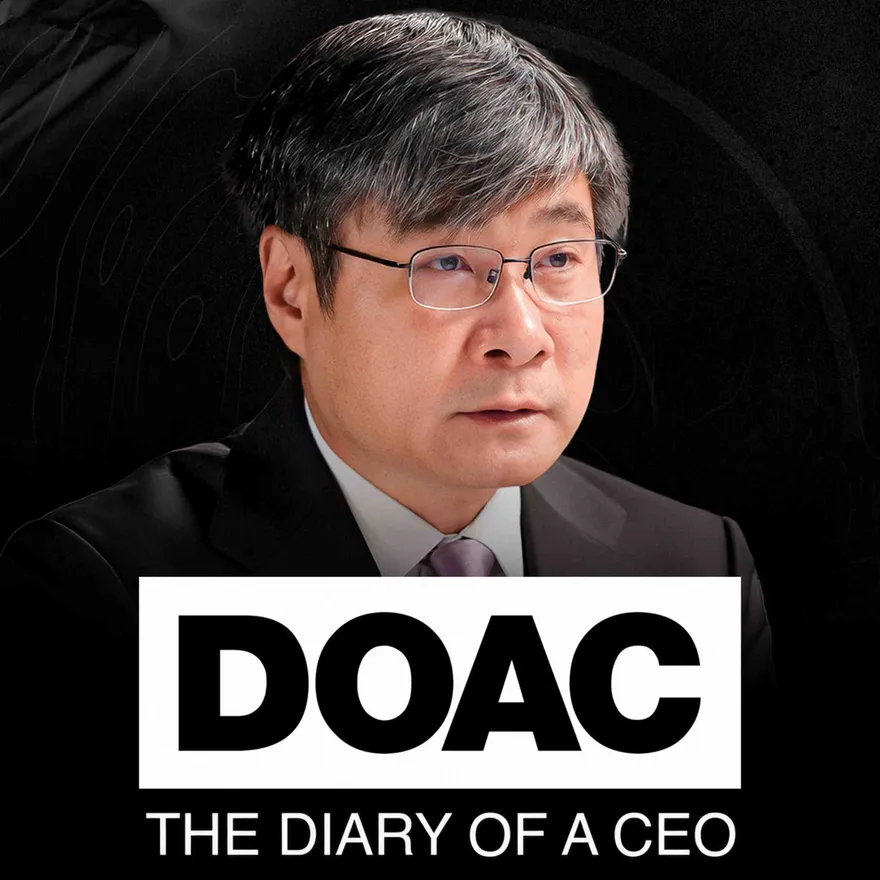

This is a preview of the Shortform summary of the Sep 14, 2026 episode of the The Diary Of A CEO with Steven Bartlett
Sign up for Shortform to access the whole episode summary along with additional materials like counterarguments and context.
1-Page Summary
The Petrodollar System and Global Supply Chain Collapse
Jiang Xueqin argues that technological innovation depends on a simple formula: specialization times globalization. Countries must specialize in specific tasks and trade freely with each other for technology to advance. He uses semiconductors as an example: China produces most of the world's silicon, [restricted term], and germanium; the US designs chips; Taiwan and Malaysia manufacture them using specialized equipment from the Netherlands and Japan; and China often assembles final products. Each stage depends on seamless international trade, making technology impossible without global collaboration.
After World War II, the United States established a global economic order anchored by the petrodollar system—Middle Eastern oil sold exclusively in US dollars—along with China supplying manufactured goods for dollars and Japan investing savings in US treasuries. This system, backed by American military hegemony, created the foundation for globalization and technological progress. When this setup is disrupted, the entire system threatens to collapse.
Jiang warns that with the world entering a period of persistent conflict, global supply chains may break down irreparably. He points to food production as a stark example: the global North produces most fertilizer while the South depends on these imports for food security. If supply chains collapse, the South would face famine. He notes that modern technology amplifies these vulnerabilities—China controls most rare earths, America's Spruce Pine controls 90% of high-quality quartz for chips, and disrupted trade would halt entire industries. The most catastrophic risk comes from loss of shipping insurance and maritime security; without confidence, insurers won't cover shipments, collapsing global trade regardless of surviving infrastructure.
Geopolitical Conflicts and Regional Wars
Iran coordinates with decentralized Shia proxies—the IRGC, Houthis, Hezbollah, and Iraqi militias—that threaten Middle Eastern stability and global trade. These religiously driven groups control critical chokepoints like the Baab el-Mandab Strait and threaten the Suez Canal and Saudi energy infrastructure. Jiang explains that China and Russia directly support Iran through the Belt and Road Initiative and Caspian Sea routes, enabling indefinite conflict and creating persistent uncertainty in global shipping and energy flows.
In East Asia, Jiang identifies a looming conflict between China and Japan over Taiwan and Southeast Asian resources. Japan, wholly dependent on overseas energy and resources, views Chinese control of Taiwan as an existential threat that could enable Beijing to choke off its supply routes. As tensions rise, alliances are solidifying with China and Russia on one side, and Japan, the Philippines, India, Australia, and South Korea on the other.
In Ukraine, Jiang notes that Western-supplied drones are attacking Russian energy infrastructure, forcing Russia into a strategic corner. Realizing that a war of attrition against Europe's protected manufacturing capacity is unwinnable, Russia may escalate by provoking NATO and Europe directly, possibly attacking European infrastructure to force mass mobilization and create internal instability.
Cascading Societal Consequences
Jiang predicts that water scarcity will drive new conflicts in the next 20 years, with hotspots in the Middle East, the India-China border, and Northeast Asia. Even wealthy nations like the US already face water disputes among western states fighting over the Colorado River, foreshadowing future water wars amid climate change.
Africa's high fertility rate, combined with Middle Eastern scarcity and geopolitical tensions, will drive mass migration to Europe, straining infrastructure and social cohesion. Jiang notes that aging European populations need immigrant labor for healthcare and services, but this requirement collides with surging right-wing parties whose main goal is restricting immigration. He observes that "people are much cheaper and much more expendable than robots," making human migration the most immediate solution despite political resistance.
Jiang draws a parallel to the Bronze Age collapse, when cascading disasters—climate-driven famine, migrations, and failed trade routes—destroyed almost every major city in the eastern Mediterranean between 1200 and 1150 BCE. Today's interconnected world faces similar vulnerabilities. As US power declines, the shield that protected Western societies from global chaos is eroding, and cascading crises threaten to converge.
Specific Predictions for Near-Term Crisis
Jiang predicts Donald Trump will still be in the White House on January 21, 2029, effectively serving a third term either by refusing to leave during a declared emergency or by running as vice president with his son. He foresees widespread political violence in Democratic cities like New York, Los Angeles, and San Francisco, with municipalities refusing to pay federal taxes and rejecting federal law enforcement. Jiang envisions New York City as the focal point of resistance, predicting a federal siege cutting off food and water supplies.
Jiang's second prediction involves a catastrophic cyberattack on US financial infrastructure that would instantly wipe out Americans' bank accounts and savings. He argues this would be more psychologically devastating than 9/11, as the loss would touch every household personally and simultaneously, pushing people into panic and potentially provoking mass anger.
His third prediction involves Argentina becoming increasingly close to Israel and the US, positioning itself to accept large-scale Israeli immigration. Jiang predicts Lionel Messi will become Argentina's president and that Argentina will reclaim the Falkland Islands from Britain, using nationalism and Messi's popularity to make the demographic change palatable to Argentine citizens.
Spiritual Awakening as Response
Jiang advises that one must believe in God and focus on family to navigate times of collapse. He shares that despite his elite education at Yale, worldly achievements brought only anger and frustration rooted in secular materialism. Brexit and Trump's election shattered his illusions about meritocracy, prompting a spiritual awakening that moved him from depression to hope through renewed faith. He contends that pursuing material success erodes empathy, imagination, and love, while genuine connection is forged through family. He and Steven Bartlett agree that focusing on politics or systemic solutions is futile—lasting fulfillment comes from embracing faith and nurturing family bonds.
Jiang argues that crises serve as catalysts for collective spiritual awakening. When abundance fades, people are forced to question what gives life meaning, discovering that love for others is the only truly satisfying answer. He describes crisis as a "corrective" that strips away false priorities and reveals that only struggle fosters real spiritual growth. He warns that AI and advanced technology are increasingly used for control rather than liberation, making the search for meaning and spiritual purpose all the more urgent. Jiang concludes that faith, love, and humility in the face of struggle enable true wisdom, and only by accepting and growing through crisis does humanity advance toward its real purpose—a spiritual awakening centered on love and imagination.
1-Page Summary
Additional Materials
Clarifications
- The petrodollar system is a global arrangement where oil-exporting countries price and sell oil exclusively in US dollars. This creates constant demand for the dollar, supporting its value and allowing the US to run trade deficits with less economic risk. Oil revenues in dollars are often recycled into US financial markets, especially government debt, reinforcing US economic influence. The system links global energy trade to US monetary policy and geopolitical power.
- Rare earth elements are a group of 17 chemically similar metals essential for manufacturing high-tech devices like smartphones, electric vehicles, and military equipment. They have unique magnetic, luminescent, and electrochemical properties that enable advanced functionality in electronics and renewable energy technologies. Despite their name, rare earths are relatively abundant but difficult to mine and refine economically. Control over rare earth supply chains is strategically important because shortages can disrupt global technology production.
- Spruce Pine, North Carolina, is the primary source of high-purity quartz essential for semiconductor manufacturing. This quartz is used to produce silicon metal, the base material for computer chips. Its unique purity and quality make it irreplaceable in advanced chip fabrication. Disruptions in Spruce Pine quartz supply could halt semiconductor production globally.
- The IRGC (Islamic Revolutionary Guard Corps) is an elite branch of Iran's military focused on protecting the Islamic regime and projecting influence abroad. The Houthis are a Shia rebel group from Yemen engaged in a civil war against the Yemeni government and its allies. Hezbollah is a Lebanese Shia militant and political organization backed by Iran, involved in regional conflicts and opposing Israel. Iraqi militias are various armed groups in Iraq, often Shia and supported by Iran, that influence Iraqi politics and security.
- The Baab el-Mandab Strait connects the Red Sea to the Gulf of Aden and the Arabian Sea, serving as a critical chokepoint for oil and goods traveling between Europe, Asia, and Africa. The Suez Canal links the Mediterranean Sea to the Red Sea, drastically shortening shipping routes between Europe and Asia by avoiding the longer trip around Africa. Disruption at either location can severely delay global trade and increase shipping costs. Both are vital for energy exports and international commerce, making their security a strategic priority.
- The Belt and Road Initiative (BRI) is a global infrastructure and economic development project launched by China in 2013 to enhance trade routes connecting Asia, Africa, and Europe. It involves building ports, railways, highways, and energy projects to increase China's influence and secure supply chains. Geopolitically, the BRI extends China's strategic reach, often challenging US and Western dominance in global trade and regional security. It also creates dependencies for participating countries, giving China leverage in political and economic matters.
- Taiwan is strategically located near vital shipping lanes and rich natural resources in Southeast Asia, making it crucial for regional power control. China views Taiwan as a breakaway province and aims to assert sovereignty, which threatens Japan's access to energy and trade routes passing through nearby waters. Japan depends heavily on these routes for importing resources and energy, so Chinese control could disrupt its economy and security. This rivalry intensifies regional tensions and drives alliance formations on both sides.
- The alliances mentioned reflect current geopolitical tensions in the Indo-Pacific region. China and Russia often coordinate strategically to counterbalance US influence and its allies. Japan, the Philippines, India, Australia, and South Korea are part of or aligned with the "Quad" and other partnerships aimed at containing China's regional ambitions. These alliances focus on security cooperation, intelligence sharing, and joint military exercises to maintain a balance of power.
- Western countries have supplied Ukraine with drones to conduct precise strikes on Russian military and energy infrastructure. These drones increase Ukraine's ability to disrupt Russian supply lines and weaken its war effort without large-scale ground operations. The attacks strain Russia's resources and force it to divert defenses, creating strategic pressure. This escalation risks provoking broader conflict by challenging Russia's control and prompting retaliatory actions.
- The Bronze Age collapse was a widespread societal breakdown around 1200 BCE affecting civilizations in the eastern Mediterranean. It involved the destruction of cities, loss of writing systems, and decline in trade networks. Causes likely included natural disasters, invasions by the Sea Peoples, and internal rebellions. This event marked the transition from the Bronze Age to the less advanced Iron Age.
- The prediction of Donald Trump’s extended presidency is based on political polarization and potential constitutional crises in the U.S. Some supporters believe Trump could declare a national emergency to delay or refuse leaving office. Another scenario involves Trump running as vice president to bypass term limits, exploiting legal ambiguities. These ideas reflect deep divisions and challenges to democratic norms in recent U.S. politics.
- Municipalities refusing to pay federal taxes means local governments withhold tax revenues collected from residents instead of sending them to the national government. Rejecting federal law enforcement involves local authorities denying cooperation or barring federal agents from operating within their jurisdiction. These actions represent extreme forms of political defiance, challenging federal authority and legal norms. Such conflicts can lead to legal battles and potential federal intervention.
- A catastrophic cyberattack on US financial infrastructure would target critical systems like banks, payment networks, and stock exchanges, disrupting transactions and data integrity. It could erase or freeze account balances, preventing access to funds and halting economic activity. Such an attack would cause widespread panic, undermine trust in financial institutions, and potentially trigger a severe economic crisis. Recovery would require extensive technical repairs, legal responses, and government intervention to restore stability.
- Lionel Messi is a globally beloved sports figure whose popularity could unite diverse political factions in Argentina. His presidency would symbolize a shift from traditional politicians to a charismatic, non-political leader. This could boost national pride and support for policies like reclaiming the Falkland Islands. Demographically, his appeal might help integrate different social groups and ease acceptance of large-scale immigration.
- Secular materialism is the belief that material success and worldly achievements are the primary goals in life, often excluding spiritual or religious values. Political events like Brexit and Trump’s election exposed deep societal frustrations and disillusionment with established systems, challenging the idea that meritocracy and progress through material means are guaranteed. These events prompted some, like Jiang, to question the sufficiency of materialism and seek deeper meaning through spiritual awakening. This awakening involves turning away from purely material pursuits toward faith, family, and inner growth as sources of fulfillment.
- AI and advanced technology can be used to monitor and influence people's behavior through data collection and surveillance. Governments and corporations may deploy these tools to enforce conformity and suppress dissent. Algorithms can manipulate information flow, shaping public opinion and limiting access to alternative views. This control limits individual freedom and undermines the liberating potential of technology.
Counterarguments
- While technological innovation often benefits from specialization and globalization, there are examples of significant technological advances achieved within more closed or autarkic systems, such as the Soviet Union's space program or China's recent semiconductor progress under sanctions.
- The global semiconductor supply chain is highly interdependent, but there are ongoing efforts in multiple countries (e.g., the US, EU, Japan, China) to localize or diversify supply chains, which may reduce vulnerability over time.
- The petrodollar system has been evolving, with some countries conducting energy trade in other currencies (e.g., China-Russia oil trade in yuan/rubles), suggesting the global economic order is more flexible than described.
- Globalization has shown resilience to shocks, such as the COVID-19 pandemic, with supply chains adapting and recovering rather than collapsing entirely.
- Fertilizer production is increasingly diversified, with some developing countries investing in domestic production or alternative sources, potentially reducing dependency on the global North.
- While concentrated control of certain materials poses risks, ongoing research into alternative materials and recycling technologies may mitigate these vulnerabilities.
- Maritime security is provided by multiple nations and international cooperation, not solely by the US, and regional powers have increased their roles in protecting shipping lanes.
- The influence of Iranian proxies is significant but has not resulted in a complete breakdown of Middle Eastern trade or energy flows; international diplomacy and regional actors continue to manage tensions.
- The likelihood of a direct large-scale conflict between China and Japan remains uncertain, as both countries have strong economic incentives to avoid war and maintain stability.
- Russia's escalation against European infrastructure would carry significant risks and is not a foregone conclusion; diplomatic and economic pressures may deter such actions.
- Water scarcity is a serious issue, but technological advances in desalination, water management, and international agreements have helped mitigate some conflicts.
- Migration to Europe is influenced by multiple factors, and European countries have varying policies and capacities for integration; not all migration leads to social strain or instability.
- The comparison to the Bronze Age collapse is debated among historians, as modern societies have more robust institutions, technologies, and global cooperation mechanisms.
- US global influence remains substantial in military, economic, and cultural terms, and predictions of imminent decline are contested by many analysts.
- There is no credible evidence or legal pathway for a US president to serve a third term or for a vice president to serve as a proxy in the manner described.
- Widespread political violence and federal sieges in US cities are speculative and not supported by current trends or historical precedent.
- While cyberattacks are a real threat, the US financial system has extensive cybersecurity measures and redundancies to prevent total loss of all bank accounts and savings.
- There is no indication that Lionel Messi intends to enter politics or that Argentina is preparing to reclaim the Falkland Islands; such scenarios are highly speculative.
- Many people find meaning and fulfillment through secular achievements, community involvement, or personal pursuits, not solely through faith or family.
- Political and systemic solutions have historically addressed major societal challenges, such as public health, civil rights, and economic development, suggesting they are not futile.
- AI and advanced technology have been used for both control and liberation, enabling new forms of creativity, communication, and problem-solving.

Get access to the context and additional materials
The Petrodollar System and Global Supply Chain Collapse
Effective Tech Needs Specialization & Globalization
Jiang Xueqin presents a formula for technological progress: technological innovation equals specialization times globalization. This means that more countries must specialize in specific tasks or products and must be able to trade freely with each other. All technological progress—particularly in advanced industries—is premised on this collaboration and global trade. Without robust supply chains connecting multiple countries, innovation withers.
The example of semiconductors illustrates this interdependence. The manufacturing of computer chips depends on three critical elements: silicon, [restricted term], and germanium. China produces about 60-70% of the world’s silicon, 70% of the [restricted term], and 90% of the germanium. The United States, primarily in California, is responsible for chip design—companies like Nvidia and Apple lead the industry. These designs are sent to Taiwan and Malaysia for production. For actual chip printing, highly specialized lithography machines from the Netherlands (notably ASML) and Japan are required. Assemblers in Taiwan and Malaysia use these machines, while finalized chips are often sent to China to be integrated into various appliances before global distribution. Each stage—material extraction, design, equipment, assembly, and device manufacturing—depends on seamless international trade. Technology, in effect, is impossible without globalized collaboration.
However, the drive toward national self-sufficiency, typically in response to conflict or political division, undermines both specialization and globalization. During wartime or periods of heightened nationalism, countries attempt to build closed, generalist supply chains within their own borders. This leads to decreased innovation and stunted technological progress.
Petrodollar System Since 1971 Globalized Trade via US Dollar
After World War II, the United States created a global economic order where it loaned dollars to Europe and Japan to purchase exports, with repayment in gold. In 1971, President Nixon took the US dollar off the gold standard. To maintain global demand for the dollar, three pillars were established: the petrodollar system (Middle Eastern oil sold only in US dollars), China demanding dollars for its manufactured goods, and Japan sending its savings into US treasuries, especially after the "plastic cord" era of the mid-1980s.
Japan, for example, would import Middle Eastern energy, use it to manufacture consumer electronics, and export those products globally in exchange for dollars. China, Japan, and the Gulf Cooperation Council (GCC) would invest their excess savings in US assets, especially treasury bonds. This system is premised on global trust—China supplies manufactured goods, Saudi Arabia supplies oil, and all parties support the dollar as a global reserve currency.
The backbone of globalization, and thus of technological advancement, is the petrodollar system—anchored by the US dollar and enforced by America's unrivaled military hegemony. After World War II, US military and economic supremacy created the Pax Americana, a period of relative global stability and open trade routes. The US dollar became a global contract and a symbol of credibility, with China, Japan, and Saudi Arabia recycling their earnings through the American financial system.
Disruption of this setup—either when oil stops flowing in dollars, manufactured goods can’t be exported, or parties lose faith in the dollar—threatens the entire system. Such a disruption would rapidly undermine globalization, halting the flow of capital and goods, and shaking the very foundation upon which technological innovation depends.
Wartime Supply Chain Collapse Threatens Technological Progress and Civilization
With the world entering a period of persistent conflict, Jiang warns that the mechanisms of globalization may break down beyond repair. The collapse of global supply chains threatens not only industry, but civilization itself. He argues that the Clean Break strategy and continuous regional wars have set in motion structural forces that will destroy the global trade system. It is bec ...
Here’s what you’ll find in our full summary
The Petrodollar System and Global Supply Chain Collapse
Additional Materials
Clarifications
- The formula "technological innovation equals specialization times globalization" means innovation grows when countries focus on specific tasks (specialization) and trade freely (globalization). Specialization allows efficiency and expertise in narrow fields, boosting quality and speed of innovation. Globalization connects these specialized producers, enabling exchange of ideas, materials, and products. Without both, innovation slows because isolated or generalist economies lack the depth and cooperation needed for advanced technology.
- Silicon is the primary semiconductor material used to create the integrated circuits in chips due to its excellent electrical properties and abundance. [restricted term] is used mainly in compound semiconductors like [restricted term] arsenide, which are essential for high-speed and optoelectronic devices such as LEDs and laser diodes. Germanium enhances silicon-based semiconductors by improving electron mobility, enabling faster and more efficient transistors. Together, these elements enable the diverse functions and performance levels required in modern semiconductor devices.
- Nvidia and Apple are leaders in creating the blueprints for computer chips, which determine how chips perform tasks. Their designs enable devices to run software efficiently and support advanced functions like graphics processing and artificial intelligence. These companies invest heavily in research to push chip capabilities beyond basic computing. Without their innovative designs, hardware manufacturers would lack the instructions needed to produce cutting-edge chips.
- Lithography machines are essential for printing intricate circuit patterns onto silicon wafers, enabling the creation of microchips. ASML's machines use extreme ultraviolet (EUV) light, allowing for smaller, more powerful chip designs. Japan produces advanced components and materials critical for these machines' operation. Without these machines, modern high-performance semiconductor manufacturing is impossible.
- In 1971, President Nixon ended the US dollar's convertibility into gold to stop gold reserves from depleting amid rising inflation and trade deficits. This move ended the Bretton Woods system, which had fixed currencies to the dollar and the dollar to gold. The dollar became a fiat currency, meaning its value is not backed by a physical commodity but by government decree. This shift allowed more flexible monetary policy but required new mechanisms, like the petrodollar system, to maintain global confidence in the dollar.
- The petrodollar system means oil-exporting countries sell oil exclusively in US dollars, creating constant global demand for the currency. This demand encourages those countries to invest their dollar earnings back into US financial assets, supporting the US economy. It also reinforces the US dollar's role as the dominant global reserve currency, facilitating international trade and finance. The system relies on US military power to maintain stability and enforce dollar-based transactions worldwide.
- The "plastic cord" era refers to the rapid growth of consumer credit and credit card use in the 1980s, which fueled Japan's export-driven economy. This consumer boom increased Japan's trade surpluses, generating large amounts of US dollars. Japan then invested these dollars in US Treasury bonds to recycle its earnings and maintain the dollar's strength. This cycle reinforced the petrodollar system and global economic interdependence.
- Pax Americana refers to the period of relative peace and stability maintained by the United States' dominant military and economic power after World War II. This dominance allowed the US to secure open sea lanes and trade routes, ensuring global commerce could flow freely. It also enabled the US dollar to become the primary global reserve currency, facilitating international trade and investment. The US military presence deterred large-scale conflicts, supporting a stable environment for globalization and technological progress.
- The "Clean Break" strategy refers to a 1996 policy paper advising Israel to shift from territorial compromise to a more aggressive stance against regional adversaries. It advocates weakening neighboring states to ensure Israel's security through proactive military and political measures. This approach has influenced ongoing regional conflicts, increasing instability and disrupting global trade networks. The resulting persistent conflicts undermine international cooperation and global supply chains.
- Fertilizers are essential for modern agriculture to increase crop yields and ensure food security. Ammonia is a key ingredient in nitrogen-based fertilizers, which provide plants with vital nutrients for growth. The global South relies on imports because it lacks the industrial capacity to produce sufficient ammonia and other fertilizers domestically. Disruptions in supply can lead to reduced agricultural productivity and increased risk of famine in these regions.
- Helium is used in semiconductor manufacturing primarily for cooling and creating controlled environments during chip product ...
Counterarguments
- While globalization and specialization have historically driven technological innovation, some countries (e.g., South Korea, Israel, Switzerland) have demonstrated significant technological progress through focused national strategies and partial self-sufficiency.
- The assertion that technological development is "impossible" without seamless global collaboration overlooks periods of significant innovation during times of limited trade, such as wartime advances in the US and Soviet Union.
- National self-sufficiency can sometimes foster innovation by encouraging domestic industries to develop alternatives and reduce dependency on foreign suppliers, as seen in Japan’s post-war industrial policy and recent efforts in renewable energy.
- The petrodollar system is not the sole underpinning of globalization; other factors such as technological advancements in transportation, communication, and international legal frameworks have also played crucial roles.
- The US dollar’s role as a global reserve currency has been challenged by the rise of the euro, Chinese yuan, and other regional currencies, indicating that global trade can adapt to shifts in reserve currency status.
- Some supply chains have proven resilient to shocks, as seen during the COVID-19 pandemic, where many industries adapted through diversification, reshoring, or nearshoring of production.
- The claim that the collapse of global supply chains would "threaten civilization itself" may be overstated, as societies have histor ...
Get access to the context and additional materials
Geopolitical Conflicts and Regional Wars
The world faces a convergence of regional conflicts and global power struggles, each driven by deep strategic imperatives, religious fervor, and new patterns of international support. Together, these pressures threaten global trade, stability, and alliances.
Iran-Centric Middle East Conflict and Proxies Pose Unprecedented Global Trade Threat Due to Coordinated Decentralization and International Support
Iran sits at the center of an expanding web of conflict, coordinating with decentralized Shia proxies—the IRGC in Iran, the Houthis in Yemen, Hezbollah in Lebanon, and various Iraqi Shia militias—that pose a persistent threat across the Middle East. These groups, religiously driven and fanatical, are geographically dispersed and difficult to eliminate by conventional military means. Their tactics echo the "forever wars" in Afghanistan and Iraq, where the United States expended vast resources but failed to neutralize decentralized insurgencies.
The Houthis exemplify this challenge: they are virtually invincible in their mountainous Yemeni strongholds and display a religious commitment to martyrdom, fighting to the death. Their control over the Baab el-Mandab Strait, a chokepoint at the entrance to the Red Sea, enables them to threaten global maritime trade. Likewise, Hezbollah threatens the Suez Canal, and Iraqi Shia militias can impact Mediterranean routes. These groups coordinate loosely but report back to the IRGC, expanding the conflict’s reach and intensifying uncertainty in global trade.
Saudi Arabia is acutely vulnerable, as the Houthis possess ballistic missiles and drones capable of attacking vital energy infrastructure, endangering the region's "lake of gasoline." The strategic focus of Iran and its proxies lies in their ability to create chaos by attacking at unpredictable points—Saudi Arabia, Israel, choke points along global shipping lanes—thereby undermining the global trading system.
China and Russia directly support Iran, prolonging these conflicts. China uses the Belt and Road Initiative to strengthen supply corridors to Iran, while Russia leverages the Caspian Sea, ensuring Iran and its proxies are resourced for indefinite conflict. This concerted support enables Iran’s coalition to sustain military operations without exhaustion, ensuring lasting disruption to critical maritime passages like the Straits of Hormuz and Baab el-Mandab. The result is persistent uncertainty and risk to global trade, including energy flows and shipping through the Red Sea and Suez Canal.
China and Japan Will Conflict Over Taiwan and Southeast Asian Resources Due to Geographic and Strategic Imperatives
A separate, looming conflict centers on East Asia, driven by longstanding and intensifying imperatives between China and Japan. China, historically an agriculturally based, self-sufficient land power, sees Japanese and allied encroachment—especially regarding Taiwan and the South China Sea—as existential. Japan, conversely, is a sea power wholly dependent on overseas resources and energy.
This dependence leaves Japan vulnerable to embargo if China were to control Taiwan and the South China Sea. Taiwanese reunification with China could grant Beijing the power to choke off Japan’s supply routes, an outcome Japanese leaders regard as intolerable. Japan’s need for secure access to Southeast Asia’s resources drives alliances with India, the Philippines, Australia, South Korea, and possibly Taiwan and North Korea, all counterbalancing China’s growing dominance.
To exert pressure, China is likely to wield North Korea as a proxy, threatening both South Korea, whose population largely resides within striking distance of the North, and Japan directly, either through missile launches or instability in the region. The Philippines, as Japan’s primary proxy, also challenges Chinese naval control in the South China Sea.
Alliances are solidifying: China and Russia on one side; Japan, the Philippines, India, Australia, and South Korea on the other. As the United States retreats from the Asia-Pacific, it becomes strategically desirable for the US to foster tension between China and Japan, which weakens Chinese hegemony and redirects energy and semiconductor supply chains. For example, a worsening of China-Japan tension encourages the relocation of the Taiwanese semiconductor industry to the US, illustrated by major investments such as TSMC’s new Arizona facility.
Russia May Provoke Nato and Europe as Ukraine Attrition Strategy Fails Against European Capacity
In Ukraine, entrenched conflict and Western support are forcing Russia into a strategic corner. Ukraine is attacking Russian energy infrastructure with Wester ...
Here’s what you’ll find in our full summary
Geopolitical Conflicts and Regional Wars
Additional Materials
Clarifications
- The Islamic Revolutionary Guard Corps (IRGC) is a branch of Iran's military founded after the 1979 revolution to protect the Islamic regime. It operates independently from Iran’s regular army and has significant political and economic influence within the country. The IRGC oversees Iran’s proxy militias and supports regional allies to extend Iran’s strategic reach. It is designated as a terrorist organization by some countries due to its involvement in regional conflicts and militant activities.
- The Houthis are a Zaidi Shia Muslim rebel group from northern Yemen. They emerged in the 1990s, initially opposing government corruption and marginalization. Since 2014, they have controlled large parts of Yemen, including the capital, Sanaa. Their conflict with the Yemeni government and Saudi-led coalition has caused a severe humanitarian crisis.
- The Baab el-Mandab Strait connects the Red Sea to the Gulf of Aden and the Arabian Sea, serving as a critical maritime chokepoint. It is a key route for oil and goods traveling between Europe, the Middle East, and Asia, making it vital for global trade. Disruption here can significantly increase shipping times and costs by forcing vessels to take longer routes around Africa. Control or threat to this strait can thus impact energy supplies and international commerce worldwide.
- Hezbollah is a powerful political and militant group in Lebanon, founded in the 1980s with support from Iran. It holds significant influence in Lebanese politics and maintains a well-armed militia independent of the Lebanese army. Hezbollah's military capabilities and alliances allow it to project power regionally, especially against Israel. Its presence complicates Lebanon’s internal stability and regional security dynamics.
- Decentralized Shia proxies are armed groups with ideological and financial ties to Iran but operate independently across different countries. They use guerrilla tactics, blending into local populations and terrain, making them hard to target with conventional military force. These groups receive training, weapons, and strategic guidance from Iran’s IRGC but maintain local leadership and autonomy. Their decentralized nature allows flexible, widespread influence without direct Iranian military presence.
- "Forever wars" refer to prolonged military conflicts without clear end goals or timelines, leading to extended troop deployments and ongoing violence. In Afghanistan and Iraq, these wars involved complex insurgencies, shifting alliances, and difficulties in establishing stable governance. The term highlights the challenges of defeating decentralized, ideologically motivated groups using conventional military tactics. These conflicts drained resources and morale, with no decisive victory achieved.
- The Suez Canal is a critical maritime shortcut connecting the Mediterranean Sea to the Red Sea, drastically reducing travel time between Europe and Asia. It handles about 12% of global trade, including a significant portion of oil and gas shipments. Disruptions here can cause major delays and increase shipping costs worldwide. Mediterranean shipping routes link Europe, North Africa, and the Middle East, serving as vital corridors for energy supplies and goods.
- The term "lake of gasoline" metaphorically describes the vast and concentrated energy resources in the Middle East, especially oil and gas reserves. It highlights the region's critical role as a global energy supplier. Disruptions there can severely impact global fuel availability and prices. The phrase emphasizes the area's strategic importance and vulnerability.
- The Belt and Road Initiative (BRI) is China’s global infrastructure and economic development project aimed at enhancing trade routes across Asia, Africa, and Europe. It includes building ports, railways, and highways to connect participating countries more closely with China’s economy. Iran is a key partner in the BRI due to its strategic location linking Asia and Europe, making it a vital corridor for trade and energy supplies. This partnership strengthens China-Iran ties by facilitating economic cooperation and ensuring supply chain resilience amid geopolitical tensions.
- The Caspian Sea is a critical energy and transport hub linking Russia and Iran. It allows Russia to supply Iran with military and economic resources despite international sanctions. Control over the Caspian Sea facilitates secure, covert logistics and trade routes. This support strengthens Iran’s regional proxy networks and sustains prolonged conflict.
- Historically, China developed as a vast agrarian empire with abundant natural resources, enabling it to sustain large populations internally without heavy reliance on overseas trade. Its geography, dominated by extensive landmass and natural barriers, fostered a focus on land-based power and self-sufficiency. Japan, an island nation with limited natural resources, depended heavily on maritime trade to import essential materials like food, fuel, and raw goods. This maritime reliance shaped Japan into a naval power focused on securing sea lanes and overseas resources.
- Taiwan is a major global hub for semiconductor manufacturing, critical for electronics worldwide. The South China Sea is a vital maritime route, carrying about one-third of global shipping traffic and vast energy supplies. Control over these areas grants significant economic and military leverage in East Asia. Their strategic location also enables power projection and influence over regional trade and security.
- Japan’s alliances with India, the Philippines, Australia, and South Korea are formal or strategic partnerships focused on security, economic cooperation, and balancing China’s influence in the region. Taiwan is an informal partner with shared interests in resisting Chinese control, though Japan does not have official diplomatic ties due to China’s pressure. North Korea is not an ally but is mentioned as a potential proxy used by China to exert pressure on Japan and its allies. These relationships form part of a broader regional coalition to maintain stability and secure supply routes.
- North Korea acts as a strategic tool for China to exert pressure on South Korea and Japan without direct Chinese involvement. By threatening or destabilizing the Korean Peninsula, North Korea diverts attention and resources from China’s other regional ambitions. This proxy role allows China to influence regional security dynamics while maintaining plausible deniability. It also complicates alliances opposing China by creating uncertainty and tension in East Asia.
- Semiconductors are essential components in electronics, powering everything from smartphones to military systems. Taiwan Semiconductor Manufacturing Company (TSMC) is the world’s largest and most advanced chip maker, dominating global supply. TSMC’s Arizona facility represents a strategic move to diversify production outside Asia, reducing risks from regional conflicts. This shift strengthens U.S. technological security and lessens dependence on potentially unstable supply routes.
- The Ukraine conflict began in 2014 when Russia annexed Crimea and supported separatists in Eastern Ukraine, escalating into ...
Counterarguments
- The effectiveness of Iran’s proxies in threatening global trade routes is sometimes overstated; international naval coalitions have successfully reduced the impact of Houthi attacks on shipping in the Red Sea.
- The Houthis’ control over the Baab el-Mandab Strait is contested and subject to ongoing military pressure from regional and international actors, limiting their ability to consistently disrupt maritime trade.
- While Iran’s proxies are difficult to eliminate, they have suffered significant losses and setbacks from targeted military operations, demonstrating that conventional means can have an impact.
- The degree of coordination between Iran and its proxies is debated; some analysts argue that these groups often act with significant autonomy and pursue local agendas.
- China’s support for Iran, while significant, is constrained by its broader economic interests and desire to maintain stable relations with Western trading partners.
- The likelihood of a direct China-Japan military conflict remains low, as both countries have strong economic interdependence and diplomatic channels that act as deterrents to open warfare.
- Japan’s alliances in the region, while strengthening, are not formal military pacts and may not guarantee unified action in the event of a crisis.
- The scenario of Taiwanese reunification with China leading to a total embargo of Japan’s supply routes is speculative; alternative routes and international responses could mitigate such risks.
- North Korea’s willingness to act as a Chinese proxy is not guaranteed, as Pyongyang often pursues its own interests independent of Beijing’s strategic goals.
- The assertion that the US is re ...
Get access to the context and additional materials
Cascading Societal Consequences
Water Scarcity to Create Geopolitical Flashpoints Globally
Maps that highlight regions of severe water stress align closely with existing and potential geopolitical tensions, signaling that in the next 20 years, water scarcity will likely drive new conflicts. Key global hotspots include the Middle East, the India-China border, and Northeast Asia around Japan and North Korea, all of which face mounting water shortages. In the Middle East, the threat resembles a powder keg, with water scarcity set to exacerbate regional strife and existing hostilities.
In the United States, water issues are already sparking conflict among western states such as Colorado, California, and Arizona, all fighting over dwindling supplies from the Colorado River. The fact that even wealthy nations like the U.S. are embroiled in water disputes foreshadows future water wars amid accelerating climate change.
High Fertility in Africa, Middle East Scarcity May Overwhelm European Infrastructure
Africa currently has the world’s highest fertility rate, closely followed by the Middle East. These regions are not only highly fertile but also face acute geopolitical tensions and resource scarcity, making mass migration inevitable. As populations swell and young people encounter few economic opportunities, increasing numbers seek to migrate to Europe—a trend intensified when famine or deprivation strikes, as described in possible scenarios where populations from Iran or Africa may flee toward Europe in search of survival.
This influx would strain European infrastructure and the social fabric, as seen in previous crises following conflicts in Libya and Syria, which resulted in mass migration to Europe, significant social friction, and political polarization. European countries, already facing demographic decline and a rapidly aging population, especially in Japan, Europe, and North America, find themselves in urgent need of immigrant labor to provide affordable healthcare and services for the elderly.
However, this requirement collides head-on with the surge of right-wing political parties—such as Reform in the UK, AFD in Germany, MAGA in the United States, and Vox in Spain—whose main policy goal is to restrict immigration. The theoretical alternative of replacing immigrant labor with robots remains challenging as robotics production is critically dependent on elements like copper, lithium, silicon, and rare earths, largely sourced from or manufactured in a handful of countries with fragile supply chains. When trade networks falter, the most immediate, cost-effective solution is still human migration, as “people are much cheaper and much more expendable than robots.” Ultimately, Western nations are forced to choose between accepting large numbers of immigrants or facing economic stagnation and possible collapse of social services.
Bronze Age Collapse: How Cascading Crises Trigger Civilizational Breakdown Across an Interconnected World
The Bronze Age collapse serves as a powerful historical analogy for today’s vulnerabilities in an interconnected world. During that period, globalized trade united regions that required copper and tin from separate locations for bronze production, establishing a deeply integrated network of economic reliance. This interconnectedness bred inequality, debt, and polarization—issues that set the stage for widespread collapse when c ...
Here’s what you’ll find in our full summary
Cascading Societal Consequences
Additional Materials
Clarifications
- The India-China border dispute centers on contested areas like Aksai Chin and Arunachal Pradesh, leading to military standoffs and occasional clashes. Northeast Asia tensions involve North Korea's nuclear weapons program threatening regional security, prompting concerns from Japan and neighboring countries. Japan also faces territorial disputes with China over the Senkaku/Diaoyu Islands in the East China Sea. These conflicts are exacerbated by competition for scarce water resources and strategic control.
- The Colorado River supplies water to nearly 40 million people across seven U.S. states and Mexico. Prolonged drought and overuse have drastically reduced its flow, leading to severe shortages. States like California, Arizona, and Colorado compete for limited water under complex legal agreements called the "Law of the River." These disputes affect agriculture, urban water supply, and ecosystem health, intensifying tensions amid climate change.
- High fertility rates in Africa and the Middle East stem from factors like limited access to education and contraception, cultural norms favoring large families, and economic reliance on children for labor and support. These high birth rates lead to rapid population growth, increasing pressure on limited resources and job markets. As economic opportunities remain scarce, especially for young people, many seek better living conditions abroad. This drives migration toward regions like Europe, intensifying social and infrastructural challenges there.
- The migration crises from Libya and Syria to Europe began around 2011 due to civil wars and political instability in both countries. Millions fled violence, seeking safety and better opportunities, often undertaking dangerous sea crossings to reach Europe. This sudden influx strained European border controls, social services, and sparked political debates over immigration policies. The crises also fueled the rise of nationalist and anti-immigration movements across Europe.
- Europe, Japan, and North America have low birth rates, often below the replacement level of 2.1 children per woman, leading to fewer young people over time. Advances in healthcare have increased life expectancy, resulting in a larger proportion of elderly individuals. This shift creates economic challenges, such as a shrinking workforce and higher costs for pensions and healthcare. Governments face pressure to adapt social services and labor markets to support aging populations.
- Reform UK is a right-wing party advocating for Brexit, immigration control, and economic liberalism. AfD (Alternative for Germany) opposes immigration, the EU, and promotes nationalist policies. MAGA (Make America Great Again) is associated with former U.S. President Trump, emphasizing nationalism, immigration restrictions, and conservative values. Vox in Spain is a nationalist, anti-immigration party opposing regional independence movements and promoting traditional social policies.
- Robotics production relies heavily on specific raw materials for manufacturing components like batteries, semiconductors, and motors. Copper is essential for electrical wiring due to its high conductivity. Lithium is critical for rechargeable batteries that power robots. Silicon is used in microchips, while rare earth elements enable strong magnets and advanced electronics, making supply chain stability vital.
- The Bronze Age collapse occurred around 1200 BCE, marking the sudden decline of several advanced civilizations in the eastern Mediterranean. The Sea Peoples were mysterious maritime raiders believed to have contributed to this collapse by attacking and destabilizing these societies. This period saw the breakdown of trade networks, loss of writing systems, and widespread societal disruption. The collapse illustrates how interconnected economies and societies can fail rapidly when multiple crises coincide.
- During the Bronze Age, trade networks connected distant regions that specialized in producing different raw materials, such as copper from Cyprus and tin from Central Asia, both essential for making bronze. This interdependence ...
Counterarguments
- While water scarcity is a significant concern, historical evidence suggests that countries often cooperate over shared water resources through treaties and joint management, reducing the likelihood of outright conflict.
- The inevitability of mass migration from Africa and the Middle East to Europe is debated; migration flows are influenced by a complex mix of factors, including economic development, border controls, and changing aspirations within origin countries.
- The assertion that people are "cheaper and more expendable than robots" overlooks ongoing advancements in automation and AI, which are increasingly being adopted even in resource-constrained environments.
- Some European countries have successfully integrated large numbers of immigrants in the past, demonstrating that social cohesion can be maintained or even strengthened with effective policies and community engagement.
- The analogy to the Bronze Age collapse may be overstated, as modern societies possess far more advanced technology, communication, and crisis management capabilities, which can mitigate cascading failures.
- The decline of U.S. global power is not universally accepted as inevitable or linear; the U.S. continues to maintain significant military, econo ...
Get access to the context and additional materials
Specific Predictions for Near-Term Crisis
Jiang Xueqin presents a series of bold predictions for geopolitical crises potentially unfolding in the near future, ranging from domestic American turmoil to disruptive attacks on financial infrastructure and dramatic political change in Argentina.
Trump Third Term Could Spark Conflict, Federal Siege on NYC
Jiang Xueqin predicts Donald Trump will be in power after the 2028 US presidential election, speculating that on January 21, 2029, Trump will still be in the White House, effectively serving a third term. Despite the constitutional barrier—specifically the 22nd Amendment, which prohibits serving more than two terms—Jiang outlines possible ways this could be bypassed: either by Trump refusing to leave office during a declared national emergency and suspending the Constitution, similar to Lincoln’s suspension of habeas corpus and Roosevelt’s internment of Japanese Americans, or by running as vice president on a ticket with his son Don Jr., who could then resign after the election to allow Trump to resume the presidency.
Jiang stresses that many of the safeguards in US politics are based on convention and agreed-upon norms rather than hard enforcement, leaving room for dramatic departures under extreme circumstances. He suggests that Trump, if intent on maintaining power, could simply ignore these conventions, and there would be little recourse.
If this scenario occurs, Jiang foresees widespread political violence in the United States, especially in strongly Democratic cities like New York City, Los Angeles, San Francisco, Boston, and Chicago. He predicts these cities would openly revolt by refusing to pay federal taxes and rejecting federal law enforcement actions, particularly attempts to enforce immigration policy through agencies like ICE. This would set up direct conflicts between local and federal authorities.
Within this turmoil, Jiang envisions New York City as the focal point of resistance due to its strong government, charismatic mayor Zohar Madani, and the fierce temperament of its residents. He predicts a siege, with federal forces—possibly backed by supportive state militias—cutting off food and water supplies to New York, creating a scenario akin to historical urban warfare. He believes this conflict could persist for years.
An Attack on US Financial Infrastructure Could Be More Psychologically Devastating Than 9/11 By Instantly Destroying Americans' Savings and Retirement Accounts
Jiang Xueqin’s second major prediction involves a catastrophic attack on the US financial infrastructure. He argues that, while the physical destruction of symbols like the World Trade Center and Pentagon traumatized Americans after 9/11, a direct cyberattack wiping out financial records and erasing bank account balances would be even more psychologically devastating.
He describes a scenario where, seemingly overnight, Americans trying to make simple purchases would discover their bank accounts empty, with no immediate hope of recovery. This, he asserts, would push people into panic and outrage, as decades of savings and retirement funds disappeared in an instant. Jiang contends that the trauma of such an event could provoke mass anger and potentially even greater self-destructive responses than those that followed 9/11, as the loss would touch every American household personally and simultaneously.
Jiang notes that foreign or hostile actors, seeking to maximize American trauma and destabilize the countr ...
Here’s what you’ll find in our full summary
Specific Predictions for Near-Term Crisis
Additional Materials
Clarifications
- The 22nd Amendment to the U.S. Constitution limits a person to being elected president no more than twice. It was ratified in 1951 after Franklin D. Roosevelt served four terms. The amendment also states that if someone serves more than two years of a term to which another was elected, they can only be elected once more. This rule was created to prevent any president from holding power for an extended period.
- During the American Civil War, President Abraham Lincoln suspended the writ of habeas corpus, allowing the government to detain individuals without immediate trial to suppress rebellion. This action was controversial but deemed necessary to maintain national security. In World War II, President Franklin D. Roosevelt authorized the internment of Japanese Americans, forcibly relocating them to camps due to fears of espionage. Both actions involved overriding normal legal protections during perceived national emergencies.
- The 22nd Amendment limits a person to two elected presidential terms. However, the Constitution does not explicitly forbid a former president from serving as vice president. If elected vice president, that person could become president again if the sitting president resigns or is removed. This loophole is controversial and untested in practice.
- Local law enforcement agencies operate within cities or counties and focus on community policing and local laws. Federal law enforcement agencies, like ICE (Immigration and Customs Enforcement), enforce national laws, including immigration policies, across the entire country. ICE has the authority to detain and deport undocumented immigrants, which can conflict with local policies if cities adopt "sanctuary" stances limiting cooperation with ICE. This tension creates jurisdictional disputes and can lead to clashes between local governments and federal authorities.
- A federal siege cutting off food and water means blocking supply routes and utilities entering the city, causing shortages. This tactic aims to force surrender by creating humanitarian crises, but it risks severe civilian suffering and legal challenges. Urban infrastructure is complex, so disrupting essentials requires control over transportation, power, and water systems. Historically, sieges can lead to long-term damage, resistance, and international condemnation.
- A cyberattack on financial infrastructure targets the digital systems that record and manage money, such as banks and payment networks. If these systems are compromised, account balances and transaction histories can be erased or altered, making money inaccessible. This sudden loss disrupts daily life, causing panic as people cannot pay for essentials or access savings. The widespread, personal nature of financial loss can lead to deep mistrust in institutions and severe social instability.
- The 9/11 attacks caused trauma by destroying iconic buildings and causing loss of life, creating a shared national shock. A financial cyberattack would erase personal wealth instantly, affecting every individual’s daily life and future security. This direct, widespread economic harm could lead to deeper psychological distress and social instability. Unlike 9/11’s physical destruction, a financial collapse disrupts trust in essential systems people rely on constantly.
- Israel's society includes both secular Jews, who often prioritize modern, liberal values, and religious Jews, who adhere strictly to Jewish law and traditions. Tensions arise over issues like military service exemptions for ultra-Orthodox men, public observance of religious laws, and the role of religion in government. These conflicts affect politics, education, and daily life, creating divisions within Israeli society. The divide influences debates on national identity and policy decisions.
- Israeli immigration to Argentina could shift regional demographics and influence political alliances in South America. It may strengthen Argentina's ties with Isra ...
Counterarguments
- The 22nd Amendment to the US Constitution explicitly prohibits any person from being elected to the presidency more than twice, and the US legal and political system has strong institutional checks, including the judiciary and Congress, that have historically enforced constitutional limits.
- The scenario of a president refusing to leave office and suspending the Constitution is unprecedented in US history, and the US military and federal agencies have repeatedly affirmed their commitment to the Constitution rather than to any individual leader.
- The idea of a vice president resigning to allow a former president to assume office after two terms is widely considered unconstitutional and would almost certainly be challenged and blocked by the courts.
- US cities and states are legally required to collect and remit federal taxes; refusal would trigger immediate legal and financial consequences, and there is no historical precedent for major cities successfully withholding federal taxes as a form of protest.
- The prediction of a prolonged siege of New York City by federal forces is highly speculative and lacks historical precedent in modern US history; such an action would likely face overwhelming legal, political, and logistical obstacles.
- The US financial system has multiple layers of redundancy, backup, and cybersecurity protocols designed to prevent the total erasure of account balances, making a complete and instantaneous wipeout of all Americans’ savings extremely unlikely.
- While cyberattacks on financial infrastructure are a real threat, banks and financial i ...

Get access to the context and additional materials
Spiritual Awakening as Response
Faith in God and Family Over Material Success or Politics Best Navigates Collapse
Jiang Xueqin advises that, above all, one must believe in God and focus on family to navigate times of collapse. He shares that despite having received the best education at Yale and rising from poverty through meritocracy, this pathway brought only anger and frustration rooted in a worldview that dismissed spirituality. He explains that worldly achievements and education pushed him toward secular materialism, convincing him that logic and science ruled and that God did not exist. The disillusionment following Brexit and Trump's election shattered his illusions about meritocracy and rationality, revealing deep chaos when these systems failed. This prompted a profound spiritual awakening in the past two years, moving from depression and anger to hope and purpose through renewed faith.
Jiang says that believing in God and prioritizing family instills a structural order in life and gives it meaning outside the pursuit of wealth and fame. He contends that the pursuit of material success, power, and fame erodes empathy, imagination, and love—the core qualities of being truly human. Instead, genuine connection is forged through love for others, nurtured especially in family. The presence of his wife and children brings not just hope but also a sense of responsibility to live truthfully and leave a legacy rooted in love and faith. He emphasizes that faith compels one to act with integrity and to speak the truth, even if it brings personal consequences; truthful living and speaking out are responsibilities inherent to real belief in God.
Jiang and Steven Bartlett agree that focusing on politics, protests, or hoping for systemic solutions is futile. Lasting fulfillment and the ability to withstand collapse are found by embracing faith, nurturing family bonds, and dedicating oneself to truth regardless of outcomes. Adversity or an uncertain future is met not with fear, but with love and steadfastness grounded in spiritual purpose.
Crisis From Collapse Will Serve a Spiritual Purpose By Forcing Humanity to Question What Matters
Jiang Xueqin argues that the crises born from the collapse of existing systems serve as catalysts for collective spiritual awakening. When abundance fades and survival becomes less certain, people are forced to deeply interrogate the meaning of life. He posits that in those moments, it becomes clear that love for others is the only truly satisfying and enduring answer. In deprivation and difficulty, people awaken to the insufficiency of wealth, status, or comfort for true fulfillment. Only struggle and suffering foster real spiritual growth—surpassing any accomplishment or possession.
Jiang describes cr ...
Here’s what you’ll find in our full summary
Spiritual Awakening as Response
Additional Materials
Counterarguments
- Many people find meaning, resilience, and fulfillment through secular philosophies, community service, or personal passions without reliance on religious faith or traditional family structures.
- Empirical studies show that strong social support networks—whether based on family, friendship, or community—are key to well-being, regardless of religious belief.
- Secular education and meritocracy have enabled social mobility, scientific progress, and improved quality of life for millions, and do not inherently lead to anger or frustration.
- Political engagement and systemic reforms have historically led to significant positive changes (e.g., civil rights, public health, education), suggesting that focusing on politics and systemic solutions is not necessarily futile.
- Many individuals report finding purpose and ethical guidance through humanism, philosophy, or other non-religious frameworks.
- The assertion that material success erodes empathy and love is not universally supported; many people with material success also demonstrate high levels of empathy, generosity, and imagination.
- Not all experiences of crisis or collapse lead to spiritual awakening; some may result in trauma, cynicism, or social fragmentation.
- AI and technology have also been used to empower individuals, improve health outcomes ...
Actionables
- you can create a daily ritual where you write down one way you showed love or support to a family member or close friend, then reflect on how it shaped your sense of meaning and connection, helping you prioritize relationships over achievements or possessions
- by making this a habit, you’ll notice patterns in how small acts of love and support foster deeper bonds and a sense of purpose, especially during stressful or uncertain times.
- a practical way to counteract feelings of control or dehumanization from technology is to set aside a specific time each week to disconnect from all screens and spend that time in face-to-face conversation or shared activity with someone you care about
- this intentional break helps you reclaim your attention, nurture empathy, and reinforce the value of genuine human connection, even as technology becomes more pervasive.
- you can keep a “legacy j ...
Get access to the context and additional materials


Create Summaries for anything on the web
Download the Shortform Chrome extension for your browser
