

Ray Dalio: I Predicted The 2008 Crash, I Know What Comes Next
In this episode of The Diary Of A CEO, Ray Dalio and Steven Bartlett examine the formation and collapse of economic bubbles, with particular focus on warning signs of a potential AI bubble. Dalio situates these cycles within broader historical patterns, arguing that empires follow roughly 80-year trajectories of growth and decline. The conversation explores the shift from U.S. global dominance toward a multipolar world order, with China's economic rise and internal American challenges—rising debt, political polarization, and educational decline—posing greater threats than external adversaries.
The discussion also addresses how AI and automation are reshaping employment across all labor sectors, accelerating wealth concentration among capital owners while creating an entry-level employment crisis for young workers. Dalio and Bartlett outline personal financial strategies centered on diversification and skill development, and examine how capitalism inherently concentrates wealth, leading to political dysfunction and societal instability. Throughout, Dalio emphasizes adaptability as the key to navigating rapid economic and technological change.
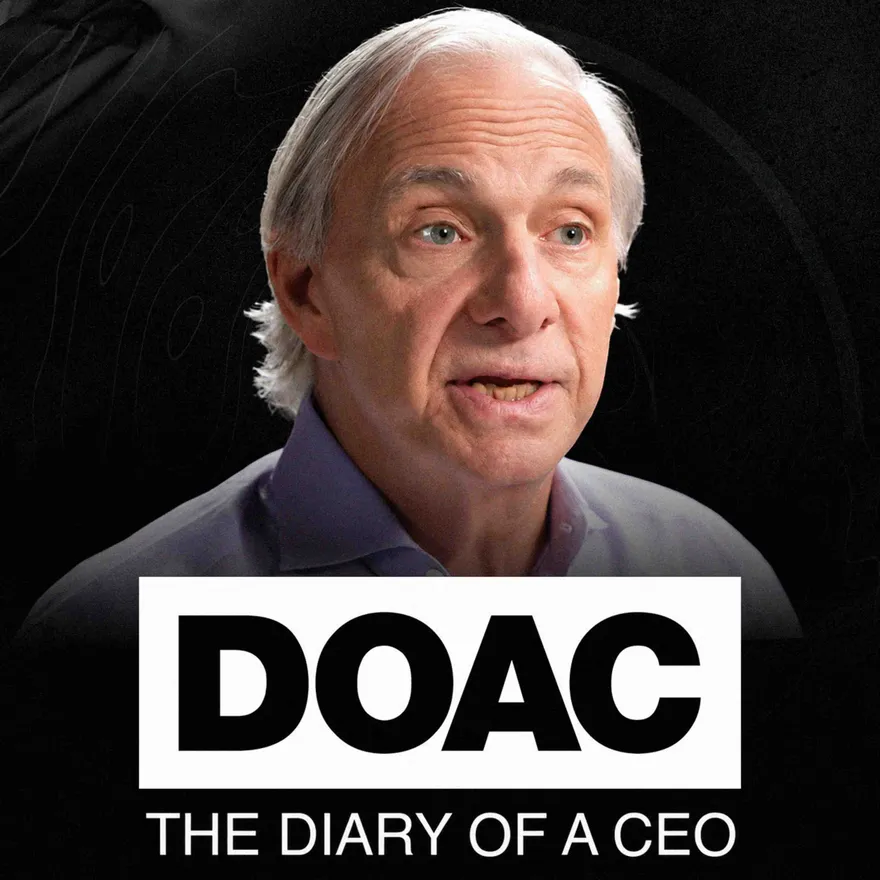

This is a preview of the Shortform summary of the Jul 30, 2026 episode of the The Diary Of A CEO with Steven Bartlett
Sign up for Shortform to access the whole episode summary along with additional materials like counterarguments and context.
1-Page Summary
Economic Cycles and Bubbles
Ray Dalio and Steven Bartlett explore how economic bubbles form, escalate, and collapse, focusing on the current risk of an AI bubble within larger historical cycles.
How Bubbles Form and Inflate
Bubbles begin when revolutionary technology—like the internet or AI—excites investors who overlook traditional valuation metrics. Dalio notes that people invest heavily based on enthusiasm rather than fundamentals like earnings. To amplify returns, investors use leverage, borrowing against paper wealth. Bartlett illustrates this: buying $100 in AI shares, then borrowing $50 against them to double the position. This creates vast paper wealth, but as Dalio warns, this wealth is only real if buyers exist at these prices—in distressed markets, converting paper to cash becomes impossible.
The Collapse and Economic Contagion
Bubbles burst when external shocks—interest rate hikes, geopolitical crises—force investors to liquidate. As asset values fall below the debt secured against them, forced selling creates a downward spiral. Bartlett gives an example: shares dropping from $100 to $25 after a $50 loan, leaving investors "$25 in a hole." This collapse ripples through the economy as spending stops, companies lay off workers, and unemployment spikes. Dalio explains that companies may accelerate automation, replacing workers with AI and deepening the economic pain.
The AI Bubble Today
Dalio and Bartlett identify clear warning signs: inexperienced investors chasing skyrocketing prices, valuations based on speculation rather than earnings, and excessive new stock issuances. Dalio explains that issuing $50 million in shares might create a billion-dollar valuation, but only $50 million has actually changed hands—creating fragile paper wealth. As founders flood the market with new AI shares, supply outpaces demand, setting up a correction when enthusiasm wanes.
The 80-Year Historical Cycle
Dalio situates bubbles within broader historical patterns, arguing that empires follow roughly 80-year cycles: establishment, growth, over-indebtedness, and collapse or restructuring. After WWII, a new order was established, but mature economies like the US and UK now show signs of decline—over-indebtedness, eroding productivity, and persistent deficits. This leads to political instability, widening wealth gaps, and diminishing faith in government. Despite these disruptions, technological progress continues through booms and busts, even as financial and political systems reset themselves.
Geopolitical Power Shifts and Global Conflict
Ray Dalio outlines a fundamental shift in global power, moving from U.S. unipolar dominance toward a multipolar, regionally-focused world order.
China's Rise and America's Decline
Dalio highlights that China is now the largest trading partner for most countries, marking a fundamental economic power shift. Meanwhile, U.S. military interventions in the Middle East have exposed vulnerabilities. Dalio notes that current entanglements, like keeping the Strait of Hormuz open, show American power no longer guarantees control as it once did. He questions whether the U.S. can credibly maintain global commitments, observing that the public is war-weary and "you can't fight a war that way." In contrast, China prefers economic leverage over military occupation—for example, potentially blockading Taiwan's semiconductor exports could crash global markets without firing a shot.
Regional Powers and Reduced Global Conflict
Dalio forecasts a future with regional powers—the U.S. dominating the Americas, China leading the Asia-Pacific—each focusing on their spheres of influence. He suggests this regional balance may actually reduce the risk of large-scale global conflict, as no single system is enforced worldwide. However, strategic chokepoints remain flashpoints where the U.S. military presence may be tested, particularly as domestic concerns limit appetite for intervention.
Internal Decay as the Greater Threat
Dalio underscores that a nation's true strength rests on internal factors—financial stability, education quality, social cohesion, and productivity—rather than military might. For the United States, he sees rising debt, political polarization, weakening education, and middle-class erosion as greater threats than any external foe. Countries that neglect these fundamentals will decline, while those overcoming such challenges will rise, shaping the global order more through internal evolution than direct conflict.
AI, Automation, and the Future of Work
Dalio and Bartlett examine how AI and automation are reshaping work, wealth distribution, and generational prospects.
Accelerating Displacement Across All Labor
Dalio traces how technology has historically replaced physical labor—tractors in fields, machines in factories. Now AI advances into cognitive domains, threatening white-collar professionals and knowledge workers. He emphasizes that many thinking jobs are at risk unless individuals are actively leveraging AI at the cutting edge. Bartlett notes companies like Uber envision autonomous vehicles replacing millions of drivers, while factories increasingly depend on robots. What distinguishes humans, Dalio argues, are emotions and interpersonal abilities—empathy, judgment, and emotional intelligence that technology cannot replicate.
Wealth Concentration Among Capital Owners
Bartlett explains that while 61% of U.S. adults have some stock exposure, almost 90% of stocks are held by the top 10%. As AI-driven productivity boosts corporate profits, these gains disproportionately benefit equity owners rather than workers. Dalio observes that labor's share of revenue declines while shareholder returns rise, widening inequality as wage growth lags productivity gains. Significant economic benefits will accrue to the top fraction—those with outstanding technical skill or who can most effectively partner with AI.
The Youth Employment Crisis
Despite overall economic strength, Dalio notes that opportunities for young workers are shrinking. Entry-level tasks once performed by graduates are now handled by AI, making employers hesitant to hire and train inexperienced staff. Bartlett stresses that AI's deployment speed far exceeds historical precedents, risking a scenario where the economy cannot retrain displaced workers fast enough. Young people face unusual uncertainty—an "unemployability crisis" at entry levels, alongside geopolitical instability and disappearing stable career paths.
Personal Financial Strategy and Wealth Management
Dalio and Bartlett discuss building financial security through diversification and skill development.
The Problem With Cash
Dalio explains that cash in savings earns 3% to 5%, but inflation erodes purchasing power. After paying taxes on interest, savers often lose real wealth. This inequality benefits those who understand capital allocation while modest savers consistently lose ground.
Diversification as Essential
A robust strategy involves diversification across stocks, bonds, gold, real estate, and Bitcoin. Dalio explains that each asset reacts differently to economic conditions—when gold rises, bonds might fall; during inflation, hard assets outperform. While individual assets can swing wildly, a diversified mix significantly reduces portfolio volatility. He cautions that allocation should start with living expenses and the question: "How many years can I live if money doesn't come in?" Minimizing drawdown risk matters more than chasing maximum returns.
Skills as Primary Assets
For those with little capital, Dalio emphasizes their primary asset is themselves—their capacity to earn through labor and skills. Bartlett observes that the same skill can be valued quite differently depending on context: driving for Uber pays far less than chauffeuring for a billionaire. Positioning oneself in high-value markets is key. Dalio states that investing just 10% more effort into skill improvement can double or triple compensation, making continuous development central to building long-term wealth. Young people should identify their most valuable skills, develop AI partnerships to enhance productivity, and position themselves in growing geographies and industries.
Systemic Inequality and Societal Dysfunction
Bartlett and Dalio discuss how capitalism produces growing inequality and system-wide dysfunction.
Capitalism Inherently Concentrates Wealth
Dalio states that capitalism inherently creates inequality. The pursuit of productivity favors capital owners over workers, and as AI replaces people, income from productivity is captured by those who own production rather than labor. Despite rising productivity, the wealth gap widens as returns flow to capital instead of wages.
The Dysfunction Cycle
With large wealth disparities, political dysfunction intensifies. The poor resent wealth concentration while the rich resist redistribution, resulting in gridlock. Dalio notes that inequality harms education, increases crime, undermines cohesion, reduces productivity, and decreases competitiveness. When the majority feels the system isn't working, societies face escalating violence and soaring social costs—such as prison budgets exceeding education spending. Bartlett mentions the UK experiencing six prime ministers in seven years as evidence of this instability.
Education and Opportunity as Foundations
Dalio asserts that governments must ensure access to basic education, healthcare, and housing to maintain stability. He points to Singapore and Scandinavian countries as examples where strong social floors prevent citizens from becoming "liabilities not assets." Capitalist efficiency must be balanced with social investments; otherwise, neglect leads to dysfunction and conflict.
Redistribution Challenges
Addressing inequality through wealth redistribution is difficult. Dalio notes that even taxing the ultra-wealthy at 100% wouldn't generate enough revenue due to their small population share. Wealth taxes are logistically complex, prompt migration, can force asset sales that burst bubbles, and may reduce productive investment. Dalio proposes that solutions require bipartisan cooperation to restructure incentives and implement reforms that enhance productivity—a "strong middle" where leaders work together to make the majority productive and keep society stable.
Personal Adaptation and Career Strategy
Adaptability Over Fixed Skills
Dalio emphasizes that history shows the most successful are not the most intelligent or hardest-working, but the most adaptable. As AI rapidly changes which skills matter—illustrated by the diminishing value of coding—adaptability becomes critical. He asserts that people should focus on developing learning capacity and self-awareness rather than betting on specific expertise, which risks quick obsolescence.
Aligning Passion With Economic Reality
Dalio advocates aligning work with innate strengths and passions while meeting financial needs. He warns that after basic security, money has little effect on happiness. The ideal career combines talents, interests, meaningful work, and sufficient compensation. Both Dalio and Bartlett discuss how the same skill commands vastly different pay depending on context. Dalio urges individuals to experiment, assess themselves using tools like personality tests, and find where high-value skills intersect with genuine interests and market demand.
Thinking Globally
Dalio advises seeking regions with high education, civility, productivity, and vibrant culture, as these environments are more likely to prosper. He references the proverb, "A smart rabbit has three holes," suggesting that flexibility across geographies and professional opportunities reduces vulnerability to localized downturns. Building a global network and maintaining multiple options helps capture opportunities and insures against regional decline.
1-Page Summary
Additional Materials
Clarifications
- Leverage in investing means using borrowed money to increase the size of an investment beyond what you could afford with your own cash. Borrowing against paper wealth involves using the current value of your investments as collateral to take out loans. This amplifies potential gains but also magnifies losses if asset prices fall. If the value of your investments drops below the loan amount, you may face forced selling or margin calls.
- Paper wealth refers to the value of assets like stocks or real estate as shown on paper, which can fluctuate and may not be easily converted to cash. Real wealth is the actual purchasing power or cash you can access and use without loss. Paper wealth can disappear quickly if market prices drop or if there are no buyers. Real wealth remains stable and usable regardless of market conditions.
- Interest rate hikes increase borrowing costs, making loans more expensive for investors and consumers. Higher rates reduce the present value of future earnings, causing asset prices to fall. This can trigger selling as leveraged investors face margin calls or debt repayment pressures. Consequently, bubbles deflate as enthusiasm wanes and liquidity tightens.
- Forced selling occurs when investors must sell assets quickly to meet margin calls or repay debts, regardless of market conditions. This sudden increase in supply pushes prices down further, triggering more margin calls and sales. The cycle intensifies as falling prices erode collateral value, forcing additional selling. This feedback loop accelerates the market decline, deepening the downward spiral.
- When a company issues new shares, it sells ownership stakes to investors in exchange for cash or other assets. This increases the total number of shares outstanding, which can raise the company's market capitalization if the share price remains high. However, the market value can become inflated if the share price is driven by speculation rather than actual earnings or cash flow. Thus, the valuation may reflect potential future value rather than real, immediate cash entering the company.
- The 80-year cycle theory suggests that major empires and economies go through predictable phases roughly every 80 years. The establishment phase involves building institutions and expanding influence. Growth follows, marked by rising wealth and power. Over-indebtedness occurs when debt levels become unsustainable, leading to collapse or restructuring to reset the system.
- The Strait of Hormuz is a narrow waterway connecting the Persian Gulf to the Arabian Sea, serving as a critical chokepoint for global oil shipments. About one-fifth of the world's petroleum passes through it daily, making it vital for energy security. Control over the strait allows influence or disruption of oil flow, impacting global markets and economies. Its strategic location also makes it a focal point for military presence and geopolitical tensions.
- Economic leverage refers to using financial tools like trade relationships, investments, and sanctions to influence other countries without direct military force. It relies on interdependence, where economic pressure can compel behavior by threatening access to markets or resources. Military occupation involves physically controlling territory through armed forces, which is costly and politically risky. Economic leverage is often preferred as it can achieve strategic goals more subtly and with less overt conflict.
- Physical labor involves tasks requiring bodily strength or manual skills, such as farming or factory work. Cognitive jobs require mental processes like reasoning, problem-solving, and decision-making, common in professions like law, finance, or programming. AI and automation initially replaced many physical tasks but are increasingly capable of performing complex cognitive functions through machine learning and data analysis. This shift threatens a broader range of jobs, including those traditionally considered secure due to their intellectual nature.
- In the U.S., stock ownership is highly concentrated, with the wealthiest 10% owning nearly 90% of all stocks. This concentration means that most investment gains primarily benefit the rich, widening the wealth gap. Middle- and lower-income households have limited stock exposure, reducing their ability to build wealth through market growth. Consequently, economic gains from rising corporate profits disproportionately increase inequality.
- Productivity gains mean companies produce more output with the same or fewer inputs. Labor's share of revenue is the portion of total income paid to workers as wages and benefits. When productivity rises but labor's share shrinks, workers receive less of the increased value they help create. Shareholder returns grow because profits retained or distributed as dividends increase, benefiting owners of capital rather than employees.
- Drawdown risk refers to the potential decline in the value of an investment portfolio from its peak to its lowest point before recovering. It measures how much an investor could lose during a market downturn. Managing drawdown risk helps protect against large losses that can be difficult to recover from. It is a key factor in assessing the stability and resilience of an investment strategy.
- Wealth redistribution aims to reduce inequality by transferring wealth from richer to poorer groups, often through taxes or social programs. Wealth taxes can discourage investment and prompt wealthy individuals to move assets or relocate to lower-tax areas, reducing government revenue. Implementing such taxes is complex due to difficulties in accurately valuing assets and enforcing compliance. Effective redistribution requires balancing incentives to maintain economic growth while funding social support.
- Adaptability means quickly learning new skills and adjusting to change, which is crucial as technology and job demands evolve. Intelligence and hard work matter, but fixed skills can become obsolete if the economy shifts. Being adaptable allows people to seize new opportunities and avoid being left behind. This flexibility helps sustain long-term success amid uncertainty.
- Self-awareness helps individuals understand their strengths, weaknesses, and motivations, enabling better career choices and adaptability. Learning capacity refers to the ability to quickly acquire new skills and knowledge, essential in rapidly changing job markets. Together, they allow workers to pivot as industries evolve, especially with AI altering skill demands. These traits reduce the risk of obsolescence and enhance long-term career resilience.
- The proverb "A smart rabbit has three holes" means having multiple escape routes or options to avoid danger. Metaphorically, it advises maintaining diverse career skills and geographic flexibility to adapt to changing circumstances. This approach reduces risk by ensuring you are not dependent on a single job or location. It encourages proactive planning for uncertainty in work and life.
- Capitalist efficiency refers to maximizing economic output and profits through market-driven competition and innovation. However, without social investments—such as education, healthcare, and housing—inequality and social instability can increase. Balancing these means using some economic gains to fund public goods that support social cohesion and workforce productivity. This balance helps sustain long-term economic growth by preventing social unrest and systemic dysfunction.
- Political gridlock occurs when opposing groups in government cannot agree on policies, often due to conflicting interests tied to wealth disparities. Wealthy groups may resist policies that redistribute resources, while poorer groups demand change, creating stalemates. This deadlock prevents effective governance, delaying solutions to social problems. As a result, public trust erodes and social tensions increase.
- The "unemployability crisis" refers to young workers struggling to find entry-level jobs because AI automates tasks they traditionally perform. This limits opportunities to gain experience and develop skills needed for career advancement. Without early work experience, youth face long-term challenges in securing stable employment. The rapid pace of AI adoption outstrips the economy's ability to retrain and absorb displaced workers.
- Strategic chokepoints are narrow passages like straits or canals critical for global trade and military movement. Control over these points allows a country to influence or block the flow of goods, especially energy supplies. Their disruption can cause significant economic damage worldwide by halting shipping routes. Because of their importance, chokepoints are often heavily militarized and contested in geopolitical conflicts.
Counterarguments
- Not all technological bubbles result in catastrophic collapses; some lead to lasting infrastructure and productivity gains even after corrections (e.g., the internet bubble).
- The focus on leverage and paper wealth may overstate the risk, as regulatory reforms and risk management practices have improved since previous bubbles.
- The 80-year cycle theory is debated among historians and economists, with many arguing that historical cycles are not so predictable or uniform.
- The shift to a multipolar world does not necessarily reduce the risk of global conflict; regional rivalries can escalate into broader wars, as seen in the 20th century.
- U.S. economic and military influence remains significant, and predictions of rapid American decline may underestimate its adaptability and innovation capacity.
- Automation and AI can create new job categories and industries, offsetting some displacement effects and potentially raising overall productivity and living standards.
- The concentration of stock ownership does not account for the growth of retirement funds and index investing, which have broadened indirect equity participation.
- Some evidence suggests that wage growth can catch up with productivity gains in tight labor markets or with effective policy interventions.
- Wealth redistribution can be achieved through means other than direct taxation, such as investments in education, healthcare, and infrastructure, which can enhance social mobility.
- Capitalism has historically lifted billions out of poverty globally, and inequality does not always correlate with social dysfunction if there is upward mobility and opportunity.
- Adaptability is important, but deep expertise in certain fields remains highly valuable and less susceptible to automation (e.g., advanced scientific research, skilled trades).
- The value of cash as a safe, liquid asset is significant during periods of market volatility or deflation, and not all savers lose out in real terms.
- Geographic mobility is not feasible or desirable for everyone due to family, cultural, or legal constraints, and local investments in community resilience can also yield prosperity.

Get access to the context and additional materials
Economic Cycles and Bubbles
Ray Dalio and Steven Bartlett discuss how economic cycles and bubbles form, escalate, and ultimately collapse, with a focus on the current risk of an artificial intelligence (AI) bubble alongside long-term historical cycles.
Understanding how Asset Bubbles Form and Inflate
Bubbles begin when a revolutionary technology emerges and excites investors, such as the internet during the dot-com boom or AI today. Dalio notes that people become enthusiastic, overlook traditional valuation metrics, and invest heavily, believing in inevitable success. They often ignore whether rising prices are actually supported by fundamentals like earnings or productivity.
To boost returns, investors use leverage—borrowing money against their assets. For example, Bartlett describes buying AI company shares valued at $100, using this paper wealth to secure a $50 loan, thereby doubling the investor’s position. This amplifies gains during market appreciation, but it also increases vulnerability if sentiment shifts.
During the bubble, vast amounts of “paper wealth” accumulate, with net worths ballooning as market capitalization rises. However, as Dalio cautions, this wealth is not liquid: it can only be turned into cash if someone else is willing to buy at these prices. In illiquid or distressed markets, converting paper wealth to money becomes difficult or even impossible.
The Mechanics of Bubble Collapse and Economic Contagion
Bubbles typically burst when an external event—such as interest rate hikes, tax changes, inflation, or geopolitical shocks—forces investors to liquidate assets. When investors need to repay debt and face higher interest costs, they rush to sell their holdings. This wave of selling increases supply, driving asset prices down sharply.
As asset values fall below the debt owed against them, investors are forced to sell at even lower prices, triggering a downward spiral. Bartlett gives the example of a share dropping from $100 to $25 after a $50 loan was secured against it, leaving the investor “$25 in a hole.” This dynamic results in forced sales, further price drops, and growing losses.
The collapse in asset values ripples through the economy: people stop spending, revenues fall, and companies cut costs, leading to layoffs and rising unemployment. Dalio explains that as people’s asset-based spending power shrinks and demand declines, the pain spreads throughout the economy. Unemployment spikes as companies shift from growth to survival and may even accelerate automation by replacing workers with AI agents or robots.
The Ai Bubble: Current Risk and Specific Mechanisms
Dalio and Bartlett identify clear signs of an AI bubble: an influx of inexperienced investors chasing skyrocketing stock prices, ignoring valuation fundamentals; inflated company valuations based not on actual earnings but on speculative growth projections; and a surge of new AI stock issuances as founders race to capitalize on demand.
Dalio explains how excessive stock issuance is common in bubbles. For example, issuing $50 million in shares may result in a billion-dollar valuation, but, in reality, only $50 million has changed hands. This creates a disconnect between “wealth” on paper and real money, making the value fragile.
As more founders raise capital and flood the market with new AI company shares, the supply of stock outpaces genuine demand, setting the stage for a correction. When investor enthusiasm wanes, perhaps prompted by rising interest rates or tighter liquidity, the bubble is pricked. Rapid loss of confidence and mass selling then accelerate price declines and further spread losses and economi ...
Here’s what you’ll find in our full summary
Economic Cycles and Bubbles
Additional Materials
Clarifications
- Leverage means using borrowed money to increase the size of an investment beyond your own cash. It magnifies profits when asset prices rise because gains apply to the total invested amount, not just your money. However, if prices fall, losses also multiply, potentially exceeding your initial investment. This can lead to margin calls, where lenders demand repayment, forcing you to sell assets at a loss.
- "Paper wealth" refers to the value of assets like stocks or property as shown on paper, based on current market prices, not actual cash in hand. It is illiquid because these assets cannot be quickly sold or converted into cash without potentially losing value. Liquidity depends on having willing buyers at the current price, which may vanish during market stress. Thus, high paper wealth does not guarantee immediate spending power or financial security.
- Interest rate hikes increase borrowing costs, making debt repayment more expensive and reducing investors' cash flow. Tax changes can reduce after-tax returns or increase liabilities, pressuring investors to raise cash. These pressures force investors to sell assets quickly to meet obligations. Rapid selling floods the market, pushing prices down and triggering further liquidations.
- Forced selling occurs when investors must quickly sell assets to repay loans or meet margin calls, often at unfavorable prices. If asset prices drop below the loan amount, investors owe more than their assets are worth, creating "negative equity." This loss forces further sales to cover debts, increasing supply and pushing prices down more. The cycle repeats, accelerating price declines and financial distress.
- Stock issuance is when a company creates and sells new shares to investors to raise capital. This increases the total number of shares available, which can boost the company's market valuation if demand remains high. However, the valuation rise may not reflect actual cash inflow beyond the initial sale, creating a gap between perceived wealth and real money. Excessive issuance dilutes existing shares and can make the stock price fragile if investor demand weakens.
- The 80-year big economic cycle, often called the "long wave" or "Kondratiev wave," reflects recurring patterns in economic growth and decline tied to generational shifts. It begins with a period of rebuilding and innovation after major disruptions, leading to rapid expansion and prosperity. Over time, excessive debt, inequality, and declining productivity create imbalances that weaken the system. The cycle ends with financial crises and social upheaval, prompting a reset before the pattern repeats.
- Long-term economic cycles, like the 80-year cycle, reflect broad structural changes in economies and societies over decades. Shorter six-year recession cycles are more frequent fluctuations caused by factors like inflation, credit tightening, and asset bubbles within the larger cycle. These shorter cycles act as periodic corrections or adjustments that influence the economy’s path but do not override the overarching long-term trend. Together, they create a layered pattern of economic expansion and contraction across different time scales.
- Economic decline reduces government revenues, limiting public services and social support. Rising unemployment and inequality increase frustration and competition for resources. This fuels protests, polarization, and challenges to political leaders. Loss of trust grows as governments appear ineffective or corrupt in addressing hardships.
- During economic downturns, companies seek to reduce costs to survive, often by replacing human workers with automated systems. Automation can perform repetitive or routine tasks more efficiently and cheaply than employees. This shift accelerates job displacement, especially in roles vulnerable to technology. While it may boost productivity, it can increase unemployment and widen economic inequality in the short term.
- Traditional valuation fundamentals measure a company's current financial health, focusing ...
Counterarguments
- Not all revolutionary technologies result in unsustainable bubbles; some, like the smartphone or cloud computing, have led to sustained value creation without dramatic collapses.
- Many investors and institutions continue to use rigorous valuation metrics and risk management strategies, even during periods of technological excitement.
- Leverage is often regulated and monitored by financial institutions, reducing systemic risk compared to past bubbles.
- Paper wealth can sometimes be converted to cash through secondary markets or private transactions, even during downturns, depending on the asset and market conditions.
- External shocks do not always trigger collapses; some bubbles deflate gradually or correct without widespread economic fallout.
- Forced selling and downward spirals are mitigated in some cases by circuit breakers, government interventions, or central bank actions.
- Automation and AI adoption can create new jobs and industries, offsetting some negative employment effects from economic downturns.
- The presence of inexperienced investors does not necessarily indicate a bubble; retail participation has increased in many markets without leading to collapses.
- Excessive stock issuance is often limited by regulatory oversight and market discipline, which can prevent extreme disconnects between paper wealth and real money.
- The ...

Get access to the context and additional materials
Geopolitical Power Shifts and Global Conflict
Ray Dalio, in conversation with Steven Bartlett, outlines the large-scale shift underway in the global balance of power, moving away from decades of U.S. unipolar dominance toward a more multipolar, regionally-focused world order. He foregrounds the internal strengths and vulnerabilities of nations as increasingly decisive factors in shaping global influence, rather than pure military strength or strategy.
Erosion of American Global Dominance and Chinese Ascendance
U.S. Losing Leverage as China Becomes Top Trading Partner Globally
Dalio highlights that China is now a larger trading partner for most countries than the United States, marking a fundamental shift in global economic power. He references capital flows and shifting alliances as key indicators of this transition, stating "you're seeing that kind of a shift in power" as China’s economic ties supplant longstanding U.S. relationships.
Us Military Interventions in Middle East Expose Vulnerabilities, Undermine Credibility
Current U.S. entanglements, exemplified by the war with Iran and related interventions to keep regional chokepoints like the Strait of Hormuz open, have exposed the vulnerabilities and diminishing credibility of American power. Dalio notes that U.S. military actions no longer guarantee control the way they once did, drawing a parallel to Britain's loss of the Suez Canal. He observes the American public's war-weariness and concerns over casualties and gas prices, concluding "the United States doesn’t want to fight a war... you can’t fight a war that way." This exposes the limitations of U.S. power, both in capability and in sustaining long-term occupations or interventions.
Dalio emphasizes the historic difficulty of controlling other countries by force, citing Iran’s population of 90 million as an example. He questions whether the U.S. can credibly threaten or maintain control over global chokepoints like the Strait of Hormuz, stating that the willingness and ability to enforce such control is now in doubt.
China's Regional Influence Through Economic and Strategic Non-military Means
In contrast to the U.S., Dalio explains that China prefers economic and strategic influence over military occupation. He points to China’s ability to affect global supply chains, such as hypothetically blockading semiconductor exports from Taiwan—a move that could crash global stock markets and devastate economies—demonstrating China's non-military leverage. China’s approach, shaped by cultural and historical factors, seeks competitive strength within its own region, securing prosperity and security without direct control over other states.
Shift From Unipolar to Multipolar or Regional Order
Emerging World Order: Regional Powers Like China in Asia-Pacific, U.S. in Americas, Other Regions Gain Autonomy
Dalio situates the modern transition in historical context. Before World War I, he explains, power was distributed regionally—multiple strong empires coexisted. Post-World War II, the U.S.-led global, rules-based order prevailed but now appears to be fracturing. Dalio forecasts a future with regional powers—such as the U.S. dominating the Americas and China leading the Asia-Pacific—each focusing inward on their spheres of influence. Other regions will similarly pursue greater autonomy.
Regional Focus by Powers Lowers Global Conflict Risk Over Enforcing one System
Dalio suggests that as world power becomes more regional, the risk of large-scale global conflict may decrease. He is optimistic that world leaders possess sufficient wisdom to avoid conflict at a scale that would produce another true global hegemon, and that a more balanced regional order will prevent the enforcement of a uniform system across all regions.
Chokepoint Flashpoints Challenge U.S. Military Presence
Risks remain, particularly regarding strategic chokepoints. Dalio describes situations like the Strait of Hormuz and Taiwan’s semiconductor industry, where the U.S. military presence may be tested or become a liability. He qu ...
Here’s what you’ll find in our full summary
Geopolitical Power Shifts and Global Conflict
Additional Materials
Clarifications
- "U.S. unipolar dominance" refers to the period after the Cold War when the United States was the world's sole superpower with unmatched military, economic, and political influence. This dominance allowed the U.S. to shape global institutions, enforce international rules, and intervene militarily with little opposition. It was characterized by a relatively stable international order centered on American leadership. This era began in the early 1990s and has been gradually challenged by rising powers like China.
- A "multipolar, regionally-focused world order" means global power is shared among several influential countries or regions, rather than dominated by one superpower. Each major power primarily controls and influences its own geographic area, focusing on regional interests and security. This contrasts with a unipolar world, where one country sets global rules and policies. Such a system can reduce global tensions by limiting attempts to impose a single system worldwide.
- The Strait of Hormuz is a narrow waterway between the Persian Gulf and the Gulf of Oman. It is a critical chokepoint through which about 20% of the world’s petroleum passes. Control or disruption of this strait can significantly impact global oil supply and prices. Its strategic importance makes it a focal point for regional and international security concerns.
- The Suez Canal Crisis of 1956 marked Britain's decline as a global imperial power. Britain, along with France and Israel, attempted to regain control of the canal after Egypt nationalized it. International pressure, especially from the U.S. and USSR, forced Britain to withdraw, signaling its reduced influence. This event symbolizes the limits of military power without broad international support.
- Capital flows refer to the movement of money for investment, trade, or business across countries. They influence economic power by shifting where resources and investments are concentrated. Large capital inflows can strengthen a country's economy and global influence. Conversely, capital outflows can weaken economic stability and reduce leverage in international relations.
- Taiwan produces the majority of the world's most advanced semiconductors, essential components for electronics, computers, and smartphones. These chips are critical for global technology supply chains and economic stability. Disruptions in Taiwan's semiconductor production could severely impact industries worldwide. This makes Taiwan a strategic focal point in global economic and geopolitical competition.
- Global chokepoints are narrow passages like straits or canals critical for international trade and energy transport. Control or disruption of these points can significantly impact global supply chains and economies. They are strategic military and economic targets because blocking them can halt the flow of goods, especially oil and key materials. Their geopolitical importance lies in the power to influence or pressure other nations by controlling access through these routes.
- The "rules-based order" post-World War II refers to an international system established mainly by the United States and its allies to promote peace and cooperation. It is built on agreed-upon laws, institutions, and norms, such as the United Nations and trade agreements, to regulate state behavior. This system aimed to prevent conflicts like the world wars by encouraging diplomacy and economic interdependence. It also sought to uphold human rights and sovereign equality among nations.
- Before World War I, global power was divided among several large empires, such as the British, Ottoman, Austro-Hungarian, German, and Russian Empires. These empires controlled vast territories and influenced regional politics without a single dominant global power. International relations were shaped by alliances, colonial competition, and military build-ups. This multipolar system eventually contributed to tensions that sparked the war.
- Economic ties replace military or political influence by creating mutual dependencies through trade, investment, and financial flows. Countries reliant on each other economically are less likely to engage in conflict, as disruptions harm both parties. Economic influence can shape policies and alliances by leveraging access to markets, technology, and capital. This form of power is often more sustainable and less costly than military intervention.
- Internal factors like education improve a nation's workforce skills and innovation capacity. Social cohesion fosters stability and collective action, reducing conflict and enabling effective governance. Fiscal management ensures sustainable funding for public services and investments, maintaining economic health. Together, these elements build a resilient foundation that supports long-term national strength beyond military power ...
Counterarguments
- While China has become a major trading partner for many countries, the U.S. dollar remains the dominant global reserve currency, and U.S. financial markets continue to play a central role in the world economy.
- The U.S. maintains a network of alliances and security partnerships that provide significant influence beyond economic measures, which China has not yet matched.
- U.S. military capabilities, including global power projection and advanced technology, still surpass those of any other nation, and the U.S. retains the ability to respond rapidly to global crises.
- The decline of U.S. influence is not universally accepted; some analysts argue that American soft power, innovation, and cultural influence remain strong.
- China’s economic rise is accompanied by significant internal challenges, such as demographic decline, high debt levels, and questions about long-term political stability.
- The effectiveness of China’s non-military influence is sometimes limited by mistrust among neighboring countries and concerns about economic coercion.
- The assumption that a multipolar or regional order will necessarily reduce the risk of large-scale conflict is debated; history shows that multipolar systems can also be unstable and prone to rivalry.
- The U.S. has demonstrated resilience in the face of internal challenges in the past, and some argue that its institutions and capacity for reform remain robust.
- Some cr ...
Get access to the context and additional materials
Ai, Automation, and the Future of Work
Ray Dalio and Steven Bartlett illuminate how artificial intelligence and automation are reshaping the nature of work, wealth distribution, and the prospects of future generations.
The Multi-Generational Displacement Pattern Accelerating With Ai
Ai and Robotics: Technology Replacing Physical and Cognitive Human Labor
Dalio traces the evolution of labor displacement, noting that throughout history, technology first replaced human physical labor during the agricultural and industrial revolutions, such as tractors replacing field workers and machines in factories replacing manual laborers. Today, automation and robotics continue this pattern, but AI now advances into higher cognitive domains, replacing not only repetitive tasks but also aspects of thinking and reasoning.
Bartlett adds that companies like Uber envision autonomous vehicles supplanting millions of driver jobs worldwide, illustrating the current shift where technology encroaches on both physical and routine mental roles.
Ai Displacing White-Collar Professionals and Knowledge Workers
Dalio emphasizes that AI now threatens white-collar professionals and knowledge workers. Many thinking jobs are at risk unless individuals are in the most capable, cutting-edge group actively leveraging AI. In numerous businesses, hiring and training college graduates has become less attractive compared to utilizing AI's efficiency for such tasks.
Bartlett notes, in daily workplaces, employees are being replaced by AI agents or robotics, and factories increasingly depend on robots instead of human workers—a steady march of technological substitution.
Automation Leaves Emotional Intelligence As Key Human Skill
Dalio underlines that what distinguishes humans from AI are emotions, intuitions, and nuanced interpersonal abilities. Machines do not possess these traits; therefore, as AI absorbs more responsibilities, the remaining value will increasingly hinge on skills such as empathy, judgment, and emotional intelligence that technology cannot replicate.
Ai Benefits Concentration Among Capital Owners and Elite Technologists
Wealthy Hold Nearly 90% of Stocks, Ai Gains Benefit Equity Owners Over Workers
Bartlett explains that while about 61% of US adults have some stock exposure, ownership is heavily concentrated—almost 90% of stocks are held by the top 10% of households. This structure amplifies the wealth of the elite as AI-driven corporate profits disproportionately benefit equity owners rather than workers.
Ai-driven Productivity Gains Boost Corporate Profits and Shareholder Returns, Widening Wealth Inequality as Wage Increases Are Bypassed
Dalio observes that as companies deploy AI to replace or augment workers, the share of corporate revenue going to labor declines while returns for business owners and shareholders rise. This widens the gap between those who own and control technology and the broader workforce, intensifying income and wealth inequality as wage growth lags productivity and profit gains.
Top 10% of Ai Talent or Those Integrating Ai With Human Intelligence Will Capture Significant Economic Benefits
Dalio states that significant economic advantages will accrue to the top fraction—those possessing outstanding human intelligence and technical skill, or who can most effectively partner with AI. These individuals and organizations will accelerate, while the remaini ...
Here’s what you’ll find in our full summary
Ai, Automation, and the Future of Work
Additional Materials
Clarifications
- The Agricultural Revolution, beginning around 10,000 years ago, marked humanity's shift from hunting and gathering to farming, enabling population growth and settled societies. The Industrial Revolution, starting in the late 18th century, introduced mechanized manufacturing, drastically increasing production and urbanization. Both revolutions transformed economies and labor by replacing manual human work with technology. These shifts set historical patterns of technological displacement of human labor seen today with AI.
- Higher cognitive tasks involve complex mental processes like problem-solving, decision-making, language understanding, and learning. AI performs these by using algorithms that analyze data patterns, simulate reasoning, and generate responses based on learned information. Techniques like machine learning and neural networks enable AI to improve its performance over time without explicit programming for every task. This allows AI to handle tasks traditionally requiring human intelligence, such as writing, diagnosing diseases, or driving cars autonomously.
- Autonomous vehicles are cars or trucks equipped with technology that allows them to drive themselves without human input. They use sensors, cameras, and artificial intelligence to navigate roads and traffic safely. This technology can reduce the need for human drivers in industries like ride-sharing, delivery, and trucking. As a result, many driving jobs may be lost or transformed as companies adopt these self-driving vehicles.
- White-collar professionals typically work in office settings and perform managerial, administrative, or professional tasks. Knowledge workers are a subset of white-collar workers who primarily handle information, analysis, and problem-solving rather than manual labor. Other job types include blue-collar workers, who perform manual labor or skilled trades, and service workers, who provide personal or customer services. The distinction lies mainly in the nature of tasks: cognitive and information-based versus physical or routine.
- "Leveraging AI" means using artificial intelligence tools and systems to improve work efficiency and decision-making. It involves integrating AI technologies to automate tasks, analyze data, or enhance creativity. Employees who leverage AI can focus on higher-level work by offloading routine or complex processes to machines. This approach helps businesses gain competitive advantages and reduce costs.
- AI agents operate by using algorithms to perform tasks such as data analysis, customer service, or decision-making without human intervention. Robotics involves machines programmed to carry out physical tasks, often mimicking human movements or actions in manufacturing or logistics. Together, they automate repetitive, routine, or precise work faster and more consistently than humans. This reduces the need for human labor in roles that can be standardized or digitized.
- Emotional intelligence involves recognizing, understanding, and managing one's own emotions and those of others to navigate social interactions effectively. It requires empathy, intuition, and the ability to respond to subtle emotional cues, which are deeply tied to human consciousness and experience. AI lacks genuine feelings and self-awareness, so it cannot authentically perceive or experience emotions. Consequently, AI cannot replicate the nuanced, context-dependent emotional judgments humans make in complex social situations.
- Stock ownership refers to holding shares that represent partial ownership in companies. The top 10% of households own the vast majority of these shares, giving them significant control and financial benefits from company profits. This concentration means most people have little direct stake in corporate earnings or decision-making. As a result, wealth generated by stock market gains disproportionately enriches this small group.
- AI-driven productivity gains mean companies can produce more goods or services with fewer workers or less time. This efficiency increases corporate profits because costs, especially labor costs, decrease while output rises. Higher profits often lead to increased shareholder returns through dividends or stock price appreciation. Since shareholders own the company, they benefit more directly from these gains than employees do.
- Wage growth lags productivity when companies keep more profits instead of raising employee pay. This happens because labor's bargaining power weakens due to automation and global competition. Additionally, capital owners and shareholders capture a larger share of economic gains through dividends and stock value increases. As a result, workers see smaller wage increases despite higher overall output.
- The "top 10% of AI talent" refers to individuals with exceptional skills in AI development, data science, and machine learning who drive innovation and create advanced AI systems. Integrating AI with human intelligence means combining AI's computational power with human creativity, judgment, and emotional insight to solve complex problems more effectively. Th ...
Counterarguments
- Historical evidence shows that while technology displaces certain jobs, it also creates new industries and roles that were previously unimaginable, often leading to net job growth over time.
- Many studies indicate that AI and automation are more likely to augment human work rather than fully replace it, especially in complex or creative fields.
- The adoption of AI and robotics is uneven across sectors and geographies, with many industries and regions still heavily reliant on human labor.
- Emotional intelligence and interpersonal skills are increasingly being recognized and valued in the labor market, leading to new opportunities in fields such as healthcare, education, and customer service.
- Some research suggests that AI can help democratize access to information and tools, enabling small businesses and individuals to compete more effectively with larger corporations.
- Policy interventions, such as progressive taxation, universal basic income, or expanded social safety nets, can mitigate the concentration of wealth and income inequality associated with AI-driven productivity gains.
- There is evidence that companies investing in AI often experience increased demand for skilled workers to develop, maintain, and oversee these systems.
- The narrative of a widespread "u ...
Get access to the context and additional materials
Personal Financial Strategy and Wealth Management
Ray Dalio and Steven Bartlett discuss the pitfalls of traditional saving, the importance of diversification, and the foundational role of skills and income in wealth building, outlining how individuals should position themselves for financial security and long-term resilience.
The Inadequacy and Risk of Cash Holdings
Bank Deposits Are Safe but Lose Value due to Inflation
Dalio explains that cash placed in savings or bank deposits earns an interest rate, typically around 3% to 5%, but inflation often erodes its real value. Even if the interest appears competitive, the purchasing power of saved cash diminishes over time due to rising prices.
Savings Lose Buying Power After Taxes on Interest
Bartlett and Dalio emphasize that savers must also pay taxes on any interest earned. As Dalio points out, even though savers may feel they've gained, after taxation and inflation, their real wealth often decreases, making long-term returns on cash "lousy."
The Wealthy Benefit From Capital Allocation; Modest Savers Suffer
Dalio highlights a fundamental inequality: while savers with modest means consistently lose ground due to taxes and inflation, those who understand how to allocate their capital into productive or appreciating assets are more likely to grow wealth.
Diversification Across Uncorrelated Assets as Essential Risk Management
A robust financial strategy involves diversification across different asset classes. Dalio outlines a balanced portfolio including stocks, bonds, gold, real estate, and Bitcoin.
Balanced Portfolio: Stocks, Bonds, Gold, Real Estate, Bitcoin
Having a mix of assets—such as cash, stocks, bonds, gold, real estate, and a small allocation to Bitcoin—serves as the foundation for risk management.
Asset Classes React Differently To Economic Conditions—Stocks Down, Gold Up; Inflation Up, Hard Assets Outperform—Diversification Reduces Portfolio Volatility
Dalio explains the importance of understanding how each asset class reacts to different market conditions. For example, when gold goes up, bonds might go down; when inflation rises, hard assets like gold and real estate often outperform. He notes that while each individual asset can swing by large margins, a diversified mix significantly reduces overall portfolio risk and volatility.
Allocation Should Consider Risk Tolerance, Time Horizon, and Living Expenses to Minimize Drawdown Over Maximizing Returns
Dalio cautions that portfolio construction should start with an estimation of necessary living expenses and the question: "How many years can I live if money doesn't come in?" Allocating resources across uncorrelated assets minimizes the risk of a major financial drawdown, which is more important than chasing the highest returns with concentrated bets.
Importance of Income and Skill Development
For Those With Few Financial Assets, Their Labor, Skills, and Income Potential Are Key To Building Security
Dalio emphasizes that for those starting out with little capital, their primary asset is themselves—their capacity to earn income through their labor and skills.
Positioning Skills in High-Value Markets Yields Better Returns Than First Available Opportunity
Bartlett observes that the same skill can be valued quite differently depending on the context or industry. For instance, driving for Uber pays much less than chauffeuring for a billionaire, despite being the same core skill. Positioning oneself in a high-value market or industry is key to maximizing returns on one's abilities.
Boosting Capability By 10% Can Triple Compensation, Making Skill Development Key For Wealth
Dalio states that investing just 10% more effo ...
Here’s what you’ll find in our full summary
Personal Financial Strategy and Wealth Management
Additional Materials
Clarifications
- "Real value" refers to the purchasing power of money after adjusting for inflation. Inflation means prices of goods and services increase over time, so the same amount of money buys less than before. When inflation is higher than the interest earned on savings, the real value of that money decreases. This erosion reduces the actual wealth or buying capacity of saved cash.
- Interest rates on savings represent the percentage your money earns in a bank account over time. Inflation rate measures how much prices for goods and services increase annually, reducing money's purchasing power. When inflation exceeds interest rates, your saved money loses real value despite nominal growth. Thus, even with interest, your savings may buy less in the future.
- When you earn interest on savings, that interest is considered taxable income by governments. Taxes reduce the amount of interest you actually keep, lowering your effective return. For example, if your interest rate is 5% but you pay 20% tax on it, your net return is only 4%. This means your savings grow slower than the nominal interest rate suggests.
- Capital allocation is the process of deciding where to invest or deploy money to generate the best possible returns. Wealthy individuals often allocate capital into diverse assets like businesses, real estate, or stocks that can appreciate or produce income. Modest savers typically keep money in low-yield accounts or cash, missing opportunities for growth. This difference leads to wealth accumulation for the wealthy and stagnation or loss of value for modest savers.
- Uncorrelated asset classes are investments whose prices do not move in tandem; when one falls, another may rise or stay stable. This lack of synchronization means losses in one asset can be offset by gains or stability in another. Diversification spreads risk across these different assets, reducing the chance that all investments lose value simultaneously. This balance helps protect the overall portfolio from large swings and potential losses.
- Stocks often perform well during economic growth but can fall during recessions. Bonds typically provide steady income and tend to rise when interest rates fall or during economic uncertainty. Gold is seen as a safe haven, gaining value during inflation or market turmoil. Real estate usually benefits from inflation and low interest rates, while Bitcoin's behavior is more volatile and influenced by market sentiment and adoption trends.
- Portfolio volatility refers to the degree of variation in the value of an investment portfolio over time, indicating how much the portfolio's returns fluctuate. Drawdown is the peak-to-trough decline in the value of a portfolio, showing the largest loss experienced before a new high is reached. High volatility means more frequent and larger price swings, increasing investment risk. Managing drawdown is crucial to avoid significant losses that can be hard to recover from.
- Risk tolerance is an individual’s ability and willingness to endure losses in their investments without panic. Time horizon refers to the length of time one expects to hold an investment before needing to access the money. Together, they guide how aggressively or conservatively a portfolio should be structured. Longer time horizons typically allow for higher risk-taking since there is more time to recover from downturns.
- Labor, skills, and income potential are considered financial assets because they generate future cash flow through earnings. Unlike physical assets, they are intangible but can be invested in and improved to increase value. This "human capital" can be leveraged to obtain better job opportunities and higher income. Treating them as assets emphasizes their role in wealth creation and financial security.
- High-value markets pay more for the same skills because they have greater financial resources or higher demand for specialized expertise. These markets often involve clients or industries with larger budgets, complex needs, or higher stakes. Positioning yourself in such markets means targeting roles, companies, or sectors where your skills are scarce and highly valued. This strategy increases your earning potential without changing the core skill itself.
- A 10% improvement in skills can lead to tripled compensation because skill value often grows exponentially, not linearly. Small enhancements can unlock access to higher-paying roles or clients willing to pay a premium. This is due to increased efficiency, expertise, and the ability to solve more com ...
Counterarguments
- While inflation can erode the value of cash, holding some cash is essential for liquidity, emergencies, and short-term needs; not all cash holdings are intended for long-term investment.
- Taxes on interest earnings vary by jurisdiction, and some tax-advantaged accounts (such as IRAs or ISAs) can mitigate or eliminate this effect for savers.
- Not all wealthy individuals grow their wealth solely through capital allocation; many inherit wealth or benefit from systemic advantages, and some modest savers do achieve upward mobility through disciplined saving and investing.
- Diversification does not guarantee against loss in all market conditions; during systemic crises, correlations between asset classes can increase, reducing the effectiveness of diversification.
- The inclusion of volatile assets like Bitcoin in a diversified portfolio is debated, as its long-term risk/return profile and regulatory status remain uncertain.
- Some investors may prefer concentrated investments in areas where they have expertise or conviction, which can outperform diversified portfolios in certain cases.
- Focusing on minimizing drawdowns may lead to overly conservative portfolios that underperform inflation over the long term, especially for younger investors with longer time horizons.
- Not everyone has equal access to high-value markets or industries due to structural barriers, discrimination, or geographic limitations.
- The claim that a 10% improvemen ...
Get access to the context and additional materials
Systemic Inequality and Societal Dysfunction
Steven Bartlett and Ray Dalio discuss how the design of capitalism produces growing inequality and system-wide dysfunction, with wealth concentrating in fewer hands while society becomes more unstable.
Structural Link Between Capitalist Productivity and Wealth Concentration
Dalio states that capitalism inherently creates inequality. The pursuit of productivity—producing things more efficiently—drives economic growth but mostly favors capital owners rather than workers. As technology and artificial intelligence increasingly replace people in various jobs, the income from productivity is captured by those who own the means of production, while workers’ share of total revenues declines. This dynamic leads to a widening wealth gap despite rising productivity, as returns flow more to capital than to labor.
Wealth Gaps, Political Dysfunction, System Instability Cycle
With large wealth disparities, Dalio explains, societal and political dysfunction intensifies. The poor grow resentful of wealth concentration while the rich resist policies aimed at redistribution, resulting in political gridlock and instability. Bartlett mentions recent global examples, such as the UK experiencing six prime ministers in seven years, which Dalio partly attributes to resource shortages and social unrest fueled by inequality.
Dalio notes that wealth inequality harms education, increases crime and incarceration rates, undermines civil cohesion, damages social stability, reduces national productivity, and decreases global competitiveness. Ultimately, these effects harm the entirety of society, including the wealthy. When the majority feels the system isn’t working for them, societies face escalating violence, disrupted communities, and soaring social costs—such as prison budgets exceeding those for education.
Education and Opportunity as Systemic Foundations
Dalio asserts that governments must ensure all citizens have access to basic education, healthcare, and housing to maintain social stability. He points to countries like Singapore and Scandinavian nations as successful in setting a strong social “floor.” If societies allow citizens to fall below these minimum standards, the population becomes “liabilities not assets”—disruptive rather than productive. Capitalist efficiency must be balanced with social investments; otherwise, neglect of fundamental needs leads to dysfunction, social upheaval, and conflict.
Difficulty and Limited Effectiveness of Wealth Redistribution
Addressing inequality directly through wealth redistribution presents significant challenges. Bartlett references popular proposals like a 2% wealth tax on individuals with net worths over $10 million, intended to raise significant public funds. Dalio notes, however, that even if the ultra-wealthy were ...
Here’s what you’ll find in our full summary
Systemic Inequality and Societal Dysfunction
Additional Materials
Clarifications
- Capitalist productivity refers to the ability of businesses to produce goods and services more efficiently, often through technology and innovation. This efficiency increases overall economic output but primarily benefits owners of capital—such as shareholders and investors—because they receive profits and returns on investments. Workers, whose labor is replaced or supplemented by technology, often see stagnant or declining wages relative to productivity gains. As a result, wealth accumulates disproportionately with capital owners, deepening economic inequality.
- The "means of production" refers to the physical, non-human inputs used to produce goods and services, such as factories, machines, and tools. Owners of these means control how production is organized and receive profits generated from it. Workers, who sell their labor but do not own these assets, typically earn wages that are smaller than the total value created. This ownership difference is a key factor in how income and wealth are distributed in capitalist economies.
- Technological advancements and artificial intelligence often replace tasks previously done by workers, reducing the need for human labor. Capital owners invest in and control these technologies, so they receive the profits generated from increased efficiency. Workers may face job losses or wage stagnation because their labor is less in demand. This shifts income from wages to returns on capital, widening the wealth gap.
- Wealth inequality creates distinct economic classes with opposing interests, making compromise difficult. The wealthy often use their resources to influence politics, blocking reforms that threaten their assets. Meanwhile, marginalized groups push for change, increasing political polarization. This stalemate weakens governance and fuels social unrest.
- Wealth inequality often limits access to quality education, jobs, and social services for poorer communities, increasing economic desperation. This desperation can lead to higher crime rates as individuals seek alternative means to survive or improve their situation. Additionally, unequal systems may enforce harsher penalties on disadvantaged groups, raising incarceration rates. Social exclusion and lack of opportunity create environments where crime and imprisonment become more common.
- A social "floor" refers to a minimum standard of living guaranteed by the government to ensure basic needs like education, healthcare, and housing are met. Scandinavian countries implement this through comprehensive welfare systems funded by high taxes, providing universal healthcare, free education, and social safety nets. Singapore combines strong economic growth with targeted social programs, such as affordable public housing and mandatory savings plans for healthcare and retirement. These measures reduce poverty and promote social stability by preventing citizens from falling below essential living standards.
- Wealth taxes require accurately valuing all assets, but illiquid assets like private businesses, real estate, or art lack clear market prices. This makes assessment subjective, time-consuming, and costly, often leading to disputes and inconsistent tax bills. Illiquid assets cannot be easily sold to pay taxes, forcing owners to find cash or sell under unfavorable conditions. These challenges complicate enforcement and reduce the effectiveness of wealth taxes.
- Retroactive laws change tax or financial rules for past actions, creating uncertainty and discouraging investment. Capital controls restrict money movement across borders, limiting investors' ability to protect or grow assets internationally. Both measures can reduce investor confidence, leading to capital flight and slower economic growth. They may also trigger legal challenges and damage a country's reputation in global markets.
- Wealth taxes can force owners to sell assets to pay the tax, increasing supply in markets like real estate or stocks. This sudden selling can lower asset prices, causing speculative bubbles—where prices are artificially high—to burst. When bubbles burst, investor confidence drops, leading to reduced spending and investment. This chain reaction can deepen economic downturns by shrinking wealth and slowing growth.
- The "strong middle" refers to a stable, pro ...
Counterarguments
- Some economists argue that capitalism, despite its flaws, has historically lifted billions out of poverty and improved living standards globally, suggesting that its benefits can outweigh its tendency toward inequality.
- Technological advancements and AI can create new industries and job opportunities, potentially offsetting job losses and providing avenues for upward mobility.
- Wealth concentration is not unique to capitalism; other economic systems have also experienced inequality and social stratification.
- Rising productivity can lead to lower prices and increased access to goods and services for all consumers, not just capital owners.
- Political dysfunction and instability can result from factors unrelated to wealth inequality, such as cultural divisions, geopolitical pressures, or institutional weaknesses.
- Some countries with high wealth inequality, such as the United States, have maintained high levels of innovation, entrepreneurship, and economic growth.
- Wealth taxes have been implemented in some countries with limited success, and some have repealed them due to administrative complexity and limited revenue generation.
- There is deb ...


Get access to the context and additional materials
Personal Adaptation and Career Strategy in Uncertain Times
Adaptability Over Skills or Intelligence
Ray Dalio emphasizes that history shows it's not the most intelligent or hardest-working people or species who are most successful, but rather those most adaptable to changing conditions. As technology and circumstances shift—illustrated by the rapid rise of artificial intelligence and the diminishing value of once-reliable coding skills—being adaptable becomes more critical than ever. Dalio asserts that instead of betting on specific skills, people should focus on developing adaptability, learning capacity, and especially self-awareness. In rapidly changing eras, rigid expertise quickly risks obsolescence, whereas those attuned to evolving circumstances thrive. Dalio highlights the importance of knowing oneself, understanding personal strengths, and engaging in continual self-assessment to remain flexible and ready for future opportunities.
The Integration of Personal Passion With Economic Viability
Dalio advocates for aligning one's work with innate strengths and passions while not neglecting practical financial needs. He warns against equating high income with happiness, noting that after basic financial security is met, money has little effect on happiness. The ideal career combines talents, interests, meaningful work, and sufficient financial compensation. Dalio shares that for him, immersing in nature costs little but provides immense fulfillment, showing the importance of knowing what truly motivates and sustains personal joy. Both Dalio and Steven Bartlett discuss the variable value of skills across industries: the same ability, such as driving, commands vastly different compensation depending on context. Dalio urges individuals to experiment, assess themselves using tools like the free online Principles You personality test, and find where their high-value skills intersect with genuine interests and market demand. This process requires ongoing learning and openness to adjust one's path as industries and economic realities change.
Strategic Positioning in Declining We ...
Here’s what you’ll find in our full summary
Personal Adaptation and Career Strategy in Uncertain Times
Additional Materials
Clarifications
- Ray Dalio is a renowned American investor, hedge fund manager, and founder of Bridgewater Associates, one of the world's largest investment firms. He is known for his expertise in economic cycles, financial markets, and principles of effective decision-making. Dalio's opinions carry weight because of his successful track record and influential writings on economics and personal development. His book "Principles" is widely regarded for its insights on adaptability and life strategy.
- The "Principles You personality test" is an online assessment developed by Ray Dalio's organization to help individuals understand their personality traits and decision-making styles. It is based on Dalio's book "Principles," which outlines his approach to life and work. The test provides personalized insights to improve self-awareness and adaptability. It can be found on the official Principles You website or through links associated with Ray Dalio's platforms.
- The proverb "A smart rabbit has three holes" originates from Chinese culture, symbolizing the wisdom of having multiple escape routes or options. It teaches the value of flexibility and preparedness in uncertain situations. By having several alternatives, one can avoid being trapped or vulnerable. This metaphor encourages strategic thinking and adaptability in life and career decisions.
- "Declining Western dominance" refers to the gradual reduction of economic, political, and cultural influence held by Western countries, especially the U.S. and Europe. This shift is driven by the rise of other global powers like China and India, changing trade patterns, and internal challenges within Western nations. It implies that opportunities and stability may increasingly be found outside traditional Western centers. Individuals are encouraged to adopt a global perspective to navigate these evolving power dynamics effectively.
- AI tools can now write, debug, and optimize code faster than many humans. This automation reduces demand for routine coding tasks. As a result, basic coding skills alone may no longer guarantee job security. Instead, skills in managing, adapting, and integrating AI with coding are becoming more valuable.
- Adaptability is the ability to adjust effectively to new conditions. Learning capacity refers to how quickly and efficiently a person can acquire new knowledge or skills. Self-awareness involves understanding one’s own strengths, weaknesses, and emotional responses. Together, these traits enable a person to recognize change, learn what is needed, and apply it in ways that suit their unique situation.
- High-value skills are abilities that are in high demand and command better pay or opportunities in specific industries. Their value depends on how scarce, specialized, or impactful they are within a particular economic context. General skills may be common and useful but often have lower market value because many people possess them. Thus, the same skill can be low-value in one industry and high-value in another based on supply, demand, and industry needs.
- Balancing passion with economic viability means choosing work that you enjoy and are good at, while also ensuring it can provide enough income to support your life. Pursuing only passion without financial stability can lead to stress and hardship. Conversely, focusing solely on income without interest can cause dissatisfaction and burnout. The goal is to find a sustainable middle ground where per ...
Counterarguments
- While adaptability is important, intelligence and hard work remain significant predictors of success in many fields, especially those requiring deep expertise or innovation.
- The value of specific skills, such as coding, may diminish in some contexts but can remain highly valuable in others, particularly where automation is not yet feasible or where advanced technical knowledge is required.
- Overemphasizing adaptability may lead to a lack of depth in any one area, potentially resulting in "jack of all trades, master of none" scenarios that can be disadvantageous in specialized professions.
- Not all individuals have equal access to opportunities for global mobility or the resources needed to build international networks, making the advice to seek prosperity in other regions less universally applicable.
- The assertion that high income does not significantly increase happiness beyond basic financial security may not account for cultural differences or individual circumstances where higher income can provide greater life satisfaction or security.
- Aligning work with personal passions is not always feasible for those facing economic hardship o ...

Get access to the context and additional materials


Create Summaries for anything on the web
Download the Shortform Chrome extension for your browser
