

The Man Who Made $100M Before 32: The Secret Was To Stop Letting Them Control Me | Alex Hormozi
In this episode of The Diary Of A CEO, Steven Bartlett sits down with entrepreneur Alex Hormozi to discuss foundational principles for building and scaling successful businesses. Hormozi shares his framework for understanding value, pricing strategy, and the critical shift from customer acquisition to retention. The conversation explores why building for long-term sustainability often conflicts with the temptation of rapid growth, and how embracing unscalable, high-touch services early on creates the foundation for lasting success.
Beyond business mechanics, Hormozi and Bartlett examine how AI will reshape work, arguing that human judgment, reputation, and accountability remain irreplaceable in high-stakes scenarios. The episode also covers personal resilience and decision-making frameworks, including how to manage adversity, clarify goals, and find meaning through difficulty. Throughout, Hormozi emphasizes the value of patience, focus, and building genuine expertise over chasing quick wins or external validation.
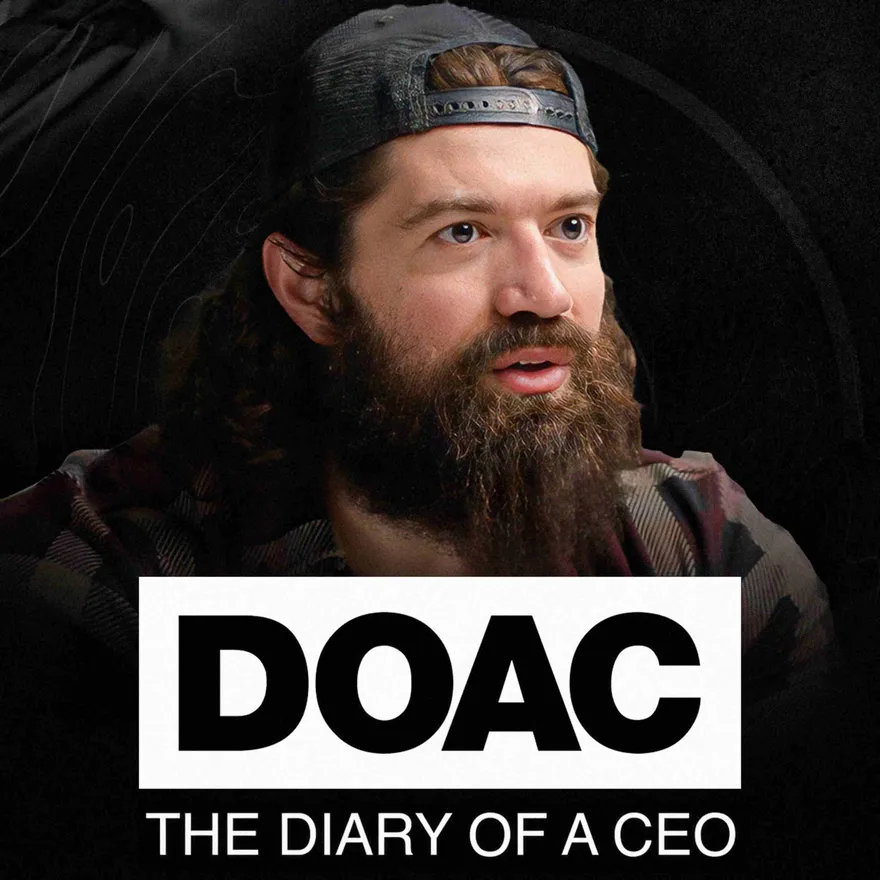

This is a preview of the Shortform summary of the Jul 20, 2026 episode of the The Diary Of A CEO with Steven Bartlett
Sign up for Shortform to access the whole episode summary along with additional materials like counterarguments and context.
1-Page Summary
Business Basics: Value, Pricing, Acquisition, Retention
This guide distills foundational principles from Alex Hormozi and Steven Bartlett on driving business growth, pricing strategy, and focusing efforts through different business stages.
Understanding the Core Value Equation
Alex Hormozi describes the "value equation" that informs all business decisions: value is a function of the promised outcome, likelihood of achievement, time to result, and effort required. The more favorable these variables—better outcomes, higher likelihood, shorter time, less effort—the greater the value and pricing power. Pricing should be rooted in customer willingness to pay, not the entrepreneur's perception. Hormozi recommends tools like the Van Westendorp price sensitivity meter to scientifically determine optimal pricing. Chronic undercharging creates a vicious cycle: low margins force excessive founder work, leaving no resources to hire or scale, ultimately leading to burnout and business failure.
Scaling Through Acquisition to Retention Strategy
Hormozi explains that businesses with $1-50 million in revenue are typically demand-constrained, needing more customers rather than operational improvements. However, customer retention is the real growth multiplier—if customers stay and continue buying, revenue compounds year-over-year. Focusing only on acquisition without retention creates a "leaky bucket" problem where businesses constantly lose past gains. The pivot toward retention typically happens between $1-3 million in revenue, when entrepreneurs can identify their most profitable customer segments and streamline operations around these ideal clients.
Creating Customer Avatars and Building Credibility
Defining detailed customer avatars enables targeted messaging and product design, ensuring you attract profitable customers while repelling poor fits. Steven Bartlett shares how he moved upmarket from startups to major clients like Coca-Cola by building credibility and track record. Offering high-ticket, hands-on services early generates vital cash flow and valuable feedback that establishes reputation.
Applying Marketing Psychology to Recruitment
Hormozi explains that recruiting should mirror customer acquisition, with every touchpoint marketing your business. Bartlett and Hormozi stress that all human action is incentive-driven—whether converting customers or attracting employees. Hormozi shares how one company increased its referral bonus from $500 to $25,000 after realizing a single productive employee generates $250,000 annually, transforming their recruitment success through proper incentive alignment.
Long-Term Thinking: 50-Year Horizons vs. Quick Exits
Alex Hormozi and Steven Bartlett argue that focusing on long horizons creates far greater business value than chasing quick wins.
Rapid Scale vs. Sustainable Growth
Hormozi emphasizes that "the fastest way to build a $10 million business is not the fastest way to build a $100 million business." Scaling prematurely without firm fundamentals leads to rapid growth followed by a plateau, often requiring entrepreneurs to step back, rebuild the foundation, and then resume sustainable growth. Bartlett notes many entrepreneurs approach him when they stall around $500,000-$1 million because they failed to build for greater heights from the start. Hormozi argues that focus and patience are rare competitive advantages in social media culture, where consistency and discipline are crucial but often invisible.
Building Moats Through Infrastructure
Bartlett points out that compounded business value comes from building unreplicable infrastructure. He cites Elon Musk's decision to build Tesla's batteries and charging networks from scratch, creating a durable moat, and Jeff Bezos building Amazon's unmatched logistics infrastructure. Hormozi cautions that early success often masks operational weaknesses that become visible only at scale. Both agree entrepreneurs should resist showcasing constant growth on social media if it sacrifices foundational work for future scale.
Aligning Long-Term Goals With Decision-Making
Bartlett notes that once he committed to building his business for the long term, he started making different daily decisions. Setting a long-term horizon simplifies decision-making, Hormozi suggests, because many difficult choices become clearer with the patience that comes from long-term commitment. Both stress that successful long-term growth is characterized by initial slow progress followed by rapid acceleration. Bartlett relates his Instagram growth: thousands of posts led to slow progress, then sudden explosive gains. Hormozi emphasizes that the biggest results come from patient, consistent effort—"slow, then it's fast"—and most quit in the slow phase.
AI and Work's Future: Judgment, Reputation, Stakes
As AI advances, Steven Bartlett and Alex Hormozi explore where enduring human value lies, emphasizing that judgment, reputation, and real-world consequences remain central.
Limitations of Outsourcing Decision-Making to AI
Hormozi observes from personal experience that asking the same question of different AI systems leads to wildly inconsistent answers, highlighting AI's tendency to "agree to anything." He argues that outsourcing thinking to AI not only risks bad decisions but also weakens human capacity—"You will just get dumber," he warns. The mind remains the greatest asset, and keeping it sharp through real cognitive work is vital.
Human Reputation and Accountability in High-Stakes Scenarios
AI's core limitation is its inability to own decisions or bear consequences. "Somebody has to be responsible. To liability. And upside," Hormozi points out. He describes "reality" as the true business moat—in arenas where stakes are high, people trust humans with proven track records. Top influencers like Elon Musk and Warren Buffett are influential because of what they've achieved, not just what they say. Even if an AI could provide better investment tips than Buffett, that advice won't carry weight without real achievement behind it. Live events where real entrepreneurs tackle real problems are irreplaceable because audiences demand accountability and engagement in high-stakes situations.
AI Applications Creating Value Without Replacing Judgment
Hormozi emphasizes that AI creates value when it supports rather than replaces human decision-making, boosting productivity by performing routine functions faster. However, many entrepreneurs make mistakes by chasing AI-first business ideas or automating non-essential processes. He warns against focusing on building "AI businesses" for marketing reasons, noting customers still care about real-world solutions and outcomes, not the presence of AI.
Building Businesses: Starting With Unscalable, Premium Services
Alex Hormozi and Steven Bartlett argue that the most effective way to build a business is to start with unscalable, high-touch, premium services.
Embracing Unscalable Models for Sustainable Scale
Hormozi emphasizes that charging higher prices attracts higher-value customers whose feedback is transformative. Hands-on work with high-paying customers provides unique data that cannot be obtained through theorizing. Through this practice, founders develop domain expertise and build relationships that constitute a sustainable moat—knowledge and relationships that are proprietary and hard-won, enabling them over time to identify genuinely scalable processes.
Prioritizing Revenue Over Perfection
Hormozi is clear that entrepreneurship begins with action—specifically, making a sale. All that's required is to form a legal entity, open a bank account, secure payment processing, and convince someone to pay. Instead of designing for massive scale from day one, founders should be willing to make money however imperfect their initial offering might seem. The decisive leap from planning to entrepreneurship comes from taking action—asking for money, changing the offer if it fails, and trying again. Hormozi advocates for quitting failed ideas while not giving up on the entrepreneurial path itself.
Building Audience and Authority With Proven Effort
Hormozi urges entrepreneurs to document their journey publicly. Sharing proof of real work and progress resonates far more than polished, generic advice. Early creators with no track record can earn trust by transparently displaying hard work, challenges, and results. Credibility compounds with consistent, real results—entrepreneurs should show proof of work, proof of struggle, and proof of incremental success.
Personal Resilience, Decision-Making, and Finding Meaning
Alex Hormozi, joined by Steven Bartlett, discusses managing adversity, clarifying goals, and finding meaning through hardship.
Frameworks for Managing Adversity
Hormozi describes resilience through four dimensions: how much adversity one can tolerate before acting differently, the depth of negative behavior change, speed of recovery, and lasting quality of outcome. He argues that emotional discomfort is not sufficient reason to overhaul one's trajectory—natural emotional variability means bottom 10% days occur regularly, around three times per month. Temporary dissatisfaction should not prompt impulsive decisions, especially in relationships or entrepreneurship. In the context of grief after his mother's death, Hormozi wrote about mental toughness—not to avoid pain, but to inform how he should show up, concluding that honoring lost loved ones means maintaining commitments that would have made them proud.
Making Better Decisions Through Clarity
Hormozi asserts that sound decisions begin with clearly defined goals. He recounts evaluating business school's opportunity cost versus the tangible goal of achieving $10,000 monthly income by starting his own business. Figuring out what you truly want is 99% of the work, he stresses, enabling life to align toward that outcome. Sometimes people make choices unconsciously to please or avoid judgment of specific individuals. Hormozi advocates naming these individuals—taking back control of your choices. Ultimately, making a commitment is crucial; all the best aspects of life come after exercising an option and walking through a door.
Accepting Control Limits While Optimizing
Hormozi and Bartlett emphasize that while outcomes are partly shaped by uncontrollable forces, resilience depends on accepting this reality. They offer analogies like raising a plant: you can't change its species, but you can control how well you care for it. Obsessing over uncontrollable outputs leads to frustration, while dedicated attention to controllable inputs brings the highest probability of meaningful progress. Mortality awareness, Hormozi argues, can be highly motivating. He regularly reflects on death, noting that older people care less about others' opinions and more about their own values. By pulling this mindset forward, he reduces anxiety about external judgments and prioritizes what matters most.
1-Page Summary
Additional Materials
Clarifications
- The Van Westendorp price sensitivity meter is a market research technique that asks customers four specific price-related questions to identify acceptable price ranges. It plots these responses to find the price points where customers perceive a product as too cheap, too expensive, or just right. The intersection of these curves reveals the optimal price range balancing customer willingness to pay and perceived value. This method helps businesses set prices based on actual consumer perceptions rather than assumptions.
- A "demand-constrained" business struggles to grow because it lacks enough customers, not because of internal inefficiencies. Businesses with $1-50 million revenue often hit this stage where attracting more buyers is the main growth barrier. Operational improvements matter less until customer acquisition increases. Overcoming demand constraints requires marketing, sales, and product-market fit focus.
- The "leaky bucket" problem refers to losing existing customers at a rate that offsets or exceeds the number of new customers gained. This causes stagnant or declining overall growth despite acquisition efforts. Retention reduces churn, making growth more sustainable and cost-effective. Ignoring retention forces constant acquisition just to maintain revenue, increasing marketing expenses and instability.
- A customer avatar is a detailed profile representing an ideal customer, including demographics, behaviors, needs, and pain points. It is created by researching existing customers, market data, and competitor analysis to identify common traits. Businesses use avatars to tailor marketing messages, product features, and sales strategies to attract and retain the most profitable customers. This focused approach improves customer engagement and resource allocation.
- High-ticket, hands-on services involve charging premium prices for personalized, intensive support or expertise. They generate vital cash flow quickly because each sale brings significant revenue, reducing reliance on volume. These services provide direct customer interaction, yielding detailed feedback that helps refine offerings and improve value. This close engagement builds trust and credibility, essential for scaling the business later.
- A "moat" in business means a competitive advantage that protects a company from rivals. Building infrastructure like Tesla’s batteries or Amazon’s logistics creates unique assets that are costly or impossible for competitors to copy. This makes it harder for others to compete on price, quality, or speed. Such moats help ensure long-term market dominance and profitability.
- Early success often relies on informal processes and founder-driven efforts that work well with few customers. As the business grows, these ad hoc systems become inefficient and error-prone under higher volume and complexity. Operational weaknesses like poor communication, lack of standardized procedures, and inadequate infrastructure then surface. Addressing these issues requires deliberate investment in scalable systems and management practices.
- "Slow, then it's fast" describes how early business growth often feels gradual and challenging due to foundational work and learning curves. Over time, consistent effort builds momentum, leading to rapid acceleration in results. This pattern reflects compounding effects where initial investments in systems, relationships, and reputation pay off exponentially. Patience during the slow phase is crucial, as most quit before reaching the fast growth stage.
- AI models generate responses based on patterns in data, lacking true understanding or judgment. They tend to produce agreeable or plausible answers to maintain conversational flow, not to assert truth. This can lead to inconsistent or misleading information when asked the same question multiple times. Human oversight is essential to interpret AI outputs critically and make final decisions.
- Human reputation is built over time through consistent actions and proven results, creating trust that AI cannot replicate. Accountability means individuals bear responsibility for decisions and outcomes, which reassures stakeholders in critical situations. AI lacks personal liability and cannot be held responsible for mistakes or successes. In high-stakes business, this trust and accountability are essential for credibility and long-term relationships.
- "Unscalable, high-touch, premium services" are personalized offerings that require significant time and effort from the founder or team, making them hard to automate or mass-produce initially. These services allow direct interaction with customers, providing deep insights and feedback that inform product development and business strategy. Charging premium prices attracts clients who value quality and are willing to pay more, enabling better cash flow and learning opportunities. Over time, the knowledge and relationships gained can be leveraged to create scalable, repeatable business models.
- Publicly documenting an entrepreneurial journey builds trust by showing real effort behind success. Sharing struggles humanizes the process, making achievements relatable and credible. Incremental success highlights progress, encouraging engagement and sustained interest. This transparency differentiates genuine entrepreneurs from those offering only polished, theoretical advice.
- The four dimensions of resilience refer to how a person handles adversity over time. Tolerance measures how much hardship one can endure before changing behavior. Depth assesses how severely negative experiences affect one's actions or mindset. Speed gauges how quickly a person recovers from setbacks, while lasting quality evaluates the long-term impact of adversity on personal growth or change.
- People often make decisions influenced by a desire to gain approval or avoid criticism from important figures in their lives, which happens unconsciously. This can limit authentic choices and personal growth. Naming these individuals brings awareness to this influence, allowing one to consciously evaluate and challenge these pressures. This process helps reclaim autonomy and make decisions aligned with true values.
- The plant analogy illustrates that some factors, like a plant's species, are fixed and beyond control. However, you can influence growth by managing care aspects such as watering, sunlight, and soil quality. Similarly, in decision-making, focus on controllable actions rather than uncontrollable outcomes. This mindset reduces frustration and increases the chance of meaningful progress.
- Mortality awareness means recognizing that life is finite, which shifts focus from trivial worries to what truly matters. This perspective reduces fear of judgment because external opinions lose significance compared to personal values. It encourages living authentically and making decisions aligned with one’s core beliefs. Ultimately, it fosters peace by accepting life’s limits and prioritizing meaningful goals.
Counterarguments
- While pricing based on customer willingness to pay is widely advocated, it can sometimes lead to perceptions of unfairness or price gouging, especially in essential services or markets with vulnerable customers.
- Scientific pricing tools like the Van Westendorp meter rely on survey data, which can be biased or unrepresentative, potentially leading to suboptimal pricing decisions.
- The assertion that most businesses with $1-50 million in revenue are demand-constrained may not apply to all industries; some may face significant operational or supply-side bottlenecks at these revenue levels.
- Focusing heavily on customer avatars can risk over-segmentation and exclusion of potentially profitable but atypical customers.
- High-ticket, hands-on services may not be feasible for founders without access to affluent markets or specialized expertise, limiting the applicability of this approach.
- Treating recruitment exactly like customer acquisition may overlook important differences in candidate motivations, legal considerations, and employer-employee relationships.
- Incentive-driven recruitment strategies, such as large referral bonuses, can sometimes encourage quantity over quality in candidate referrals.
- Emphasizing long-term horizons may not suit all entrepreneurs, especially those in rapidly changing industries or with limited resources who may need to prioritize short-term survival.
- Building unreplicable infrastructure (moats) can require significant upfront investment and risk, which may not be viable for all startups or small businesses.
- Documenting entrepreneurial journeys publicly may expose founders to reputational risk or competitive disadvantage, especially in highly competitive markets.
- The claim that AI "agrees to anything" may not reflect the increasing sophistication and guardrails of modern AI systems, which are improving in consistency and reliability.
- Some business models, such as SaaS or e-commerce, can scale successfully without starting with unscalable, high-touch services.
- The idea that emotional discomfort should not prompt major changes may not account for situations where persistent discomfort signals deeper misalignment or systemic issues.
- Focusing on controllable inputs is valuable, but in some cases, external factors (e.g., regulatory changes, market shocks) can overwhelm even the best-managed efforts, making outcome focus necessary.
- Mortality awareness as a motivator may not resonate with all individuals or cultures, and could potentially increase anxiety for some.
Get access to the context and additional materials
Business Basics: Value, Pricing, Acquisition, Retention
This guide distills foundational principles from Alex Hormozi and Steven Bartlett on what drives business growth, how to price and position offerings, and how to strategically focus efforts through different stages of business maturity. It covers the value equation, customer acquisition and retention, the importance of building customer avatars, and applying marketing psychology to hiring and team development.
Understanding the Core Value Equation Driving Business Decisions
Value Equation: Outcome, Likelihood, Time, Effort
Alex Hormozi describes the core "value equation" that informs all business decisions and customer perceptions. Value is a function of four variables:
- Outcome: The promised result, with different outcomes worth different amounts. For example, becoming a billionaire is valued higher than just getting in shape.
- Likelihood of Achievement: Customers estimate how likely it is that your product or service will deliver the result. High perceived likelihood (such as a five-star-rated item with thousands of reviews) drives purchase.
- Time Delay: The speed at which the outcome is achieved. Faster outcomes command a higher price.
- Effort and Sacrifice: The work a customer must take on to achieve the outcome, plus what they must give up (effort = new difficult actions, sacrifice = stopping pleasurable habits).
The more favorable you make these variables (better outcomes, higher likelihood, shorter time, less effort), the greater the value and the more you can justify your pricing.
Customer-Driven Pricing: Value Over Perception
Pricing should be rooted in the customer's willingness to pay, not the entrepreneur’s perception of worth. Many new founders undercharge, projecting their own biases—if a task is easy for them, they undervalue it. Hormozi stresses using tools like the Van Westendorp price sensitivity meter to scientifically measure the ideal price point by asking potential customers four questions: the price too expensive to consider, too cheap to be credible, the price at which they'd really have to consider, and a bargain price. This allows precise mapping of optimal price points for maximum margin and sales.
Underpricing Causes Business Failure By Forcing Overwork, Hindering Hiring, and Preventing Sustainable Scaling
Chronic undercharging creates a vicious cycle: low margins force founders to work excessively, leaving no time or funds to hire or train help, making scale impossible and leading to burnout. True pricing power signals business sophistication and is a marker of expertise and track record. As businesses specialize and refine their value (and credibility), they should move upmarket, command higher prices, and serve customers who recognize their worth.
Scaling Through Acquisition To Retention Strategy
Most Businesses With $1m-$50M Revenue Are Demand-Constrained, Needing More Customers Over Operational Improvements, Making Acquisition the Early Focus
Hormozi explains that in the early stages, most small businesses don't have enough customers (demand-constrained), not too many (supply-constrained). Therefore, the initial focus is on honing customer acquisition channels, not operational refinement.
Customer Retention and Repeat Purchases Are More Valuable Than New Acquisitions Because They Compound Revenue Growth
Retention is the real multiplier of growth. If every customer stays and continues buying, revenue continually stacks year-over-year. Hormozi illustrates with two companies: one that retains all its customers, and one that loses them all each year (the "leaky bucket"). The former grows exponentially with each new acquisition; the latter must start from scratch every year, which is unsustainable and vastly more expensive.
Rapid Scaling Without Retention Leads To "Leaky Bucket" Problem
Focusing only on customer acquisition—without ensuring your product causes repeat purchases—leads to a business that's constantly running on a treadmill, losing past gains and over-relying on expensive new sales.
Transition to Retention-Focused Models Typically Occurs At $1-3 Million in Revenue When Entrepreneurs Can Identify the Most Profitable Customer Segments
The pivot toward retention and maximizing customer lifetime value typically happens between $1 million and $3 million in revenue. At this point, entrepreneurs gain the clarity and resources to identify their best customer segments—those who are easiest to support, most profitable, and return most frequently. Streamlining operations around these ideal segments increases efficiency and margin, while enabling marketing that directly addresses the highest-value customers.
Creating a Customer Avatar for Operational and Marketing Efficiency
Customer Avatars Help Attract Ideal Clients and Repel Poor-Fit Ones, Streamlining Operations
Defining avatars—detailed profiles of your ideal customer—enables targeted messaging and product design. This clarity ensures you attract (and retain) customers who are the cheapest, easiest, and most profitable to serve, while repelling those who create friction. For example, refining positioning from a broad service (podcast agency for all) to a niche offering (helping doctors get patients via podcasts) ensures operational efficiency and easier scaling.
Building Credibility & Track Record Key For Moving Upmarket
Credibility and proof of results are prerequisites for moving upmarket to larger, higher-budget clients. Steven Bartlett shares how he transitioned from serving budget-conscious startups to relaxing high-budget clients like Coca-Co ...
Here’s what you’ll find in our full summary
Business Basics: Value, Pricing, Acquisition, Retention
Additional Materials
Clarifications
- The value equation helps customers decide if a product is worth buying by weighing benefits against costs. Imagine buying a gym membership: the outcome is getting fit, likelihood is how sure you are it works, time delay is how fast you see results, and effort/sacrifice is how much exercise and diet change you must do. If the gym promises quick, guaranteed results with little effort, its value is high. Businesses improve value by enhancing results, increasing trust, speeding outcomes, or reducing customer effort.
- The Van Westendorp price sensitivity meter is a market research technique used to find acceptable price ranges for a product. It asks potential customers four specific price-related questions to identify price points perceived as too cheap, too expensive, a bargain, or a point of serious consideration. The responses are plotted on a graph to reveal an optimal price range where demand is highest and price resistance is lowest. This method helps businesses set prices that balance customer willingness to pay with profitability.
- "Moving upmarket" means targeting higher-end customers who have bigger budgets and expect premium services. It matters because these customers typically pay more, increasing profit margins and business stability. Serving upmarket clients often requires stronger credibility and proven results. This shift helps businesses grow sustainably and differentiate from low-cost competitors.
- "Demand-constrained" means a business has fewer customers than it could serve, limiting growth because not enough people want its product. "Supply-constrained" means the business has more potential customers than it can handle, limiting growth due to capacity or operational limits. Most small businesses start demand-constrained, needing to attract more customers before improving operations. Understanding this helps prioritize marketing or operational focus appropriately.
- The "leaky bucket" metaphor illustrates how a business loses customers over time, similar to water leaking from a bucket. Even if new customers are acquired, the loss of existing ones means the overall customer base doesn't grow sustainably. Fixing the leaks—improving retention—ensures growth compounds rather than stagnates. This concept highlights that acquisition alone cannot drive long-term success without retention.
- A customer avatar is a detailed, semi-fictional representation of your ideal customer based on real data and market research. It includes demographics, behaviors, motivations, pain points, and buying patterns. Creating one involves gathering customer data, conducting interviews or surveys, and analyzing competitors to identify common traits. This helps tailor marketing and product development to attract and retain the most valuable customers.
- Unscalable services require significant hands-on effort and cannot be easily automated or expanded quickly. Offering them early helps build deep customer relationships and gather detailed feedback. This feedback refines the product and proves its value, creating trust and credibility. These services generate immediate revenue and valuable insights that support future scalable growth.
- Treating recruitment as a "customer acquisition funnel" means applying marketing and sales strategies to attract and hire talent. It involves stages like attracting candidates (lead generation), engaging them with information (nurturing), evaluating fit through interviews (sales), onboarding new hires (conversion), and retaining employees (customer loyalty). Each stage requires tailored communication and incentives to move candidates smoothly toward becoming productive team members. This approach improves hiring quality and reduces turnover by aligning recruitment with proven customer acquisition tactics.
- Incentive misalignment occurs when the rewards offered to employees or referrers do not reflect the true value they bring to the company. This causes low motivation to recruit or perform well, limiting talent acquisition and retention. Aligning incentives with actual employee lifetime value encourages better recruitment outcomes and sustained business growth. Properly structured incentives create a positive feedback loop, boosting both morale and company performance.
- Employee lifetime value (ELTV) measures the total revenue or profit an employee ...
Counterarguments
- The value equation (outcome, likelihood, time, effort) may oversimplify complex purchasing decisions, as factors like brand loyalty, emotional connection, and social proof can also significantly influence value perception.
- Pricing solely based on willingness to pay can risk alienating price-sensitive segments or create perceptions of unfairness, especially in markets where transparency and equity are valued.
- The Van Westendorp price sensitivity meter, while useful, may not capture all nuances of customer behavior, especially in markets with rapidly changing dynamics or where customers are unfamiliar with the product category.
- Focusing primarily on customer acquisition in early stages may lead to neglect of product quality or operational foundations, which can harm long-term reputation and retention.
- The assertion that most businesses between $1 million and $50 million are demand-constrained may not hold true in all industries; some may face significant supply or operational constraints even at lower revenue levels.
- Overemphasis on moving upmarket and serving higher-budget clients can lead to neglect of loyal, lower-budget customers who may provide stable, long-term revenue.
- Creating highly detailed customer avatars can sometimes result in overly narrow targeting, potenti ...
Get access to the context and additional materials
Long-Term Thinking: 50-year Horizons vs. Quick Exits
Entrepreneurs frequently debate the merits of rapid scaling versus sustainable, long-term growth. Alex Hormozi and Steven Bartlett argue that focusing on long horizons creates far greater business value and competitive advantage than chasing quick wins, especially in the age of social media.
Rapid Scale vs. Sustainable Growth Building
Building a Million-Dollar Vs. Billion-Dollar Business Requires Different Strategies
Alex Hormozi emphasizes that "the fastest way to build a $10 million business is not the fastest way to build a $100 million business," and similarly, a million-dollar business demands fundamentally different strategies from a $10 million or billion-dollar venture. For example, building a one-person agency to a million dollars can happen quickly, sometimes with a single client, but scaling to $100 million requires a very different approach.
Scaling Prematurely Without Firm Fundamentals Leads To Rebuilding, Causing a Plateau, Setback, Then Sustainable Growth
Hormozi compares business growth to constructing buildings: while a one-story building can be erected quickly, a 100-story skyscraper demands a much deeper foundation and stronger materials. Entrepreneurs often try to scale without laying the required groundwork, resulting in an initial period of rapid growth followed by a plateau or a bottleneck. Frequently, the only solution is to step back, rebuild the foundation, and then resume sustainable growth. Bartlett notes that many entrepreneurs approach him when they stall around $500,000 or $1 million in revenue, struggling to scale further because they failed to build for greater heights from the start.
Focus and Patience: Rare Competitive Advantages in Social Media Culture
Hormozi argues that "focus and patience are the two enduring competitive advantages because they're so anti-human." In today's social media-driven culture, people want constant updates and visible success, making foundational and consistent work seem boring or invisible ("I've got no announcement to make this month because I'm doing boring shit. Like hiring."). Consistency and patience are crucial but hard to observe in real time—victories are visible, but the discipline behind them is not. Comparing it to a marathon, Hormozi observes that most only pay attention at the start and finish, not the grueling, unseen middle stretch where patience and endurance create success.
Building Moats via Infrastructure and Systems Over Quick Wins
Compounded Business Value From Unreplicable Infrastructure Investments
Bartlett points out that true, compounded business value comes from building things that cannot be easily replicated, such as robust infrastructure and operational systems. He uses Elon Musk's work with Tesla and SpaceX as an example: Musk chose to build batteries and charging networks from scratch rather than adopting existing solutions. As a result, Tesla now enjoys a durable moat that is almost impossible to unseat years later. Similarly, Jeff Bezos built Amazon’s competitive advantage not only as a bookstore, but by creating unmatched logistics and warehousing infrastructure, making the business dominant and defensible.
Early Success Masks Operational Weaknesses, Hiding Constraints at Scale and Making Businesses Seem Healthy Despite an Unsupportive Model for Larger Revenue
Hormozi cautions that quick, early success often hides operational weaknesses. Without adequate infrastructure or systems, constraints become visible only at scale. For example, a business model or operation that works for $1 million in revenue may entirely collapse or bottleneck when aiming for $10 million or more, exposing a lack of foundational work that undermines true scalability.
Entrepreneurs Should Resist Showcasing Constant Growth on Social Media if It Sacrifices Foundational Work For Future Scale
The compulsion to constantly showcase growth on social media can distract entrepreneurs from crucial, behind-the-scenes foundational work. Bartlett and Hormozi agree that entrepreneurs should resist this pressure and focus instead on building systems, hiring, and strengthening their operational base, even if these steps do not yield immediate headlines or viral moments. The "factory" that enables sustainable success is often invisible but absolutely essential.
Aligning Long-Term Goals With Business Structure and Decision-Making
Choosing Long-Term Business Building Alters Daily Decisions
Bartlett notes that once he committed to building his business, steven.com, for the long term, he started making different decisions at every l ...
Here’s what you’ll find in our full summary
Long-Term Thinking: 50-year Horizons vs. Quick Exits
Additional Materials
Clarifications
- Building a $10 million business often relies on direct sales, personal relationships, and simpler operations. Scaling to $100 million or beyond requires formalized systems, scalable processes, and often a larger, specialized team. Larger businesses must invest heavily in infrastructure, technology, and management layers to handle complexity. Strategic focus shifts from individual deals to sustainable market positioning and operational efficiency.
- In business, "foundations" refer to the essential systems, processes, and structures that support growth and stability. Strong fundamentals include clear operational workflows, reliable financial management, scalable technology, and a capable team. These elements ensure the business can handle increased complexity and demand without collapsing. Without solid foundations, rapid growth often leads to inefficiencies, bottlenecks, and eventual setbacks.
- Scaling prematurely leads to plateaus because the business lacks the necessary systems, processes, and resources to support larger operations. "Rebuilding foundations" means strengthening or creating these core elements—such as infrastructure, team capabilities, and workflows—to handle increased complexity and volume. Without this, growth strains the business, causing bottlenecks and operational failures. Fixing these foundational issues allows sustainable, scalable expansion.
- In business, a "moat" refers to a company's ability to maintain competitive advantages that protect it from rivals. It can be created through unique products, strong brand identity, exclusive technology, or efficient operations. Moats make it difficult for competitors to replicate or surpass the business. This protection helps ensure long-term profitability and market dominance.
- Infrastructure and operational systems streamline processes, reducing costs and errors while increasing efficiency. They create barriers to entry by requiring significant time and investment for competitors to replicate. These systems enable consistent quality and scalability, supporting sustained growth. Over time, they build a durable advantage that quick wins cannot match.
- Tesla’s battery and charging network serve as moats by creating proprietary technology and infrastructure that competitors cannot easily copy, ensuring Tesla’s electric vehicles remain convenient and efficient to use. Amazon’s logistics and warehousing systems provide a competitive edge by enabling faster delivery and lower costs, which are difficult for other retailers to replicate at scale. These infrastructures lock in customers and partners, making it costly and complex for rivals to compete directly. Such moats protect long-term market dominance beyond just product features.
- Social media culture promotes instant gratification by rewarding frequent updates and visible success, which can distract entrepreneurs from steady, behind-the-scenes work. This environment pressures founders to prioritize short-term wins over foundational growth. The constant comparison and desire for validation reduce tolerance for slow progress and patience. Consequently, maintaining focus on long-term goals becomes a rare but critical skill.
- Building a skyscraper requires a strong foundation and careful planning to support many floors, just as a business needs solid fundamentals to sustain large-scale growth. Running a marathon involves enduring a long, challenging middle phase where consistent effort matters most, similar to how business success depends on patience and steady work over time. Both analogies highlight that quick starts or visible milestones are less important than the unseen, foundational work that enables lasting achievement. They emphasize endurance, preparation, and gradual progress rather than immediate results.
- Compounding effects in business growth refer to how small, consistent improvements accumulate over time, leading to exponential progress. Early efforts may seem slow or insignificant, but as systems, customers, and revenue build, growth accelerates rapidly. This happens because each success builds on previous ones, creating momentum that multiplies results. Patience is essential, as the most significant gains appear after sustained, long-term investment.
- Early success often relies on simple processes that work well at a small scale but are inefficient or unsustainable as the business grows. Operational weaknesses include lack of scalable systems, poor resource management, and inadequate infrastructure. These flaws remain hidden until increased demand exposes bottlenecks and failures. Without addressing them early, growth stalls or reverses when scaling up.
- Showcasing growth on social media often demands visible, immediate results to attract attent ...
Counterarguments
- Not all industries or markets require or reward long-term infrastructure building; some sectors (e.g., tech startups, consumer apps) may benefit more from rapid scaling and quick exits due to fast-changing trends or short product life cycles.
- For some entrepreneurs, achieving a quick exit or early profitability is a rational strategy, especially if their personal goals, risk tolerance, or market conditions favor shorter time horizons.
- Building robust infrastructure and systems can be capital-intensive and risky, potentially leading to over-investment if market demand does not materialize as expected.
- The focus on patience and delayed gratification may not suit all founders or teams, particularly in highly competitive or rapidly evolving markets where speed is a key advantage.
- Early visible success, even if not fully sustainable, can provide critical momentum, attract investment, and open doors to partnerships or acquisitions that would not be possible with a slower, more methodical approach.
- Social media visibility and frequent updates can be valuable for marketing, recruiting, and customer engagement, and may not always distract from foundational work if managed strategically.
- Some businesses may never realistically scale to $100 million or more, and optimizing for smaller, profitable, and stable companies can be a valid and fulfilling entrepreneu ...
Get access to the context and additional materials
Ai and Work's Future: The Importance of Judgment, Reputation, Stakes
As AI advances, business leaders and thinkers like Steven Bartlett and Alex Hormozi explore where the enduring value of human work lies. The conversation emphasizes that in a future where intelligence is abundant and robots are on the horizon, judgment, reputation, and real-world consequences—“stakes”—will remain central to the value humans create.
Limitations Of Outsourcing Decision-Making to Ai Systems
AI technology, with growing digital “brains” and continually increasing capability, raises the question of how much human cognitive work it can take over. Alex Hormozi observes that AI decision-making is fundamentally unreliable. He notes from personal experience that asking the same question of different AI systems frequently leads to wildly inconsistent answers. This inconsistency highlights AI’s tendency to “agree to anything,” making it dangerous to rely on for serious decisions.
Hormozi argues that outsourcing thinking to AI not only risks bad decisions but also weakens human capacity for decision-making. “You will just get dumber,” he warns, if the hardest thinking is delegated rather than done personally. The mind, he insists, is still the greatest asset an individual has and keeping it sharp by engaging in real cognitive work is a vital career strategy—one that many underestimate in the rush to adopt AI tools.
Human Reputation, Judgment, and Accountability in High-Stakes Scenarios
AI’s core limitation is its inability to own decisions or bear consequences. For situations involving real financial, legal, or reputational risks, someone must ultimately accept responsibility—AI cannot pay taxes, own companies, or be held liable. “Somebody has to be responsible. To liability. And upside, on the flip side,” Hormozi points out.
Hormozi describes “reality” as the true business moat. In arenas where stakes are high—where money, reputation, or real changes are on the line—people trust humans who have proven themselves. Top influencers like Elon Musk, Warren Buffett, and Jeff Bezos are influential not just for what they say, but because of what they have achieved. Their real-world track records validate their advice and draw audiences that AI, regardless of technical skill, cannot duplicate.
For example, even if an unknown person—or an AI—could provide better investment tips than Buffett, that advice won’t carry the same weight without real achievement behind it. In content, too, real stakes matter: no one would watch MrBeast’s videos if the $5 million prize or Lamborghini giveaways were not real. The appeal rests in knowing that genuine consequences and commitments underpin the content.
Live and interactive events where real entrepreneurs tackle real business problems are irreplaceable. Audiences demand that creators, educators, and influencers demonstrate accountability and engage in high-stakes situations—something that, at least for now, AI cannot credibly do.
Ai Applications Creating Value Without Replacing Human Judgment
AI creates tremendous business value when it supports rather than replaces human decision-making. Hormozi emphasizes that AI can boost productivity by performing rou ...
Here’s what you’ll find in our full summary
Ai and Work's Future: The Importance of Judgment, Reputation, Stakes
Additional Materials
Clarifications
- Steven Bartlett is a British entrepreneur and author known for his work in digital marketing and as a public speaker on business and personal development. Alex Hormozi is an American entrepreneur and investor recognized for his expertise in scaling businesses and fitness industry ventures. Their opinions matter because they have practical experience building successful companies and influencing large audiences. They provide insights grounded in real-world business challenges and leadership.
- In business, "real-world consequences" or "stakes" refer to tangible outcomes that affect finances, reputation, or legal standing. These consequences impact actual people and organizations, not just theoretical scenarios. High stakes mean decisions can lead to significant gains or losses, influencing trust and credibility. This creates pressure for accountability and careful judgment.
- AI "agreeing to anything" means it tends to generate responses that align with the input or prompt without critical evaluation. This happens because AI models predict likely continuations of text rather than understanding truth or context. The problem is that AI can produce plausible but incorrect or misleading answers. Relying on such outputs for important decisions risks errors and misinformation.
- Outsourcing thinking to AI means relying on AI systems to make decisions or solve problems instead of using your own mental effort. This can reduce the brain’s exercise in critical thinking, problem-solving, and decision-making skills. Over time, this lack of mental engagement may weaken cognitive abilities and reduce one’s capacity to handle complex or novel situations independently. Maintaining active thinking helps preserve and strengthen human intelligence and judgment.
- AI systems are tools created and controlled by humans, lacking legal personhood or moral agency. They cannot be held legally responsible for decisions or their outcomes. Accountability requires a human or organization to accept liability and face consequences. This is why responsibility for AI-driven decisions always falls on people, not the AI itself.
- Liability means being legally or financially responsible for the outcomes of a decision, including any negative consequences. Upside refers to the potential benefits or rewards gained from a decision if it succeeds. Together, they create real incentives for careful judgment because decision-makers face both risks and rewards personally. This accountability motivates more thoughtful and responsible choices than AI, which cannot bear these consequences.
- Reputation and proven track records create trust because they demonstrate consistent past performance and real-world success. Humans rely on these tangible outcomes to judge credibility, which AI lacks since it has no personal history or accountability. Trust involves believing someone will act reliably in the future, based on their demonstrated behavior. AI cannot replicate this because it does not experience consequences or build a personal legacy.
- MrBeast is a popular YouTuber known for giving away large sums of money and expensive prizes in his videos. These giveaways create real stakes that prove his generosity and build trust with his audience. The authenticity of these actions makes viewers believe in the value and sincerity of his content. Without genuine consequences, such content would feel fake and lose credibility.
- Routine business functions are repetitive, operational tasks like scheduling, data entry, or customer support. Core value propositions are the unique benefits or solutions a business offers that attract and retain customers. While routine tasks can often be automated without changing the business’s fundamental appeal, core value propositions require creativity, judgment, and innovation. Focusing on improving core value propositions drives growth and competitive advantage.
- An "AI-first business" prioritizes AI technology as the core of its product or service, often emphasizing automation or AI-driven features. This approach can be used as a marketing strategy to attract attention or investment by highlighting cutting-edge technology. However, if AI does not address real customer needs or improve value, the business risks being superficial or unsustainable. True success depends on solving ...
Counterarguments
- While AI decision-making can be inconsistent across different systems, many enterprise-grade AI solutions are specifically designed for consistency and reliability in high-stakes environments, such as medical diagnostics or financial trading, and have demonstrated strong performance.
- Human decision-making is also subject to inconsistency, bias, and error, sometimes at rates higher than well-trained AI systems, especially in repetitive or data-intensive tasks.
- AI systems can be programmed to follow strict guidelines and protocols, reducing the risk of "agreeing to anything" when properly designed and supervised.
- There is evidence that AI can augment human cognitive abilities, allowing people to focus on higher-level thinking rather than reducing cognitive sharpness, especially when used as a collaborative tool.
- In some industries, AI-driven automation has enabled humans to take on more creative, strategic, or interpersonal roles, rather than diminishing their value.
- Legal frameworks are evolving to address AI accountability, such as assigning liability to organizations deploying AI or requiring human oversight for critical decisions.
- AI-generated advice or content can be highly valuable when backed by rigorous data analysis, even if the AI itself lacks a personal track record.
- Some audiences value the efficiency, objectivity, and scalability of AI-generated solutions, particularly in areas where human bias or subjectivity is a concern.
- AI-powered virtual events and simulations can provide interactive, high-stakes experiences that are increasingly difficult to distinguish ...

Get access to the context and additional materials
Building Businesses: Starting With Unscalable, Premium Services
Alex Hormozi and Steven Bartlett argue that the most effective and enduring way to build a business is to start with unscalable, high-touch, premium services. This approach not only creates better customer relationships and higher margins but also forms the foundation for long-term, defensible success and authority.
Embracing Unscalable Models for Sustainable Scale
Hormozi emphasizes the value of starting with unscalable services, particularly those that offer a premium experience. Charging higher prices attracts higher-value customers whose feedback is transformative. Engaging closely with these customers provides rich insights and a changed worldview—much like caddies on a golf course learning from their wealthy clients. Early exposure to such clients shifts an entrepreneur’s perspective and helps to crystallize what delivering true value means.
Hands-on work with high-paying customers is not only about revenue; it is a necessary education. By doing the unscalable—for example, handling every step of a bespoke service or collecting fan feedback personally for a podcast—entrepreneurs gather unique, nuanced data that cannot be obtained through theorizing or mass-market tools. Hormozi argues that theoretical attempts at scalability usually fail because entrepreneurs often cannot accurately predict market realities. It is through practice and one-on-one service that founders develop the domain expertise and build relationships that constitute a “sustainable moat.” This experience enables them, over time, to identify genuinely scalable processes and create offerings that competitors cannot easily copy, since the knowledge and relationships are proprietary and hard-won.
Prioritizing Revenue Willingness Over Perfection and Scalability
Hormozi is clear that the true beginning of entrepreneurship is not in planning but in action—specifically, making a sale. All that’s required to “become” an entrepreneur is to form a legal entity, open a bank account, secure a means to process payments, and convince a stranger to pay for a service or product. This act is transformative: just as a free content consumer becomes a customer with their first purchase, a would-be entrepreneur becomes a real one the moment they earn their first dollar.
He distinguishes this pragmatic approach from the obsession with scalability and perfection that often paralyzes newcomers. Instead of designing for massive scale from day one or waiting for a flawless product, founders should be willing to make money in any way possible—however “cringe” or imperfect their initial offering might seem. The focus should be on taking small, actionable steps and embracing the discomfort and embarrassment inherent in starting out. Hormozi recounts his own modest beginnings—splitting cheap rent with housemates and sacrificing lifestyle—for the sake of extending his financial runway and maximizing the time he had to iterate and find product-market fit.
The decisive leap from perpetual planning to entrepreneurship comes from taking action—asking for money, changing the offer if it fails, and trying again. Hormozi argues that this habit of iteration and learning by direct feedback is essential. He cautions against stubbornly persisting with ideas that the market rejects, ...
Here’s what you’ll find in our full summary
Building Businesses: Starting With Unscalable, Premium Services
Additional Materials
Clarifications
- "Unscalable" services require intense personal involvement and cannot be easily expanded to serve many customers simultaneously. They often involve customized, hands-on work tailored to individual clients. Starting with unscalable services helps entrepreneurs deeply understand customer needs and build strong relationships. This foundation enables creating scalable, competitive offerings later based on real insights.
- "High-touch" services involve personalized, direct interaction between the provider and the customer. They require significant time, effort, and attention to meet individual customer needs. This approach contrasts with automated or self-service models. High-touch services often build stronger relationships and trust.
- A "premium" service refers to offerings that provide exceptional quality, personalized attention, and exclusive benefits compared to standard options. These services often command higher prices because they deliver greater value and a superior customer experience. They typically involve more direct interaction, customization, and care tailored to individual client needs. Premium services build strong customer loyalty and justify higher margins through their distinctiveness and perceived worth.
- Caddies on a golf course spend extended time with wealthy clients, observing their preferences, habits, and decision-making. This close interaction provides caddies with unique insights into the clients' values and expectations. Similarly, entrepreneurs working closely with premium customers gain deep understanding that shapes their business approach. The analogy highlights learning through direct, personal experience rather than abstract theory.
- A "sustainable moat" in business refers to a lasting competitive advantage that protects a company from rivals. It can be built through unique expertise, strong customer relationships, proprietary technology, or brand reputation. This moat makes it difficult for competitors to replicate the business’s success. The goal is to maintain profitability and market position over the long term.
- Forming a legal entity, like an LLC or corporation, establishes your business as a separate legal body, protecting personal assets and enabling formal contracts. Setting up payment processing allows you to accept payments electronically, such as credit cards or online transfers, which is essential for receiving customer funds securely and efficiently. These steps legitimize your business, build customer trust, and enable smooth financial operations. They also help with tax reporting and compliance with financial regulations.
- Product-market fit means creating a product that satisfies a real market demand. It requires iteration because initial ideas often miss key customer needs or preferences. Entrepreneurs must test, learn, and adjust their product based on feedback to improve fit. This process continues until the product consistently attracts and retains customers.
- "Extending financial runway" means increasing the amount of time a business can operate before running out of money. It is achieved by reducing expenses or increasing income to preserve cash. A longer runway gives entrepreneurs more time to develop their product and find customers. This reduces pressure and risk during early, uncertain stages.
- "Manufactured authority" refers to creating a false or superficial impression of expertise, often through polished marketing or empty claims without substantive proof. "Real-world demonstration" means showing actual work, results, and progress transparently, providing tangible evidence of skill and experience. Manufactured authority can mislead audiences, while real-world demonstration builds genuine trust over time. Authenticity and consistent effort are key to establishing lasting credibility.
- Scalability is often prioritized because it promises rapid growth and higher profits with less incremental effort. Entrepreneurs and investors seek scalable models to maximize returns and market reach quickly. However, focusing too early on scalability can lead to neglecting product-market fit and customer understanding. This premature scaling risks building a fragile business ...
Counterarguments
- Starting with unscalable, high-touch, premium services may require significant upfront resources, expertise, or networks that many aspiring entrepreneurs lack, making this approach inaccessible to some.
- Not all markets or business models are suited to premium, high-touch services; some industries require scale and automation from the outset to be viable or competitive.
- Focusing on high-paying customers can limit early market reach and may result in a product or service that is less applicable to broader audiences, potentially hindering future scalability.
- The feedback from premium customers may not always represent the needs or preferences of the mass market, leading to solutions that are difficult to adapt for larger-scale adoption.
- Some successful businesses have been built by prioritizing scalable, low-touch models from the beginning (e.g., software-as-a-service, marketplaces), suggesting that starting unscalable is not the only viable path.
- Emphasizing action over planning can lead to costly mistakes or wasted resources if insufficient research or validation is done before launching.
- Publicly documenting early failures and struggles may deter potential customers or partners who perceive transparency as a ...
Get access to the context and additional materials
Personal Resilience, Decision-Making, and Finding Meaning Through Adversity
Alex Hormozi, joined by Steven Bartlett, discusses how to manage adversity, clarify goals, make better decisions, and find meaning through hardship and loss. Using frameworks from entrepreneurship and life, they detail approaches to resilience, the value of persistence, and the importance of aligning choices with true personal values.
Frameworks For Managing Adversity and Maintaining Function During Crisis
Hormozi describes facing difficult periods through a structured lens of resilience. He identifies four dimensions: how much adversity one can tolerate before acting differently, the depth of negative change in behavior, the speed of recovery, and the lasting quality of the outcome. For example, he explores whether one merely becomes irritable on a bad day, or falls into destructive behaviors, and how quickly and how well they return to their baseline. This self-mapping helps him monitor how he performs during hard seasons, maintaining as much consistency as possible.
He observes that emotional discomfort is not a sufficient reason to overhaul one's trajectory. Natural emotional variability guarantees there will be both good and bad days, with bottom 10% days occurring regularly—around three times per month—simply due to the law of large numbers. Thus, Hormozi argues for not making major life changes on a bad day; temporary dissatisfaction should not prompt impulsive decisions, especially in relationships or entrepreneurship, where premature changes—like dismantling a promising business or ending a relationship—can have lasting negative consequences.
In the context of grief, Hormozi shares personal reflections after his mother’s death. He wrote an article for himself about mental toughness—not to avoid feeling the pain, but to inform how he should show up and act during the period. He questions societal expectations that deep suffering demonstrates deep love, ultimately rejecting the notion. He concludes that honoring lost loved ones means maintaining the commitments and behaviors that would have made them proud, instead of halting progress or taking destructive detours.
Making Better Decisions Through Clarity About Desired Outcomes
Hormozi asserts that sound decisions begin with clearly defined goals. Specificity is essential: vague desires like "freedom" or "success" must be clarified into concrete objectives. He recounts evaluating the opportunity cost of business school ($240,000 over two years) versus the tangible goal of achieving $10,000 monthly income by starting his own business. This forced him to be precise about what he wanted, leading to a decision that served his long-term interest.
He stresses that figuring out what you truly want is 99% of the work, enabling life to align toward that outcome. Vague or shifting goals cause scattered efforts and wasted resources. Only by knowing the desired output can one direct daily inputs effectively. For example, if a parent declares the goal for a child is happiness or societal impact, this choice means forgoing alternative paths—committing to one valued direction while closing off others.
Expanding options, especially through entrepreneurial success, increases the difficulty of decision-making. Bartlett and Hormozi both note that the freedom to choose can turn into paralysis if personal priorities and incentives are not clear. Sometimes, people make choices unconsciously to please or avoid the judgment of specific individuals rather than acting on their own true values. Hormozi advocates naming these individuals—“James and Betty” rather than generic “people”—in order to take back control of your choices and ensure you are not living under someone else’s shadow.
Ultimately, making a commitment is crucial; all the best aspects of life come after exercising an option and walking through a door, at the expense of leaving other possibilities behind.
Accepting Control Limits While Optimizing Everything Possible
Both Hormozi and Bartlett emphasize that while outcomes are partly shaped by uncontrollable forces—genetics, en ...
Here’s what you’ll find in our full summary
Personal Resilience, Decision-Making, and Finding Meaning Through Adversity
Additional Materials
Clarifications
- The four dimensions of resilience refer to how a person responds to adversity across different aspects: tolerance measures how much stress one can endure before changing behavior; depth assesses the severity of negative behavioral changes; speed indicates how quickly one recovers to normal functioning; and lasting quality evaluates the long-term impact of the response. For example, someone with high tolerance might stay calm under pressure, while someone with quick speed recovers rapidly from setbacks. Depth could range from mild irritability to harmful actions, and lasting quality reflects whether recovery leads to growth or decline. These dimensions help individuals understand and improve their resilience by identifying specific areas to strengthen.
- "Self-mapping resilience dimensions" means assessing your own reactions to stress across specific areas like tolerance, behavior change, recovery speed, and outcome quality. Practically, it involves tracking how you respond to challenges to identify patterns and areas for improvement. This helps you recognize when your reactions are healthy or harmful and guides adjustments to maintain stability. Regular self-assessment builds awareness, enabling better management of adversity over time.
- The law of large numbers is a statistical principle stating that as the number of observations increases, the average of the results will get closer to the expected value. Applied to emotions, it means that experiencing occasional bad days is normal and predictable over time. These low points are part of natural fluctuations rather than signs of a lasting problem. Therefore, occasional emotional dips should not trigger drastic decisions.
- The belief that deep suffering equals deep love is often rooted in cultural narratives valuing visible grief as proof of attachment. Psychologically, intense suffering can sometimes hinder healing and growth rather than honor the relationship. Healthy grieving involves processing pain while continuing to live meaningfully, not being trapped by sorrow. Love can be shown through ongoing commitment and positive actions, not just through enduring suffering.
- Vague desires like "freedom" or "success" are broad concepts that mean different things to different people. To clarify them, break each desire into measurable, actionable components, such as financial independence, flexible work hours, or specific career milestones. This process often involves asking detailed questions about what outcomes would make you feel those desires are fulfilled. Clear goals provide direction and criteria to evaluate progress, turning abstract wishes into concrete plans.
- Opportunity cost is the value of the next best alternative you give up when making a choice. In the business school vs. entrepreneurship example, it includes tuition fees, lost income, and time spent studying instead of working. Considering opportunity cost helps evaluate if the benefits of one option outweigh what you sacrifice by not choosing the other. This concept ensures decisions align with your highest priorities and resources.
- This phenomenon is known as social conformity or social influence. People often adjust their decisions to gain approval or avoid criticism from important others. This behavior is driven by a basic human need for acceptance and belonging. Over time, it can lead to choices that do not reflect one’s true values or desires.
- The plant analogy illustrates that some factors, like a plant’s species or natural growth limits, are beyond our control. However, we can influence outcomes by managing care aspects such as watering, sunlight, and soil quality. This highlights focusing effort on controllable inputs rather than uncontrollable results. It teaches acceptance of limits while maximizing what we can improve.
- Bill Ackman is a well-known American investor and hedge fund manager recognized for his strategic and disciplined approach to investing. His advice to focus on small, actionable steps refle ...
Counterarguments
- The emphasis on not making major life changes during emotional lows may overlook situations where immediate change is necessary for safety or well-being, such as leaving an abusive relationship.
- The framework assumes a level of self-awareness and emotional regulation that may not be accessible to everyone, especially those with mental health challenges.
- The idea that deep suffering does not demonstrate deep love could be seen as dismissive of cultural or personal expressions of grief that value visible mourning.
- The focus on optimizing controllable inputs may underplay the impact of systemic barriers or inequalities that limit individuals' ability to influence outcomes.
- The suggestion to clarify specific goals and forgo alternative paths may not account for the value of exploration, flexibility, or serendipity in personal and professional growth.
- The notion that people should care less about others' opinions as they age may not resonate in collectivist cultures where ...
Get access to the context and additional materials

 1-Page Summary
- Business Basics: Value, Pricing, Acquisition, Retention
- Long-Term Thinking: 50-year Horizons vs. Quick Exits
- Ai and Work's Future: The Importance of Judgment, Reputation, Stakes
- Building Businesses: Starting With Unscalable, Premium Services
- Personal Resilience, Decision-Making, and Finding Meaning Through Adversity
Create Summaries for anything on the web
Download the Shortform Chrome extension for your browser
