

Postpartum Fitness & My Boob Job…
In this episode of Pursuit of Wellness, Mari Llewellyn opens up about her postpartum journey, sharing how she's adapted her approach to fitness, nutrition, and wellness after having her son, Kai. She discusses her shift from intensive biohacking to more sustainable practices that fit the realities of motherhood, including her strength training routine, nutrition strategy centered on protein and intuitive eating, and the mental health benefits she's experienced from returning to regular exercise.
Mari also addresses the lifestyle changes motherhood has required, from condensed wellness routines to the importance of childcare support and meal prep services. Additionally, she shares details about her decision to undergo breast augmentation, her experience with peptides for recovery and muscle building, and her simplified supplement approach. Throughout, Mari emphasizes how prioritizing fitness and self-care has helped her feel like herself again while modeling healthy behaviors for her son.
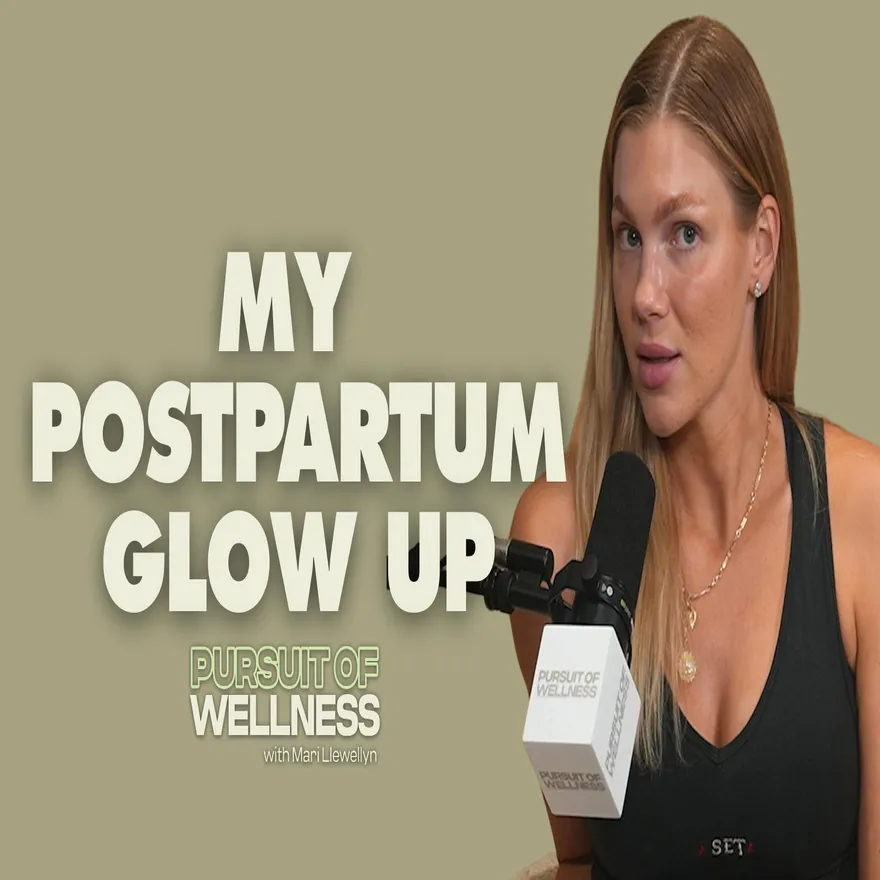

This is a preview of the Shortform summary of the Sep 24, 2026 episode of the Pursuit of Wellness
Sign up for Shortform to access the whole episode summary along with additional materials like counterarguments and context.
1-Page Summary
Mari's Postpartum Fitness and Wellness Journey
In this episode, Mari Llewellyn shares how she's navigated fitness, nutrition, and wellness after having her son, Kai. Her approach has shifted from intensive biohacking to sustainable practices that accommodate the realities of motherhood while maintaining her physical and mental health.
Strength Training Forms the Foundation
Mari emphasizes that weightlifting remains the cornerstone of her fitness routine, focusing on progressive overload to build muscle and achieve a toned appearance. She tracks her weights and reps, pushing herself to increase them consistently. Her workouts blend strength training with high-intensity interval training (HIIT), keeping rest periods minimal and maintaining constant movement. Sessions typically last 30 to 45 minutes, occasionally extending to an hour when her schedule allows.
She recognizes that accountability is crucial to her success, whether through a trainer in Colorado, FaceTime coaching, or group settings. Mari recommends that others seek similar accountability through trainers, apps, classes, or friends, noting that people push themselves harder in these environments. She continues lifting weights three to four times per week.
During Colorado summers, Mari integrates substantial cardio through daily hikes with Kai in a backpack, tennis twice weekly, and biking. However, Austin's extreme heat—regularly exceeding 100 degrees—has forced her to adapt by focusing more on indoor training. Mari acknowledges that her preference for intense training over gentler methods like Pilates suits her temperament, and she thrives on tough coaching that doesn't tolerate complaints.
Fitness Benefits Extend Beyond Physical Changes
For Mari, exercise's benefits reach far beyond aesthetics. She feels working out makes her a better mother, wife, and friend, improving her mental health and reducing anxiety. Rediscovering fitness after childbirth has restored her self-confidence and helped her reconnect with her sense of self. Even after sleepless nights, Mari consistently finds that movement energizes and uplifts her mood.
Nutrition Prioritizes Protein and Intuitive Eating
Mari has lost 50 to 60 pounds since giving birth, but she emphasizes that her focus is on aesthetics—looking and feeling her best—rather than the number on the scale. She advocates eating enough protein and carbs to build muscle optimally while maintaining a balanced approach. Mari doesn't practice extreme restriction, enjoying whole foods like homemade pasta, burgers, and sweet potato fries made from organic ingredients.
Meal prep has become essential with a young child, and Mari frequently uses meal prep services to ease the stress of daily cooking. She admits to sometimes ordering in when necessary, acknowledging the mental load of meal planning in motherhood. Her breakfasts are consistent—scrambled eggs, sourdough toast, butter, and fruit—while lunch and dinner rotate through simple options like rice bowls, salmon, and pasta.
Mari no longer tracks macronutrients, finding it too mentally taxing as a mother. Instead, she relies on visual estimation and intuition, embracing a nutritional philosophy centered on moderation and consistency. She enjoys nightly Bloom Pops with dinner, occasional popcorn with Swedish candy, and weekly outings for drinks like spritzes or skinny margaritas. Importantly, Mari found that breastfeeding made it difficult to control her appetite and prevented weight loss—unlike friends whose weight dropped during nursing, her progress accelerated only after she stopped breastfeeding.
Mental and Emotional Health Through Wellness
Mari reflects that it took nine months to feel like herself again after childbirth, attributing much of her renewed confidence and well-being to returning to regular fitness. She recounts feeling confused and uncomfortable during early postpartum podcasting despite sounding composed, describing it as classic "first time mum vibes." As she prioritized fitness again, her confidence in professional commitments and work returned.
Her motivation for fitness has shifted from personal achievement to modeling healthy behavior for Kai. Mari wants him to witness her working out and eating healthy, valuing the demonstration of strength, discipline, and self-care. She finds regular workouts vital for managing anxiety and building psychological resilience, enabling her to be a better mother and individual.
Mari acknowledges that her former "biohacking" approach centered on optimization, but motherhood has shifted her focus to sustainability. She stopped comparing her current fitness capacity to her pre-pregnancy self, recognizing that her life and priorities have fundamentally changed. Now, Kai always comes first, and workouts fit around his needs rather than the other way around.
Lifestyle Adaptations as a Mother
Before motherhood, Mari's wellness routine included daily sauna sessions, cold plunges, red light therapy, hyperbaric chamber sessions, and careful supplement regimens. Since having Kai, this approach has become condensed and realistic—she manages sauna sessions only once every two weeks and typically only remembers necessary medications. Mari accepts that this shift is more practical and reflects the reality of fitting wellness into small pockets of time.
Childcare support through a nanny who arrives early for morning workouts is vital for maintaining her fitness commitment. Each morning, Mari takes Kai on a walk for bonding and outdoor exposure before training. She notes that cooking and meal planning have proven the most challenging aspect of motherhood, making meal prep services essential. Mari insists that self-care is necessary to be a better mother, wife, and friend, believing that maintaining wellness and personal identity models healthy behaviors for her son.
Medical Procedures and Supplements
Mari underwent breast augmentation with Dr. Anna Steven in New York, receiving over-the-muscle, teardrop-shaped implants with a lift, minimal fat transfer, and slight reduction. Her motivation stemmed from body changes after losing 90 pounds in 2017 and breastfeeding, which caused sagging, asymmetry, and stretch marks that affected her confidence. She intentionally scheduled the surgery before a planned second pregnancy, wanting to enjoy feeling great in her body for at least a year despite knowing future pregnancy may alter results.
Recovery required temporary exercise modifications—limited to bodyweight workouts initially, with no weightlifting for six weeks. Mari discusses her experiences with peptides like SS-31 and MOTS-C, which she found beneficial for recovery, muscle building, and sleep postpartum. However, she cautions that peptide use requires careful research, reputable sourcing, and medical guidance, criticizing the current trend of extreme undereating facilitated by GLP-1 peptides among celebrities.
Mari's postpartum supplement strategy has become less intensive than her biohacking era, now prioritizing only essential medications and recommending creatine for daily use to support muscle health. Her overall approach has shifted toward sustainable and simplified wellness practices focused on long-term balance.
1-Page Summary
Additional Materials
Counterarguments
- While Mari emphasizes weightlifting and HIIT as foundational, some experts argue that gentler forms of exercise like Pilates, yoga, or walking can be equally effective for postpartum recovery and long-term health, especially for those with different temperaments or physical needs.
- The focus on aesthetics and achieving a "toned appearance" may inadvertently reinforce societal pressures on postpartum women to prioritize appearance over holistic well-being or functional strength.
- Not all mothers have access to resources such as personal trainers, nannies, or meal prep services, making Mari’s approach less accessible or practical for many women.
- The use of peptides and supplements, even with medical guidance, is not universally recommended for postpartum women, as long-term safety and efficacy data are limited.
- Emphasizing accountability through external sources (trainers, apps, group settings) may not suit everyone; some individuals thrive with self-motivation or less structured routines.
- The narrative that self-care and fitness are necessary to be a "better" mother, wife, or friend could be discouraging or guilt-inducing for women unable to prioritize these activities due to circumstances beyond their control.
- While Mari’s approach to intuitive eating and moderation works for her, some individuals may require more structured nutritional guidance, especially if they have a history of disordered eating or specific health conditions.
- The decision to undergo cosmetic surgery for confidence is personal, but some may argue that promoting surgical solutions for postpartum body changes could perpetuate unrealistic beauty standards.
- The assertion that movement always energizes and uplifts mood may not hold true for everyone, particularly those experiencing postpartum depression or other mental health challenges.
Actionables
- you can create a weekly “energy and mood tracker” to log how different types of movement, rest, and nutrition choices affect your mood, energy, and confidence, helping you identify which routines best support your mental and physical well-being as a parent or busy individual; for example, note how you feel after a short walk with your child, a quick strength session, or a balanced meal, and use these insights to adjust your habits for sustainability.
- a practical way to maintain fitness consistency with a young child is to set up a “parent-child movement basket” filled with simple items like resistance bands, a jump rope, or soft weights in your living space, so you can squeeze in mini strength or cardio bursts while your child plays nearby or joins in; for instance, do a set of squats or lunges while supervising playtime, or invite your child to mimic your movements for fun and bonding.
- you can simplify meal planning by building a “mix-and-match meal matrix” for the week, listing 2-3 proteins, 2-3 carbs, and 2-3 veggies or sides you enjoy, then quickly assembling different combinations for lunches and dinners without overthinking; for example, rotate grilled chicken, salmon, and tofu with rice, sweet potatoes, and pasta, pairing each with a veggie, so you always have balanced, easy-to-prep options that reduce decision fatigue.
Get access to the context and additional materials
Postpartum Fitness Journey and Exercise Routine
Strength Training Forms the Foundation of Her Fitness Regimen
Mari Prioritizes Weightlifting, Focusing On Progressive Overload to Build Muscle
Mari emphasizes that weightlifting is the cornerstone of her fitness journey. She believes if you want to see real progress—whether that means looking more toned or gaining muscle—lifting heavy and practicing progressive overload is essential. She regularly tracks her weights and reps, always aims to increase them, and commits to making herself uncomfortable to ensure growth. Currently, Mari focuses heavily on her legs, abs, and shoulders, and credits daily activities like holding her child, Kai, as unexpectedly effective arm workouts for her biceps.
Maximize Fat Loss With HIIT: Weights, Minimal Rest, Constant Movement
Her routines blend strength training with high-intensity interval training (HIIT), rarely allowing for long rests. She keeps her body moving, incorporating jumps and step-ups, often reaching a point of exhaustion by the end of her sessions. Sessions typically last 30 to 45 minutes, sometimes stretching to an hour when her schedule allows.
Accountability Boosts Mari's Motivation and Effort
Mari recognizes that having support is crucial; she performs better with a trainer or when others are involved. When in Colorado, she works with a trainer she admires, and in other locations, she uses FaceTime for remote coaching or trains solo. She recommends that others seek accountability through trainers, fitness apps, workout classes, friends, or group weightlifting. Mari notes that people push themselves more in accountable settings, and she continues to lift weights three to four times per week.
Cardio Complements Strength Training Despite Geographic and Seasonal Limits
Summer Cardio Activities in Colorado
During summers in Colorado, Mari integrates substantial cardio into her routine. She hikes almost daily with Kai in a backpack and engages in tennis twice a week, which she describes as “insane cardio”—especially at high altitude where it’s harder to breathe. She also bikes, pushes a stroller on walks, and generally ensures a high level of movement every day.
Workouts Last 30 to 45 Minutes, Occasionally Extending To an Hour, Balancing Childcare While Maintaining Intensity
Workout duration is often limited to 30 to 45 minutes, because she juggles exercise with childcare duties, quickly returning to Kai after each session. On days when timing aligns, she extends workouts to an hour. Mornings start with a walk outdoors with Kai, and she adapts her schedule to train whenever she has help with childcare, often shifting sessions later in the day.
Austin's Heat and Climate Challenge Outdoor Cardio, Prompting Her to Adapt Her Training
Relocating to Austin presents new obstacles. With temperatures routinely exceeding 100 degrees, outdoor cardio becomes far more difficult and less frequent. As a result, Mari adapts by focusing more on indoor training to maintain consistency despite the oppressive heat.
Methodology Matches Her Temperament, Drives Results
Mari Prefers Intense Training To Gentler Methods Like Pilates For Motivation and Progress
Mari knows her preferences well: she thrives on physical intensity and the sense of challenge. She admits gentler approaches like Pilates just aren’t motivating for her. Instead, she opts for “balls to the wall” training that reignites her energy and drive, stating the element of intensity “lights ...
Here’s what you’ll find in our full summary
Postpartum Fitness Journey and Exercise Routine
Additional Materials
Counterarguments
- Focusing primarily on weightlifting and progressive overload may not be suitable or appealing for everyone, especially those with joint issues, injuries, or different fitness goals.
- High-intensity interval training (HIIT) with minimal rest can increase injury risk, particularly for postpartum individuals or those new to exercise.
- Prioritizing discomfort and pushing to exhaustion may not be sustainable long-term and could contribute to burnout or overtraining.
- Relying on accountability from trainers or group settings may not be accessible or affordable for everyone.
- Emphasizing intense training over gentler methods like Pilates overlooks the benefits of low-impact exercise for core strength, flexibility, and injury prevention.
- The belief that exercise always improves mood or energy may not hold true for everyone, as some individuals may experience increased fatigue or negative mental health effects from intense routines.
- The approach may not adequately address the importance of rest, recovery ...
Actionables
- You can create a weekly challenge calendar that rotates focus areas (legs, abs, shoulders, arms) and includes a daily mini-challenge using household items or your own body weight, making it easy to track progress and stay motivated even with a busy schedule.
- A practical way to maximize short workout windows is to set a timer for 30 minutes and alternate between strength moves and bursts of cardio (like jumping jacks or stair climbs) with minimal rest, using a notepad to jot down your reps and weights for each session to see your improvements over time.
- You can turn everyday parenting or household tasks into micro-w ...
Get access to the context and additional materials
Nutrition, Weight Loss, and Body Composition
Protein-Centric Eating Supports Muscle Development and Weight Loss
Mari's Protein-Forward Nutrition Approach
Mari advises a balanced approach: "eat enough, eat enough protein, eat enough carbs" to optimally build muscle. After giving birth, she has lost around 50 to 60 pounds, but she emphasizes that her focus in nutrition and fitness is on aesthetics—looking and feeling her best—rather than the specific number on the scale. She notes the importance of feeling fit and healthy and prioritizes this personal goal in her approach.
Post-Birth Weight Loss of 50-60 Pounds Prioritizes Aesthetics Over Scale Weight in Nutrition and Fitness Decisions
Mari describes her post-pregnancy transformation as less about the number lost and more about regaining her sense of self and wellbeing. She shares that the process is highly personal, emphasizing that for her, it's important to feel and look like herself again.
Whole Foods: Moderate Portions, No Restriction
Mari does not practice extreme restriction. Dinners at her home involve whole ingredients and moderate portions, but she still enjoys foods like homemade pasta, burgers, and sweet potato fries, typically made from good, organic ingredients. She maintains a healthy balance by eating whole foods without cutting out the dishes she enjoys.
Practical Meal Strategies Ensure Consistency Amid Motherhood Demands
Meal Prep Eases Mari's Mealtime With Young Child
Meal prep has become essential for Mari, especially with the demands of caring for her young child. She frequently uses meal prep services to have ready-to-eat meals in the fridge. This strategy eases the stress of preparing meals each day and ensures she can provide nourishing and varied options for her son, Kai, as well as herself.
Flexible Dining Routine For Stress Reduction
Mari openly admits to sometimes ordering in when meal prep isn’t possible, citing the challenge of cooking after a busy day with a baby. She acknowledges the mental load associated with meal planning and preparation in motherhood and gives herself permission to prioritize convenience and stress reduction.
Breakfast Is Consistent; Other Meals Are Flexible With Organic Ingredients
Mari’s breakfasts are the same every day: scrambled eggs and sourdough toast with butter and fruit—an approach she says her son loves as well. For lunch, she often eats a rice bowl or salad with protein, while dinners include a rotating selection such as salmon, rice, soy sauce, avocado, ground beef pasta, red sauce, sushi, and sweet potatoes. She prefers simple, repetitive meals using organic ingredients, occasionally adding vegetables and mixing things up for variety.
Strategic Use of Beverages and Treats Enhances Enjoyment Without Derailing Progress
Mari Enjoys Bloom Pops With Dinner, Choosing Between Shirley Temple and Crisp Apple
Mari has a nightly ritual of enjoying a fizzy drink with dinner, typically a Bloom Pop—her favorite flavors are Shirley Temple and Crisp Apple. She considers these drinks a daily treat that enhances her meal satisfaction.
Infrequent Dessert Eater Enjoys Popcorn With Swedish Candy
She's not a frequent dessert eater but occasionally treats herself to popcorn with a few pieces of Swedish candy mixed in for a sweet-salty snack.
Weekly Alcohol Consumption: Single Outing With Light Drinks for Social Enjoyment
Mari enjoys going out about once a week, usually with her husband Greg, for a social drink such as an alcohol spritz or a skinny margarita. She appreciates these outings as part of her lifestyle without letting them derail her progress.
Nutrition Became Intuitive and Less Restrictive Over Years
Mari Avoids Tracking Macronutrients, Preferring Visual Estimation and Intuitive Eating, as She Finds Tracking too ...
Here’s what you’ll find in our full summary
Nutrition, Weight Loss, and Body Composition
Additional Materials
Counterarguments
- Focusing on aesthetics and "feeling fit" over objective health markers may overlook important aspects of health, such as cardiovascular fitness, metabolic health, or bone density, which are not always visible.
- Emphasizing protein and carbohydrate intake for muscle building may not be necessary for everyone; some individuals may have different dietary needs or health conditions that require alternative macronutrient distributions.
- The approach of not tracking macronutrients and relying on intuition may not work for individuals who struggle with portion control or have a history of disordered eating, as intuitive eating can be challenging for some.
- Using meal prep services and organic ingredients may not be accessible or affordable for everyone, making this approach less practical for people with limited resources.
- Regular consumption of fizzy drinks, even if marketed as healthy or low-calorie, may not be suitable for individuals sensitive to carbonation, artificial sweeteners, or certain additives.
- Prioritizing convenience and takeout, while reducing stress, can sometimes lead to less ...
Actionables
- you can create a weekly “food mood” journal to track how different meals and snacks make you feel physically and emotionally, helping you identify which foods support your sense of wellbeing, satisfaction, and energy without focusing on calories or weight.
- a practical way to simplify meal planning is to build a rotating two-week menu template with your favorite easy-to-prepare meals, leaving a few flexible slots for spontaneous takeout or new recipes, so you reduce daily decision fatigue and maintain variety.
- you can set ...
Get access to the context and additional materials
Mental and Emotional Health Through Wellness
Mari Llewellyn reflects on her journey with fitness as a vital part of her postpartum recovery, ongoing sense of self-worth, and evolving role as a mother. She candidly shares how her relationship with fitness both grounds her and shifts as she navigates motherhood.
Fitness Key To Reconnecting With Authentic Self Post-Pregnancy
Postpartum Recovery Accelerated by Fitness: Mari's Nine-Month Journey
Mari describes how it took her nine months to feel like herself again after childbirth. She emphasizes that the journey was gradual, and attributes much of her improved well-being and confidence to returning to regular fitness routines. She notes that “feeling healthy and fit again” is a huge reason for her renewed sense of self.
Podcasting Postpartum: Confused, Uncertain, and Uncomfortable Despite Composure
Mari recounts her early postpartum experience hosting the podcast, saying that although she might have sounded composed, internally she felt confused, unsure of what she wanted her life to look like or what to share, and uncomfortable in her body—a classic “first time mum vibes” experience. Attempting to work and podcast during this stage, she constantly felt off-balance and emotionally unsettled.
Fitness Boost Restores Confidence for Professional Commitments
As Mari prioritized her health and fitness again, she felt more confident returning to work and handling professional tasks. Regaining physical health contributed directly to improved confidence, enabling her to fully engage in her podcast and feel more like herself.
Fitness As Essential to Her Identity and Self-Worth
Intense Exercise as a Pre-motherhood Psychological Trait
Before motherhood, intense workouts were a critical part of Mari’s identity. She describes rising at 6am daily for an hour of training, which she sees now as an aspect of her life she doesn’t seek to replicate exactly.
Motivation For Fitness: Modeling Healthy Behavior, Strength, Discipline, and Self-Care for Her Son
Mari’s motivation for fitness has shifted from aesthetics or personal achievement to setting a healthy example for her son. She wants him to witness her working out and eating healthy, and she values modeling strength, self-discipline, and self-care as part of daily life. She credits her partner, Greg, as a positive influence in this aspect.
Regular Workouts Are Vital for Her Mental Clarity and Emotional Stability, Essential For Managing Anxiety and Psychological Resilience
She finds that bringing fitness back into her routine benefits her mental clarity, self-esteem, and emotional stability. Regular exercise allows her to manage anxiety and build psychological resilience, which in turn enables her to be a better mother, wife, friend, and individual.
Shifting Fitness Priorities From Optimization To Sustainability Improved Her Exercise Relationship
Mari's Wellness Shift: From Biohacking To Motherhood
Mari reflects on how her former approach centered on optimization and “biohacking,” but motherhood has changed her focus to sustainability in wellness.
Recognizing Former Extremes: Embracing a Relatable and Sustainable Approach
She acknowledges that the “6am, hardcore” training mentality is no longer compatible with motherhood. Instead, she embraces a much more relatable and sustainab ...
Here’s what you’ll find in our full summary
Mental and Emotional Health Through Wellness
Additional Materials
Counterarguments
- While fitness played a central role in Mari’s postpartum recovery, many women recover and regain confidence through other means such as therapy, social support, or creative pursuits, suggesting fitness is not universally essential for postpartum well-being.
- The emphasis on returning to fitness as a path to feeling “like herself” may unintentionally reinforce societal pressures on new mothers to “bounce back” physically, which can be unrealistic or unhealthy for some.
- Not all mothers have the time, resources, or support to prioritize regular fitness routines postpartum, making Mari’s experience less relatable or attainable for some audiences.
- The narrative centers on individual responsibility for well-being, potentially overlooking structural factors such as access to childcare, socioeconomic status, or healthcare that significantly impact postpartum recovery and mental health.
- While Mari’s shift from optimization to sustainability is positive for her, some individuals may still find value and fulfillment in more intense or goal-oriented fi ...
Actionables
- you can create a weekly “energy and mood tracker” that links your physical activity, sleep, and emotional state, helping you notice how even small, sustainable fitness efforts impact your confidence, clarity, and parenting presence; jot down quick notes each evening about what you did for movement, how you felt, and any moments you modeled healthy habits for your child.
- a practical way to reinforce fitness as a family value is to set up a “movement jar” at home, where you and your child each add a marble or token every time you do something active together or make a healthy food choice, then celebrate with a simple, non-food family reward when the jar fills up.
- you can schedule a monthly “reset reflection” wher ...
Get access to the context and additional materials
Lifestyle Adaptations as a Mother
Motherhood requires Mari to radically adapt her approach to wellness, fitness, and daily routines. While she once embraced elaborate biohacking and controlled nutrition, her current reality as a mother emphasizes flexibility, support, and the importance of prioritizing her own wellbeing for the benefit of herself and her family.
Motherhood Alters Her Wellness Approach
Mari acknowledges that, before becoming a mother, her wellness routine was intensive and included daily practices like the sauna, cold plunges, red light therapy, hyperbaric chamber sessions, and a careful regimen of supplements. This biohacking approach allowed her to deeply optimize her health. However, since having her child, Kai, her approach has become more condensed and realistic. Now, she manages a sauna session only once every two weeks, rarely uses the hyperbaric chamber, skips cold plunges, and typically only remembers to take her necessary medications. Supplements and elaborate routines are often forgotten in the bustle of parenting. Mari accepts that this shift is more practical and relatable for most mothers and reflects the reality of fitting wellness into small pockets of available time.
Childcare Support Essential To Maintaining Her Fitness Commitment
Support, especially through childcare, is vital for Mari to maintain her commitment to fitness. She has a nanny who has become like family, arriving early when Mari wants to work out in the mornings—something her husband, who leaves early for work, cannot help with. Each morning, Mari takes Kai on a walk, which serves as a bonding activity and gives both of them outdoor exposure. While she notes that some gyms, like Lifetime, offer daycare and that swapping childcare shifts with a spouse or having a family member visit are alternatives, her nanny allows her greater flexibility. This tailored support system ensures Mari can still prioritize her fitness despite the demanding schedule motherhood brings.
Cooking and Meal Prep: Challenges of Motherhood
Cooking and meal planning have proven to be the most challenging aspect of motherhood for Mari. She finds it difficult to muster the energy to cook complex meals when she also has to care for and feed her son, sometimes at the same time. To lessen this burden, Mari invests in a meal pr ...
Here’s what you’ll find in our full summary
Lifestyle Adaptations as a Mother
Additional Materials
Counterarguments
- Mari’s reliance on a nanny for childcare support may not be accessible or relatable for many mothers who lack the financial means or family resources for such help.
- The emphasis on maintaining personal wellness routines, including aesthetic procedures, could be seen as reinforcing societal pressures on mothers to “bounce back” or prioritize appearance.
- The use of meal prep services to manage cooking challenges may not be a practical or affordable solution for all families.
- The narrative may underrepresent the experiences of mothers who do not have flexible work schedules, supportive partners, or external help, making Mari’s ...
Actionables
- you can create a rotating list of five-minute wellness resets that fit into unpredictable parenting moments, like stretching while your child plays, deep breathing during nap time, or a quick dance session together, so you maintain self-care without needing a set schedule or special equipment.
- a practical way to make meal planning less overwhelming is to set up a weekly ingredient swap with another parent, where each of you preps a large batch of a simple, healthy ingredient (like roasted veggies or cooked grains) and trade portions, giving both families more variety with less eff ...
Get access to the context and additional materials
Medical Procedures and Supplements
Breast Augmentation Restored Confidence and Addressed Body Changes
Mari undergoes breast augmentation and related procedures in New York with Dr. Anna Steven, who employs the Preseve method for breast lift, fat transfer, and minor reduction. Dr. Steven, known for working with Dr. Neinstein on "mommy makeovers," performs a surgery involving a lift, minimal fat transfer, and slight reduction. Mari receives over-the-muscle, teardrop-shaped implants for a more natural look and a smaller incision, which also allows for a faster recovery — an important factor with a young child at home.
Mari’s motivation stems from body changes after losing 90 pounds in 2017 and breastfeeding, which caused significant breast sagging, asymmetry, and stretch marks that ultimately affected her confidence. She recalls feeling uncomfortable in a bathing suit during a trip to Greece and deciding that the persistent impact on her self-image was reason enough to move forward with surgery. Though never obsessed with having "amazing boobs," Mari ultimately chooses the procedure to regain daily confidence.
Strategic Surgery Timing Boosts Confidence Before Pregnancy
Mari intentionally schedules the surgery before a second planned pregnancy. After years focusing on IVF and raising her first child, she wants to enjoy feeling great in her body for at least a year. She's comfortable with a 2-3-year age gap between children to better savor her body’s post-surgery changes. Although aware that a future pregnancy may alter the results, Mari feels better knowing her breasts will "start higher" even if changes occur.
Recovery Required Temporary Modifications To Her Exercise Routine
Post-surgery, Mari temporarily modifies her exercise routine, initially limited to bodyweight workouts such as lunges and able to lift her child, but unable to resume weightlifting for six weeks. She admits to some frustration with exercise constraints but remains committed to fitness, looking forward to resuming training. During her recovery, her spouse Greg plays a supportive and active role in managing childcare and household needs despite his usual demanding work schedule.
Mari Stays Optimistic on Peptides, Stresses Informed and Safe Usage
Mari discusses her experiences with peptides, specifically SS-31, which she found beneficial for recovery, muscle building, and sleep postpartum, and MOTS-C, which supports muscle and may help with weight loss. She cautions that peptide use must be approached carefully—users need to do their own research, source peptides from reputable vendors (third-party tested), and have accurate dosing with medical guidance. She warns against improperly sourced products and misuse, highlighting significant risks, and critiques the current trend among celebrities of extreme undereating facilitated by GLP-1 peptides. Mari finds this "wasting away" trend concerning and advoca ...
Here’s what you’ll find in our full summary
Medical Procedures and Supplements
Additional Materials
Counterarguments
- Surgical interventions like breast augmentation may reinforce societal pressures on women to conform to certain beauty standards, potentially perpetuating body dissatisfaction rather than addressing its root causes.
- The long-term safety and efficacy of newer surgical techniques and implant types, such as the Preseve method and teardrop-shaped implants, may not be fully established compared to more traditional approaches.
- Choosing cosmetic surgery to address confidence issues may not resolve underlying self-esteem challenges, which could benefit from psychological support or counseling.
- Scheduling elective surgery before a planned pregnancy may result in the need for additional corrective procedures if pregnancy significantly alters surgical results, leading to more surgeries and associated risks.
- The use of peptides like SS-31 and MOTS-C for recovery and muscle building is not widely supported by large-scale, peer-reviewed clinical studies, and their safety profiles are not well established for general use.
- The peptide supplement market’s lack of regulation and oversight increases the risk of contamination, mislabeling, or adulteration, making even "reputable" sources potentially unreliable.
- Criticizing the FDA’s caution rega ...
Actionables
- you can create a personal recovery plan for any upcoming procedure or major life change by mapping out daily self-care tasks, identifying which household or childcare duties you’ll need help with, and scheduling check-ins with your support network to ensure you have practical and emotional assistance during your recovery period.
- a practical way to maintain fitness motivation during periods of limited activity is to set up a visual progress tracker for your recovery milestones, such as a calendar where you mark each day you complete gentle movement or self-care, helping you celebrate small wins and stay engaged with your long-term health goals.
- you can ...
Get access to the context and additional materials


Create Summaries for anything on the web
Download the Shortform Chrome extension for your browser
