

Calum Marsh on 'The Glass Box,' his new history of the CrossFit fitness empire
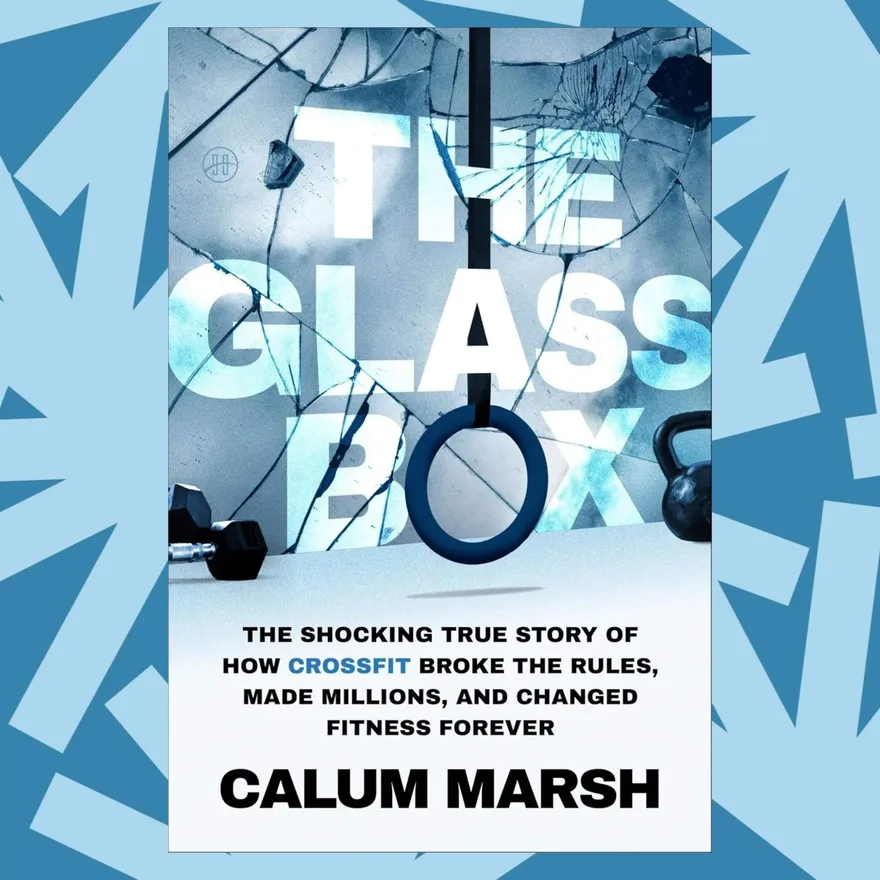
In this episode of NPR's Book of the Day, Calum Marsh discusses his book examining the rise and transformation of the CrossFit fitness empire. Marsh explores how founder Greg Glassman's libertarian philosophy initially shaped CrossFit as an anti-commercial enterprise, freely sharing a revolutionary workout methodology that brought elite athletic training to everyday fitness enthusiasts. The conversation traces CrossFit's evolution from grassroots movement to corporate partnership with Reebok and ESPN, which transformed the CrossFit Games into a major international competition.
Marsh also addresses the significant challenges CrossFit has faced, particularly around diversity and representation issues that came to a head in 2020 when Glassman's controversial response to George Floyd's death led to his resignation and mass gym de-affiliations. The episode concludes by examining CrossFit's future, including whether the organization might benefit from adopting a more open model similar to Pilates, prioritizing widespread accessibility over centralized brand control.

This is a preview of the Shortform summary of the Nov 17, 2026 episode of the NPR's Book of the Day
Sign up for Shortform to access the whole episode summary along with additional materials like counterarguments and context.
1-Page Summary
Crossfit's Founding Philosophy and Greg Glassman's Anti-Commercial Vision
Greg Glassman's revolutionary fitness approach in the 1990s combined Olympic weightlifting, high-level gymnastics, and basic exercises into fast-paced, timed circuits. This brought intense training—previously reserved for collegiate athletes—to general fitness enthusiasts. Glassman's libertarian views shaped his anti-commercial stance, treating his methodology as a public good to be shared freely rather than exploited for profit. He rejected typical commercial tactics like selling branded merchandise, relying solely on the strength of his ideas to attract followers while maintaining authenticity.
Corporate Shift: Reebok, ESPN, and Crossfit Games Rise
Despite initial resistance to corporate involvement, Reebok's tens-of-millions-dollar offer eventually convinced CrossFit leadership to formalize a partnership, fundamentally transforming the enterprise. Calum Marsh notes that combined with ESPN broadcasting, these partnerships evolved the CrossFit Games from a backyard barbecue into a stadium-sized international competition attracting tens of thousands of participants and millions of viewers. CrossFit's structured definition of fitness—encompassing speed, strength, mobility, balance, and accuracy—supported their claim that the Games determined the "Fittest on Earth." Marsh explains that CrossFit athletes generally outperform specialized athletes because they must excel across diverse activities. This made the title "fittest athlete" more defensible than "best athlete," as elite specialists in other sports often lack proficiencies outside their domain.
Diversity and Racial Issues in Crossfit: 2020 Crisis and Aftermath
CrossFit has long faced criticism for the underrepresentation of Black athletes in competitions and gyms. This issue became critical in 2020 when founder Greg Glassman issued an insensitive tweet linking George Floyd's death to COVID-19, sparking major backlash and exposing systemic racial issues within the organization. The crisis forced Glassman to resign and sell the company. During this period, thousands of CrossFit's 15,000 affiliated gyms chose to de-affiliate, continuing to use the methodology independently without official brand association. This mass exodus and organizational trauma hindered CrossFit's post-pandemic expansion, causing it to miss a crucial opportunity to surpass struggling fitness competitors.
Should Crossfit's Future Mirror the Pilates Model?
Pilates, originally developed by Joseph Pilates for post-WWII injured soldiers, became a generic term after the founder's death, allowing anyone to open studios without licensing or central affiliation. If CrossFit leadership prioritizes long-term viability and broad adoption over corporate control and revenue, following the Pilates model would be most beneficial, making CrossFit a widely accessible and enduring fitness approach rather than a tightly controlled brand.
1-Page Summary
Additional Materials
Counterarguments
- While Greg Glassman promoted an anti-commercial philosophy, CrossFit still charged significant affiliate fees and certification costs, which limited access for some potential gym owners and trainers.
- The claim that CrossFit methodology was shared "freely" is debatable, as the brand enforced trademark protections and legal actions against unauthorized use of the CrossFit name.
- The assertion that CrossFit athletes are the "fittest" because of their versatility is subjective; some critics argue that the definition of fitness used by CrossFit is tailored to favor their own competition format.
- The rapid commercialization and partnership with Reebok and ESPN, while expanding CrossFit's reach, also led to criticisms of "selling out" and diluting the original community-driven ethos.
- The underrepresentation of Black athletes in CrossFit may also reflect broader socioeconomic and cultural barriers in the fitness industry, not solely issues within CrossFit itself.
- The Pilates model, while increasing accessibility, has also led to inconsistent quality and lack of standardization, which could be a risk if CrossFit were to follow the same path.
- Some argue that maintaining brand control and quality standards is important for safety and effectiveness, and that a fully decentralized model could undermine these aspects.
Actionables
- You can create your own open-source workout log by sharing your daily fitness routines, modifications, and progress online for free, encouraging others to use, adapt, and improve upon them without any paywalls or branding requirements; this helps spread accessible fitness knowledge and builds a collaborative community around diverse training methods.
- A practical way to support inclusivity in fitness spaces is to invite friends from underrepresented backgrounds to join you for workouts, ask for their feedback on how welcoming the environment feels, and share those insights with gym staff or online forums to encourage positive changes.
- You can experiment with blending different fitness elements—like combining balance drills, speed challenges, and strength moves—into your own timed circuits at home, tracking which combinations feel most challenging and rewarding, and then sharing your favorite routines with others who want a well-rounded approach.
Get access to the context and additional materials
Crossfit's Founding Philosophy and Greg Glassman's Anti-Commercial Vision
Glassman's 1990s Training Methodology: Intense Weightlifting, Gymnastics, Circuit Training
Greg Glassman's core idea in the 1990s was to combine Olympic weightlifting, high-level gymnastics—such as handstands and the use of gymnastic rings—and basic exercises like burpees into fast-paced circuits performed on a clock, pushing participants to complete the workouts as quickly as possible. This approach brought unprecedented levels of intensity to general fitness, previously encountered mainly by collegiate athletes, and fundamentally changed how people approached and thought about fitness training.
Glassman Rejected Profit-Driven Models, Maintaining an Anti-Commercial Stance Rooted In Libertarianism
Glassman held a strong anti-commercial stance, inspired by die-hard libertarian views. He believed in sharing his training concepts freely, regarding his methodology as a public good rather than an opportunity for profit. He never envisioned Crossfit as a get-rich-qui ...
Here’s what you’ll find in our full summary
Crossfit's Founding Philosophy and Greg Glassman's Anti-Commercial Vision
Additional Materials
Counterarguments
- While Glassman initially rejected commercial tactics, CrossFit as an organization later became highly commercialized, with widespread franchising, branded competitions, and merchandise sales.
- The high-intensity, competitive nature of CrossFit workouts has been criticized for increasing the risk of injury, especially among beginners or those without proper supervision.
- Some fitness professionals argue that the "one-size-fits-all" approach of CrossFit circuits may not be suitable for everyone, particularly individuals with specific health conditions or fitness needs.
- Despite Glassman's anti-commercial intentions, the rapid growth and popularity of Cross ...
Actionables
- you can design your own short, high-intensity workout circuits at home by combining simple bodyweight moves (like squats, push-ups, and jumping jacks) with a timer, aiming to complete each round faster each time to experience a new level of intensity and track your progress
- For example, set a 10-minute timer and cycle through 10 squats, 10 push-ups, and 10 jumping jacks as many times as possible, recording your rounds and trying to beat your score next session.
- you can share your favorite workout routines, tips, or progress updates freely with friends or online communities without attaching any sales pitch or promoting products, focusing on helping others get fit for the sake of it
- For instance, post a weekly workout challenge on social media or in a group chat, inviting others to join and share their results, making it clear you’re not selling anything.
- you can avoid buying br ...
Get access to the context and additional materials
Corporate Shift: Reebok, Espn, and Crossfit Games Rise
Reebok and Espn Partnerships Reshape Crossfit's Structure Despite Resistance
Reebok, at the time a $4 billion brand, played a pivotal role in reshaping CrossFit’s trajectory. Initially, CrossFit was reluctant to accept corporate involvement, priding itself on its independent, renegade spirit. However, as Calum Marsh notes, the substantial financial offer—tens of millions of dollars—eventually convinced CrossFit leadership to formalize a partnership with Reebok. This shift was not immediate and met resistance, as the founders felt they were "too rock and roll" to go corporate. Yet, the infusion of significant investment fundamentally changed the nature of CrossFit, making it a very different enterprise over time.
Crossfit Games Grew From Small Event To Massive International Competition on Espn
The partnerships with Reebok and ESPN transformed the CrossFit Games from humble beginnings into a global phenomenon. What started nearly two decades prior as a backyard barbecue gathering evolved, within two or three years of the partnerships, into a stadium-sized event attracting tens of thousands of participants. Broadcasting on ESPN allowed millions to witness a competition unlike anything previously seen in the world of fitness. The CrossFit Games thus transitioned from an intimate affair to a centerpiece of a worldwide fitness revolution.
CrossFit’s marketing claimed that the Games determined the “Fittest on Earth”—a claim rooted in their structured definition of fitness rather than mere branding.
Crossfit's Definition of Fitness—Speed, Strength, Mobility, Balance, Accuracy—Supports Claim as World's Fittest
CrossFit’s concept of fitness encompasses a broad range of physical skills: speed, strength, mobility, balance, and accuracy. The structure of the Games means that athletes need proficiency across all these dimensions to succeed. According to Calum Marsh, CrossFit athletes generally outperform specialized athletes because they must be well-rounded across diverse activities—not just excel at one. For example, while a basketball player like peak Michael Jordan ma ...
Here’s what you’ll find in our full summary
Corporate Shift: Reebok, Espn, and Crossfit Games Rise
Additional Materials
Counterarguments
- The infusion of corporate sponsorship, particularly from Reebok, led to concerns among some original CrossFit community members that the sport lost aspects of its grassroots identity and authenticity.
- The claim that CrossFit athletes are more well-rounded than specialized athletes is based on CrossFit’s own definition of fitness, which may not be universally accepted or applicable across all sports and physical disciplines.
- The assertion that CrossFit determines the “Fittest on Earth” is inherently subjective, as different sports and organizations have varying criteria for fitness and athleticism.
- The rapid commercialization and expansion of the CrossFit Games may have prioritized spectacle and marketability over the original ethos of functional fitness and community.
- Some critics argue that the CrossFit training methodology, while broad, may not adequately address certain aspects of fitness such as long-term enduranc ...
Actionables
- you can design a weekly fitness challenge for yourself that rotates focus between speed, strength, mobility, balance, and accuracy, so you develop a more well-rounded physical skill set rather than specializing in just one area; for example, dedicate each weekday to a different skill—like sprint intervals on Monday, bodyweight strength circuits on Tuesday, yoga or stretching on Wednesday, balance drills on Thursday, and target-based accuracy games on Friday.
- a practical way to measure your progress across multiple fitness domains is to create a personal scorecard where you track your performance in a simple test for each skill (such as a timed run, max push-ups, standing on one leg, or tossing a ball at a target), then review your scores monthly to see which areas need more attention and celebrate improvements in your overall fitness balance. ...

Get access to the context and additional materials
Diversity and Racial Issues in Crossfit: 2020 Crisis and Aftermath
Crossfit's Black Athlete Underrepresentation in Competitions and Gyms Reflects Systemic Issues
Crossfit has long faced criticism for the lack of Black athletes not only at the CrossFit Games but also in local gyms. Calum Marsh points out that Black participation in Crossfit lags, and the causes of this underrepresentation are complex and multifaceted. This issue became especially prominent in 2020, as it forced the CrossFit community to reckon with systemic problems regarding diversity and inclusion.
Founder Greg Glassman's Response to George Floyd's Death Exposed Racial Issues
Glassman's Insensitive Tweet Linking George Floyd's Death To Covid-19 Sparks Racism Backlash
After the Black Lives Matter protests and the killing of George Floyd, CrossFit founder Greg Glassman stated that CrossFit as an organization was not mourning George Floyd’s death. He issued an insensitive tweet that linked George Floyd’s death to COVID-19, sparking a major backlash. Many people pointed out that this was not a one-off issue, but evidence of a long-standing undercurrent of racism within the organization, leading to a serious reckoning inside CrossFit.
Backlash Over Systemic Racial Issues in Crossfit Led To Glassman's Resignation
This backlash soon forced Greg Glassman to step down from his position. He was compelled to sell the company and sever ties with CrossFit entirely as the organization faced demands for accountability and reform.
2020 Racial Crisis Caused Mass De-affiliation From Crossfit While Retaining Methodology
15,000 Crossfit Affiliates Existed; Thousands De-affiliated, Becoming Independent Gyms Maintaining the Methodology Without Official Brand Association
During this crisis, the CrossFit brand h ...
Here’s what you’ll find in our full summary
Diversity and Racial Issues in Crossfit: 2020 Crisis and Aftermath
Additional Materials
Counterarguments
- While Black underrepresentation in CrossFit is noted, participation rates in fitness activities can be influenced by a variety of factors beyond systemic issues, such as cultural preferences, socioeconomic status, and geographic access to gyms.
- The causes of underrepresentation are described as complex and multifaceted, and some analysts argue that attributing it primarily to systemic racism may oversimplify the issue.
- Some affiliates and athletes have stated that their decision to de-affiliate was based on a desire for independence or disagreement with corporate management, rather than solely on racial issues.
- Despite the crisis, CrossFit has continued to maint ...
Actionables
- you can anonymously review your local gym’s website and social media for signs of diversity and inclusion, then send a short, constructive email suggesting ways to make the gym’s online presence more welcoming to underrepresented groups (such as featuring diverse athletes in photos or sharing stories from a range of members), helping gyms recognize and address unintentional barriers.
- a practical way to support inclusion is to invite a friend from an underrepresented background to join you for a free trial class at your gym, then ask for their honest feedback about the environment and share their suggestions with gym staff, helping gyms identify and fix issues that might discourage participation.
- you can track and ...


Get access to the context and additional materials
Should Crossfit's Future Mirror the Pilates Model?
Decentralizing Crossfit Control Could Widen Methodology Availability, Like Pilates Post-Founder
Pilates Originated by Joseph Pilates For Post-Wwii Injured Soldiers, Later Became Generic Allowing Studios Without Licensing or Central Affiliation
Pilates was invented by Joseph Pilates and gained popularity after World War II as a rehabilitation method for injured soldiers. Following Joseph Pilates’ death, the method surged in popularity again during the 1980s and 1990s, especially in New York. At this point, "Pilates" became a generic term anyone could use. There is no central governing body or company, like "Pilates Inc.," requiring studios or instructors to license the name or practice; anyone can open a Pilates studio without paying for rights or central affiliation.
If Crossfit Leadership Prioritizes Long-Term Viability and Adoption Over Corporate Control and Revenue, the Pilates Path Would Be Most Beneficial
If Crossfit ...
Here’s what you’ll find in our full summary
Should Crossfit's Future Mirror the Pilates Model?
Additional Materials
Clarifications
- Crossfit is a branded fitness program combining weightlifting, cardio, and gymnastics. It is currently controlled by CrossFit, Inc., which licenses affiliated gyms and certifies trainers. Affiliates pay fees and follow specific training standards to use the Crossfit name. This centralized control maintains quality but limits who can officially offer Crossfit programs.
- When a term becomes "generic," it means it is no longer legally protected as a trademark. This allows anyone to use the term freely without paying fees or obtaining permission. For Pilates, this means studios can market themselves as Pilates providers without licensing from a central authority. Practically, this increases accessibility but can lead to varied quality and standards.
- A central governing body in fitness sets standards, certifies instructors, and controls the use of the brand or method. Licensing requires studios or trainers to pay fees and follow specific rules to use the name or system. This ensures quality control and protects the brand’s reputation. Without it, anyone can teach or use the method freely, which can increase accessibility but reduce uniformity.
- Pilates became generic because Joseph Pilates did not establish a formal trademark or licensing system before his death. This allowed anyone to use the name and teach the method without paying fees or adhering to central rules. In contrast, Crossfit is a trademarked brand requiring gyms to pay licensing fees and follow specific standards to use the name. This corporate control limits who can officially call their workouts "Crossfit."
- When a founder’s legacy becomes public domain, it means their original work is no longer legally protected by copyrights or trademarks. This allows anyone to use, teach, or modify the method without needing permission or paying fees. In fitness, this leads to widespread adoption and many independent studios offering the practice. It contrasts with proprietary systems controlled by a company or individual.
- Crossfit operates under a franchising model where individual gyms pay fees to use the Crossfit name and methodology. The company, led by Crossfit Inc., tightly controls branding, certification, and competition standards. This centralized control generates significant revenue through licensing and certifications. Leadership decisions often prioritize maintaining this control and revenue stream.
- Decentralizing control means removing a single organization’s exclusive authority over a fitness m ...
Counterarguments
- The lack of centralized control in Pilates has led to significant variation in quality and safety standards among instructors and studios, which could be a risk if Crossfit were to follow the same model.
- Crossfit’s current model of certification and affiliation helps maintain a consistent standard of coaching and programming, which may contribute to participant safety and brand reputation.
- The decentralized Pilates model has resulted in trademark disputes and confusion among consumers about what constitutes authentic Pilates, which could similarly affect Crossfit’s brand identity and consumer trust.
- Crossfit’s business model, including licensing and certification, provides financial resources for research, community events, and athlete support, which might be diminished under a fully decentralize ...
Get access to the context and additional materials


Create Summaries for anything on the web
Download the Shortform Chrome extension for your browser
