

Annie Proulx says "Brokeback Mountain" wasn't a gay love story until late in the game
In this episode of NPR's Book of the Day, author Annie Proulx discusses the craft of short story writing and shares surprising details about her most recognized work. Proulx explains what distinguishes short stories from novels, emphasizing their demand for immediate engagement and their capacity to compress extensive periods into just pages. She describes her writing process as one of total commitment followed by complete closure, though she makes exceptions for story endings that can transform entire narratives.
Proulx reveals that the characters in "Brokeback Mountain" were not initially conceived as gay, and that a chance encounter with bigotry during lunch fundamentally altered the story's direction. She emphasizes that the story focuses primarily on economic hardship and job scarcity, though its cultural impact as a portrayal of same-sex love has overshadowed these themes and her broader literary career. Throughout the conversation, Proulx describes writing as a joyful form of puzzle-solving rather than laborious work.
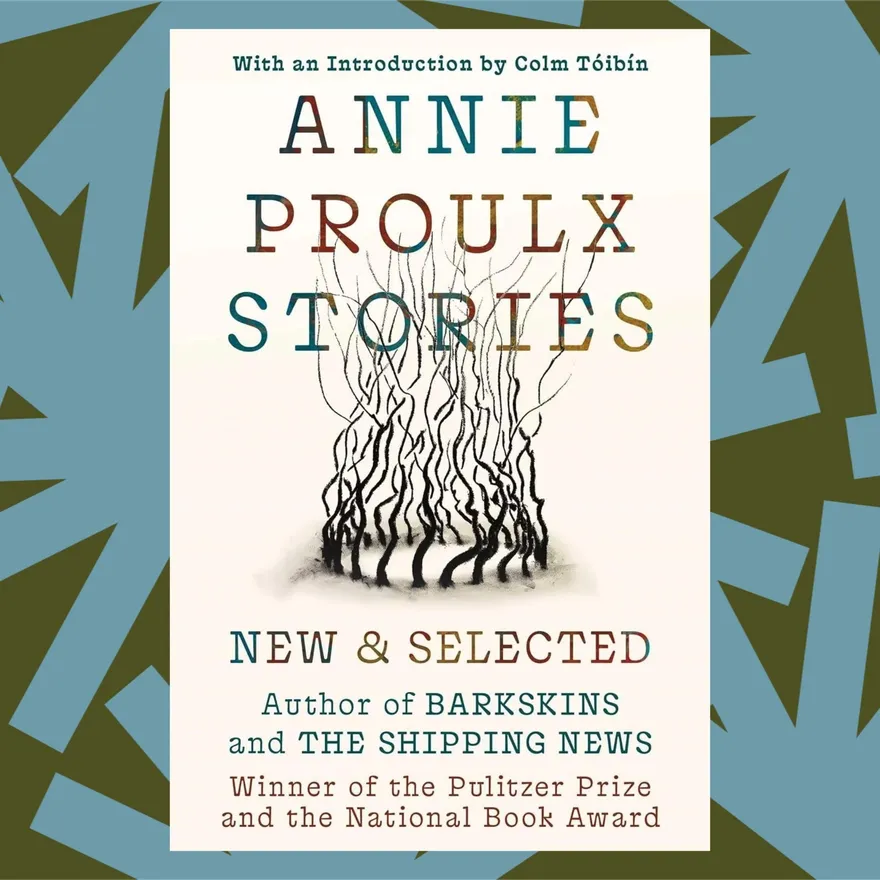

This is a preview of the Shortform summary of the Nov 16, 2026 episode of the NPR's Book of the Day
Sign up for Shortform to access the whole episode summary along with additional materials like counterarguments and context.
1-Page Summary
Advantages and Unique Qualities of Short Stories
Annie Proulx, along with interviewers Andrew Limbong and Scott Simon, explores what makes short stories a distinctive and valuable literary form. Proulx highlights how short stories demand immediate engagement—they lack the luxury of lengthy setup that novels enjoy. This compression requires every element to serve the narrative's core purpose, keeping both writer and reader engaged from the first line.
Simon notes that while some short stories capture mere snapshots, others like Proulx's work can condense years or decades into just pages. Proulx describes the form as "a thing that's small enough to hold in your hand," emphasizing its satisfying completeness. This compactness allows for substantial changes with small revisions, demonstrating the form's delicate flexibility.
Proulx calls the short story "a most excellent portmanteau for ideas, for exposition, for character development, for having fun." The concise length encourages experimentation and allows robust character development without reader fatigue. Unlike novels, which can grow tedious during the writing process, short stories provide intense, focused bursts of creativity—offering the satisfaction of completion without creative exhaustion.
Proulx's Writing Process and Character Development
Proulx describes her philosophy as one of total commitment while writing, followed by absolute closure upon completion. She rarely rereads her work, explaining that once a story is finished, she considers it complete and sees no need for further revision. During the writing process, her characters become vivid and real, but once the story is complete, they become subordinate to the overall narrative structure.
However, Proulx makes exceptions for story endings. She recounts calling her agent to add sentences that transformed entire narratives, including the now-iconic final line of "Brokeback Mountain": "There was some open space between what he knew and what he tried to believe, but nothing could be done about it. And if you can't fix it, you've got to stand it."
"Brokeback Mountain" Origin and Cultural Impact
Proulx reveals that the central characters of "Brokeback Mountain" were not originally conceived as gay. The turning point came when she stopped for lunch and encountered a restaurant owner who recounted, with clear prejudice, her experience serving two gay guests. Hearing this display of bigotry, Proulx decided to make her two sheepherders gay, fundamentally altering the story's meaning.
Proulx emphasizes that the story is primarily about economic hardship and job scarcity—two men who could only find work herding sheep, an undesirable job. The love story emerged organically later in the writing process. Despite her attempts to highlight these economic themes, the story's cultural impact as a portrayal of same-sex love has come to dominate discussion of her work, overshadowing her long and varied literary career.
Writing As Joyful Puzzle-Solving
Proulx describes writing as a source of joy, likening it to solving a complex puzzle rather than laborious work. She regards words as precisely calibrated pieces that must fit together, transforming composition into an engaging pursuit. The malleability of short stories particularly appeals to her, as even small revisions can dramatically affect tone and impact. This enthusiasm for literary problem-solving distinguishes Proulx from writers who view the craft as exhausting, as she delights in the pleasurable challenge of continual experimentation and refinement.
1-Page Summary
Additional Materials
Counterarguments
- While short stories require immediate engagement, some readers and writers may find the lack of extended setup limits emotional investment or world-building compared to novels.
- The necessity for every element to serve the narrative's core purpose can restrict creative digressions or subplots that some readers enjoy in longer works.
- Although short stories can condense long periods into a few pages, this compression may sometimes result in a lack of depth or nuance in character development or plot.
- The compactness and completeness of short stories may leave some readers wanting more resolution or exploration of themes.
- The flexibility and delicacy of the short story form can also make it challenging for writers to achieve the same level of complexity as in longer works.
- Some writers and readers may prefer the sustained immersion and gradual development offered by novels, finding short stories too brief or abrupt.
- Proulx's approach of rarely revisiting or revising completed stories may not suit all writers, as some benefit from ongoing revision and reflection.
- The idea that characters become subordinate to narrative structure after completion may conflict with approaches that prioritize character-driven storytelling.
- While Proulx emphasizes economic hardship in "Brokeback Mountain," many readers and critics find the story's emotional and cultural impact as a same-sex love story more compelling or relevant.
- The view of writing as joyful puzzle-solving may not resonate with writers who experience the process as emotionally taxing or creatively draining.
- The malleability of short stories, allowing small revisions to have large effects, can also make the form feel unstable or difficult to control for some writers.
Actionables
- you can write a one-page story using only details that directly move the plot or reveal character, then swap out or remove any sentence that doesn’t serve a clear purpose, to practice making every element count and see how small changes shift the story’s impact
- (for example, write about a lost wallet and only include actions or thoughts that push the story forward; then, try removing a descriptive sentence and notice how the tone or clarity changes)
- a practical way to experiment with narrative flexibility is to retell the same brief story twice: once as a single vivid moment and once as a summary of years, using the same characters and setting, to see how compression or expansion changes the story’s focus and emotional effect
- (for example, describe a character’s first day at a new job in one version, then summarize their entire career at that job in another, both in under 300 words)
- you can treat story endings as modular by writing three different final sentences for a short story draft, each shifting the meaning or emotional tone, and then ask a friend which ending feels most powerful or surprising
- (for example, end a story about a reunion with a hopeful, ambiguous, or regretful line, and see which version resonates most)
Get access to the context and additional materials
Advantages and Unique Qualities of Short Stories
Short stories offer a distinct form of literary engagement, celebrated for their ability to immediately captivate and satisfy both readers and writers. Annie Proulx, an author renowned for her mastery of the form, highlights how the brevity and structure of short stories set them apart from longer works.
Short Stories Require Instant Engagement, Not Lengthy Setup
Short stories must work immediately, as Andrew Limbong points out—they don't have the luxury of a lengthy setup or gradual immersion. In their compressed format, short stories capture attention and deliver value from the very beginning. This enforced brevity means that every element, every sentence and gesture, must serve the narrative’s core purpose, ensuring nothing is superfluous. The form demands a sharp focus that keeps both the writer and the reader engaged from the first line.
Short Story Structure Allows Compression of Significant Time Spans and Complex Character Arcs
Scott Simon notes that while many short stories act as snapshots or episodes from a life, others, like Annie Proulx’s work, can condense years or decades into just a few pages. This gives the short story a narrative density that rivals much longer forms, fitting a breadth of experience, change, and emotional complexity into tightly controlled space. Time can move rapidly, and transformation within characters occurs efficiently, yielding powerful arcs without the sprawl of a novel.
The Compactness of Short Stories Makes Them Feel Satisfyingly Complete, Like a Small Object to Appreciate As a Whole
Proulx describes the short story as "a thing that's small enough to hold in your hand." The form’s compactness makes each story feel satisfyingly complete, like a small, beautifully made object that can be examined and appreciated as a whole. Small tweaks during revision can substantially change its effect, demonstrating the delicacy and flexibility of the form.
The Form Explores Literary Elements: Ideas, Exposition, Character Development, and Stylistic Innovation
Annie Proulx calls the short story "a most excellent portmanteau for ideas, for exposition, for character development, for having fun." The concise length encourages experimentation with literary elements and allows writers to explore ideas and styles that might get lost or diluted in a novel. Character development is still robust, but occurs without reader fatigue, ...
Here’s what you’ll find in our full summary
Advantages and Unique Qualities of Short Stories
Additional Materials
Clarifications
- Annie Proulx is a highly acclaimed American author known for her skillful storytelling in both short stories and novels. She has won prestigious awards, including the Pulitzer Prize and National Book Award, which establish her authority in literature. Her expertise in crafting concise, impactful narratives makes her insights on short stories particularly valuable. Proulx's work often exemplifies the strengths and unique qualities of the short story form.
- In this context, "portmanteau" means a container or a vessel that holds multiple things together. Annie Proulx uses it metaphorically to describe how short stories combine various literary elements—ideas, exposition, character development—into one compact form. The term originally refers to a suitcase with two compartments, symbolizing the story’s ability to carry diverse components simultaneously. It highlights the short story’s capacity to blend and balance different narrative aspects efficiently.
- Narrative density refers to how much story, character development, and thematic content is packed into a small amount of text. Unlike longer works that have space to unfold gradually, short stories condense complex ideas and emotions into fewer words. This compression requires careful selection of details to create a rich, impactful experience quickly. As a result, short stories often feel intense and concentrated compared to the broader scope of novels.
- A character arc is the transformation or growth a character undergoes throughout a story. In short stories, this change happens quickly, often shown through key moments or decisions rather than extended scenes. Writers use concise details and symbolism to imply deeper development efficiently. This compression allows a full emotional journey within a limited word count.
- Short stories require sharp focus because their limited length leaves no room for unnecessary details or digressions. Writers must carefully choose every word and scene to advance the plot or develop characters efficiently. For readers, this means the story delivers impact quickly and maintains attention without distractions. This concentrated approach intensifies the emotional and thematic effect of the story.
- Reader fatigue occurs when readers become mentally tired or lose interest due to the length or complexity of a novel. Longer works require sustained attention and emotional investment, which can feel overwhelming or exhausting over time. Short stories, being brief, reduce this risk by delivering a complete experience quickly and intensely. This keeps readers engaged without the prolonged effort longer books demand.
- Small tweaks during revision can alter tone, pacing, or emphasis, significantly changing how a story feels. Because short stories are brief, even minor word changes or sentence rearrangements impact the reader’s experience deeply. These adjustments refine clarity, emotional resonance, and narrative focus. This precision makes the story more powerf ...
Counterarguments
- Some readers and writers may find short stories unsatisfying due to their brevity, preferring the depth and immersion offered by longer works.
- The compressed format of short stories can sometimes result in underdeveloped characters or themes, leaving readers wanting more context or detail.
- Not all literary ideas or complex narratives can be effectively explored within the constraints of a short story.
- The demand for instant engagement may limit the use of subtle or slow-building narrative techniques that are possible in novels.
- The rapid movement of time and condensed character arcs in short stories can occasionally feel rushed or unconvincing.
- Some writers may find the precision and focus required by short stories more creatively restrictive than ...


Get access to the context and additional materials
Proulx's Writing Process, Character Development, and Endings
Proulx's Philosophy: Full Creative Commitment in Writing, Then Total Closure
Annie Proulx describes her philosophy of writing as one of total commitment while working on a piece, followed by absolute closure upon its completion. She states that she stays with her material intensively until she is finished, and then she rarely goes back to reread her work. For example, she admits she has not looked at "The Half-Skinned Steer" for many years and thus fumbles when recalling it. Proulx emphasizes that when she is done, she considers the work complete and sees no need for further revision, which is why she deliberately avoids rereading her past writing.
Characters Are Vivid but Become Subordinate to the Story Structure
Proulx explains that during the writing process, she invents her characters and they become very real and authentic to her as she works. However, once the story is complete, the narrative itself takes primacy. At that point, the character becomes subordinate to the overall shape and structure of the story, losing their independent vitality as the plot assumes control.
Proulx Revises Endings, Adding Sentences That Transform a Story's Impact
While Proulx does not return to revise her work in general, she makes exceptions for sto ...
Here’s what you’ll find in our full summary
Proulx's Writing Process, Character Development, and Endings
Additional Materials
Counterarguments
- Some writers and critics argue that revisiting and revising completed works can lead to deeper insights and improvements, suggesting that Proulx’s approach may limit the potential evolution of her stories.
- The idea that characters become subordinate to narrative structure after completion may be seen as diminishing the lasting impact or autonomy of well-crafted characters, which some readers and writers value as central to storytelling.
- While Proulx finds closure by not rereading her work, others believe that engaging with past works can provide valuable reflection, growth, and connection with readers over time.
- The practice of rarely revisiting or revising completed works contrasts with the approach ...
Actionables
- you can treat each creative or work project as a closed chapter by setting a personal ritual to mark its completion, such as writing a short reflection or creating a symbolic gesture (like moving the file to a special folder), then intentionally not revisiting or editing it afterward to reinforce a sense of closure and forward momentum.
- a practical way to strengthen your focus and commitment during a project is to set aside dedicated, uninterrupted time blocks where you immerse yourself fully in the task, then consciously shift your attention to new projects once finished, helping you avoid lingering over past work.
- you can ex ...

Get access to the context and additional materials
"Brokeback Mountain" Origin and Evolution: Real-World Inspiration's Influence
Central Characters Originally Not Conceived As Gay Transformed Midway by Real-World Encounter
Annie Proulx explains that when she began writing "Brokeback Mountain," the central characters were not originally conceived as gay. The turning point came about halfway through writing, when she stopped for lunch at a small restaurant. The proprietress, visibly upset, recounted a recent experience with two guests whom she described in a way that strongly indicated they were gay. Her prejudice was clear as she detailed how she had served them poorly and asked them to leave, complaining about what she, as an owner, had to endure. Hearing this story, Proulx decided then to make her two sheepherders gay. The real-world encounter and display of prejudice fundamentally altered both the characters’ identities and the deeper meaning of the story.
Cultural Impact Overshadows Focus on Economic Hardship and Job Scarcity
Proulx emphasizes that despite its public perception, "Brokeback Mountain" is not primarily a story about two cowboys or even, initially, a love story. The protagonists are two men who could not find any work in Wyoming except herding sheep, a job considered undesirable. The context of economic hardship and job scarcity is central to their story. It is only after Proulx’s encounter with the prejudiced restaurant owner that the tale naturally evolved into a love story. She states directly that the love story "turned into a love story late in the game," arising organically from the characters' circumstances and not as the story’s foundational element.
Tale Tied To Pr ...
Here’s what you’ll find in our full summary
"Brokeback Mountain" Origin and Evolution: Real-World Inspiration's Influence
Additional Materials
Counterarguments
- While Annie Proulx emphasizes the economic hardship and job scarcity in "Brokeback Mountain," many readers and critics argue that the story’s enduring impact and emotional resonance stem primarily from its portrayal of forbidden love and the consequences of societal prejudice, rather than its depiction of economic conditions.
- The assertion that the love story element "arose organically" and was not foundational may be challenged by the narrative’s structure and focus, which centers on the emotional and romantic relationship between the protagonists throughout the story.
- Although Proulx expresses frustration at being primarily associated with "Brokeback Mountain," it is common for authors to be most closely identified with their most culturally significant or widely recognized work, regardless of the breadth of their careers.
- Some may argue that the cultural focus on the same-sex relationship in "Brokeback Mountain" is justified, given the historical lack ...
Actionables
- you can reflect on how your own creative or professional projects might shift if you let real-world encounters or injustices influence your direction, such as journaling about a recent moment of witnessed prejudice or hardship and brainstorming how it could reshape a story, work project, or personal goal you’re developing.
- a practical way to recognize overlooked themes in popular works is to reread or rewatch a well-known story and make a list of underlying issues (like economic hardship or marginalization) that aren’t usually discussed, then share your observations with a friend or online group to broaden the conversation beyond the usual focus.
- you can experiment w ...


Get access to the context and additional materials
Proulx's Philosophy: Completing Work and Not Rereading
Once a Story Is Final, Proulx Feels Returning Is Unnecessary or Impossible
Annie Proulx insists that she stays with her work until it is fully complete, drawing a clear line between the process of creation and the emergence of the finished product. For her, once a story is done, it marks a phase of finality, acting as an artistic statement that needs no further attention or alteration.
Reluctance to Revisit Completed Work Due to Belief It's Counterproductive
Proulx rarely, if ever, goes back to reread her writing after it is finished. She finds revisiting her past work unfamiliar, almost as if it requires a completely new approach and mindset. This reluctance surfaces when she must select stories or reference earlier pieces such as "T ...
Here’s what you’ll find in our full summary
Proulx's Philosophy: Completing Work and Not Rereading
Additional Materials
Counterarguments
- Many writers find value in rereading their completed works, as it can provide insights for future projects or help identify recurring themes and growth as an author.
- Some authors believe that revisiting and even revising published work can lead to artistic improvement or correction of overlooked errors.
- Readers and literary critics often argue that an author's ongoing engagement with their own work can enrich public discussions and interpretations.
- For some, the process of rereading past work can be a source o ...
Actionables
- you can set a clear endpoint for any personal project by creating a checklist of completion criteria and, once all are met, deliberately archive the project and move on to something new, resisting the urge to revisit or tweak it
- This helps you practice finality and lets you focus your creative energy on new ideas instead of endlessly refining old ones. For example, after finishing a photo album or a written piece, store it in a folder labeled "finished" and don't open it again for a set period.
- a practical way to reinforce the separation between finished work and ongoing creativity is to schedule a symbolic "closing ritual" after completing a project, such as writing a short reflection about what you learned and then putting away all related materials
- This ritual marks the transition from creator to observer, helping you mentally release attachment to the work. For instance, after completing a craft or home improvement task, jot down a few thoughts about the process, then store your tools and notes out of sight.
- you can experie ...


Get access to the context and additional materials
Writing As Joyful, Experimental Puzzle-Solving Craft
Annie Proulx describes writing as a source of joy and experimentation, likening the process to solving a multifaceted puzzle rather than a laborious endeavor.
Proulx Views Writing As an Enjoyable Intellectual Activity, Akin To Solving a Complex Interconnected Puzzle
Proulx finds inherent enjoyment in approaching writing intellectually, treating composition as an exercise in puzzle-solving. She regards words as precisely calibrated pieces that must fit together in the process of creation. This perspective transforms writing from a strenuous obligation into an engaging and entertaining pursuit for the author, inviting continuous discovery and ingenuity at every turn of phrase and structural choice.
The Malleability of Short Stories Allows Structural, Tonal, and Impactful Adjustments
For Proulx, the short story form holds special appeal due to its malleability. She believes that even the smallest language or construction revision can have an outsized effect on the story’s narrative function, tone, or emotional impact. The ability to adjust structure and language with such visible, immediate consequence contributes to her enjoyment of the meticulous craft of revision. Each draft presents new opportunities to experiment, refine, and re-engineer elements to optimize engagement a ...
Here’s what you’ll find in our full summary
Writing As Joyful, Experimental Puzzle-Solving Craft
Additional Materials
Counterarguments
- Many writers, both historically and currently, experience writing as a difficult, emotionally taxing, or even painful process, suggesting that Proulx’s joyful approach is not universal and may not resonate with all authors.
- The analogy of writing as a puzzle may not capture the emotional, intuitive, or chaotic aspects of the creative process that some writers emphasize.
- Some authors argue that the malleability of the short story form can be a source of frustration rather than enjoyment, as small changes may lead to unintended consequences or endless revision cycles.
- The perception of revision as pleasurable and experimental is not shared by all writers; for some, revision is tedious or anxiety-inducing.
- Viewing writing primarily as an intellectual or tec ...
Actionables
- you can treat any daily writing task—like emails, texts, or notes—as a playful puzzle by intentionally rearranging sentences or swapping out words to see how small changes shift the tone or clarity, turning routine communication into a source of curiosity and experimentation.
- a practical way to make revision enjoyable is to set a timer for five minutes and challenge yourself to rewrite a short paragraph or message in as many different styles or moods as possible, focusing on how each tweak alters the emotional impact or meaning.
- you can keep a running list of interesting phrases ...
Get access to the context and additional materials

 1-Page Summary
- Advantages and Unique Qualities of Short Stories
- Proulx's Writing Process, Character Development, and Endings
- "Brokeback Mountain" Origin and Evolution: Real-World Inspiration's Influence
- Proulx's Philosophy: Completing Work and Not Rereading
- Writing As Joyful, Experimental Puzzle-Solving Craft
Create Summaries for anything on the web
Download the Shortform Chrome extension for your browser
