

Shirley Jackson's biographer on the writer's ability to find evil in the ordinary
In this episode of NPR's Book of the Day, biographer Ruth Franklin discusses Shirley Jackson's ability to uncover darkness within ordinary life. Franklin traces Jackson's literary sensibilities to her troubled childhood, particularly her contentious relationship with her mother, which shaped her perspective on domestic spaces as sites of potential danger rather than safety.
The conversation explores how Jackson's work captured the constraints faced by women in the 1950s, using horror and the supernatural to examine social anxieties rather than provide escapist fiction. Franklin highlights Jackson's dual identity as both a writer of psychological horror and domestic essays, noting her role as a precursor to modern unvarnished parenting narratives. The episode also examines why "The Lottery" continues to disturb readers across generations and how Jackson's insights into human capacity for collective violence remain relevant for understanding contemporary social behavior.
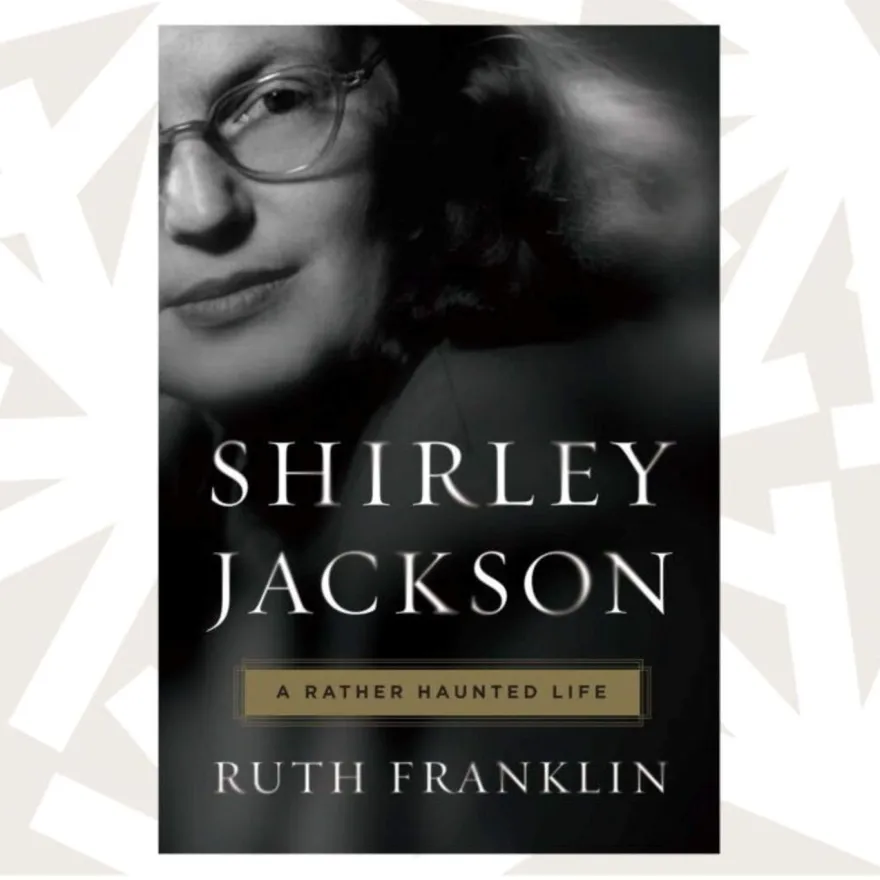

This is a preview of the Shortform summary of the Oct 22, 2026 episode of the NPR's Book of the Day
Sign up for Shortform to access the whole episode summary along with additional materials like counterarguments and context.
1-Page Summary
Jackson's Childhood and Creative Development
Ruth Franklin traces Shirley Jackson's dark worldview to her difficult childhood, particularly her fraught relationship with her socialite mother who constantly pushed her to conform. This lack of acceptance created fundamental insecurity and anxiety about home—traditionally a safe space—which profoundly influenced Jackson's literary focus on hidden dangers lurking in domestic settings.
Franklin also notes Jackson's unusual childhood habit of keeping multiple diaries where she would inhabit different personas and write letters to herself using various nicknames. This imaginative play and internal storytelling evolved into her lifelong practice of crafting plots and characters even during everyday household tasks.
Jackson's Examination of 1950s Women's Constraints
Franklin explores how Jackson's work chronicles the realities and constraints of women's lives in the 1950s. She emphasizes Jackson's keen awareness of the uncontrollable and dangerous social forces women faced. In "The Haunting of Hill House," Jackson subverts romantic heroine narratives through Eleanor, a disturbed spinster whose supernatural experiences blur the line between external hauntings and internal turmoil shaped by social expectations. Linda Wertheimer observes that Jackson distinguished herself by centering women not in romance but as subjects of domestic terror, using horror and the supernatural to confront women's anxieties rather than offering escapist narratives.
Jackson's Dual Literary Identity
Franklin notes that despite Jackson's work spanning chilling psychological horror and witty domestic essays, her distinctive style remains coherent across both genres. Her household essays avoided sentimentality, never idealizing family life but maintaining a sharp, dark humor. Franklin describes Jackson as a precursor to modern "mommy bloggers," pioneering unvarnished parenting narratives that depicted genuine family messiness and defied the idealized domestic imagery of the 1950s.
Jackson's Mental Composition Process
Jackson's children recall that she composed stories mentally while performing household chores, developing plots and characters entirely in her head. Linda Wertheimer discusses how this method allowed Jackson to draw creative material directly from the rhythms and details of domestic life.
Jackson's Enduring Impact
Franklin explains that "The Lottery" maintains its power across generations by revealing universal truths about mob psychology and how ordinary people can become complicit in collective violence. Andrew Limbong recalls the story frightening him and his classmates in middle school, illustrating its enduring shock value. Franklin emphasizes Jackson's consistent message that nothing humans are capable of—including extraordinary evil—should surprise us. She points out that Jackson's insights into human darkness and collective evil remain relevant for understanding current social and political behavior, showing how evil lurks beneath even the most functional communities.
1-Page Summary
Additional Materials
Counterarguments
- While Jackson's difficult childhood and relationship with her mother are cited as influences on her worldview, some scholars argue that attributing an artist's creative output primarily to personal trauma can oversimplify the complex interplay of cultural, historical, and individual factors that shape literary work.
- The focus on hidden dangers in domestic settings is a common theme in mid-20th-century literature, and Jackson was part of a broader literary movement exploring domestic unease; her work may reflect wider societal anxieties rather than being solely rooted in her personal experiences.
- The practice of keeping multiple diaries and adopting personas, while notable, is not unique to Jackson and has been observed in other writers; it may be a general feature of creative development rather than a singular cause of her literary style.
- Some critics suggest that Jackson's depiction of women's constraints in the 1950s, while insightful, can be read as reinforcing certain stereotypes about female victimhood and passivity, rather than offering models of resistance or agency.
- The interpretation of Eleanor in "The Haunting of Hill House" as a subversion of romantic heroine narratives is one perspective; others have argued that the novel can also be read as a psychological study of isolation and mental illness, not exclusively tied to gendered social expectations.
- While Jackson is credited with pioneering unvarnished parenting narratives, other contemporaneous writers also challenged idealized domestic imagery, suggesting that Jackson was part of a larger trend rather than a sole innovator.
- The assertion that "The Lottery" reveals universal truths about mob psychology has been questioned by some critics who argue that the story's impact relies heavily on its specific cultural context and may not be universally applicable.
- The claim that Jackson's insights into human darkness remain relevant for understanding current social and political behavior is a matter of interpretation; some readers may find her work less directly applicable to contemporary issues, viewing it instead as a product of its time.
Actionables
- you can keep a set of themed notebooks or digital notes where you write short, imaginative scenes or letters to yourself from different personas, using daily frustrations or anxieties as creative prompts to explore hidden tensions in everyday life.
- a practical way to recognize and confront subtle social pressures is to jot down moments when you feel compelled to act or appear a certain way at home or in public, then reflect on how these pressures shape your sense of security or belonging.
- you can observe your own reactions to group decisions or trends in your community or workplace, noting times when you go along with the majority despite private doubts, and then write a brief reflection on what influenced your choice and how you might respond differently next time.
Get access to the context and additional materials
Jackson's Childhood and Experiences as Sources for Her Dark Worldview
Ruth Franklin points to Shirley Jackson’s difficult childhood as the root of her tendency to see evil in ordinary situations. Jackson’s uneasy relationship with her mother, who was a socialite determined to mold Jackson in her own image, created early feelings of conflict and a deep sense of being unloved and unappreciated within her own home. This fundamental instability and anxiety led Jackson to feel insecure in the very place traditionally considered safe.
Family Influence Shaped Jackson's Perception of Hidden Evil
Jackson’s mother’s constant push to make her conform fostered a conflict that shaped Jackson’s emotional landscape. The lack of acceptance and affection from her mother made Jackson feel fundamentally unwanted, setting the stage for her persistent literary focus on the hidden dangers and evils lurking in domestic settings. This early anxiety about her home profoundly influenced all of her later literary works, where insecurity and darkness often lurk beneath the surface of everyday life.
Jackson's Creativity Began In Childhood Diaries
She Used Personas and Wrote Letters To Herself With Nicknames as Imaginative Play
Franklin notes that Jackson’s early creativity expressed itself in an unusual habit: keeping several different diaries at once. In these diaries, Jackson would inhabit various personas, writing letters to herself using different nicknames. For instance, Franklin discovered a letter among Jackson’s ...
Here’s what you’ll find in our full summary
Jackson's Childhood and Experiences as Sources for Her Dark Worldview
Additional Materials
Counterarguments
- While Jackson’s difficult childhood may have influenced her worldview, attributing her literary focus on evil in ordinary situations solely to her upbringing overlooks other possible influences, such as broader cultural anxieties, literary trends, or her own adult experiences.
- Many writers draw on a variety of sources for inspiration, and it is possible that Jackson’s creativity and interest in dark themes were also shaped by her education, reading, and professional life, not just her family dynamics.
- The interpretation that Jackson’s mother’s push for conformity was entirely negative may oversimplify their relationship and ignores the possibility that such pressures could also foster resilience or independence.
- The connection between Jackson’s childhood diary habi ...
Actionables
- you can create a daily routine where you intentionally notice and write down subtle tensions or anxieties you feel in familiar places, then brainstorm creative ways these feelings could inspire stories, art, or problem-solving in your everyday life; for example, if you feel uneasy in your kitchen at night, imagine a narrative or draw a scene that explores why, turning discomfort into creative fuel.
- a practical way to explore your own emotional landscape is to assign playful nicknames or personas to different moods or inner voices you experience throughout the day, then jot short notes or messages from each perspective to better understand and express your internal world; for instance, let your anxious side write a note to your confident side ...


Get access to the context and additional materials
Jackson's Study of 1950s Domestic Terror and Women's Constraints
Ruth Franklin explores Shirley Jackson's writing as a rich chronicle of women's lives and constraints in the 1950s, highlighting the forces that endangered their well-being and the ways Jackson's fiction challenged the norms of her time.
Women Faced Uncontrollable Social Forces Endangering Their Well-Being
Franklin describes how reading Jackson's domestic memoirs, which detail life with her four children and her absent-minded professor husband, reveals both Jackson’s literary range and the realities of women's lives in the 1950s. Creative women like Jackson faced strict social constraints. Franklin asserts that Jackson had a keen awareness of how women in particular were subject to uncontrollable and often dangerous social forces.
Eleanor in the Haunting of Hill House Challenges Romantic Heroine Narratives, Blurring Lines Between Supernatural and Internal Disturbances
In "The Haunting of Hill House," Jackson crafts a narrative in which Eleanor, the protagonist, is not a romantic heroine but a disturbed spinster who has spent her life caring for her invalid mother. Eleanor's first taste of freedom brings ambiguity: the novel’s supernatural presence is never fully explained, blurring the line between external hauntings and the internal turmoil of Eleanor herself. Jackson’s approach challenges the familiar narrative of romantic heroines, focusing instead on the psychological disturbances shaped by social expectations.
Jackson Highlighted Women's Restricted Agency Over Sentimentalized Domestic Life
Jackson's work highlights the restricted agency women experienced in the sentimentalized context of domestic life, showing the dangers and lack of control faced by women in an environment that was supposed to be n ...
Here’s what you’ll find in our full summary
Jackson's Study of 1950s Domestic Terror and Women's Constraints
Additional Materials
Counterarguments
- While Jackson's work certainly highlights women's constraints, some critics argue that her portrayal of domestic life can also be read as ambiguous, sometimes reinforcing rather than subverting traditional gender roles.
- The interpretation that Jackson's fiction primarily serves as social critique may overlook other significant themes in her work, such as existential dread, individual alienation, or the broader human condition, which are not exclusively tied to gender.
- Some scholars suggest that the supernatural elements in "The Haunting of Hill House" can be interpreted independently of gendered social critique, focusing instead on universal psychological or metaphysical questions.
- The claim that Jackson's stories are unique in centering women as subjects of domestic terror may understate the contributions ...
Actionables
- you can keep a daily log of moments when you notice subtle social pressures or expectations shaping your choices, then reflect on how these pressures affect your sense of agency and well-being; for example, jot down when you feel compelled to act a certain way at work, in family settings, or in public, and note any emotional or mental impact.
- a practical way to challenge traditional narratives is to rewrite a familiar story or fairy tale from the perspective of a character who is usually sidelined or constrained, focusing on their internal struggles and the social forces at play; for instance, retell Cinderella from the stepmother’s point of view, exploring her motivations and the pressures she faces.
- you can set aside time each week to i ...
Get access to the context and additional materials
Jackson's Duality: Psychological Horror & Humorous Essays
Shirley Jackson’s writing occupies two seemingly contradictory genres: chilling psychological horror and sharply witty domestic essays. Yet, as Ruth Franklin notes, these works remain recognizably Jackson’s due to her distinctive style and thematic approach.
Jackson's Stylistic Coherence Amid Genre Contradictions
Psychological Suspense and Household Essays Share Traits in Voice and Approach
Franklin observes that Jackson’s coherent style permeates all her work. Whether crafting unnerving psychological stories or describing everyday household chaos, Jackson’s voice and approach remain consistent. Both genres showcase her control over tone, pacing, and subtle perspective, uniting the supernatural with the mundane.
Darkly Humorous Domestic Stories Avoid Sentimentality
Even in her domestic tales, Jackson retains a dark humor. Franklin highlights that these household essays are not sentimental; Jackson does not idealize family life or view her children with excessive fondness. Instead, her domestic stories possess a distinctly unsentimental, sharp wit that keeps them free of the saccharine gloss often found in tales of family life.
Jackson's Essays on Motherhood and Family Were Unvarnished and Revolutionary
Candidly Chronicling Household Chaos, She Pioneered Realistic Parenting Narratives
Franklin describes Jackson as a precursor to toda ...
Here’s what you’ll find in our full summary
Jackson's Duality: Psychological Horror & Humorous Essays
Additional Materials
Counterarguments
- Some critics argue that Jackson’s domestic essays, while witty, still rely on familiar tropes of chaotic motherhood and may not be as revolutionary as suggested, given that other writers of her era also explored similar themes.
- The claim that Jackson’s style is always coherent across genres can be challenged; some readers find her tone and narrative approach in horror stories to be markedly different from her domestic essays, leading to a sense of disjunction rather than unity.
- While Jackson’s essays are praised for their lack of sentimentality, some readers interpret her humor as occasionally veering into cynicism, which may not appeal to all audiences.
- The assertion that Jackson pioneered realistic parenting n ...
Actionables
- you can write a short daily journal entry about your home life using a consistent tone and style, whether you’re describing a funny mishap or a tense moment, to develop your own recognizable voice across different moods and situations; for example, use the same dry humor or observational detail whether you’re recounting a burnt dinner or a sibling argument.
- a practical way to bring wit and realism into your family stories is to set aside ten minutes each week to rewrite a recent family event, intentionally avoiding sentimental language and instead highlighting the chaos, messiness, or absurdity of the moment; for instance, describe a spilled breakfast as a slapstick disaster rather than a bonding experience ...
Get access to the context and additional materials
Jackson's Lifelong Mental Story Composition Method
Jackson's Mental Composition During Routine Tasks Reveals Her Creative Engagement
Developing Plots and Characters During Mundane Activities
One of Shirley Jackson's children notes that she composed stories mentally while performing household chores. Whether cooking or making beds, Jackson would work out plots and create characters entirely in her head.
Method Allowed Drawing From Domestic Life
Linda Wertheimer discusses how Jackson would tell stories to herself during the ...
Here’s what you’ll find in our full summary
Jackson's Lifelong Mental Story Composition Method
Additional Materials
Counterarguments
- While Jackson found inspiration in domestic life, not all writers or creative individuals may find routine tasks conducive to creativity; some may require solitude or a change of environment to generate ideas.
- The method of composing stories mentally during chores may not be effective for everyone, as some people might find multitasking distracting or detrimental to their creative process.
- Drawing creative material from immediate surroundings could potentially limit the scope of inspiration, as it may lead to repetitive themes ...
Actionables
- you can assign a specific household task as your daily story incubation time, intentionally using that routine to brainstorm new ideas or characters, then jot down a single sentence summary immediately after finishing the task to capture what surfaced
- For example, decide that every time you fold laundry, you’ll mentally explore a new plot twist or character motivation, and keep a notepad nearby to quickly record your thoughts before moving on.
- a practical way to spark creativity from your surroundings is to pick one object or sound you encounter during chores and imagine how it could play a role in a story, letting your mind wander as you work
- For instance, if you hear the hum of the refrigerator or see a chipped mug, invent a backstory or a scene where that detail becomes important, and let it evolve as you continue your task.
- you ...
Get access to the context and additional materials
Jackson's Impact On Understanding Human Nature, Mob Psychology, and Evil in Ordinary Circumstances
Ruth Franklin explains that Shirley Jackson’s story "The Lottery" maintains its powerful grip across generations because it reveals deep truths about human susceptibility to mob psychology and the existence of evil in ordinary settings. Andrew Limbong recalls reading "The Lottery" in middle school and feeling genuinely frightened, a feeling he shared with classmates, illustrating the enduring shock of Jackson’s work within otherwise safe environments.
The Lottery's Power Endures Across Generations By Revealing Universal Truths About Human Susceptibility to Mob Psychology and Collective Evil
Understanding Mob Mentality In Communities
Franklin notes that Jackson would not have been surprised by how quickly mob psychology can overtake a small town. "The Lottery" demonstrates how ordinary people—nice, normal, small-town folks—can become complicit in collective violence when swept up in terrible traditions. Linda Wertheimer observes that the story serves as a template in Jackson’s other works, highlighting the sinister potential simmering beneath everyday life.
Humans’ Profound Darkness Should Not Surprise Us
Jackson’s biographer Franklin emphasizes Jackson’s consistent message that nothing humans are capable of—including extraordinary evil—should surprise us. Jackson's gift lies in exposing how evil can exist in mundane, everyday circumstances, revealing the profound darkness possible in anyone.
Jackson's Legacy Provides Insights Into Today’s Disturbing Political and Social Behavior
Vision of Darkness in Human Nature Resonates Across History and Poli ...
Here’s what you’ll find in our full summary
Jackson's Impact On Understanding Human Nature, Mob Psychology, and Evil in Ordinary Circumstances
Additional Materials
Counterarguments
- Some critics argue that "The Lottery" presents an exaggerated or overly pessimistic view of human nature, suggesting that most communities do not blindly follow violent traditions.
- The story’s depiction of mob psychology may oversimplify the complex motivations and moral reasoning of individuals within groups.
- Not all readers experience genuine fear or shock from "The Lottery"; some may find its impact diminished by familiarity or changing cultural norms.
- The narrative’s focus on collective evil in small towns could be seen as unfairly stigmatizing rural or close-knit communities.
- There are alternative literary works that explore human nature and evil with more nuance or optimism, offering a counterbalance to Jackson’s darker vision.
- Some scholars contend that the story’s relevance ...
Actionables
- you can keep a daily log of moments when you feel pressure to go along with a group decision, then privately note your honest reaction and whether you acted differently than you felt, helping you spot patterns where group influence overrides your judgment in everyday life
- (for example, jot down when you agree with a group at work or among friends even if you disagree, and reflect on what made you go along).
- a practical way to recognize hidden dangers in familiar settings is to periodically pause during routine activities and ask yourself, “what assumptions am I making about safety or morality here?” and write down any overlooked risks or ethical blind spots you notice
- (for example, while waiting in line, consider if you’re ignoring unfair treatment of others or if you’re assuming everyone is being treated equally).
- you can set a recurring reminde ...
Get access to the context and additional materials

 1-Page Summary
- Jackson's Childhood and Experiences as Sources for Her Dark Worldview
- Jackson's Study of 1950s Domestic Terror and Women's Constraints
- Jackson's Duality: Psychological Horror & Humorous Essays
- Jackson's Lifelong Mental Story Composition Method
- Jackson's Impact On Understanding Human Nature, Mob Psychology, and Evil in Ordinary Circumstances
Create Summaries for anything on the web
Download the Shortform Chrome extension for your browser
