

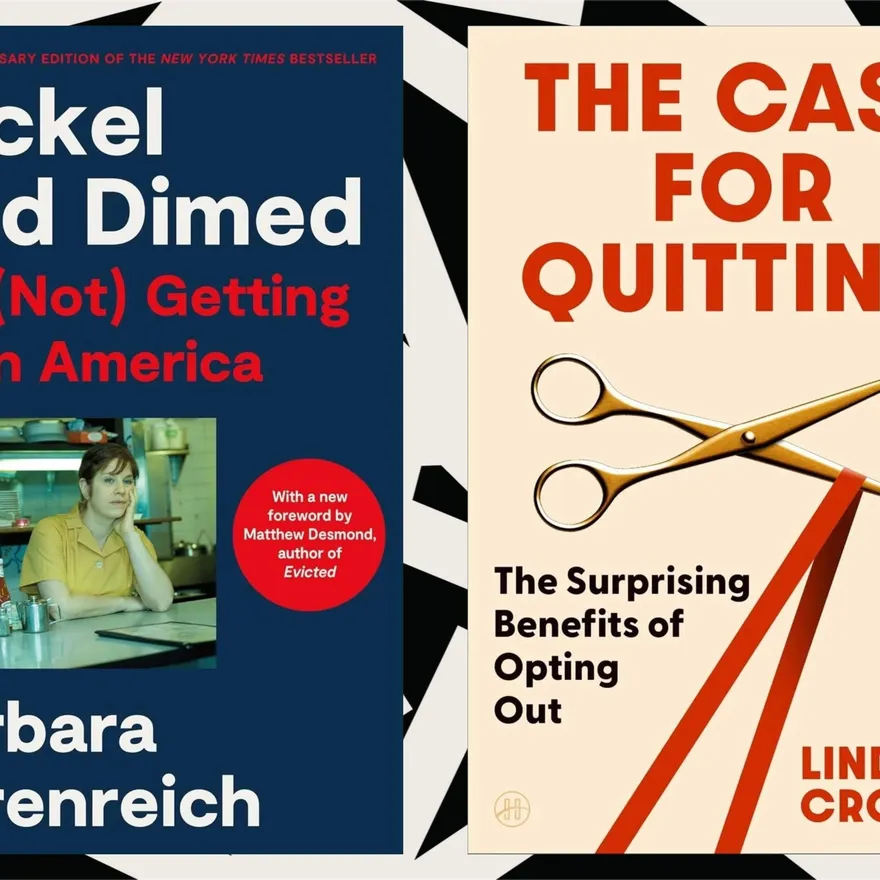
'Nickel and Dimed' and 'The Case for Quitting' reconsider our relationship to work
In this episode of NPR's Book of the Day, the discussion centers on two books that challenge conventional thinking about work in America. The first part examines Barbara Ehrenreich's Nickel and Dimed and its enduring impact on conversations about low-wage work, economic inequality, and worker rights. Ehrenreich's undercover investigation exposed the financial pressures and systemic barriers faced by minimum-wage workers, reframing service work as skilled labor and inspiring wage justice movements.
The second part introduces Lindsay Crouse's The Case for Quitting, which argues that society's celebration of perseverance overlooks the courage required to walk away from unfulfilling situations. The episode explores how economic privilege shapes the ability to quit, the costs of staying in jobs or situations out of inertia, and practical strategies for navigating life transitions—including identifying transferable skills and exercising agency even when options are limited.

This is a preview of the Shortform summary of the Oct 16, 2026 episode of the NPR's Book of the Day
Sign up for Shortform to access the whole episode summary along with additional materials like counterarguments and context.
1-Page Summary
Low-wage Work and Economic Inequality in America
Barbara Ehrenreich's book Nickel and Dimed and her advocacy work exposed the harsh realities of low-wage work in America, challenging widespread misconceptions about labor value and economic justice. Her investigation continues to shape debates about inequality and worker rights.
Ehrenreich Uncovers Harsh Conditions for Minimum-Wage Workers
In the late 1990s, Ehrenreich worked undercover as a nursing aide, housekeeper, cleaner, and waitress, earning $5.15 an hour—just $2 below today's federal minimum wage. In her late fifties, she performed physically demanding labor while living in motels, experiencing firsthand the immense financial pressures faced by low-wage workers and providing an intimate view of systemic economic barriers.
Reframing Service Work as Skilled Labor and Philanthropy
Ehrenreich and Alissa Quart, co-founder of the Economic Hardship Reporting Project, challenge the notion of "unskilled labor," arguing that tasks like making pizza or caring for children demand considerable expertise. Ehrenreich famously argued that the working poor are society's greatest philanthropists—they give away their time and labor, the most expensive gifts, without gaining equity or sharing in profits.
Critics and Response
Ehrenreich faced criticism for her relative privilege as an educated, financially secure writer, unlike the permanently precarious workers she documented. Quart acknowledges these critiques, noting Ehrenreich's awareness of this contradiction. In response, Ehrenreich co-founded the Economic Hardship Reporting Project in 2012 to amplify working-class voices and give a platform to writers directly impacted by economic struggle.
Inspiring Worker Rights Movements
Quart credits Nickel and Dimed with influencing wage justice campaigns like the Fight for 15, which raised minimum wages in cities like New York. Ehrenreich's work anticipated Occupy Wall Street's focus on the 99% versus the 1% and highlighted how economic hardship was spreading to white-collar professions. As the first co-chair of the Democratic Socialists of America, she had a lasting impact on labor discourse in the United States.
Reframing Quitting As a Courageous Choice
Andrew Limbong introduces the idea that while society admires perseverance and shames quitting, this view may overlook the courage required to walk away. Lindsay Crouse argues in her book The Case for Quitting that quitting can be the bravest choice.
Challenging the Stigma Around Quitting
Crouse addresses how culture treats quitters as failures while celebrating perseverance, but she believes this conditioning limits possibilities. She argues that quitting and perseverance complement each other—treating quitting as the enemy of success means losing out on better opportunities. Quitting can be a courageous pivot that allows people to focus efforts on paths where true perseverance is meaningful.
The Cost of Staying
Crouse explores the "cost of staying," using relationships as an example. She recounts a man who moved through relationship stages out of comfort and routine, feeling he was sleepwalking through life and missing deeper fulfillment. This cost emerges when people choose comfort over possibility. She explains the "spotlight effect," where people overestimate how much others judge their decisions—in reality, those who truly matter care far less than we imagine.
Recognizing True Support and Making Gradual Transitions
When discussing Simone Biles' withdrawal from the Olympics, Crouse notes that while critics judged her, the voices that mattered—family, experts, teammates—supported her decision. True supporters remain consistent regardless of whether one perseveres or quits. Crouse also advocates for gradual transitions rather than abrupt changes, noting that entrepreneurs who maintain employment while building their next move are more likely to succeed than those who quit suddenly.
Economic Privilege and Barriers To Quitting
Financial Precarity Limits Choices
Sacha Pfeiffer addresses that for many Americans, quitting isn't an option due to reliance on paychecks, health insurance, and a tough job market. Crouse agrees that the ability to leave a job is often a privilege, and her message isn't to encourage mass quitting but to highlight how staying is often a constrained choice driven by necessity. The rise of the gig economy and union-busting have made financial security elusive, making quitting a luxury millions cannot afford.
Working Class Misunderstood in Politics
Quart describes how the working class, while increasingly mentioned in national newspapers, is typically referenced as an electoral category rather than as real people with concrete policy needs. A Columbia University study reveals that discussions of the working class focus more on their electoral function than on the substance of their lives. Politicians from both parties use terms like "affordability" without grappling with what it means to provide a good quality of life, leaving working people discussed but rarely truly heard or helped.
Strategies For Navigating Life Transitions and Difficult Choices
Experts Lindsay Crouse and Sacha Pfeiffer provide guidance on managing transitions by focusing on transferable skills, envisioning the future, and emphasizing personal agency.
Identifying Transferable Skills
Crouse advises individuals to identify what made them excel in their current roles—qualities like asking insightful questions, meeting deadlines, or connecting with people. These transferable traits can enable progress in new contexts, especially when traditional opportunities are limited. Pfeiffer adds that it's helpful to identify other fields where these skills are valued and explore those possibilities.
Envisioning Your Future
Crouse recommends visualizing life five or ten years in the future on the current path to determine whether continuing evokes happiness or discomfort. This helps discern if staying the course supports wellbeing or simply maintains the status quo driven by inertia rather than active choice.
Focusing On Agency
Even when quitting isn't immediately feasible, Crouse suggests identifying smaller dimensions where personal choices can still be made. Exercising agency, even in limited ways, helps counter helplessness. This targeted approach prevents passivity and opens opportunities for positive change, cultivating a sense of control and laying groundwork for future transitions.
1-Page Summary
Additional Materials
Counterarguments
- While Ehrenreich’s undercover work provided valuable insights, critics argue that her temporary immersion cannot fully capture the chronic stress and lack of long-term options faced by lifelong low-wage workers.
- Some economists and policymakers contend that labeling all service work as “skilled” may dilute the distinction between jobs that require extensive formal training and those that do not, potentially complicating wage-setting and credentialing.
- The claim that the working poor are “society’s greatest philanthropists” could be seen as rhetorical overstatement, as philanthropy typically implies voluntary giving rather than labor performed out of necessity.
- Critics note that Ehrenreich’s ability to leave low-wage work at any time differentiates her experience from those who have no such safety net, potentially limiting the authenticity of her perspective.
- Some argue that raising the minimum wage, as advocated by movements influenced by Ehrenreich, could have unintended economic consequences such as reduced employment opportunities for entry-level workers or small business strain.
- The idea that quitting is courageous may not account for cultural or personal values that prioritize perseverance, stability, or loyalty, which can also be valid and adaptive responses.
- Emphasizing quitting as a positive choice may inadvertently downplay the resilience and resourcefulness required to endure difficult circumstances when alternatives are unavailable.
- The assertion that the working class is only discussed as an electoral category overlooks some policy initiatives and reporting that do address concrete needs and lived experiences of working people.
- The focus on transferable skills and agency may not fully account for structural barriers such as discrimination, credential requirements, or lack of access to retraining resources that limit mobility for many workers.
Actionables
- you can keep a daily log of the skills and problem-solving moments you use at work, then review it weekly to spot patterns of expertise that others might overlook, helping you recognize and communicate the real value of your labor.
- a practical way to challenge assumptions about quitting is to write down one situation where you feel stuck, list the hidden costs of staying, and brainstorm three small, low-risk steps you could take to test a new direction without fully committing to quitting.
- you can create a personal support map by listing people in your life and noting how they’ve responded to your past decisions, which helps you identify who genuinely supports you regardless of whether you persevere or change course.


Get access to the context and additional materials
Low-wage Work and Economic Inequality in America
Barbara Ehrenreich’s book Nickel and Dimed and her advocacy work expose the realities of low-wage work in the United States and challenge widespread misconceptions about labor, value, and economic justice. Her personal investigation and activist legacy continue to shape public debates about inequality, worker rights, and the value of service labor.
Ehrenreich Uncovers Harsh Conditions for Minimum-Wage Workers
Ehrenreich Worked Low-wage Jobs as Nursing Aide, Housekeeper, Cleaner, and Waitress At $5.15/Hour
In Nickel and Dimed, Barbara Ehrenreich went undercover in the late 1990s to document the lives of Americans surviving on minimum wage. She worked a series of jobs, including as a nursing aide, a home cleaner, a housekeeper, and a waitress at restaurants like Jerry's and Harfside, earning $5.15 an hour—a rate only $2 below today’s federal minimum wage.
Enduring Hardships to Capture the Working Poor's Reality
Ehrenreich was in her late fifties during this experiment, performing physically demanding labor like lugging vacuum cleaners and diner orders, while living in motels and experiencing the immense financial pressures faced by low-wage workers. At a time when “stunt journalism” was rare, her courage provided an intimate, grounded view of systemic economic barriers affecting millions.
Portraying Low-wage Workers as Philanthropists Challenges Misconceptions About Value and Skill in Service Work
Skilled Tasks Labeled "Unskilled Labor"
Ehrenreich and Alissa Quart, co-founder of the Economic Hardship Reporting Project, challenge the notion of “unskilled labor.” Quart points out that work such as making pizza, operating in a supermarket, or taking care of children actually demands considerable expertise—often more than tasks typically seen as requiring professional training. Ehrenreich’s intention was to reframe society’s understanding of skill and achievement in the service sector.
Low-wage Workers' Time and Labor Are Philanthropic as They Lack Equity in Profiting Companies
Ehrenreich famously argued that so-called “working poor” are among society’s most significant philanthropists. They give away their labor and time, which she calls the ultimate and most expensive gift, without gaining equity or sharing in the profits of companies benefiting from their work. Their contribution lies not just in their physical output, but in their sacrifice of life and opportunity for the benefit of others and the economy.
Critics Questioned Ehrenreich's Position As an Older, Educated Woman With a Safety Net Conducting Research
Ehrenreich's Advantages vs. Permanent Poverty Circumstances
Ehrenreich faced critique for her relative privilege—she was an older, college-educated, already well-known writer with financial security, unlike the permanently precarious people she worked beside. Alissa Quart acknowledges these criticisms, noting that students often questioned the point of reading an older white woman’s depiction of poverty. Ehrenreich herself was conscious of this contradiction, which partly motivated her later work.
Ehrenreich Co-founded the Economic Hardship Reporting Project In 2012 to Amplify Working-Class Writers' Voices
In 2012, Ehrenreich co-founded the Economic Hardship Reporting Project (EHRP), along with Quart, to give a platform to working-class voices and address the disparity between observer and lived experience. This nonprofit supports writers who are directly impacted by economic struggle, including those working in retail stores, supermarkets, or even training AI systems. For Ehrenreich, this was a way to reconcile her own intellectual distance from genui ...
Here’s what you’ll find in our full summary
Low-wage Work and Economic Inequality in America
Additional Materials
Counterarguments
- Ehrenreich’s experience, while immersive, was temporary and conducted with the knowledge that she could return to financial security, which may limit the authenticity or depth of her understanding compared to those experiencing chronic poverty.
- Some critics argue that undercover journalism, like Ehrenreich’s, can unintentionally reinforce stereotypes or overlook the agency and resilience of low-wage workers themselves.
- The assertion that all service work is “skilled” may overlook genuine differences in training, certification, and complexity between various types of labor.
- The concept of low-wage workers as “philanthropists” may be seen as rhetorical and could obscure the structural economic forces that limit their choices, rather than highlighting their agency.
- While Nickel and Dimed is credited with influencing movements like Fight for 15, wage activism has a long history in the U.S., and many other factors and voices contributed to these campaigns.
- Some economists and policymakers argue that significant increases in the minimum wage could have unintended consequences, such as reduced employment opportunities for entry-level workers or small businesses.
- The focus on the inadequacy of tipping as a systemic is ...
Actionables
- you can track and publicly share the real cost of everyday services by calculating the hours a minimum-wage worker would need to work to afford them, helping others see the value of labor behind common goods and services; for example, post on social media how many hours at minimum wage it takes to pay for a haircut, a meal out, or a monthly bus pass.
- a practical way to challenge the “unskilled labor” label is to document and share the specific skills, problem-solving, and multitasking you observe in service roles during your daily life, such as noting the expertise of a barista managing multiple orders or a cashier handling complex transactions, and sharing these observations with friends or online to shift perceptions.
- you ...


Get access to the context and additional materials
Reframing Quitting As a Courageous Choice
Andrew Limbong introduces the idea that while society admires grit and perseverance—rewarding those who grind through tough situations and shaming those who quit—this view may overlook the courage required to walk away. Lindsay Crouse, in her book The Case for Quitting, argues that quitting can, at times, be the bravest choice.
Society Celebrates Perseverance and Sees Quitting As Failure, but This Limits Possibilities
Lindsay Crouse addresses how culture tends to see quitters as failures and perseverers as inherently noble, citing the marathon runner who finishes despite injury as a celebrated figure and the quitter as a coward. She emphasizes that she does not view perseverance as wrong but believes people are conditioned to treat quitting as absolute failure or shameful, rather than as a viable option. According to Crouse, quitting and perseverance actually complement each other; treating quitting as the enemy of success makes us lose out on better opportunities. Quitting can be the courageous first step—a pivot or break that allows the pursuer to focus their efforts on paths where true perseverance is possible and desired.
"Staying Costs" Block Meaningful Possibilities
Crouse explores the "cost of staying," using relationships as an example. She recounts the experience of a man who, out of comfort and routine, moved through stages of his relationship—weekend plans, then moving in together, then feeling marriage was the only next step—only to feel he was sleepwalking through life and missing out on deeper fulfillment. This "cost of staying" emerges when individuals choose comfort over possibility and risk missing out on richer, more meaningful paths. Quitting, for such cases, is not failure but a chance to seize greater possibility.
The fear of quitting is often rooted in fear of judgment and uncertainty. Crouse explains the "spotlight effect," a cognitive bias where people think others pay closer attention to their actions than is true. In reality, most people, and especially those who genuinely matter, care far less about others’ quitting decisions than we imagine. This recognition can help lessen the paralyzing fear that inhibits meaningful change.
Overcoming Fear and Shame In Quitting Means Recognizing Supportive Voices Remain Consistent Regardless of the Decision
When discussing high-profile examples of quitting, such as Simone Biles’ withdrawal from the Olympics for mental health reasons, Crouse points out that public opinion is divided: armchair ...
Here’s what you’ll find in our full summary
Reframing Quitting As a Courageous Choice
Additional Materials
Clarifications
- The spotlight effect is a cognitive bias where people overestimate how much others notice their actions or appearance. It stems from our self-focused perspective, making us believe we are the center of attention. Psychologically, it relates to egocentrism and social anxiety. Understanding this helps reduce unnecessary fear of judgment.
- Societal norms often equate perseverance with moral strength and success, rooted in cultural stories valuing hard work and resilience. Quitting is frequently stigmatized as weakness or failure due to these ingrained beliefs. This conditioning shapes how individuals judge themselves and others, influencing decisions and self-worth. Such norms can discourage reevaluating goals or changing paths, even when beneficial.
- Quitting and perseverance complement each other because quitting can free up energy and focus for pursuits that truly matter. Perseverance is most effective when applied to goals aligned with one’s values and potential. Quitting allows one to avoid wasting effort on unproductive or harmful paths. Together, they create a balanced approach to growth and success.
- The "cost of staying" refers to the negative consequences or missed opportunities that result from remaining in a situation out of comfort or fear rather than genuine desire. In relationships, it means sacrificing personal growth, happiness, or fulfillment by staying in a partnership that no longer aligns with one's needs or values. This cost can include emotional stagnation, loss of potential new experiences, and diminished well-being. Recognizing this cost helps individuals evaluate whether quitting might lead to better life outcomes.
- Simone Biles is a world-renowned gymnast known for her exceptional skill and competitive success. Her withdrawal from the 2021 Tokyo Olympics was unprecedented because athletes rarely quit mid-competition, especially at such a high level. She cited mental health concerns, highlighting the importance of prioritizing well-being over external expectations. This act challenged traditional views on quitting by showing it can be a brave, self-care decision rather than a failure.
- Gradual transitions allow individuals to test new paths while maintaining stability, reducing financial and emotional risks. This approach provides time to adjust, learn, and build confidence before fully committing. Abrupt quitting can lead to sudden loss of income, support, or direction, increasing stress and failure risk. Incremental change helps manage uncertainty and preserves resources during major life shifts.
- Many entrepreneurs start new businesses while keeping their current jobs to ensure steady income. This approach reduces financial risk and stress during the uncertain early stages of a venture. It allows them to test their business ideas and build customer bases gradually. Maintaining employment also provides benefits like health insurance and ...
Counterarguments
- While quitting can be courageous in some cases, perseverance is often necessary to achieve long-term goals, and frequent quitting may prevent individuals from developing resilience or reaching their full potential.
- The celebration of perseverance in society is sometimes based on the recognition that many worthwhile achievements require sustained effort through adversity, and normalizing quitting could risk undermining this important lesson.
- Not all quitting is courageous or wise; sometimes quitting is motivated by avoidance of discomfort, impatience, or fear of failure rather than thoughtful self-assessment.
- The negative consequences of quitting—such as loss of income, reputation, or missed opportunities for growth—can be significant and should not be minimized.
- The "cost of staying" is real, but so is the "cost of quitting," which can include regret, instability, or the loss of valuable relationships and experiences.
- The idea that most people care less about quitting decisions may not hold true in all contexts, especially in professional or team environments wher ...


Get access to the context and additional materials
Economic Privilege and Barriers To Quitting
Millions Rely On Paychecks For Survival, Insurance, and Stability
Sacha Pfeiffer addresses the reality that for many Americans, quitting a job is not an option because of their reliance on steady paychecks, access to health insurance, and the challenges of a tough job market. Lindsay Crouse agrees, pointing out that the ability to leave a job is often a privilege due to widespread financial precarity. Crouse emphasizes that her message is not to encourage everyone to quit their jobs, but to highlight how, for many, even the act of staying is a constrained choice caused by necessity rather than preference.
In today’s labor environment, the rise of the gig economy and persistent union-busting efforts have increased the vulnerability of low-wage workers. These factors make financial security elusive and the notion of quitting a luxury that millions simply cannot afford.
Working Class Often Misunderstood in Politics
Alissa Quart describes how the working class, while increasingly mentioned in national newspapers, is typically referenced as an electoral category rather than as real people facing concrete policy needs. A study by sociologist Elena Krimova at Columbia reveals that discussions of the working class in national outlets like The New York Times have grown, but these mentions focus more on their function in elections than on the substance of their lives, jobs, or housing.
Despite frequent political attention, the deeper reality of working-class lives remains under-examined. The media and politicians often analyze, appeal to, or try to explain the working class during elections, yet rarely address their day-to-day struggles or material needs. Thus, the working class becomes a political talking point more than a genuinely understood or represented group.
Paradox: Politicians Talk, Working People Unheard due to Lack of Solutions
This gap is evident in poli ...
Here’s what you’ll find in our full summary
Economic Privilege and Barriers To Quitting
Additional Materials
Clarifications
- Union-busting refers to actions by employers or organizations aimed at preventing workers from forming or joining labor unions. These tactics can include intimidation, firing union supporters, or legal challenges to union activities. The impact weakens workers' collective bargaining power, reducing their ability to negotiate better wages, benefits, and working conditions. This often leads to increased job insecurity and lower overall worker protections.
- The gig economy refers to a labor market characterized by short-term contracts or freelance work instead of permanent jobs. Workers in this economy often lack traditional employment benefits like health insurance, paid leave, and job security. This model can increase income instability and reduce workers' bargaining power. It often affects low-wage and precarious workers the most.
- Quitting a job is considered a "privilege" because it requires financial stability to handle periods without income. Many workers depend on steady paychecks for basic needs like rent, food, and healthcare. Without savings or alternative support, leaving a job risks severe hardship. Thus, only those with economic security can afford to quit without immediate negative consequences.
- In the U.S., many people receive health insurance through their employer as part of their job benefits. Losing a job often means losing this insurance, which can lead to high medical costs or lack of coverage. This connection makes quitting risky for those who cannot afford private insurance or government programs. Therefore, job-related health insurance ties workers to their employers beyond just income.
- Financial precarity means having unstable or insecure financial conditions that make it hard to cover basic expenses consistently. It often involves irregular income, lack of savings, and vulnerability to unexpected costs. People experiencing financial precarity may struggle to afford essentials like housing, food, and healthcare. This instability limits their ability to make long-term plans or take risks, such as quitting a job.
- The working class as an "electoral category" means politicians and analysts focus on this group mainly for their voting behavior and political influence. It reduces complex social and economic realities to simple voter demographics. This framing often overlooks the actual needs and daily experiences of working-class people. It treats them more as a means to win elections than as individuals with specific policy concerns.
- "Affordability" is often used by politicians to signal concern about economic issues without committing to specific actions. It serves as a vague promise that sounds appealing to voters but lacks detailed plans or funding. This tactic helps gain support while avoiding difficult policy debates or reforms. As a result, the term becomes a rhetorical tool rather than a guide for real change.
- Political rhetoric refers to the language and promises politicians use to appeal to voters, often focusing ...
Counterarguments
- While many Americans face financial precarity, there are also significant numbers who have successfully transitioned between jobs, sometimes improving their circumstances, suggesting that quitting is not universally unattainable.
- Some workers may choose to stay in jobs for reasons beyond necessity, such as personal fulfillment, professional growth, or workplace community, indicating that not all employment decisions are purely constrained.
- The gig economy, while criticized for instability, has also provided flexibility and new income opportunities for some individuals who prefer non-traditional work arrangements.
- Media and political attention to the working class, even if sometimes superficial, has led to increased awareness and some policy discussions that might not have occurred otherwise.
- There have been policy initiatives and legislative efforts aimed at improving working conditions and affordability, even if progress is slow or un ...

Get access to the context and additional materials
Strategies For Navigating Life Transitions and Difficult Choices
Experts Lindsay Crouse and Sacha Pfeiffer provide guidance on how to manage life transitions and difficult decisions by focusing on core skills, envisioning the future, and emphasizing personal agency.
Identifying Transferable Skills to Envision New Paths
Recognizing Core Competencies Across Arenas
Lindsay Crouse advises individuals questioning their next step to first identify what made them excel in their current or previous roles. This includes reflecting on qualities such as the ability to ask insightful questions, meet deadlines, be responsive, or connect with people. Such traits are fundamental and not limited to any single profession, making them transferable to various arenas.
Leveraging Strengths in New Contexts Enables Progress Amid Scarce Traditional Opportunities
Crouse emphasizes that these transferable traits can enable progress, especially when traditional opportunities are limited. By trying to apply these inherent strengths in new contexts, individuals may discover fulfillment or, at the very least, gain valuable experience—even if initial attempts result in failure. Sacha Pfeiffer adds that it is helpful to identify other jobs or fields where these same skills are valued and to explore those possibilities actively.
Envisioning Your Future Helps Clarify if Continuing Aligns With Aspirations or Represents Inertia
Assess if Continuing This Path For 5-10 Years Brings Happiness or Terror to Gauge if It Serves Wellbeing
Crouse recommends visualizing life five or ten years in the future on the current path. This exercise helps determine whether the prospect of continuing evokes happiness or causes discomfort and fear. Such awareness is key to discerning if staying the course supports one's wellbeing or simply maintains the status quo.
A Path Continued Without Active Choice
Continuing without regularly reevaluating goals and feelings may result in a life propelled by inertia rather than active choice. Asking if this path is chosen intentionally or followed ...
Here’s what you’ll find in our full summary
Strategies For Navigating Life Transitions and Difficult Choices
Additional Materials
Counterarguments
- Not all core competencies are equally valued or transferable across different professions; some industries require highly specialized skills that may not overlap with general traits like responsiveness or interpersonal skills.
- Leveraging transferable strengths may not always lead to fulfillment or progress if the new context lacks adequate support, training, or recognition for those skills.
- Actively exploring other jobs or fields may not be feasible for individuals facing financial constraints, caregiving responsibilities, or limited access to education and networking opportunities.
- Visualizing the future can be anxiety-inducing or paralyzing for some, especially if they lack clear alternatives or face systemic barriers, making this strategy less effective for everyone.
- Regular reevaluation of life paths may not be practical or desirable for individuals who value stability, routine, or have long-term commitments that limit flexibility.
- Focusing o ...
Actionables
- You can create a weekly “skill swap” challenge with a friend or colleague where each of you picks one of your strengths and brainstorms together how it could be used in a completely different job or life scenario, then share your ideas and feedback at the end of the week to spark new perspectives.
- A practical way to clarify your future direction is to write two short letters to yourself: one from the perspective of your future self who stayed on your current path, and one from your future self who made a change; compare the tone, emotions, and details in each letter to help reveal which path feels more fulfilling or authentic.
- You can set a daily ...


Get access to the context and additional materials


Create Summaries for anything on the web
Download the Shortform Chrome extension for your browser
