

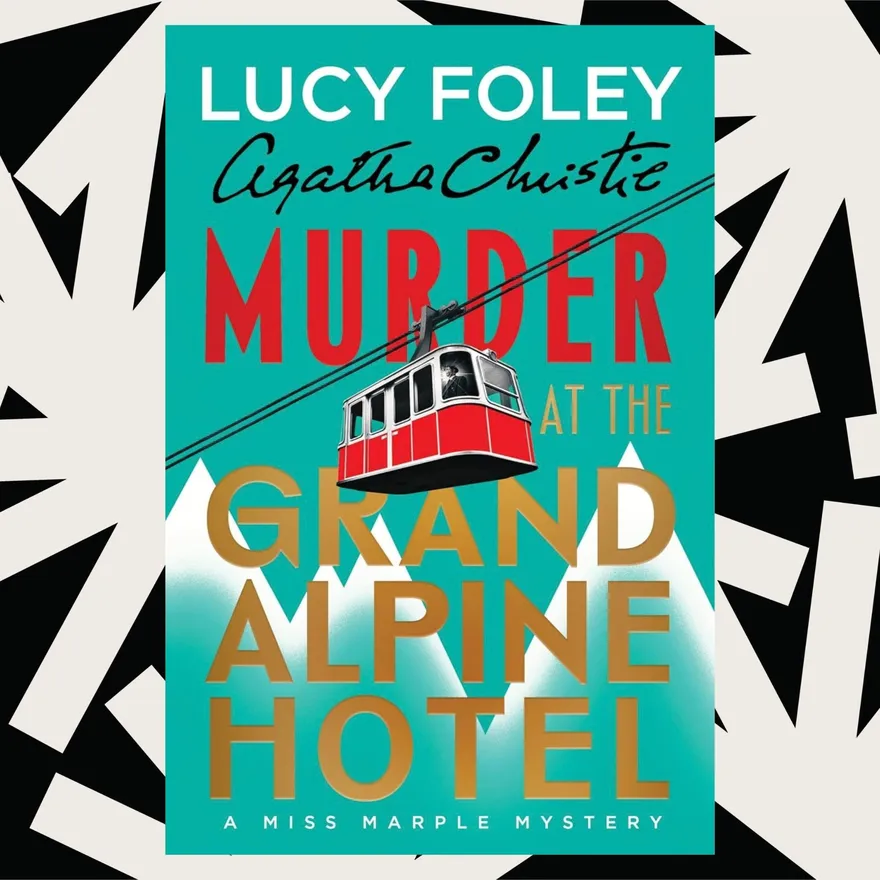
In 'Murder at the Grand Alpine Hotel,' Lucy Foley continues Agatha Christie's legacy
In this episode of NPR's Book of the Day, author Lucy Foley discusses her approach to writing a new Miss Marple mystery that continues Agatha Christie's legacy. Foley explores what makes Miss Marple a distinctive detective—an elderly woman who uses assumptions about her to her advantage while observing human nature with precision. The conversation covers the novel's post-World War II setting at a snowbound Swiss Alps hotel, where wartime trauma and hidden secrets shape the investigation.
Foley describes the meticulous research process she undertook to authentically channel Christie's style, from traveling to the Alps to immersing herself in 1950s culture and films. She explains the challenge of faithfully capturing Miss Marple's voice and adopting Christie's methodical plotting techniques, which required extensive pre-planning before writing. The episode offers insight into both the enduring appeal of Christie's detective and the craft of writing within an established literary tradition.

This is a preview of the Shortform summary of the Sep 30, 2026 episode of the NPR's Book of the Day
Sign up for Shortform to access the whole episode summary along with additional materials like counterarguments and context.
1-Page Summary
Miss Marple's Enduring Appeal as a Detective Protagonist
Miss Marple represents a unique detective archetype—an elderly English woman with no formal credentials who relies on her deep understanding of human nature to solve crimes. As Lucy Foley notes, Miss Marple cleverly plays into assumptions people make about her, presenting herself as forgetful and "very stupid" to disarm suspects while her sharp mind never misses a detail. Foley finds that Miss Marple's lack of ego and natural humor set her apart from other popular detectives like Poirot.
Despite her engaging personality, Miss Marple's world in Christie's novels remained relatively confined. Foley shares that Christie originally intended to send Miss Marple to Egypt for "Death on the Nile," but ultimately gave the story to Poirot instead. This restriction makes Miss Marple more relatable, as many readers can identify someone in their own lives with similar qualities.
Novel's Plot, Setting, and Cast of Characters
The novel opens at the Grand Alpine Hotel, a luxurious Swiss Alps resort where a body is discovered in a gondola during its first morning run. Shortly after, a fierce snowstorm traps all guests and staff, leaving everyone isolated as both potential witnesses and suspects.
The story unfolds through four main characters' perspectives. Diana Glass serves as a lady's companion, hinting at a complex background beyond her titled position. Catherine Narricott presents as the perfect aristocratic wife but conceals secrets beneath her refined exterior. Sylvia Sinclair embodies old Hollywood glamour reminiscent of Rita Hayworth and Marilyn Monroe. Bruno Crane arrives unexpectedly as a bumbling, awkward visitor whose true motives remain questionable.
Post-WWII Themes and Their Role in the Story
Five years after World War II, the characters remain deeply affected by wartime trauma. Foley highlights how recent and unresolved the trauma still feels, shaping how characters perceive themselves and interact with others. Questions of wartime morality—whether individuals acted heroically or behaved poorly—create tension and provide opportunities for characters to reconstruct their personal histories.
Foley observes that, in Christie's tradition, the past consistently catches up with the characters. As the murder investigation unfolds, the process inevitably brings concealed wartime conduct and long-buried secrets to the surface, confirming Christie's belief that hidden truths will ultimately be revealed.
Foley's Writing, Research, and Approach to Channeling Christie
Lucy Foley discusses the meticulous approach she undertook to authentically channel Agatha Christie. She traveled to the Alps for firsthand knowledge of the luxury hotel setting and immersed herself in 1950s culture, exclusively viewing films from that era—notably Hitchcock's work—and reading 1950s thrillers to internalize the period's aesthetic and narrative sensibilities.
Her greatest challenge was rendering Miss Marple faithfully for Christie's fans. Foley meticulously researched Christie's novels to replicate Miss Marple's voice, mannerisms, and investigative methods as precisely as possible. She also adopted Christie's intricate plotting techniques, outlining the entire book before writing—a departure from her usual spontaneous approach. This methodical pre-planning, which took about six months, allowed the plot to organically form and proved more effective for Foley, enabling her to authentically channel both the era and Christie's enduring appeal.
1-Page Summary
Additional Materials
Counterarguments
- While Miss Marple's reliance on understanding human nature is celebrated, some critics argue that her methods can seem implausibly effective given the complexity of criminal investigations, especially without formal training or access to forensic evidence.
- The portrayal of Miss Marple as disarming suspects by playing into stereotypes may reinforce ageist or sexist assumptions, even if subverted, and could be seen as relying on outdated social dynamics.
- Miss Marple's lack of ego and humor are highlighted as distinguishing traits, but some readers may find her personality less dynamic or engaging compared to more flamboyant detectives like Poirot.
- The "confined world" of Miss Marple's stories, while relatable to some, may limit narrative variety and scope, potentially making the stories feel repetitive or less adventurous than those featuring globe-trotting detectives.
- The decision to restrict Miss Marple's geographical scope, such as not sending her to Egypt, could be viewed as a missed opportunity to diversify settings and challenge the character in new environments.
- The use of a luxury hotel as the setting and the snowstorm as a plot device may be seen as formulaic or reminiscent of classic "locked room" mysteries, potentially lacking originality.
- The focus on post-WWII trauma and morality, while relevant, might overshadow the mystery elements for readers primarily interested in the puzzle aspect of detective fiction.
- Foley's meticulous research and imitation of Christie's style, while intended to honor the original, could be criticized for limiting creative innovation or resulting in pastiche rather than a fresh interpretation.
- The methodical pre-planning and outlining approach, though effective for some writers, may reduce opportunities for spontaneous creativity or organic character development.
Actionables
- you can practice reading social situations by intentionally observing small details in everyday interactions, then jotting down your impressions and later checking if your assumptions were accurate, helping you develop sharper observational skills like Miss Marple.
- a practical way to challenge your own ego and assumptions is to spend a day purposefully letting others take the lead in conversations, focusing on listening and humor rather than asserting your own opinions, which can reveal new perspectives and build rapport.
- you can experiment with reconstructing your personal narrative by writing a short story or diary entry from the perspective of someone who knows you only through your actions during a challenging time, helping you reflect on how past experiences shape your present self and relationships.
Get access to the context and additional materials
Miss Marple's Enduring Appeal as a Detective Protagonist
Miss Marple: A Detective Archetype Relying On Psychological Insight
Miss Marple stands as a remarkable detective archetype, especially considering she was created nearly a century ago. As Lucy Foley notes, Miss Marple is an elderly English woman who has spent almost her entire life in a small village. She has no formal detective credentials, yet her investigative strength lies in her profound understanding of human nature.
She cleverly plays into the assumptions people make about her. With self-deprecating mannerisms, she claims to be forgetful, "very stupid," fluttery, and overly gossipy. These behaviors disarm suspects and encourage people to lower their guard around her, allowing her to gather critical information unnoticed. All the while, her sharp, observant mind never misses a detail.
Miss Marple distinguishes herself within the mystery genre not only for her brilliant deductive abilities but also for her lack of ego and natural humor, traits that Lucy Foley finds set her apart even from popular detectives like Poirot.
Miss Marple: An Iconic Creation by Agatha Christie
Miss Marple’s character resonates because many people can identify someone in their own lives with her qualities of keen observation and a gentle exterior—Lucy Foley notes both of her grandmothers shared similar traits.
Despite her sharp mind and en ...
Here’s what you’ll find in our full summary
Miss Marple's Enduring Appeal as a Detective Protagonist
Additional Materials
Counterarguments
- Some critics argue that Miss Marple’s reliance on village analogies and amateur status can strain plausibility, as her insights may not always realistically translate to complex criminal cases.
- The limited scope of Miss Marple’s adventures, mostly confined to her village or similar settings, can make the stories feel repetitive or less dynamic compared to other detective fiction.
- Miss Marple’s characterization as an elderly, unassuming woman who is consistently underestimated may reinforce certain stereotypes about age and gender, rather than subvert them.
- While Miss Marple’s lack of ego and humor are praised, some readers find her personality less compelling or charismatic than more flamboyant detectives like Poirot or Sherlock Holmes.
- The relatability of Mi ...
Actionables
- you can practice reading subtle cues in everyday conversations by quietly noting small changes in people’s tone, body language, or word choice, then later reflecting on what those details might reveal about their feelings or intentions—like noticing a neighbor’s hesitation before answering a question and considering what that might mean.
- a practical way to use gentle humor and self-effacing comments is to intentionally downplay your own expertise or knowledge in group settings, which can encourage others to open up and share more candidly, making it easier to gather honest perspectives without drawing attention to yourself.
- you can deepen your und ...
Get access to the context and additional materials
Novel's Plot, Setting, and Cast of Characters
Murder at Exclusive Alpine Resort During Snowstorm Traps Suspects and Witnesses
The Grand Alpine Hotel: A Luxurious, Isolated Swiss Alps Skiing Retreat Where Guests Are Trapped After a Body Is Discovered
The novel opens at the Grand Alpine Hotel, a majestic and luxurious resort nestled high in the Swiss Alps. With crisp, clean air and heavy snowfall, it offers the ideal setting for skiing. Guests ascend the slopes using gondolas, which allow breathtaking views and convenient access to the peaks. However, the serene atmosphere quickly turns sinister when a dead body is discovered in one of the gondolas during its first morning run. The discovery sends shockwaves through the exclusive retreat.
Body Found In Gondola; Snowstorm Traps Guests
Shortly after the body is found, a fierce snowstorm descends upon the mountain. The police are unable to make the ascent from the valley due to the blizzard conditions, so guests and staff become isolated, unable to leave or receive outside assistance. Suspicion mounts as everyone becomes both a potential witness and a suspect in the sudden murder at the Grand Alpine Hotel.
Four Characters' Perspectives With Backgrounds and Motivations Creating Layers of Suspicion and Intrigue
Lady's Companion Diana Glass: A Complex and Intelligent Presence
Diana Glass serves as Dolly Bantry’s lady's companion at the hotel. Beyond her titled position, Diana is intelligent, adventurous, and hints at a life more complex than guests may perceive. Her background and previous experiences make her a character worthy of both trust and suspicion.
Catherine Narricott, an Aristocratic Wife, Maintains a Perfect Image While Hiding Secrets Beneath Her Refined Exterior
Catherine Narricott is the epitome of a high-society wife, formerly a debutante with all the right connections and proper training to say and do the perfect thing. Her exterior is deliberately flawless, but beneath the surface, she conceals secrets that could unrav ...
Here’s what you’ll find in our full summary
Novel's Plot, Setting, and Cast of Characters
Additional Materials
Counterarguments
- The setting of a luxurious, isolated ski resort during a snowstorm is a familiar trope in mystery fiction, which may make the plot feel less original to some readers.
- The use of a snowstorm to isolate characters and prevent outside help is a common device in classic mysteries, potentially leading to predictability.
- The character archetypes—such as the glamorous film star, the aristocratic wife with secrets, and the awkward outsider—are well-established in the genre and may risk feeling stereotypical i ...
Actionables
- you can create a daily routine that includes a short period of intentional solitude, such as a walk or quiet time in a specific spot, to simulate the sense of isolation and reflection found in remote, luxurious settings and encourage personal insight.
- a practical way to sharpen your observation and deduction skills is to keep a private journal where you record small details about your surroundings and the people you interact with, then periodically review your notes to spot patterns or inconsistencies, much like a detective would in a closed environment.
- you can experiment with adopting a new per ...
Get access to the context and additional materials
Post-Wwii Themes and Their Role in the Story
Psychological and Social Impact of Wwii on Characters, Five Years Post-War
Five years after World War II, the characters in the story are still deeply affected by the trauma of living through the conflict. Debbie Elliott notes that these experiences have become ingrained in the characters’ daily habits and behaviors, lingering well into peacetime. Lucy Foley agrees, highlighting how recent and unresolved the trauma still feels to the characters, much like the proximity and lingering effects of more recent collective hardships. The war’s psychological imprint remains strong, shaping how characters perceive themselves and interact with others in the present.
Questions of morality during the war—whether individuals acted heroically or behaved poorly—create tension among the characters. These moral ambiguities and uncertainties provide opportunities for characters to reconstruct or rewrite their personal histories in peacetime, blurring the line between genuine memory and self-serving narrative.
The Past Resurfaces, Aligning With Agatha Christie's Belief That Hidden Truths Emerge
Lucy Foley observes that, in the tradition of Agatha Christie, the truth always finds a way to emerge. In the ...
Here’s what you’ll find in our full summary
Post-Wwii Themes and Their Role in the Story
Additional Materials
Counterarguments
- Not all individuals who experienced World War II were equally traumatized or continued to be affected five years later; some may have found ways to heal or move on more quickly.
- The persistence of trauma and its influence on daily habits may be overstated, as many people demonstrated resilience and adaptability in the postwar years.
- The focus on unresolved psychological impact may overlook examples of postwar optimism, reconstruction, and the desire to look forward rather than dwell on the past.
- The idea that everyone reconstructs or rewrites their personal histories in peacetime may not apply universally; some individuals may be honest and transparent about their wartime experiences.
- The narrative that hidden truths always em ...
Actionables
- you can keep a daily log of small habits or reactions that seem rooted in past experiences, then review them weekly to spot patterns and consider how those patterns shape your current relationships and self-image
- By tracking moments when you feel triggered, nostalgic, or uneasy, you can start to see how past events influence your present-day choices and interactions. For example, if you notice you avoid certain conversations or feel anxious in specific situations, jot down what happened and how you responded. Over time, reviewing these notes can help you recognize which behaviors are tied to old wounds and decide if you want to address or change them.
- a practical way to explore the line between memory and self-narrative is to write two versions of a significant personal story: one as you usually tell it, and another as objectively as possible, then compare the two for differences
- This exercise helps you see where you might unconsciously embellish, omit, or reinterpret details to suit your current self-image or goals. For instance, you might notice you downplay your mistakes or highlight your resilience. Comparing the two versions can reveal how you shape your own history and prompt reflection on why you do so.
- you can set aside time each month to privately ...
Get access to the context and additional materials
Foley's Writing, Research, and Approach To Channeling Christie
Lucy Foley discusses the meticulous research and methodical approach she undertook to authentically channel Agatha Christie in her new mystery novel. Foley combines her background in historical fiction with an intense study of Christie's techniques to bring Miss Marple to life.
Foley Researched 1950s Settings, Including Alps Travel and Period Media Immersion
Author Visits Alps For Firsthand Knowledge of Luxury Hotel Setting
Foley relished the chance to merge her historical fiction expertise with a thriller’s pace, thoroughly immersing herself in the 1950s world demanded by the story. She traveled to the Alps to gain firsthand knowledge of the luxury hotel setting central to her book, fully indulging her passion for historical detail.
Foley Immersed In 1950s Films, Thrillers, and Cultural Artifacts, Focusing On Hitchcock to Internalize Aesthetic and Narrative Sensibilities
To internalize the period's aesthetic and narrative sensibilities, Foley went "method"—during her writing process, she exclusively viewed films set in the 1950s, notably Hitchcock’s work, and read 1950s thrillers that reflected a very post-war, masculine sensibility. This deliberate media immersion helped Foley evoke the appropriate cultural textures, atmosphere, and tension characteristic of the era.
Author's Historical Fiction Informs Mystery Thriller
Her background in writing historical fiction provided the foundation for embedding rich, accurate historical details, allowing her to marry those skills with thriller plotting and indulge in her love of historical research.
Foley's Method For Channeling Christie Required Deep Study of Miss Marple and Plotting Techniques
The Author Researched Miss Marple in Christie's Novels to Capture Her Voice, Mannerisms, and Investigative Methods Precisely and Authentically
Foley’s challenge was rendering an iconic pre-existing character—Miss Marple—faithfully for Christie’s many fans. She meticulously researched Christie’s novels to replicate Miss Marple’s voice, mannerisms, and investigative approach as closely as possible to the original texts, striving for precision and authenticity.
Foley Adopted Agatha Christie's Intricate Plotting Techniques, Departing From Her Usual Creative Process
Foley became obsessed with Christie’s intricate plotting and, for the first time in her writing career, ad ...
Here’s what you’ll find in our full summary
Foley's Writing, Research, and Approach To Channeling Christie
Additional Materials
Counterarguments
- Foley’s intense focus on replicating Christie’s style and Miss Marple’s character could risk stifling her own unique voice and creativity, potentially resulting in a work that feels derivative rather than original.
- Relying heavily on period immersion through films and thrillers, especially those with a “very post-war, masculine sensibility,” may inadvertently overlook or underrepresent other important cultural perspectives from the 1950s.
- The methodical, outline-driven approach Foley adopted, while effective for her, may not necessarily lead to a more engaging or innovative narrative compared to more spontaneous or character-driven writing processes.
- Foley’s emphasis on historical accuracy and detail, while commendable, could potentially overshadow the ...
Actionables
- you can create a mood board using images, advertisements, and magazine clippings from the era you want to write about to visually immerse yourself in the period’s style and atmosphere before starting your project; for example, gather photos of 1950s interiors, fashion, and technology to help you naturally weave authentic details into your story.
- a practical way to internalize a character’s voice is to record yourself reading dialogue from your favorite books, then improvise new lines in that character’s style and listen back to spot patterns in speech and mannerisms; this helps you develop a consistent and authentic voice for your own characters.
- ...
Get access to the context and additional materials


Create Summaries for anything on the web
Download the Shortform Chrome extension for your browser
