

'Taipei Story' is a more personal novel from 'Yellowface' author R.F. Kuang
In this episode of NPR's Book of the Day, author R.F. Kuang discusses her new novel and explores how language shapes identity and self-perception. Kuang shares her personal experiences as a heritage speaker, explaining how speaking different languages allows individuals to construct different versions of themselves, and how linguistic fluency connects to confidence and maturity. She also addresses the challenges second-generation immigrants face in preserving family narratives when relatives are reluctant to discuss traumatic histories.
Kuang reveals how she processed her own grief over her grandfather's death through fiction, amplifying her emotions to create her protagonist Lily Chen's story. The conversation also touches on her diverse writing career across multiple genres—from dark fantasy to satirical fiction to literary works—and her refusal to be confined by industry expectations that authors should stick to a single genre.
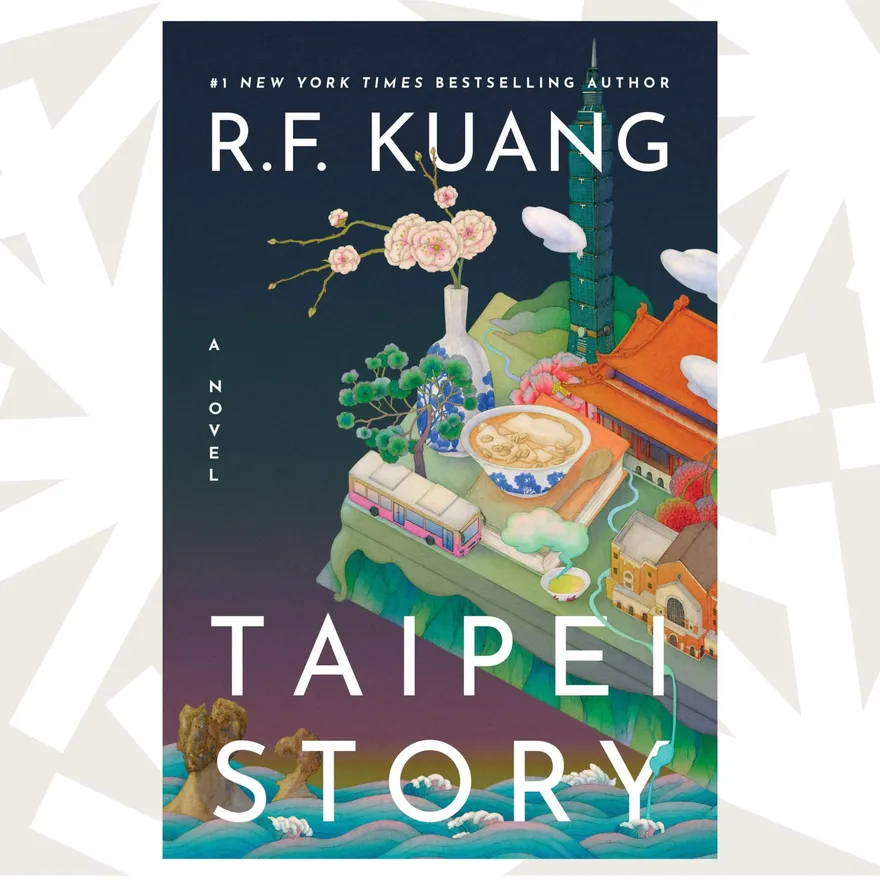

This is a preview of the Shortform summary of the Sep 28, 2026 episode of the NPR's Book of the Day
Sign up for Shortform to access the whole episode summary along with additional materials like counterarguments and context.
1-Page Summary
Language and Identity
R.F. Kuang explores how language profoundly shapes identity through personal experience and literary characters, revealing the complex relationship between linguistic ability and selfhood.
Kuang observes that speaking different languages allows people to construct new versions of themselves with unique emotional and social traits. As a heritage speaker, she notes feeling more docile and obedient when speaking Chinese, as the language carries the "baggage" of childhood family dynamics and former social roles. Conversely, she discusses how language learning encourages identity experimentation through classroom roleplay, where students assume personas that offer a "blank slate" to speak without ego or accent concerns.
Kuang also details the exhausting challenges non-fluent readers face when navigating daily life in a non-dominant language, where deciphering street signs and subway platforms requires constant conscious effort. To authentically represent this experience in her novel, she composed her protagonist Lily's Chinese dialogues first, then translated them carefully to preserve their original logic and imagery for English readers.
The ability to navigate a language fluently, Kuang explains, is tightly linked to confidence and maturity. Her character Lily feels more confident in English but younger and more naive in Chinese—a feeling Kuang mirrors in her own life, noting how non-dominant languages literally shift the "internal architecture" of the individual.
Family Heritage and the Immigrant Experience
Indira Lakshmanan and Kuang reflect on how second-generation immigrants struggle with preserving family narratives and cultural heritage. Lakshmanan observes that many want to become fluent in their ancestral language to speak with grandparents about family history but often run out of time, leading to deep regret. Kuang shares her own remorse for postponing opportunities to record her grandfather's stories due to embarrassment over her limited Chinese.
The desire to preserve family history is often hindered by reluctance to discuss past trauma. Kuang explains that her efforts to document her family's experiences with the Cambodian genocide were met with silence or fragmented disclosures, with relatives claiming she wasn't entitled to these painful details. She highlights how parents who fled hardship often withhold ancestral narratives, viewing this silence as protection and a mark of successful immigration—ensuring their children never have to confront traumatic family histories.
This clash of perspectives causes intergenerational pain. While Kuang's mother sees withholding stories as protective, Lily feels excluded and disconnected from her family narrative, revealing the deep complexities that silence binds within immigrant families.
Processing Grief Through Fiction
Lakshmanan draws parallels between Kuang and her protagonist Lily Chen, noting both are Yale students who attended a summer program in Taipei. Kuang confirms that Lily is drawn from her own experiences, particularly her grief when her grandfather passed away three years prior during her time in Taipei—a loss that left her unable to write for a long time.
Kuang explains that she intensified her own grief, guilt, and shame "to a 10" through fiction. She writes Lily as a 19-year-old with far fewer resources than she had at 30—no support system, greater alienation, and deeper disorientation. This fictional amplification allows Kuang to use fiction as a space to explore how everything could feel so much worse, providing cathartic distance to process and examine the emotional landscape of grief more deeply.
Writing Across Multiple Genres
Andrew Limbong challenges the industry notion that authors must stay within a single genre, highlighting Kuang as an example of breaking this mold. Known for her dark fantasy trilogy "The Poppy War," Kuang has also published "Yellow Face," a satirical novel about racial identity and publishing, along with dark academia fantasies and her new literary fiction work "Taipei Story."
Kuang explains that her love of reading widely drives her passion for genre diversity. She expresses a desire to "do everything, write everything," and live "an infinite number of lives through an infinite number of works." For Kuang, restricting herself to one genre would limit her storytelling possibilities, and she plans to return to historical fantasy, proving that genre boundaries need not confine an author's creative output.
1-Page Summary
Additional Materials
Counterarguments
- While language can influence identity, many individuals maintain a stable sense of self regardless of the language they are speaking.
- Some heritage speakers do not experience significant shifts in personality or behavior when switching languages.
- Not all language learners use roleplay or persona adoption as a means of identity experimentation; for some, language learning is a purely practical or academic pursuit.
- Many non-fluent readers develop coping strategies that reduce the exhaustion of navigating daily life in a non-dominant language.
- Authentic bilingual dialogue can sometimes be effectively written directly in the target language without composing in the original language first, depending on the writer's fluency and intent.
- Confidence and maturity can be expressed independently of language fluency; some individuals feel confident in non-dominant languages due to personality or context.
- Some second-generation immigrants successfully preserve family narratives and cultural heritage without full fluency in the ancestral language, using translation or other means.
- Not all immigrants regret not learning their ancestral language; some prioritize assimilation or have different values regarding heritage preservation.
- Silence about family trauma can sometimes foster resilience or allow families to focus on positive aspects of their new lives, rather than always causing pain or disconnection.
- Fiction is not the only or necessarily the best way to process grief; some individuals find other forms of expression or support more effective.
- Some authors prefer to specialize in a single genre, finding depth and mastery more rewarding than genre diversity.
- Genre boundaries can help readers find books that match their interests and expectations, and some authors appreciate these structures.
Actionables
- You can keep a rotating language diary where you write short daily entries in different languages you know or are learning, then reflect on how your mood, self-perception, or style shifts with each language. For example, write about the same event in English, Spanish, and your heritage language, then note any changes in tone, confidence, or emotional nuance.
- A practical way to preserve and explore family narratives is to record voice memos of yourself recounting family stories or memories in both your dominant and ancestral languages, even if your skills are limited. Compare how details, emotions, or perspectives change between languages, and use these recordings as a personal archive to revisit or share with relatives.
- You can experiment with genre fluidity by rewriting a favorite personal story or memory in several different genres—such as a mystery, a comedy, and a fantasy—regardless of your writing experience. Notice how shifting genres changes the emotional impact, themes, or the way you relate to the story, and reflect on which version feels most authentic or cathartic.

Get access to the context and additional materials
Language and Identity
Language shapes identity in profound ways, affecting not only how individuals interact with the world but also how they perceive themselves. R.F. Kuang discusses these themes through personal experience and the creation of literary characters, highlighting the powerful, complex relationship between linguistic ability and selfhood.
Speaking Different Languages Enables New Versions of Oneself With Distinct Emotional and Social Traits
Kuang observes that speaking different languages allows a person to construct new versions of themselves with unique emotional and social traits. She reflects on her experiences as a heritage speaker, feeling expected to be comfortable in Beijing and Taipei, but facing significant mental fatigue and cognitive overload trying to understand what her brain believes should be familiar.
Heritage Speakers Face Complexity as Their Linguistic Choices Carry Historical Family and Developmental Baggage
For heritage speakers like Kuang, linguistic choices are complicated by historical family ties and developmental experiences. Kuang notes that when she speaks Chinese, she feels more docile and obedient, as most of her Chinese-speaking context involves family and memories from childhood. The language comes with the "baggage" of former social roles and expectations, coloring her sense of self when using that language.
Roleplay and Personas Help Language Learners Shed Ego and Accent, Allowing Identity Experimentation Without Performance Investment
Kuang also discusses how language learning encourages identity experimentation through classroom roleplay and personas. In her Japanese classes, students would assume roles—such as a student’s mother or someone’s girlfriend—allowing them to speak without the burden of ego or personal association with words or accent. This roleplay offers a "blank slate," providing the freedom to temporarily become someone else and experiment with new ways of being.
Barriers to Meaning-Making in Texts for Non-fluent Readers
Kuang details her and her character Lily’s struggles with reading in a non-dominant language, where even mundane tasks present challenges. She describes how navigating daily life in Taipei required significant effort to decipher street signs, subway platforms, and information that would be instantly understood at home. This constant need to consciously process written language became exhausting, highlighting how automatic and "lubricated" daily life is when reading is effortless.
Navigating Challenges for Non-native Readers
Non-fluent readers face persistent barriers to meaning, turning everyday reading into a laborious, deliberate act. The challenge extends beyond understanding words to navigating an entire environment where meaning is not instantly accessible.
Preserving Dialogue's Logic, Imagery, and Patterns Through Chinese-To-English Translation Highlights Linguistic Displacement
Kuang wanted to authentically represent this language experience in her novel. Most of her protagonist Lily’s conversations in the n ...
Here’s what you’ll find in our full summary
Language and Identity
Additional Materials
Counterarguments
- While language can influence identity, many individuals maintain a stable core sense of self regardless of the language they are using.
- Some bilingual or multilingual speakers report feeling equally confident and mature in all their languages, especially if they acquired them simultaneously or have used them extensively in diverse contexts.
- The association of heritage languages with childhood roles or docility may not be universal; for some, heritage language use can evoke empowerment, pride, or adult responsibilities.
- Not all language learners find roleplay or persona adoption helpful or liberating; some may find it artificial or anxiety-inducing.
- The mental fatigue and barriers described for non-fluent readers may diminish significantly with increased exposure and practice, making the process less laborious over time.
- The preservation of original linguistic texture in translation, while valuable for authenticity, can sometimes hinder readability or acces ...
Actionables
- you can keep a daily language mood journal to track how your self-perception, confidence, and emotional tone shift when you use different languages, noting specific situations where you feel more mature, naive, or socially adaptable
- (for example, jot down how you feel introducing yourself in your dominant language versus your heritage or non-dominant language, and reflect on any changes in your sense of self or social role).
- a practical way to explore identity flexibility is to assign yourself a different persona or social role for each language you use during routine activities, such as ordering food, making appointments, or chatting online, and then reflect on how your behavior and feelings change
- (for instance, try being more assertive in one language and more reserved in another, and observe how this affects your interactions and self-image).
- you can create a personal reading challenge where you selec ...

Get access to the context and additional materials
Family Heritage and the Immigrant Experience
Indira Lakshmanan and R.F. Kuang reflect on the challenges faced by second-generation immigrants in preserving their family heritage and narratives. Their stories reveal the complexities of generational memory, linguistic barriers, and the pain of unspoken trauma that pervades immigrant families.
Second-Generation Immigrants Regret Losing Family Narratives and Cultural Heritage
Both Lakshmanan and Kuang discuss the deep regret many second-generation immigrants feel over lost family stories and cultural heritage. Lakshmanan observes that individuals like Lily want to become fluent in their ancestral language to speak with grandparents about family history, but often run out of time, leading to deep regret when elders pass away before these conversations can happen. Kuang echoes this sentiment, sharing personal remorse for postponing opportunities to record her grandfather’s stories due to embarrassment over her limited Chinese, ultimately losing that chance forever.
Family Story Documentation Hindered by Reluctance to Discuss Trauma
The desire to preserve family history is frequently hindered not just by lost opportunity or language, but by a reluctance to discuss past trauma. Kuang explains that while she wished to document her family’s history, especially relating to the Cambodian genocide and her relatives’ experiences in labor camps, her efforts were met with silence or fragmented disclosures, according to the comfort of relatives. Lingering trauma among immigrant parents often results in an unwillingness to revisit or share painful memories. As Kuang recounts, any time she sought more details, she was told: “this is a very hard thing for us to talk about. In fact, we don’t want to talk about it at all and you don’t really have a right to know, so we’re going to move on.”
Parents Fleeing Hardship May Withhold Ancestral Narratives, Believing Shielding Children From This Knowledge Marks Successful Immigration
Kuang highlights the rationale behind this reticence: from the parents’ perspective, the goal of escaping hardship and resettling in the U.S. is precisely so that their children, like Lily, will never have to confront or dwell on traumatic family histories. The withholding of these stories becomes, for some, an emblem of successful immigration, a way of offering children a new start free from the burdens of the past.
Silence Shrouds Generational Trauma and Complex Family Histories
Silence around family history leaves many descendants with only fragmented knowledge, and the selective sharing of traumatic histories shapes the contours of memory and identity.
Family Might Selectively Share History, Claiming Descendants ...
Here’s what you’ll find in our full summary
Family Heritage and the Immigrant Experience
Additional Materials
Counterarguments
- Some second-generation immigrants may not feel regret over lost family stories or cultural heritage, instead prioritizing assimilation or valuing their current cultural identity.
- Not all immigrant parents withhold traumatic histories; some families openly discuss their past, and some children may feel overwhelmed or burdened by too much information.
- The desire to shield children from trauma can be seen as a valid and compassionate parenting choice, prioritizing emotional well-being over historical completeness.
- Fragmented or selective sharing of family history is not unique to immigrant families; many families, regardless of background, have incomplete or selectively told narratives.
- Some second-generation immigrants may not feel disconnected or excluded by the lack of family narratives, instead finding connection through other means ...
Actionables
- you can create a private, ongoing family question journal by writing down questions about your family's past, including those you feel hesitant or embarrassed to ask, and leaving the journal in a shared space for relatives to answer at their own pace and comfort level; this lets family members respond when they're ready, and you can gradually collect stories and details that might otherwise remain unspoken.
- a practical way to bridge language gaps and preserve family stories is to use a voice memo app to record yourself practicing ancestral language phrases, then send these recordings to elders with a request for corrections or stories in response; this invites gentle feedback and can spark conversations without the pressure of face-to-face embarrassment.
- you can map out a visual family time ...
Get access to the context and additional materials
Processing Grief Through Fiction
Autobiographical Elements and Personal Trauma Fuel Universally Resonant Fiction Narratives
Indira Lakshmanan draws parallels between the author R.F. Kuang and her protagonist, Lily Chen, noting that both are students at Yale, attended a summer program in Taipei, and have immigrant Chinese parents. Kuang confirms that much of Lily Chen is drawn from her own experiences. She shares that she was in Taipei three years prior when her own grandfather passed away, a loss that left her unable to write for a long time. Kuang emphasizes that the motivation behind her work as a novelist was to understand her family and honor their experiences, and this personal trauma directly informs the emotional core of her fiction.
Amplifying Emotional Experiences Through Fictional Alienation and Limited Support Can Create Cathartic Distance and Explore Intensified Pain
R.F. Kuang explains that, in shaping Lily’s journey, she decided to intensify her own grief, guilt, shame, and humiliation "to a 10" through fiction. While Kuang was 30 at the time, she writes Lily as a 19-year-old who deals ...
Here’s what you’ll find in our full summary
Processing Grief Through Fiction
Additional Materials
Counterarguments
- While drawing from personal trauma can create emotionally resonant fiction, some critics argue that excessive reliance on autobiographical elements may limit the universality of the narrative, making it less accessible to readers with different backgrounds.
- Intensifying emotional pain and alienation in fiction may risk sensationalizing or exaggerating real-life experiences, potentially undermining the authenticity of the emotional journey.
- The cathartic distance provided by fiction might not be effective for all readers or writers; some may find that fictionalizing trauma does not aid in processing grief and could even retraumatize.
- Focusing on alienation and lack of support as a means to amplify grief may ...
Actionables
- you can write a short story or scene where a character with your background faces a loss or challenge, but exaggerate their sense of isolation and lack of support to explore how grief might feel in a more intense, unfamiliar context; this helps you safely examine your own emotions from a new angle and may reveal hidden feelings or strengths.
- a practical way to honor your family's experiences is to record a voice memo or write a letter to a family member (living or deceased), focusing on a specific memory or event that shaped your relationship, and then reflect on how that event influences your current feelings or choices.
- you ...
Get access to the context and additional materials
Writing Across Multiple Genres
Authors Can Successfully Pursue Diverse Storytelling Without Confined Genres
Andrew Limbong challenges the common industry notion that authors must stay within the boundaries of a single genre, such as a legal thriller writer being confined to legal thrillers or a family drama writer exclusively producing family sagas. He highlights R.F. Kuang as an example of an author who breaks this mold. Kuang is known for her ability to transition between genres, starting with her acclaimed dark fantasy trilogy "The Poppy War," which draws from Chinese history. She has also published "Yellow Face," a satirical novel exploring racial identity and the publishing world. Additionally, Kuang wrote two dark academia fantasy novels and now ventures into literary fiction with her new novel about language and family, "Taipei Story." Each genre allows her to explore distinct narratives and engage with different thematic inquiries, demonstrating that writers are not limited to a single style or subject.
Wide Reading Fuels Cross-Genre Writing, Rejecting Industry Norms
Indira Lakshmanan notes Kuang's broad body of work, spanning bestsellers across several genres. Kuang explains that her love of reading widely drives her passion for genre diversity. She expresses ...
Here’s what you’ll find in our full summary
Writing Across Multiple Genres
Additional Materials
Counterarguments
- Some readers develop strong expectations for an author's style or genre, and frequent shifts between genres can make it harder to build a consistent readership or brand loyalty.
- The publishing industry often relies on genre categorization for marketing, shelving, and targeting audiences, so cross-genre writing can present practical challenges in promotion and sales.
- Mastery of a single genre can allow authors to deeply refine their craft and understanding of specific conventions, potentially leading to higher quality or more innovative work within that genre.
- Authors who frequently switch genres may face difficulties in ...
Actionables
- you can set a monthly reading challenge where you pick books from genres you’ve never explored before, then jot down a few sentences about what you liked or didn’t like about each genre to discover new storytelling possibilities and break out of your usual reading habits.
- a practical way to experiment with genre diversity is to write a short story or scene each week in a different genre, even if you don’t plan to share them, so you can experience firsthand how different genres shape your creativity and narrative voice.
- yo ...
Get access to the context and additional materials


Create Summaries for anything on the web
Download the Shortform Chrome extension for your browser
