

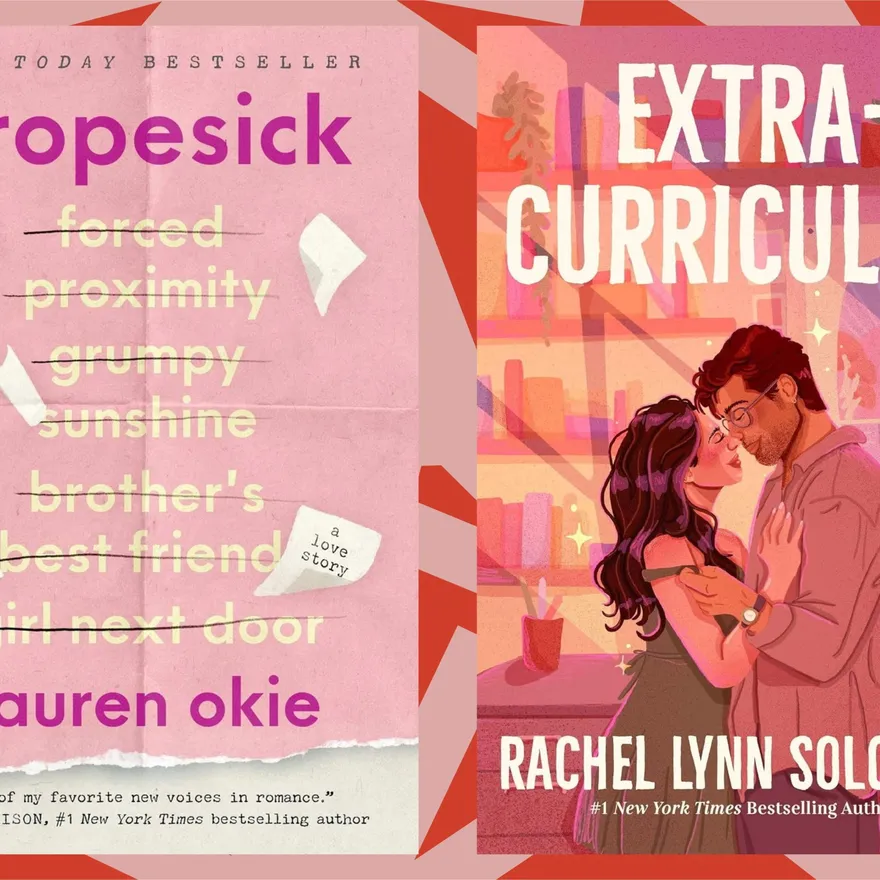
'Tropesick' and 'Extracurricular' are romance novels that subvert genre expectations
In this episode of NPR's Book of the Day, two romance novels are examined for how they challenge and reimagine genre conventions. Lauren Okie's Tropesick uses a meta-fictional structure to celebrate and subvert familiar romance tropes, while Rachel Lynn Solomon's Extracurricular redefines controversial tropes like the student-professor relationship through explicit attention to consent and communication. Both novels incorporate difficult subject matter—including addiction, grief, burnout, and past abuse—while maintaining the genre's promise of a happy ending.
The discussion explores how these authors balance escapism with realism, using romance as a framework to address mental health and trauma. The episode examines how both books navigate power dynamics and agency within their relationships, and considers how the romance genre's guaranteed happy ending creates a safe space for readers to engage with challenging topics while maintaining hope for connection and healing.

This is a preview of the Shortform summary of the Sep 25, 2026 episode of the NPR's Book of the Day
Sign up for Shortform to access the whole episode summary along with additional materials like counterarguments and context.
1-Page Summary
Deconstructing Tropes & Meta-Fiction: How Both Novels Subvert Romance Conventions
Lauren Okie's Tropesick: A Self-Aware Love Letter to Romance Tropes
Lauren Okie's Tropesick takes a self-aware approach to romance conventions, using typewriter-font sections every 20 or 30 pages to preview upcoming tropes. This structural device functions as both homage and subversion, letting readers know what's coming while maintaining tension. Okie explains that tropes emerged organically during writing—starting with the brother's best friend trope, which triggered the girl-next-door trope in a domino effect. Despite the meta-fictional framework, Okie carefully ensures the emotional core remains intact, using the structure as an invitation to celebrate and gently disrupt romance tradition.
Rachel Lynn Solomon's Extracurricular Redefines Age Gap, Student-Professor Romance Tropes, Emphasizing Consent, Communication, and Vulnerability
In Extracurricular, Rachel Lynn Solomon tackles two debated tropes—the age gap and student-professor relationship—by grounding them in open communication and unwavering consent. Solomon's protagonist Ramona complicates the traditional power imbalance through her fame and wealth, having spent 26 years in the public eye. Her decision to leave the music industry and attend college marks her first act of true independence. Therapy emerges as key for both characters, creating a foundation for mutual understanding and emotional honesty that redefines classic romance tropes.
Trauma and Mental Health in Romance: Addiction, Loss, Burnout, and Therapy in Narratives
Tropesick Blends Light Rom-com Tropes With the Dark Reality of Shared Grief Over a Character's Opioid Addiction Death
In Tropesick, Katie and Tyler reunite after years of avoiding each other following the opioid overdose death of Katie's brother, Mikey. Okie deliberately challenges the notion that love conquers all, showing that genuine connection requires acknowledging unresolved trauma and life's painful truths. Despite the darker subject matter, the novel incorporates classic rom-com elements as comic relief, balancing lightness against the gravity of loss and addiction.
Extracurricular Uses Romance to Explore how Burnout, Past Abuse, and Trauma Shape Characters' Capacity for Healthy Relationships and Emotional Expression
Ramona's journey from child star to college student represents her reclaiming agency after systemic abuse from managers, parents, and industry executives. Nick's commitment to therapy—beginning with his first chapter in a therapy session—is celebrated within the narrative as "the hottest thing a man can do." Solomon illustrates how both characters use therapy to dismantle performative personas and allow vulnerability, showing that mental health awareness and emotional literacy are foundations for healthy, authentic romantic connection.
Agency and Power Dynamics: Navigating Consent and Control Within Unequal Power Structures
Tropesick Presents Katie and Tyler Reuniting Through Shared Trauma, Equalizing Their Brothers-Best-Friend Dynamic
Katie and Tyler's reunion after eight years is marked by intense tension and unresolved feelings from Mikey's death. Their prolonged separation fosters mutual vulnerability that transcends the traditional "brother's best friend" power hierarchy. As they work together to write a romance novel, Katie and Tyler are forced to confront their shared history, using storytelling as a means to address unresolved issues and begin healing.
Extracurricular Adds Social, Financial, and Experiential Power to Student Ramona, Complicating the Student-Professor Power Imbalance
Solomon reimagines the student-professor trope by giving Ramona considerable power through her celebrity status and wealth. Her fame and resources act as counterweights to Nick's academic authority, disrupting the usual power hierarchy. Nick finds himself unsettled by Ramona's assertive presence as she challenges his classroom control. At the core of their relationship are consent, communication, and character development, which Solomon makes non-negotiable, prioritizing healthy interaction and individual agency over traditional power dynamics.
Romance as Safe Space: Happy Endings Explore Tough Topics, Offer Security & Validation
Solomon emphasizes that the romance genre's promise of a happy ending creates a covenant with readers to explore trauma without existential dread. This assurance invites readers to engage with painful subjects—mental health, addiction, abuse, and grief—while guaranteeing emotional safety. Both Tropesick and Extracurricular honor this promise while capturing love's complexity, portraying romance as both escapist and realistic. By acknowledging the realities of mental health alongside romantic fulfillment, these novels maintain the genre's commitment to connection and hope, upholding romance as a safe haven for readers to believe in the possibility of love.
1-Page Summary
Additional Materials
Counterarguments
- The use of typewriter-font sections to preview tropes in Tropesick, while self-aware, may reduce narrative suspense for some readers who prefer to discover plot developments organically.
- The meta-fictional approach in Tropesick, though intended to celebrate and subvert romance traditions, could be seen as distancing, potentially making it harder for some readers to emotionally invest in the story.
- While Tropesick aims to balance comic relief with serious themes like addiction and grief, some readers may feel that the juxtaposition risks trivializing the gravity of these issues.
- The emphasis on therapy and mental health in both novels, though progressive, may not resonate with all readers, particularly those who feel that such themes are becoming formulaic or overrepresented in contemporary romance.
- In Extracurricular, giving Ramona fame and wealth to counterbalance the student-professor power dynamic may not fully address the ethical concerns some readers have about such relationships, regardless of individual agency or consent.
- The promise of a happy ending as a "safe space" in romance could be critiqued for potentially minimizing the long-term impact of trauma or suggesting that love alone is sufficient for healing.
- The focus on subverting tropes and meta-commentary might appeal more to readers already familiar with romance conventions, potentially alienating newcomers to the genre.
Actionables
- you can create a personal reading log that tracks not just the tropes in romance novels you read, but also notes how characters handle power dynamics, consent, and communication, helping you recognize and reflect on healthy relationship patterns in fiction and real life
- For example, after finishing a book, jot down which tropes appeared, how characters navigated difficult conversations, and whether therapy or mental health themes were present, then consider how these elements compare to your own relationships or expectations.
- a practical way to explore emotional honesty and vulnerability is to write a short story or journal entry where you intentionally include a difficult conversation or moment of mutual vulnerability between characters, focusing on open communication and consent
- For instance, draft a scene where two characters discuss a past trauma or set boundaries, then reflect on how this process felt and what you learned about expressing needs or listening empathetically.
- you can balance lightness and heaviness in your daily life by pairing a challenging or emotionally heavy activity (like processing a tough memory or supporting a friend) with a planned moment of joy or comic relief, such as watching a favorite comedy or sharing a funny story
- This helps you practice holding space for both difficult emotions and positive experiences, mirroring the way some stories blend grief and humor to foster resilience.
Get access to the context and additional materials
Deconstructing Tropes & Meta-Fiction: How Both Novels Subvert Romance Conventions
Lauren Okie's Tropesick: A Self-Aware Love Letter to Romance Tropes
Lauren Okie's Tropesick stands out as a self-aware exploration of the romance genre, playfully acknowledging and subverting its own conventions. Okie structures the novel with a distinctive frame story: every 20 or 30 pages, sections appear in a typewriter font, each previewing a particular trope. These moments serve as a roadmap, letting readers know almost exactly what's coming next—yet Okie intentionally maintains tension, trusting that the appeal of romance lies not in the ending, but in the journey itself. This structural device functions as both homage and subversion, highlighting the familiarity of tropes while allowing Okie space to upend reader expectations.
Okie describes how tropes emerged organically during her writing. She started with the brother's best friend trope and quickly realized it necessitated the girl-next-door trope—each choice triggering the next in a domino effect. This approach led to a wild, unruly proliferation of conventions, mirroring Okie's own forager-like process of gathering ideas from different genres and media and weaving them back into romance storytelling. For her, the only unbreakable covenant with the reader was ensuring the couple’s ultimate happiness together.
Despite the overt meta-fictional aspect, Okie carefully avoids allowing self-awareness to overshadow the story’s emotional core. She resists the temptation to “break the fourth wall” or let the behind-the-scenes mechanics of trope use dominate the narrative. Okie leans on a lifetime of consuming tropes and love stories, crafting a book that uses its meta framework not as a distraction, but as an invitation to both celebrate and gently disrupt romance tradition.
Rachel Lynn Solomon's Extracurricular Redefines Age Gap, Student-Professor Romance Tropes, Emphasizing Consent, Communication, and Vulnerability
In Extracurricular, Rachel Lynn Solomon boldly tackles two of romance’s most debated tropes—the age gap and the student-professor relationship—aiming to transform them from taboo into tenderness. Solomon’s intention is to ground the relationship in open communication and unwavering consent, making these elements non-negotiable against the backdrop of potentially problematic power dynamics.
Solomon ensures that her protagonist, Ramona, complicates the traditional student-professor power imbalance. Ramona, having spent 26 years in the public eye and subjected to abuse by her parents, music executives, and the world at large, enters the story seeking independence for the first t ...
Here’s what you’ll find in our full summary
Deconstructing Tropes & Meta-Fiction: How Both Novels Subvert Romance Conventions
Additional Materials
Counterarguments
- While Tropesick’s meta-structure is intended to subvert romance conventions, some readers may find that frequent signposting of tropes reduces narrative suspense or emotional immersion.
- The reliance on familiar tropes, even when subverted, could be seen as reinforcing the genre’s formulaic nature rather than truly innovating or challenging it.
- Okie’s avoidance of breaking the fourth wall may limit the depth of meta-fictional commentary, potentially missing opportunities for deeper critique or satire of the romance genre.
- The assurance of a happy ending in Tropesick, while comforting to some, may be viewed as limiting narrative stakes or complexity.
- In Extracurricular, the attempt to equalize the student-professor power dynamic through Ramona’s fame and wealth may not fully address the inherent ethical concerns or institutional boundaries present in such relationships.
- Emphasizing therapy and open communication as solutions in Extracurricular may oversimplify the c ...
Actionables
- you can keep a running list of romance tropes you notice in books, movies, or shows, then write a short scene or dialogue that gently twists or subverts one of those tropes, helping you recognize and play with genre expectations in your own creative projects or daily conversations.
- a practical way to deepen emotional connections in your relationships is to set aside time for open-ended conversations where both people share a recent vulnerability or challenge, focusing on listening without judgment and responding with empathy, mirroring the emphasis on communication and mutual respect.
- you can create a person ...
Get access to the context and additional materials
Trauma and Mental Health in Romance: Addiction, Loss, Burnout, and Therapy in Narratives
Tropesick Blends Light Rom-com Tropes With the Dark Reality of Shared Grief Over a Character's Opioid Addiction Death
Addiction and Its Aftermath: The Long Shadow of Overdose
In Lauren Okie’s Tropesick, the narrative centers on Katie and Tyler, whose lives are forever altered by the opioid overdose death of Katie's brother, Mikey. Both are still grappling with unresolved grief, as neither has addressed the tragedy since Mikey died at the end of high school. The surprise reunion of Katie and Tyler, her brother’s best friend, forces them to confront not only the unresolved tension between them but also the enduring trauma of loss. The novel underscores that addiction casts a long, multifaceted shadow, affecting surviving loved ones from numerous angles and for years after the event.
Okie Challenges "Love Conquers all," Showing Genuine Connection Requires Acknowledgment of Life's Edges and Unresolved Trauma
Okie deliberately challenges the classic romance notion that love can resolve all wounds. In Tropesick, genuine connection is only possible when characters face the painful truths of their shared past. Okie sees it as crucial, particularly in romance, to recognize that love does not always conquer everything and that meaningful relationships depend on acknowledging life's hardships and unfinished grief.
Comic Relief: Providing Lightness Amidst Grief
Despite its darker subject matter, Tropesick incorporates classic rom-com elements as comic relief. The improbable pairing and rivals-to-lovers setup introduce moments of levity, providing a balancing lightness that offsets the gravity of loss and addiction. These trope-driven comedic moments enable the story to maintain accessibility while respecting the seriousness of its central themes.
Extracurricular Uses Romance to Explore how Burnout, Past Abuse, and Trauma Shape Characters' Capacity for Healthy Relationships and Emotional Expression
Ramona's Transition From Child Star to College Student Marks Her First Independent Choice, Reclaiming Agency After Systemic Abuse From Managers, Parents, and Industry Executives
In Rachel Lynn Solomon’s Extracurricular, Ramona battles extreme burnout after spending 26 years in the public eye subject to manipulation and abuse by manager-parents, industry executives, and the unforgiving gaze of the public. Leaving the music industry and starting college is Ramona’s first act of true independence and represents her reclaiming agency lost to years of systemic abuse.
Nick's Divorce and Ther ...
Here’s what you’ll find in our full summary
Trauma and Mental Health in Romance: Addiction, Loss, Burnout, and Therapy in Narratives
Additional Materials
Counterarguments
- While Tropesick challenges the "love conquers all" trope, some readers may feel that the inclusion of rom-com elements and comic relief risks trivializing the gravity of addiction and grief, potentially undermining the seriousness of the subject matter.
- The portrayal of therapy as universally positive and "the hottest thing a man can do" in Extracurricular may oversimplify the complexities and barriers many people face in accessing or benefiting from mental health care, such as cultural stigma, financial constraints, or ineffective therapeutic relationships.
- Focusing on individual therapy and emotional self-work as the primary means of healing may inadvertently downplay the importance of broader systemic changes needed to address issues like addiction, abuse, and burnout.
- The narratives center on characters who have the resources and support to pursue therapy and personal g ...
Actionables
- you can schedule a monthly check-in with a trusted friend or partner to openly discuss any ongoing grief, stress, or emotional challenges, making space for honest conversations that acknowledge hardships rather than glossing over them
- Set aside a regular time—like the first Sunday of each month—to talk about what’s been difficult lately, what you’re still processing, and how it’s affecting your relationships. This helps normalize vulnerability and ensures that unresolved feelings don’t get buried under daily routines.
- a practical way to balance heavy conversations is to intentionally introduce lighthearted activities or humor after discussing tough topics with loved ones
- After a serious talk, suggest watching a favorite comedy, playing a silly game, or sharing funny stories. This approach helps maintain emotional accessibility and connection without minimizing the seriousness of what was shared.
- you can create a personal “em ...

Get access to the context and additional materials
Agency and Power Dynamics: Navigating Consent and Control Within Unequal Power Structures
This discussion unpacks how contemporary romance novels complicate traditional power dynamics by centering trauma, consent, personal agency, and communication.
Tropesick Presents Katie and Tyler Reuniting Through Shared Trauma, Equalizing Their Brothers-Best-Friend Dynamic
In Tropesick, Katie is unexpectedly paired with Tyler McNally, her now-deceased brother's best friend, to co-author a new romance novel. The two have not seen or spoken to each other since the traumatic event of Katie's brother Mikey's overdose eight years earlier, which occurred at the end of high school. This prolonged separation fosters a profound sense of mutual vulnerability that transcends the traditional "brother's best friend" power hierarchy. Their reunion is marked by intense tension and unresolved feelings, challenging the usual rivals-to-lovers setup by grounding it in real emotional stakes and past pain. As they work together to write a love story, Katie and Tyler are forced to confront and navigate their shared history, using the act of storytelling as a means to address their unresolved issues and begin healing.
Extracurricular Adds Social, Financial, and Experiential Power to Student Ramona, Complicating the Student-Professor Power Imbalance
Rachel Lynn Solomon’s Extracurricular reimagines the classic student-professor trope by assigning student Ramona considerable power in her own right. Despite being a student, Ramona is famous and wealthy, having lived twenty-six years under public scrutiny, enduring abuse from her manager parents, the industry, and the media. Burned out and seeking autonomy, leaving the music industry marks her first truly independent decision, shifting the usual assumed power imbalance.
Ramona's celebrity status and resources act as counterweights to the academic authority of Nick, the professor. Unlike typical age-gap or student-professor romances, Ramona's wealth and experience prevent a simplistic, unidirectional p ...
Here’s what you’ll find in our full summary
Agency and Power Dynamics: Navigating Consent and Control Within Unequal Power Structures
Additional Materials
Counterarguments
- While contemporary romance novels may attempt to complicate traditional power dynamics, some critics argue that these efforts can still inadvertently reinforce existing hierarchies by framing agency and consent within familiar, often heteronormative, relationship structures.
- The portrayal of trauma as a means to equalize power dynamics, as in Tropesick, may risk romanticizing or oversimplifying the complexities of trauma recovery and its impact on relationships.
- Using the act of co-authoring a romance novel as a healing mechanism could be seen as an unrealistic or overly tidy narrative device that does not fully address the depth of unresolved emotional issues.
- In Extracurricular, despite Ramona’s wealth and celebrity status, the inherent institutional and age-based power imbalance between student and professor remains, and some readers may feel that these factors are not fully mitigated by her personal agency.
- The depiction of mutual respect and negotiation in relationships with significant power differentials may not reflect the real-world challenge ...
Actionables
- you can practice equalizing power in your relationships by intentionally sharing decision-making in everyday situations, like alternating who chooses activities or meals, and openly discussing how each person feels about those choices to foster mutual agency and communication.
- a practical way to center consent and personal boundaries is to create a shared list with a friend or partner of topics, activities, or boundaries that feel sensitive or important, then regularly check in together about comfort levels and any changes, making negotiation and respect a routine part of your interactions.
- you can en ...
Get access to the context and additional materials
Romance as Safe Space: Happy Endings Explore Tough Topics, Offer Security & Validation
The Romance Genre's Promise of a Happy Ending Creates a Covenant With Readers to Explore Trauma Without Existential Dread
Rachel Lynn Solomon emphasizes that one of the foundational rules of a romance novel is the promise of a happily ever after or, at minimum, a happy for now. This covenant assures readers that, regardless of the trauma or suffering characters endure, there will be fulfillment and connection in the end. For readers facing a messy and stressful world, such predictability offers needed escapism and a sense of joy and light. The assurance of a positive resolution invites readers to engage with painful subjects—such as mental health, addiction, abuse, and grief—without existential dread, knowing that vulnerability will not lead to despair. Romance becomes a reliable soft place to land, making space to explore difficulties while guaranteeing emotional safety.
Tropesick and Extracurricular Honor the Genre's Promises While Capturing Love's Complexity Within Emotional Landscapes
In novels like Tropesick and Extracurricular, romance is depicted as both escapist and realistic, embracing the emotional landscape with nuance. They portray love stories that are emotionally satisfying, providing readers with validation that longing for attachment and healing is normal and worthy. These stor ...
Here’s what you’ll find in our full summary
Romance as Safe Space: Happy Endings Explore Tough Topics, Offer Security & Validation
Additional Materials
Counterarguments
- The predictability of happy endings in romance novels can limit narrative complexity and reduce opportunities for genuine surprise or emotional catharsis.
- The guarantee of emotional safety may prevent readers from fully engaging with the realities and consequences of trauma, potentially minimizing the seriousness of difficult topics.
- Some critics argue that the genre’s focus on fulfillment through romantic connection can reinforce the idea that personal healing or happiness is dependent on finding a partner.
- The emphasis on escapism might discourage readers from confronting or processing real-life issues in a more direct or nuanced way.
- By centering stories around romantic ...
Actionables
- you can create a personal reading ritual where you intentionally choose romance novels during stressful times to give yourself a predictable emotional reset; for example, set aside one evening a week to read a romance novel with the expectation of a hopeful ending, using it as a way to decompress and remind yourself that positive outcomes are possible even after tough days.
- a practical way to explore vulnerability safely is to keep a journal where you write about your own experiences with longing, connection, or emotional pain, then imagine how a romance novel might resolve those feelings with hope or healing; this helps you process difficult emotions while reinforcing the idea that fulfillment and connection are attainable.
- you can use romance novels as conversation starters w ...
Get access to the context and additional materials

 1-Page Summary
- Deconstructing Tropes & Meta-Fiction: How Both Novels Subvert Romance Conventions
- Trauma and Mental Health in Romance: Addiction, Loss, Burnout, and Therapy in Narratives
- Agency and Power Dynamics: Navigating Consent and Control Within Unequal Power Structures
- Romance as Safe Space: Happy Endings Explore Tough Topics, Offer Security & Validation
Create Summaries for anything on the web
Download the Shortform Chrome extension for your browser
