

Emily St. John Mandel's 'Exit Party' opens in the wake of a second American Civil War
In this episode of NPR's Book of the Day, author Emily St. John Mandel discusses her novel "Exit Party," which opens in a fractured America recovering from a second civil war. Mandel explains how climate science projections of multiple possible futures shaped her post-collapse setting, and how she navigates the challenge of writing dystopian fiction that increasingly mirrors reality. She describes finding necessary distance from dark material through everyday family life and the grounding force of routine responsibilities.
The conversation explores Mandel's use of parallel universes and doppelgangers to examine the concept of "counterlives"—the alternative paths people might have taken through different choices. Mandel also discusses her structural approach, using objects like a painting to connect multiple timelines and perspectives, and her preference for intuitive writing over rigid pre-planning. Throughout, she emphasizes finding moments of joy and meaning in ordinary experiences, even amid circumstances of impermanence and collapse.
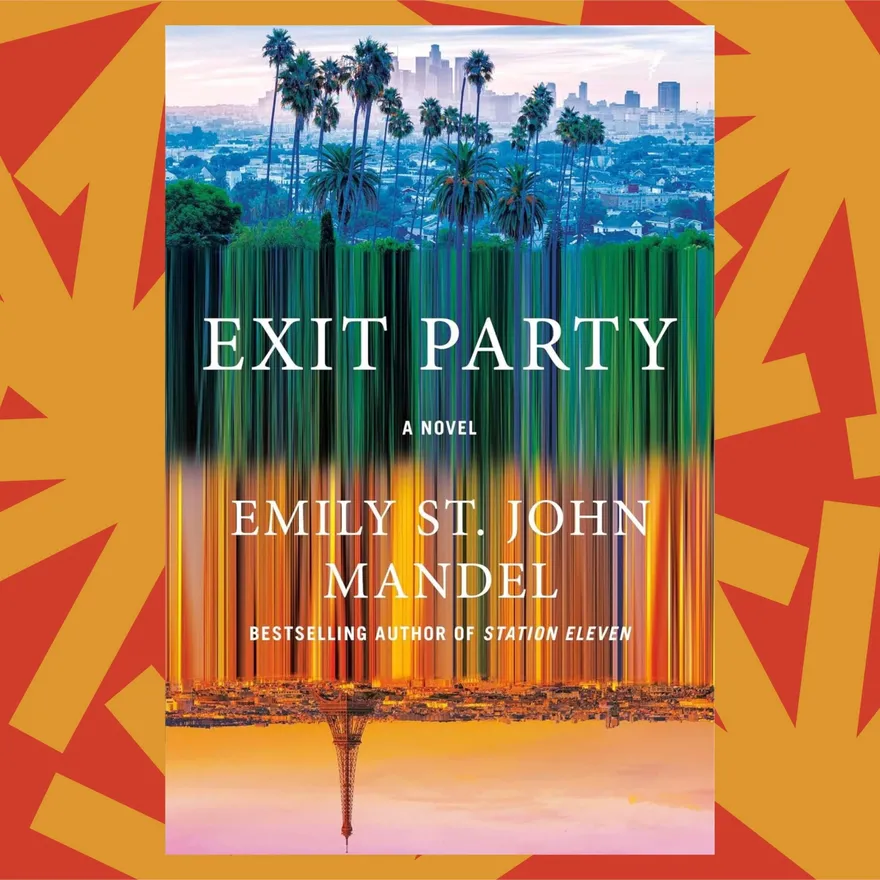

This is a preview of the Shortform summary of the Sep 23, 2026 episode of the NPR's Book of the Day
Sign up for Shortform to access the whole episode summary along with additional materials like counterarguments and context.
1-Page Summary
Exit Party: Climate, War, and Ari's Journey in Post-Collapse America
Future Shaped by Environmental and Political Collapse Post-Inflection Points
Emily St. John Mandel explains that her novel "Exit Party" draws from climate scientists' projections of multiple possible futures based on temperature increases. These scenarios—showing what the world might look like at various degrees of warming—provided the framework for her post-collapse fiction. The novel opens in 2031 Los Angeles, now part of the Republic of California and emerging from a second American civil war. While Mandel isn't predicting such events, this backdrop sets the stage for her protagonist Ari, who emerges from 18 years of imprisonment for morally ambiguous reasons. Originally the villain in Mandel's 2010 novel "The Singer's Gun," Ari returns as a complex character navigating a transformed, uneasy society.
Mandel's Approach Needs Distance for Creative Objectivity
Writing dystopian scenarios became unsettling for Mandel as aspects of her fiction began reflecting reality, particularly scenes involving authoritarianism that paralleled news of ICE raids. Mandel notes that her everyday life, especially parenthood, provides necessary relief from dark fictional worlds. The demands of family life—like picking up her child and making dinner—pull her out of intense engagement with dystopian material, and this enforced distance becomes protective, grounding her even as she explores collapse in her fiction.
Parallel Lives and Doppelgangers: Exploring Alternate Selves and "Roads Not Taken"
Novel Uses Sci-fi Trope of Doppelgangers and Parallel Universes to Explore Counterlives and Alternative Selves
Mandel imagines a party scene where guests disappear and reappear as different versions of themselves, functioning as a swing door between parallel universes. This device explores the concept of "counterlives"—the lives people might have led had they made different choices. Drawing from her own unlikely journey from rural British Columbia to becoming a New York City novelist, Mandel finds it easy to imagine alternate paths. This narrative architecture invites readers to ponder how small changes in choices could significantly alter personal fate, exploring the interplay between choice, chance, and personal identity.
Narrative Structure: Using "Swan Dive" to Connect Timelines and Perspectives
Mandel Uses Time-Traveling Objects and Varying Perspectives For Coherence In Complex Novels
Mandel explains that she uses time-traveling objects to unify diverse narrative strands in her structurally complex novels. The painting "Swan Dive" moves from hand to hand across timelines, serving as a through line that maintains continuity across multiple perspectives and eras. She's fascinated by how art endures across time, embodying a kind of immortality as it moves through generations, creating resonance and connection throughout the novel.
Mandel Relies On Intuition Over Pre-planning to Manage Intricate Narratives
Mandel avoids rigid pre-planning, preferring to start with a messy first draft written intuitively without a predetermined structure. Her process involves obsessive, iterative revision that can extend over years, letting coherence emerge organically through careful reworking. Through this approach, narrative elements and complex timelines eventually form meaningful patterns, resulting in the richly woven structures characteristic of her novels.
Grounding in Everyday Moments: Finding Joy to Balance Dark Fiction Writing
Mandel finds solace in everyday experiences like getting dinner on the table or picking up her child from school while writing dystopian fiction. The pandemic taught her to value simple beauty and connection amid chaos, helping her recognize that moments of joy can exist alongside difficult circumstances. This interplay between fleeting joy and impermanence is woven into "Exit Party," with the novel's final three sentences distilling its philosophical argument about finding meaning in ephemeral moments. Mandel suggests that ordinary experiences offer authentic meaning even amid extraordinary circumstances, reinforcing that joy can be found and cherished regardless of life's impermanence.
1-Page Summary
Additional Materials
Counterarguments
- While Mandel draws on climate science projections, some critics might argue that using speculative scenarios of civil war and societal collapse risks sensationalizing or oversimplifying complex real-world issues.
- The use of a post-collapse America as a backdrop may reinforce dystopian tropes that can feel repetitive or derivative within contemporary fiction.
- Presenting Ari, a previously established villain, as a morally ambiguous protagonist could be seen as relying on familiar redemption arcs rather than offering new character dynamics.
- The parallel universe and doppelganger device, while imaginative, is a well-worn trope in science fiction and may not offer a fresh perspective for readers familiar with the genre.
- Relying on intuition and iterative revision rather than pre-planning can sometimes result in narrative incoherence or lack of structural clarity, potentially making the novel less accessible to some readers.
- The emphasis on finding meaning in everyday moments, while comforting, might be viewed as insufficient or overly simplistic in the face of large-scale societal collapse and trauma.
- Using art as a unifying motif across timelines is a common literary device, and some may feel it does not significantly distinguish the novel from other works with similar themes.
Actionables
- you can create a personal timeline with branching paths to visualize how different choices could have led to alternate versions of your life, helping you reflect on the role of chance and decision-making in shaping your identity; for example, sketch a simple chart with key moments and imagine what might have happened if you’d chosen differently at each point.
- a practical way to ground yourself during stressful or unsettling times is to intentionally schedule small, everyday rituals—like making a favorite meal or taking a short walk—to anchor yourself in the present and find moments of joy, especially when the world feels unpredictable.
- you can use a meaningful object from your past (like a photo, letter, or keepsake) as a touchstone to connect different periods of your life, reflecting on how your sense of self and priorities have shifted over time and how certain values or memories endure across changing circumstances.
Get access to the context and additional materials
Exit Party: Climate, War, and Ari's Journey in Post-Collapse America
Future Shaped by Environmental and Political Collapse Post-Inflection Points
Emily St. John Mandel draws on climate science and meteorological concepts to craft the fictional scenarios in her novel "Exit Party." She explains that when listening to climate scientists, they present projections of a range of possible futures based on temperature increases—showing what the world might look like at three, four, or five degrees above current levels. All these scenarios are possible trajectories for humanity, and she used them as the framework for envisioning plausible post-societal collapse conditions in her story.
The novel opens in the aftermath of a second American civil war, making clear that while Mandel is not predicting such an event, it serves as the starting backdrop for her fiction. In 2031 Los Angeles, now part of the Republic of California and just emerging from civil conflict, citizens remain on edge; the city is only one terrorist attack away from disaster. The lifting of curfew and the withdrawal of international peacekeeping troops coincide with the bloom of jacaranda trees, infusing the air with a fragile grace and hope despite the persistent sense of danger.
At the heart of this transformed landscape is Ari, the protagonist. Ari emerges from 18 years of imprisonment not for a minor offense but for serious, morally ambiguous reasons. Originally the villain in Mandel’s 2010 novel "The Singer’s Gun," Ari was a character Mandel found compelling and returned to, curious about how Ari would navigate the transformed, uneasy society after serving a long sentence. This journey—of a complex, perhaps irredeemable character confronting a nation remade by collapse—forms a central thread of the book.
Mandel's Approach Needs Distance for Creative Objectivity
Writing about dystopian scenarios and authoritarianism proved unsettling for Mandel, especially as aspects of her fiction began to reflect real-world events. She describes difficulty writing scenes involving an authoritarian state, particularly as news emerged of ICE raids in places like Minneapolis, with police seemingly "dis ...
Here’s what you’ll find in our full summary
Exit Party: Climate, War, and Ari's Journey in Post-Collapse America
Additional Materials
Counterarguments
- While Mandel draws on climate science for her scenarios, some critics might argue that using worst-case projections as the primary framework could risk reinforcing a sense of fatalism or inevitability about societal collapse, rather than encouraging proactive solutions.
- The depiction of a second American civil war and the fragmentation of the United States, though intended as fiction, could be seen as sensationalizing or oversimplifying complex political and social dynamics.
- The focus on Los Angeles and the Republic of California may inadvertently center the narrative on a specific region, potentially neglecting the varied experiences of other parts of the country or world in similar scenarios.
- Using a previously established villain as the protagonist may limit the exploration of new perspectives or reinforce certain character archetypes, rather than introducing fresh voices to the narrative.
- Some readers might feel that the juxtaposition of hope (symbolized by jacaranda blooms) and ongoing danger risks romanticizing or minimizing the real trauma experienced in post-conflict ...
Actionables
- you can use local climate projections to imagine how your own neighborhood might change at different temperature increases, then sketch or write a short scene set in that future to better understand potential impacts on daily life (like altered routines, new challenges, or unexpected sources of hope).
- a practical way to balance exposure to unsettling news is to schedule intentional breaks for grounding activities—such as tending to a plant, taking a walk, or playing a game with family—whenever you read or watch something about societal instability, helping you maintain perspective and emotional resilience.
- you can refl ...

Get access to the context and additional materials
Parallel Lives and Doppelgangers: Exploring Alternate Selves and "Roads Not Taken"
Novel Uses Sci-fi Trope of Doppelgangers and Parallel Universes to Explore Counterlives and Alternative Selves
In the novel, Emily St. John Mandel imagines a party scene where guests appear to disappear and reappear as different manifestations of themselves. Mandel explains that, just for a second, the party functions as a swing door between parallel universes, allowing another version of oneself to step through. This device uses science fiction tropes to explore the idea of a "counterlife"—the lives people might have led had they made different choices at pivotal moments. The party setting becomes a tangible metaphor for the fluid exchange between parallel universes and alternate lives.
Mandel draws from personal experience as she reflects on her own unlikely journey from rural western British Columbia, with a background involving homeschooling and the absence of a high school diploma, to becoming first a dancer and then a New York City novelist. She notes that her actual life sometimes feels improbable, which makes it easy for her to imagine counterlives stemming from alternative choices or circumstances. By examining possible alternate lives, the novel enables readers to confront the roads not taken and the inflection points that define individual destinies.
Parallel Identities Explore Choice, Chance, and Personal Identity
The concept of a c ...
Here’s what you’ll find in our full summary
Parallel Lives and Doppelgangers: Exploring Alternate Selves and "Roads Not Taken"
Additional Materials
Clarifications
- A "counterlife" refers to an alternate version of a person's life that could have existed if different choices were made. It highlights the idea that multiple potential lives branch out from key decisions. In literature, exploring counterlives helps examine identity and fate by imagining these alternate realities. This concept deepens understanding of how chance and choice shape who we become.
- A doppelganger is a fictional or mythical double of a living person, often seen as a mysterious or supernatural counterpart. In science fiction, doppelgangers represent alternate versions of a person existing in parallel universes—different realities where events and choices vary. Parallel universes are hypothetical separate realities that coexist alongside our own, each with its own timeline and versions of people. The idea connects doppelgangers to the concept that multiple versions of oneself could exist simultaneously in these alternate realities.
- Parallel universes are hypothetical separate realities existing alongside our own, each with different versions of events or people. In science fiction, they often serve as settings where characters encounter alternate selves or outcomes of different choices. These universes can be accessed through portals, time travel, or other speculative means, allowing stories to explore "what if" scenarios. This concept helps examine how different decisions might lead to vastly different lives or worlds.
- The "swing door" metaphor suggests a portal that briefly opens and closes, allowing passage between two spaces. In this context, it symbolizes a momentary connection between parallel universes where alternate versions of a person can cross over. This imagery emphasizes the fleeting and fluid nature of encountering alternate selves. It helps readers visualize how different life paths might intersect briefly before diverging again.
- Science fiction tropes like doppelgangers and parallel universes symbolize how people imagine different versions of themselves based on choices made. These tropes externalize internal psychological experiences of regret, curiosity, and identity exploration. They help visualize abstract concepts of "what if" scenarios in a concrete, narrative form. This blending allows readers to emotionally engage with complex ideas about self and possibility.
- "Inflection points" are critical moments or decisions in life that cause a significant change in direction. They shape the course of a person's future by altering opportunities, relationships, or circumstances. These moments often feel small at the time but have lasting impacts on one's identity and destiny. Understanding inflection points helps explain how different choices lead to vastly different life paths.
- Narrative structure organizes how a story ...
Counterarguments
- The use of doppelgangers and parallel universes as metaphors for alternate lives is a well-worn trope in science fiction and literature, which may make the novel's approach feel unoriginal or derivative to some readers.
- Focusing on "roads not taken" and alternate selves can risk overshadowing the value of accepting and finding meaning in one's actual life and choices.
- The emphasis on pivotal moments and minor decisions shaping destiny may oversimplify the complex interplay of social, economic, and systemic factors that influence personal outcomes.
- The metaphorical use of a party as a "swing door" between universes might not resonate with all readers, potentially feeling contrived or lacking emotional impact.
- Some criti ...
Get access to the context and additional materials
Narrative Structure: Using "Swan Dive" to Connect Timelines and Perspectives
Mandel Uses Time-Traveling Objects and Varying Perspectives For Coherence In Complex Novels
Emily St. John Mandel explains that, in her structurally complex novels with multiple points of view, characters, and timelines, cohesive narrative threads are essential. She uses time-traveling objects to unify diverse narrative strands and perspectives. The painting "Swan Dive" is one such object that moves from hand to hand and between timelines, binding the narrative together. According to Mandel, these objects serve as through lines—maintaining continuity across multiple perspectives, characters, and eras. They ensure the story remains anchored even as it shifts through decades or centuries.
Mandel is fascinated by the way art endures across time. She describes a kind of immortality attached to art as it moves and is reinterpreted by new individuals through generations. For her, objects like the painting "Swan Dive" are not merely narrative tools; they also embody the emotional relationships characters and readers form with art throughout its journey in the novel, creating resonance and connection across eras.
Mandel Relies On Intuition Over Pre-planning to Manage Intricate Narratives
Mandel Writes Messy First Drafts Without a Predetermined Structural Blueprint
Mandel’s approach to her intricate narratives is to avoid rigid pre-planning or elaborate organizational systems. She recalls attempting a detective-style board with photos and red yarn to track connections for her novel "The Glass Hotel," but found it cumbersome and unhelpful. Instead, she prefers starting with a messy first draft, wri ...
Here’s what you’ll find in our full summary
Narrative Structure: Using "Swan Dive" to Connect Timelines and Perspectives
Additional Materials
Counterarguments
- While time-traveling objects like "Swan Dive" can provide narrative cohesion, some readers may find such devices contrived or distracting, potentially detracting from character development or thematic depth.
- The reliance on a single object to connect disparate timelines and perspectives may risk oversimplifying complex relationships or reducing the richness of individual storylines.
- Not all readers or critics agree that objects can effectively embody emotional relationships or create resonance; some may find these connections forced or less impactful than direct character interactions.
- The idea that art possesses immortality and enduring resonance is subjective; some may argue that the meaning and relevance of art can fade or be lost over time.
- Mandel’s avoidance of pre-planning and organizational systems may not be effective for all writers, and some may argue that more structured approaches can lead to greater narrative clarity and efficiency.
- Writing messy first drafts without a blueprint can result in significant inefficiencies, requiring extensive revision and potentially leading to narrative inconsistencies that are difficult to resolve.
- Some authors and editors believe that tools like det ...
Actionables
- you can choose a personal object (like a photo, letter, or keepsake) and intentionally use it as a recurring touchstone in your own writing or journaling to connect different memories, emotions, or life stages, helping you notice patterns and emotional threads across time
- For example, revisit the same object in your journal every few months, reflecting on how your relationship to it and your life context have changed, and let it spark new entries that link past and present experiences.
- a practical way to embrace intuitive creativity is to set aside a short, regular time to write or create without any outline or plan, letting your thoughts flow freely, then revisit and revise your work over several sessions to discover unexpected connections and themes
- For instance, write a story or personal reflection in one sitting, then return to it weekly, looking for links between ideas or moments you hadn’t noticed before, and gradually shape it into something more coherent.
- you can experiment with tracking the emotional impact of ar ...
Get access to the context and additional materials
Grounding in Everyday Moments: Finding Joy to Balance Dark Fiction Writing
Emily St. John Mandel finds solace in everyday experiences while writing bleak and dystopian fiction. She emphasizes the grounding power of simple acts like getting dinner on the table or picking up her child from school. These "good moments" became more pronounced and precious to her during the pandemic, a period that forced her to recognize and value them amid widespread chaos and uncertainty.
The Pandemic Taught Mandel to Value Simple Beauty and Connection Amid Chaos
The pandemic offered Mandel profound lessons on finding and appreciating happiness in daily life, even when the world outside felt harsh or unpredictable. She learned that moments of joy and connection, like a lovely evening with her child or a magical afternoon with friends, can exist alongside difficult circumstances. Acknowledging and cherishing these moments demonstrates that joy and impermanence can coexist. For Mandel, such moments not only provide happiness but also validate the importance and possibility of human connection, even in darkness and adversity. This mindset helps her stay grounded as she navigates the emotional demands of writing dystopian stories.
Joy Amid Impermanence Central to Exit Party Narrative
The interplay between fleeting joy and impermanence is woven into the core of Mandel's narrative in "Exit Party." She explains that the book's final ...
Here’s what you’ll find in our full summary
Grounding in Everyday Moments: Finding Joy to Balance Dark Fiction Writing
Additional Materials
Counterarguments
- While finding joy in everyday moments can be grounding for some, others may find it difficult or even impossible to access such moments during periods of intense hardship or trauma.
- The emphasis on cherishing simple joys might risk minimizing or overlooking the severity of systemic issues or personal suffering that cannot be alleviated by individual perspective shifts.
- Not everyone has access to the kinds of domestic stability or social connections described, making the advice less universally applicable.
- The focus on individual resilience and finding meaning in small moments could be seen as placing the burden of ...
Actionables
- you can create a daily two-minute ritual where you pause and intentionally notice one small, positive sensory detail—like the warmth of a mug, the sound of birds, or the feel of clean sheets—to anchor yourself in the present and reinforce the value of fleeting joys, even on difficult days; jot these moments in a notebook or on your phone to revisit during tougher times.
- a practical way to reinforce the coexistence of joy and impermanence is to set a recurring reminder to send a brief message of appreciation or connection to someone in your life, focusing on a recent ordinary moment you shared, which helps you both recognize and cherish everyday connect ...
Get access to the context and additional materials

 1-Page Summary
- Exit Party: Climate, War, and Ari's Journey in Post-Collapse America
- Parallel Lives and Doppelgangers: Exploring Alternate Selves and "Roads Not Taken"
- Narrative Structure: Using "Swan Dive" to Connect Timelines and Perspectives
- Grounding in Everyday Moments: Finding Joy to Balance Dark Fiction Writing
Create Summaries for anything on the web
Download the Shortform Chrome extension for your browser
