

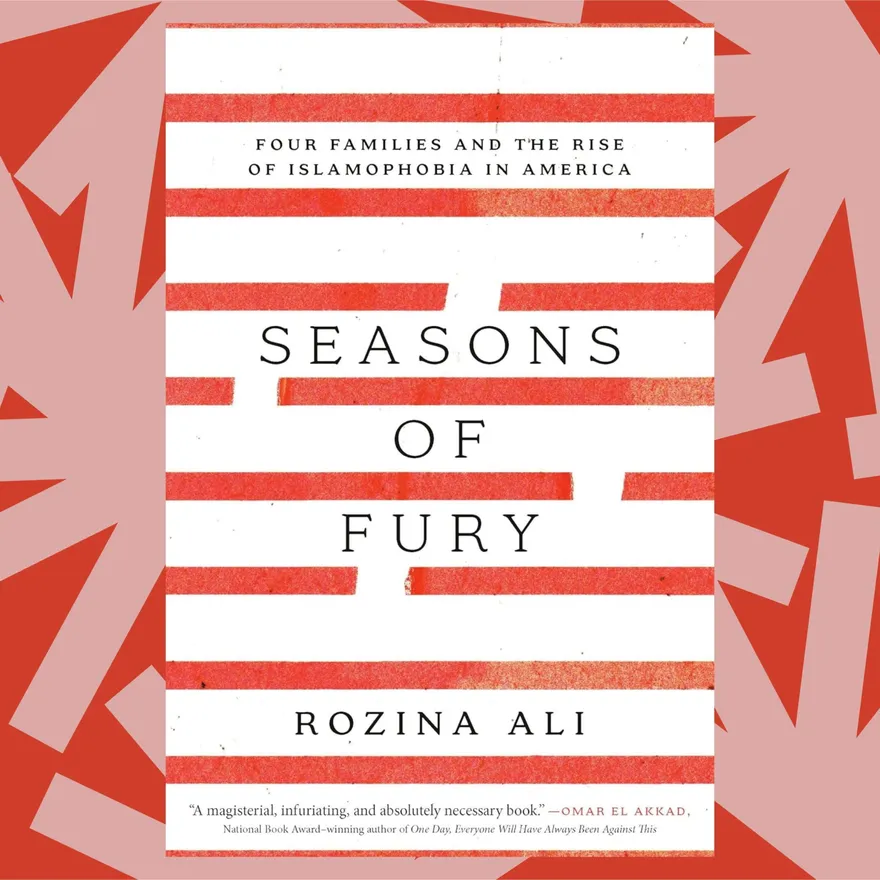
'Seasons of Fury' traces the roots of Islamophobia in the United States
In this episode of NPR's Book of the Day, Leila Fadel speaks with investigative journalist Rozina Ali about the historical roots of Islamophobia in America. Ali's research reveals that anti-Muslim and anti-Arab sentiment became embedded in American consciousness decades before September 11th, tracing back to government surveillance practices that began in the 1960s and 1970s following the 1967 Israel-Arab War.
The conversation examines how these historical patterns persist today through disparate sentencing in terrorism cases, widespread post-9/11 surveillance of Muslim communities, and the challenges Muslim political candidates face. Ali discusses specific cases that illustrate how terrorism laws are applied unevenly and explains how counterterrorism practices have effectively criminalized Muslim religious communities. The episode provides context for understanding how Muslims continue to be perceived as fundamentally different from other Americans despite their long-standing presence in the country.

This is a preview of the Shortform summary of the Sep 17, 2026 episode of the NPR's Book of the Day
Sign up for Shortform to access the whole episode summary along with additional materials like counterarguments and context.
1-Page Summary
Roots of Islamophobia in America Before 9/11
Leila Fadel and investigative journalist Rozina Ali explore how anti-Muslim and anti-Arab sentiment in the United States predates the September 11th attacks by decades. Ali's research reveals that the portrayal of Islam as foreign and dangerous, along with government surveillance, became embedded in American consciousness during the 1960s and 1970s.
Early Government Surveillance and the 1967 War
Ali highlights the Jabara family's experience to illustrate how federal authorities targeted Muslim and Arab Americans simply because of their heritage, despite the family's civic engagement and military service. FBI agents visited mosques and questioned attendees as early as 1968 and 1969. Ali connects this surge in federal scrutiny to the 1967 Israel-Arab War, which was pivotal in shaping Arab American identity and triggering government suspicion. After this conflict, law enforcement began viewing Muslim and Arab communities as potential security threats, a perception that solidified in the American imagination and has persisted to the present day.
Systemic Injustice in Terrorism Cases
Sentencing Disparities Reveal Unequal Application of Law
Fadel describes how Mateen Siraj, a young Muslim man manipulated by a law enforcement informant, received a 30-year prison sentence despite never buying materials or building explosives. In contrast, two white supremacists who bought ammunition and had their attack foiled after firing shots received sentences of only 10 and 14 years. Ali explains that courts justify lengthy sentences for terrorism defendants through fear-based reasoning: judges speculate that imprisonment may radicalize defendants further, creating a Kafkaesque cycle where Muslim defendants face insurmountable barriers to demonstrating rehabilitation. This uneven application of terrorism laws, Ali emphasizes, sends a social signal that Muslims are uniquely dangerous, perpetuating Islamophobic narratives.
Post-9/11 Counterterrorism Effects
Ali explains that after 9/11, nearly the entire Muslim community fell under widespread surveillance from federal authorities, local police, and even neighbors. This approach effectively criminalized the Muslim religious community regardless of individual actions. Counterterrorism prosecutions, often involving entrapment schemes using informants, have disproportionately impacted Muslim Americans, amplifying fear and reinforcing the community's experience of ongoing suspicion.
Islamophobia's Impact on Muslim Politicians
Ali notes that Muslim candidates like Abdullah El-Sayed and Zoran Mamdani face Islamophobic attacks with little political consequence. Fadel describes how visual tactics, such as contrasting photos highlighting religious dress, are used to suggest Muslims embody an incompatible vision for America. Ali argues the country is deeply divided over Muslim political participation, with some viewing Muslim candidates as threats while others see diversity as positive. While pockets of progress exist, Ali observes that the broader national perception still casts Muslims as intrinsically different rather than as integral members of the American community.
1-Page Summary
Additional Materials
Counterarguments
- While anti-Muslim and anti-Arab sentiment existed before 9/11, it was not universally held and many Americans had little awareness or opinion about Islam or Arab Americans prior to major geopolitical events.
- Government surveillance in the 1960s and 1970s targeted a variety of groups, including civil rights activists, leftist organizations, and other minorities, not exclusively Muslim or Arab Americans.
- Sentencing disparities in terrorism cases can be influenced by a range of factors, including the specifics of each case, the charges brought, plea deals, and judicial discretion, rather than solely by the defendant's religion or ethnicity.
- After 9/11, increased surveillance and counterterrorism measures were implemented broadly across many communities and sectors, not only targeting Muslims, though Muslim communities were disproportionately affected.
- Visual tactics and negative portrayals in political campaigns have been used against various minority groups, not just Muslims, reflecting broader issues of prejudice in American politics.
- There are examples of Muslim Americans who have achieved significant political and civic success, indicating that integration and acceptance are possible and occurring in some areas.
Actionables
- You can track and challenge your own assumptions by keeping a private log of moments when you notice yourself reacting to news, images, or stories involving Muslims or Arabs, then intentionally seeking out a counter-narrative or positive story to balance your perspective.
- A practical way to counter visual stereotypes is to follow and share social media accounts that highlight the everyday lives, achievements, and diversity of Muslim and Arab Americans, making these images a regular part of your online environment.
- You can support fair treatment by writing a short, respectful email to your local representatives or media outlets whenever you notice unequal language or coverage about Muslim or Arab Americans, using specific examples and suggesting more balanced alternatives.

Get access to the context and additional materials
Roots of Islamophobia in America Before 9/11: The 1960s-70s
Leila Fadel and investigative journalist Rozina Ali explore how anti-Muslim and anti-Arab sentiment in the United States has roots reaching decades before the September 11th attacks. Ali's research reveals that the depiction of Islam as foreign and dangerous, as well as government surveillance, became embedded in American consciousness during the 1960s and 1970s.
Jabara Family's Story Shows Government Surveillance of Muslim and Arab Americans Began Decades Before 9/11
Rozina Ali highlights how the Jabara family’s experiences illustrate early government suspicion and surveillance of Muslim and Arab Americans. The Jabara patriarch served in the U.S. Army and was an active member of various organizations in his small town. Despite these signs of civic engagement and patriotism, the family was targeted by federal authorities simply because of their Arab and Muslim heritage. This targeting wasn’t unique to the Jabaras, but part of a broader pattern of anti-Arab and anti-Muslim focus from the government in the 1960s and 1970s.
Fbi Surveilled Mosques, Questioned Attendees On 1968-1969 Participation
Ali notes that, in the wake of the geopolitical changes of the late 1960s, FBI agents visited mosques and questioned people about their participation as early as 1968 and 1969. Law enforcement treated mosque attendance and community gathering as activities worthy of surveillance, reinforcing suspicion based on religion and origin.
1967 War Shaped Arab American Identity, Triggered Anti-Muslim Sentiment As Security Concern
The Israel-Arab War of 1967, also known as the Six-Day War, was pivotal in shaping the political identity of Arab Americans, particularly in places like Michigan. Rozina Ali connects the surge in federal scrutiny and societal suspicion to this geopolitical conflict. Law enforcement and national security agencies began to view Muslim and Arab communities as potential threats based purely on their religious and ethnic identity. This conflation of religious identity with danger or foreignness became a common part of the American mindset after 1967.
Characterizing Muslims as For ...
Here’s what you’ll find in our full summary
Roots of Islamophobia in America Before 9/11: The 1960s-70s
Additional Materials
Counterarguments
- While anti-Muslim and anti-Arab sentiment did exist before 9/11, some historians argue that it was not as widespread or institutionalized as other forms of prejudice in the U.S. during the 1960s and 1970s, such as anti-Black racism or anti-Communist sentiment.
- Surveillance of various ethnic and religious groups by the FBI in the 1960s and 1970s was part of broader national security efforts during the Cold War, which also targeted other communities (e.g., Black civil rights activists, leftist groups, and Jewish organizations), not exclusively Muslims or Arabs.
- The perception of Muslims as "foreign" or "dangerous" was influenced by global events and media portrayals, but there were also periods and regions in the U.S. where Muslim and Arab Americans were integrated and faced less suspicion.
- The experience of the Jabara family, while illustrative, may not represent the experiences of all Muslim or Arab Americans during that era, as levels of suspicion and surveillance varied by region and individual circumstances.
- Some ...
Actionables
- you can keep a simple log for one week of every time you notice media, conversations, or policies that frame Muslims or Arabs as foreign or dangerous, then reflect on how these patterns shape your own assumptions and reactions
- (for example, jot down headlines, TV scenes, or overheard comments, and at the end of the week, review your notes to spot recurring themes and consider how they might influence your perceptions or interactions).
- a practical way to challenge ingrained stereotypes is to intentionally seek out and learn about the everyday lives and histories of Muslim and Arab Americans in your own city or region, focusing on their civic contributions and community roles
- (for example, read local news stories, look up historical markers, or explore public records about Muslim or Arab American organizations, and note how their presence and participation contrast with common stereo ...


Get access to the context and additional materials
Systemic Injustice in Terrorism Cases: Sentencing Disparities and Fear-Based Reasoning
Mateen Siraj's Case Highlights Disparities in Terrorism vs. White Supremacist Prosecutions
Leila Fadel describes how Mateen Siraj, a young Muslim man, was convicted of terrorism despite not buying any materials, not building explosives, and ultimately withdrawing from a plot to attack a New York subway station—a plot set in motion following manipulation by a law enforcement informant. Nevertheless, Mateen received a 30-year prison sentence. In stark contrast, two white supremacists who planned a racist gunfire attack, bought ammunition, and had their attack foiled after one shot was fired, received far shorter sentences—one 10 years, the other 14. These white supremacists were much further along in carrying out their planned violence than Mateen, yet the legal system imposed far lighter penalties.
Judiciary's Fear-Based System Creates Kafkaesque Barriers to Freedom and Rehabilitation
Rozina Ali explains that the courts justify lengthy sentences for terrorism defendants under a logic based in fear: judges speculate that after years in solitary confinement or prison, defendants may become even more radicalized and thus remain a threat upon release. This circular reasoning means that the mere possibility of future radicalization becomes justification for indefinite punishment, making it mathematically impossible for someone to conclusively demonstrate their rehabilitation or satisfy the court's concerns about potential danger. As a result, no matter how long the sentence or the conditions endured, Muslim defendants like Mateen often face insurmountable barriers to winning their freedom ...
Here’s what you’ll find in our full summary
Systemic Injustice in Terrorism Cases: Sentencing Disparities and Fear-Based Reasoning
Additional Materials
Clarifications
- Mateen Siraj is a Muslim man who was involved in a terrorism case due to his association with a planned attack on a New York subway. He did not purchase materials or build explosives and withdrew from the plot before it could be carried out. His involvement was influenced by an informant working with law enforcement. Despite his limited actions, he received a 30-year prison sentence.
- Law enforcement informants are individuals who secretly provide information to authorities about suspected criminal activity. In terrorism cases, they often engage with suspects to gather evidence or encourage plots to identify threats. Their involvement can sometimes lead to accusations of entrapment if they induce someone to commit a crime they otherwise would not have. Courts must assess whether the informant's actions unfairly influenced the defendant's behavior.
- "Withdrawing from a plot" means a person decides to stop participating in a planned criminal act before it is carried out. Legally, this can sometimes reduce or eliminate criminal liability if the withdrawal is clear, voluntary, and communicated to authorities or co-conspirators. However, withdrawal must occur before the crime happens and be proven to avoid conviction. Courts may still convict if they believe the withdrawal was insincere or too late.
- Terrorism charges often carry harsher penalties due to perceived threats to national security. White supremacist violence, while also serious, has historically received lighter sentences despite similar or greater levels of planning and violence. This disparity reflects systemic biases in law enforcement and judicial practices. It also influences public perception, framing some groups as more dangerous than others.
- Fear-based reasoning in judicial sentencing occurs when judges impose harsher penalties based on the perceived risk that a defendant might commit future crimes, rather than solely on past actions. This approach often relies on speculation about a defendant's potential for future harm, which can be influenced by stereotypes or biases. It creates a cycle where defendants are punished indefinitely because the court fears they remain dangerous, regardless of evidence of rehabilitation. This reasoning can undermine principles of fairness and due process by prioritizing fear over objective assessment.
- "Kafkaesque" refers to situations that are absurdly complex, illogical, and oppressive, often involving endless bureaucratic obstacles. It originates from Franz Kafka's literary works, where characters face nightmarish, surreal legal or administrative systems. In this context, it means defendants are trapped in a system that makes it nearly impossible to prove their innocence or rehabilitation. The term highlights the frustrating and dehumanizing nature of the legal barriers they encounter.
- Solitary confinement isolates individuals from social interaction and support, increasing feelings of loneliness and despair. This extreme isolation can intensify anger and resentment, making individuals more susceptible to adopting radical beliefs. Lack of mental health resources in solitary can worsen psychological distress, further fueling extremist ideologies. The environment may also limit access to positive influences that could counteract radicalization.
- In terrorism cases, courts often require defendants to show consistent behavior over time that indicates renunciation of extremist beliefs. This can include participation in de-radicalization programs, psychological evaluations, and positive conduct reports. However, there is no standardized legal benchmark, making proof of rehabilitation subjective and inconsistent. Judges may still doubt sincerity due to the perceived ongoing risk of radicalization.
- In the U.S., terrorism laws criminalize acts intended to intimidate or coerce civilians or influence government policy through violence or threats. These laws apply broadly to ...
Counterarguments
- Sentencing decisions in terrorism cases often depend on a range of factors, including statutory guidelines, plea deals, cooperation with authorities, and the specific charges brought, which may not be fully comparable across different cases.
- The involvement of law enforcement informants is a common investigative tool in counterterrorism and organized crime cases, and courts have generally upheld its use when there is evidence of predisposition or intent.
- The legal system requires judges to consider public safety and potential future risk when sentencing, which is not unique to terrorism cases or to Muslim defendants.
- Disparities in sentencing can also result from differences in legal representation, prosecu ...


Get access to the context and additional materials
Effect of Post-9/11 Counterterrorism on Muslim Americans via Surveillance and Suspicion
Post-9/11 Era Triggered Widespread Federal Surveillance and Suspicion of U.S. Muslim Communities
After 9/11, Rozina Ali explains that nearly the entire Muslim community in the United States fell under a broad case of suspicion. This suspicion did not only come from federal authorities like the FBI and local police departments, but also extended to neighbors. In this new era, a widespread monitoring apparatus developed, targeting Muslims primarily because of their religious identity and perceived associations with the events of 9/11. This approach to counterterrorism effectively criminalized the Muslim religious community, placing them under persistent scrutiny regardless of individual actions.
Counterterrorism Prosecutions Disproportionately Impact Muslim Americans, Amplifying Fear and Reinforcing Suspicion Through the Justice System
The justice system’s counterterrorism prosecutions have had a disproportionate impact on Muslim Am ...
Here’s what you’ll find in our full summary
Effect of Post-9/11 Counterterrorism on Muslim Americans via Surveillance and Suspicion
Additional Materials
Counterarguments
- While surveillance efforts after 9/11 did increase, they were part of a broader national security strategy that also targeted non-Muslim groups and individuals suspected of extremist activity, not exclusively Muslims.
- Some argue that law enforcement agencies were responding to credible intelligence and threats, rather than targeting individuals solely based on religious identity.
- There are documented cases where counterterrorism efforts successfully prevented planned attacks, which supporters claim justified certain surveillance measures.
- The U.S. government has since implemented reforms and oversight mechanisms to address concerns about profiling and civil liberties.
- Not all members of t ...
Actionables
- you can keep a private log of your own daily interactions and observations to notice and challenge any unconscious biases or assumptions you might make about people based on religion or appearance, helping you become more aware of how suspicion can be internalized and acted upon in everyday life.
- a practical way to counteract social suspicion is to intentionally seek out and support local businesses, events, or services run by Muslim Americans, making a conscious effort to normalize positive engagement and reduce the impact of community-wide mistrust.
- you can write a short, anonymou ...
Get access to the context and additional materials
Islamophobia's Impact on Muslim Politicians and Candidates
Islamophobia frequently shapes the experience of Muslim politicians and candidates in the United States, as anti-Muslim rhetoric is weaponized against them with little consequence. Public debates over their belonging and visibility reveal ongoing divisions in American society and a persistent view of Muslims as outsiders, especially in the political arena.
Islamophobic Rhetoric Weaponized Against Muslim Candidates With Little Consequence
Rozina Ali notes that candidate Abdullah Al-Sayed, running for Senate in Michigan, is facing Islamophobic attacks similar to those experienced by others such as New York City mayoral candidate Zoran Mamdani. In Mamdani’s case, references to 9/11 were repeatedly evoked, painting him as a potential threat to the city—an example of how anti-Muslim sentiment is leveraged as a political weapon. Ali finds it astonishing that politicians can circulate such Islamophobic rhetoric with almost no repercussions or political cost, even as they openly peddle vitriol.
Visual tactics have also been employed to invoke division. Leila Fadel describes a moment when the president posted a photo of himself with Melania alongside a photo of El-Sayed and his wife, Sarah Joukakou, who wears a hijab. The caption, “Two very different Americas,” suggests that Muslim Americans, by mere presence or appearance, embody an incompatible vision for the United States.
Division in American Society Over Muslim Political Participation
Ali argues that this country is deeply divided over the presence and participation of Muslims in politics. When public figures or political leaders share images of Muslim candidates and their visibly religious spouses, such as Abdullah El-Sayed’s wife’s hijab, these visual markers become focal points for polarized reactions. One part of the population may see such a photo and feel threatened, rejecting the idea that people like El-Sayed and his family should belong in America. Another part, by contrast, sees such diversity as a positive reflection of American pluralism an ...
Here’s what you’ll find in our full summary
Islamophobia's Impact on Muslim Politicians and Candidates
Additional Materials
Counterarguments
- While Islamophobia is a real issue, some critics argue that political attacks on candidates often focus on a wide range of perceived vulnerabilities, not just religion, and that candidates from many minority backgrounds face similar challenges.
- There have been instances where politicians or public figures have faced backlash, loss of support, or public condemnation for overtly Islamophobic rhetoric, indicating that there can be consequences.
- Some Americans may argue that concerns about national security are not always rooted in religious bias but in broader anxieties about terrorism, which have affected people of various backgrounds.
- The use of visual contrasts in political campaigns is a common tactic used to highlight differences between candidates on many issues, not solely religion or ethnicity.
- There are examples of Muslim politicians who have achieved significant electoral success and public support, suggesting that acceptance is growing in some regions and ...
Actionables
- you can intentionally diversify your daily media consumption by following social media accounts, newsletters, or YouTube channels run by Muslim Americans from a variety of backgrounds, which helps normalize Muslim voices and perspectives in your everyday life and challenges the narrative of Muslims as outsiders.
- a practical way to counter visual stereotypes is to keep a photo journal where you collect and display positive, everyday images of Muslim Americans—such as families at local parks, professionals at work, or students at school—on your fridge, workspace, or digital screensaver, reinforcing the ordinariness and diversity of Muslim life in America.
- you can ...
Get access to the context and additional materials

 1-Page Summary
- Roots of Islamophobia in America Before 9/11: The 1960s-70s
- Systemic Injustice in Terrorism Cases: Sentencing Disparities and Fear-Based Reasoning
- Effect of Post-9/11 Counterterrorism on Muslim Americans via Surveillance and Suspicion
- Islamophobia's Impact on Muslim Politicians and Candidates
Create Summaries for anything on the web
Download the Shortform Chrome extension for your browser
