

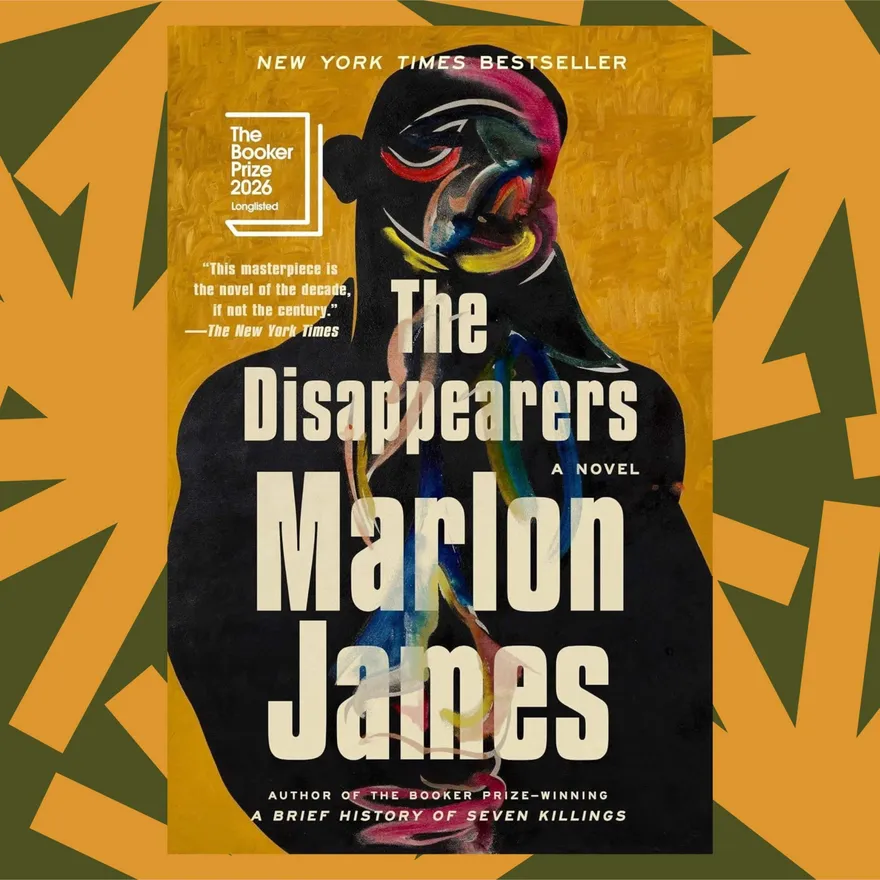
Marlon James' novel 'The Disappearers' chronicles the aftermath of a violent attack
In this episode of NPR's Book of the Day, author Marlon James discusses his novel about a violent 1988 mob attack on gay men in Kingston, Jamaica. James explains his approach to depicting violence in fiction, arguing that all violence is inherently gratuitous and should disturb rather than entertain readers. He explores how he briefly enters the minds of attackers to reveal the disturbing logic behind mob violence without granting them narrative power.
The conversation also examines how disappearance functions as both a form of erasure and a survival strategy for marginalized people. Drawing on his own experience growing up gay in Jamaica, James describes the various ways his characters cope with trauma, from denial and self-reinvention to vengeance and voluntary vanishing. Additionally, James discusses his methodology for historical fiction, explaining why he distrusts official records and instead gathers stories from community members to honor the experiences of those whose traumas were never formally documented.

This is a preview of the Shortform summary of the Sep 14, 2026 episode of the NPR's Book of the Day
Sign up for Shortform to access the whole episode summary along with additional materials like counterarguments and context.
1-Page Summary
Violence in Fiction: Complex Perpetrators
Marlon James explains his decision to briefly enter the minds of violent attackers in his novel, not to grant them narrative power, but to demystify mob mentality. He emphasizes that perpetrators are real people who often see themselves as good and moral despite their harmful actions, revealing the disturbing logic behind violence rather than treating attackers as a faceless beast.
James challenges the notion that violence in fiction can ever be non-gratuitous. He argues that all violence is inherently gratuitous, asking pointedly, "What is too much rape? ... What is just enough rape? There's no such thing." For James, depictions of violence should disturb readers, not entertain them—leaving them with a sense that real damage has occurred. He believes it's his responsibility to portray violence authentically, refusing to exaggerate or sensationalize while honestly showing its impact.
Survival Strategies and Disappearance in Trauma Response
Juana Summers notes that disappearance in James's novel functions as both literal erasure imposed by others and a voluntary survival strategy used by marginalized people. James shares his personal experience in homophobic Jamaica, where he stopped speaking between ages 15 and 17 to avoid detection as gay, and took alternative bus routes to escape hostile peers at school.
The novel depicts various post-trauma responses including denial, self-reinvention, revenge, and vanishing. James describes how the character who chooses vengeance ultimately loses their sense of self and stability, showing that even justified retribution carries a psychological cost. Other characters pursue harmony, acceptance, normalcy, or simply wish to disappear, illustrating the complex ways survival and disappearance intersect in coping with trauma.
1980s Jamaica: Homophobia, Criminalization, AIDS Crisis
In late spring of 1988, a group of gay men gathered in Kingston, Jamaica to rehearse a play—an inherently dangerous act since sex between men was outlawed. During one rehearsal, a murderous mob attacked. James explains how the AIDS crisis worsened conditions for gay Jamaicans as churches weaponized AIDS as God's punishment, driving gay clubs underground and forcing communities into secrecy. He recalls how the AIDS crisis even eclipsed the fear of nuclear war as Jamaica's predominant existential threat during the 1980s.
Responsibility to Victims and Methodology for Historical Fiction
James openly distrusts official records, noting they're often shaped by colonial, upper-class, or political interests. Instead, he gathers information from streets, mountains, alleyways, and community elders like grandmothers to uncover suppressed narratives. A pivotal moment came when James confirmed a fictional attack in his book was based on a real event by speaking with a Canadian asylum survivor, validation that nearly brought him to tears. This confirmation deepened his commitment to respectfully and accurately portray real victims' stories, ensuring his fiction honors the experiences of those whose traumas were never formally recorded.
1-Page Summary
Additional Materials
Counterarguments
- Some critics argue that entering the minds of violent perpetrators, even with the intent to demystify, risks inadvertently humanizing or eliciting sympathy for them, which could be distressing or triggering for victims and readers.
- The assertion that all violence in fiction is inherently gratuitous is debatable; some readers and scholars believe that violence can serve necessary narrative, thematic, or cathartic purposes, and that context and intent matter.
- While James aims to disturb rather than entertain, some readers may find value in fiction that allows for catharsis, resilience, or even empowerment through depictions of overcoming violence.
- The refusal to exaggerate violence for effect may limit the emotional or symbolic impact that some literary traditions use to convey the extremity of trauma or injustice.
- The focus on disappearance as a survival strategy may overlook other forms of resistance or activism that marginalized people have historically employed.
- Distrusting official records is important for uncovering marginalized voices, but completely dismissing them may risk losing valuable factual information or context that can complement oral histories.
- Relying primarily on community sources and oral histories can introduce its own biases, as memories and narratives may be shaped by personal or collective trauma, selective recall, or myth-making.
Actionables
- you can keep a private journal where you write about times you or others justified questionable actions as moral, then reflect on how those justifications shaped your feelings and choices; this helps you recognize and challenge self-justification in your own thinking.
- a practical way to honor overlooked stories is to ask older relatives or neighbors about events or people they feel were misunderstood or erased, then write a short summary or creative piece (like a poem or letter) that preserves their perspective in your own words.
- you can practice noticing and recording the small, everyday ways people around you cope with stress or trauma—such as changing routines, avoiding certain places, or seeking out supportive company—to better understand the range of survival strategies people use and how these might go unrecognized.
Get access to the context and additional materials
Violence in Fiction: Complex Perpetrators
James Studies Violent Attackers' Minds to Demystify Mob Mentality Instead Of Treating Them As a Faceless Beast
Marlon James explains that he made the difficult decision to enter the minds of violent attackers in his novel to help readers think differently about violence. He intentionally keeps this section of the book brief, emphasizing that he did not want to grant narrative agency or power to those who inflict harm on marginalized groups. By exploring the perspective of the attackers, he seeks to demystify the idea of a mob acting as a faceless beast. Instead, James stresses that these perpetrators are real people—individuals who may see themselves as good, loving, and moral, despite participating in acts of violence. He mentions that many do not view themselves as evil; some are loving parents who return home to families, while harboring hateful beliefs or performing harmful actions. James’s approach aims to reveal the logic or reasoning behind violent acts, as suggested by Grace Paley’s advice: to get another rock of the character’s reasoning.
All Violence in Fiction Is Gratuitous: Readers Should Feel Disturbed, Not Entertained by Depictions of Harm
James challenges the commonly held idea that violence in fiction can be non-gratuitous. He argues that all violence is inherently gratuitous, and that attempting to define an acceptable threshold for violence is inherently contradictory. He pointedly asks, "What is too much rape? ... What is just enough rape? There’s no such thing." For James, any assertion of "not too much" violence in fiction is problematic because it implies there could ever be an appropriate amount. He insists that depictions of violence should disturb readers; they are not ...
Here’s what you’ll find in our full summary
Violence in Fiction: Complex Perpetrators
Additional Materials
Counterarguments
- Some critics argue that exploring the perspectives of violent perpetrators, even briefly, can risk humanizing or eliciting sympathy for them, potentially overshadowing the experiences of victims.
- Others contend that refusing to provide any cathartic closure or satisfaction for readers may limit the emotional complexity and potential for healing that fiction can offer.
- There is a viewpoint that not all depictions of violence in fiction are gratuitous; some may serve important narrative, thematic, or educational purposes, such as raising awareness or fostering empathy.
- Some readers and scholars believe that it is possible to responsibly depict violence in fiction without necessarily disturbing the audience, and that such portrayals can still be meaningful and impactful.
- The assertion that all violence in fiction is inherently gratuitous is debated; some argue that context, intent, and execution matter i ...
Actionables
- you can keep a violence reflection journal where, after encountering news stories or fictional depictions of violence, you write a short entry focusing on the possible reasoning, self-image, and humanity of the perpetrators, while also noting your emotional response and whether the depiction felt disturbing or entertaining—this helps you recognize the complexity behind violent acts and your own reactions.
- a practical way to challenge mob mentality is to pause when you notice group outrage online or in person, and privately list three possible individual motivations or backgrounds for people involved, reminding yourself that each participant has a personal story rather than seeing them as a faceless group.
- you can set ...
Get access to the context and additional materials
Survival Strategies and Disappearance in Trauma Response
Disappearance is not only an action imposed by others but also a coping strategy individuals use for survival, especially those from marginalized groups. Juana Summers notes that the title suggests disappearing can be both a literal erasure enacted by external forces and a voluntary self-concealment as a mode of survival.
Disappearance as External Threat and Internal Coping For Marginalized People
The Title Explores Disappearance As Both Literal Erasure and Voluntary Self-Concealment
Juana Summers highlights that disappearance isn’t only done to people, but is also something people do to themselves. Disappearance acts as both a physical erasure and a psychological or strategic withdrawal to navigate danger, especially for marginalized individuals.
Disappearance as Survival: Tactics for Persecuted Individuals in Hostile Environments
Disappearance becomes a key survival tactic for those exposed to persecution in hostile societies. Concealment and withdrawal are deliberate strategies to avoid harm, maintain safety, and escape detection.
Author's Personal Experience: Surviving Homophobic Jamaica Through Disappearance
James Silenced His Voice At 15-17 to Avoid Detection As Gay, Speaking Minimally to Escape Violence
Marlon James shares that as a teenager in Jamaica, he recognized how the sound of his voice could expose him to violence and ridicule for being gay. As a result, between the ages of 15 and 17, he virtually stopped speaking, limiting himself to as few words as possible in an effort to stay unnoticed and avoid danger.
Alternative Bus Routes: Avoiding Confrontation With Hostile Peers at School
James also recalls a pattern of modifying his daily routine, such as taking a later bus to avoid the homophobic “cool kids.” By leaving for school at 6:15 am instead of 6:00, he ensured that he would not encounter those who might target him, entering and leaving school unseen.
The Novel Depicts Post-Trauma Responses: Denial, Self-Reinvention, Revenge, and Vanishing
Following trauma, characters in the novel exhibit a spectrum of responses. Some exist in denial about the trauma, while others attempt to reinvent themselves, seek revenge, or disappear entirely. James notes that these coping mechanisms are neither wholly r ...
Here’s what you’ll find in our full summary
Survival Strategies and Disappearance in Trauma Response
Additional Materials
Clarifications
- "Disappearance" externally imposed refers to situations where individuals are forcibly hidden, erased, or silenced by others, often through violence or oppression. Voluntary disappearance is a conscious choice to withdraw or conceal oneself to avoid harm or persecution. This self-imposed invisibility can protect marginalized people from threats by reducing their visibility or presence in hostile environments. Both forms reflect survival tactics shaped by power dynamics and danger.
- Marginalized groups often face systemic discrimination, violence, and social exclusion that threaten their safety and well-being. Legal inequalities and societal prejudices can limit their access to protection and resources. This hostile environment forces individuals to hide aspects of their identity to avoid harassment or harm. Disappearance becomes a strategic means to reduce visibility and risk in unsafe contexts.
- Jamaica has a history of strong social and legal discrimination against LGBTQ+ individuals, rooted in conservative religious and cultural beliefs. Homosexual acts were criminalized under colonial-era laws, contributing to widespread stigma and violence. Public attitudes often reflect deep-seated homophobia, making it dangerous for LGBTQ+ people to be open about their identities. This hostile environment forces many to conceal their sexual orientation to avoid persecution.
- Marlon James is a Jamaican author known for exploring themes of identity, trauma, and survival in his work. His personal experience as a gay man in homophobic Jamaica provides authentic insight into the survival strategy of disappearance. This lived experience grounds the discussion in real-world context, illustrating how trauma responses manifest. His perspective enriches the analysis of coping mechanisms in marginalized communities.
- Trauma responses are complex because they reflect attempts to manage overwhelming emotions and threats to identity. Denial helps individuals avoid confronting painful realities immediately, providing temporary emotional relief. Self-reinvention allows people to create new identities or narratives to regain control and hope. Revenge and disappearance, while coping strategies, can lead to further psychological harm by deepening isolation or eroding self-coherence.
- "Erasure" literally means the physical removal or disappearance of a person or group, often through violence or forced absence. Metaphorically, it refers to the denial or ignoring of someone's identity, history, or existence by society or dominant groups. This can lead to invisibility, marginalization, and loss of voice or recognition. Both forms of erasure contribute to the suppression and dehumanization of marginalized individuals.
- Altering d ...
Counterarguments
- While disappearance can be a survival strategy, it may also reinforce marginalization by limiting individuals' opportunities for self-expression, community building, and advocacy.
- The emphasis on disappearance as a coping mechanism might unintentionally normalize withdrawal or self-erasure, potentially discouraging efforts toward systemic change or collective resistance.
- Not all marginalized individuals have the option or ability to disappear or conceal themselves, and suggesting disappearance as a primary strategy may overlook the diversity of survival tactics.
- The portrayal of vengeance as inherently eroding identity and stability could be challenged by examples where seeking justice or retribution leads to empowerment or healing for some individuals.
- Focusing on ind ...
Get access to the context and additional materials
1980s Jamaica: Homophobia, Criminalization, Aids Crisis
Jamaica in the 1980s Criminalized Male Same-Sex Relationships, Endangering Gay Men
In late spring of 1988, a group of gay men gathered in Kingston, Jamaica, aiming to stretch their acting skills and put on a play. At this time, even such gatherings were inherently dangerous. Sex between men was outlawed, making any assembly of gay men for any reason a risk. Homophobia was rampant and intense, so much so that, during one rehearsal, a murderous, hateful mob attacked. The illegality of homosexual conduct amplified the danger for gay Jamaicans, forcing them to assemble with constant fear for their safety.
Aids Crisis, Religious Extremism, and Homophobia Intensified Discrimination, Forcing Gay Communities Underground
As the AIDS crisis unfolded, the environment for gay Jamaicans worsened. Churches in Jamaica weaponized AIDS as a tool for increased condemnation, proclaiming it as God's final punishment against homosexuals. This religious framing deepened the stigma and justified widespread persecution. According to Marlon James, gay clubs were driven underground because people began to associate these venues and their patrons with the spread of the "plague"—AIDS. The belief was especially strong among those who feared for "decent Christian people," even blaming AIDS transmission on blood transf ...
Here’s what you’ll find in our full summary
1980s Jamaica: Homophobia, Criminalization, Aids Crisis
Additional Materials
Counterarguments
- While homophobia and legal persecution were significant in 1980s Jamaica, it is important to note that similar laws and attitudes existed in many other countries during this period, reflecting broader global trends rather than a uniquely Jamaican phenomenon.
- The association of AIDS with homosexuality and the resulting stigma were not exclusive to Jamaica; many societies worldwide, including in North America and Europe, experienced similar patterns of fear, misinformation, and discrimination during the early years of the AIDS crisis.
- Some religious leaders and organizations in Jamaica, while generally upholding conservative views, may have also provided care or support to those affected by AIDS, reflecting a more complex response than solely condemnation.
- The focus on male same-sex relationships in legal and social persecut ...
Actionables
- you can privately document and reflect on how fear, stigma, and misinformation have shaped attitudes in your own community by keeping a journal of overheard comments, media portrayals, or personal experiences related to LGBTQ+ issues and health crises, then periodically reviewing your entries to notice patterns and shifts in perception.
- a practical way to challenge misinformation and stigma is to create a personal fact-checking habit: whenever you hear a claim about LGBTQ+ people or health risks, pause to look up credible sources and keep a running list of myths and facts for your own reference, which you can use to inform your conversations with friends or ...

Get access to the context and additional materials
Responsibility to Victims and Methodology for Historical Fiction
James Prioritized Oral Histories Over Official Records in Jamaica to Uncover Suppressed Narratives
Author Distrusts Official Records, Noting Agendas Shaped by Colonial, Upper-Class, or Political Interests
Marlon James openly distrusts official records, emphasizing that these often come with agendas influenced by colonial, upper-class, or political interests. He believes that the narratives found in formal documentation are frequently shaped or distorted by those in power, leading to the suppression or omission of important truths.
James Gathered Information From Streets, Mountains, Alleyways, and Community Elders
To uncover what truly happened, James relies on oral histories. He actively seeks out information from the streets, mountains, alleyways, and particularly from community elders such as grandmothers. James prefers these firsthand accounts to capture the suppressed and unrecorded narratives essential for his historical fiction.
Author Confirms Fictional Attack Based On Real Event, Validating Research and Strengthening Novel's Responsibility To Victims
James Confirmed the Event's Historical Reality By Speaking With a Canadian Asylum Survivor
A key moment in James's research came when he confirmed that a fictional attack depicted in his book was based on a real event. He achieved this by speaking to a person who had been granted political asylum in Canada, who provided firsthand confirmation of the incident.
Verification Deepened James's Commitment To Representing Unrecorded Stories
This confirmation moved James deeply, nearly bringing him to tears, and validated his efforts to give voice to ...
Here’s what you’ll find in our full summary
Responsibility to Victims and Methodology for Historical Fiction
Additional Materials
Counterarguments
- Oral histories, while valuable, can also be subject to personal bias, selective memory, and inaccuracies, potentially leading to the creation or perpetuation of myths rather than factual accounts.
- Official records, despite their flaws, often provide verifiable data and a broader context that can be useful for historical research and should not be dismissed entirely.
- Relying primarily on oral histories may risk overlooking the complexity and multiplicity of perspectives present in written records, including those that may challenge dominant narratives.
- The process of fictionalizing real traumas, even with careful i ...
Actionables
- you can start a personal notebook where you record stories, memories, and perspectives from people in your family or neighborhood who rarely get asked about their experiences, focusing on overlooked or everyday events that might not appear in official records; for example, ask an older neighbor about changes they've seen in your area or a family member about a tradition that isn't written down anywhere.
- a practical way to honor the dignity of people whose stories you hear is to ask for their permission before sharing their experiences with others, and to check in with them about how they'd like their story to be told or if there are details they'd prefer to keep private.
- you can compare news sto ...

Get access to the context and additional materials


Create Summaries for anything on the web
Download the Shortform Chrome extension for your browser
