

New book evaluates President Biden's legacy as midterm elections approach
In this episode of NPR's Book of the Day, historian Julian Zelizer discusses President Biden's legacy as evaluated in a new book. Zelizer examines Biden's central goal of defeating MAGA politics, explaining how Biden inherited a deeply divided nation but ultimately failed to eliminate the movement's influence, as evidenced by Trump's 2024 election victory. The conversation explores Biden's efforts to restore Justice Department independence and the institutional protections he and Attorney General Merrick Garland rebuilt.
The episode also addresses the disconnect between Biden's policy achievements and his inability to secure working-class support, with inflation obscuring real gains in manufacturing and education. Zelizer contrasts Biden's traditional communication approach with Trump's mastery of modern media platforms, arguing that ineffective messaging prevented voters from recognizing Biden's domestic policy successes. The discussion offers insights into why Democrats struggled to translate legislative accomplishments into electoral victories.
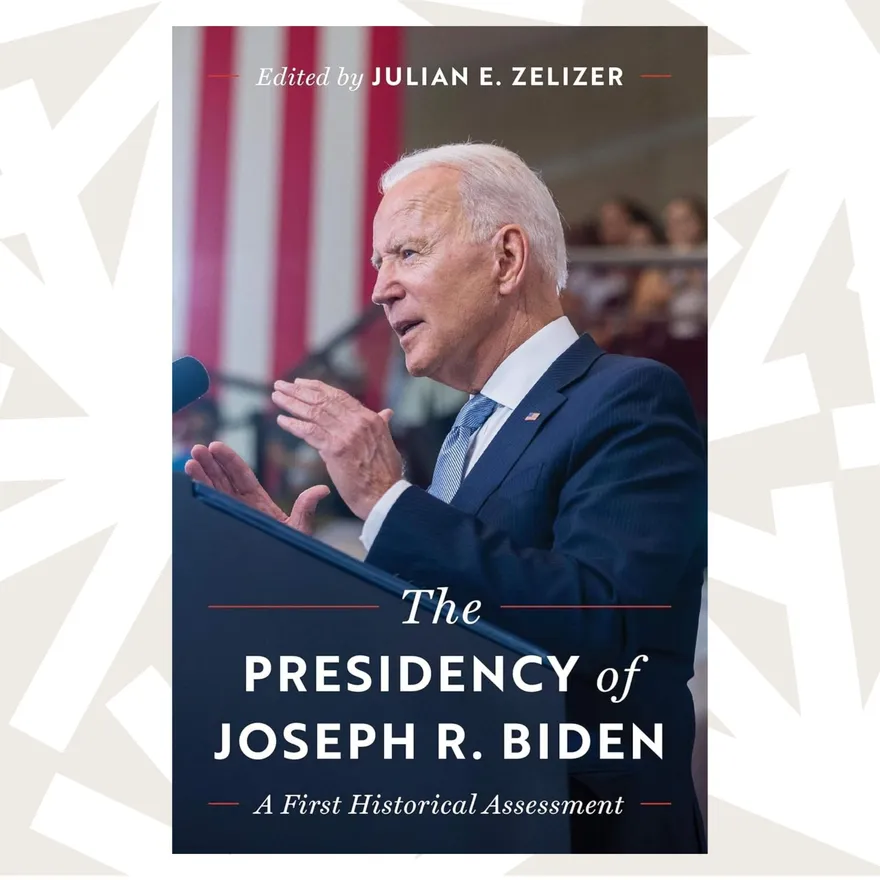

This is a preview of the Shortform summary of the Sep 3, 2026 episode of the NPR's Book of the Day
Sign up for Shortform to access the whole episode summary along with additional materials like counterarguments and context.
1-Page Summary
Biden's Central Goal to Defeat MAGA Politics
Julian Zelizer explains that President Biden's primary objective was to eliminate MAGA republicanism from American political life. Biden promised that by the end of his term, both the extreme policies and hyper-partisan style associated with MAGA would be gone. However, Zelizer concludes this effort clearly failed—Trump won the 2024 election and returned to the Oval Office, demonstrating that polarization and MAGA's influence remain strong.
Zelizer notes that Biden inherited a deeply divided nation with systemic obstacles including gerrymandering, a partisan Congress, and a Republican Party that had shifted far right with little interest in compromise. Biden, like Obama before him, underestimated the depth of ideological division in both the electorate and the political system itself, believing the red-blue narrative overstated actual divisions when in fact those divisions were deeply entrenched.
Restoring Justice Department Independence
Zelizer explains that Biden and Attorney General Merrick Garland deliberately rebuilt the Watergate-era firewalls separating the Justice Department from presidential political influence. Garland made significant progress restoring these protections even while handling sensitive investigations involving the former president and efforts to overturn the 2020 election.
Zelizer describes Biden's approach as a constitutional model for protecting the rule of law and preventing weaponization of the Justice Department against political opponents. However, he notes a concerning trend: Trump does not share Biden's commitment to Justice Department independence and has actively worked to erode these restored protections. The growing acceptance of using the DOJ as a political tool marks a dangerous regression from the standards Biden and Garland aimed to reestablish.
Policy Achievements vs. Failure to Connect With Working-Class Voters
Despite Biden positioning himself as "Scranton Joe" and walking picket lines, Scott Tong notes he ultimately failed to secure significant support from non-college-educated working-class Americans in 2024.
Zelizer acknowledges that Biden made real progress on working-class issues including reducing education costs, addressing prices, and investing in manufacturing. However, persistent inflation obscured these policy gains, making it difficult for voters to feel the positive impact amidst rising costs and budget pressures. Many working-class Americans felt Biden's agenda didn't sufficiently address their continued challenges—high education and housing costs, stagnant wages, and growing wealth inequality.
Looking forward, the analysis suggests Democrats could improve their prospects by centering efforts on economic policies directly benefiting the working class rather than cultural messaging, and by building durable coalitions beyond election cycles. While Biden accomplished significant policy gains, failure to connect these achievements to voters' lived experiences contributed to electoral losses.
Communication Strategy vs. Trump's Media Mastery
Zelizer observes that Trump skillfully uses modern media—from podcasts to social media platforms—to maintain visibility and communicate directly with voters. In contrast, Biden relies on traditional media like newspapers and network television, reflecting an earlier era's communication style. Trump's comfort with platforms like Joe Rogan's podcast and Truth Social keeps him constantly visible and engaging with audiences through current digital channels.
Trump also weaponized his legal challenges, presenting himself as a victim of political persecution rather than a defeated president. His mastery of modern media allowed this narrative to gain traction among supporters. Zelizer argues that while Biden made substantial progress on domestic policy, ineffective communication meant these achievements didn't register strongly with voters. Without effectively highlighting policy successes, Democrats contributed not only to Biden's electoral loss but also to the erosion of a potentially transformative policy agenda.
1-Page Summary
Additional Materials
Clarifications
- "MAGA republicanism" refers to the political movement associated with Donald Trump’s slogan "Make America Great Again," emphasizing nationalist, populist, and conservative policies. Its "extreme policies" often include strict immigration controls, skepticism of climate change, and aggressive deregulation. The "hyper-partisan style" means intense political polarization, frequent attacks on opponents, and rejection of bipartisan cooperation. This approach has deeply divided American politics and challenged traditional norms of governance.
- The 2024 election marked a significant political shift as Donald Trump defeated Joe Biden, reversing Biden's efforts to diminish MAGA influence. Trump's return to the Oval Office signaled continued polarization and the persistence of MAGA-style politics in the U.S. This outcome challenged assumptions about the durability of Biden's policy and political strategies. It also underscored deep divisions within the American electorate and political institutions.
- Gerrymandering is the practice of drawing electoral district boundaries to favor one political party. It often results in oddly shaped districts designed to concentrate or dilute voting power. This manipulation can entrench political divisions by making districts less competitive. Consequently, it reduces incentives for politicians to compromise across party lines.
- The "Watergate-era firewalls" refer to reforms made after the 1970s Watergate scandal to ensure the Justice Department operates independently from the president's political influence. These reforms established internal rules and norms preventing the president from interfering in investigations or prosecutions for political gain. They are crucial for maintaining the rule of law and public trust in fair legal processes. Restoring these protections helps prevent the Justice Department from being used as a political weapon.
- Merrick Garland, appointed by Biden as Attorney General, prioritized rebuilding the Justice Department's independence after years of perceived political interference. He reinforced internal policies to prevent presidential influence over investigations and prosecutions. Garland managed high-profile cases impartially, signaling a return to rule-of-law norms. His efforts aimed to restore public trust in the DOJ as a nonpartisan institution.
- Trump has pressured Justice Department officials to drop investigations into his allies and himself. He publicly criticized and sought to replace officials who pursued cases against him or his supporters. Trump also promoted loyalists to key DOJ positions to influence legal decisions. These actions undermined the DOJ's impartiality and independence.
- "Scranton Joe" refers to Joe Biden's nickname highlighting his roots in Scranton, Pennsylvania, a working-class town. It emphasizes his image as a relatable, blue-collar politician who understands everyday American struggles. Biden uses this persona to connect with working-class voters and contrast himself with elite politicians. The nickname aims to build trust and authenticity among voters facing economic challenges.
- Non-college-educated working-class Americans are a key demographic because they represent a large portion of the electorate and often decide close elections. Their economic concerns, such as wages, job security, and cost of living, directly influence their voting behavior. Political parties target this group to build winning coalitions and address issues that resonate with everyday economic struggles. Shifts in their support can signal broader political realignments and impact national policy priorities.
- Inflation reduces the purchasing power of money, making everyday goods and services more expensive for consumers. Even if policies improve economic conditions, rising prices can overshadow these benefits in voters' minds. This leads to a perception that their financial situation is worsening, regardless of actual policy progress. Consequently, inflation can erode public support for incumbents despite positive policy outcomes.
- Economic policies focus on tangible issues like jobs, wages, taxes, and public services that directly affect people's financial well-being. Cultural messaging addresses values, identity, social issues, and symbolic topics that shape group loyalty and emotional connections. Political strategy balancing these can influence voter support by appealing either to material interests or to shared beliefs and identities. Overemphasizing cultural messaging may alienate voters concerned primarily with economic survival.
- Modern media platforms like Joe Rogan's podcast and Truth Social allow politicians to bypass traditional news outlets and speak directly to large, engaged audiences. These platforms enable unfiltered, long-form conversations that can shape public opinion more personally and immediately. They also foster communities where supporters can interact and reinforce shared beliefs. This direct access increases a politician's visibility and influence in ways traditional media cannot match.
- Trump weaponized legal challenges by using ongoing investigations and court cases to rally his supporters, framing these actions as unfair attacks. Portraying himself as a victim of political persecution means he claimed the legal system was being used by his opponents to silence or punish him unjustly. This narrative helped him maintain loyalty and sympathy among his base despite legal troubles. It shifted focus from the substance of the cases to a broader story of political conflict.
- The "red-blue narrative" simplifies U.S. politics into two opposing camps: red for Republicans and blue for Democrats. It suggests a clear, uniform division between conservative and liberal voters. However, this view overlooks the complexity and diversity of opinions within each party and among independents. In reality, many Americans hold mixed or moderate views that don't fit neatly into this binary framework.
- Building durable coalitions beyond election cycles means creating lasting political alliances that persist between elections, not just during campaigns. This approach helps parties maintain consistent support by addressing voters' ongoing needs and concerns. It prevents short-term, issue-based alliances that dissolve after elections, which can weaken political influence. Durable coalitions strengthen a party’s ability to implement policies and sustain power over time.
Counterarguments
- The claim that Biden's central goal was to "eliminate MAGA republicanism" may overstate his intentions; his stated focus was often on restoring civility and bipartisanship rather than eradicating a political movement.
- While Trump won the 2024 election, the persistence of MAGA politics may reflect broader societal trends and voter preferences rather than a failure unique to Biden's presidency.
- Systemic obstacles like gerrymandering and partisanship have challenged multiple administrations, not just Biden's, and are not easily overcome by any single president.
- The assertion that Biden and Obama underestimated ideological division is debatable; both acknowledged polarization and made efforts to address it through policy and rhetoric.
- The restoration of Justice Department independence under Garland is recognized, but some critics argue that public perception of DOJ impartiality remained mixed due to high-profile investigations and political commentary.
- The idea that Trump uniquely erodes DOJ independence can be challenged by pointing to historical instances where presidents of both parties have been accused of politicizing the Justice Department.
- Biden's policy achievements on working-class issues, such as manufacturing investment and education cost reduction, are acknowledged by some economists and analysts as significant, even if not always felt immediately by voters.
- Persistent inflation was a global phenomenon during Biden's term, influenced by factors such as the COVID-19 pandemic and international supply chain disruptions, not solely by domestic policy decisions.
- The suggestion that Democrats should focus less on cultural messaging is contested; some argue that cultural issues are inseparable from economic concerns for many voters.
- Biden's communication strategy, while more traditional, was consistent with his longstanding political style and may have appealed to older or more moderate voters.
- The effectiveness of Trump's media strategy is debated; while it energized his base, it also contributed to high levels of polarization and misinformation.
- The narrative that Biden's policy achievements did not resonate with voters may overlook the impact of partisan media environments and disinformation campaigns that shaped public perception.

Get access to the context and additional materials
Biden's Attempt to Unite and Defeat Maga Fails
Biden's Goal to Eliminate Maga Politics and Reduce Division Failed
Julian Zelizer explains that a major objective of President Biden’s administration was to defeat MAGA republicanism. During his initial campaign, Biden vowed that by the end of his term, not only the extreme policies but also the hyper-partisan style of politics associated with MAGA would be eliminated from American political life. However, Zelizer concludes that Biden clearly did not succeed in this aim. Donald Trump, the very person Biden pledged to remove from political relevance, won the 2024 election and returned to the Oval Office, proving that polarization and MAGA’s influence persist.
Biden Vowed to End Maga's Influence, but Trump Won the 2024 Election, Showing Polarization Endures
Despite Biden’s promises, the outcome of the 2024 election—with Trump reclaiming political power—demonstrates that efforts to overcome MAGA republicanism and reduce national polarization were ineffective. Biden’s decision to run again and the ultimate withdrawal from the race did not prevent the return of Trump, showing that the nation’s divisions remain firmly in place.
Biden Took Over a Divided Nation Hindered by Gerrymandering, a Partisan Congress, and an Uncompromising Republican Party
Scott Tong notes that Biden entered office facing a deeply polarized country. Zelizer elaborates that Biden was confronted by systemic obstacles, including entrenched political polarization supported by institutions and prevailing political culture. The political system, shaped by gerrymandering and the workings of Congress, privileged partisanship over con ...
Here’s what you’ll find in our full summary
Biden's Attempt to Unite and Defeat Maga Fails
Additional Materials
Clarifications
- "MAGA republicanism" refers to the political movement associated with Donald Trump’s 2016 campaign slogan "Make America Great Again." It emphasizes nationalist policies, strict immigration controls, and skepticism of traditional political institutions. The style is often confrontational, using populist rhetoric that appeals to a base frustrated with establishment politics. This approach has deeply influenced Republican Party strategies and American political discourse.
- The 2024 election marked a significant political event where Donald Trump regained the presidency after losing in 2020. His return signaled the continued strength of the MAGA movement and its influence on American politics. This outcome challenged efforts to reduce polarization and restore bipartisan cooperation. It also highlighted persistent divisions within the electorate and political institutions.
- Gerrymandering is the practice of drawing electoral district boundaries to favor one political party. It often creates districts that are oddly shaped to concentrate or dilute certain voters' influence. This leads to less competitive elections and encourages politicians to cater to extreme party bases. As a result, it intensifies political polarization by reducing incentives for compromise.
- The U.S. Congress is a bicameral legislature consisting of the House of Representatives and the Senate. It creates laws, approves budgets, and oversees the executive branch. Partisanship arises when members prioritize party loyalty over collaboration, often leading to legislative gridlock. Consensus requires negotiation and compromise, which can be difficult when parties are deeply divided.
- Since the 1990s, the Republican Party has increasingly embraced conservative social and economic policies, moving further right on issues like immigration, government size, and cultural values. This shift has reduced common ground with Democrats, making bipartisan cooperation harder. The rise of the MAGA movement intensified this trend by promoting more extreme positions and rejecting compromise. As a result, legislative gridlock and political polarization have deepened.
- The "red-blue narrative" refers to the common way of depicting U.S. political divisions, where red represents Republican-leaning areas and blue represents Democratic-leaning areas. This color-coded map simplifies complex political beliefs into two opposing camps. It is relevant because it shapes how people perceive national unity and division, often exaggerating the extent of polarizat ...
Counterarguments
- While Biden did not eliminate MAGA’s influence, he did achieve significant legislative accomplishments and policy changes that contrast with MAGA priorities, such as the bipartisan infrastructure bill and investments in climate policy.
- The persistence of polarization and MAGA’s influence is not solely attributable to Biden’s actions; these are longstanding trends rooted in broader social, economic, and media dynamics.
- Trump’s victory in 2024 may reflect voter dissatisfaction with a range of issues, not just Biden’s failure to reduce polarization or defeat MAGA republicanism.
- Systemic obstacles like gerrymandering and partisan gridlock have challenged multiple administrations, not just Biden’s, and are not easily overcome by any single president.
- The Republican Party’s rightward shift and lack of bipartisanship are mirrored by increasing polarization on both sides of the political ...


Get access to the context and additional materials
Judicial Independence and Restoring Firewalls at Justice Department
Biden and Garland Reestablish Protections Separating Justice Department From Presidential Politics
Julian Zelizer explains that President Biden and Attorney General Merrick Garland were deliberate in rebuilding the firewalls established after Watergate, which serve to separate the Justice Department’s investigations from presidential political influence. Garland, as detailed in Noah Rosenblum’s essay, made significant progress in restoring these protections even in the exceptional context of ongoing investigations involving the former president and his efforts to overturn the 2020 election.
Garland Restored Watergate-Era Firewalls to Insulate Investigative Decisions From Presidential Interference, Even In Cases Involving the Former President
Garland reestablished measures designed during the post-Watergate era to ensure the Justice Department operated independently and investigatory decisions were not subject to presidential interference. These firewalls were tested with the sensitive issue of investigating a former president, yet Garland maintained the department’s autonomy.
Biden's Approach to Judicial Independence: A Blueprint to Protect the Rule of Law and Prevent Weaponization Against Opponents
Zelizer describes Biden’s approach as a model for future administrations. Although achieving complete independence may be idealistic, especially in the current political climate that differs significantly from the post-Watergate period, Biden’s efforts serve as a necessary example. Zelizer underscores the constitutional and democratic importance of keeping the Justic ...
Here’s what you’ll find in our full summary
Judicial Independence and Restoring Firewalls at Justice Department
Additional Materials
Counterarguments
- Some critics argue that despite efforts to restore independence, the Justice Department under Biden and Garland has still faced accusations of political bias, particularly from Republican lawmakers and conservative commentators.
- There have been instances where the Justice Department’s decisions—such as the handling of investigations into Hunter Biden—have been criticized as either too lenient or too harsh, suggesting that perceptions of independence are influenced by partisan perspectives.
- The notion that the Justice Department was fully independent during the Watergate era or immediately after is contested by some historians, who point to ongoing political pressures and controversies in subsequent decades.
- Some legal scholars contend that complete insulation of the Justice Department from presidential influence is unrealistic, given the president’s constitutional authority over the executive branch.
- Critics of the Biden administration argue that public statements by the presid ...
Actionables
- you can practice supporting institutional independence in your daily life by refusing to pressure or influence decision-makers (like teachers, managers, or local officials) when their role requires impartiality, even if the outcome affects you or people you care about; for example, if a friend is being disciplined at work or school, avoid lobbying for special treatment and instead encourage fair, unbiased processes.
- a practical way to reinforce the value of independent decision-making is to set a personal rule to always ask, “Would I want this process to be the same if the roles were reversed?” before advocating for or against any action involving authority figures, which helps you recognize and resist the temptation to support double standards based on pe ...
Get access to the context and additional materials
Achievements vs. Failure to Connect With Working-Class Voters
President Biden entered office aiming to bridge the gap with non-college-educated working-class Americans, often presenting himself as "Scranton Joe" and showing visible support such as walking the picket line. However, according to Scott Tong, Biden ultimately failed to secure significant support from this demographic in the 2024 election results.
Biden's Domestic Climate, Racial Equity, and Manufacturing Policies Lacked Support From Non-college-Educated Working-Class Americans
Biden's Progress on Key Working-Class Issues: Manufacturing, Education Costs, Economic Opportunity
Julian Zelizer notes that Biden made real progress on issues relevant to the working class, including reducing education costs, addressing prices, and investing in forms of new manufacturing. Over his four years, these policies represented significant steps toward creating economic opportunity and targeting work sector revitalization.
Inflation Challenged Biden's Messaging, Obscuring Policy Gains Amidst Voter Budget Pressures
Despite these accomplishments, persistent inflation remained a major challenge to Biden's messaging. Rising costs and budget pressures on voters obscured the practical gains from his policies, making it difficult for working-class Americans to feel the positive impact. This disconnect limited Biden’s ability to resonate with these voters on bread-and-butter economic issues.
Biden's Policies Failed to Address Economic Challenges, Education and Housing Costs, and Wealth Inequality, Limiting Improvements For Working-Class Americans
Even with policy achievements, many working-class Americans felt Biden’s agenda did not sufficiently address the continued economic challenges they face—the high cost of education and housing, stagnant wages, and growing wealth inequality. As a result, tangible improvements for these Americans were limited, contributing to their lack of strong support for his administration and reelection campaign.
Democrats Can Enhance ...
Here’s what you’ll find in our full summary
Achievements vs. Failure to Connect With Working-Class Voters
Additional Materials
Counterarguments
- While Biden did not secure overwhelming support from non-college-educated working-class voters, exit polls and surveys indicate that he maintained or slightly improved margins among certain segments of this demographic compared to previous Democratic candidates, suggesting a more nuanced shift than a simple failure.
- Some analysts argue that structural factors, such as long-term partisan realignment and cultural polarization, play a larger role in working-class voting patterns than any single administration’s policies or messaging.
- The impact of global economic trends, supply chain disruptions, and post-pandemic recovery on inflation and cost of living were not entirely within the control of the Biden administration, complicating the attribution of economic dissatisfaction solely to his policies.
- There is evidence that some of Biden’s manufacturing and infrastructure investments have begun to create jobs and economic opportunities in certain regions, but the lag time for such benefits to be widely felt is typical for large-scale policy initiatives.
- ...
Actionables
- you can track your own household budget over several months and note which rising costs most affect your daily life, then write a short letter or email to your local representative describing these specific pressures and suggesting one concrete policy change that would help
- By identifying and communicating the exact economic challenges you face, you help policymakers understand what matters most to working-class households. For example, if your rent or grocery bills have increased, describe how this impacts your ability to save or spend elsewhere, and propose a solution like rent stabilization or targeted food subsidies.
- a practical way to connect policy changes to your lived experience is to keep a simple journal where you record any noticeable changes in your work, pay, or expenses after new policies are announced, then share these observations with friends or family in everyday conversations
- This helps make abstract policy shifts more tangible and encourages others to notice and discuss how policies affect their own lives. For instance, if you receive a tax credit or see a change in your paycheck, jot it down and mention it when talkin ...
Get access to the context and additional materials
Communication and Media Strategy vs. Trump's Effectiveness
Biden's Approach Focused On Traditional Media, While Trump Effectively Leveraged Digital Platforms
Julian Zelizer observes that former President Trump skillfully uses the modern media landscape, from podcasts to social media platforms, to remain in the public eye and communicate with voters. In contrast, President Biden relies on more traditional forms of media such as newspapers and network television, reflecting a communications style rooted in an earlier era. Despite being from the same generation, Trump is comfortable in spaces like Joe Rogan's podcast and Truth Social, keeping himself constantly visible and engaging with audiences through current digital channels.
Trump Excelled In Modern Media Use, Outpacing Biden's Outdated Traditional Strategy
Trump's command of new media is a critical factor in his continued political relevance. He knows how to use emerging platforms effectively, ensuring his messages reach audiences directly and unfiltered. Biden's approach, centered on established media, does not resonate as strongly in a media environment where traditional outlets have less influence and digital platforms shape public opinion rapidly.
Trump Weaponized Legal Issues, Portraying Himself As a Victim of Political Persecution, Amplified Through His Mastery of Modern Communication Channels
Trump also turned ongoing investigations and legal cases to his advantage. Zelizer notes that Trump weaponized these challenges to present himself as a victim of political persecution, rather than the image of a defeated, one-term president. His adeptness with modern media channels allowed this narrative to gain traction and sympathy among supporters, reinforcing his political brand and further energizing his base.
Democrats' Communication ...
Here’s what you’ll find in our full summary
Communication and Media Strategy vs. Trump's Effectiveness
Additional Materials
Counterarguments
- While Trump’s use of modern media platforms is notable, his messaging often polarizes audiences and may alienate moderate or undecided voters, potentially limiting his appeal beyond his core base.
- Biden’s reliance on traditional media may still effectively reach older voters and those less engaged with digital platforms, who remain a significant portion of the electorate.
- The assertion that Biden’s communication strategy is outdated overlooks efforts by his administration and campaign to engage on digital platforms, including social media and influencer outreach.
- Trump’s portrayal of himself as a victim through legal challenges is not universally persuasive; many voters view these legal issues as legitimate concerns about his conduct.
- The effectiveness of Trump’s media strategy in maintaining political relevance does not necessarily translate to broader electoral success, as seen in the 2020 election outcome.
- The claim that Democrats failed to communicate policy successes may understate the impact of external factors such as economic conditions, media fragmentation, and parti ...
Actionables
- you can practice sharing your own achievements or positive news in group chats or on your social media in a way that highlights their impact, so others recognize and remember them—try posting a short story about how a recent accomplishment benefited your community or workplace, and invite others to share similar stories to build momentum.
- a practical way to strengthen group support for a cause or project is to create a recurring digital update (like a monthly email or message) that summarizes recent wins and progress, making it easy for everyone to see ongoing achievements and stay engaged.
- you can experiment with reframing setbac ...
Get access to the context and additional materials


Create Summaries for anything on the web
Download the Shortform Chrome extension for your browser
