

'How We Disappear' is a Stanford historian's take on our personal archives
In this episode of NPR's Book of the Day, Stanford historian Thomas Mullaney discusses themes from his work on personal archives and impermanence. Mullaney explores entropy—the universal tendency toward disorder—and explains how life itself is a continuous act of resistance against decay. He draws parallels between this scientific principle and the challenges of preserving information, emphasizing that maintaining the original order of materials is as crucial as their physical survival.
The conversation also examines Mullaney's personal experience archiving his father's belongings after his death, revealing the paradox that no amount of documentation can fully capture or preserve another person. He reflects on language as a fragile system requiring constant transmission, and advocates for creating positive contributions that endure without attribution. The episode considers how we might embrace disappearance as a natural process rather than something to fear or deny.
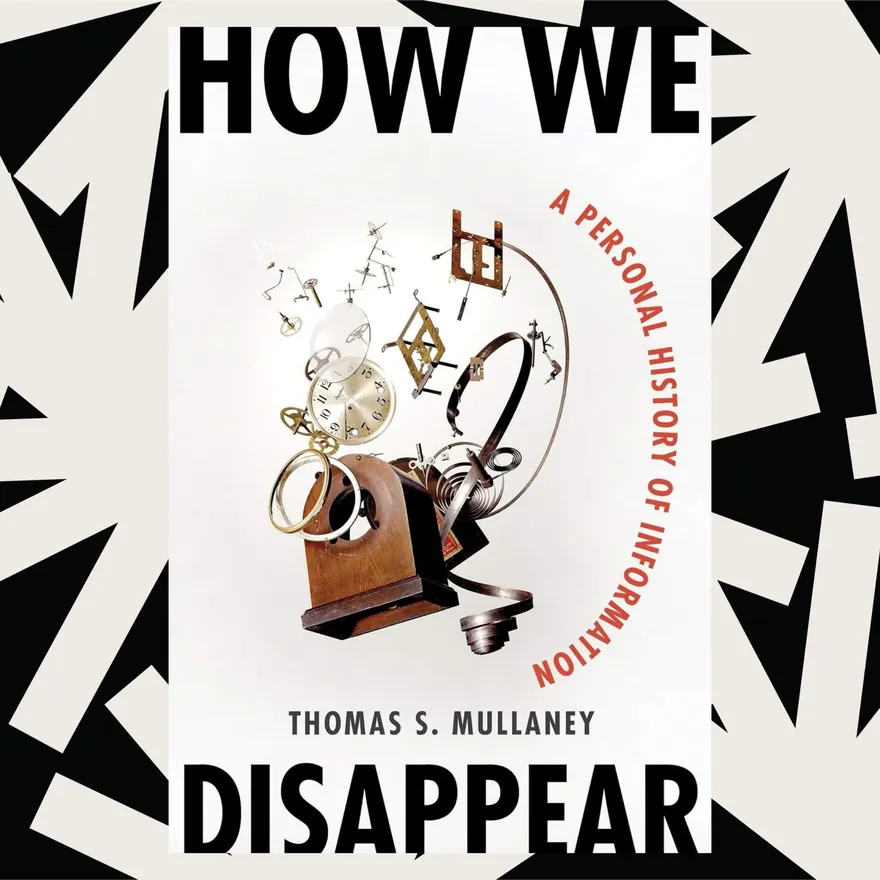

This is a preview of the Shortform summary of the Sep 1, 2026 episode of the NPR's Book of the Day
Sign up for Shortform to access the whole episode summary along with additional materials like counterarguments and context.
1-Page Summary
Entropy and the Impermanence of all Things
Peter O'Dowd introduces entropy as the fundamental truth that "once something is gone, it is gone," describing it as the innate tendency for everything to fall apart from the moment of creation. Thomas Mullaney explains that the universe has been collapsing for billions of years, governed by the second law of thermodynamics which dictates that disorder constantly increases. He argues that any formation of order is "miraculous" because the universe is fundamentally "allergic" to structure and information—whether it's getting children to school on time or maintaining satellites in orbit.
Despite this universal drift toward disorder, life represents a system constantly resisting decay. Mullaney notes that billions of cells within our bodies perpetually work to stave off degradation, making even routine human activities extraordinary acts of defiance against entropy. However, he cautions against both denial and nihilism when confronting this reality. While entropy is as inevitable as the need to breathe, he argues there's little value in succumbing to despair. Even a nihilistic outlook is biologically disingenuous, since living cells continue battling entropy regardless of one's philosophical stance.
Information Preservation and Archiving
Mullaney likens information preservation to archaeology, stressing that maintaining the original order of materials is crucial because disrupting that order erases context and meaning. Like pottery shards at an archaeological site, the placement and relationship between objects are as important as their survival. He notes that most materials in life—papers, photos, and objects—are loose and unbounded, making the preservation of their "original order" essential for future interpretation. The effort required to organize and maintain this information reveals what Mullaney calls a "miraculous coherence," a constant struggle against universal disorder necessary to preserve meaning.
The Personal Experience of Loss
When Mullaney's father died in 2017, his training as a historian compelled him to archive everything that proved his father had existed. O'Dowd describes how Mullaney documented random papers, official documents, photographs, and personal items. Drawing from his experience in archives worldwide, Mullaney recognized that the arrangement and context of belongings transmit identity and meaning.
He admits that archiving was also an attempt to prevent his father from becoming unknowable. Yet the process revealed a fundamental paradox: no matter how meticulously one catalogs a life, it's impossible to fully know or preserve another person. The work of remembrance may ease the fear of loss, but cannot prevent the ultimate disappearance that comes with death.
Language and Cultural Transmission
Mullaney observes that all inscription is, in a way, encryption. While languages appear effortless to native speakers, this fluency results from generational transmission requiring tens of thousands of purposeful repetitions for children to acquire their mother tongue. He explains that language maintenance is not automatic but depends on continuous teaching. The infrastructure of a language would collapse within a single generation without active transmission—what feels natural and permanent is actually as fragile as a beach ball kept aloft at a concert, persisting only through constant energy and effort. Without this daily investment, living languages would quickly become as mysterious as ancient, undeciphered scripts.
Philosophical Balance
Mullaney reflects on the cultural shift toward advance end-of-life planning, contending this conversation should expand to include the idea of disappearance itself. He describes finding peace in creating without expectation of recognition, recounting how he volunteered over a thousand hours establishing a garden at his children's toddler school. Recently witnessing a mother and child picking herbs from the garden—unaware of his contribution—exemplified for him a dignified way to disappear: leaving a positive mark that endures without personal credit.
In contrast, Mullaney argues that name-bearing monuments impose anxiety on successive generations, creating more existential pain than solace. He finds value in creating good that influences future generations even if they never know the source, rather than attaching one's name and expectations to enduring institutions.
1-Page Summary
Additional Materials
Clarifications
- Entropy is a measure of disorder or randomness in a system. The second law of thermodynamics states that in an isolated system, entropy tends to increase over time, meaning systems naturally progress from order to disorder. This law explains why processes like heat transfer and decay are irreversible. It underpins why maintaining order requires continuous energy input.
- The universe is described as "allergic" to structure and information because the second law of thermodynamics causes disorder (entropy) to increase over time. This natural tendency makes the formation and maintenance of organized systems rare and temporary. Structures and information require continuous energy input to resist this decay. Without effort, order inevitably breaks down into chaos.
- Cells resist entropy primarily through metabolism, converting energy from nutrients into usable forms to maintain order. They continuously repair damaged molecules and replace worn-out components to prevent decay. DNA replication and protein synthesis enable cells to reproduce and sustain their structure. Cellular processes like autophagy remove dysfunctional parts, preserving overall function and organization.
- Maintaining the "original order" preserves the relationships and context between items, which is essential for understanding their meaning. Disrupting this order can distort or erase the story the materials collectively tell. Archivists use original order to reconstruct how people organized and used their records, revealing insights into their lives and activities. This practice helps future researchers interpret the materials accurately and authentically.
- Inscription as encryption means that written language encodes meaning in symbols that must be learned to understand. Each generation deciphers and passes on this code through teaching and practice. Without this transmission, the symbols lose their meaning and become unintelligible. Thus, writing is not inherently clear but depends on cultural knowledge to be "decoded."
- Generational transmission is the process by which parents and communities teach children their native language through daily interaction and practice. This continuous teaching ensures the language's vocabulary, grammar, and cultural nuances are passed down accurately. Without this ongoing transfer, languages lose speakers and can become extinct. It is the primary way languages survive and evolve over time.
- The beach ball metaphor illustrates how language requires continuous effort to survive, much like a beach ball at a concert needs constant hits to stay in the air. Without ongoing use and teaching, languages lose speakers and eventually disappear. This fragility contrasts with the illusion that language is permanent or self-sustaining. It highlights the active role communities play in preserving their linguistic heritage.
- Disappearance emphasizes accepting the natural fading of individual presence without seeking lasting recognition. Legacy focuses on creating lasting memorials or achievements that carry one's name forward. Philosophically, disappearance invites peace through humility and detachment from ego. Legacy can create pressure on descendants to uphold or remember, sometimes causing anxiety.
- Name-bearing monuments often create pressure on future generations to uphold the legacy or reputation of the person commemorated. This can lead to anxiety as descendants may feel obligated to meet high expectations or live up to an idealized image. The monuments can also cause existential pain by emphasizing mortality and the passage of time, reminding people of loss and impermanence. Such memorials may overshadow personal or collective growth by focusing attention on the past rather than the present or future.
Counterarguments
- While entropy dictates a general trend toward disorder, local decreases in entropy (such as the emergence of life, technological progress, or the creation of art) are not only possible but common, provided there is an input of energy; thus, order is not as "miraculous" as suggested but a natural part of thermodynamic systems.
- The assertion that "once something is gone, it is gone" overlooks the possibility of reconstruction, replication, or reinterpretation—information and meaning can sometimes be recovered or reimagined through technology, memory, or collective effort.
- The framing of life as a constant "defiance" against entropy may overstate the antagonism; many biological and ecological processes work with, rather than against, entropy to sustain systems.
- The idea that preserving the "original order" of materials is essential for meaning may not account for the value of reinterpretation, remixing, or new contexts that can generate fresh significance from old materials.
- The claim that archiving cannot fully preserve or know another person’s life is true, but it may underappreciate the profound impact and connection that partial preservation and storytelling can provide for future generations.
- The view that language would collapse within a generation without active teaching may underestimate the resilience of oral traditions, informal learning, and the adaptability of human communication.
- The suggestion that name-bearing monuments impose anxiety and existential pain may not reflect the comfort, inspiration, or sense of continuity that many individuals and communities derive from such memorials.
- The argument that anonymous good is more valuable than recognized contributions is subjective; for some, public recognition can motivate positive action and foster communal identity.


Get access to the context and additional materials
Entropy and the Impermanence of all Things
Peter O’Dowd introduces the central idea of entropy by stating, "once something is gone, it is gone," summarizing entropy as the innate tendency for all things—without exception—to fall apart from the moment they are created. This theme underscores a fundamental truth in the universe: everything that exists is in a state of decline.
Universe Opposes Order and Structure at Every Level
Existence Deteriorates Due to Thermodynamics
Thomas Mullaney explains that the universe has been collapsing and falling apart for billions of years before life even began. This decline is dictated by the laws of thermodynamics, with the second law ensuring that disorder, or entropy, increases over time. Anything put into formation is already on a path to eventual disintegration and disappearance.
Universe Collapsing For Billions, Formation of Order Exceptional
Mullaney argues that it is “miraculous” whenever anything achieves order, even temporarily. He notes that formation—whether guiding children to school on time, building skyscrapers, or maintaining technologies like satellites—is exceptional because all acts of creation are performed in a universe fundamentally “allergic” to structure and information. Order is not the norm but the rare victory against the cosmic drift toward disorder.
Life Defies the Universe's Drift Toward Disorder
Organisms Constantly Combat Degradation
Despite entropy’s unrelenting pressure, life exemplifies a system constantly resisting decay. Mullaney states that billions of cells within the body are perpetually working to stave off their own degradation. This relentless effort occurs beneath our awareness, with the architecture of life itself mobilizing against universal decay at every moment.
Creation, From Objects to Infrastructure Like Skyscrapers and Satellites, Operates Against a Reality That Resists Information and Order
On every scale, human creations—from mundane daily routines to the construction of massive infrastructure—are extraordinary acts defying the universe’s bias against order. As Mullaney notes, even getting children to school punctually is winning against entropy in a reality that resists the preservation of any form or information.
Embracing Entropy Without Surrendering Meaning or Adopting Nihilism
Acknowledging Existence's Futility, yet ...
Here’s what you’ll find in our full summary
Entropy and the Impermanence of all Things
Additional Materials
Clarifications
- Entropy is a measure of disorder or randomness in a system. The second law of thermodynamics states that in an isolated system, entropy tends to increase over time. This means natural processes move toward greater disorder and energy becomes less available for work. As a result, ordered structures naturally break down unless energy is continuously added to maintain them.
- The universe is described as "allergic" to order because natural processes tend to increase disorder, as stated by the second law of thermodynamics. This law means energy spontaneously spreads out, making organized structures unstable over time. Information and order require energy input to maintain against this natural tendency. Without continuous effort, systems naturally degrade into randomness.
- Heat death refers to a theoretical end state of the universe where all energy is evenly distributed and no work or life can occur. It results from entropy reaching its maximum, meaning no usable energy remains to sustain processes that increase order. In this state, the universe is in thermodynamic equilibrium, with no temperature differences to drive change. Heat death implies a final, irreversible decline into complete disorder and inactivity.
- Cells resist entropy by constantly repairing damaged molecules and replacing worn-out components through processes like protein synthesis and DNA repair. They use energy from nutrients to maintain order and perform functions essential for survival. Cellular mechanisms such as autophagy remove dysfunctional parts to prevent buildup of disorder. This continuous renewal sustains life despite the natural tendency toward decay.
- Thermodynamics is the branch of physics that studies energy and its transformations. The second law of thermodynamics states that in an isolated system, entropy—a measure of disorder—always increases over time. This law explains why natural processes tend to move from order to disorder, causing universal decline. It underpins why maintaining or creating order requires continuous energy input.
- Creation and order are called "miraculous" because the natural tendency of the universe is toward increasing disorder, as described by the second law of thermodynamics. Forming and maintaining organized structures requires energy input to locally decrease entropy, which is rare compared to the overall trend of disorder. This makes any stable, ordered system—from living organisms to human-made objects—an extraordinary and temporary achievement. Thus, order is exceptional because it defies the dominant, natural flow toward chaos.
- Nihilism is the belief that life has no inherent meaning or value, often leading to despair or apathy. Acceptance of entropy recognizes the natural decline and disorder in the universe but still finds purpose in resisting decay and creating meaning. The key difference is that acceptance involves active engagement despite inevitability, while nihilism often resul ...
Counterarguments
- While entropy increases in closed systems, local decreases in entropy (i.e., the creation of order) are common and natural in open systems that exchange energy with their environment, such as Earth receiving energy from the Sun.
- The framing of the universe as "opposed" or "allergic" to order is anthropomorphic; physical laws are indifferent, and order arises naturally under certain conditions.
- The emergence and persistence of complex structures, including life, are not necessarily "miraculous" but can be explained by well-understood physical and chemical processes.
- Human activities and creations do not "defy" entropy but operate within its constraints, often increasing entropy elsewhere as a consequence of creating local order.
- The inevitability of entropy does not inherently negate the possibility of meaning, purpose, or value, which are philoso ...

Get access to the context and additional materials
Information Preservation and Archiving
Essential to Preserve Interpretative Order of Materials
Thomas Mullaney likens information preservation to archaeology. He stresses that maintaining the original order of materials is crucial because disturbing that order erases the context and loses the story behind the elements. He explains that, like an archeologist encountering shards of pottery, the placement and relationship between objects are as important as their survival. If you move things around, interpretation is lost with the disruption of their original arrangement. Mullaney points out that most materials in life are not bound together but are loose: arrangements of papers, photos, and objects. Preserving this "original order" is essential for future interpretation, as this order carries the narrative and meaning intended or developed over time.
Effort to Organize Information Reveals Miraculous Coherence
Mullaney also underscores that the process of organizing and maintaining these ...
Here’s what you’ll find in our full summary
Information Preservation and Archiving
Additional Materials
Clarifications
- "Interpretative order" refers to the original arrangement of materials that reflects how they were used or related. This order provides context by showing connections and relationships between items, which helps reveal their meaning. Without it, the story or purpose behind the materials becomes unclear or lost. Archivists preserve this order to maintain the integrity and authenticity of the information.
- In archaeology, shards of pottery are fragments of broken vessels that provide clues about past cultures. Their original placement helps archaeologists understand how people lived, what they used, and the context of their activities. Similarly, in information preservation, the original arrangement of documents or objects reveals relationships and meanings that are lost if items are moved. This analogy highlights that preserving context is as important as preserving the items themselves.
- "Original order" refers to the way materials were naturally arranged by their creator or user, reflecting how they were used or organized in daily life. It preserves relationships and context between items, which helps understand their purpose and meaning. Disrupting this order can erase important clues about the history and function of the materials. Archivists strive to keep this order intact to maintain the integrity of the collection.
- "Miraculous coherence" refers to the surprising and meaningful order that emerges when chaotic or scattered materials are carefully organized. This coherence is not obvious at first but becomes clear through the effort of arranging items in their original or logical sequence. Organizing materials uncovers connections and patterns that tell a story or reveal insights. Without this effort, the materials would remain disjointed and their significance hidden.
- The comparison highlights that maintaining order requires continuous effort against natural tendencies toward chaos. Just as parents must consistently manage children's schedules to keep them on time, and technicians must regularly fix systems to keep them running, archivists must actively organize materials. This ongoing wo ...
Counterarguments
- In some cases, the original order of materials may reflect biases, errors, or arbitrary decisions by the creator, and reorganization can provide clearer or more equitable access and understanding.
- For certain research purposes, thematic or chronological reordering of materials can enhance usability and facilitate discovery, especially when the original order is confusing or non-informative.
- Digital technologies allow for multiple, non-destructive arrangements and metadata tagging, enabling users to explore materials in various contexts without permanently altering the original order.
- The concept of "original order" may not always be applicable or meaningful, particularly for collec ...


Get access to the context and additional materials
The Personal Experience of Loss
Mullaney's Exploration of Disappearance and Meaning Through His Father's Possessions
Father's Death Drives Historian Mullaney To Document Bedroom Items
When Thomas Mullaney’s father died in 2017, the historian’s response was to archive and organize all the remnants of his father’s life—random shreds of paper, official documents, photographs, and personal items. Peter O’Dowd describes how Mullaney’s training as a historian immediately took over, compelling him to document everything that proved his father had ever lived. Mullaney recounts the emotional weight of climbing the stairs to his father’s bedroom, which also functioned as his home office, and feeling something powerful inside him activate as he prepared to confront the physical aftermath of death.
Experience in Archives Across Cultures Reveals how Arrangement and Context Convey Identity and Meaning
Drawing from his experience in archives around the world, Mullaney recognizes that the arrangement and context of belongings transmit meaning and identity. As he approaches the task of organizing his father’s personal artifacts, he is acutely aware of how presentation and setting shape memory and understanding, both for himself and anyone who might encounter these items in the future.
Archiving a Deceased Loved One's Life Reveals Tension Between Preventing Loss and Accepting Disappearance
Mullaney Saw Archiving As a Way to Prevent His Father From Becoming Unknowable
Confronting Grief and the Historian's Paradox: We Can't Fully Know or Preserve Another Person
Mullaney admits that archiving his father ...
Here’s what you’ll find in our full summary
The Personal Experience of Loss
Additional Materials
Counterarguments
- Archiving and organizing a loved one's possessions is not the only or necessarily the best way to process grief; some people may find meaning or closure through other rituals or by letting go of physical items.
- The act of documentation may risk reducing a person's life to material artifacts, potentially overlooking the intangible aspects of their identity, such as relationships, values, or memories that cannot be archived.
- The belief that arrangement and context of belongings convey identity and meaning may not hold true for everyone; some may see these items as mere objects without deeper significance.
- The tension between preventing loss and accepting disappearance is not universal; some individuals may find peace in embracing impermanence rather than resisting it through preservation.
- The idea that documentation eases the ...
Actionables
- you can create a memory map by drawing a simple floor plan of a loved one's living space and marking where significant items were found, then writing a short note about what each spot or object meant to you or to them; this helps you reflect on how arrangement and context shape memory and identity.
- a practical way to balance the urge to preserve with the need to accept loss is to set a timer for a short period (like 20 minutes) and during that time, choose one item to let go of while writing a brief letter to the person about why you’re releasing it; this ritual acknowledges both remembrance and the necessity of disappearance.
- you can invite a t ...
Get access to the context and additional materials
Language and Cultural Transmission
Languages: Encrypted Systems Deciphered Through Generations
Thomas Mullaney observes that all inscription is, in a way, encryption. Languages such as English, French, Chinese, and Hindi appear effortless to their native speakers, but this sense of ease is deceptive. The effortless fluency felt by those living in their mother tongues is actually the result of generational transmission of letters, sounds, and grammar. Mullaney notes that raising children exposes the labor required: it takes tens and hundreds of thousands of purposeful repetitions of language elements for a child to acquire the ability to use their language as second nature. The maintenance of living languages is not automatic; rather, it depends on continuous teaching to keep them intelligible across generations.
Without Daily Cultural Transmission, Language Would Become Mysterious and Unreadable Like Ancient Undeciphered Scripts
Language relies on active transmission to retain meaning. As Mullaney explains, the infrastructure of a language would collapse within a single generation if parents did not explicitly teac ...
Here’s what you’ll find in our full summary
Language and Cultural Transmission
Additional Materials
Clarifications
- Inscription as encryption means that written language encodes spoken words into symbols. These symbols only make sense to those who know the code—letters, sounds, and grammar rules. Without learning this code, the writing appears as meaningless marks. Thus, writing is a system that hides meaning until it is decoded by someone familiar with the language.
- Languages are compared to encrypted systems because their meaning is hidden and must be decoded using shared knowledge of sounds, symbols, and grammar. Ancient undeciphered scripts are writing systems whose meanings are lost because no one has the key to interpret them. Without continuous teaching, living languages lose their "key," making them as unintelligible as these ancient scripts. This comparison highlights how language depends on cultural knowledge passed down to remain understandable.
- Generational transmission is the process by which language is passed from parents to children through daily interaction and teaching. It involves learning vocabulary, grammar, pronunciation, and cultural meanings embedded in language use. This process ensures that language evolves yet remains understandable within a community. Without it, languages would lose coherence and eventually disappear.
- "Purposeful repetitions of language elements" means intentionally practicing parts of a language, like sounds, words, or grammar rules, repeatedly to help learning. For example, a child might hear and say the alphabet many times or practice common phrases daily. This repetition helps the brain recognize patterns and use language naturally. Without such practice, language skills would not develop fully.
- Language maintenance requires active effort because languages change and can be forgotten if not regularly used and taught. Children learn language through repeated exposure and practice, which builds their understanding of sounds, words, and grammar. Without this ongoing teaching, language skills weaken and can disappear over time. This process ensures that language remains functional and meaningful across generations.
- The beach ball metaphor illustrates how language requires continuous effort to survive. Just as a beach ball at a concert stays in the air only when people keep pushing it up, language remains alive only through constant teaching and use. If people stop supporting it, the ball falls, and similarly, language can fade or become unintelligible. This shows language is not self-sustaining but depends on active participation.
- Parents play a crucial role by introducing children to the basic building blocks of lan ...
Counterarguments
- While explicit teaching accelerates language acquisition, many aspects of language are acquired naturally through immersion and social interaction, even without formal instruction.
- There are documented cases of children developing complex languages (such as creoles or sign languages) in the absence of deliberate, structured teaching, suggesting that language transmission can occur organically.
- Some elements of language, such as basic grammar and phonetics, appear to be acquired with remarkable ease by children, indicating an innate human capacity for language learning.
- The analogy between living languages and undeciphered scripts may be overstated, as languages often persist in partial or altered forms even after transmission is disrupted, rather than becoming entirely un ...



Get access to the context and additional materials
Philosophical Balance
Embrace Entropy and Disappearance Without Succumbing To Nihilism or Denial
Thomas Mullaney reflects on the positive cultural shift toward advance end-of-life planning. He observes that people increasingly acknowledge death as an integral part of life, making thoughtful decisions—such as do-not-resuscitate orders—well before their health deteriorates. Mullaney contends that this conversation should expand to include the idea of disappearance, embracing entropic decline as a natural phase of existence. He cautions against nihilism, noting that it disregards the fundamental biological reality: even as living beings approach death, their cells and systems continue to make efforts to resist degradation. Therefore, acknowledging entropy doesn’t mean surrendering to meaninglessness or denial. Instead, it involves accepting transience while still valuing life’s processes and planning the nature of one’s eventual exit.
Finding Meaning: Accepting Disappearance, Engaging In Creating, and Leaving Legacies
Mullaney describes finding peace in the act of creating without expectation of recognition. He recounts volunteering over a thousand hours at his children’s toddler school, where he served as board president and established a garden. Although gardening wasn’t previously an interest of his, he wanted the unused space to reach its potential. Recently, he witnessed a mother and child picking herbs from the garden—unaware of his contribution. For Mullaney, this quiet persistence of his work exemplifies a dignified way to disappear: leaving a ...
Here’s what you’ll find in our full summary
Philosophical Balance
Additional Materials
Clarifications
- Entropy is a scientific term from thermodynamics describing the natural tendency of systems to move from order to disorder over time. In living organisms, entropic decline refers to the gradual breakdown of biological structures and functions as they age and approach death. This process is inevitable and reflects the loss of energy and organization within cells and tissues. Philosophically, embracing entropy means accepting this natural decay as part of life's cycle rather than resisting or denying it.
- Nihilism is a philosophical belief that life lacks inherent meaning, purpose, or value. It often leads to the view that moral principles and social structures are baseless. This perspective can result in feelings of despair or indifference toward existence. Mullaney warns against nihilism because it ignores the ongoing biological efforts to sustain life despite decline.
- As organisms near death, their cells activate repair mechanisms to fix damage and maintain function. Processes like DNA repair, protein maintenance, and antioxidant defenses work to slow cellular breakdown. These efforts reflect the cell’s intrinsic drive to preserve life despite overall decline. This biological resistance to degradation continues until cellular systems can no longer sustain themselves.
- "Disappearance" in philosophy refers to the process of ceasing to exist or be present, especially in relation to identity and legacy. It emphasizes the natural fading away of individuals and their influence over time without resistance or denial. This concept encourages acceptance of impermanence and the transient nature of life. It contrasts with attempts to achieve immortality through fame or lasting monuments.
- Anonymous legacy refers to positive impacts or contributions made without attaching one's identity or name to them, allowing the work to stand on its own. Name-bearing monuments are physical or institutional legacies explicitly linked to an individual's name, creating ongoing expectations for descendants or successors. The former offers freedom from personal pressure, while the latter can impose responsibility and anxiety on future generations. This distinction highlights different ways people influence the future and how they relate to their own memory.
- Name-bearing legacies create pressure because descendants feel obligated to uphold the reputation and success associated with the name. This responsibility can limit personal freedom and cause fear of failure or disappointing others. The legacy becomes a bu ...
Counterarguments
- While anonymous contributions can be fulfilling for some, others may find personal recognition or named legacies to be a meaningful source of motivation and a way to inspire future generations.
- The anxiety associated with maintaining a family legacy may be outweighed for some by the sense of pride, belonging, and continuity that such legacies can provide.
- Attaching one’s name to institutions or projects can serve important social functions, such as accountability, historical record, and encouraging philanthropy.
- Some cultures and traditions place high value on honoring ancestors and maintaining named legacies, viewing them as essential to communal identity and cohesion.
- Planning for end-of-life and embracing entropy may not be psychologically or culturally accessible or desirable for ev ...

Get access to the context and additional materials


Create Summaries for anything on the web
Download the Shortform Chrome extension for your browser
