

In 'Man Overboard!,' Kathleen Rooney approaches a life-or-death story with humor
In this episode of NPR's Book of the Day, author Kathleen Rooney discusses her novel about Patrick "Kick" Kilpatrick, a 33-year-old who finds himself alone in the Gulf of Mexico after falling overboard from a cruise ship. Rooney and host Scott Simon explore how the narrative uses Kick's life-or-death situation to examine deeper themes of self-absorption, emotional immaturity, and the search for purpose and connection.
The conversation highlights how Rooney balances dark existential questions with humor throughout the story. As Kick confronts his isolation and mortality, encounters with sea creatures serve as catalysts for self-reflection, forcing him to reckon with unresolved relationships and his place in a larger world. The episode also touches on how the novel's structure—told through hour-long chapters tracking Kick's time in the water—merges external survival with internal philosophical reckoning.
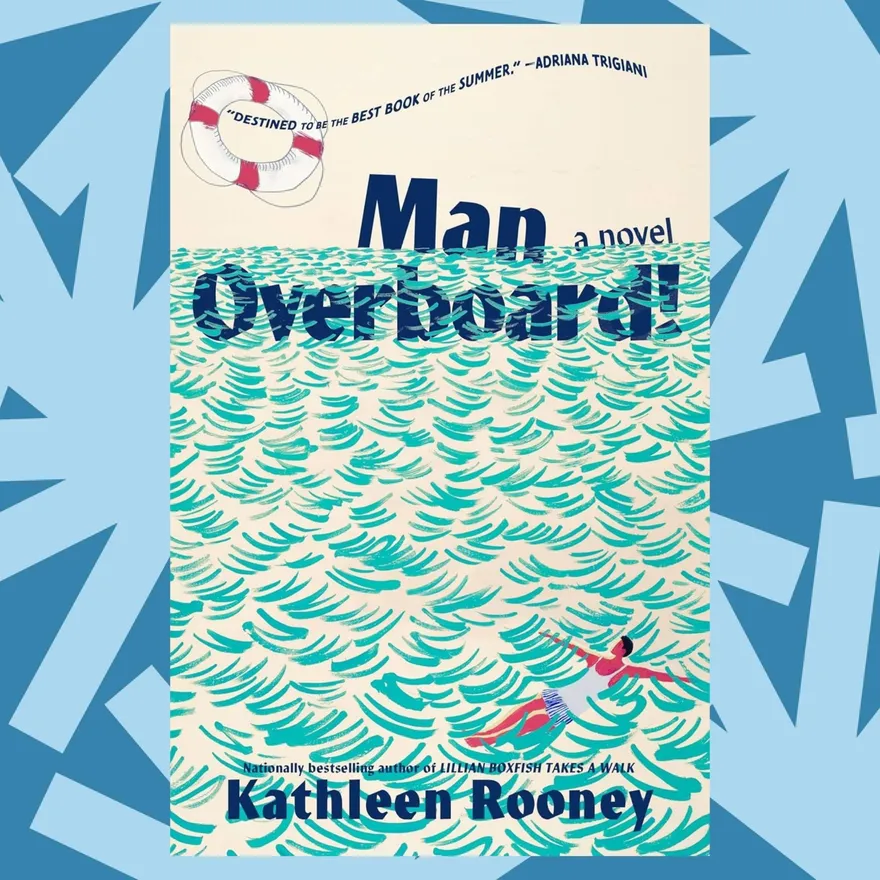

This is a preview of the Shortform summary of the Aug 31, 2026 episode of the NPR's Book of the Day
Sign up for Shortform to access the whole episode summary along with additional materials like counterarguments and context.
1-Page Summary
Protagonist's Existential Crisis and Confrontation With Mortality
Patrick "Kick" Kilpatrick, a former college swimmer who both fears and hates the sea, finds himself adrift alone in the Gulf of Mexico after midnight. While the Carnival Valor's passengers and crew remain unaware, Kick confronts a deeply personal disaster that is both physical and existential.
Kick's Suicidal Ideation and Dark Thoughts During Ocean Ordeal
Floating in the dark subtropics, Kick experiences painful awareness of the cold, his solitude, and overwhelming regret. Unlike the Titanic's involuntary disaster, his circumstances stem from a deeply personal crisis marked by confusion—his extreme intoxication prevents him from understanding how he ended up in the water at all. This lack of clarity compounds his desperation, making his struggle not only against the elements but also an internal battle with memory and the unsettling question of whether he truly wants to live.
Isolation Compels Kick to Reassess His Life and Relationships Honestly
As a physical therapist by day and fitness instructor by night, Kick is accustomed to a fast-paced routine that leaves little time for honest self-reflection. Now, isolation forces him to abandon these distractions and confront long-avoided truths. Facing death, he realizes that if he doesn't want to die with unresolved issues, he must not want to live with them either. This epiphany drives him toward redemption: survival becomes about confronting personal crises he has long avoided.
Kick's Journey: From Survival to Purpose Beyond Self-Absorption
Kick recognizes that self-absorption has been a barrier to genuine fulfillment. Encounters with sea creatures—from the smallest plankton to the largest whale sharks—reinforce that all beings struggle in their own way. This realization expands his sense of empathy and purpose, gradually transforming him from self-pity toward an emerging understanding of connection and the will to live.
Kick and Justine's Emotional Maturity in Relationships
At age 33, Kick demonstrates a pattern of emotional immaturity, often moving from one relationship to the next. Despite developing genuine feelings for Justine, who is 44, he hesitates to commit due to self-consciousness about their eleven-year age gap and anxiety from past rejection. This leads him to suggest they take a break before embarking on their cruise together. Yet while floating in the ocean, Kick repeatedly finds his thoughts turning to Justine. This separation reveals how deeply his feelings for her run and confirms that his affection outweighs his previous reservations about commitment.
Balancing Humor With Darker Emotional and Existential Themes
Andrew Limbong describes how, even as the protagonist faces life-threatening danger, there is space for both horror and good humor. Kathleen Rooney, in conversation with NPR's Scott Simon, likens the relationship between humor and sorrow to "chocolate and peanut butter," arguing that each amplifies the impact of the other. She observes that the saddest narratives often contain wit and humor, which together reveal surprising flashes of what makes existence glorious and mysterious.
Thrilling Narrative: One-hour Chapters in Water, Merging Survival Suspense With Internal Philosophical Reckoning
Each suspenseful, hour-long chapter tracks the protagonist's survival in the water, merging external struggle with internal reckoning. Rooney expresses her hope that readers are drawn in by the comedy but remain engaged as the narrative delves deeper into existential questions about meaning, mortality, and purpose.
Nature and Sea Creatures as Guides For Self-Reflection
Kick finds unexpected guides in the sea creatures he encounters, starting with a well-spoken sea turtle. Unlike advice from family or his own inner voice, the turtle's direct confrontation—blaming Kick for environmental destruction like oil spills and global warming—prompts powerful self-examination. The turtle tells Kick he needs to be committed not only to wanting to live but also to life and others, pushing him to reflect on his memories and relationships.
Ocean Animals Show all Beings Face Struggles Regardless of Size or Species
Rooney explains that encounters with creatures like seahorses and jellyfish prod Kick into considering not just his own problems, but also his place within a larger, interconnected world. These animal guides reveal that difficulty and struggle are universal, impacting everyone from the smallest plankton to the largest whale shark. This broader perspective helps Kick realize that thinking about others—humans and animals alike—can be a path to a more compassionate life.
1-Page Summary
Additional Materials
Counterarguments
- The narrative's use of talking sea creatures as guides for self-reflection may be seen as overly whimsical or unrealistic, potentially undermining the seriousness of Kick's existential crisis.
- The portrayal of Kick's transformation from self-absorption to empathy through brief encounters with sea animals could be criticized as simplistic or lacking psychological depth.
- The balance of humor and existential dread, while praised by some, might not resonate with all readers; some may find the juxtaposition jarring or feel it detracts from the gravity of the protagonist's situation.
- The focus on Kick's personal redemption and self-realization may come across as self-centered, especially given the broader environmental themes introduced by the sea turtle.
- The narrative's structure—hour-long chapters tracking survival—could be viewed as formulaic or repetitive, potentially diminishing suspense or emotional impact.
- The depiction of Kick's emotional immaturity and sudden realization of love for Justine during a crisis might be interpreted as a cliché or as lacking nuance in character development.
- The story's emphasis on individual transformation in the face of mortality may overlook or minimize the importance of systemic or external factors in personal growth and redemption.
Actionables
- you can schedule a solo walk in a natural setting without your phone or distractions, using the time to honestly reflect on your relationships and identify one unresolved issue you want to address with someone important to you
- Take a notebook and jot down any thoughts or realizations that come up about your connections with others, then choose one person to reach out to for a genuine conversation about your relationship.
- a practical way to expand empathy is to spend ten minutes observing a small animal or insect in your environment, imagining the daily challenges it faces, and then write a short note to yourself about how your own struggles compare
- This exercise helps you see your problems in a broader context and can prompt you to consider how you might support others facing their own difficulties.
- you can use humor to process difficult emotions by writing a short, funny story or comic strip about a recent personal setback, blending the serious and the absurd
- This approach lets you explore your feelings from a new angle, making it easier to accept both the pain and the humor in your experiences, and can reveal unexpected insights about your own resilience.
Get access to the context and additional materials
Protagonist's Existential Crisis and Confrontation With Mortality
Patrick "Kick" Kilpatrick, a former college swimmer who both fears and hates the sea, finds himself adrift alone in the Gulf of Mexico after midnight, forced to swim for his life. While the passengers and crew of the Carnival Valor remain oblivious to his plight, Kick is left to confront a deeply personal disaster, one that is both physical and existential.
Kick's Suicidal Ideation and Dark Thoughts During Ocean Ordeal
Kick, Alone in the Gulf of Mexico, Confronts His Mortality and Desire to Live
As Kick floats in the dark subtropics, he is painfully aware of the cold, his solitude, and the overwhelming sense of wretchedness and regret. The totality of his predicament—a never-ending, irrevocable "uh-oh"—forces him to question fundamental aspects of his existence. He reflects on how, much like the victims of the Titanic, he is suddenly and acutely aware of his mortality. Unlike the Titanic’s involuntary disaster, his circumstances stem from a deeply personal crisis, marked by confusion and a lack of understanding about how he ended up in the water at all.
Intoxication Prevents Him From Understanding His Situation, Adding To His Desperation and Confusion
Kick’s inability to recall how he ended up in the ocean is rooted in his extreme intoxication. This lack of clarity compounds his desperation and confusion, making his struggle not only against the elements but also an internal battle with memory, regret, and the desire—or lack thereof—to go on living. The suspicion that he may not want to live at all emerges as a dark undertone, yet as he continues to fight for survival, he confronts the unsettling possibility that he does, in fact, want to live.
Isolation Compels Kick to Reassess His Life and Relationships Honestly
Forced to Pause Routine, Therapist and Fitness Instructor Reflects On Avoidance
Kick’s ordeal in the ocean forces him to abandon the endless distractions of daily life. As a physical therapist by day and fitness instructor by night, he is accustomed to a fast-paced routine that leaves little time for honest self-reflection. Now, isolation suspends time, demanding that he confront not only his immediate predicament but also long-avoided truths about himself and his relationships.
Facing Death Prompts Questioning Unresolved Issues; Survival Hinges On Finding Reasons to Live
Confronted with the real possibility of death, Kick begins to question what remains unresolved in his life. He realizes that if he does not want to die with unresolved issues, he must not want to live with them either. This epiphany drives him toward a potential redemption: the possibility that survival is not just about endurance, but about confronting and resolving the personal crises he has long ...
Here’s what you’ll find in our full summary
Protagonist's Existential Crisis and Confrontation With Mortality
Additional Materials
Counterarguments
- The narrative centers heavily on individual introspection and personal crisis, potentially overlooking the broader systemic or environmental factors that might contribute to such situations.
- The comparison to Titanic victims may be seen as disproportionate, as their disaster was a mass tragedy with little personal agency, whereas Kick’s predicament is largely self-inflicted due to intoxication.
- The portrayal of intoxication as a catalyst for existential insight could be criticized for romanticizing or oversimplifying the dangers and consequences of substance abuse.
- The emphasis on self-reflection and personal redemption may not resonate with all readers, particularly those who believe that survival situations require practical action over introspection.
- The idea that observing animal struggle leads to empathy and purpose might be viewed as anthropomorphizing or projecting human concerns onto non-human life. ...
Actionables
- you can schedule a solo walk at night in a safe, familiar area without your phone or distractions to intentionally experience solitude and reflect on your current life direction, unresolved issues, and what truly motivates you to keep moving forward; after the walk, jot down any realizations or questions that surfaced about your purpose or relationships.
- a practical way to confront personal crises is to write a letter to yourself from the perspective of someone or something else (like a pet, a stranger, or even a sea creature) describing your struggles and strengths, then read it aloud to gain a new angle on your challenges and to spark empathy for yourself and other ...

Get access to the context and additional materials
Kick and Justine's Emotional Maturity in Relationships
Kick's Relationship With Justine Shows His Pattern of Emotional Immaturity and Commitment Avoidance Despite Genuine Feelings
Kick, at age 33, demonstrates a pattern of emotional immaturity in his relationships, often moving from one to the next. Despite developing genuine feelings and even love for Justine, who is 44, he hesitates to commit. His self-consciousness about their eleven-year age gap is a significant factor in his reluctance. Additionally, Kick’s wariness of emotional risks is heightened by his past experiences with rejection, making him anxious about deepening his relationship with Justine. This anxiety and hesitation ultimately lead to his suggestion that they take a break before embarking on a cruise together.
Justine's Impact on Kick's Mind in the Ocean Shows Their Emotional Connection
While on the cruise and during a moment floating in the ocean, Kick repeatedly fin ...
Here’s what you’ll find in our full summary
Kick and Justine's Emotional Maturity in Relationships
Additional Materials
Counterarguments
- Kick’s hesitation to commit may not necessarily indicate emotional immaturity; it could reflect thoughtful consideration of significant factors such as the age gap and past experiences.
- Moving from one relationship to another does not always equate to immaturity; it can also be a sign of searching for compatibility or personal growth.
- Kick’s decision to take a break before the cruise could be seen as a responsible step to avoid leading Justine on if he is unsure about his feelings, rather than a sign of avoidance.
- Concerns about age differences in relationships are common and can be valid, rather than simply a sign of self-consciousness or immaturity.
- Experiencing anxiety about deep ...
Actionables
- you can keep a relationship timeline journal to spot patterns in your own commitment habits and emotional responses, helping you notice if you tend to avoid commitment or repeat certain behaviors
- Write down the start and end dates of past relationships, reasons for transitions, and your feelings at each stage. Review your notes to identify any recurring themes, such as hesitancy to commit or anxiety about vulnerability, and reflect on what triggers these patterns.
- a practical way to address anxiety about age gaps or other differences is to write a letter to your future self describing what you value most in a partner and why those qualities matter more than external factors
- Describe the qualities that make you feel loved and secure, and explain to your future self why these are more important than things like age or background. Revisit the letter when doubts or anxieties arise to remind yourself of your true priorities.
- you can schedule a solo day trip or activity whe ...
Get access to the context and additional materials
Balancing Humor With Darker Emotional and Existential Themes
Andrew Limbong describes how, even as the protagonist faces life-threatening danger and floats in water, there is space for both horror and good humor. Kathleen Rooney, in conversation with NPR’s Scott Simon, emphasizes the deliberate blending of funny and sad elements in storytelling.
Comedy Weaves Lightness Into Serious Existential Questions
Rooney likens the relationship between humor and sorrow to "chocolate and peanut butter," arguing that each amplifies the impact of the other. She observes that the saddest narratives often contain wit and humor, which together reveal surprising flashes of what makes existence glorious and mysterious. By intertwining levity with tragedy, the narrative achieves a resonance where comedy doesn't just coexist with darker themes but actively enhances and deepens them.
Thrilling Narrative: One-hour Chapters in Water, Merging Survival Suspense With Internal Philosophical Reckoning
In this story, each suspenseful, hour-long chapter tracks the protagonist’s survival in the water, merging the ex ...
Here’s what you’ll find in our full summary
Balancing Humor With Darker Emotional and Existential Themes
Additional Materials
Counterarguments
- Some readers may find that blending humor with dark or existential themes can undermine the seriousness of the subject matter, making it harder to fully engage with the gravity of the protagonist’s situation.
- The use of humor in tragic or suspenseful narratives might alienate audiences who prefer a more consistent or somber tone, potentially reducing emotional immersion.
- Not all stories benefit from a mix of comedy and tragedy; for some narratives, maintaining a singular emotional focus can create a more powerful or authentic experience.
- The analogy of humor and sorrow being like "chocolate and peanut butter" may not resonate with everyone, as som ...
Actionables
- you can keep a daily humor-and-horror journal where you record one moment that scared or unsettled you and, in the same entry, deliberately find or invent something funny about it, training yourself to notice and blend both emotions in real time.
- a practical way to deepen your emotional experiences is to watch a suspenseful or sad movie and, during intense scenes, pause to write down a witty or absurd observation about what's happening, then reflect on how this changes your emotional response to the story.
- you can set a timer for one hour and, during that time, focus ...

Get access to the context and additional materials
Nature and Sea Creatures as Guides For Self-Reflection
Sea Creatures as Unlikely Sources of Wisdom For Kick, More Readily Heard Than Family or Inner Voice Advice
Kick, the protagonist, finds unexpected guides in the sea creatures he encounters, starting with a well-spoken sea turtle who becomes a conversational partner. Unlike advice that may come from family or his own inner voice, the sea turtle’s direct confrontation prompts a powerful self-examination. The turtle blames Kick for environmental destruction such as oil spills and global warming, forcing him to confront and reconsider his own impact on the world. This challenge is more compelling to Kick because it comes from the natural world, whose perspective feels fresh and urgent. Beyond just survival, the sea turtle tells Kick that he needs to be committed not only to wanting to live but also to life and others, pushing Kick to reflect on both his memories and the way he relates to those around him.
Ocean Animals Like Seahorses and Jellyfish Show all Beings Face Struggles Regardless of Size or Species
Kick’s journey continues as he meets creatures like seahorses and jellyfish, each offering further insight. Kathleen Rooney explains that these encounters prod Kick into considering not just his own problems, but also his relationships with other people and his pl ...
Here’s what you’ll find in our full summary
Nature and Sea Creatures as Guides For Self-Reflection
Additional Materials
Clarifications
- Kick is the main character in a story focused on self-discovery and personal growth. His journey involves interactions with sea creatures that serve as symbolic guides. The narrative uses these encounters to explore themes of environmental responsibility and empathy. Kick’s story is a metaphor for confronting inner and outer challenges to achieve greater self-awareness.
- Kick is personally blamed because he represents humanity's collective responsibility for environmental harm. The sea turtle's confrontation symbolizes nature holding humans accountable for pollution and climate change. This direct blame is meant to provoke self-reflection and awareness of individual impact. It emphasizes that everyone contributes to environmental issues, not just distant corporations or governments.
- The sea turtle being "well-spoken" symbolizes wisdom and clarity, traits often attributed to elder or guiding figures in stories. Its ability to communicate directly with Kick represents a bridge between nature and human understanding, making the message more impactful. This personification helps convey complex environmental and moral issues in a relatable way. The turtle’s articulate speech contrasts with typical animal behavior, emphasizing the importance of its message.
- Kick’s relationship with his family and inner voice is strained or ineffective because their advice may feel familiar, biased, or emotionally charged. Family advice can be influenced by personal history and expectations, making it harder for Kick to accept or reflect on. His inner voice might be clouded by self-doubt or denial, limiting honest self-examination. The sea turtle’s perspective is fresh and external, prompting deeper reflection.
- After the sea turtle’s challenge, Kick reflects on memories of his past actions and their consequences, especially those linked to environmental harm. He also considers his relationships with family and friends, questioning how his behavior has affected them. This reflection helps him recognize patterns of neglect or selfishness. Ultimately, it prompts him to seek more meaningful, responsible connections with others and the world.
- Kathleen Rooney is likely a scholar or critic providing analysis or interpretation of the story. Her role is to offer an external perspective that helps explain the significance of Kick’s encounters with sea creatures. She connects these encounters to broader themes of empathy and interconnectedness. This adds depth to the understanding of the story’s message.
- Seahorses symbolize vulnerability and unique parenting roles, highlighting that struggle exists even in delicate, small creatures. Jellyfis ...
Counterarguments
- The idea that advice from sea creatures is more compelling or urgent than advice from family or one's inner voice may not resonate with all readers; some may find human relationships and internal reflection more meaningful or effective for self-examination.
- The narrative places significant responsibility for environmental destruction on the individual (Kick), which could be seen as oversimplifying complex, systemic issues that involve corporations, governments, and broader societal factors.
- Using anthropomorphized animals as sources of wisdom may risk trivializing real-world environmental and ethical issues by framing them in a fantastical or allegorical context rather than addressing them directly.
- The suggestion that broadening concern to include all beings will necessarily lead to healing and a better-adjusted life may not accoun ...


Get access to the context and additional materials


Create Summaries for anything on the web
Download the Shortform Chrome extension for your browser
