

'New York Times' obituarist Sam Roberts says he writes about life – not death
In this episode of NPR's Book of the Day, New York Times obituarist Sam Roberts discusses his approach to writing obituaries as celebrations of life rather than announcements of death. Roberts explains his technique of identifying the "rosebud moment"—the transformative turning point that defines a person's legacy—and crafting opening sentences that draw readers into each subject's story. He shares examples of obituaries that honor both famous figures and little-known individuals who made significant contributions.
Roberts and editor Eyder Peralta explore the editorial and ethical challenges of obituary journalism, from selecting which lives to memorialize among thousands of daily deaths to deciding how to balance unflattering details against a person's broader accomplishments. The conversation also touches on philosophical questions about fame, legacy, and the nature of impact, with Roberts asserting that every person possesses a story of significance, regardless of public recognition.
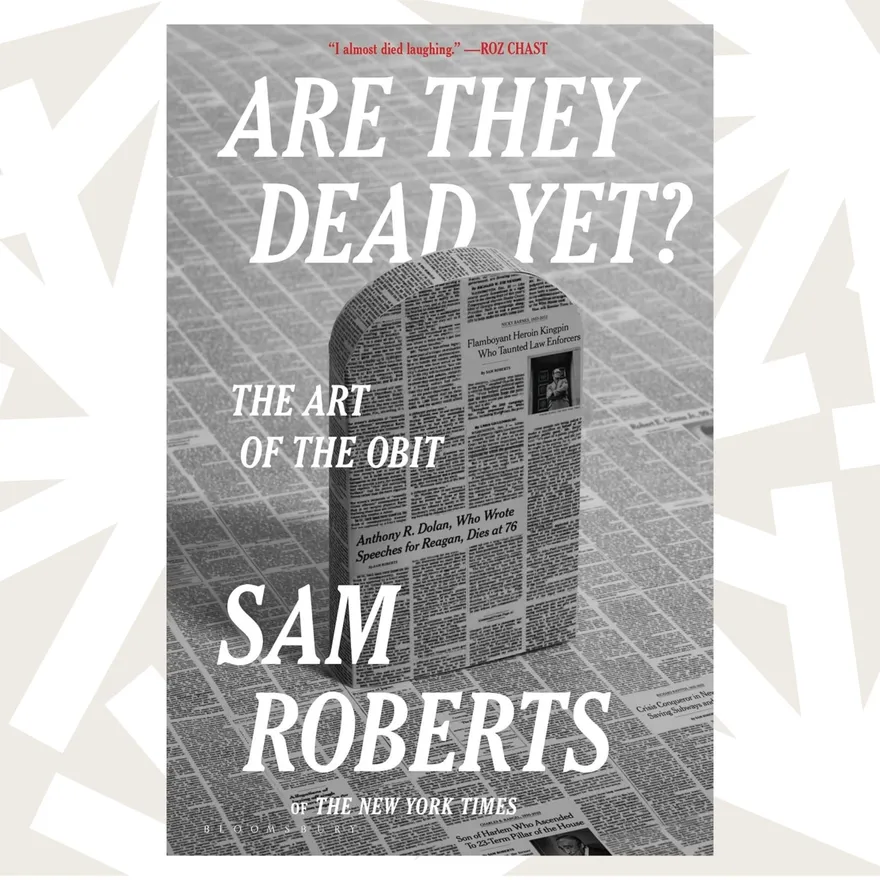

This is a preview of the Shortform summary of the Aug 26, 2026 episode of the NPR's Book of the Day
Sign up for Shortform to access the whole episode summary along with additional materials like counterarguments and context.
1-Page Summary
The Craft and Technique of Writing Obituaries
Sam Roberts discusses the art of crafting obituaries, emphasizing their role as compelling mini-biographies that celebrate life rather than merely announce death.
Identifying the Transformative Moment Defining a Person's Significance
Roberts describes his primary goal as finding the "rosebud moment"—a term from Citizen Kane—referring to the turning point that shaped a person's legacy. He seeks pivotal experiences that not only define individuals but also highlight their contributions, sometimes previously unrecognized. For example, he recalls writing about a young man at the Jet Propulsion Laboratory who, though virtually unknown, played a crucial role in the first moon landing's success by confidently dismissing a false alarm.
Constructing Compelling Opening Sentences That Engage Readers
The first sentence of an obituary serves as a hook that captures attention while framing the subject's importance. Roberts highlights one of his favorite opening lines from an obituary he wrote about Jesus as if it were penned in 33 AD, illustrating how to balance descriptive detail with narrative momentum that invites readers into the subject's journey from obscurity to influence.
Obituaries as Life Celebrations
Roberts insists that obituaries are not about death—death is relegated to a single sentence—but rather function as celebrations of life. These narratives often bring to light little-known figures who have made exceptional contributions yet remained anonymous, transforming the genre into an assignment to discover and honor the quietly extraordinary.
Editorial and Ethical Challenges in Obituary Journalism
Obituary journalism presents unique editorial and ethical decisions in both who is memorialized and how a life is represented. Insights from Roberts and editor Eyder Peralta shed light on these continual challenges.
Selection Decisions for Obituary Coverage
Roberts highlights the daunting scale of choices facing obituary editors: approximately 150,000 deaths occur worldwide each day, but The New York Times typically has room for just three or four obituaries daily. Editors must judge the newsworthiness of lives across vast fields and accomplishments. The paper has also expanded its scope to include fictional characters like Hercule Poirot, animals like Gus the neurotic polar bear, and even inanimate objects, reflecting evolving notions of what is worthy of remembrance.
Balancing Critical Information Against an Individual's Legacy
Crafting an obituary requires careful ethical consideration of which life elements to highlight. Peralta points out that while family-written obituaries may avoid unflattering details, news obituaries must sometimes include controversies or indiscretions. Roberts illustrates this through his experience writing Charles Rangel's obituary, where he chose to mention a late-career ethics violation deeper within the article rather than in the opening, ensuring that one setback didn't overshadow decades of historic accomplishment. Such placement decisions carry significant weight in shaping public memory.
Philosophical Insights About Life, Legacy, and Notability
Roberts reflects on the nature of fame, the impermanence of recognition, and the true measure of a life's impact.
Fame and Recognition Are Temporary and Often Misaligned With True Impact
Roberts observes that public perception of legacy can shift dramatically over time, recalling how George H.W. Bush was considered a "loser" after his reelection defeat but was hailed as an elder statesman upon his death. He illustrates the misalignment between celebrity and genuine impact with a philosophical question: Who is greater, Hannibal or the anonymous inventor of the spade? He casts his vote for the creator of the spade, emphasizing the enduring impact of unheralded contributors over celebrated figures.
Recognizing That Individuals Possess Extraordinary and Meaningful Stories
Roberts stresses that every person leads a life rich with significance, whether or not they achieve public renown. He recalls how the New York Times' "Portraits of Grief" after 9/11 and COVID-19 coverage revealed the irreplaceable presence of individuals like postal workers and teachers—people who may be overlooked but whose absence leaves a profound void. Roberts believes that if a significant story cannot be found in someone's life, the shortcoming lies with the writer, not the individual. For him, the task is to recognize and convey the inherent value present in every life.
1-Page Summary
Additional Materials
Counterarguments
- Focusing primarily on celebrating life and minimizing mention of death may risk glossing over the reality and gravity of loss, which some readers may find unsatisfying or emotionally incomplete.
- The emphasis on finding a "rosebud moment" could oversimplify complex lives, reducing individuals to a single defining event or trait.
- Highlighting previously unrecognized contributions may inadvertently downplay or omit other significant aspects of a person's life that were more meaningful to them or their loved ones.
- The narrative-driven approach to obituary writing may introduce subjectivity or bias, potentially shaping public memory in ways that do not fully align with the individual's true character or legacy.
- The expansion of obituary subjects to include fictional characters, animals, and inanimate objects could dilute the significance of obituaries for real people and may be seen as trivializing the genre.
- The assertion that every life contains an extraordinary or meaningful story may not resonate with all readers, as some may believe that not every life is equally noteworthy in a public context.
- Suggesting that the absence of a significant story is always the writer's failure may overlook the reality that some lives, while valuable, may not have elements that translate into compelling public narratives.
- The focus on unheralded contributors over famous figures could be seen as undervaluing the legitimate impact and inspiration provided by well-known individuals.
Actionables
- You can write a one-paragraph life tribute for someone you know (friend, family member, neighbor, or colleague) that spotlights a single, transformative moment you witnessed or learned about, focusing on how it shaped their impact on others. This helps you practice identifying and celebrating the defining moments in everyday lives, not just those of public figures.
- A practical way to recognize overlooked contributions is to keep a weekly gratitude journal where you jot down the names and actions of people in your community whose efforts often go unnoticed, then share a short note or message with them or their loved ones highlighting their unique value.
- You can experiment with crafting a creative obituary for a beloved object, pet, or fictional character from your life, using vivid details and a compelling opening line to capture its significance and the role it played in your personal story, which helps you explore the broader idea of what makes a life or presence meaningful.
Get access to the context and additional materials
The Craft and Technique of Writing Obituaries
Sam Roberts discusses the art and methodology behind crafting obituaries, emphasizing their role not as mere announcements of death but as compelling mini-biographies that celebrate life and illuminate the overlooked yet transformative moments in individual histories.
Identifying the Transformative Moment Defining a Person's Significance
Sam Roberts describes his primary goal in obituary writing as finding the "rosebud moment" in a person's life—the turning point that changed their direction and ultimately shaped their legacy. He explains that this term comes from Orson Welles' film Citizen Kane, where "Rosebud" evokes a key memory of innocence and formative change. In obituaries, the rosebud moment marks the instance or epoch that makes a life worthy of broader notice and reflection. Roberts seeks out these pivotal experiences and achievements that not only define individuals but also highlight their contributions, sometimes previously unrecognized. For example, he recalls writing about a young man at the Jet Propulsion Laboratory who, virtually unknown, played a crucial role in the success of the first moon landing by confidently dismissing a false alarm, a decision with far-reaching impact.
Constructing Compelling Opening Sentences That Engage Readers
The first sentence of an obituary is vital, serving as a hook that both captures the reader’s attention and frames the subject's importance through careful language and narrative strategy. Sam Roberts highlights one of his favorite opening lines from an obituary he wrote about Jesus as if it were penned in 33 AD: “Jesus of Nazareth, a Galilean carpenter turned itinerant minister, whose appeals to piety and repute as a healer had galvanized a growing contingent of believers, died on Friday after being crucified just outside Jerusalem, only days after his followers had welcomed him triumphantly to the city as the anointed one and the son of David.” This example illustrates the balan ...
Here’s what you’ll find in our full summary
The Craft and Technique of Writing Obituaries
Additional Materials
Counterarguments
- Focusing on the "rosebud moment" may risk oversimplifying complex lives by reducing them to a single transformative event, potentially neglecting the broader context or ongoing contributions of the individual.
- Emphasizing narrative-driven and engaging openings could blur the line between journalism and storytelling, possibly leading to embellishment or subjective interpretation rather than strict factual reporting.
- Prioritizing the celebration of life over the announcement of death might not align with all cultural or familial expectations, as some communities may prefer a more straightforward or somber approach to obituary writing.
- Highlighting little-known individuals and their contributions, while valuable, could in ...
Actionables
- you can write a one-paragraph mini-biography for a friend or family member that highlights a single transformative moment in their life, then share it with them as a way to celebrate their impact and spark meaningful conversation about their legacy
- (For example, recall a time when your friend made a bold decision that changed their path, and describe how that moment shaped who they are today.)
- a practical way to honor unsung contributors in your community is to keep a weekly journal where you jot down the names and stories of people whose small actions made a big difference, then send them a handwritten note expressing what you noticed and why it mattered
- (For instance, thank the neighbor who quietly organizes recycling or the coworker who always helps others behind the scenes.)
- you can practice crafting atten ...

Get access to the context and additional materials
Editorial and Ethical Challenges in Obituary Journalism
Obituary journalism presents editors and writers with unique editorial and ethical decisions in both who is memorialized and how a life is represented. Insights from seasoned obituarists like Sam Roberts and editor Eyder Peralta shed light on the continual challenges of selection and balance in this journalistic craft.
Selection Decisions for Obituary Coverage
With Only Three to Four Obituary Slots Available, Editors Must Judge the Newsworthiness of Approximately 150,000 Deaths Daily Across Diverse Fields and Achievements
Sam Roberts highlights the daunting scale of choices facing obituary editors: an average of 150,000 deaths occur worldwide each day, but The New York Times typically has room to publish just three or four obituaries daily. Editors must therefore judge the newsworthiness of lives led across a vast range of fields and accomplishments, making difficult decisions about who is recognized with a published obituary and who is not.
Nyt Expands Obituary Subjects to Fictional Characters, Animals, and Objects, Reflecting Evolving Commemoration
The evolution of commemorations at The Times extends beyond traditional figures. Roberts notes that the paper has published obituaries for fictional characters such as Hercule Poirot, for animals like Gus the neurotic polar bear at the Central Park Zoo, and even, recently, for inanimate objects such as a vacuum cleaner belonging to Senator Chuck Grassley. This expanded scope reflects changing notions of what—and who—is deemed worthy of reflection and remembrance, challenging traditional definitions of significance in obituary journalism.
Balancing Critical Information Against an Individual's Legacy
Obituary Writers Should Balance Ethical Violations or Crimes With Career Successes to Prevent a Single Failure From Overshadowing Decades of Contributions
The process of crafting an obituary also requires careful ethical consideration of which elements of a person’s life to highlight. Eyder Peralta points out that while family-written obituaries may avoid unflattering details, news obituaries must sometimes include controversies or indiscretions, as notoriety itself can be newsworthy. The challenge lies in how to weigh personal failings, mistakes, and even crimes against the full measure of a lifetime’s achievements.
Placement Decisions Shape Perceptions of Flaws Versus Achievements In Defining ...
Here’s what you’ll find in our full summary
Editorial and Ethical Challenges in Obituary Journalism
Additional Materials
Clarifications
- An obituarist researches and writes obituaries, summarizing a person's life and achievements. They verify facts, interview sources, and ensure respectful, accurate representation. Their role involves ethical judgment about what to include or omit. They balance honoring the deceased with journalistic integrity.
- Newsworthiness refers to the criteria editors use to decide which events or people are important enough to report. It often includes factors like impact, prominence, timeliness, and public interest. In obituary journalism, newsworthiness helps determine whose life story will resonate with or inform the audience. This concept ensures limited space highlights the most relevant or influential individuals.
- The New York Times has limited obituary space due to print and digital layout constraints. Editorial resources and reader interest also influence the number of obituaries published. The paper prioritizes individuals with significant public impact or unique stories. This selectivity ensures quality and relevance in coverage.
- Publishing obituaries for fictional characters, animals, and objects is a way to honor cultural impact or symbolic significance beyond human lives. These obituaries often mark the "end" of a character's story, the death of a notable animal, or the retirement of an iconic object. This practice reflects society's evolving values and broadens the scope of remembrance. It also engages readers by connecting with shared cultural experiences.
- Family-written obituaries are typically submitted by relatives and focus on positive memories and personal details, often omitting negative aspects. News obituaries are written by journalists and aim to provide a balanced, factual account of a person's life, including achievements and controversies. News obituaries serve a public record function and adhere to journalistic standards of objectivity. Family obituaries are more personal and celebratory, while news obituaries prioritize comprehensive and impartial reporting.
- Censure is a formal statement of disapproval issued by a legislative body or professional organization. It does not remove a person from office but publicly condemns their actions. Censure can damage a person's reputation and political influence. It serves as a disciplinary measure short of expulsion or legal penalty.
- The placement of information in an obituary guides readers' focus and emotional response. Details introduced early are more likely to shape the overall impression of the person. Negative facts placed at the beginning can ove ...
Counterarguments
- The expansion of obituary subjects to include fictional characters, animals, and inanimate objects could dilute the significance of obituaries for real individuals who have made substantial contributions to society.
- The notion that only a few deaths are "newsworthy" enough for major obituary coverage may reinforce existing biases and hierarchies, potentially overlooking marginalized or less-publicized achievements.
- The process of editorial selection, described as requiring "arbitrary judgment," may lack transparency and accountability, leading to inconsistent or subjective decisions about whose lives are commemorated.
- Balancing ethical violations with career successes in obituaries could risk minimizing or excusing serious wrongdoing, potentially misleading readers about the true impact of an individual's actions.
- The p ...


Get access to the context and additional materials
Philosophical Insights About Life, Legacy, and Notability
Sam Roberts reflects on the nature of fame, the impermanence of recognition, and the true measure of a life's impact, drawing from his career as an obituary writer and the lessons learned from major tragedies.
Fame and Recognition Are Temporary and Often Misaligned With True Impact
Roberts observes that public perception of legacy can shift dramatically over time. He recalls how George H.W. Bush was considered a "loser" after his defeat for reelection, yet upon his death, he was hailed as an elder statesman. This transformation highlights the fleeting and mutable nature of fame and recognition.
Roberts further illustrates the misalignment between celebrity and genuine impact with a philosophical question: Who is greater, Hannibal—known for his historic military campaigns—or the anonymous inventor of the spade? He casts his vote for the creator of the spade, emphasizing the enduring, practical impact of unheralded contributors over the celebrated deeds of military leaders or celebrities.
Recognizing That Individuals Possess Extraordinary and Meaningful Stories
Roberts stresses that every person leads a life rich with significance and meaning, whether or not they achieve public renown. He recalls how the New York Times’ "Portraits of Grief," published after 9/11, and coverage of lives lost to COVID-19 revealed the irreplaceable presence of individuals such as postal workers, teachers, or neighbors—people who may be overlooked bu ...
Here’s what you’ll find in our full summary
Philosophical Insights About Life, Legacy, and Notability
Additional Materials
Counterarguments
- While fame and recognition can be fleeting, some individuals' legacies—such as those of major historical figures—have endured for centuries, suggesting that public perception can sometimes reflect lasting impact.
- The assertion that practical contributions by anonymous individuals are more significant than celebrated achievements may undervalue the transformative effects of certain public figures whose actions have shaped societies or changed the course of history.
- Not all lives may be equally rich in significance or meaning from a broader societal perspective, even if they are valued by close friends or family.
- The idea that the failure to find a meaningful story in someone's life lies solely with the ...
Actionables
- you can keep a weekly log where you jot down small but meaningful actions you notice from people around you, like a neighbor helping someone carry groceries or a coworker offering encouragement, to remind yourself of the lasting impact of everyday contributions
- This helps you recognize and appreciate the significance of ordinary roles and actions that often go unnoticed, reinforcing the idea that everyone’s presence matters.
- a practical way to honor the unique stories of people in your life is to ask a different friend, family member, or acquaintance each month to share a memory or lesson that shaped them, then write a short paragraph about it in a personal journal
- This practice helps you see the richness in every life and trains you to find meaning in stories that might seem unremarkable at first gla ...

Get access to the context and additional materials


Create Summaries for anything on the web
Download the Shortform Chrome extension for your browser
