

Former U.S. Mexico ambassador Ken Salazar on new memoir and "crisis" at the border
In this episode of NPR's Book of the Day, former U.S. Ambassador to Mexico Ken Salazar discusses his new memoir and shares his perspective on U.S.-Mexico relations. Salazar, a fifth-generation Mexican-American whose family has lived in the Southwest for centuries, traces his ancestral roots and explains how historical events like the Mexican-American War continue to shape the relationship between the two nations. He describes the broken promises of the Treaty of Guadalupe Hidalgo and argues that understanding this history is essential for building stronger ties across North America.
The conversation also covers Salazar's tenure as ambassador, including efforts to address migration through regional partnerships and development initiatives. Salazar discusses the gap between humanitarian principles and policy implementation at the border, the political dynamics that complicated his work, and his concerns about recent shifts in U.S. foreign policy toward Mexico. The episode examines both historical and contemporary challenges in the U.S.-Mexico relationship.
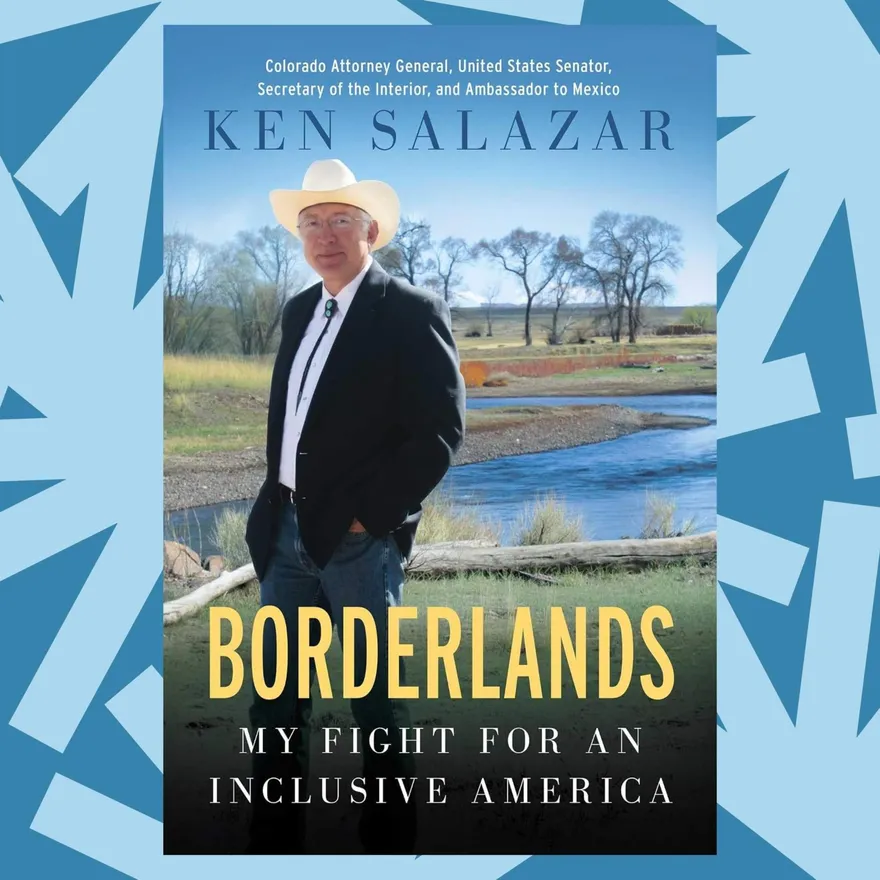

This is a preview of the Shortform summary of the Aug 24, 2026 episode of the NPR's Book of the Day
Sign up for Shortform to access the whole episode summary along with additional materials like counterarguments and context.
1-Page Summary
Mexican-American History, Identity, and Roots in the Southwest
Ken Salazar emphasizes his family's deep historical presence in the San Luis Valley, with roots extending over four centuries to the founders of Santa Fe—established long before Anglo-American settlement. Eyder Peralta describes Salazar as a fifth-generation Mexican-American who grew up in Colorado on land that was once part of Mexico. Salazar embodies the saying "we did not cross the border, the border crossed us," representing the historical continuity of Mexican Americans in the Southwest.
Salazar recounts his family's journey to reclaim ancestral lands taken after the U.S.-Mexico War. He describes this effort as restoring both cultural identity and dignity for a conquered people. For Salazar, understanding this history is essential for building national unity and fostering closer ties between the United States, Mexico, and Canada.
U.S.-Mexico Historical Relations and Their Lasting Consequences
Salazar describes the conquest of Mexican-Americans and their lands as one of America's original sins, alongside slavery and Native genocide. He asserts the Mexican-American War was deliberately provoked to seize territory, resulting in the U.S. acquiring 55% of Mexican land. Salazar references Abraham Lincoln's opposition to the war, which Lincoln condemned as unjustified aggression.
The Treaty of Guadalupe Hidalgo promised Mexican-Americans could remain in annexed territories with protected property rights, but Salazar notes these promises were largely broken. This betrayal set the stage for a fraught relationship between the nations—nearly 100 years passed before a U.S. president visited Mexico City. Salazar concludes that U.S.-Mexico relations continue to be shaped by these unresolved historical wounds.
Border and Immigration Policy as Ambassador
Salazar emphasizes that effective migration solutions cannot rely solely on U.S. border enforcement. Instead, he highlights partnerships throughout Central and Southern Mexico, noting Mexico's investment in developing the Tehuantepec isthmus to address migration's root causes. Despite pressing Washington to focus on these regional strategies, Salazar faced difficulties elevating their priority.
Salazar points to early achievements, including strengthened U.S.-Mexico cooperation and becoming each other's largest trading partner. However, he acknowledges these efforts didn't fully reach their goals, attributing the struggle to Trump-led GOP using the border as a political crisis point and Democrats letting the Americas slip in foreign policy priority.
Contradiction Between American Values and Migration Policy Implementation
Peralta describes a dissonance between official rhetoric and ground-level actions. According to his reporting, migrants reaching the U.S. border were flown or bussed to southern Mexico and left in remote areas with few resources, often with families separated—contradicting humanitarian principles.
Ambassador Salazar defends the policy by pointing to legal alternatives like H-2A visas and asylum processing in Guatemala, arguing these provide safer options than dangerous journeys to the border. However, Peralta's observations reveal these pathways are often inaccessible or traumatic, fundamentally at odds with America's commitment to humanitarian protection.
Geopolitical Tensions and Trump Foreign Policy
Peralta highlights the current climate in which the Trump administration threatens to bomb Mexico and revive the Monroe Doctrine. Salazar responds that these moves signify a dangerous regression to an imperialist stance, undermining traditional American values of cooperation and mutual respect.
Despite this threatening posture, Salazar observes a different sentiment among the American public. He describes witnessing widespread enthusiasm for a more inclusive society and notes that many Americans explicitly reject Trump's authoritarian and aggressive approaches in foreign policy, pointing to a public desire for constructive bilateral relationships rather than isolationism or hostility.
1-Page Summary
Additional Materials
Counterarguments
- While Ken Salazar’s family history in the San Luis Valley is significant, many other groups—including Native American tribes—have even longer-standing claims to the region, complicating narratives of historical belonging.
- The phrase "we did not cross the border, the border crossed us" can oversimplify the complex and diverse experiences of Mexican Americans, some of whom migrated after the border was established.
- The process of reclaiming ancestral lands is not unique to Mexican Americans; many groups in the U.S. have struggled with land loss and dispossession, and not all have been able to reclaim their lands.
- Emphasizing Mexican-American history as essential for national unity may overlook the importance of integrating the histories of other marginalized groups, such as African Americans, Asian Americans, and Native Americans.
- Labeling the conquest of Mexican-American lands as one of America’s "original sins" is a powerful rhetorical device, but some historians argue that the term "original sin" is more appropriately reserved for slavery and Native genocide due to their foundational impact on U.S. society.
- The assertion that the Mexican-American War was deliberately provoked is debated among historians; while many agree with this view, others point to complex political and diplomatic factors on both sides.
- Although Abraham Lincoln opposed the Mexican-American War, his position was not universally shared at the time, and many Americans supported the war effort.
- While the Treaty of Guadalupe Hidalgo’s promises were often broken, some Mexican Americans were able to retain property and rights, and the outcomes varied by region and circumstance.
- The claim that nearly 100 years passed before a U.S. president visited Mexico City is accurate, but diplomatic relations between the two countries continued in other forms during that period.
- U.S.-Mexico relations have also been shaped by economic, cultural, and security cooperation, not solely by historical grievances.
- Some analysts argue that border enforcement is a necessary component of migration policy and that partnerships with Mexico and Central America should complement, not replace, enforcement measures.
- Mexico’s investment in the Tehuantepec isthmus is primarily an economic development project, and its direct impact on migration patterns remains to be fully demonstrated.
- The politicization of the border is not exclusive to one party; both Republicans and Democrats have used border issues for political gain at different times.
- While there are documented cases of migrants being transported to remote areas, the U.S. and Mexico have also expanded legal migration pathways and humanitarian programs in recent years.
- Legal alternatives like H-2A visas and asylum processing are limited and difficult to access, but they do provide some migrants with safer options than irregular crossings.
- The Monroe Doctrine has been interpreted in various ways over time, and some argue that its revival could be aimed at countering external influences in the region rather than promoting imperialism.
- Public opinion in the U.S. on migration and foreign policy is deeply divided, and there is significant support for both restrictive and inclusive approaches.
Actionables
- you can map your own family’s migration or land history, even if it’s recent or incomplete, to better understand how borders and treaties have shaped your identity and community; for example, sketch a simple timeline or map showing where your ancestors lived and how political changes may have affected them, then reflect on how this shapes your sense of belonging.
- a practical way to foster unity and empathy is to start a personal reading challenge focused on memoirs or stories from people with Mexican-American, Indigenous, or migrant backgrounds, then share a one-sentence insight from each book with a friend or family member to spark conversations about shared history and values.
- you can support more humane migration practices by researching and donating to local organizations that provide direct aid to migrants in your area, such as food, legal help, or shelter, and then write a short note to your elected officials explaining why you believe upholding humanitarian commitments matters for national unity and international relationships.
Get access to the context and additional materials
Mexican-American History, Identity, and Roots in the Southwest
Salazar's Roots Precede Anglo-American Settlement
Ken Salazar highlights the deep historical presence of his family in the San Luis Valley, emphasizing roots that extend over four centuries. At the headwaters of the Rio Grande, known as the Rio Bravo in Mexico, Salazar traces his ancestry back to the founders of Santa Fe, one of the nation's oldest state capitals, established long before the Puritans landed at Plymouth Rock. This history underscores that some Mexican Americans, including Salazar’s family, have been on these lands well before Anglo-American settlement. Eyder Peralta describes Salazar as a fifth-generation Mexican-American who grew up in Colorado on land that used to be part of Mexico. Salazar takes pride in being part of one of these older families, seeing himself as a living testament to the saying: "we did not cross the border, the border crossed us." His identity and family legacy symbolize historical continuity for Mexican Americans in Colorado and throughout the Southwest.
Reclaiming Ancestral Lands Restored What Was Unjustly Taken From His Family
Salazar recounts the importance of his family's journey to reclaiming ancestral lands that had originally been theirs. For Salazar, this effort is rooted in the fundamental human need to understand one’s origins and belong to a place. He describes it as both a proud and painful h ...
Here’s what you’ll find in our full summary
Mexican-American History, Identity, and Roots in the Southwest
Additional Materials
Counterarguments
- While some Mexican Americans have deep historical roots in the Southwest, the majority of current Mexican-American populations arrived after the U.S.-Mexico War, so Salazar's experience may not represent all Mexican Americans.
- The concept of reclaiming ancestral lands is complex, as land ownership and boundaries have changed multiple times throughout history, affecting various groups including Indigenous peoples before Spanish and Mexican settlement.
- The phrase "we did not cross the border, the border crossed us" may not fully account for the diverse migration experiences of all Mexican Americans, many of whom or whose ancestors did cross the border voluntarily in more recent times.
- Efforts to recover ancestral lands can sometimes conflict with the property rights of current landowners, leading to legal and ethical complexities.
- Emphasizing historical grievances, while important fo ...
Actionables
- you can create a personal timeline that overlays your family’s history with major regional or national events to visualize how your story fits into broader historical shifts, helping you see connections between your ancestry and the land you live on
- (for example, mark when your ancestors arrived in a region alongside events like border changes, treaties, or migrations, and reflect on how these events shaped your family’s experience and sense of belonging)
- a practical way to foster mutual understanding is to invite friends or neighbors from different backgrounds to share stories about their family’s origins and connections to the land, then discuss how these histories influence your perspectives on community and identity
- (for example, host a casual dinner where each person brings a family photo or artifact and explains its significance, sparking conversations about shared roots and diverse experiences)
- you can start a gratitude journal focused ...

Get access to the context and additional materials
U.S.-Mexico Historical Relations and Their Lasting Consequences
Mexican-American War and Conquest: Foundational Injustice Akin to Slavery and Native Genocide
Ken Salazar describes the conquest of Mexican-Americans and the land they occupied by the United States as one of America’s original sins, alongside slavery and the genocide of Native Americans. He asserts that this history is rooted in the ideologies of manifest destiny and the expansion of slavery. Salazar points out that the Mexican-American War was deliberately provoked by the United States to seize territory—resulting in the acquisition of 55% of what was then Mexican land, swallowing the American Southwest.
Salazar references Abraham Lincoln’s opposition to the war when Lincoln served as a member of Congress. Lincoln vehemently condemned the war as an act of unjustified aggression for the purpose of expanding U.S. territory into land held by Mexico. Salazar emphasizes this conflict as a foundational injustice, grouping it with other critical betrayals in American history.
Treaty of Guadalupe Hidalgo Violations: A Legacy of Broken Promises Shaping Bilateral Relations
The consequences of the war were officially settled with the Treaty of Guadalupe Hidalgo, which promised that Mexican-Americans could remain in the annexed territories and that their property ...
Here’s what you’ll find in our full summary
U.S.-Mexico Historical Relations and Their Lasting Consequences
Additional Materials
Counterarguments
- While the Mexican-American War and its aftermath were deeply consequential, equating the conquest of Mexican territory with the institution of slavery or the genocide of Native Americans may oversimplify distinct historical phenomena with different scales and forms of suffering.
- The ideology of manifest destiny was a significant motivator, but economic interests, security concerns, and political pressures within both the U.S. and Mexico also played roles in the lead-up to the war.
- Some historians argue that the Mexican government’s instability and inability to effectively govern its northern territories contributed to the U.S. acquisition of those lands.
- Although many promises of the Treaty of Guadalupe Hidalgo were not fully honored, some Mexican-Americans did retain property and rights, and over time, Mexican-American communities have played a significant role in shaping the culture and development of the Ameri ...
Actionables
- you can map out the history of your own neighborhood or city by researching which Indigenous and Mexican communities originally lived there and what happened to their land, then reflect on how those histories shape your daily environment and relationships today
- (for example, look up old maps, read local historical markers, or use online archives to trace land transfers and consider how these events influence present-day demographics, street names, or property ownership)
- a practical way to recognize ongoing impacts is to pay attention to local news or community issues involving land use, property rights, or cultural heritage, and notice if any current disputes or policies echo the broken promises and injustices from the past
- (for example, when you hear about a new development, ask yourself whose land it was historically, who benefits, and who might be left out or harmed)
- you can make a habit of learning and using t ...

Get access to the context and additional materials
Border and Immigration Policy as Ambassador
Salazar Promoted Controlling Migration Via Central and Southern Mexico Partnerships, Not Just U.S. Border Enforcement
Ken Salazar emphasizes that effective solutions to migration cannot rely solely on enforcement along the 2,000-mile U.S.-Mexico border. Instead, he highlights the importance of partnerships throughout Central and Southern Mexico. Salazar notes Mexico’s prioritization of investment in the southeast, particularly in the narrow Tehuantepec isthmus—an area President López Obrador called the "Rinconolvidado." Mexico invested billions of dollars in this region, aiming to develop it as a way to address migration’s root causes.
Salazar repeatedly pressed Washington to focus more closely on these regional development strategies, but he faced difficulties elevating their priority within the U.S. executive branch. He describes a broader "security" strategy not only to boost the U.S.-Mexico border capacity, but also to establish a functional border between Guatemala and Mexico, which largely lacks meaningful infrastructure, and to improve border management across Central America, where borders "basically do not function." Salazar argues that U.S. leadership in creating security throughout these regions would ultimately enhance U.S. security as well.
Despite Early Wins, the Administration Struggled to Sustain Momentum On a Comprehensive Migration and Border Agenda
Salazar points to early achievements during his tenure, including strengthening substantive cooperation between the U.S. and Mexico and achieving the milestone of becoming each other’s largest trading partner. He also highlights efforts to launch joint border initiatives and advance regional cooperation on migration flows, su ...
Here’s what you’ll find in our full summary
Border and Immigration Policy as Ambassador
Additional Materials
Clarifications
- Ken Salazar is a former U.S. Secretary of the Interior and diplomat. He served as the U.S. Ambassador to Mexico, representing American interests there. His role involved managing diplomatic relations and addressing issues like migration and border security. As Ambassador, he worked to promote cooperation between the U.S. and Mexico.
- The Tehuantepec isthmus is the narrowest land strip in Mexico, connecting the Gulf of Mexico and the Pacific Ocean. It serves as a strategic corridor for transportation and trade, potentially easing pressure on the U.S.-Mexico border by fostering regional economic growth. Development there aims to create jobs and reduce migration by improving local infrastructure and opportunities. Its location makes it a key area for controlling migration flows from Central America through Mexico.
- "Rinconolvidado" translates from Spanish as "forgotten corner." It refers to the southeastern region of Mexico, particularly the Isthmus of Tehuantepec. This area has historically been economically neglected and underdeveloped. The term highlights the need for focused investment and development to address social and economic disparities.
- Mexico prioritizes investment in the southeast to stimulate economic growth in a historically underdeveloped area. The Tehuantepec isthmus offers strategic potential as a trade and transportation corridor between the Pacific and Atlantic oceans. Developing this region aims to create jobs and reduce migration by addressing poverty and lack of opportunities. It also helps balance national development, which has been concentrated in northern and central Mexico.
- The "security" strategy refers to a comprehensive approach that goes beyond physical border enforcement to include improving infrastructure and governance at multiple borders in the region. It aims to reduce illegal migration and trafficking by strengthening law enforcement and cooperation between countries in Central America and Mexico. This strategy also involves addressing root causes of migration, such as poverty and violence, through regional development and stability efforts. Ultimately, it seeks to create safer, more controlled borders that benefit both the U.S. and its neighbors.
- The border between Guatemala and Mexico has limited official checkpoints and lacks advanced surveillance or infrastructure, making it porous and difficult to control. Many crossings are informal, used by migrants and traffickers, complicating enforcement efforts. Across Central America, borders often have minimal resources, weak coordination, and insufficient technology for effective management. This results in challenges for tracking migration flows and preventing illegal crossings.
- The Trump-led GOP framed migration as a political crisis to rally their base and push stricter border enforcement policies. This approach often prioritized tough immigration measures over comprehensive solutions. Democrats, meanwhile, struggled to maintain focus on migration issues within broader foreign policy priorities. This partisan divide hindered sustained, bipartisan efforts to address migration comprehensively.
- The Summit of the Americas is a periodic meeting where leaders from countries in the Western Hemis ...
Counterarguments
- Focusing on regional development in Central and Southern Mexico may not address the immediate security and humanitarian concerns at the U.S.-Mexico border, where large numbers of migrants continue to arrive.
- Investment in the Tehuantepec isthmus and similar regions, while potentially beneficial in the long term, has not yet demonstrated clear, measurable reductions in migration flows.
- Relying on partnerships with Central American governments can be challenging due to persistent issues of corruption, weak institutions, and limited capacity in those countries.
- Critics argue that U.S. leadership in regional security and border management could be perceived as interference in the sovereignty of other nations.
- Some analysts contend that border enforcement remains a necessary component of migration management, and that development strategies alone are insufficient to deter irregular migration.
- The assertion that the Trump-led GOP solely politicized the border issue overlooks the fact that migration and border security have been contentious, poli ...
Get access to the context and additional materials
Contradiction Between American Values and Migration Policy Implementation
The United States professes inclusive ideals and a responsibility to welcome migrants, but the reality of migration policy implementation often contradicts these values.
Salazar's Inclusive Ideals Conflicted With His Harsh Migration Policies
Migrant Strategy Imposed Harsh Conditions, Isolating Vulnerable Individuals and Splitting Families
Eyder Peralta describes a dissonance between official rhetoric and actions on the ground. According to his reporting in Mexico, migrants reaching the U.S. border were not sent back to their home countries but rather flown or bussed by authorities to southern Mexico, frequently being left in remote areas with few resources. He notes that Mexican authorities, tasked by U.S.-influenced policy, often separated families in the process, subjecting vulnerable individuals to further trauma and isolation. These methods imposed harsh conditions, directly contradicting humanitarian principles and the stated American responsibility to provide protection and safe pathways to migrants.
Migrants Face Deportation to Southern Mexico, Undermining Humanitarian Principles and Safe Pathways
By sending migrants to southern Mexico rather than their home countries, the system forced them into precarious situations. This practice undermined the concept of humanitarian protection and safe avenues for migration, disregarding the ideals of family unity and safety for people fleeing danger or seeking better lives.
Salazar's Legal Alternatives Didn't Bridge Policy Rhetoric and Ground-Level Implementation
Migrants Directed To H-2A Visas and Asylum Processing in Guatemala Contradict Family Separation Policies
In response, Ambassador Ken Salazar defends the policy by pointing to formal legal alternatives, such as connecting people to the U.S. labor force through H-2A visas or processing refugee status and asylum applications in Guatemala. ...
Here’s what you’ll find in our full summary
Contradiction Between American Values and Migration Policy Implementation
Additional Materials
Clarifications
- U.S. migration policy often involves cooperation agreements with Mexico to manage migrant flows. These agreements can include funding, training, and directives that influence Mexican authorities' enforcement actions. Mexican officials implement U.S.-influenced policies by controlling migrant movement and processing within Mexico. This collaboration aims to reduce migration pressure on the U.S. border but can lead to harsh treatment of migrants in Mexico.
- H-2A visas are temporary work permits allowing foreign agricultural workers to work legally in the United States. These visas require employers to prove a shortage of domestic labor and provide housing and fair wages to workers. The program is intended to fill seasonal or temporary agricultural jobs. However, it often involves complex application processes and limited protections for workers.
- Asylum application processing in Guatemala involves migrants applying for refugee status at designated centers within Guatemala instead of at the U.S. border. This approach aims to reduce dangerous border crossings by providing a legal, safer location for claims. It relies on cooperation between U.S. and Guatemalan authorities to assess and process applications. However, limited resources and infrastructure in Guatemala can hinder timely and fair processing.
- Migrants are sent to southern Mexico due to agreements between the U.S. and Mexico aimed at managing migration flows without immediate deportation to home countries. This strategy is intended to reduce border crossings and encourage migrants to seek legal pathways. Southern Mexico serves as a holding area where migrants await processing or alternative solutions. However, this often places them in vulnerable conditions far from their homes.
- Ken Salazar is a former U.S. Ambassador to Mexico and a key figure in shaping U.S.-Mexico migration policies. His role involves negotiating and implementing strategies to manage migration flows between the two countries. Salazar advocates for legal migration pathways like H-2A visas and asylum processing outside the U.S. border. He aims to balance border security with humanitarian concerns, though his policies face criticism for their real-world impact.
- Family separation policies refer to government practices that intentionally separate migrant children from their parents or guardians, often as a deterrent to unauthorized migration. These policies gained widespread attention in the U.S. around 2018 under the "zero tolerance" approach, which prosecuted all illegal border crossings and resulted in thousands of children being separated. The separations caused significant psychological trauma and sparked national an ...
Counterarguments
- Migration policy is inherently complex, and balancing national security, resource constraints, and humanitarian ideals often requires difficult compromises that may not fully align with stated values.
- The U.S. government has expanded legal pathways for migration in recent years, including increased refugee admissions and new parole programs, indicating ongoing efforts to improve access and align policy with humanitarian principles.
- The practice of relocating migrants within Mexico is primarily under the jurisdiction of Mexican authorities, and while U.S. influence exists, ultimate responsibility for implementation lies with the Mexican government.
- Legal alternatives such as H-2A visas and asylum processing centers are intended to reduce the dangers of irregular migration, including exploitation by smugglers and exposure to violence along migration routes.
- Family separation is not always a direct result of policy but can occur due to logistical challenges, lack of documentation, or the acti ...
Get access to the context and additional materials
Geopolitical Tensions and Trump Foreign Policy
Trump's Aggressive Hemispheric Doctrines Mark a Dangerous Shift From Constructive International Engagement
Eyder Peralta highlights the current climate in which the United States, under the Trump administration, threatens to bomb Mexico and seeks to revive the Monroe Doctrine through what Trump calls the "Donro Doctrine." Ken Salazar responds by stating that these moves signify a regression to a more alarming and dangerous period of American foreign policy. Salazar asserts that such aggressive doctrines and threats indicate a return to an imperialist stance, undermining historical American values of cooperation and mutual respect with neighboring countries. He emphasizes that these policies diverge from the true American way, which has traditionally valued constructive international engagement rather than hostility.
Amid Threats, Salazar Sees Americans Reject Isolationism and Aggression
Despite the administration's threatening posture, Salazar observes a different sentiment among the American public. He describes traveling around the country and witnessing widespread enthusiasm for the nat ...
Here’s what you’ll find in our full summary
Geopolitical Tensions and Trump Foreign Policy
Additional Materials
Counterarguments
- The Monroe Doctrine, historically, was intended to prevent European intervention in the Western Hemisphere, and some argue that its revival is aimed at protecting regional stability rather than promoting imperialism.
- Some supporters of the Trump administration contend that a more assertive foreign policy is necessary to address security threats, such as drug cartels operating in Mexico, and to protect American interests.
- There is debate over whether the majority of Americans truly reject more aggressive foreign policy approaches, as some polls and election outcomes indicate significant support for Trump’s positions.
- Critics of previous U.S. foreign policy argue that "constructive international engagem ...
Actionables
- you can start a personal news swap with someone from another country in the Americas to regularly exchange headlines and perspectives, helping you build direct, respectful relationships and broaden your understanding of hemispheric issues beyond aggressive or isolationist narratives
- By connecting with a pen pal or online acquaintance from Mexico, Canada, or another Latin American country, you can share news articles, discuss current events, and learn about each other's cultures and viewpoints. This fosters mutual respect and cooperation at a personal level, countering divisive or hostile attitudes.
- a practical way to reinforce inclusive and cooperative values is to consciously choose media, books, or films that highlight positive cross-border collaborations and diverse American experiences, then reflect on how these stories contrast with aggressive or isolationist policies
- For example, you might watch a documentary about US-Mexico environmental partnerships or read a novel by a Latin American author, then jot down a few thoughts on how these narratives support un ...

Get access to the context and additional materials

 1-Page Summary
- Mexican-American History, Identity, and Roots in the Southwest
- U.S.-Mexico Historical Relations and Their Lasting Consequences
- Border and Immigration Policy as Ambassador
- Contradiction Between American Values and Migration Policy Implementation
- Geopolitical Tensions and Trump Foreign Policy
Create Summaries for anything on the web
Download the Shortform Chrome extension for your browser
