

In 'The Foursome,' conjoined twins marry two sisters — and that's just the beginning
In this episode of NPR's Book of the Day, author Christina Baker Kline discusses her historical novel about Chang and Eng Bunker, the famous conjoined twins from Siam who came to America in the 1800s. Kline traces their journey from exploitation as public curiosities to self-made success, their settlement in North Carolina, and their marriages to two sisters—Adelaide and Sarah—in the antebellum South.
The conversation explores the moral contradictions that defined the twins' lives, particularly their participation in slavery despite their own experiences with exploitation and legal restrictions. Kline addresses how she portrays these historical figures as complex individuals shaped by their circumstances, aiming to make their extraordinary lives feel intimate and human. The episode examines themes of identity, belonging, and the compromises people make to achieve respectability and security in challenging social contexts.
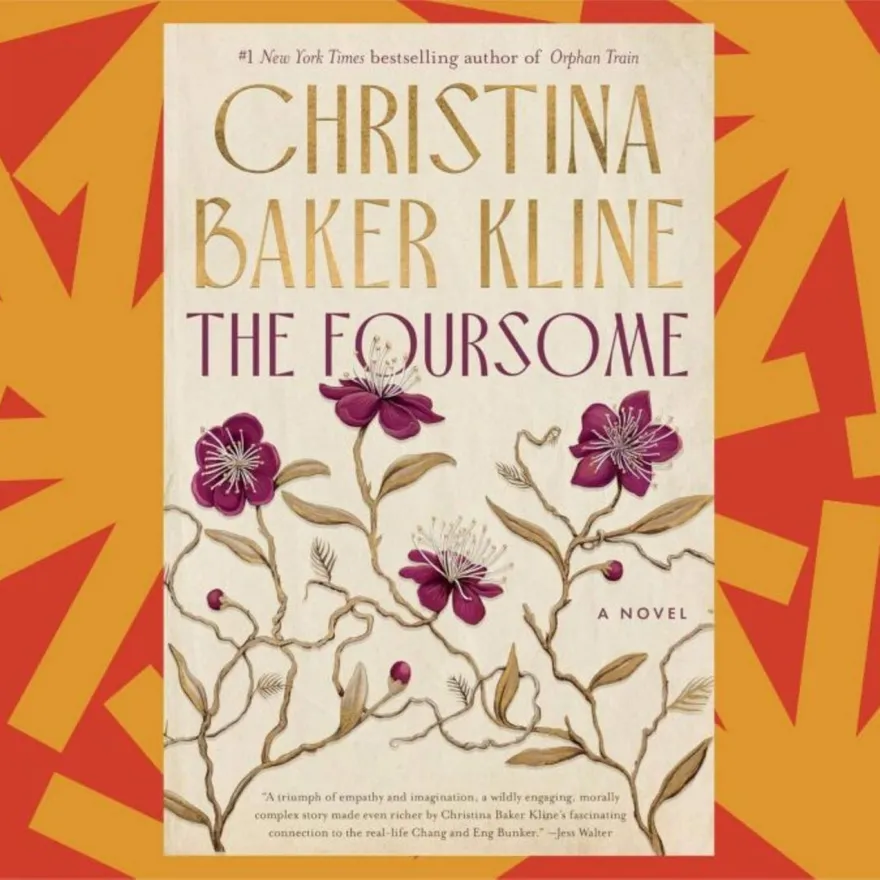

This is a preview of the Shortform summary of the Aug 20, 2026 episode of the NPR's Book of the Day
Sign up for Shortform to access the whole episode summary along with additional materials like counterarguments and context.
1-Page Summary
Chang and Eng Bunker's Journey: From Siam to America
Chang and Eng Bunker were born in 1811 as conjoined twins in Siam, Thailand, joined by a band of cartilage below their ribs. Their unique connection allowed them to develop remarkable coordination, enabling them to perform acrobatics, fish, hunt, and build houses—feats most conjoined twins could not achieve. A British merchant, recognizing their potential to attract audiences, spent years convincing their mother and the local king to let him take the twins abroad for public exhibition. He paid their mother handsomely but exploited the twins, forcing them into poor steerage conditions while he traveled first class.
Recognizing this exploitation, Chang and Eng took control of their careers, managing their own appearances and finances. Through savvy self-management, they amassed considerable wealth and retired at 29 to northwestern North Carolina, building new lives with their fortune.
Interracial Marriages to Sisters Adelaide and Sarah: Motivations and Circumstances
Christina Baker Kline explains that Adelaide and Sarah (Sally) became intertwined with the twins' story when Adelaide and Chang developed an immediate romantic spark. However, legal pressures complicated their romance—marrying only one twin would constitute bigamy, requiring Eng to marry Adelaide's sister Sarah. This coerced Sarah, who remained reluctant throughout, into marriage. Over time, though, Kline notes that Sarah adapted and eventually came to appreciate her unconventional family.
The sisters' choice to marry interracially in the antebellum South was driven by limited options on their plantation, where few eligible men were available. While economic security played a role, Kline clarifies that romance and compatibility—particularly between Adelaide and Chang—were central to these marriages, shaped by a complex interplay of personal feeling, necessity, and the unique possibilities the twins represented.
Moral Contradictions and Complexities: Slavery and Respectability in 19th Century Society
Despite their own exploitation and legal restrictions on Asian men's rights to marry and own property, Chang and Eng became slaveholders. Kline observes that the brothers seemed not to recognize the irony of participating in enslavement after being taken from their own mother. In North Carolina, they exploited a loophole that restricted rights for free Black men but not Asian men, allowing them to marry and acquire property. Adopting regional practices including slaveholding became their path to respectability and power in Southern society, a troubling compromise that gave them a foothold despite their outsider status.
Kline discusses Grace Gates, an enslaved woman raised with Sarah and Adelaide who was given to Eng and Sarah as a wedding gift. Grace lived with them for the rest of Sarah's life, and their relationship was close and complex, revealing the competing loyalties, intimate human connections, and moral contradictions that defined slavery in the Bunker household.
Portraying Historical Figures As Complex, Multidimensional Individuals
Kline describes Chang and Eng as embodying the American success story—immigrants who relied on intelligence and savvy to build a life—but emphasizes they were complicated and fallible men with distinct personalities. She highlights how the contrasting characters of Adelaide and Sarah shaped their unique responses to their extraordinary circumstances. Kline aims to immerse readers so deeply in the family's personal story that the extraordinary becomes routine, referencing a line from the book: "even the most extraordinary life feels ordinary when you're living it." She shares that three descendants have read the manuscript and understand that while the novel addresses sensitive topics, it remains a creative interpretation drawing from both rigorous research and imaginative reimagining rather than a definitive historical account.
1-Page Summary
Additional Materials
Counterarguments
- While Chang and Eng's eventual financial success is highlighted, the narrative may understate the ongoing social and legal discrimination they faced as Asian immigrants in the antebellum South, which likely limited their opportunities and social integration beyond what is suggested.
- The explanation that Adelaide and Sarah's marriages to Chang and Eng were primarily due to limited eligible men and economic security could be seen as oversimplifying the agency and motivations of the women involved, potentially neglecting other social, cultural, or personal factors.
- The portrayal of Chang and Eng as not recognizing the irony of their own participation in slavery may be speculative, as historical records may not fully capture their private reflections or justifications regarding slaveholding.
- The narrative's focus on the complexity and intimacy of relationships within the Bunker household, particularly with Grace Gates, risks minimizing or normalizing the inherent violence and coercion of slavery, regardless of individual relationships.
- Presenting the Bunkers' adoption of slaveholding as a pragmatic path to respectability could be criticized for insufficiently interrogating the moral responsibility of their choices, even within the context of their outsider status.
- Emphasizing the normalization of extraordinary lives may inadvertently downplay the ongoing trauma, marginalization, and ethical dilemmas faced by the individuals involved, both as conjoined twins and as participants in a slaveholding society.
- The acknowledgment that the novel is a creative interpretation rather than a definitive historical account is important, but readers may still conflate fiction with fact, potentially leading to misunderstandings about the historical record.
Actionables
- you can practice coordinated tasks with a partner by tying your wrists together for a set period while doing everyday activities, helping you experience the challenges and teamwork required when physically connected to someone else
- Try cooking, folding laundry, or playing a simple game while your wrists are loosely tied to another person's. This exercise builds empathy for those who must coordinate closely and highlights the importance of communication and patience.
- a practical way to reflect on moral contradictions in your own life is to list areas where your actions or privileges might conflict with your values, then brainstorm small changes you could make to align them more closely
- For example, if you value environmental sustainability but often use single-use plastics, you might commit to carrying a reusable bag or cup. This helps you recognize and address personal inconsistencies, much like historical figures who failed to see their own contradictions.
- you can normalize extraordinary or unusual aspects of your own life by writing a short daily journal entry describing your routines as if you were an outside observer, focusing on what might seem remarkable to someone else
- This helps you appreciate the uniqueness in your everyday experiences and fosters gratitude, while also making the extraordinary feel more ordinary and manageable.
Get access to the context and additional materials
Chang and Eng Bunker's Journey: From Siam to America
Chang and Eng, Born 1811 In Thailand, Conjoined Twins
Chang and Eng Bunker are born in 1811 in a small fishing village in what was then Siam, Thailand. They are conjoined twins, each with two arms, two legs, and two heads, joined by a simple band of cartilage below their ribs on one side. Their unique physical connection allows them to develop remarkable coordination and strength, enabling them to do things that most conjoined twins could not. Chang and Eng become skilled acrobats, performing backflips, somersaults, fishing, building houses, hunting, and earning their living in various ways.
Twins' Unique Condition Allowed Acrobatics Unachievable By Most Conjoined Twins
The twins' particular form of joining enables them unmatched agility among conjoined twins. They perform not just daily tasks together but also acrobatic feats that draw admiration.
Popularity and Attention From British Merchant
Their talent and abilities draw widespread attention and affection from those who see them. A British merchant, noticing their extraordinary condition and skills while sailing down the river, realizes their potential to attract large audiences and profit. Motivated by opportunity, he spends several years convincing their mother and the local king to allow him to take Chang and Eng abroad for public exhibition.
Manager Exploited Twins; Paid Mother for Global Tour While They Stayed In Poor Conditions, Traveled First Class
The merchant pays their mother more money than she likely would have seen in her lifetime, securing permission to take the twins on a global tour. However, the arrangement is exploitative. While the merchant travels in first class, Chang and Eng are relegated to dire ...
Here’s what you’ll find in our full summary
Chang and Eng Bunker's Journey: From Siam to America
Additional Materials
Counterarguments
- The portrayal of Chang and Eng's physical abilities may be somewhat romanticized; while they were unusually coordinated for conjoined twins, historical records do not conclusively document feats such as backflips or somersaults.
- The narrative emphasizes their agency in taking control of their lives, but it may understate the ongoing challenges and discrimination they faced as immigrants and people with disabilities in 19th-century America.
- The account frames their move to America and accumulation of wealth as a straightforward success story, but it omits the complexities of their later lives, including financial difficulties, health issues, and the social stigma they continued to encounter.
- The text describes the British merchant's actions as exploitative, but does not fully address the broader c ...
Actionables
- you can identify a unique skill or trait you have and practice using it in everyday tasks to develop coordination and confidence, such as trying to cook, clean, or exercise in creative ways that challenge your abilities and help you discover new strengths.
- a practical way to protect your interests is to regularly review any agreements or commitments you make—like subscriptions, memberships, or work arrangements—and renegotiate or opt out if you notice unfair terms or treatment, ensuring you maintain control over your choices and resources.
- you can set aside ...
Get access to the context and additional materials
Interracial Marriages to Sisters Adelaide and Sarah: Motivations and Circumstances
Adelaide Needed Sarah to Marry Eng to Prevent Bigamy Charges; Few Eligible Men on Their Plantation
Adelaide and Sarah—known as Sally—are sisters who become entwined in the story of Chang and Eng. Adelaide, described by Christina Baker Kline as a renowned beauty who is charming and sophisticated, shares an immediate romantic spark with Chang. However, social and legal pressures complicate their romance. At the time, it would be considered bigamy for only one twin to marry a sister, creating a legal predicament. To avoid bigamy charges, it becomes necessary for Eng to marry Adelaide’s sister, Sarah.
Adelaide and Chang's Romance Coerced Reluctant Sarah Into Marriage Due to Twin Marriage Requirement
This requirement leads to Sarah being coerced into marriage by her sister Adelaide. Throughout the process, Sarah remains reluctant and skeptical about the union. She does not enter the marriage out of her own desire, but rather due to external pressures arising from Adelaide and Chang's romance and the unusual necessity for twin brothers to marry sisters simultaneously.
Sarah's Journey: Embracing Her Unconventional Family
Over time, Sarah adapts to her circumstances. Christina Baker Kline notes that Sarah eventually comes to appreciate the benefits of being part of an unconventional family. Her journey from initial reluctance to acceptance makes her an intriguing narrator, entering the arrangement with skepticism but growing to find her place within this complex family structure.
Sisters' Choice to Marry Interracially In Antebellum South Driven by Limited Options, Attraction, Economic Security, and Lifestyle Promise
The choice by Adelaide and Sarah to marry outside their race in the mid-1800s South is shaped by their circumstances and ...
Here’s what you’ll find in our full summary
Interracial Marriages to Sisters Adelaide and Sarah: Motivations and Circumstances
Additional Materials
Counterarguments
- The narrative may understate the extent to which social, economic, and racial pressures—not just romance or compatibility—shaped the sisters' decisions, especially given the antebellum South's context.
- The claim that finances were not a primary motivation could be questioned, as economic security was a significant concern for women in the 19th century, particularly in unstable or unconventional unions.
- The portrayal of Sarah's eventual acceptance might oversimplify or romanticize the psychological impact of coerced marriage, potentially minimizing her lack of agency.
- The text frames the marriages as primarily driven by attraction and compatibility, but it may overlook the broader systemic constraints and lack of true choice faced by women in that era.
- The idea that the siste ...
Actionables
- you can reflect on your own relationship choices by making a list of the factors that have influenced your past decisions, then identify which were based on external pressures versus personal attraction or compatibility, helping you recognize patterns and make more intentional choices in the future.
- a practical way to explore unconventional family or relationship structures is to write a short story or journal entry imagining yourself in a nontraditional arrangement, noting your feelings and any challenges or benefits you might experience, which can broaden your perspective on what family can look like.
- you can assess your openne ...
Get access to the context and additional materials
Moral Contradictions and Complexities: Slavery and Respectability in 19th Century Society
Chang and Eng, Despite Their Own Exploitation and Legal Restrictions on Marriage and Property for Asian Men, Became Slaveholders, Revealing Troubling Compromises For Acceptance
Chang and Eng, the famous Siamese twins, became slave owners despite having been exploited themselves and facing legal barriers as Asian men in America. Christina Baker Kline observes that the brothers seemed not to recognize the irony that after their mother was paid for them to be taken away from Siam, they would later participate in enslaving others. Their situation was shaped by arriving in the country with nothing and experiencing anti-Asian sentiment while touring in America.
Twins Exploited a North Carolina Loophole to Marry and Acquire Property as Free Asian Men, While Similar Rights Were Denied to Free Black Men Elsewhere
Legally, Chang and Eng were not supposed to be allowed citizenship or marriage rights as Asian men. However, in North Carolina, a loophole existed because this restriction was targeted specifically at free Black men. They exploited this loophole to marry and acquire property, allowing them certain privileges that were denied to free Black men elsewhere in the United States.
Chang and Eng Gained Respectability and Power By Adopting Regional Practices, Including Enslavement, to Establish Themselves In Southern Society
Kline explains that their route to respectability and power in North Carolina was by adopting the habits of their surroundings, including slaveholding. Subjugating others, as was the norm in their new society, gave Chang and Eng a foothold and a path to influence. This troubling compromise was a way to establish themselves in Southern society despite their outsider status.
Grace Gates: Enslaved Woman Given to Eng and Sarah as a Wedding Gift, Connected To Family Throughout Life
Ayesh ...
Here’s what you’ll find in our full summary
Moral Contradictions and Complexities: Slavery and Respectability in 19th Century Society
Additional Materials
Clarifications
- Chang and Eng were conjoined twins born in Siam (now Thailand) in 1811. They became famous as "The Siamese Twins" and toured the world as a curiosity and sideshow attraction. Their unique physical condition and exotic origin fascinated 19th-century audiences. They eventually settled in the United States and became naturalized citizens.
- In 19th century America, anti-Asian sentiment was fueled by economic competition and racial prejudice, especially on the West Coast. Laws like the Chinese Exclusion Act of 1882 legally barred many Asians from immigrating or becoming citizens. Asians were often stereotyped as unassimilable and faced social and legal discrimination. This hostility limited their rights and opportunities compared to white Americans.
- In the 19th century, many U.S. states had laws that barred Asian immigrants from naturalization, denying them citizenship. Without citizenship, Asian men were often legally prohibited from marrying white women and owning property. These restrictions were part of broader racial exclusion laws aimed at maintaining white supremacy. North Carolina's loophole was unusual because it targeted Black men specifically, not Asians.
- In the 19th century, North Carolina laws specifically restricted marriage and property rights for free Black men but did not explicitly include Asian men. This legal gap meant that Chang and Eng, as Asian men, were not barred by these laws from marrying or owning property. The loophole arose because racial laws were often narrowly defined and did not anticipate or address all non-white groups. Thus, Chang and Eng could legally marry and acquire property despite widespread racial discrimination.
- In 19th-century Southern society, slaveholding was a key marker of wealth, status, and power. Owning slaves signified social respectability and economic success, reinforcing a rigid racial hierarchy. It allowed individuals to participate in the dominant culture and gain influence within their communities. Refusing or being unable to own slaves often meant exclusion from elite social circles.
- Grace Gates was an enslaved African American woman connected to the Bunker family through slavery. She was raised alongside Sarah and Adelaide, the twins' wives, indicating a close, complex relationship from childhood. Grace's life exemplifies the personal and emotional entanglements within slaveholding households. Her story highlights the human impact of slavery beyond legal and economic aspects.
- In 19th-century America, enslaved people were considered property and could be bought, sold, or gifted like objects. Giving enslaved individuals as wedding gifts was a way to transfer wealth and labor within families or social networks. This practice reinforced the dehumanization of enslaved people by treating them as assets rather than human beings. It also symbolized the merging of wealth and status between families through marriage.
- In slaveholding households, enslaved people often lived in close proximity to their owners, creating complex personal relationships. These relationships could include elements of dependency, coercion, and occasional emotional bonds, despite the inherent power imbalance. Enslaved individuals had limited autonomy and were subject to the control and decisions of their owners. ...
Counterarguments
- While Chang and Eng were exploited as children, they were not technically enslaved in the same way as African Americans in the United States; their early exploitation was more akin to indentured servitude or contractual exhibition.
- The legal loophole in North Carolina that allowed Chang and Eng to marry and own property was not created for their benefit, but rather was a byproduct of laws specifically targeting free Black men, reflecting the complexities of race-based legal systems rather than deliberate exploitation by the twins.
- Chang and Eng’s adoption of slaveholding practices can be seen as a pragmatic adaptation to the prevailing economic and social norms of their environment, rather than solely a quest for respectability or power.
- The close relationships between enslaved people and slaveholders, such as that between Grace and Sarah, do not negate th ...
Get access to the context and additional materials
Portraying Historical Figures As Complex, Multidimensional Individuals
the Novel Transcends Simplistic Historical Views, Depicting the Bunkers As Complex Humans With Unique Personalities and Motivations
Christina Baker Kline describes Chang and Eng as extraordinary individuals who embody the prototypical American success story—immigrants arriving with nothing, relying on their intelligence and savvy to create a life for themselves. However, Kline emphasizes that they were not merely symbols; they were complicated and fallible men. She hopes readers come away seeing them as individuals, noting that Eng and Chang’s distinct personalities become clear early in the novel. Kline also highlights the contrasting characters of sisters Adelaide and Sarah. By the end of the book, readers should understand how the sisters’ different choices, fears, and growth shaped their unique responses to the unusual circumstances they faced. Through this nuanced portrayal, the novel moves beyond a simplistic historical narrative, inviting readers to see each figure as multidimensional.
Author Seeks to Immerse Readers in the Family's Natural Navigation of Unconventional Circumstances Despite Extraordinary External Factors
Kline aims to immerse readers so deeply in the Bunker family's personal story that the extraordinary becomes routine and understandable. She references a line from the book—“even the most extraordinary life feels ordinary when you’re living it”—to express how Sarah, one of the sisters, adapts to the unusual, making it a part of everyday life. This perspective he ...
Here’s what you’ll find in our full summary
Portraying Historical Figures As Complex, Multidimensional Individuals
Additional Materials
Counterarguments
- While the novel aims to portray Chang and Eng as complex individuals, some readers may feel that fictionalization risks misrepresenting or oversimplifying certain aspects of their real personalities and experiences.
- The balance between rigorous research and creative reimagining may lead to concerns about historical accuracy, as some details or characterizations could be more speculative than factual.
- Presenting extraordinary circumstances as ordinary might inadvertently downplay the genuine hardships and societal challenges faced by the Bunker family.
- Descendants' approval of the manuscript does not necessarily guarantee that all interpretations or portrayals will be universally accepted ...
Actionables
- you can write a short letter or journal entry from the perspective of a historical or family figure, focusing on their everyday worries, hopes, and quirks to practice seeing them as multidimensional people rather than just symbols or stereotypes; for example, imagine what your great-grandparent might have felt on a regular day, or what a well-known historical figure might have worried about at home.
- a practical way to humanize people you read about in history or the news is to list three possible motivations or fears they might have had, based on their context, and then reflect on how those motivations could lead to different choices or behaviors; for instance, consider what personal goals or anxieties might have influenced a leader’s decisions beyond what’s commonly reported.
- you can n ...
Get access to the context and additional materials

 1-Page Summary
- Chang and Eng Bunker's Journey: From Siam to America
- Interracial Marriages to Sisters Adelaide and Sarah: Motivations and Circumstances
- Moral Contradictions and Complexities: Slavery and Respectability in 19th Century Society
- Portraying Historical Figures As Complex, Multidimensional Individuals
Create Summaries for anything on the web
Download the Shortform Chrome extension for your browser
