

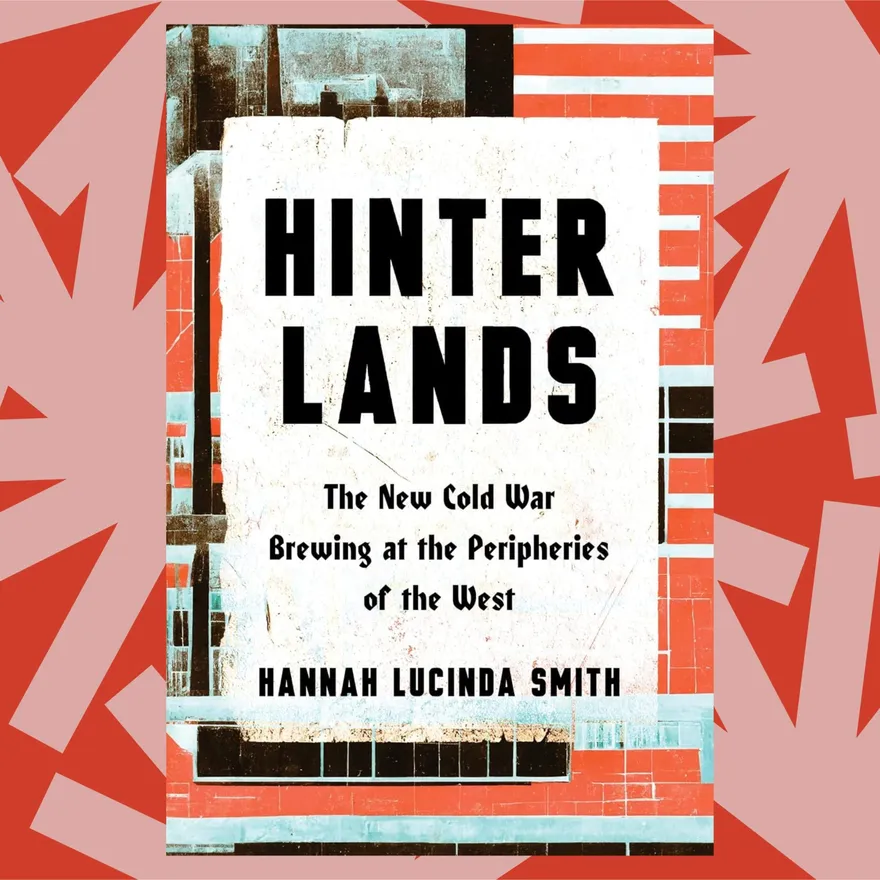
In 'Hinterlands,' Hannah Lucinda Smith warns not to overlook conflict at the fringes
In this episode of NPR's Book of the Day, Hannah Lucinda Smith discusses her book examining "hinterlands"—strategic border regions that sit between competing spheres of influence like Russia, Turkey, and the West. Smith argues that these peripheral territories are often dismissed as backwaters, but they actually represent dangerous weak spots where unresolved conflicts can escalate into global crises.
The conversation explores how the 2011 Syrian uprising transformed into a proxy war that accelerated Russia-West tensions and provided a testing ground for modern hybrid warfare tactics. Smith traces how regional powers like Putin's Russia and Erdogan's Turkey exploit instability in these frontier zones, from the Caucasus to the Balkans, to advance their geopolitical interests. The episode examines how conflicts in these overlooked regions shape international relations and why understanding hinterlands is crucial for anticipating future territorial shifts.

This is a preview of the Shortform summary of the Aug 13, 2026 episode of the NPR's Book of the Day
Sign up for Shortform to access the whole episode summary along with additional materials like counterarguments and context.
1-Page Summary
Understanding "Hinterlands" as Strategic Border Regions
Hannah Lucinda Smith defines "hinterlands" as peripheral territories that historically sat at the edges of great empires like the Ottoman, Russian, Persian, and British. Today, these same regions exist between competing spheres of influence—Russia under Putin, Turkey under Erdogan, and the collective West represented by the EU and NATO. Smith emphasizes that despite being dismissed as "overlooked" or "backwaters," these areas are actually strategic zones where geopolitical tensions concentrate.
Smith argues that the neglect of these hinterlands creates dangerous "weak spots" where minor conflicts can rapidly escalate into global crises. She points to flashpoints like Nagorno-Karabakh in the Caucasus and post-Yugoslavia regions like Bosnia and Kosovo, where unresolved conflicts produced only an "imperfect stasis" rather than lasting peace. These unstable conditions allow ambitious leaders like Putin and Erdogan to exploit weaknesses and challenge Western interests.
Syria: From Local Uprising to Global Proxy War
Mary Louise Kelly draws a provocative comparison between Damascus in 2011 and Sarajevo in 1914, illustrating how Syria became the spark for a new phase of international confrontation. When protests erupted in Damascus in early 2011, the uprising quickly escalated into a civil war that attracted global powers. Russia and Iran backed Assad's regime, while Turkey, Qatar, and Western nations supported his opponents—creating a proxy war that resembled World War II-era confrontations.
Smith argues that the Syrian conflict intensified Russia-West rivalries, providing Putin an opportunity to openly challenge NATO expansion. For those analyzing Russia's 2022 invasion of Ukraine, Smith contends the roots lie in the aftermath of Syria's 2011 conflict. The Syrian war also introduced hybrid warfare tactics—cyber attacks, disinformation campaigns, and economic sanctions—that have since become standard features of modern geopolitical competition.
Regional Powers Exploiting Instability
Smith emphasizes that Putin had pursued aggressive policies to reclaim traditional Russian territories well before 2011, driven by longstanding grievances against NATO expansion. The Syrian conflict accelerated these ambitions, prompting direct confrontation with the West.
Meanwhile, Erdogan's Turkey became increasingly problematic for NATO after 2011, with Turkish interventionism in the Middle East and Balkans clashing with Western interests. Smith also notes that peace deals in Bosnia and Kosovo ended warfare but created only fragile conditions that allow Putin and Erdogan to exploit "frozen conflicts" as leverage against the West.
Modern Warfare and Border Dynamics
Humans often mistakenly view borders as permanent, but redrawing boundaries fundamentally alters realities for affected populations and inevitably brings trauma and violence. Modern conflicts increasingly rely on "hybrid war" tactics—cyber attacks, disinformation, and sanctions—that blur conventional distinctions between war and peace. These tactics, which grew prominent after Syria, allow states to advance geopolitical interests without direct military escalation. Given these dynamics, the long-term configuration of hinterlands and spheres of influence remains uncertain, with territorial arrangements likely to evolve dramatically in coming decades.
1-Page Summary
Additional Materials
Clarifications
- "Hinterlands" historically referred to the remote areas beyond a country's core regions, often serving as buffer zones or sources of resources. Empires like the Ottoman, Russian, Persian, and British used these peripheral territories to expand influence and control trade routes. These regions were strategically important for military and economic reasons but often lacked direct governance, leading to local autonomy or conflict. Their position at empire edges made them zones of cultural mixing and frequent contestation.
- Russia under Putin seeks to restore influence over former Soviet territories and counter NATO's eastward expansion. Turkey under Erdogan aims to assert regional dominance, especially in the Middle East and Balkans, often challenging Western policies. The collective West, through the EU and NATO, promotes democratic governance, security cooperation, and containment of authoritarian influence. These actors compete for control and influence over strategic border regions to secure their geopolitical interests.
- "Imperfect stasis" refers to a situation where active fighting has stopped but no formal peace or resolution has been achieved, leaving tensions unresolved. "Frozen conflicts" are prolonged disputes where hostilities are paused but underlying issues remain, preventing lasting peace. These conditions create unstable regions vulnerable to renewed violence or external manipulation. Such conflicts often serve as geopolitical leverage for powerful actors.
- Nagorno-Karabakh is a disputed region between Armenia and Azerbaijan, leading to violent conflicts rooted in ethnic and territorial claims. Bosnia and Kosovo experienced brutal wars in the 1990s after Yugoslavia's breakup, involving ethnic cleansing and international intervention. Both areas remain politically unstable with unresolved tensions and international peacekeeping presence. These flashpoints symbolize broader regional rivalries and fragile peace in post-Soviet and post-Yugoslav spaces.
- The 2011 uprising in Damascus began as part of the Arab Spring, with citizens demanding political reforms and an end to authoritarian rule under Bashar al-Assad. The regime's violent crackdown on protesters escalated tensions, leading opposition groups to take up arms. Regional powers backed different sides: Iran and Russia supported Assad to maintain influence, while Turkey, Qatar, and Western countries backed rebels to counterbalance Assad and expand their own influence. This external involvement transformed the conflict into a complex proxy war with multiple factions and international interests.
- Proxy wars involve powerful countries supporting opposing sides in a conflict without direct fighting between themselves. During World War II, major powers backed allied or axis forces in various regions, turning local battles into global struggles. Modern proxy wars, like in Syria, mirror this by having external states supply weapons, funding, and political support to local factions. This indirect involvement escalates regional conflicts into broader geopolitical contests.
- Hybrid warfare combines traditional military force with non-military tactics to destabilize opponents without full-scale combat. Cyber attacks target computer systems to disrupt communication, infrastructure, or data integrity. Disinformation campaigns spread false or misleading information to influence public opinion and sow confusion. Economic sanctions restrict trade or financial transactions to pressure governments without direct violence.
- After the Cold War, NATO expanded eastward, incorporating former Soviet states and Warsaw Pact countries. Russia viewed this as a threat to its security and influence, feeling encircled by Western military alliances. Putin’s policies aim to counter this perceived encroachment and restore Russia’s regional dominance. This historical grievance fuels Russia’s assertive actions in neighboring regions.
- Erdogan’s Turkey is seen as problematic for NATO because it often pursues independent policies that conflict with alliance goals, such as purchasing Russian military systems. Turkish interventionism includes military operations in Syria to counter Kurdish groups it views as terrorists and to expand influence. In the Balkans, Turkey supports political and cultural ties with Muslim communities, sometimes challenging Western-backed governments. These actions create tensions within NATO by complicating unified responses to regional security issues.
- The peace deals in Bosnia (Dayton Agreement, 1995) and Kosovo (UN administration post-1999) ended active warfare but left deep ethnic divisions unresolved. These agreements created complex political structures that often paralyzed governance and fostered mistrust among ethnic groups. Limited economic development and external influence further weakened state institutions. As a result, these regions remain politically unstable and vulnerable to external manipulation.
- Borders are human-made lines that often change due to wars, treaties, or political shifts. Redrawing them can separate communities or force different groups to live together, disrupting social and cultural ties. This upheaval frequently leads to displacement, loss of identity, and conflict. Historical examples include the partition of India and the breakup of Yugoslavia, both causing widespread trauma and violence.
- Hinterlands are regions where major powers compete for control or influence, often without clear, stable borders. Their political status can shift due to conflicts, alliances, or external interventions, making future boundaries unpredictable. Changes in global power dynamics, such as rising or declining influence of states, further complicate these regions' stability. This uncertainty affects local populations and international relations, as no fixed order is guaranteed.
Counterarguments
- While hinterlands have historically been sites of geopolitical tension, not all peripheral regions are inherently unstable or destined to become flashpoints; some have achieved relative stability and integration through local governance or international cooperation.
- The assertion that neglect alone creates dangerous weak spots may overlook the agency and resilience of local populations, who often play significant roles in managing or mitigating conflict.
- The idea that the Syrian conflict directly led to Russia’s 2022 invasion of Ukraine may oversimplify a complex set of motivations and historical factors influencing Russian foreign policy.
- Hybrid warfare tactics such as cyber attacks and disinformation were in use prior to the Syrian conflict, and their development cannot be solely attributed to events in Syria.
- The characterization of Erdogan’s Turkey as “increasingly problematic” for NATO may not account for Turkey’s continued strategic importance and cooperation within the alliance on various issues.
- The notion that peace deals in Bosnia and Kosovo only created “fragile conditions” may understate the progress made in those regions toward stability and reconciliation, despite ongoing challenges.
- The view that borders are inherently impermanent and always traumatic to change may not reflect cases where peaceful border adjustments or negotiated settlements have occurred.
- The focus on great power competition in hinterlands may underplay the significance of local and regional actors’ interests, identities, and initiatives in shaping outcomes.


Get access to the context and additional materials
Definition and Significance of "Hinterlands" in Border Regions Between Competing Spheres
Hannah Lucinda Smith describes "hinterlands" as peripheral territories historically and currently at the edges of great empires. These regions have consistently found themselves sitting on the fringes—overlooked and often neglected by major centers of power. In the past, they marked the margins of empires like the Ottoman, Russian, Persian, and to some extent the British empires. In the present day, these same areas now lie between the spheres of influence held by modern powers: primarily the Russian sphere under Vladimir Putin, the Turkish sphere under Recep Tayyip Erdogan, and the collective West, embodied by entities such as the European Union and NATO. These hinterlands are not only geographically but also politically and culturally pulled between competing interests, making them dynamic and contested zones as great powers vie for control of these strategically situated regions.
Peripheral Territories Often Overlooked At Empires' Edges
Smith repeatedly emphasizes that these hinterlands are often dismissed as "overlooked," "neglected," or "backwaters." Despite their seeming insignificance to outsiders, their peripheral location actually places them at the intersection or the "fraying" edges of greater geopolitical landscapes. The regions once on the margins of the Ottoman, Russian, Persian, and British empires now serve as volatile buffer zones between Russian, Turkish, and Western interests. Major powers are drawn to these territories for their strategic value, intensifying the tension as each seeks to assert influence or prevent the encroachment of a rival.
Peripheral Zones Heighten Geopolitical Risks By Concentrating Friction Between Opposing Forces
Smith argues that the very neglect and dynamic nature of these hinterlands produce "weak spots" where geopolitical friction is amplified. Minor conflicts in these peripheral areas can rapidly escalate if mishandled by external actors, creating scenarios where local clashes threaten to spark larger global crises. Smith highlights flashpoints such as Nag ...
Here’s what you’ll find in our full summary
Definition and Significance of "Hinterlands" in Border Regions Between Competing Spheres
Additional Materials
Clarifications
- "Hinterlands" originally means the land behind a coast or river port, often rural or less developed. In geopolitics, it refers to border regions that lie between major powers' spheres of influence. These areas are strategically important because they act as buffers or zones of competition. Their peripheral status makes them vulnerable to conflict and external manipulation.
- The Ottoman Empire was a vast Muslim empire centered in modern-day Turkey, lasting from the 14th to early 20th century, controlling Southeast Europe, Western Asia, and North Africa. The Russian Empire expanded from Eastern Europe into Asia from the 16th century until the 1917 revolution, becoming a major Eurasian power. The Persian Empire, historically centered in modern Iran, refers to several dynasties over millennia, notably the Safavid and Qajar empires influencing the Middle East. The British Empire was the largest global empire from the 17th to mid-20th century, controlling territories on every inhabited continent, including South Asia, Africa, and the Americas.
- "Spheres of influence" refer to areas or regions where a powerful country exerts dominant control or significant cultural, economic, or military influence without formal sovereignty. These zones often shape local politics and alignments according to the interests of the dominant power. They can limit the actions of other countries within that area, effectively creating informal boundaries of power. Historically, spheres of influence have been used to avoid direct conflict while maintaining strategic advantages.
- Russia under Vladimir Putin seeks to restore influence over former Soviet territories and counter Western expansion. Turkey under Recep Tayyip Erdogan aims to expand its regional power, leveraging historical ties and strategic locations. The collective West, through the EU and NATO, promotes democratic values, security cooperation, and counters authoritarian influence. These actors compete for control and influence in border regions to secure strategic advantages.
- Nagorno-Karabakh is a disputed region primarily between Armenia and Azerbaijan, leading to wars and ceasefires since the early 1990s. Bosnia and Kosovo experienced violent ethnic conflicts during the breakup of Yugoslavia in the 1990s, resulting in international intervention and ongoing political instability. These areas remain sensitive due to unresolved ethnic tensions and competing national claims. Their instability attracts external powers seeking influence, making them key geopolitical flashpoints.
- Yugoslavia was a multi-ethnic country in Southeast Europe that dissolved in the early 1990s. Its breakup led to several new independent states and triggered ethnic conflicts and wars, especially in Bosnia, Croatia, and Kosovo. These wars involved severe violence, including ethnic cleansing and genocide, deeply destabilizing the region. The international community intervened with peacekeeping missions and agreements, but tensions and political instability persist.
- "Buffer zones" are areas situated between rival powers that reduce direct conflict by acting as a physical or political barrier. "Fraying edges" refer to border regions where control and influence are weakening or contested, causing instability. "Imperfect stasis" describes a fragile peace that prevents open conflict but leaves underlying tensions unresolved. These terms highlight how such regions are ...
Counterarguments
- While hinterlands are often described as neglected or overlooked, many have received significant international attention and aid, especially in the post-Cold War era (e.g., international interventions in the Balkans, peacekeeping missions, and reconstruction efforts).
- The characterization of hinterlands as merely "weak spots" or sources of instability may overlook the agency and resilience of local populations, who often actively shape their own political and cultural destinies.
- Not all hinterlands are equally volatile or prone to conflict; some peripheral regions have remained relatively stable and have successfully managed their relationships with neighboring powers.
- The focus on great power competition may understate the importance of local and regional dynamics, including economic development, civil society, and grassroots peacebuilding efforts.
- The idea that neglect alone creates instability may be overly simplistic, as some conflicts in hinterlands are driven by deep-rooted historical, ethnic, or econ ...


Get access to the context and additional materials
From Regional Conflicts to Global Confrontations: Syria Case Study
Mary Louise Kelly draws a provocative parallel between Damascus in 2011 and Sarajevo in 1914, the latter being the flashpoint for World War I. This comparison, central to Hannah Lucinda Smith's book Hinterlands, illuminates how localized upheaval in Syria ignited a sequence of international conflicts and new forms of geopolitical rivalry.
Syrian Uprising in 2011 Became an International Proxy War
In late 2010, the Arab world witnessed a surge of popular protests, known as the Arab Spring. These uprisings, beginning in Tunisia and spreading through Egypt and Libya, initially bypassed Syria. However, by early 2011, protests erupted in Damascus and rapidly escalated into a civil war.
Unlike conflicts in Libya, the Syrian civil war quickly became a stage for global power struggles. Russia and Iran strongly and openly supported Bashar al-Assad's regime, while Assad’s political and armed opponents were backed by a coalition including Turkey, Qatar, the US (to a degree), the UK, and France. This alignment of global powers around the Syrian conflict resembled the confrontation patterns last seen during World War II, marking a new phase of international proxy warfare.
Syrian Conflict Intensifies Russia-West Geopolitical Rivalries
The Syrian crisis provided a focal point for underlying geopolitical tensions between Russia and the West. Vladimir Putin had been vocal about his concerns regarding NATO’s eastward expansion and, in the years preceding the Syrian war, Russia had been consolidating its own sphere of influence, positioning itself as a rival bloc to Western alliances. The Syrian war acted as a spark—bringing these simmering rivalries into the open.
For those analyzing the causes of Russia’s 2022 invasion of Ukraine, Smith argues that the roots lie in the aftermath of the 2011 Syrian conflict. The confrontation and ...
Here’s what you’ll find in our full summary
From Regional Conflicts to Global Confrontations: Syria Case Study
Additional Materials
Counterarguments
- The comparison between Damascus in 2011 and Sarajevo in 1914 may be overstated, as the Syrian conflict, while tragic and internationally significant, did not escalate into a global war on the scale of World War I.
- The Syrian uprising was influenced by a complex mix of internal factors, including longstanding grievances against the Assad regime, sectarian tensions, and economic hardship, not solely by international intervention or rivalry.
- While the Syrian conflict did become a proxy war, not all external actors were equally involved or committed; for example, US involvement was limited and inconsistent compared to Russia and Iran’s support for Assad.
- The alignment of global powers in Syria did not fully mirror World War II-era alliances, as many countries maintained ambiguous or shifting positions throughout the conflict.
- The intensification of Russia-West tensions cannot be attributed solely to the Syrian conflict; other factors, such as the 2008 Georgia war and longstanding disputes over NATO expansion, also played significant roles.
- The claim that the roots of Russia’s 2022 invasion of Ukraine lie primarily in the aftermat ...
Actionables
- you can track current news stories about international conflicts and map out which countries are supporting each side to visualize shifting alliances and rivalries, helping you recognize patterns similar to those described in historical conflicts
- By creating a simple chart or using a notebook, list out the countries involved in a conflict and note their alliances, support, or opposition. Over time, you’ll start to see how global power alignments change and how local events can escalate into broader rivalries.
- a practical way to understand hybrid warfare tactics is to monitor your own exposure to misinformation and cyber threats by keeping a weekly log of suspicious news, phishing attempts, or social media campaigns you encounter
- Each week, jot down any questionable headlines, emails, or posts you see, then research their origins. This helps you become more aware of how hybrid tactics are used in everyday life and trains you to spot manipulation or influence efforts.
- you can simulate the impact of economic sanctions and circumvention by ...
Get access to the context and additional materials
Russia, Turkey, and Western Influences Causing Tension and Instability
Hannah Lucinda Smith emphasizes that the current geopolitical environment is fertile ground for leaders like Vladimir Putin and Recep Tayyip Erdogan to create challenges and instability for the West.
Russia Rebuilds Regional Sphere to Counter Western Influence
Smith points out that it was not only in 2011 that Vladimir Putin began pursuing a more aggressive stance to reclaim what he perceives as traditional Russian territories. These ambitions had been evident for some time, driven by longstanding grievances against NATO’s expansion towards Russia’s borders. The Syrian conflict marked a turning point, accelerating Russia's assertive policies in the region and pushing Putin to act directly to counter Western influence through both military and political means.
Putin's Longstanding Nato Grievances Acted On Post-2011 Conflict
The escalation of the Syrian conflict served as a watershed moment, prompting Putin to bring longstanding frustrations with NATO into open confrontation and further motivate efforts to reassert Russian dominance in contested areas.
Erdogan's Turkey: A Nato Challenge in Middle East and Balkans
Recep Tayyip Erdogan's leadership brought a pronounced shift in Turkish foreign policy post-2011, increasing Turkish assertiveness and interventionism in both the Middle East and the Balkans. Smith observes that Erdogan became significantly more problematic for NATO after the Syrian conflict began, with these trends building steadily over time. Turkish moves have increasingly clashe ...
Here’s what you’ll find in our full summary
Russia, Turkey, and Western Influences Causing Tension and Instability
Additional Materials
Counterarguments
- While Putin and Erdogan have pursued assertive foreign policies, attributing regional instability solely to their actions overlooks the significant roles played by Western interventions and policy failures in the Middle East and Balkans.
- NATO’s expansion has been supported by many Eastern European countries seeking security guarantees, suggesting that Russian grievances are not the only perspective on the issue.
- The Syrian conflict involved multiple international actors, including the US and European countries, whose interventions also contributed to the complexity and instability of the region.
- Turkey’s increased assertiveness post-2011 can also be seen as a response to regional security threats, such as the rise of ISIS and instability on its borders, rather than solely as a challenge to the West.
- The peace agreements in the Balkans, while imperfect, have largely prevented a return to large-scale violence for decades, which some analysts view as a significant achi ...
Actionables
- you can track news stories about the Balkans, Russia, and Turkey using a simple spreadsheet to spot patterns in how instability or "frozen conflicts" are discussed, helping you recognize when leaders might be leveraging these situations for geopolitical gain; for example, note each time a news article mentions border disputes, peace agreements, or foreign interventions, and see if you notice recurring themes or timing.
- a practical way to understand how unresolved regional tensions affect global politics is to map out alliances and rivalries on a blank world map, using colored pencils or sticky notes to mark countries involved in recent conflicts or shifting alliances, which can help you visualize how instability in one region can rippl ...
Get access to the context and additional materials
Borders' Dynamics and "Hybrid War" in Modern Conflicts
Borders and Boundaries Are Fluid, Redrawing Has Severe Consequences
Humans often mistakenly regard current borders in longstanding, stable nations—such as the US or UK—as permanent. This perspective overlooks the inherent dynamism of borders throughout history. Redrawing borders is never a simple administrative act or the mere redrawing of lines on a map. Such changes fundamentally alter realities for the people living in affected regions, and these alterations are inevitably accompanied by trauma, tension, and the potential for violence or conflict.
Modern Warfare now Includes Sophisticated Hybrid Tactics Blurring the Line Between War and Peace
Modern conflicts increasingly rely on “hybrid war,” a collection of tactics that blur conventional distinctions between war and peace. This form of warfare includes cyber attacks, widespread misinformation and disinformation campaigns, and the strategic use and circumvention of sanctions. The prominence of these tactics grew notably after the Syrian conflict, marking a new era in global competition. Hybrid tactics empower states to achieve covert objectives and advance geopolitical interests without resorting to direct military esc ...
Here’s what you’ll find in our full summary
Borders' Dynamics and "Hybrid War" in Modern Conflicts
Additional Materials
Clarifications
- Hybrid war combines conventional military force with irregular tactics like cyber attacks, propaganda, and economic pressure. Unlike traditional warfare, it often avoids open battles and direct confrontation. It aims to destabilize opponents subtly, creating confusion and division without clear declarations of war. This approach exploits legal and political gray areas to achieve strategic goals covertly.
- The Syrian conflict exposed the effectiveness of combining conventional warfare with cyber attacks, propaganda, and proxy forces. It demonstrated how non-state actors and external powers could influence outcomes without full-scale invasions. This conflict highlighted the use of misinformation to shape international opinion and destabilize opponents. As a result, hybrid war tactics became a model for modern geopolitical strategies.
- "Spheres of influence" refer to regions or countries where a powerful state exerts dominant control or significant cultural, economic, or military influence without formal sovereignty. These areas often align politically or economically with the influencing power, shaping local policies and alliances. Historically, spheres of influence have been used to expand strategic interests without direct colonization or conflict. Changes in these spheres can shift global power balances and affect international relations.
- Cyber attacks disrupt critical infrastructure or steal sensitive data to weaken an opponent without open combat. Misinformation spreads false or misleading information to influence public opinion and destabilize societies. Sanctions restrict economic resources to pressure governments or entities into changing behavior. Together, these tools create confusion and strain without triggering full-scale war.
- Redrawing borders often disrupts established communities by dividing ethnic, cultural, or linguistic groups, causing identity and loyalty conflicts. It can lead to loss of homes, resources, and political power for affected populations. New borders may create disputes over land and governance, sparking violence or prolonged conflict. Historical grievances and competing nationalisms intensify these tensions.
- A "hinterland" refers to the land lying behind a coast or the area surrounding a city or port that supports its economy. In border dynamics, hinterlands are crucial because control over these areas affects access to resources, trade routes, and strategic depth. Changes in ...
Counterarguments
- While borders have changed throughout history, many current borders have remained stable for long periods, and international norms and institutions (such as the UN) now strongly discourage changes by force, making large-scale border shifts less common in the modern era.
- Not all border changes result in inevitable trauma or violence; some have occurred peacefully through negotiation, referenda, or mutual agreement (e.g., the Velvet Divorce between the Czech Republic and Slovakia).
- The concept of "hybrid war" is sometimes criticized as being too broad or ill-defined, encompassing a wide range of activities that have long been part of statecraft and conflict, such as propaganda and economic pressure.
- The prominence of hybrid tactics is not unique to the post-Syrian conflict era; similar methods have been used throughout history, albeit with different technologies and contexts.
- While ...

Get access to the context and additional materials


Create Summaries for anything on the web
Download the Shortform Chrome extension for your browser
