

'Etna' author Paul Yoon on narrating war through a dog's eyes
In this episode of NPR's Book of the Day, author Paul Yoon discusses his novel about Etna, a dog conscripted into military service and separated from his family on a farm. The conversation explores how Yoon uses a canine perspective to examine the nature of warfare, revealing both its senselessness and the resilience of those who endure it. By placing Etna in morally complex situations where he participates in violence alongside his handler Jason, Yoon avoids easy answers about heroism and responsibility in war.
The episode addresses the technical challenges of narrating from a non-human perspective while keeping the story accessible to readers. Yoon and the hosts also discuss themes of family and belonging, as Etna forms new bonds with his handler, fellow dogs, and military unit after losing his original family. These alternative connections become essential to his survival, illustrating how relationships rather than physical places define the concept of home.
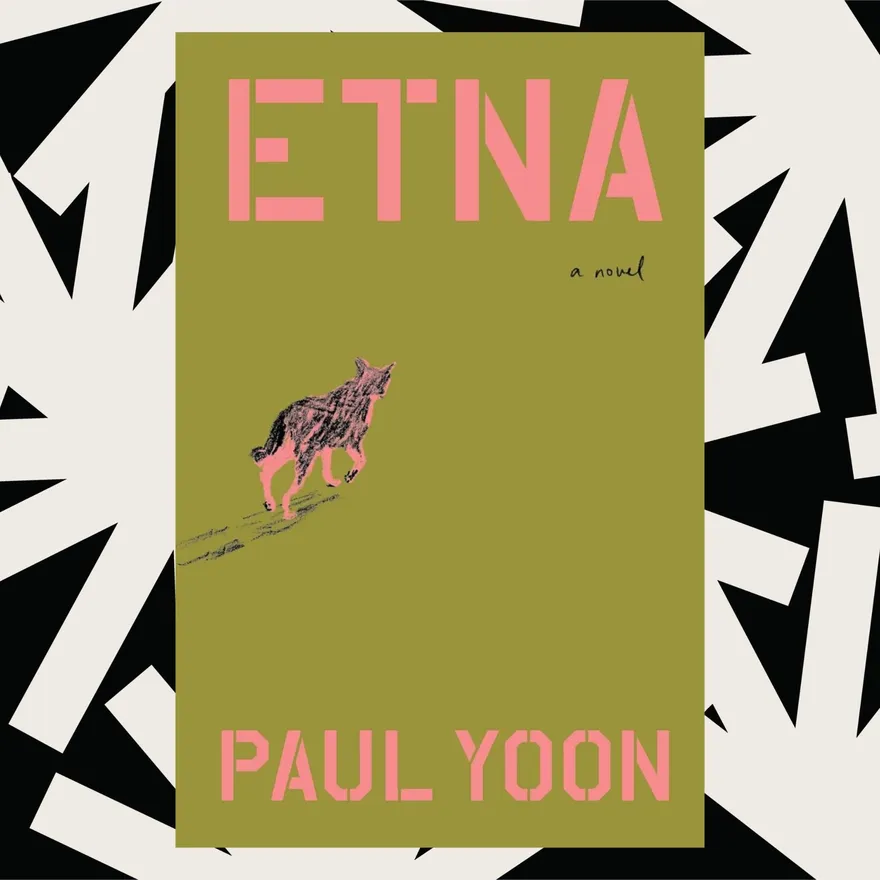

This is a preview of the Shortform summary of the Aug 10, 2026 episode of the NPR's Book of the Day
Sign up for Shortform to access the whole episode summary along with additional materials like counterarguments and context.
1-Page Summary
Etna's Journey and Relationships
Etna's story begins on a farm where he lives peacefully with his mother and siblings until a mysterious woman conscripts him into military service as a war dog. The abrupt separation leaves him disoriented and grieving, thrust into an unfamiliar world without warning.
Once in the military, Etna is paired with his handler Jason, and the two develop a profound bond built on mutual protection and sacrifice. As the war intensifies, Etna's unit—both human soldiers and fellow dogs—becomes his surrogate family, offering him vital connection and purpose. Through this experience, Etna learns that true belonging isn't tied to a specific place but to the community he builds. His journey reveals that home is ultimately about the relationships he forges rather than the geography he left behind.
Exploring War Through a Non-human Perspective
Paul Yoon's novel uses Etna's perspective to examine the nature of warfare in ways that challenge traditional views. By narrating through a dog's eyes, Yoon illuminates the senselessness of war and its cyclical destruction, while simultaneously revealing the remarkable endurance of both humans and canines who persist amid constant upheaval.
The moral complexity deepens when Etna himself participates in violence alongside Jason and other soldiers. As Yoon writes, "I killed and the other dogs killed. We lost men. We lost dogs." This honest portrayal places Etna in a morally ambiguous position, forcing readers to confront the profound complexity of war without offering easy answers about heroism or responsibility.
Narrating From a Dog's Point of View
Elissa Nadworny and Scott Simon note that the story is told in first person from Etna's perspective, immersing readers directly in the canine experience. Yoon explains that the greatest challenge was making the leap into a non-human consciousness while keeping it relatable. He had to remain true to what a dog might genuinely perceive while simultaneously providing readers access to understand the world in ways Etna himself cannot fully describe, balancing authenticity with accessibility.
Themes of Family, Belonging, and Resilience in Trauma
Yoon illustrates that resilience in trauma often emerges through new bonds and supportive connections. When separated from his original family, Etna finds belonging in alternative structures—Jason, his fellow dogs, and his military unit become his new family. These connections with people and animals alike become essential for his psychological survival, demonstrating that alternative families are crucial sources of support and resilience amid traumatic experiences.
1-Page Summary
Additional Materials
Counterarguments
- The portrayal of Etna's ability to form complex, human-like bonds and understandings may anthropomorphize animal behavior beyond what is supported by scientific evidence.
- The narrative's focus on alternative families and resilience could risk minimizing the lasting psychological harm and trauma caused by forced separation and violence, both for animals and humans.
- By using a dog's perspective to explore the horrors of war, the novel may inadvertently distance readers from the full human cost and complexity of warfare.
- The depiction of moral ambiguity in Etna's participation in violence might oversimplify or obscure the ethical distinctions between human and animal agency and responsibility.
- The emphasis on finding belonging in new communities could be seen as overlooking the irreplaceable loss and grief associated with the destruction of original families and homes.
Actionables
- you can create a simple daily ritual to honor and reconnect with people or animals you’ve lost touch with, such as lighting a candle or writing a short note, to process separation and foster resilience through remembrance and gratitude.
- a practical way to strengthen your sense of belonging is to intentionally reach out to someone outside your usual circle—like a neighbor or coworker—and invite them to share a meal or walk, focusing on building new supportive connections regardless of location.
- you can challenge your own assumptions about conflict by keeping a private journal where you record moments of disagreement or tension in your life, then reflect on the underlying causes and how cycles of misunderstanding might be broken, helping you see beyond surface-level disputes.

Get access to the context and additional materials
Etna's Journey and Relationships
Etna Conscripted Into the Military As a War Dog, Separating From Family
Etna begins his life as a young pup living happily with his mother, siblings, and other animals on a farm in a fictional coastal country. One day, a mysterious woman arrives, recruiting dogs for her unnamed army in preparation for an impending conflict. Without warning, Etna is taken from his family and hurried into a truck, experiencing a car ride for the first time. This abrupt separation leaves Etna disoriented, scared, and struggling to process what is happening, all while mourning the sudden loss of his mother and siblings.
Etna Bonds With Handler Jason, Forming a Family Unit Central to His Survival and Well-Being in the War
After being conscripted, Etna is paired with his handler, Jason. Over time, Etna and Jason develop a profound bond, growing to rely on and protect each other. Their relationship evolves into one marked by deep mutual sacrifice, with each willing to risk their life for the other. As the war intensifies, the dogs and soldiers of his unit become Etna's surrogate family, offering him vital connection and a sense of purpose amid the chaos of conflict. Jason, always by Etna’s side, becomes central to Etna’s new understanding of belonging.
Etna ...
Here’s what you’ll find in our full summary
Etna's Journey and Relationships
Additional Materials
Counterarguments
- The narrative may oversimplify the trauma and long-term psychological effects of forced separation and conscription, especially for animals, by focusing primarily on Etna's eventual adaptation and new bonds.
- The story presents the formation of new relationships and community as a positive outcome, but it could be argued that this does not fully compensate for the loss of Etna's original family and home.
- The depiction of Etna's acceptance of his new circumstances might understate the ongoing grief or sense of loss that can persist despite forming new attachments.
- The idea that "home is defined by relationships rather than place" may not resonate with all readers, as some individuals (or a ...
Actionables
- you can create a rotating dinner or coffee routine with neighbors or coworkers to foster a sense of belonging beyond your immediate family or home, helping you build new connections and redefine what community means for you
- Invite a different person or small group each week, focusing on mutual support and shared experiences rather than location or background. Over time, this helps you experience how relationships can become your anchor, even if you move or your circumstances change.
- a practical way to deepen bonds with someone new is to set up a shared challenge or project where you both rely on each other to succeed, such as training for a local 5K together or co-managing a small garden plot
- This mutual reliance builds trust and a sense of partnership, mirroring how strong connections can form through working toward a common goal and supporting each other through difficulties.
- y ...
Get access to the context and additional materials
Exploring War Through a Non-human Perspective
Paul Yoon’s novel uses the perspective of a dog, Etna, to probe the nature of warfare, challenging traditional perceptions and uncovering new truths about endurance and destruction.
Narrating Through a Dog's Eyes Reveals Warfare's Meaninglessness and Cyclical Destruction, While Showing Human and Canine Endurance
By telling the story through Etna’s eyes, Yoon illuminates the utter senselessness of war. Etna witnesses combat and daily destruction across the nation, observing firsthand the repetitive cycle of violence and its toll on everyone involved. Despite constant upheaval and devastation, both Etna and her human counterparts display a remarkable capacity to endure and persist, surviving alongside each other even as the world around them is torn apart. This perspective underscores not just the futility of conflict but also the sheer resilience required to keep going in its midst.
Etna's Role In Killing Highlights Moral Complexity of War and Forces Reflection On Soldiers' Destructive Role
Etna’s story becomes even more complex when considering her own implication in the violence. Alongside her handler Jason, other soldiers, and fellow military dogs, Etna participates directly in the taking of both human and animal l ...
Here’s what you’ll find in our full summary
Exploring War Through a Non-human Perspective
Additional Materials
Clarifications
- Paul Yoon is a contemporary American author known for his literary fiction exploring themes of memory, loss, and displacement. He has received critical acclaim for his evocative storytelling and poetic prose. Yoon often focuses on characters affected by war and trauma, providing intimate perspectives on human experience. His work contributes significantly to modern literature by blending emotional depth with social commentary.
- Etna is a military working dog trained to assist soldiers in combat zones. Such dogs are often trained for tasks like detecting explosives, tracking, and protection. They form close bonds with their handlers and share the dangers of warfare. Etna’s perspective offers a unique lens on the human and animal experience in conflict.
- Military dogs are trained to perform tasks such as detecting explosives, locating enemies, and providing protection to soldiers. They enhance soldiers' safety by using their keen senses to identify threats that humans might miss. These dogs often work closely with handlers, forming strong bonds that improve teamwork and effectiveness. Their roles can involve both support and direct engagement in combat situations.
- Etna is a military working dog trained to assist soldiers in combat situations. Jason is her handler, responsible for guiding, caring for, and working closely with Etna during missions. Their relationship is built on trust, communication, and mutual dependence in high-stress environments. This bond is crucial for their survival and effectiveness in war zones.
- Moral ambiguity in war means that actions cannot be clearly labeled as purely right or wrong. Soldiers and others involved often face difficult choices where harm and good outcomes are intertwined. This complexity challenges simple judgments about heroism or villainy. It reflects the ethical uncertainty and conflicting values present in wartime decisions.
- Narrating from a dog's perspective removes human biases and emotional complexities, offering a more instinctual and raw view of war. Dogs experience war through senses and survival instincts rather than ideology or politics. This viewpoint highlights the physical and emotional toll of conflict without glorification. It also emphasizes the bond and shared endurance between humans and animals in extreme conditions.
- Using a non-human narrator, like a dog, removes human biases and emotional complexities from the story, offering a fresh, often more objective view of war. This perspective highlig ...
Counterarguments
- Using a non-human perspective, such as a dog's, may risk oversimplifying or distancing readers from the complex human motivations and experiences involved in warfare.
- The depiction of war as entirely senseless and futile could be seen as overlooking the historical, political, or ideological reasons that drive conflicts, which some may argue are important to understanding war’s realities.
- Focusing on endurance and resilience might unintentionally romanticize survival in war, potentially minimizing the trauma and long-term psychological effects experienced by both humans and animals.
- The narrative’s avoidance of straightforward heroism could be criticized for not acknowledging acts of genuine bravery or self-sacrifice that occur in wartime.
- By emphasizin ...
Related Shortform Content

Get access to the context and additional materials
Narrating From a Dog's Point of View
Elissa Nadworny notes that the story is told from the first person, from the perspective of Etna, the dog. Scott Simon emphasizes that Etna is the narrator of his own story, immersing the reader directly in the canine experience.
Making Etna's Non-human Consciousness Relatable to Readers Without Losing Authenticity
Paul Yoon explains that the greatest challenge in writing was making the leap into the voice, mind, and point of view of a non-human character. He aimed to convey Etna’s thoughts and perceptions genuinely, remaining true to what a dog might experience and understand. Yet, as the writer, it was paramount for Yoon to provide readers a way to access, build, and understand the world in ways ...
Here’s what you’ll find in our full summary
Narrating From a Dog's Point of View
Additional Materials
Counterarguments
- Narrating from a dog's first-person perspective may risk anthropomorphizing the animal, potentially misrepresenting authentic canine consciousness despite efforts to remain true to the species.
- Some readers may find it difficult to relate to or fully engage with a non-human narrator, regardless of the writer's attempts at authenticity and relatability.
- The necessity to provide readers with understanding beyond the dog's comprehension could undermine the immersive quality of the canine perspective, creating a tension between authenticity and narrative clarity.
- The approach assumes that rea ...
Actionables
- you can narrate a simple daily activity (like making breakfast or walking to the mailbox) from the imagined perspective of a non-human animal, focusing on what senses and thoughts that animal might realistically have, then compare your version with a friend’s to see how each of you interprets the animal’s experience differently.
- a practical way to balance limited perspective with broader understanding is to write a short scene where you describe a room or event only using what a dog might notice (smells, sounds, movement), then add a second paragraph where you, as the reader, interpret what’s really happening based on those clues.
- ...
Get access to the context and additional materials
Themes of Family, Belonging, and Resilience in Trauma
Surviving Trauma Through Connection and New Family Structures
Paul Yoon illustrates that resilience in the face of trauma often emerges through the formation of new and supportive bonds. When Etna is separated from his original family, he finds belonging and strength in alternative familial structures. Jason, his fellow dogs, and his entire military unit become his new family as the war progresses. These connections—with people and animals alike—become essentia ...
Here’s what you’ll find in our full summary
Themes of Family, Belonging, and Resilience in Trauma
Additional Materials
Counterarguments
- While forming new bonds can foster resilience, some individuals may not find adequate support in alternative family structures, leading to prolonged trauma or isolation.
- The emphasis on alternative families might overlook the importance of processing grief and loss related to the original family, which can be essential for healing.
- Not all military units or groups provide positive or supportive environments; in some cases, these structures can exacerbate trauma.
- The narrative may understate the role of individual coping mechanisms and per ...
Actionables
- you can create a weekly check-in ritual with a small group of friends, neighbors, or coworkers to share challenges and offer mutual support, helping everyone build new bonds and a sense of belonging outside traditional family structures; for example, set up a rotating video call or group message where each person shares one thing they're struggling with and one thing they're grateful for.
- a practical way to strengthen connections with animals as sources of comfort is to volunteer for a local animal shelter or pet-sitting network, even if you don't own a pet; spending regular time caring for animals can foster emotional resilience and provide nonjudgmental companionship.
- ...
Get access to the context and additional materials


Create Summaries for anything on the web
Download the Shortform Chrome extension for your browser
