

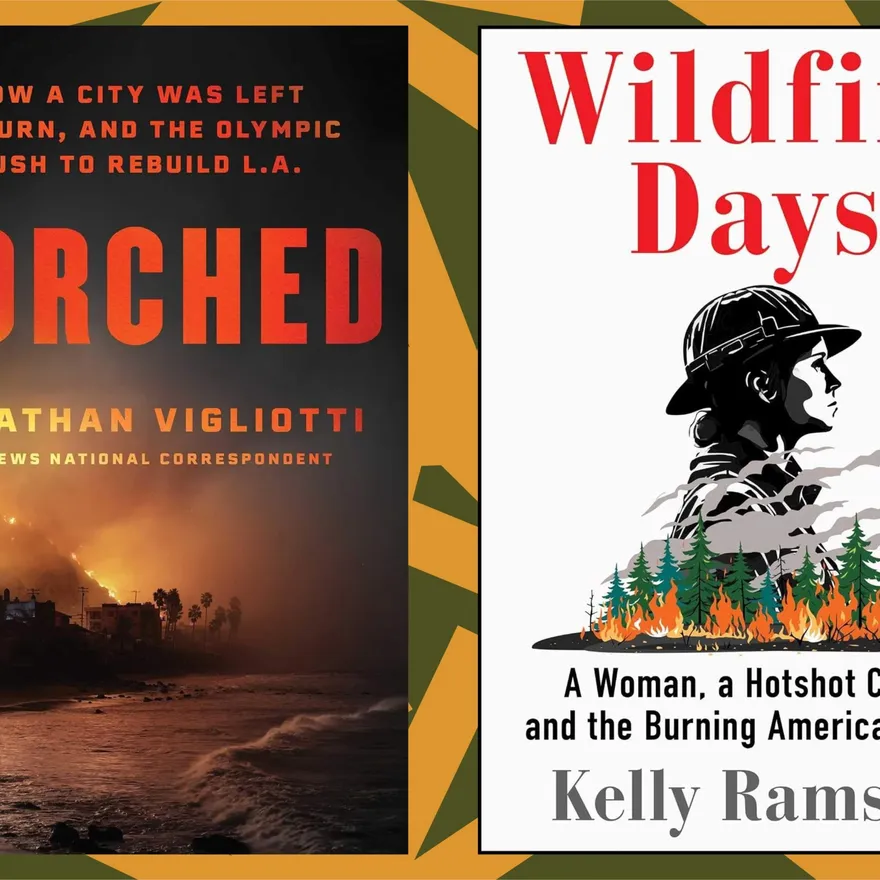
'Torched' and 'Wildfire Days' look at California's wildfires from the front lines
In this episode of NPR's Book of the Day, Jonathan Vigliotti examines California's wildfires through two books that explore the crisis from different angles. The discussion covers policy failures exposed by the Palisades Fire, including officials' lack of accountability and the pressure to rebuild quickly for the 2028 Olympics rather than prioritizing fire-resistant construction. Vigliotti also addresses systemic issues like urban sprawl into high-risk areas and aging infrastructure that hasn't kept pace with population growth.
The episode also features Kelly Ramsey's perspective on hotshot firefighting, detailing the extreme physical and mental demands of the work and the unique challenges faced by women in this male-dominated field. Throughout the conversation, Vigliotti highlights how climate change is intensifying wildfire risks while exploring potential solutions, from fire-resistant building materials to addressing the human causes behind 95% of wildfires.

This is a preview of the Shortform summary of the Aug 7, 2026 episode of the NPR's Book of the Day
Sign up for Shortform to access the whole episode summary along with additional materials like counterarguments and context.
1-Page Summary
Policy Failures, Accountability, and Challenges in Wildfire Recovery
The Palisades Fire exposed significant policy failures in California and raised urgent questions about accountability as the state faces intensifying wildfire risks, rapid urbanization, and the approaching 2028 Olympics.
Officials Struggle to Explain and Take Responsibility For Failures Allowing Widespread Devastation From the Palisades Fire
Jonathan Vigliotti reports that Mayor Karen Bass and Governor Gavin Newsom have struggled to provide clear explanations for the Palisades Fire response failures, with both declining interviews despite public outcry. Their offices dismissed criticisms, but this lack of transparency fueled resident frustration. Spencer Pratt, who lost his home along with his parents' home, became a vocal critic on social media and eventually ran for mayor after receiving no answers. The fire's aftermath became central to the LA mayoral race, demonstrating lasting political consequences for unaddressed policy failures.
2028 Olympics Rebuild Prioritizes Speed Over Disaster Prevention
The urgency to host the 2028 Olympics directly shaped Los Angeles's post-fire rebuild strategy. The day after the fire started, both Bass and Newsom toured the area with the Olympics in mind, as insiders revealed that losing the Games was considered an even greater political danger than the fire itself. This led to rushed reconstruction, with permit approval times slashed from 12-18 months to just three months. Rather than prioritizing fire-resistant designs, officials relied on pre-existing blueprints known to be fire-susceptible, amplifying future vulnerability.
Systemic Issues and Urban Sprawl Into High-Risk Areas Create Dangers Not Adequately Addressed by Policy
The fire highlighted broader systemic challenges, including a 160% surge in development within the wildland urban interface over the past 20 years. California's housing shortage has driven communities into these high-risk areas despite well-known seasonal wildfire threats. Meanwhile, fire protection infrastructure hasn't kept pace—there are fewer firehouses today than in the 1960s despite nearly double the population. Despite clear evidence of dangerous consequences, policies have not adequately evolved to address the compound risks.
Climate Change, Infrastructure, and Wildfire Preparedness Strategies
Extreme weather fueled by climate change is outpacing efforts to contain wildfires, creating unprecedented challenges for communities and emergency responders.
Climate Change Fuels Extreme Wildfires Outpacing Prevention
Climate change is escalating wildfire severity and frequency beyond traditional firefighting capacity. The western U.S. experienced record-breaking wildfire seasons in 2020 and 2025, underlining the urgent need to address climate change's compounding effects on wildfire risk.
Experts: Policy Solutions and Better Materials Can Reduce Fire Risk Despite Climate Challenges
Fire experts emphasize that while climate change presents major challenges, policy changes and fire-resistant building materials can significantly mitigate wildfire risks. Vigliotti highlights the necessity of prioritizing resilient construction methods and updating standards. A holistic strategy is needed that integrates fire safety into every stage of planning, ensuring fire preparedness is fundamental to both urban planning and emergency management in wildfire-prone areas.
Reducing Wildfires: Focus On Human Behavior and Infrastructure Standards
According to CAL FIRE, 95% of wildfires are human-caused, with most incidents unintentional rather than deliberate. This underscores the critical importance of effective regulations, public education, and community preparedness in reducing human error. By targeting preventable human causes through improved infrastructure standards and stricter construction regulations, communities can significantly decrease wildfire risk and impact.
Extreme Demands of Hotshot Firefighting
Hotshot firefighting pushes individuals to their physical, mental, and emotional limits through grueling training, exceptional danger, and life-and-death stakes.
Hotshot Crew Members Undergo Rigorous Training and Maintain Elite Physical Fitness to Qualify For This Firefighting Role
Kelly Ramsey describes that training begins five to six months before fire season, with crew members hiking steep hills carrying 45 to 70 pounds. The regimen includes running, weight training, and cardio at least six days a week. Candidates must pass difficult physical tests, including running a mile and a half at a set pace and completing minimum pull-ups and push-ups. The qualification process is so demanding that hotshot crews are often compared to military special forces.
Hotshot Crews Tackle the Toughest Fires in Extreme Conditions With Minimal Amenities
Hotshot crews are sent to the most difficult and dangerous parts of wildfires. Ramsey explains that most nights, crews sleep in the dirt with only a tarp and sleeping bag, often going weeks without showers while working 16-hour shifts in 110-degree heat. The 2020 California fire season was historic, with around 10,000 fires and over 4 million acres burned. Ramsey describes witnessing 50-foot flame lengths and trees igniting with sounds like jet engines—intensity that exceeded even experienced firefighters' expectations.
Firefighters Must Build Resilience to Manage Fear
Despite intensive training, hotshot firefighters face real mortal danger. Ramsey recounts how a burned tree falling on a team member shattered the illusion of safety. The firefighting culture typically emphasizes restraint and toughness, yet the close call led to emotional release as crew members openly shared their fears and experiences. Ramsey reflects that this mutual recognition of risk and shared mortality strengthened crew bonds in profound ways as firefighters processed their commitment to each other's safety.
Women in Male-Dominated Firefighting: Representation and Challenges
Women remain vastly underrepresented in wildland firefighting, particularly in elite hotshot crews, where their presence comes with unique pressures and complex experiences.
Women Are 5-15% of Wildland Firefighters; Elite Crews Have 5% or Less
Ramsey notes that women make up about 10-15% of wildland firefighters overall, but the numbers drop sharply to around 5% or less on elite crews like hotshots and smokejumpers. It's common to be the only woman or one of two women on such teams, leading to heightened isolation. This underrepresentation amplifies pressure to perform, as female firefighters feel obligated not just to prove personal competence but to validate women's capability in general.
Women Firefighters Face Pressure to Prove Gender Ability, Adding Psychological Burden Beyond Job Demands
Ramsey describes a dual burden: meeting the job's requirements while feeling obligated to represent and validate all women in the field. Her early struggles, including a tough first hike despite extensive preparation, led to humiliation and fear of not measuring up. This fear became an ever-present motivator, as any shortcoming risked reflecting on more than just herself.
Women Firefighters Navigate Complex Relationships and Identity While Managing Physical and Psychological Dangers Like Their Male Counterparts
Female firefighters face the same physical hazards and psychological stresses as their male peers but also navigate additional complexities around identity and relationships. Ramsey ties her decision to fight wildfires to deep-rooted personal experiences, including a difficult childhood, describing the Forest Service and fire as ways to seek belonging and find herself. While shared danger can forge strong team bonds, Ramsey notes that for women—who are often singular or part of a very small minority—this sense of belonging can be fraught, as they constantly feel exceptional and face extra scrutiny while trying to claim their place within the demanding culture of wildland firefighting.
1-Page Summary
Additional Materials
Counterarguments
- While California's wildfire response has faced criticism, the scale and unpredictability of recent fires—driven by unprecedented climate conditions—have challenged even the most robust emergency systems, making some failures difficult to avoid.
- Mayor Karen Bass and Governor Gavin Newsom may have prioritized ongoing emergency management and recovery efforts over immediate public communication, which can sometimes necessitate delayed or limited media engagement.
- Rapid rebuilding after the Palisades Fire, though criticized for prioritizing speed, was also intended to quickly restore housing and infrastructure for displaced residents and maintain economic stability, especially with the Olympics approaching.
- Urban development in high-risk areas is partly a response to severe housing shortages, and restricting such development without providing alternative affordable housing solutions could exacerbate homelessness and affordability crises.
- Fire protection infrastructure improvements require significant funding and long-term planning, and budget constraints or competing public needs can limit the pace of expansion despite population growth.
- Policy evolution can be slow due to the complexity of balancing environmental, economic, and social factors, and some incremental improvements have been made even if not all risks are fully addressed.
- While climate change is a major factor, some wildfire severity is also due to decades of fire suppression policies that have led to increased fuel loads in forests, a factor independent of recent policy decisions.
- Adoption of fire-resistant materials and stricter building codes can increase construction costs, potentially making housing less affordable for some residents.
- Human-caused wildfires are often accidental, and while education and regulation help, completely eliminating human error is unrealistic.
- The demanding nature of hotshot firefighting is necessary due to the extreme conditions faced, and rigorous standards help ensure crew safety and effectiveness.
- The low representation of women in elite firefighting roles is influenced by a variety of factors, including personal career interests and the physically demanding nature of the work, not solely by workplace culture or discrimination.
- Some women in firefighting report positive experiences and strong support from their teams, indicating that the culture is not universally exclusionary or negative.
Actionables
- you can create a personal wildfire risk checklist for your home and neighborhood, then walk through your living space and immediate surroundings to identify and address fire hazards like flammable landscaping, blocked exits, or missing emergency supplies, updating your checklist each season to reflect changing risks and weather patterns.
- a practical way to support fire resilience in your community is to write a short, clear letter to your local representatives urging them to prioritize fire-safe infrastructure and transparent emergency response policies, referencing specific local vulnerabilities you notice, such as outdated hydrants or limited evacuation routes.
- you can build empathy and awareness for underrepresented groups in high-risk professions by reading first-person accounts from women wildland firefighters, then sharing a summary or key insights with friends or family to spark conversations about inclusion and the psychological challenges faced by those on the front lines.
Get access to the context and additional materials
Policy Failures, Accountability, and Challenges in Wildfire Recovery
The devastation from the Palisades Fire exposed major policy failures and deepened debates about accountability among California officials. As wildfire risks intensify alongside pressures of rapid urbanization and looming events like the 2028 Olympics, persistent questions remain about whether recovery efforts are building true resilience or reproducing vulnerabilities.
Officials Struggle to Explain and Take Responsibility For Failures Allowing Widespread Devastation From the Palisades Fire
Jonathan Vigliotti reports that elected officials, including Mayor Karen Bass and Governor Gavin Newsom, have struggled to deliver a clear explanation for what went wrong during the initial Palisades Fire response. Despite public outcry, both the mayor and governor declined to provide interviews addressing these failures. Newsom’s office claims the governor was on the ground within hours coordinating the emergency response, dismissing criticisms as “total nonsense.” Mayor Bass’s spokesperson similarly denounced claims of failure, insisting the mayor is leading the rebuilding effort.
This lack of transparency and absence of accountability has fueled frustration among affected residents. Spencer Pratt, who lost his own home and whose parents also lost theirs, became a vocal critic on social media, repeatedly asking officials for answers but receiving none. His unresolved anger over the lack of accountability drove him to run for mayor. In the subsequent LA mayoral race, the issue of responsibility for the fire’s aftermath became a central topic, illustrating that political consequences for unaddressed policy failures can linger long after the flames are extinguished.
2028 Olympics Rebuild Prioritizes Speed Over Disaster Prevention
The urgency of Los Angeles’s post-fire rebuild is directly shaped by the city’s commitment to host the 2028 Olympics. The day after the Palisades Fire started, both Mayor Bass and Governor Newsom toured the area, focused as much on the Olympics as on the ongoing crisis. Insiders revealed that failing to save the Palisades would hurt their careers, but losing the Olympic Games was considered an even greater political danger. National advisors were reportedly considering relocating the Olympics, a possibility that added enormous stakes to the recovery.
This led to a rush to reconstruction, as getting neighborhoods ready in time for the Olympics became the top priority. Permit approval times that usually span 12 to 18 months after a disaster were slashed to three months. This haste meant relying on pre-existing blueprints that were known to be susceptible to fire. Rather than pushing for fire- ...
Here’s what you’ll find in our full summary
Policy Failures, Accountability, and Challenges in Wildfire Recovery
Additional Materials
Counterarguments
- While some residents felt frustrated by the perceived lack of transparency, both Mayor Bass and Governor Newsom did visit the affected areas and coordinated emergency responses, which demonstrates a level of engagement and leadership during the crisis.
- The expedited permit approval process, though criticized for prioritizing speed, was intended to quickly restore housing and infrastructure for displaced residents, which can be seen as a necessary response to an urgent humanitarian need.
- Using pre-existing blueprints for reconstruction may have been a pragmatic choice given time constraints and the need to provide immediate shelter, rather than a deliberate disregard for fire safety.
- The increase in development within the wildland urban interface (WUI) is partly a response to California’s severe housing shortage, and restricting such development could exacerbate affordability and homelessness issues.
- Fire protection infras ...
Actionables
- you can review your own home’s fire risk by walking around your property and making a checklist of flammable materials, then set a calendar reminder to remove or replace one item each month, such as swapping out wooden mulch for gravel or trimming back overgrown vegetation.
- a practical way to encourage better emergency services in your area is to write a short, specific letter to your city council or local officials asking how many fire stations serve your neighborhood and what plans exist to expand resources as the population grows.
- you can track how long it takes to ...
Get access to the context and additional materials
Climate Change, Infrastructure, and Wildfire Preparedness Strategies
Extreme weather fueled by climate change is currently outpacing efforts to contain wildfires, particularly in vulnerable regions. This creates unprecedented challenges for communities and emergency responders alike.
Climate Change Fuels Extreme Wildfires Outpacing Prevention
Climate Change Intensifies Fire Threats Beyond Traditional Firefighting Capacity
Climate change is escalating the severity and frequency of wildfires, reaching levels that surpass the traditional capacity of firefighting systems. The increasing intensity and unpredictability of fires place significant strain on existing prevention and containment strategies.
Record-Breaking Wildfire Severity in Western U.S. in 2025 and 2020
The western U.S. in recent years has seen record-breaking wildfire seasons, notably in 2020 and again in 2025, underlining the urgent need to address the compounding effects of climate change on wildfire risk.
Experts: Policy Solutions and Better Materials Can Reduce Fire Risk Despite Climate Challenges
Fire Specialists Advise Fire-Resistant Materials, Stricter Construction Standards
Fire experts emphasize that while climate change remains a major challenge, policy changes and the adoption of fire-resistant building materials can go a long way toward mitigating wildfire risks. Jonathan Vigliotti highlights the necessity to alter rebuilding policies by prioritizing resilient construction methods and updating standards so new structures withstand future fire threats.
Holistic Approach to Community Development and Firefighting Resource Allocation in Wildfire Areas
A holistic strategy is needed for how and where communities are developed, integrating fire safety into every stage of planning. This involves ensuring that fire preparedness and resource allocation are considered fundamental aspects of both urban planning and emergency management in wildfire-prone areas.
Reducing Wildfires: Focus On Human Behavior and Infrastructure Standards
Most Fires Are Un ...
Here’s what you’ll find in our full summary
Climate Change, Infrastructure, and Wildfire Preparedness Strategies
Additional Materials
Clarifications
- Climate change increases temperatures and prolongs droughts, drying out vegetation and making it more flammable. It also alters wind patterns, which can spread fires faster and unpredictably. Longer fire seasons mean firefighters face more frequent and intense fires with fewer rest periods. These factors overwhelm traditional firefighting resources designed for shorter, less severe fire events.
- Traditional firefighting systems include ground crews, fire engines, water tankers, and aerial support like helicopters and planes. Their limitations arise from resource constraints, difficult terrain, and rapidly changing fire behavior. These systems often struggle with large, fast-moving wildfires intensified by climate change. Additionally, they rely heavily on weather conditions and accessibility, which can hinder effective containment.
- The years 2020 and 2025 are highlighted because they marked some of the most severe wildfire seasons in the western U.S., with extensive damage and large areas burned. In 2020, wildfires were fueled by extreme drought and heatwaves linked to climate change, causing historic destruction. The 2025 season continued this trend, showing that wildfire risks are increasing over time. These years serve as key examples demonstrating the escalating impact of climate change on wildfire severity.
- Fire-resistant building materials are designed to withstand high temperatures and reduce the spread of fire. Examples include concrete, brick, stucco, fiber cement siding, and fire-rated glass. These materials help protect structures by slowing ignition and fire damage. Using them in construction improves a building’s resilience during wildfires.
- Stricter construction standards require buildings to use fire-resistant materials like ember-resistant vents, tempered glass, and non-combustible siding. They also mandate defensible space around structures by clearing vegetation to reduce fuel for fires. These standards often include improved roofing materials and enhanced building designs to prevent fire spread. Compared to current standards, they focus more on resilience to wildfire exposure rather than just general safety or energy efficiency.
- A holistic approach means considering all factors that affect wildfire risk together, such as land use, building design, vegetation management, and emergency response. It involves collaboration among urban planners, firefighters, environmental experts, and the community. This approach aims to create safer, more resilient communities by integrating fire safety into every stage of development. It moves beyond isolated actions to coordinated, comprehensive planning.
- Fire safety in urban planning involves designing communities with defensible spaces, such as cleared vegetation buffers around buildings to slow fire spread. Emergency management integrates fire safety by mapping high-risk zones and ensuring accessible evacuation routes and water sources for firefighting. Building codes require fire-resistant materials and construction techniques to reduce ignition risk. Coordination between planners, firefighters, and local authorities ensures preparedness and rapid response during wildfires.
- Fire preparedness involves planning, training, and equipping communities and responders to effectively prevent, respond to, and recover from wildfires. Resource allocation means distributing firefighting personnel, equipment, and funding strategically to areas at highest risk. Responsibilities include coordinating evacuation plans, maintaining firebreaks, and ensuring communication systems are operational. Effective allocation maximizes response speed and minimizes wildfire damage.
- Most unintentional human-caused wildfires start from everyday activities like unattended campfires, discarded cigarettes, or sparks from machinery. Power lines can also spark fires during high winds or equipment failure. These actions ignite dry vegetation, especially during droughts or windy conditions. Public awareness and careful behavior are crucial to prevent such accidental ignitions.
- Effective regulations include restrictions on outdoor burning during high-risk periods and mandatory ...
Counterarguments
- While climate change contributes to wildfire severity, factors such as forest management practices, historical fire suppression, and land use changes also play significant roles in wildfire risk and intensity.
- The focus on fire-resistant materials and stricter construction standards may not be feasible or affordable for all communities, particularly those with limited resources or existing older infrastructure.
- Emphasizing rebuilding with resilient materials does not address the underlying causes of wildfires, such as fuel buildup from decades of fire suppression or invasive species that increase flammability.
- Integrating fire safety into urban planning may conflict with housing needs, economic development, or cultural practices in certain regions, making holistic approaches challenging to implement universally.
- While most wildfires are caused by human activity, some are ignited by natural causes such as lightning, which cannot be mitigated through regu ...


Get access to the context and additional materials
Extreme Demands of Hotshot Firefighting
Hotshot firefighting pushes individuals to their physical, mental, and emotional limits. These elite crews endure a grueling training regimen, confront exceptional danger on the front lines of wildfires, and build resilience in the face of life-and-death stakes.
Hotshot Crew Members Undergo Rigorous Training and Maintain Elite Physical Fitness to Qualify For This Firefighting Role
Off-season Training: 5-6 Months, 45-70 Lbs Weight, Cardio, Strength, 6+ Days/Week
Kelly Ramsey describes that training for hotshot crews begins well before fire season, starting in the previous fall. Crew members spend five to six months hiking up steep hills, each often carrying at least 45 pounds, matching the standard wildland firefighter’s pack. Many add extra weight or carry a chainsaw, training themselves to handle 65 or even 70 pounds. Their regimen is intense and includes running, running hills, push-ups, pull-ups, sit-ups, wall sits, weight training, and cardio. Ramsey reports training at least six days a week for those six months just to prepare. When the hotshot crew assembles together in May, they spend about a month training both physically and in the classroom to prepare for the season.
Physical Tests For Candidates: Run 1.5 Miles At Set Pace, Complete Minimum Pull-Ups and Push-Ups, Equating Hotshot Training To Military Special Forces
Entering the ranks requires passing difficult physical tests. Candidates must run a mile and a half at a set pace and complete a minimum number of pull-ups and push-ups. The qualification process and conditioning are so demanding that hotshot crews are often described as the special forces or Navy SEALs of wildland fire.
Hotshot Crews Tackle the Toughest Fires in Extreme Conditions With Minimal Amenities
Crew Members Endure Long Shifts in Extreme Heat, Sleeping In Basic Camps and Going Weeks Without Showers
Hotshot crews are sent to the most difficult, dangerous, and hard-to-reach parts of wildfires. Ramsey explains that most nights, hotshot crews simply sleep in the dirt or woods near the fire line with only a tarp and a sleeping bag. Even when camps have showers, there is rarely time to use them. After 16-hour shifts, firefighters simply pick up their meal and return to their minimal camps. Weeks can pass without a shower, and working in 110-degree heat means being constantly coated in ash and soot.
2020 California Fire Season: 10,000 Fires, 4 Million Acres Burned, Unprecedented Activity, 50-foot Flames, Jet Engine-Like Tree Torching, Exceeds Experience
The 2020 California fire season was historic, with around 10,000 fires and over 4 million acres burned. Ramsey describes witnessing 50-foot flame lengths, walls of fire moving across the landscape, and events called “torching,” when trees ignite from the base and erupt with a sound like a jet engine. The magnitude and intensity of these fires exceeded even experienced firefighters’ expectations, producing awe and respect for the power and unpredictability of fire.
Firefighters Must Build Resilience to Manage Fear
Death Is a Real Occupational Hazard; Burned Trees Can Fall On Firefighters, Creating Vuln ...
Here’s what you’ll find in our full summary
Extreme Demands of Hotshot Firefighting
Additional Materials
Clarifications
- Hotshot firefighting refers to elite wildland firefighting teams specially trained to handle the most dangerous and complex wildfire situations. These crews are distinguished by their advanced skills, physical fitness, and ability to work in remote, rugged terrain with minimal support. They often perform direct attack on fires, constructing firelines and managing fuel to control fire spread. Hotshot crews are typically deployed to the most critical wildfire incidents nationwide.
- A wildland firefighter’s pack typically weighs between 45 to 60 pounds, containing essential gear like water, food, tools, and safety equipment. This weight is significant because firefighters must carry it over rugged terrain for long distances, often under extreme conditions. The pack’s load tests and builds the firefighter’s endurance and strength, crucial for their demanding work. Properly managing this weight helps prevent injury and ensures readiness during firefighting operations.
- "Torching" in wildfires refers to when a tree's lower branches and trunk catch fire, causing flames to rapidly climb upward. This process can create intense heat and loud roaring sounds, similar to a jet engine. It often leads to the entire tree igniting and falling, spreading fire to surrounding areas. Torching significantly increases fire intensity and danger for firefighters.
- Hotshot crews are compared to military special forces or Navy SEALs because both require exceptional physical fitness, mental toughness, and specialized training to perform high-risk missions. Like special forces, hotshots operate in extreme, unpredictable environments where quick decision-making and teamwork are critical. Their work demands endurance, resilience, and the ability to handle life-threatening situations under intense pressure. This comparison highlights the elite status and rigorous demands of hotshot firefighting.
- An after action review (AAR) is a structured debrief conducted after a mission or event to evaluate what happened, why it happened, and how to improve. It encourages open, honest discussion among team members to identify successes and mistakes without assigning blame. The goal is to enhance future performance and safety by learning from real experiences. AARs are common in military, emergency response, and firefighting operations.
- Burned trees become structurally unstable because fire weakens their trunks and roots. They can fall unexpectedly without warning, posing a sudden physical threat. Falling trees can cause severe injury or death due to their size and weight. Firefighters often work in dense forests, increasing the risk of being struck by these hazards.
- "Stoic" refers to showing little or no emotion, especially in difficult or painful situations. In firefighting culture, it means maintaining calmness and control despite danger or stress. This attitude helps firefighters focus on their tasks without being overwhelmed by fear or anxiety. It also fosters resilience and reliability within the team.
- Hotshot firefighter physical tests measure endurance, strength, and agility essential for intense wildfire work. Running 1.5 miles at a set pace tests cardiovascular fitness under time pressure. Pull-ups and push-ups assess upper body strength needed for carrying equipment and navigating rough terra ...
Counterarguments
- While hotshot firefighting is physically and mentally demanding, many other emergency response professions (such as urban firefighting, paramedicine, or military service) also require extreme resilience and face similar dangers.
- The comparison to military special forces or Navy SEALs may be overstated, as the nature of the work, training, and mission objectives differ significantly between wildland firefighting and military operations.
- Not all hotshot crew members experience the most extreme conditions every season; some assignments may involve less direct danger or hardship depending on fire activity and location.
- The emphasis on stoicism and toughness in firefighting culture, while fostering resilience, can sometimes discourage seeking mental health support or open communication about stress and trauma.
- The narrative focuses on the hardships and heroism of hotshot crews but does not address systemic issues such as pay, benefits, or long-term health impacts faced by wi ...

Get access to the context and additional materials
Women in Male-Dominated Firefighting: Representation and Challenges
Women remain vastly underrepresented in wildland firefighting, especially in elite hotshot and smokejumper crews, where their presence comes with unique pressures and complex experiences.
Women Are 5-15% of Wildland Firefighters; Elite Crews Have 5% or Less
Kelly Ramsey notes that women make up about 10–15% of wildland firefighters overall, but the numbers drop sharply to around 5% or less on highly competitive crews like hotshots, smokejumpers, and rappel crews. On such teams, it’s common to be the only woman or one of two women, leading to a heightened sense of isolation.
Isolation of Women on Male-Dominated Hotshot Crews
Ramsey describes entering her first season as the only woman on her crew in her late 30s, surrounded by much younger and physically imposing male colleagues. The rarity of other women meant the isolation was palpable—not just socially, but as a daily reminder of her minority status.
Underrepresentation of Women in Hotshot Firefighting Creates Barriers and Adds Pressure to Prove Capability
For female firefighters, especially on elite crews, underrepresentation amplifies the pressure to perform. Ramsey felt a weighty responsibility not only to prove her personal competence but also to vindicate the capability of women in general. The expectation was not just to be a competent crew member, but to show what women can do, challenging stereotypes and justifying their presence in the face of ingrained doubts.
Women Firefighters Face Pressure to Prove Gender Ability, Adding Psychological Burden Beyond Job Demands
The psychological demands of the work extend beyond the inherent danger and labor of firefighting. Ramsey describes a dual burden: needing to meet the requirements of the job while also feeling obligated to represent and validate women as a whole in the field. Early struggles, like a tough first hike despite extensive preparation, led to humiliation and fear of not measuring up, fueling a compulsion to prove herself and, by extension, the potential of any woman in firefighting.
Female Hotshots Validate Women's Presence in Firefighting Through Performance, Often Using Personal Struggles to Showcase Female Capability Over Personal Development
Ramsey’s focus on demonstrating women's capability at times superseded her own personal journey. The imperative to excel was tied directly to justifying all women’s place in a male-dominated profession rather than advancing her individual growth alone.
Early Poor Performance Fuels Fear, Driving Women to Prove Competence
Ramsey recounts that her early poor performance, despite offseason training, was a source of humiliation and terror. This fear became an ever-present motivator to get up to speed—aware that any shortcoming risked reflecting on more than just herself.
Women Firefighters Navigate Complex Relationships and Identity While Managing Physical and Psychological Dangers Like Their Male Counterparts
Female firefighter ...
Here’s what you’ll find in our full summary
Women in Male-Dominated Firefighting: Representation and Challenges
Additional Materials
Counterarguments
- The low percentage of women on elite crews may reflect differences in applicant pools, interest, or self-selection rather than solely barriers or discrimination.
- Some male firefighters also experience pressure to prove themselves, isolation, or psychological burdens, especially when they are new, younger, or otherwise different from the majority.
- The focus on group representation and validation may not be universal among all women; some may prioritize personal achievement or team contribution without feeling responsible for representing their gender.
- Not all women on elite crews report negative experiences; some find strong camaraderie and support from their male colleagues.
- The challenges described may be similar to those faced by mi ...
Actionables
- you can start a private reflection journal where you track moments when you feel like an outsider or under extra scrutiny in any group, then brainstorm small, specific actions you could take to build genuine connections or reduce self-imposed pressure in those situations (like inviting a colleague for coffee or sharing a personal story in a group chat).
- a practical way to support minority representation in any field is to regularly recommend or highlight the achievements of underrepresented individuals in your workplace or social circles, such as mentioning a colleague’s recent accomplishment in a meeting or sharing their work on socia ...

Get access to the context and additional materials


Create Summaries for anything on the web
Download the Shortform Chrome extension for your browser
