

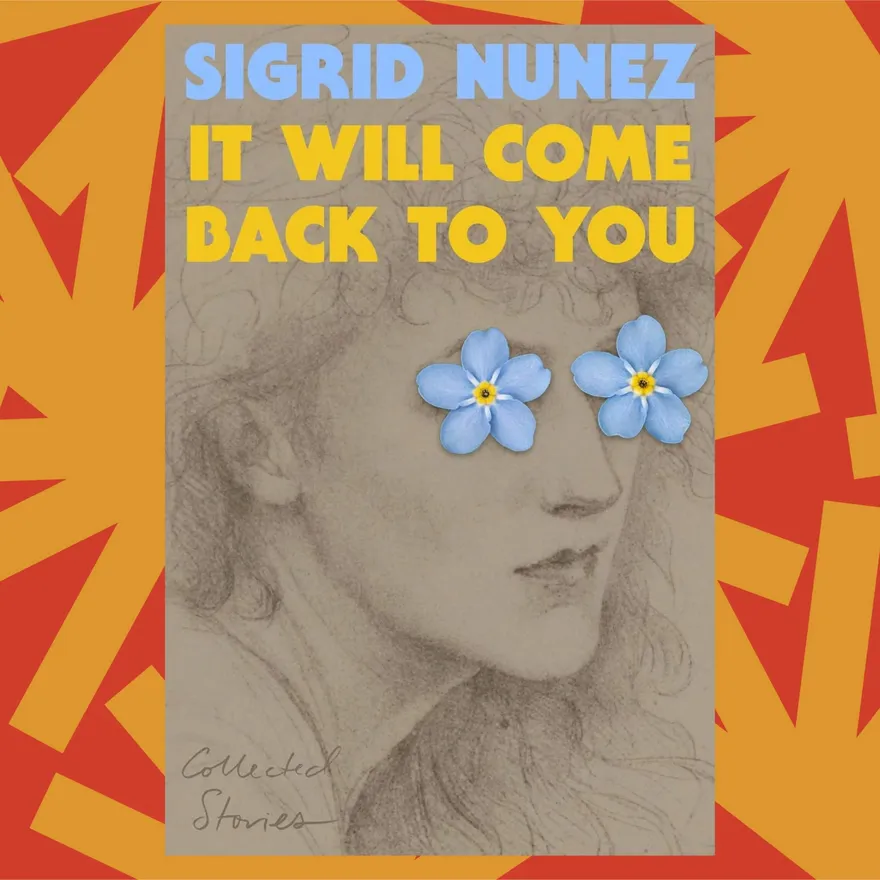
'The Friend' author Sigrid Nunez is out with a new collection of short stories
In this episode of NPR's Book of the Day, author Sigrid Nunez discusses her new collection of short stories, which explores family relationships through the lens of generational perspectives. Nunez examines how different generations within families perceive each other's lives and choices, sometimes creating tension but also deeper understanding. Through stories about dementia, adoption, and class consciousness, she illustrates how family members can reframe each other's experiences—for better or worse—and how these interpretations shape individual identity.
The conversation also covers Nunez's approach to short story writing and her focus on themes of loneliness, unfulfilled desire, and emotional vulnerability. She discusses what transforms an anecdote into a true story and how her characters' yearning for love and connection drives narrative momentum. Nunez argues that the short story format is particularly suited to capturing vulnerable moments and the internal experience of solitude that defines the human condition.

This is a preview of the Shortform summary of the Jul 30, 2026 episode of the NPR's Book of the Day
Sign up for Shortform to access the whole episode summary along with additional materials like counterarguments and context.
1-Page Summary
Family Relationships and Generational Perspectives
Family relationships are shaped by how different generations perceive and respond to each other, creating both tension and deeper meaning. Stories like "It's All Good" and "the Rabbit's Foot" illustrate how generational shifts transform the understanding of family histories and sacrifices.
In "It's All Good," a mother's dementia reveals how siblings process illness differently. When the brother hires a Brad Pitt lookalike for their mother's birthday, the sister finds this risky and appalling. Sigrid Nunez describes the story as centering on their fraught relationship, with the brother accepting their mother's changed reality while the sister feels anxious and unsettled by his approach.
"The Rabbit's Foot" explores how generational distance can reframe sacrifice. Carmine, an adopted foundling who worked as a hotel housekeeper, takes pride in her work, but her well-educated children view her life through the lens of class oppression and feel shame. In contrast, Carmine's granddaughter sees her as heroic—someone who overcame abandonment and built a family from nothing. Nunez describes this shift as resolving the generational gap, allowing Carmine's struggles to be reinterpreted as accomplishments.
Tiziana Dearing notes that family reactions can "reframe us," forcing individuals to re-examine their self-worth. Carmine's awareness of her children's shame makes her question whether her achievements are actually a source of pride, demonstrating how family perceptions can validate or undermine the meaning of a life's work.
The Craft of Short Story Writing
Nunez recalls feedback from Elizabeth Hardwick, who told her that her piece was "not a story, that is an anecdote." While Hardwick couldn't define the difference then, Nunez later understood that true stories must reveal something about the human condition, transcending personal experience to illuminate broader truths about what it means to be human.
She emphasizes the importance of character motivation, referencing writing advice—possibly from Kurt Vonnegut—about giving characters clear desires at the beginning. This creates momentum and reader engagement. In her own stories, Nunez describes how her characters often long for love and connection, with this yearning driving the narrative and deepening emotional impact.
Themes of Loneliness, Unfulfilled Desire, and Vulnerability
Nunez asserts that loneliness is a universal condition, and argues that the short story format is ideal for exploring it. The compactness of short stories allows writers to vividly capture vulnerable moments and internal experiences of solitude, exposing how loneliness manifests in everyday life and relationships.
Her characters grapple with emotional hunger and the pain of feeling unloved. Mo never feels loved by her mother, describing herself like a hungry child staring through a bakery window at treats she cannot have. Her daughter Jo, while receiving love, becomes hypervigilant to her mother's emotional needs, attempting to compensate for Mo's deprivation—a cyclical burden passed down within families.
Throughout Nunez's stories, characters yearn for love, recognition, and stability that often remain unfulfilled. Rather than offering tidy resolution, her stories validate the reality of readers' own unfulfilled desires and emotional disconnection, reflecting the aching experiences found in everyday life.
1-Page Summary
Additional Materials
Counterarguments
- While generational perspectives can shape family relationships, individual personalities and circumstances may play a more significant role than generational identity alone.
- The interpretation of sacrifice and pride in family histories may not always shift positively with generational distance; some families may maintain or even intensify negative perceptions over time.
- The depiction of siblings processing a parent's illness differently is not unique to generational differences and can occur due to personal coping styles or sibling dynamics unrelated to age or era.
- Viewing working-class backgrounds with shame is not universal among educated children; many may feel pride or gratitude for their parents' sacrifices regardless of class mobility.
- The assertion that true stories must transcend personal experience to reveal broader truths about the human condition is subjective; some readers value stories that remain intimate and particular.
- The emphasis on clear character motivation as essential for narrative momentum may not apply to all literary traditions or experimental forms, where ambiguity or lack of clear desire can be intentional and effective.
- The idea that short stories are uniquely suited to explore loneliness could be challenged, as novels, poetry, and other forms can also powerfully depict solitude and vulnerability.
- Not all readers find validation in stories without tidy resolutions; some may prefer narratives that offer closure or hope rather than lingering on unfulfilled desires.
Actionables
- you can start a family story swap by inviting relatives to share a memory from a previous generation, then write down or record your own interpretation of that story, focusing on how your perspective differs from theirs and what emotions or values you attach to it—this helps you notice generational shifts in meaning and emotional response.
- a practical way to explore emotional hunger and connection in your relationships is to keep a week-long journal where you note moments you feel unseen or misunderstood by family, then reflect on how you respond (withdraw, seek reassurance, act out, etc.) and experiment with expressing your needs directly in one small, low-stakes conversation.
- you can create a personal ritual at the end of each week where you write a short, untidy story about a recent family interaction, intentionally leaving the ending unresolved—this validates the reality of unfulfilled desires and helps you become more comfortable with emotional ambiguity in your relationships.
Get access to the context and additional materials
Family Relationships and Generational Perspectives
Family relationships are shaped by the perceptions, judgments, and emotional responses of different generations. Stories like “It’s All Good” and “the Rabbit’s Foot” explore how family members’ varied perspectives create both tension and meaning, and how generational shifts can transform the way family histories and sacrifices are understood.
Family Members' Varied Perceptions Create Tension and Meaning
In “It’s All Good,” the mother’s dementia becomes a catalyst for revealing differences in how siblings respond to illness and vulnerability. The mother develops a crush on Brad Pitt, prompting the brother to hire a Brad Pitt lookalike for her birthday lunch. The sister, who narrates the story, finds this risky for their mother’s emotional state and is appalled by her brother’s decision. Sigrid Nunez describes the story as centering on the fraught, loving relationship between a brother and sister, highlighting their very different attitudes toward their mother’s slide into dementia. The brother appears to accept the mother's changed reality and tries to bring her joy, while the sister feels anxious about her mother’s condition and is unsettled by the brother’s approach, underlining the tension that emerges when siblings process a parent’s transformation in distinct ways.
A Grandchild's View Can Elevate a Parent's or Grandparent's Sacrifices Unlike Their Children
The story “the Rabbit’s Foot” explores generational shifts in recognizing and valuing family sacrifice. Carmine, an adopted foundling, spends her life working as a housekeeper at a luxury Manhattan hotel and takes pride in her work. However, her children, who are well-educated and have good jobs, feel shame over Carmine’s position and view her life as defined by oppression due to class. They struggle to see dignity in her journey, interpreting her sacrifices as examples of mistreatment. In contrast, Carmine’s granddaughter views her as a heroic figure, admiring Carmine for overcoming abandonment, building a life from nothing, and raising a family. This shift demonstrates how a grandchild, removed from immediate generational biases, can reframe hardship as strength and perseverance. Nunez describes ...
Here’s what you’ll find in our full summary
Family Relationships and Generational Perspectives
Additional Materials
Counterarguments
- The emphasis on generational perspectives may overlook the influence of individual personality traits or external social factors that also shape family relationships.
- Not all families experience significant tension due to differing perspectives; some may find strength and unity in diversity of thought.
- The interpretation of the brother’s actions in “It’s All Good” as acceptance and joy-bringing could also be seen as avoidance or denial of the seriousness of dementia.
- The sister’s anxiety in “It’s All Good” might be a reasonable and protective response rather than simply a source of tension.
- Generational shifts do not always lead to more positive reinterpretations of family history; sometimes, distance can result in misunderstanding or erasure of important contex ...
Actionables
- you can invite each family member to write a short letter describing a meaningful family event from their own perspective, then read them together to highlight how perceptions and emotions differ across generations; this helps reveal hidden tensions and sources of meaning in your family’s shared history.
- a practical way to bridge generational gaps is to ask an older relative to share a story about a personal sacrifice, then discuss with younger family members how they interpret that story and what values or lessons they see in it; this can help reframe past hardships as accomplishments and foster mutual understanding.
- yo ...
Get access to the context and additional materials
The Craft of Short Story Writing
Transforming an Anecdote Into a Resonant, Meaningful Story
Sigrid Nunez recalls receiving crucial feedback from Elizabeth Hardwick during a writing workshop: Hardwick told her that her piece was “not a story, that is an anecdote.” While Hardwick could not define the difference at the time, Nunez later understood that a true story must reveal something about the human condition. She explains that stories, even if they originate as “slices of life,” must evolve beyond a narrow recounting of events to gain resonance and meaning. A well-crafted story transcends personal experience and reflects insights relevant to broader human experience, illuminating some aspect of what it means to live and to be human.
Strategic Motivation Anchors Reader Investment
Nunez emphasizes the importance of character motivation in making stories compelling. She references writing advice—possibly from Kurt Vonnegut—that recommends giving the main character a clear desire at the beginning of ...
Here’s what you’ll find in our full summary
The Craft of Short Story Writing
Additional Materials
Counterarguments
- Some successful stories are primarily plot-driven or focus on world-building rather than revealing insights about the human condition.
- Anecdotes can be powerful and resonant in their own right, sometimes leaving a lasting impression without evolving into a traditional story structure.
- Not all readers require deep character motivation or emotional resonance to be engaged; some prefer stories that prioritize action, humor, or intellectual puzzles.
- Stories rooted in personal experience can be meaningful to readers even if they do not explicitly transcend to broader human themes.
- The definition ...
Actionables
- you can turn a recent personal anecdote into a story by rewriting it to highlight a universal human theme, such as resilience or belonging, and then sharing it with a friend to see if they relate to the deeper meaning
- Instead of just recounting what happened, focus on what the experience revealed about human nature or emotions, and ask your friend if it resonates with their own life.
- a practical way to deepen character motivation in your writing is to draft a short scene where the main character’s actions are driven by an unspoken longing, then revise the scene to make that yearning subtly visible through dialogue or behavior
- For example, show a character hesitating before making a call, revealing their desire for connection without stating it outright.
- you can practice identifying the core desire in ...


Get access to the context and additional materials
Themes of Loneliness, Unfulfilled Desire, and Vulnerability
Sigrid Nunez highlights loneliness as a profound and shared human experience, and her stories keenly examine this theme along with unfulfilled desire and vulnerability.
Loneliness: A Universal Experience Explored Through Short Stories
Nunez asserts that loneliness is a universal condition, and argues that the short story is the ideal form for exploring human loneliness. The compactness of the short story format allows writers to vividly capture vulnerable moments and the internal experiences of characters in solitude. Through detailed observations and a range of narrative perspectives, short stories expose how loneliness manifests in everyday life and within relationships, emphasizing the subtleties of emotional isolation.
Nunez's Characters Share Emotional Hunger and the Pain Of Feeling Unseen or Unloved by Loved Ones
Nunez’s characters grapple with a deep sense of emotional hunger and the pain of feeling invisible or unloved—even by those closest to them. Mo, one of her characters, never feels loved by her mother. She describes observing other parents affectionately caring for their children and likens herself to a hungry, penniless child staring through a bakery window at treats she cannot have, with love and protection tantalizingly out of reach.
Her daughter, Jo, does receive love from her mother but lives with heightened awareness of the deprivation her mother endured. Jo becomes hypervigilant to her mother’s emotional needs, attempting to compensate for the lack of l ...
Here’s what you’ll find in our full summary
Themes of Loneliness, Unfulfilled Desire, and Vulnerability
Additional Materials
Counterarguments
- While loneliness is a significant human experience, it is not necessarily universal in the same way for all individuals; some people may not experience profound loneliness or may find fulfillment in solitude.
- The assertion that the short story is the "ideal" form for exploring loneliness can be challenged, as novels, poetry, memoirs, and other forms can also effectively depict loneliness and vulnerability, sometimes with greater depth due to their length and scope.
- The focus on emotional deprivation and unfulfilled desire may overlook stories or characters who find resilience, connection, or contentment despite adversity.
- The cyclical nature of emotional hunger within families, as depicted by Nunez, may not be universally applicable; some individuals break these cycles or experience different family dynamics.
- The avoidance of "tidy resolutions" in Nunez’s stories, while validating for some readers, may leave others unsatisfied ...
Actionables
- you can keep a daily solitude snapshot journal to capture brief, vivid moments when you notice loneliness or emotional distance in yourself or others, using just a few sentences or images to reflect on how these moments show up in everyday life and relationships
- jot down a quick note or sketch each time you feel a pang of loneliness, notice someone else withdrawing, or sense a subtle disconnect, then review your entries weekly to spot patterns and better understand the nuances of emotional isolation.
- a practical way to break cycles of emotional deprivation in families is to set aside five minutes each day to intentionally express appreciation or recognition to a family member, focusing on small, specific things you notice about them
- for example, tell your child you noticed how they helped a sibling, or thank a parent for listening to you, which helps disrupt patterns of feeling unseen and fosters a sense of being valued.
- yo ...
Get access to the context and additional materials


Create Summaries for anything on the web
Download the Shortform Chrome extension for your browser
