

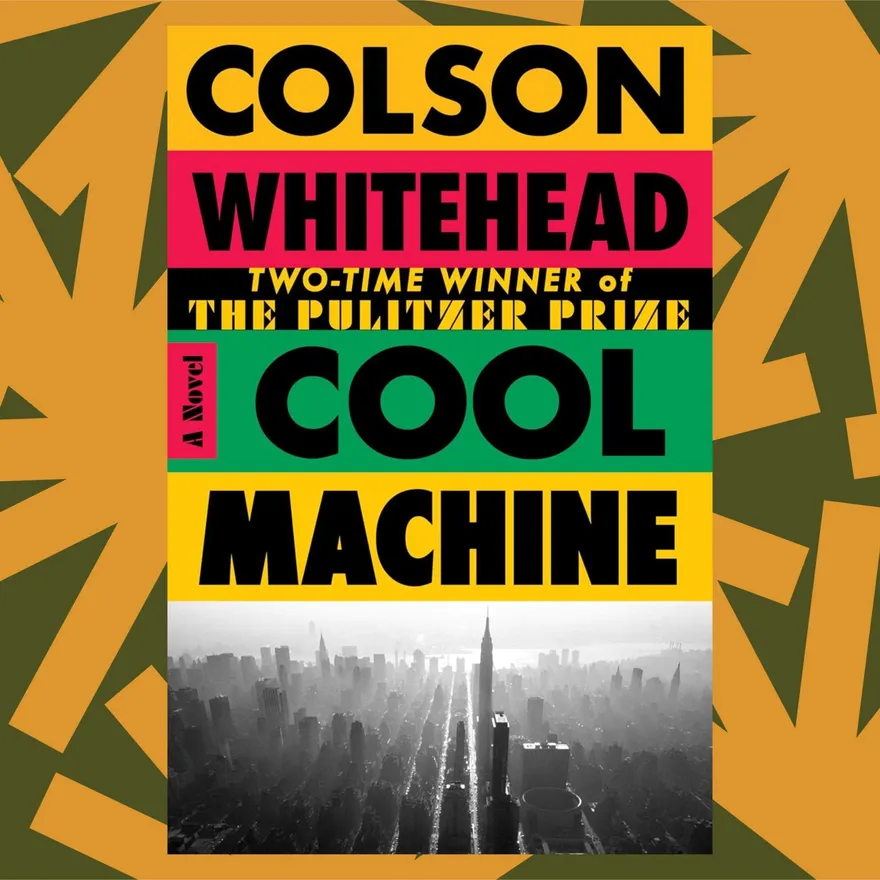
Colson Whitehead on 'Cool Machine,' the final in his Harlem Trilogy series
In this episode of NPR's Book of the Day, author Colson Whitehead discusses the final installment of his Harlem trilogy, focusing on protagonist Ray Carney's struggle to reconcile his dual life as both a respectable furniture salesman and a fence for stolen goods. Whitehead explores how Harlem's demographic shifts in the early 1980s—particularly the arrival of yuppies—transformed the neighborhood and displaced longtime residents, exemplifying the constant "churn" that defines urban life.
The conversation also covers the moral codes that govern criminal behavior, Whitehead's use of personal memories to capture 1980s New York culture, and his approach to the crime genre as a vehicle for addressing serious social issues like racism and police violence. Unlike his previous works, this trilogy allows Whitehead to blend humor and social commentary through a protagonist with greater agency, creating space for both entertainment and meaningful examination of systemic inequality.

This is a preview of the Shortform summary of the Jul 27, 2026 episode of the NPR's Book of the Day
Sign up for Shortform to access the whole episode summary along with additional materials like counterarguments and context.
1-Page Summary
Ray Carney's Dual Identity
In Colson Whitehead's trilogy, protagonist Ray Carney embodies a fundamental conflict between respectability and crime. Having grown up poor, Carney aspires to middle-class respectability as a furniture salesman in Harlem while running a side hustle as a fence—someone who launders stolen goods into legitimate channels. Throughout the trilogy, Carney alternately embraces and rejects his criminal inclinations, ultimately seeking to integrate these two conflicting sides of his identity by the final book.
Harlem's Transformation in the 1980s
Whitehead describes Harlem's history as one of constant demographic cycles, where successive waves of immigrants—from German, Irish, and Jewish residents to Black migrants from the South and Caribbean—have reshaped the neighborhood. In the early 1980s, the arrival of yuppies triggers another abrupt shift. Characters like Pepper, Ray's enforcer, feel alienated as familiar spaces transform, watching his favorite criminal bar overtaken by New York Times-reading newcomers. Whitehead frames this as "churn"—the relentless urban process of population movement and economic mobility that defines city life, bringing both dynamism and displacement.
Ethics in the Criminal Underworld
Whitehead explores the complex moral codes that govern criminal behavior. In "Crook Manifesto," the second novel in the trilogy, characters debate the boundaries of acceptable criminal activity, with Ray questioning whether his work as a fence carries the same moral weight as violent crimes. While Whitehead finds the notion of "honor" ambiguous, he argues that a clear code exists within the underworld, allowing criminals to maintain a sense of ethical consistency even while operating outside the law.
Capturing 1980s New York Culture
As a teenager in 1980s New York, Whitehead absorbed the era's vibrant cultural scene, largely through his "really cool older sister" who introduced him to influential groups like Run DMC, Liquid Liquid, and ESG. He draws on these memories to recreate the period's artistic and musical innovations in his novel, using these cultural touchstones to add authentic historical texture to his storytelling and celebrate the distinctive energy of that era.
Crime Fiction as a Vehicle for Humor and Social Commentary
Unlike his more serious works like The Underground Railroad and The Nickel Boys, Whitehead's crime trilogy allows him to tackle themes like racism, police violence, and systemic inequality through comedy and irony. He explains that the crime genre's conventions create opportunities for humor that his earlier novels didn't permit, letting him explore the absurdity of life while still engaging with serious issues. Crucially, Ray Carney's greater agency compared to Whitehead's previous protagonists enables more dynamic storytelling, freeing the author to blend deep social commentary with entertaining, character-driven humor without being constrained by tragedy.
1-Page Summary
Additional Materials
Counterarguments
- The portrayal of Ray Carney's dual identity may risk romanticizing or oversimplifying the ethical complexities of criminal behavior, potentially downplaying the real-world consequences of crime.
- The depiction of Harlem's demographic "churn" as a natural and inevitable process could be critiqued for minimizing the role of systemic forces such as redlining, discriminatory housing policies, and deliberate gentrification, which are not merely organic cycles but often involve intentional displacement.
- The assertion that a clear moral code exists within the criminal underworld may be challenged as an overgeneralization, as criminal environments often involve shifting, self-serving, or contradictory ethical standards.
- While humor and irony can be effective tools for social commentary, some may argue that using comedy to address issues like racism and police violence risks trivializing or diluting the seriousness of these topics.
- The focus on Ray Carney's agency and dynamic storytelling may inadvertently sideline or underrepresent the experiences of less empowered individuals affected by crime and systemic inequality.
- The celebration of 1980s cultural touchstones may not fully capture the diversity of experiences within Harlem or New York at large, potentially privileging certain narratives or perspectives over others.
Actionables
- you can reflect on your own conflicting ambitions or values by keeping a daily journal where you note moments when you feel pulled in different directions, then brainstorm small ways to reconcile or balance those parts of yourself, such as finding overlap between your work and personal interests.
- a practical way to understand neighborhood change is to take regular walks in your area, noting new businesses, cultural markers, or changes in the people you see, and then write a short monthly summary about how these shifts affect your sense of belonging or identity.
- you can explore your personal moral boundaries by listing everyday situations where you face ethical choices (like returning extra change or speaking up about unfairness), then rating how comfortable you feel with each and tracking how your responses evolve over time.


Get access to the context and additional materials
Carney's Conflict Between Ambition and Temptation
Ray Carney's Identity Split Between Respectability and Crime
Ray Carney is a divided soul, having grown up poor but aspiring to a solidly middle-class life. He wants to be a good family man, own a nice home, and run a legitimate business. Despite these ambitions, there's always a voice tempting him toward criminal activity. Throughout Colson Whitehead’s trilogy, Carney grapples with these conflicting urges—sometimes embracing his criminal side, sometimes running away from it, and in the final book, seeking to integrate these two halves of himself.
Ray's Journey: Balancing Criminal Impulses and Reconciliation Throughout the Trilogy
Over the span of the trilogy, Carney’s internal struggle is a persistent theme. In different books, he alternately embraces and tries to reject his criminal inclinations. Ultimately, by the third and final installment, Carney pursues reconciliation, trying to forge an identity that acknowledges both his respectability and his past in crime.
Role as a Fence: Laundering Stolen Goods Into Legitimate Channels
Ray Carney wo ...
Here’s what you’ll find in our full summary
Carney's Conflict Between Ambition and Temptation
Additional Materials
Counterarguments
- Some readers may argue that Carney’s criminal activities are not merely the result of internal conflict or temptation, but also pragmatic responses to systemic barriers and limited economic opportunities faced by Black entrepreneurs in mid-20th-century Harlem.
- The portrayal of Carney’s dual life could be seen as reinforcing stereotypes about Black men being inherently drawn to crime, rather than focusing on broader social and economic pressures.
- Carney’s efforts to reconcile his criminal and respectable identities might be interpreted less as a personal journey and more as a commentary on the impossibility of achieving true respectability within a society structured by racial and class inequities.
- The narrative emphasis on Carney’s internal struggle may underplay the exter ...
Actionables
- you can create a personal decision journal to track moments when you feel torn between doing what’s expected and what feels risky or unconventional, then review your entries weekly to spot patterns and clarify your values
- Write down situations where you feel pulled in two directions—like following rules versus bending them for a shortcut—and note what you chose and why. Over time, you’ll see which side you lean toward and can decide if you want to shift your approach.
- a practical way to reconcile different sides of your identity is to list your core values and past actions, then brainstorm ways to align your daily choices with both your aspirations and your history
- For example, if you value honesty but have made questionable choices before, think of ways to be transparent about your growth, such as sharing lessons learned with a trusted friend or setting new boundaries for yourself.
- you can set up ...
Get access to the context and additional materials
Gentrification and Transformation of Harlem in the 1980s
Harlem’s evolution is shaped by cycles of transformation, where demographic and economic forces repeatedly remake the neighborhood’s identity and landscape.
1980s: Demographic and Economic Shifts in NYC
Colson Whitehead describes Harlem’s long history of population change. The neighborhood’s townhouses, first built in the 1870s and 1880s, originally housed German, Irish, and Jewish immigrants. Over time, these groups left, making way for Black migrants from the South and Caribbean, followed by their descendants. This ongoing movement and replenishment define Harlem’s character, as each new wave of residents transforms the area for themselves while being shaped by it in return. In the early 1980s, the rise of the yuppie movement triggers another round of abrupt change. Whitehead notes that yuppies start appearing in local spots, altering neighborhood institutions. Where once a pimp might sit, a man reading the New York Times now takes his place. These subtle but significant changes signal the arrival of new cultural norms in traditional Harlem spaces.
Displacement and Alienation From Gentrification's Impact on Characters
This transformation disrupts established ways of life. Pepper, Ray's enforcer and an older figure in the local underworld, feels particularly disoriented by these shifts. He watches as his favorite criminal bar, once a haven for those on society’s fringes, is overtaken by yuppie patrons who don’t belong to the old order. Pepper is confused and hostile toward the sudden appearance of people he doesn’t understand—whether it’s the bell-bottomed youth of the 1970s, the artists of the downtown scene, or the yuppies of the 1980s. His reactions capture the sense of alienation and displacement that gentrification can cause, upending the familiar routines of longsta ...
Here’s what you’ll find in our full summary
Gentrification and Transformation of Harlem in the 1980s
Additional Materials
Clarifications
- "Yuppie" is short for "young urban professional," referring to young adults in the 1980s who were career-focused, affluent, and often associated with consumerism and upward mobility. They symbolized a shift toward a more corporate, materialistic culture in cities like New York. Their presence often signaled gentrification, as they moved into traditionally working-class or minority neighborhoods, changing local economies and social dynamics. The term carries both admiration for ambition and criticism for contributing to displacement and cultural change.
- Before the Harlem Renaissance in the 1920s, Harlem was predominantly a white, middle-class neighborhood. The Great Migration brought a large influx of African Americans from the rural South seeking better economic opportunities and escaping Jim Crow laws. This shift transformed Harlem into a cultural and intellectual hub for Black Americans. Over time, economic decline and discriminatory housing policies concentrated poverty in the area.
- In urban studies, "churn" refers to the continuous inflow and outflow of residents in a neighborhood. It involves changes in who lives there, often linked to shifts in income, race, or social status. This process can lead to economic mobility for some, while causing displacement for others. Churn reflects the dynamic and often unstable nature of city populations.
- Colson Whitehead is an acclaimed American author known for exploring African American history and culture in his works. His novels often address themes of race, identity, and social change, making his insights on Harlem's history particularly informed. Whitehead's perspective is relevant because he combines literary skill with deep historical understanding. This background allows him to capture the complex social dynamics of Harlem authentically.
- Townhouses in Harlem were typically row houses built in the late 19th century, representing middle-class housing of that era. They provided stable, long-term residences that shaped the neighborhood’s architectural character. These buildings became home to successive immigrant and migrant communities, reflecting Harlem’s changing demographics. Their preservation or alteration often signals shifts in economic and social status within the neighborhood.
- Pepper is a symbolic character representing longtime Harlem residents who experience gentrification as a loss of community and identity. As an enforcer in the local underworld, he embodies the neighborhood's old social order and cultural norms. His perspective highlights the emotional and social impact of economic and demographic changes on marginalized groups. Understanding Pepper helps reveal the human cost behind urban transformation.
- In Harlem's social spaces, a pimp symbolizes the old, informal power structures tied to the neighborhood's marginalized communities. Pimps often represented control and influence within underground economies and social networks. Their presence indicated a rough, street-level culture deeply rooted in Harlem's history. Replacing a pimp with a yuppie reading the New York Times signals a shift toward gentrification and changing social norms.
- Gentrification is the process where wealthier people move into a lower-income neighborhood, often improving housing and businesses. This influx raises property values and living costs, which can push out longtime, lower-income residents. It often changes the neighborhood’s culture, amenities, and social dynamics. While it can bring investment and reduce crime, it frequently causes displacement and loss of community identity.
- Yuppies, or "young urban professionals," brought a culture focused on career ambition, consumerism, and upscale lifestyle choices. They favored trendy cafes, boutique shops, and formal social settings ov ...
Counterarguments
- While gentrification can cause displacement and alienation, it can also bring investment, improved infrastructure, and increased safety to neighborhoods that have suffered from neglect.
- The narrative focuses on the negative impacts of demographic change but may understate the agency and adaptability of longstanding residents, many of whom find ways to benefit from or shape new developments.
- The concept of "churn" as a constant in urban life suggests that change is inevitable and not always negative; some residents may welcome new opportunities and diversity brought by incoming groups.
- The portrayal of yuppies as wholly disruptive may overlook instances where new and old residents collaborate to preserve and celebrate local culture.
- The framing of Harlem’ ...


Get access to the context and additional materials
Moral Code and Ethics in the Criminal Underworld
Colson Whitehead explores the existence of a complex ethical system within the criminal underworld, where rules and personal codes guide behavior among those operating outside the law.
Criminals Follow Codes and Rules, Indicating a Complex Ethical System Within the Illegal World
Second Trilogy Novel, Crook Manifesto, Explores Criminals' Boundaries
In his novel "Crook Manifesto," Whitehead examines how criminals draw boundaries for themselves, establishing a line they are unwilling to cross. A central theme in the book involves characters reflecting on the rules they live by—what actions they will or won't take. The narrative features characters debating the moral weight of various crimes, with Ray questioning whether his actions as a fence are as serious as those committing violent offenses. This introspective approach highlights that even within illegal enterprises, individuals grapple with their own sense of right and wrong.
Honor Exists: The Criminal ...
Here’s what you’ll find in our full summary
Moral Code and Ethics in the Criminal Underworld
Additional Materials
Counterarguments
- The existence of a "code" among criminals does not necessarily equate to a genuine ethical system; such codes may be self-serving and primarily designed to protect personal interests rather than reflect true moral reasoning.
- The boundaries set by criminals can be arbitrary and inconsistent, often shifting based on circumstance or self-preservation rather than principled ethical reflection.
- Debating the moral weight of crimes within the criminal underworld does not imply a robust or universally respected moral framework; these debates may simply rationalize or minimize wrongdoing.
- The differentiation between types of crimes may serve to justify or excuse certain illegal behaviors, rather than demonstrate meaningful ethical introspection.
- The so-called "honor" or code in the criminal world may be more about maintaining trust and order within the group tha ...
Actionables
- you can create a personal code of conduct for everyday situations by listing actions you consider acceptable and those you won’t cross, then refer to it when making tough decisions to clarify your boundaries and reinforce your values.
- a practical way to explore your own ethical logic is to keep a daily journal where you briefly note any moral dilemmas you face, how you resolved them, and your reasoning, helping you recognize patterns in your decision-making and refine your sense of right and wrong.
- you can rank common actions in your life ...

Get access to the context and additional materials
1980s Cultural Setting and Whitehead's Nostalgic Connection
Colson Whitehead describes being a young teenager in New York City during the 1980s, a period he remembers as an exciting time to experience the city’s cultural vibrancy. He recalls soaking up the music, art, and energetic atmosphere that defined the era.
Whitehead's Teenage Nyc Experiences Captured 1980s Cultural Vibrancy
Influential Music and Cultural Scenes Shaped Teen Whitehead
Whitehead credits his “really cool older sister” for introducing him to influential music groups such as Run DMC, Liquid Liquid, and ESG, which were central to the downtown music scene in 1980s New York. Being exposed to these acts gave him a front-row seat to the creative and diverse cultural environment of the city at that time.
Sister's Cultural Touchstones Key in Nostalgic 1980s New York Recreation
His sister’s influence became a cornerstone in his nostalgic recreation of 1980s New York. Whitehead notes that bringing these musical touchstones into his novel allowed him to salute and capture that pivotal cultural moment, weaving his personal memories into his fictional world.
...
Here’s what you’ll find in our full summary
1980s Cultural Setting and Whitehead's Nostalgic Connection
Additional Materials
Counterarguments
- Whitehead’s personal experiences and nostalgic perspective may not fully represent the broader or more diverse realities of 1980s New York City, as many residents faced significant social and economic challenges during that era.
- The focus on downtown music scenes and specific groups like Run DMC, Liquid Liquid, and ESG may overlook other influential cultural movements or communities present in 1980s New York.
- Emphasizing nostalgia and personal memory can sometimes lead to an idealized or selective portrayal of the past, potentially gloss ...
Actionables
- you can create a personal playlist that captures the energy of a specific time and place in your own life, then use it as a soundtrack while journaling or drawing scenes from your memories to celebrate your unique cultural experiences and influences.
- a practical way to honor the creative influences in your life is to write a short story or comic that weaves in the music, art, or cultural moments that shaped your teenage years, using them as key details to bring your setting and characters to life.
- you can invite a family member or friend ...
Get access to the context and additional materials
Crime Fiction: Combining Serious Themes With Humor
Colson Whitehead uses crime fiction as a way to blend humor with explorations of serious societal issues, creating a space where irony and comedy exist alongside meaningful commentary.
Crime Fiction Lets Whitehead Tackle Social Issues Like Racism, Police Violence, and Systemic Inequality With Irony and Humor
Unlike in his more serious works such as The Underground Railroad and The Nickel Boys, Whitehead’s crime trilogy allows him to address themes like racism, police violence, and systemic inequality through the lens of comedy and satire. Whitehead explains that, as someone who enjoys making jokes, the crime genre’s conventions and rhetoric create abundant opportunities for irony and humor. The trilogy lets him highlight the absurdity of life and use comedy to explore human behavior, something the somber tones of his earlier novels did not permit. He finds amusement in playing with the supporting cast and familiar crime fiction tropes, making these stories not just thought-provoking but entertaining.
Character-Driven Humor and Tropes in Crime Fiction Subversion
The trilogy makes use of character-driven humor, with Whitehead particularly enjoying putting his characters through comedic struggles. Pepper, for example, faces both criminal challenges and the absurdity of bar gentrification—like yuppies taking over a beloved neighborhood spot. Through these moments, Whitehead has fun subverting and riffing on classic crime fiction tropes, using the cast’s predicaments to elicit laughter while still engaging with the genre’s traditions.
Crime Fiction Grants Ray Carney More Agen ...
Here’s what you’ll find in our full summary
Crime Fiction: Combining Serious Themes With Humor
Additional Materials
Counterarguments
- Some readers may feel that using humor and satire to address serious issues like racism and police violence risks trivializing or undermining the gravity of those topics.
- The blending of comedy with social commentary in crime fiction may not resonate with all audiences, particularly those who prefer a more direct or somber approach to such themes.
- The increased agency and freedom given to Ray Carney could be seen as unrealistic or as minimizing the real constraints faced by marginalized individuals in similar historical or social contexts.
- Subverting crime fiction tropes th ...
Actionables
- you can write a short story or journal entry about a personal challenge or social issue you care about, using humor and irony to highlight the absurdity or contradictions in the situation, rather than focusing only on its seriousness—try exaggerating certain details or inventing a quirky character to bring levity to the topic.
- a practical way to explore agency and freedom in your own life is to identify a routine or expectation you usually follow, then intentionally break from it in a small, safe way—such as taking a different route to work or saying yes to something you’d normally decline—and reflect on how this shift changes your perspective or en ...
Get access to the context and additional materials


Create Summaries for anything on the web
Download the Shortform Chrome extension for your browser
