

In 'The Great Wherever' and 'Country People,' city dwellers try out rural life
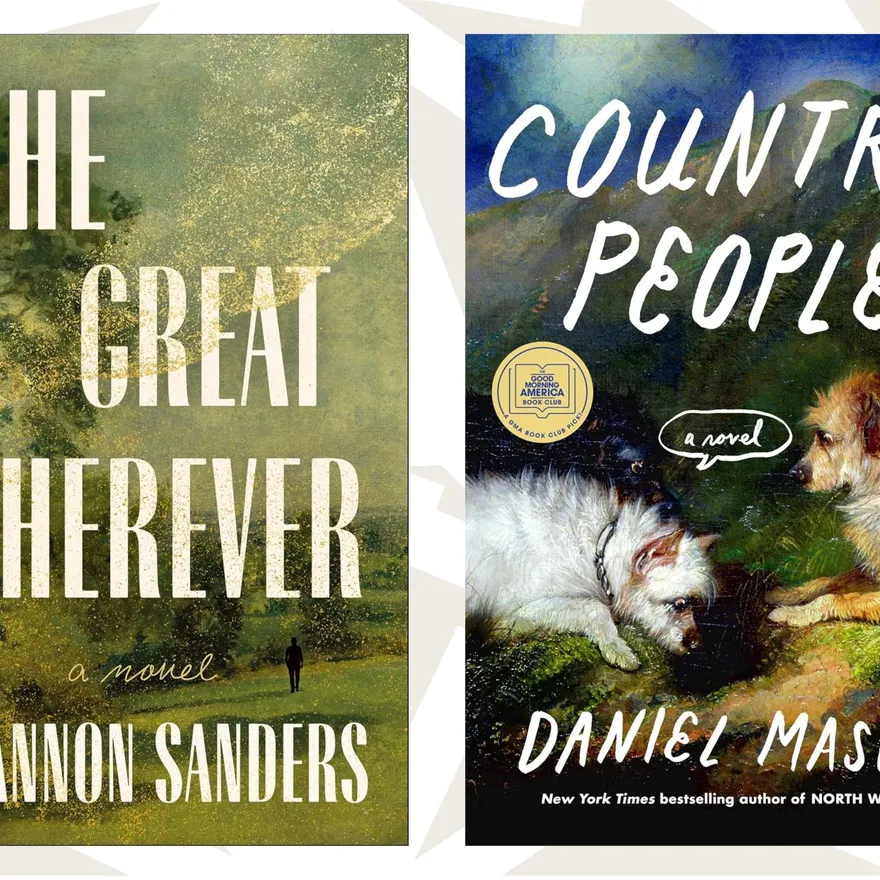
In this episode of NPR's Book of the Day, two novels explore what happens when city dwellers confront rural life. Shannon Sanders discusses "The Great Wherever," which uses ghost narrators across generations to examine how a Black woman's unexpected inheritance of Tennessee farmland connects her to ancestral legacy while her economic struggles shape how she views this connection. Daniel Mason's "Country People" follows a family moving to Vermont with romantic expectations that clash with reality, examining how storytelling and imagination help people construct meaning and find belonging.
Both authors discuss the creative challenges of novel writing and the role of imagination in their work. The conversation touches on how family gatherings on inherited land strengthen intergenerational bonds, how folkloric storytelling blurs lines between play and belief, and how communities form around shared imaginative possibilities. The episode explores tensions between idealized expectations and lived experience, and how individuals navigate disappointment while seeking connection to place and family history.

This is a preview of the Shortform summary of the Jul 24, 2026 episode of the NPR's Book of the Day
Sign up for Shortform to access the whole episode summary along with additional materials like counterarguments and context.
1-Page Summary
Family Legacy and Inherited Identity Across Generations
Shannon Sanders' novel "The Great Wherever" explores how family legacy and inherited identity shape Black families across generations through ghost narrators spanning different historical eras.
Ancestral Influence Shapes Family Through Ghosts and Memory
Sanders uses ghost narrators to give voice to multiple generations, including Zina, an enslaved ancestor who died just before emancipation, and a contemporary spirit close to the author's own perspective. The human protagonist, Aubrey Lamb, unexpectedly inherits Tennessee farmland after her father's death, linking her to her ancestry despite her urban upbringing. Sanders portrays the land as both a symbol of freedom and a meeting point for family connection, while showing how family stories are shaped by misremembering and emotional projection rather than factual accuracy alone.
Economic Realities vs. Ancestral Values and Survival Needs
Aubrey's precarious economic circumstances—juggling multiple low-wage city jobs—shape her view of the inherited farmland primarily as a financial windfall. This contrasts sharply with her ancestral ghosts, for whom the land embodies freedom and family obligation. This generational divide reflects how each generation reinterprets legacy through the lens of its own survival needs.
Ancestral Guidance and Inherited Values in Family History
Sanders draws parallels between the novel's ancestral ghosts and her own experience of being guided by her late grandmother and educator parents. These values are reinforced during family gatherings on Tennessee farmland co-owned by Sanders' extended family, strengthening intergenerational bonds and reaffirming collective history across divergent life paths.
Imagination, Storytelling, and Narrative Role
The role of imagination and storytelling in building meaning is central in Daniel Mason's fiction and in the writing philosophies discussed by Mason and Sanders.
Varied Perspectives Show how Characters Build Meaning Through Backstories and Folklore
In Mason's "Country People," protagonist Miles Shalevsky-Pitrossian tells elaborate folktales to his children nightly, including stories of the Humbaba, a mythological shapeshifter. These tales begin influencing his children's worldviews, blurring lines between playful possibility and genuine suspicion. Mason also creates local legends within the fictional town of Greensbury, including the Great Slave Fail sleigh factory catastrophe, illustrating how places and people shape meaning through constructed, inherited, and contested stories.
Storytelling: Creative Escape or Delusion
For Miles, storytelling offers creative escape rather than academic focus, as he prefers enchanting his children over writing his dissertation. Mason explores the fine line between productive imaginative play and the risk of drifting into ungrounded belief systems, particularly when belief systems become rigid or competitive.
Authors Draw From Experience With Language, Stories, and Imagination
Mason admits to a personal affinity with Miles, particularly regarding the challenge of focus and tendency toward procrastination. Sanders adds that writers are drawn to ghost stories because of the creative freedom they offer—there's "no one to tell me I'm doing it wrong." Ghost stories tap into universal mysteries and the imaginative pleasure of the unknown.
Tension Between Idealized Expectations and Lived Reality
Mason's exploration of Vermont highlights the gap between imagination and reality, and how individuals grapple with disappointment while seeking belonging.
Urban Views on Rural Life Differ From Country Realities
The Shalevsky-Pitrossian family arrives in Vermont with romantic, pastoral fantasies, expecting to find a community reminiscent of Russian folklore. Miles dreams of writing about peasants, while his wife Kate hopes for a simpler rural life. However, Mason makes clear the reality is quite different. Mason researched not just Vermont's actual landscape, but also its place in the American imagination, noting his book is as much about persistent preconceptions as about the material reality of life in Vermont.
Aspirations Often Fail to Materialize as Anticipated
Miles cycles through dissertation topics over fourteen years without success, disappointing his family despite being the grandson of prominent physician Lucius Shalevsky. Kate, a scholar of Milton and Blake, hopes that moving to Vermont and her college professorship will finally provide Miles with the stability to complete his intellectual projects, yet frustration grows as Miles fails to fulfill his potential.
Groups Embrace Beliefs Transcending Disappointment
The Hollow Earth Society serves as a refuge for those disillusioned by everyday disappointments, offering members a sense of belonging and imaginative possibility rather than being just a wacky conspiracy group. Wilson Bentley, after medical dismissal of his reincarnation beliefs, positions himself as a chronicler cataloging humanity's inventory of wrong ideas, acknowledging that most people believe false things—another way to come to terms with the tension between aspiration and reality.
Community, Belonging, and Social Connections
Shared Land and Place Anchor Family to Reunite and Reaffirm Bonds
In the novel, the Great Wherever in Lander County, Tennessee, serves as farmland that unites the family despite divergent lives. The land acts not only as a source of economic opportunity but also as a family anchor and symbolic connection between different places and generations.
Imaginative Communities Offer Belonging For Marginalized Individuals
Mason describes how the Hollow Earth Society welcomes individuals with diverse motivations—some join from loneliness or religious disillusionment, others for imaginative play or alternative possibilities. The group engages in activities like studying old atlases, exploring canyons, and researching local history, fostering social connections and offering members a sense of community regardless of their actual belief in a hollow earth.
Challenges of Creative Writing and Balancing Life Demands
Writers Juggle Obligations That Interfere With Creative Work
Sanders describes writing her novel while juggling a day job and caring for small children, mostly writing late at night when low on energy. She emphasizes that countless reasons compete against finishing a novel, applauding anyone who manages to complete such a demanding creative project.
Nocturnal, Isolated Nature of Novel Writing Demands Persistence Through Uncertainty
Sanders likens novel writing to "fumbling through the dark with a short candle," highlighting both the literal solitude of nocturnal writing and the uncertainty inherent in guiding a creative project to completion. She emphasizes that completing a novel requires significant commitment and endurance.
Writers Feel Emotional and Psychological Shifts After Finishing Major Works
Upon finishing The Great Wherever, Sanders felt "a real sense of finality." While she still thinks about her characters and enjoys speaking with readers, she feels her characters are now "safely situated on that farm," no longer requiring her active attention, underscoring the sense of closure that comes with completing a major creative work.
1-Page Summary
Additional Materials
Counterarguments
- The use of ghost narrators to represent ancestral influence may risk oversimplifying or romanticizing complex historical realities, potentially reducing nuanced experiences to symbolic figures rather than fully realized characters.
- Emphasizing misremembering and emotional projection in family stories could be seen as undermining the importance of factual historical accuracy, which is crucial for understanding and addressing real injustices faced by Black families.
- The symbolism of inherited land as freedom and connection may not resonate with all readers, especially those whose family histories involve land dispossession, forced migration, or urbanization, making the metaphor less universally applicable.
- Prioritizing economic survival over symbolic or emotional meanings in interpreting legacy might be viewed as a pragmatic necessity rather than a generational divide, suggesting that material needs often take precedence regardless of era.
- Drawing direct parallels between fictional ancestral ghosts and real-life familial guidance could be criticized for conflating imaginative constructs with lived experience, potentially blurring the line between fiction and reality.
- The portrayal of imaginative communities like the Hollow Earth Society as sources of belonging may overlook the potential dangers of groupthink or the spread of misinformation, especially in contemporary contexts where conspiracy theories can have real-world consequences.
- The focus on the challenges of creative writing and the sense of closure after completing a novel may not reflect the experiences of all writers, some of whom may feel ongoing uncertainty or dissatisfaction even after publication.
Actionables
- You can create a family memory map by drawing a simple outline of a meaningful place (like a family home or neighborhood) and inviting relatives to add memories, stories, or imagined events at different locations, highlighting how collective memory and imagination shape family identity across generations.
- A practical way to explore how economic realities influence family legacy is to list inherited or shared family items or traditions, then write down how each one’s meaning or use has changed over time due to financial needs or shifting priorities, helping you see how survival and adaptation reshape what gets valued.
- You can experiment with blending fact and folklore by writing a short story or audio recording that mixes real family history with invented legends or ghostly narrators, then sharing it with relatives to spark conversation about how stories, myths, and imagination influence your family’s sense of belonging and connection.
Get access to the context and additional materials
Family Legacy and Inherited Identity Across Generations
Shannon Sanders' novel "The Great Wherever" explores the intricate ways family legacy and inherited identity shape Black families over generations. Told through the voices of ghosts spanning different historical eras, the novel considers how memory, land, and evolving values influence family bonds.
Ancestral Influence Shapes Family Through Ghosts and Memory
Sanders uses ghost narrators to give voice to the lives and perspectives of multiple generations. One ghost, Zina, represents an ancestor who was enslaved and died just before emancipation—a presence that anchors the story in the pain and missed possibilities of freedom. The principal ghost narrator is a contemporary spirit, close in age and outlook to the author herself, allowing Sanders to blend personal generational perspective with historical resonance.
The human center of the novel, Aubrey Lamb, unexpectedly inherits Tennessee farmland upon her father's death. This land links her directly to her ancestry and the collective history of the family, despite her urban upbringing and distant relationship with the property. Sanders portrays the land not only as a symbol of opportunity and freedom but also as a perennial meeting point for family connection.
The Lamb family's stories are shown through shifting remembrance and personal bias. Sanders notes that family tales are shaped as much by misremembering and emotional projection as by factual accuracy. With a narrative that covers many characters and viewpoints, the novel demonstrates how the real story emerges from these overlapping, subjective recollections rather than any singular, definitive account.
Economic Realities vs. Ancestral Values and Survival Needs
Aubrey’s view of the inherited farmland is shaped by her precarious economic circumstances as she juggles multiple low-wage jobs in the city. For Aubrey, the land primarily represents a potential windfall—a means to financial security in a difficult present. This stands in stark contrast to the ancestral ghosts, for whom the land embodies freedom, family obligation, and the hard-won fruits of survival.
This generational divide on the land's value reflects how economic realities and opportunities shift over time. Where ancestors once saw land as liberation and a family lifeline, Aubrey sees a price tag and relief from modern financial strain. The ghosts’ inability ...
Here’s what you’ll find in our full summary
Family Legacy and Inherited Identity Across Generations
Additional Materials
Counterarguments
- The use of ghost narrators, while creative, may distance some readers from the emotional immediacy of the characters’ lived experiences, making it harder to connect with their struggles on a personal level.
- Emphasizing inherited identity and ancestral influence could risk overshadowing the agency and individuality of present-day characters, potentially reducing their complexity to mere products of their lineage.
- The portrayal of land as a unifying symbol may not resonate with all readers, especially those whose family histories do not include land ownership or who have experienced displacement, thus limiting the novel’s universality.
- The focus on subjective memory and personal bias in family storytelling, while realistic, might undermine the importance of factual historical record and collective truth in understanding the past.
- The generational divide over the value of land could be seen as reinforcing ...
Actionables
- you can create a family memory map by drawing a simple timeline or map of places significant to your family, then invite relatives to add their own memories, feelings, or stories about each location, highlighting how different generations interpret the same places and events.
- a practical way to explore inherited identity is to write a short letter to an ancestor (real or imagined), describing how you see your life and choices in relation to what you know or imagine about their experiences, then reflect on how your perspective might differ from theirs.
- you can host a casual ...
Get access to the context and additional materials
Imagination, Storytelling, and Narrative Role
The role of imagination and storytelling in building meaning and navigating belief is central in Daniel Mason’s fiction, as well as in the writing philosophies discussed by Mason and Shannon Sanders.
Varied Perspectives Show how Characters Build Meaning Through Backstories and Folklore
Miles Shalevsky-Pitrossian, the protagonist in Mason’s "Country People," weaves folktale stories every night for his children. Rather than completing his dissertation on Russian folklore, he indulges his passion for storytelling by recounting elaborate tales—some rooted in actual folklore, others of his own invention. A recurring story involves a mythological shapeshifter, the Humbaba, which becomes a shorthand in the family for the delight and mild trouble of unchecked imagination. The tales Miles shares start influencing the worldview of his children, especially his son, who suspects anyone might be the deceiving Humbaba, blurring lines between playful possibility and genuine suspicion.
Mason builds a vivid imaginative environment within the fictional town of Greensbury, introducing readers to local legends, notably the tale of the Great Slave Fail sleigh factory catastrophe. This invented legend tells of a factory in Greensbury that produced sleds for children across New England, only to have a catastrophic failure one winter where sleigh rivets failed and the machinery all broke down. This backstory, though fabricated within the novel, becomes a foundational part of local folklore, echoing how places and people shape meaning through stories. These legends are set alongside equally powerful beliefs within the local community, such as the conviction among some Vermonters that a portal to a hollow earth exists in the Green Mountains. Mason uses these contrasting but competing narratives to illustrate how characters derive meaning from their environment by constructing, inheriting, and contesting stories.
Storytelling: Creative Escape or Delusion
For Miles, the act of storytelling is a means of creative escape, a way to indulge his passion for tales rather than writing his academic dissertation. Instead of focusing on analyzing Russian folklore, he channels his energy into entertaining and enchanting his children with these stories. Mason reflects on the fine line between productive imaginative play and the risk of drifting into ungrounded belief systems. Through Miles’ tendency to let stories get “a little bit out of hand,” Mason explores the borderland where creative imagination can slip into delusion or false conviction, sometimes even affecting children’s perspectives and fears.
He draws a distinction between the benign indulgence in collective stories that bond a family or community, and the potentially more dangerous crossing over int ...
Here’s what you’ll find in our full summary
Imagination, Storytelling, and Narrative Role
Additional Materials
Counterarguments
- While storytelling and imagination are central in Mason’s fiction, some readers may find that an overemphasis on invented folklore can detract from engagement with real-world issues or character development.
- The blending of real and invented stories might confuse readers or blur important distinctions between cultural heritage and personal invention.
- The portrayal of storytelling as a creative escape could be seen as romanticizing procrastination or avoidance of responsibility, rather than addressing underlying issues.
- The suggestion that collective stories can become dangerous when belief systems become rigid may overlook the positive role that shared narratives play in fostering social cohesion and identity.
- The focus on the imagina ...
Actionables
- you can create a family or household story jar by inviting everyone to write down snippets of real memories, invented tales, or local legends on slips of paper, then draw one at random each week to read aloud and discuss how it shapes your shared sense of identity and place
- This helps everyone experience the blending of fact and fiction, and see how stories—whether true or invented—can influence group beliefs and connections.
- a practical way to explore the boundary between playful imagination and belief is to keep a personal log where you record moments when you catch yourself or others treating a playful story as possibly true, then reflect on what made the story feel believable and how it affected your feelings or actions
- For example, jot down when a joke or family myth made you second-guess reality, and note whether it brought delight, confusion, or caution.
- you can invent a ...

Get access to the context and additional materials
Tension Between Idealized Expectations and Lived Reality
Daniel Mason’s exploration of Vermont in his work highlights the persistent gap between what people imagine and what they actually encounter, as well as the ways individuals grapple with disappointment and seek belonging, even in unlikely places.
Urban Views on Rural Life Differ From Country Realities
Shalevsky-Pitrossian Family Moves to Vermont With Romantic Pastoral Fantasies, Hoping to Encounter Peasants Like In Russian Folklore, Only to Discover Different Reality
The Shalevsky-Pitrossian family arrives in Vermont driven by romantic, pastoral fantasies, expecting to find a landscape and community reminiscent of Russian folklore. Miles, the patriarch, dreams of writing a dissertation about peasants inspired by these tales, believing he’ll find real-life peasants in Vermont. His wife, Kate, supports the move, also hoping for a simpler, storybook rural life. However, Mason makes clear that the reality is quite different. The humor and central irony of the story arise from these city dwellers enthusiastically preparing to study "the natives," only to find that actual rural life does not correspond to their idealized vision.
Daniel Mason Explored Vermont as Both It Exists and as Americans Imagine It, Emphasizing the Gap Between Preconception and Reality
Mason spent considerable time in the region, researching not just Vermont’s actual landscape and lifestyle, but also the place it occupies in the American imagination as "pastoral" and "bucolic." While Vermont is truly beautiful, many outsiders arrive with ingrained preconceptions about country living. Mason notes that his book is as much about these persistent preconceptions as about the material reality of life in Vermont, and the joke is often on the city people trying—and often failing—to become country people.
Aspirations Often Fail to Materialize as Anticipated
Miles' Fourteen-Year Cycle of Dissertation Topics and Family's Growing Disappointment
Miles is burdened by family expectations as the grandson of the prominent physician Lucius Shalevsky, yet he repeatedly fails to fulfill these ambitions, cycling through dissertation topics without success. This pattern, stretching over fourteen years, becomes a source of quiet but growing disappointment for his family.
Kate, a Scholar of Milton and Blake, Hopes Moving To Vermont and a College Professorship Will Resolve Miles's Lack of Commitment to Intellectual Projects
Kate, Miles’s wife, is a committed scholar of Milton and Blake. She hopes that relocating to Vermont and taking a college professorship will finally provide Miles with the stability and inspiration needed to commit to and finally finish his long-stalled intellectual projects. Despite her passion for literature and her own academic pursuits, she increasingly struggles with frustration as Miles fails to fulfill his potential. Their shared love for literature and idealistic visions feeds both their aspirations and, at times, their disappointments.
Groups Embrace Beliefs Transcending Disappointment
Ho ...
Here’s what you’ll find in our full summary
Tension Between Idealized Expectations and Lived Reality
Additional Materials
Counterarguments
- While Mason emphasizes the gap between expectation and reality, some individuals do successfully adapt to rural life and find fulfillment, suggesting that idealized expectations can sometimes be met or even exceeded.
- The portrayal of urban dwellers as universally naive about rural life may overlook the diversity of backgrounds and preparedness among city people moving to the country.
- The focus on disappointment and unmet aspirations may understate the resilience and adaptability that many people demonstrate when faced with unexpected realities.
- The narrative centers on the experiences of outsiders, potentially neglecting the perspectives and agency of long-term rural residents in shaping their own communities.
- The idea that groups like the Hollow Earth Society primarily serve as refuges for the lonely or disappointed may not account for the genuine curiosity, intellectual playfulness, or social engagement that can also motivate par ...
Actionables
- you can keep a reality journal to track your expectations versus actual experiences when entering new situations or places, helping you notice and adjust for idealized thinking; for example, before visiting a new town or starting a new job, write down what you imagine it will be like, then revisit your notes after a week to compare and reflect on the differences.
- a practical way to explore your sense of belonging is to list the communities or groups you feel drawn to, then intentionally participate in one that seems unlikely or outside your comfort zone, noting how your feelings of connection or alienation shift over time.
- yo ...

Get access to the context and additional materials
Community, Belonging, and Social Connections
Shared Land and Place Anchor Family to Reunite and Reaffirm Bonds
In the novel, the Great Wherever in Lander County, Tennessee, serves as the family's farmland and acts as a central location that unites the family. Despite leading divergent lives, the land reinforces their shared values. The narrative highlights the land not only as a source of economic opportunity but also as a space for community, as a family anchor, and as a symbolic connection between different places and generations.
Imaginative Communities Offer Belonging For Marginalized Individuals
Daniel Mason describes how the Hollow Earth Society forms an imaginative community welcoming individuals with diverse motivations. Some members join out of loneliness or disillusionment with mainstream religion, while others are drawn to the society for imaginative play, the spirit of "what if," or the playful possibility of alternative realities—similar to the concept of costume play. The tent is expansive, accommodating various l ...
Here’s what you’ll find in our full summary
Community, Belonging, and Social Connections
Additional Materials
Counterarguments
- The idea that land serves as a unifying force for families may not apply universally; for some, land ownership can be a source of conflict, division, or exclusion, especially if inheritance or economic disparities arise.
- The symbolic connection of land across generations can sometimes reinforce traditional hierarchies or limit individual autonomy, rather than fostering genuine unity.
- The portrayal of the Hollow Earth Society as inclusive may overlook the potential for groupthink or the marginalization of dissenting voices within even imaginative communities.
- While shared activities can foster social connections, they may a ...
Actionables
- you can designate a recurring family day at a local park or shared space to create a physical anchor for your family, encouraging everyone to bring something meaningful from their own lives to share, like a favorite recipe, story, or photo, reinforcing connection across generations and locations.
- a practical way to foster inclusive community is to start a casual group chat or online forum where people with different backgrounds and beliefs can share quirky interests, local discoveries, or imaginative ideas, making space for both skeptics and enthusiasts to participate without pressure to conform.
- you can organize a r ...


Get access to the context and additional materials
Challenges of Creative Writing and Balancing Life Demands
Writers Juggle Obligations That Interfere With Creative Work
Shannon Sanders describes the difficulty of writing her novel, The Great Wherever, while juggling a day job and caring for small children. Most of her writing took place late at night after her family was asleep, often while she was low on energy and managing various competing demands. Sanders emphasizes that there are countless reasons not to finish writing a novel because daily obligations constantly compete for a writer’s attention. She applauds anyone who manages to reach the end of such a demanding creative project.
Nocturnal, Isolated Nature of Novel Writing Demands Persistence Through Uncertainty
Sanders likens the process of writing a novel to "fumbling through the dark with a short candle," highlighting both the literal solitude of writing at night and the uncertainty inherent in guiding a creative project to completion. She points out that completing a novel requires a significant degree of commitment and endurance, and expresses admiration for writers who persist despite the isolation and ambiguity.
Writers Feel Emotional and Psychological Shifts After Finishing Major Works
Sanders Finds Ghost Characters Safely Situated, Not Demanding He ...
Here’s what you’ll find in our full summary
Challenges of Creative Writing and Balancing Life Demands
Additional Materials
Counterarguments
- Some writers thrive under time constraints and find that balancing multiple obligations actually enhances their creativity and productivity.
- Not all writers experience the process as solitary or isolating; some actively seek out and benefit from collaborative writing environments or writing groups.
- Many writers do their best work during daytime hours or when energy is highest, rather than late at night.
- The sense of closure or emotional detachment after finishing a novel is not universal; some writers continue to feel deeply connected to their characters and stories long after completion.
- For some, the process of writing is energizing and fulfilling, rather than draining or marked by unce ...
Actionables
- you can create a daily five-minute “creative checkpoint” where you jot down the single most distracting obligation or thought on your mind, then write one sentence about your novel idea to keep your project present despite interruptions; this helps you maintain a thread of creative focus even on the busiest days.
- a practical way to manage late-night writing fatigue is to set up a “wind-down ritual” before writing, such as dimming lights, making herbal tea, or listening to a calming playlist, so your mind associates these cues with creative work and transitions more smoothly into writing ...


Get access to the context and additional materials


Create Summaries for anything on the web
Download the Shortform Chrome extension for your browser
