

Deb Haaland on 'A Voice Like Mine' and her candidacy for governor of New Mexico
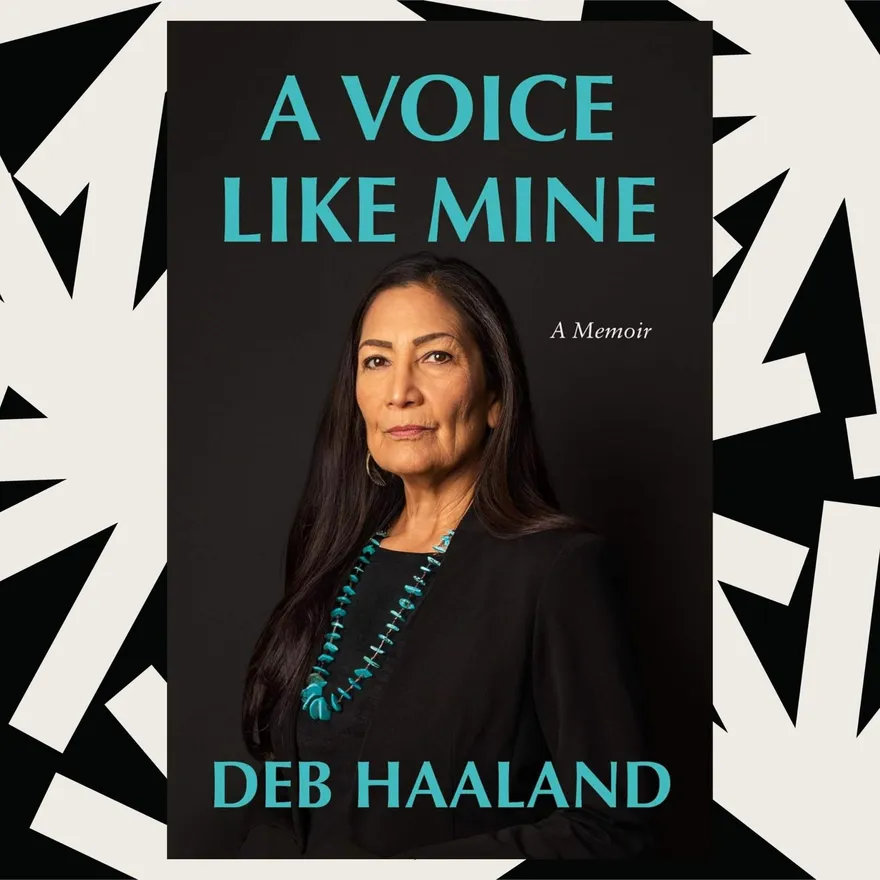
In this episode of NPR's Book of the Day, Deb Haaland discusses her new book and her candidacy for New Mexico governor. Haaland reflects on her historic political career, which includes becoming the first Native American woman elected to Congress and the first Native American cabinet secretary. She shares her personal path to public service and explains how she maintains balance through marathon running.
The conversation covers Haaland's environmental policy priorities during her tenure as Interior Secretary, including restricting fossil fuel extraction on public lands and advancing clean energy projects on tribal lands. She also addresses the reversal of these conservation measures under her successor and discusses broader issues of Native American sovereignty and land rights. Throughout, Haaland emphasizes the need for greater Indigenous representation in government and the importance of honoring historical commitments to Native peoples.

This is a preview of the Shortform summary of the Jul 23, 2026 episode of the NPR's Book of the Day
Sign up for Shortform to access the whole episode summary along with additional materials like counterarguments and context.
1-Page Summary
Deb Haaland's Historic Political Career and Native American Representation
Deb Haaland's political career represents a series of historic firsts for Native American representation in U.S. government. In 2018, she and Charise Davids became the first Native American women elected to Congress. Haaland then became the first Native American cabinet secretary when President Biden appointed her to lead the Department of the Interior. Now running for New Mexico governor, she could become the first Native American woman to serve as a state governor.
Haaland acknowledges the weight of breaking these barriers, emphasizing her role in encouraging others from marginalized backgrounds to pursue leadership. She stresses that while Indigenous people have "more of a voice than we've ever had," there's still a need for greater representation at decision-making tables to ensure Native perspectives are heard.
Personal Journey to Public Service
Despite her family's public service background—her father was a Marine and her mother worked for the Bureau of Indian Affairs—Haaland emphasizes that her decision to enter politics was self-motivated. After losing the 2014 lieutenant governor race, she redirected her efforts to rebuild the Democratic Party of New Mexico as state party chair, which positioned her for future opportunities.
Haaland maintains balance through marathon running in New Mexico's natural spaces, describing it as a peaceful way to connect with nature and find respite from her demanding public life.
Environmental and Energy Policy
As Interior Secretary, Haaland prioritized restricting fossil fuel extraction on public lands while advancing clean energy initiatives. She funded solar projects on tribal lands, including the Hopi Indian Reservation in Arizona, bringing electricity to communities that previously lacked it. Haaland advocates for a balanced energy portfolio that supports economic growth, environmental stewardship, and community welfare, emphasizing that clean energy projects create jobs and improve quality of life in Indigenous communities.
Her successor, Doug Burgum, has reversed many of these conservation measures by increasing oil and gas leasing on public lands. Haaland criticizes this shift, noting it undermines clean energy progress and climate initiatives. She explains that her approach involved collaborative stakeholder engagement rather than top-down decision-making, which helped advance clean energy projects successfully.
Native American Sovereignty and Land Rights
Haaland emphasizes that the entire country is the ancestral homeland of Native Americans and Indigenous peoples, with Pueblo Indians being the first inhabitants of New Mexico and the Southwest. She stresses that American citizens have a responsibility to honor commitments to Native peoples and recognize historical injustices, noting that despite 250 years of the country's existence, there has been regression in Native American sovereignty and land stewardship.
Haaland makes clear that Indigenous peoples don't need government recognition or national anniversaries to celebrate their homeland. Native communities honor their land daily, driven by ancestral stewardship and a deep, continuous connection that extends beyond political boundaries.
1-Page Summary
Additional Materials
Clarifications
- The U.S. Department of the Interior manages federal lands, natural resources, and wildlife conservation. It oversees programs related to Native American tribes, including land management and tribal affairs. The department also handles water resource management and national parks. Its role includes balancing environmental protection with resource development.
- A cabinet secretary is a senior official who leads a major federal department and advises the President. They help shape national policies and oversee government programs within their department's area. Cabinet secretaries are appointed by the President and confirmed by the Senate. Their decisions can significantly impact the country’s laws, economy, and public services.
- The governor of New Mexico is the state's chief executive, responsible for enforcing state laws and overseeing the executive branch. This position holds significant influence over state policy, budget decisions, and appointments to key government roles. Governors also have the power to veto legislation and call special legislative sessions. As a prominent political leader, the governor shapes New Mexico's direction on issues like education, healthcare, and economic development.
- Native American representation in U.S. politics has historically been minimal due to systemic exclusion and marginalization. For much of U.S. history, Native Americans were denied citizenship and voting rights until the Indian Citizenship Act of 1924. Even after gaining legal rights, Native Americans faced barriers like discrimination and limited access to political networks. Deb Haaland's election marks a significant breakthrough in overcoming these longstanding obstacles.
- "Fossil fuel extraction on public lands" refers to the process of drilling, mining, or harvesting coal, oil, and natural gas from land owned by the government. These activities can generate revenue and energy but often cause environmental damage, such as habitat destruction and pollution. Public lands are managed for multiple uses, so decisions about extraction balance economic benefits with conservation. Limiting extraction aims to protect ecosystems and reduce greenhouse gas emissions contributing to climate change.
- The Hopi Indian Reservation is located in northeastern Arizona, surrounded by the Navajo Nation. It is one of the oldest continuously inhabited areas in North America, with the Hopi people maintaining a rich cultural and spiritual heritage. The reservation is significant for its unique governance system and efforts to preserve traditional Hopi ways of life. It also faces challenges related to land rights and resource management.
- Collaborative stakeholder engagement is a process where policymakers actively involve all affected groups, such as communities, businesses, and interest groups, in decision-making. This approach seeks to build consensus, address concerns, and incorporate diverse perspectives to create more effective and accepted policies. It contrasts with top-down methods where decisions are made by authorities without broad input. The goal is to foster cooperation and shared ownership of outcomes.
- The Pueblo Indians are Native American peoples known for their unique adobe and stone dwellings in the Southwestern United States. They have a rich cultural heritage centered on agriculture, pottery, and complex religious ceremonies. Their societies are organized into matrilineal clans with strong community ties and governance. The Pueblo peoples have continuously inhabited the region for over a thousand years, maintaining traditions despite colonization and external pressures.
- Native American sovereignty refers to the inherent authority of Indigenous tribes to govern themselves within U.S. borders. This includes managing their own laws, resources, and lands without interference from state governments. Land stewardship involves Indigenous peoples' traditional responsibility to care for and protect their ancestral lands sustainably. Conflicts arise when federal or state policies limit tribal control or exploit natural resources on these lands.
- Native American sovereignty and land stewardship have regressed due to centuries of U.S. policies like forced removals, broken treaties, and land seizures. The establishment of reservations limited Indigenous control over their ancestral lands. Federal laws often prioritized resource extraction and development over tribal rights. These actions disrupted traditional governance and land management practices.
- Indigenous peoples have lived on their ancestral lands for thousands of years, maintaining cultural and spiritual ties independent of external validation. Government recognition or national anniversaries are formal acknowledgments that do not define their identity or connection to the land. Their relationship with the land is continuous and rooted in tradition, not dependent on official ceremonies. This perspective highlights Indigenous sovereignty and self-determination beyond colonial frameworks.
Counterarguments
- While Deb Haaland and Charise Davids were the first Native American women elected to Congress, there have been Native American men in Congress before, and some critics argue that focusing on "firsts" can overshadow ongoing systemic issues.
- Some argue that representation alone does not guarantee substantive policy changes for Native communities, and that broader structural reforms are needed beyond individual achievements.
- Critics of Haaland's energy policies contend that restricting fossil fuel extraction on public lands can negatively impact local economies and jobs, particularly in regions dependent on energy production.
- There are differing views within Native American communities regarding energy development, with some tribal governments supporting oil and gas projects for economic reasons.
- Some environmentalists argue that Haaland's clean energy initiatives, while positive, did not go far enough in addressing climate change or protecting public lands from all forms of development.
- The assertion that Native American sovereignty and land stewardship have regressed over 250 years is debated; some point to recent legal victories and increased tribal self-determination as evidence of progress.
- The idea that all of the United States is the ancestral homeland of Native Americans is historically accurate, but some critics argue that this perspective can complicate current land use and property rights discussions.
- While Haaland emphasizes collaborative stakeholder engagement, some stakeholders—such as ranchers, energy companies, and local governments—have felt excluded or inadequately consulted during her tenure as Interior Secretary.
Get access to the context and additional materials
Native American Representation and Breaking Barriers in Politics
Deb Haaland’s political career marks a series of historic breakthroughs for Native American representation at the highest levels of U.S. government. Her journey reflects both personal and collective victories, bringing visibility to Indigenous communities and inspiring others to pursue leadership roles.
Haaland's Historic Firsts as Native American Woman in Federal Politics
In 2018, Deb Haaland and Charise Davids of Kansas became the first two Native American women elected to the U.S. Congress, marking an unprecedented moment in the country’s political landscape. Haaland then made further history as the first Native American to serve as a U.S. cabinet secretary when President Joe Biden nominated her to lead the Department of the Interior. Now, Haaland is running for governor of New Mexico. If she wins in November, she will become the first Native American woman to serve as a state governor in the United States.
Haaland Feels the Weight Of Advocating For More Indigenous Leadership
Haaland openly acknowledges the fear and pressure that comes with breaking political barriers, stating, “It is kind of scary and I feel like it's kind of my job to help people to recognize that they ...
Here’s what you’ll find in our full summary
Native American Representation and Breaking Barriers in Politics
Additional Materials
Counterarguments
- While Deb Haaland’s achievements are historic, some critics argue that focusing on individual representation may not necessarily translate into substantive policy changes for Native communities.
- There is a viewpoint that increasing representation alone does not address systemic issues such as poverty, health disparities, or treaty rights violations faced by Indigenous peoples.
- Some contend that emphasizing identity in politics can risk tokenism, where individuals are celebrated for their background rather than their policy positions or effectiveness.
- Others argue that all elected officials, regardless of background, should be held to the same standards of accountabilit ...
Actionables
- you can regularly send short, encouraging messages to Indigenous or marginalized individuals in your network who express interest in leadership, letting them know you believe in their potential and are available to support them if they decide to pursue leadership roles; for example, a simple text or email saying you noticed their strengths and would be happy to help brainstorm next steps can make a big difference.
- a practical way to help increase Indigenous representation is to identify and share information about local government meetings, advisory boards, or public comment opportunities with Indigenous friends or community members, making it easier for them to participate and have their voices heard; you might forward meeting schedules, explain how to sign up to speak, or offer to attend with them for support.
- you can create a personal habit of a ...
Get access to the context and additional materials
Personal Journey and Motivation Toward Public Service
Deb Haaland’s path toward public service is shaped by her personal choices and resilience, rather than simply following the example of her family.
Haaland's Political Path Wasn't Predetermined by Her Public Service Family Background
Haaland acknowledges her family’s tradition of public service—her father was a Marine and her mother worked for the Bureau of Indian Affairs as a civil servant. However, she emphasizes her decision to enter politics was self-motivated, saying, “I just thought of running for office all on my own.” In her memoir, Haaland reflects on her winding journey from working at a bakery in Albuquerque to building a career in politics, demonstrating that her path was not preordained by her parents’ careers.
2014 Failed Gubernatorial Campaign Redirected Her to Strengthen Democratic Party Infrastructure In New Mexico
Following Her 2014 Lieutenant Governor Loss, She Pursued the Role of Democratic Party of New Mexico Chair to Rebuild the Party
Haaland ran for lieutenant governor of New Mexico in 2014, a year that saw significant losses for Democrats. After her defeat, she was determined to help the party recover and decided to run for state party chair of the Democratic Party of New Mexico. Her leadership in this role enabled her to rebuild party infrastructure and p ...
Here’s what you’ll find in our full summary
Personal Journey and Motivation Toward Public Service
Additional Materials
Counterarguments
- While Haaland emphasizes her self-motivation, it is reasonable to acknowledge that growing up in a family with a strong tradition of public service likely influenced her values and career choices, even if indirectly.
- The narrative of resilience and self-determination may understate the advantages or inspiration provided by her family's background in public service.
- Haaland’s decision to run for party chair after her 2014 defeat can also be seen as a strategic move to maintain political relevance and build a network for future campaigns, rather than solely an altruistic effort ...
Actionables
- you can create a personal timeline that highlights moments when you made choices based on your own motivations rather than family expectations, then use this as a guide to identify future opportunities where you can act from personal conviction.
- a practical way to build resilience after setbacks is to set up a simple reflection routine where, after any disappointment, you jot down one lesson learned and one small action you can take to strengthen your skills or network for next time.
- you can schedule r ...
Get access to the context and additional materials
Environmental and Energy Policy Priorities
Haaland Restricted Fossil Fuel Extraction and Promoted Clean Energy On Public Lands
During her tenure as Secretary of the Interior, Deb Haaland prioritized restricting fossil fuel drilling and moving away from leasing public land purely for resource extraction. Instead, she redirected focus and significant funding into clean energy initiatives. One notable example is the funding for solar energy projects on the Hopi Indian Reservation in Arizona, where many homes had never had electricity before these installations.
Haaland Advocates For a Balanced Energy Portfolio, Merging Economic Growth With Environmental and Community Benefits
Haaland consistently advocates for a diversified energy portfolio that gives equal weight to economic growth, environmental stewardship, and community welfare. She stresses the importance of moving clean energy forward alongside other energy sources. Clean energy projects, such as those funded on tribal lands, not only provide electricity where it's lacking but also create jobs and improve quality of life in Indigenous communities that often lack basic infrastructure. A diversified energy strategy, she argues, supports national needs and eases the transition away from fossil fuels.
Current Administration's Policy Shift Hinders Clean Energy and Climate Progress
Haaland’s successor, Doug Burgum, has reversed many of her conservation and clean energy measures by increasing oil, natural gas, and mineral leasing on public lands. This policy shift reflects a return to prioritizing resource extraction over clean energy development. Haaland criticizes these actions, noting that suppressing cle ...
Here’s what you’ll find in our full summary
Environmental and Energy Policy Priorities
Additional Materials
Counterarguments
- Restricting fossil fuel extraction on public lands can reduce government revenue from leases and royalties, which fund public services and conservation efforts.
- Limiting resource extraction may lead to increased energy imports or higher energy prices, potentially affecting national energy security and consumer costs.
- Rapidly shifting funding and focus to clean energy projects may not immediately replace the number of jobs or economic benefits provided by traditional energy industries, especially in regions dependent on fossil fuel extraction.
- Some stakeholders, including local governments and industry representatives, have argued that increased regulation and reduced leasing can negatively impact local economies and employment.
- The permitting and development process for clean energy projects on public lands can face significant delays and opposition from environmental groups concerned about land use, wildlife, and ...
Actionables
- you can join or start a neighborhood energy audit group to identify ways your community can reduce fossil fuel use and increase clean energy adoption, such as mapping out homes or buildings that could benefit from solar panels or improved insulation, then sharing findings with local decision-makers to encourage collective action.
- a practical way to support community-driven clean energy is to participate in local government meetings or online forums and advocate for including diverse voices—especially from underrepresented groups—when decisions about energy projects or land use are made, ensuring that policies reflect a balance of economic, environmental, and social needs.
- you ca ...
Get access to the context and additional materials
Native American Sovereignty, Land Rights, and U.S. Legacy With Indigenous Peoples
Ancestral Homeland of Native Americans and Indigenous Peoples
Pueblo Indians, including Deb Haaland’s Laguna Pueblo of New Mexico, were the first inhabitants of New Mexico and other parts of the Southwest prior to the founding of the United States. Deb Haaland emphasizes that the entire country is the ancestral homeland of Native Americans and Indigenous peoples who are native to North America. Native communities continue to maintain deep spiritual and cultural connections to their ancestral lands, with the bones of their ancestors buried there and an enduring obligation to honor them.
The U.S. Must Honor Commitments To Native Peoples and Recognize Historical Injustices Against Indigenous Communities
Haaland expresses that American citizens have a responsibility to care for the land and each other, reflecting on how these values should shape the nation’s treatment of Indigenous peoples. Despite 250 years of the country’s existence, there has been regression in Native American sovereignty and land stewardship. Acknowledging historical injustices and honoring the government’s commitments to Native peoples remain essential.
Native American Land Celebration Occurs Continuously, Regard ...
Here’s what you’ll find in our full summary
Native American Sovereignty, Land Rights, and U.S. Legacy With Indigenous Peoples
Additional Materials
Counterarguments
- While Native Americans were the first known inhabitants of many regions, archaeological evidence suggests that migration and settlement patterns were complex, with multiple waves of peoples arriving over thousands of years.
- The concept of the entire present-day United States as the ancestral homeland of all Native Americans can overlook the diversity and distinct territorial claims of different tribes, many of whom had shifting boundaries and conflicts with each other prior to European colonization.
- The idea that Native American sovereignty and land stewardship have only regressed may not fully account for recent legal victories, land returns, and increased tribal self-governance in some areas.
- The assertion that all American citizens have a responsibility to care for the land and each other is a value statement that may not be universally accepted or interpreted in the same way by all citizens.
- While the U.S. government has failed to honor many commitments, there have also been efforts—h ...
Actionables
- you can learn the original Indigenous names and histories of the places where you live, work, or travel, and use those names in your daily conversations and notes to honor the land’s heritage; for example, refer to a local river or mountain by its Indigenous name when giving directions or sharing photos, and include a brief note about its significance when posting online.
- a practical way to support Indigenous land stewardship is to research and choose products or foods that are grown, harvested, or made by Native-owned businesses or co-ops, especially those that use traditional, sustainable methods; for instance, select wild rice, blue cornmeal, or herbal teas from Native producers and share your reasons for these cho ...

Get access to the context and additional materials


Create Summaries for anything on the web
Download the Shortform Chrome extension for your browser
