

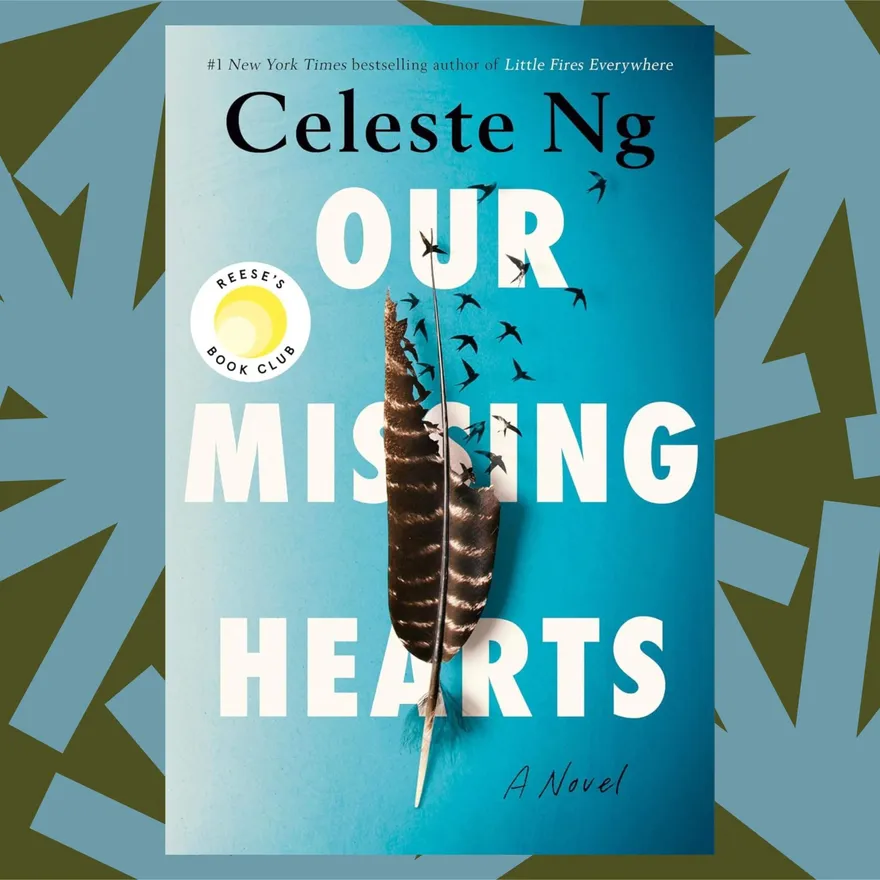
In Celeste Ng’s new novel 'Our Missing Hearts,' a boy searches for his missing mother
In this episode of NPR's Book of the Day, author Celeste Ng discusses her novel about a dystopian America where Asian Americans face systemic persecution following an economic collapse. Ng reveals how her own experiences with racial discrimination—from childhood othering to witnessing anti-Asian violence—directly inform the novel's portrayal of scapegoating and authoritarianism. She explains that every instance of discrimination in her books reflects real experiences she or her friends have encountered.
The conversation explores Ng's approach to writing with empathy, her effort to understand even flawed characters without passing easy moral judgments, and how she uses fiction to prompt readers to reconsider their views of others. Ng also discusses various forms of resistance depicted in her work, from yarn bombing as feminine activism to individual acts of defiance, all grounded in historical movements. Throughout, she grapples with the parental dilemma of raising children in a world that may be hostile to them.

This is a preview of the Shortform summary of the Jul 20, 2026 episode of the NPR's Book of the Day
Sign up for Shortform to access the whole episode summary along with additional materials like counterarguments and context.
1-Page Summary
Personal Experience as Inspiration
Celeste Ng draws deeply from her own childhood and those of friends to inform her depiction of discrimination and parental dilemmas in her novels.
Ng's Childhood Experiences With Racial Othering Shape Her View of Discrimination
Ng recounts being one of only two children of color in her Pittsburgh elementary school, giving her early, direct experience with being visibly different and subject to assumptions. She remembers a traumatic experience at age 11 when a man spat at her and her family in downtown Cleveland, telling them to go back to "Vietnam or Korea or wherever the hell you came from."
Ng's Novels Reflect Anti-Asian Discrimination From Personal Experiences
Ng explains that every example of anti-Asian discrimination in her novels is something she or an Asian friend has actually experienced—from being advised not to stand out, to being excluded from games, to direct racism like cashiers pulling back their eyes into slits. After "Everything I Never Told You" was published, readers often told her they hadn't realized Asian Americans faced such discrimination, giving her books an important documentary function.
Parental Dilemmas Reflect Her Novels' Themes
As a parent to a part-Asian child, Ng reflects on the dilemma of how much to warn her child, balancing vigilance against the risk of instilling fear. She channels this tension into the "heroic mom" character in "Our Missing Hearts," working through the question of how to raise a child in a world that will be hostile to them.
Writing Craft and Empathy
Celeste Ng emphasizes that her writing process centers on empathy—imagining lives different from her own and urging readers to better understand even the most flawed characters.
Imaginative Engagement Helps Ng Predict Character Behavior
Ng's stories often begin with vivid images or compelling questions. She spends time envisioning where her characters grew up and what troubles them, allowing her to predict their behavior in any scenario and portray them authentically.
Ng's Empathetic Portrayal Resists Easy Moral Judgment
Ng asserts that none of her characters are perfect, but rather than imposing moral judgments, she approaches their flaws with understanding. She describes empathy as a muscle, strengthened through reading and writing, and hopes readers will exercise this skill by striving to comprehend—even if they don't condone—a character's decisions.
Ng Upholds Her Empathy Via Diverse Narratives and Current Events
Ng reads voraciously, balancing fiction and nonfiction, and stays updated with current events while maintaining boundaries for her mental health. She commits to genuinely attempting to understand viewpoints that contradict her own, believing that no human perspective is entirely beyond comprehension.
Ng's Fiction Aims to Prompt More Generous Judgments
Ultimately, Ng wants her novels to prompt readers to reconsider their judgments of others. She envisions empathy in literature as a vital tool for fostering genuine human connection across differences.
Themes of Resistance and Social Change
Celeste Ng's narrative delves into the various forms resistance can take, highlighting social change through both communal and creative acts.
Yarn Bombing: Feminine Activism Challenging Conventional Narratives
Ng explains that yarn bombing—decorating public structures with crochet or knitting—is a distinctive form of protest that's intentionally feminine-coded. This creative activism pushes back against widespread neglect of women's contributions to social change, spotlighting how crafts can become vehicles for protest and visibility.
Ng Grounds Her Fictional Narrative In Historical Resistance Movements
Ng's work draws on real-world foundations of past resistance, particularly in her inclusion of thinkers like Gene Sharp and his influential book "From Dictatorship to Democracy." This reflects her commitment to grounding fiction in the reality of collective and individual agency against authoritarian threats.
"Our Missing Hearts" Highlights Resistance and Solidarity As Hopeful Change Agents
Ng's novel portrays resistance and solidarity as essential forces of hopeful transformation, exploring a spectrum of strategies from large-scale public demonstrations to intimate acts of defiance. This mosaic of responses provides a blueprint for how solidarity and varied efforts can serve as catalysts for social change.
Dystopian Social Commentary and Persecution
Celeste Ng's 2022 novel, "Our Missing Hearts," uses a dystopian future to deliver social commentary on authoritarianism, scapegoating, and systemic discrimination against Asian Americans.
Scapegoating Of Asians in Dystopian Future For Economic Collapse
The novel's America is transformed into an authoritarian regime following a financial collapse, where China and people of Asian descent become scapegoats. Children can be removed from families if parents question government policies, and Asian people face targeted violence and impunity.
Anti-Asian Violence Scene in Novel—2020 Midtown Manhattan Attack Ignored by Bystanders
A pivotal scene shows a violent attack on an Asian character in Manhattan, inspired directly by a real 2020 incident where a woman of Asian descent was brutally attacked while bystanders did nothing. Ng emphasizes her intent: "I felt like that was something that I needed to put into the book almost as sort of a witnessing or a Testimonial to say that it is a thing that can happen." By embedding real incidents of violence in her fictional regime, Ng challenges readers to recognize how quickly familiar societies can shift towards cruelty.
Mother Protagonist Resists System Separating Her From Child
Central to the narrative is a mother of Asian descent who fights to save her child and her country from authoritarianism. Ng notes how the mother character, like herself, didn't set out to be a hero but is compelled to act when dangers become immediate. Through the mother's evolution from reluctant survivor to active resistor, Ng transforms personal struggle into political resistance, driven by the question: "How do you raise a child in this world? Knowing that this world is going to be hostile to them?"
1-Page Summary
Additional Materials
Counterarguments
- While Ng’s novels are rooted in personal and community experiences, some critics might argue that relying heavily on anecdotal evidence can risk overgeneralizing the Asian American experience, which is diverse and multifaceted.
- The documentary function of Ng’s fiction may be limited by the subjective nature of storytelling; readers may question whether individual experiences can fully represent broader social realities.
- Emphasizing empathy and understanding for all characters, even those who commit harmful acts, could be seen as potentially minimizing the impact of those actions or failing to hold individuals accountable.
- The focus on anti-Asian discrimination, while important, may inadvertently overshadow other intersecting forms of discrimination or the experiences of other marginalized groups.
- Some readers may feel that the dystopian elements in "Our Missing Hearts" exaggerate or oversimplify the complexities of real-world authoritarianism and social change.
- The portrayal of creative activism like yarn bombing as a significant form of resistance could be critiqued as symbolic rather than materially impactful, especially in the face of systemic oppression.
- Ng’s approach to parental dilemmas—balancing vigilance and fear—may not resonate with all parents, some of whom might prioritize different strategies for preparing their children for discrimination.
- The use of real-life violent incidents in fiction, even as testimonial, could be seen by some as retraumatizing or exploitative for those who have experienced similar violence.
Actionables
- you can keep a private empathy journal where you write short, imagined diary entries from the perspective of someone you notice in your daily life (like a neighbor, cashier, or classmate), focusing on their possible struggles and motivations to strengthen your ability to understand lives different from your own
- (for example, after seeing someone frustrated in line, write a few sentences imagining what their day might have been like and what pressures they could be facing).
- a practical way to prepare children for discrimination without instilling fear is to create a family story-sharing night where you discuss historical and current examples of resistance and kindness, highlighting both challenges and positive actions people have taken, so children see both the reality of bias and the power of solidarity
- (for example, share stories about people who stood up for others or used creativity to make change, and invite children to suggest their own ideas for helping others).
- you can practice recognizing and countering everyday exclusion by setting a weekly goal to notice and gently include someone who seems left out in group settings, whether at work, school, or social gatherings, and reflect on the impact afterward
- (for example, invite someone sitting alone to join your lunch table or ask for their opinion in a group conversation, then note how this changes the group dynamic and your own awareness).
Get access to the context and additional materials
Personal Experience as Inspiration
Celeste Ng draws deeply from her own childhood and those of friends to inform her depiction of discrimination and parental dilemmas in her novels.
Ng's Childhood Experiences With Racial Othering Shape Her View of Discrimination
Few Children of Color in Her Pittsburgh School, She Experienced Being Visibly Different and Subject to Assumptions
Ng recounts that in her first elementary school outside of Pittsburgh, she was one of two children of color: one Black girl, one Jewish girl, and herself, the one Asian girl. This visible difference meant people often looked at her and assumed things about her, giving her early, direct experience with being othered.
Traumatic Childhood Encounter With Racism
She remembers a traumatic experience at age 11, standing at a bus stop in downtown Cleveland. A man spat at her and her family, telling them to go back to “Vietnam or Korea or wherever the hell you came from.” Ng acknowledges this moment as traumatizing, though she notes she did not generally fear physical harm growing up—unlike many others who do.
Ng's Novels Reflect Anti-Asian Discrimination From Her Personal or Close Friends' Experiences
Experiences Ground Her Fiction In Harm: Social Exclusion, Physical Aggression, Microaggressions
Ng explains that every example of anti-Asian discrimination in her novels is something she or an Asian friend has actually experienced. Incidents in her books mirror real-life microaggressions and harm: Asian American children advised not to attract attention or stand out, being excluded—from a game of Marco Polo when all non-Asian kids climb out—and direct racism such as a cashier pulling back her eyes into slits. These experiences of social exclusion, physical aggression, and microaggressions ground her fiction in reality.
Readers Surprised by Pervasive Anti-Asian Discrimination View Ng's Autobiographical Material as an Important Documentary Function
Ng notes that after “Everything I Never Told You” was published, well-meaning readers often told her they hadn't realized Asian Americans faced discrimination. Many are shocked by the pervasiveness of these experiences, which gives her books an important documentary function—making visible the everyday realities that are often invisible to others.
Conflict Between Safeguarding Her Child and Readying Him F ...
Here’s what you’ll find in our full summary
Personal Experience as Inspiration
Additional Materials
Counterarguments
- While Ng’s novels are grounded in real experiences, relying solely on personal or anecdotal accounts may limit the scope of representation and risk overlooking the diversity of Asian American experiences.
- Some readers may argue that focusing on discrimination and parental anxiety could reinforce a narrative of perpetual victimhood, potentially overshadowing stories of resilience, joy, or success within Asian American communities.
- The documentary function of Ng’s novels, while valuable, does not replace the need for broader, systematic research or data on anti-Asian discrimination.
- The comparison between Asian American parental dilemmas and those faced by Black and Brown families may overlook important differenc ...
Actionables
- you can keep a private log of subtle or overt acts of exclusion or bias you notice in daily life, then periodically review it to spot patterns and reflect on how these experiences shape your perspective and responses
- By tracking these moments, you become more aware of the frequency and types of discrimination that might otherwise go unnoticed, helping you recognize when and how to address them or support others facing similar situations.
- a practical way to prepare children for potential bias without instilling fear is to use story-based role play at home, where you and your child act out scenarios involving exclusion or microaggressions and brainstorm together how to respond
- This approach helps children build confidence and problem-solving skills in a safe environment, making it easier for them to handle real-life situations calmly a ...
Get access to the context and additional materials
Writing Craft and Empathy
Celeste Ng emphasizes that her writing process and literary aims center on empathy—imagining lives different from her own and urging readers to better understand even the most flawed characters.
Imaginative Engagement Helps Ng Predict Character Behavior
Ng’s stories often begin with a vivid image or a compelling question, as Robin Young notes in reference to Ng’s first book, where the catalyst was imagining a girl sinking to the bottom of a lake. Ng explains that such images push her to deeply investigate her characters’ backgrounds, anxieties, and motivations. She spends time envisioning where her characters grew up and what troubles them, allowing her to predict their behavior in any scenario. This meticulous understanding enables her to portray characters authentically and empathetically, even as they navigate morally complex situations.
Ng's Empathetic Portrayal Resists Easy Moral Judgment
Ng asserts that none of her characters are perfect; each makes questionable choices or harbors blind spots. Rather than imposing moral judgments, Ng approaches their flaws with understanding, aiming to reveal the emotional truths behind even their most unlikable actions. She describes empathy as a muscle, strengthened through reading and writing, and hopes readers will exercise this skill by striving to comprehend—even if they do not condone—a character’s decisions. Ng has encountered readers who question why she made certain characters, like a father, so unlikable. Her response is to highlight not just the objectionable qualities, but also the motivations behind them, encouraging readers to see the humanity in each character.
Ng Upholds Her Empathy Via Diverse Narratives and Current Events
Ng’s approach to empathy extends beyond fiction. She reads voraciously, balancing fiction and nonfiction, and stays updated with current events while maintaining boundaries for her mental health. S ...
Here’s what you’ll find in our full summary
Writing Craft and Empathy
Additional Materials
Counterarguments
- While empathy is valuable, some critics argue that excessive focus on understanding flawed or morally ambiguous characters can risk excusing or minimizing harmful behaviors.
- Not all readers believe that literature should avoid moral judgment; some value clear ethical stances in fiction as a way to guide or challenge societal norms.
- The emphasis on empathy may not resonate with readers who prefer plot-driven stories or who seek escapism rather than deep psychological exploration.
- Some literary traditions and genres prioritize satire, irony, or critique over empathetic engagement, suggesting that empathy is not the only or always the most effective literary tool.
- Attempting to understand every perspective, especially those that are harmful or oppressive, can be emotionally taxing or even unsafe for some readers and writers.
- ...
Actionables
- You can keep a daily empathy journal where you briefly describe a real person you encountered (in person or online), then write a few sentences imagining their background, worries, and motivations, especially if you disagreed with or disliked something they did; this helps you practice seeing beyond first impressions and judgments.
- A practical way to challenge your own snap judgments is to pick one news story or social media post each week that triggers a strong reaction, then write a short letter from the perspective of someone involved, focusing on their possible emotional truths and reasons for their actions, even if you don’t agree with them.
- You can set a recurring remin ...

Get access to the context and additional materials
Themes of Resistance and Social Change
Celeste Ng’s narrative delves deeply into the various forms resistance can take and highlights social change through both communal and creative acts.
Yarn Bombing: Feminine Activism Challenging Conventional Narratives
Yarn bombing serves as a distinctive form of protest in Ng’s story. Ng explains that yarn bombing is typically performed anonymously and overnight, decorating public structures—trees, buildings, sculptures—with crochet or knitting. This art form is intentionally feminine-coded, rooted in crafting traditions typically associated with women. Ng notes that such creative activism pushes back against widespread neglect of women’s contributions to social change, spotlighting how crafts, often dismissed as inconsequential, can become vehicles for protest and visibility. These artistic protests underline the influence and involvement of women in resistance movements, extending their impact beyond traditional marches and demonstrations.
Ng Grounds Her Fictional Narrative of Resistance In Reality By Incorporating Historical Knowledge of Nonviolent Resistance Movements and Theorists
Ng’s work draws on the real-world foundation of past resistance, particularly in her inclusion of thinkers like Gene Sharp. She references his influential book "From Dictatorship to Democracy," noting its impact across the globe as an instructional manual for peaceful protest and strategies for challenging authoritarianism. Ng underscores that resistance is not a new response to oppression—history is replete with examples where people have challenged dictatorships through organized, nonviolent dissent and methods that foster belief in the possibility of change. The inclusion of Gene Sharp’s theories reflects a commitment to grounding fiction in the reality of collective and individual agency against authoritarian threats.
"Our Missing Hearts" Highlights ...
Here’s what you’ll find in our full summary
Themes of Resistance and Social Change
Additional Materials
Counterarguments
- While yarn bombing is presented as a form of protest, some critics argue that it may be seen as a relatively safe or symbolic gesture that lacks the direct impact of more confrontational or policy-focused activism.
- The association of yarn bombing with femininity and traditional female crafts could unintentionally reinforce gender stereotypes, rather than subvert them.
- Artistic protests like yarn bombing may be dismissed by authorities or the public as harmless or decorative, potentially limiting their effectiveness as tools for social change.
- The focus on creative and nonviolent forms of resistance might overlook the historical significance and necessity of more direct or disruptive actions in achieving social change.
- Relying on historical theorists like Gene Sharp may not fully account for the complexities and unique challenges of contemporary authoritarian regimes, which can employ sophisticated ...
Actionables
- you can quietly leave small, handmade notes or symbols of encouragement in public spaces to foster solidarity and hope for others who may feel isolated or oppressed; for example, tuck a card with a supportive message into a library book or tape a paper heart to a bus stop bench.
- a practical way to highlight overlooked contributions is to start a personal journal or digital log where you document everyday acts of resistance or kindness you witness, then anonymously share these stories in community bulletin boards or local newsletters to inspire others.
- you c ...
Get access to the context and additional materials
Dystopian Social Commentary and Persecution
Celeste Ng's 2022 novel, Our Missing Hearts, uses a dystopian future to deliver a searing social commentary on authoritarianism, scapegoating, and the consequences of systemic discrimination against Asian Americans.
"Scapegoating Of Asians in Dystopian Future For Economic Collapse"
The novel’s America is transformed into an authoritarian regime following a financial collapse. In this world, China and people of Asian descent become scapegoats, regarded as enemies of the state. Robin Young explains that children can be removed from their families if parents dare to question government policies, creating an atmosphere of state-sanctioned terror. Within this regime, Asian people face targeted violence and impunity, a culmination of discrimination that Ng has documented across her work.
In This Regime, Children Are Separated if Parents Question Policies, Creating State-Sanctioned Terror
Families live in fear that governmental dissent will result not just in punishment for themselves, but in their children being forcibly taken away. This element of the regime forms a central terror in Ng’s narrative, reflecting nightmares of persecution and the lived experiences of marginalized communities throughout history.
Asian People Face Violence and Impunity: Culmination of Ng's Documented Discrimination
Asian Americans face escalating violence under the regime. This dystopian society provides no justice to victims, echoing real-world patterns of anti-Asian discrimination and neglect.
Anti-Asian Violence Scene in Novel—2020 Midtown Manhattan Attack Ignored by Bystanders
A pivotal scene in Our Missing Hearts shows a violent attack on an Asian character in downtown Manhattan, inspired directly by a real 2020 incident where a woman of Asian descent was brutally attacked while bystanders did nothing. Celeste Ng explains that she included this moment as a form of testimonial, bearing witness to actual events and insisting upon their reality.
Ng Included This Scene to Show That Such Violence Is Not Hypothetical but Real
Ng emphasizes her intent: “I felt like that was something that I needed to put into the book almost as sort of a witnessing or a Testimonial to say that it is a thing that can happen. It is a thing that did happen. And something that I want people to have to think about.” Her decision to transplant this event into her dystopian narrative forces readers to confront the close proximity between their world and the authoritarian nightmare she describes.
Ng Transplants Incident Into Dystopian Narrative, Forcing Readers to Confront Proximity to Authoritarian Nightmare
By embedding real incidents of violence in her fictional regime, Ng challenges readers to recognize how quickly familiar societies can shift towards cruelty and impunity, especially for marginalized groups.
Mother Protagonist Resists System Separating ...
Here’s what you’ll find in our full summary
Dystopian Social Commentary and Persecution
Additional Materials
Counterarguments
- While Our Missing Hearts draws on real incidents of anti-Asian violence, some may argue that the novel’s depiction of a rapid descent into authoritarianism may overstate the likelihood or speed of such societal changes in the United States.
- The use of dystopian fiction to address contemporary issues can sometimes risk oversimplifying complex social and political dynamics, potentially conflating distinct historical and cultural contexts.
- Some readers might feel that focusing primarily on anti-Asian discrimination could inadvertently overshadow or minimize the experiences of other marginalized groups who also face systemic injustice.
- The narrative’s emphasis on parental resistance and heroism may not fully capt ...
Actionables
- you can create a personal safety plan for yourself and your loved ones that includes steps for responding to discrimination or witnessing bias, so you feel prepared to act rather than freeze in moments of crisis; for example, decide in advance how you would safely intervene if you see someone being targeted, and practice what you might say or do.
- a practical way to support marginalized families is to discreetly check in with neighbors or acquaintances who might feel isolated or targeted, offering a listening ear or sharing resources about local support networks, so they know they’re not alone and have someone to turn to if they face discrimination or threats.
- you can keep a private journal documen ...
Get access to the context and additional materials


Create Summaries for anything on the web
Download the Shortform Chrome extension for your browser
