

Mike Pence's 'What Conservatives Believe' critiques the second Trump administration
In this episode of NPR's Book of the Day, Steve Inskeep speaks with former Vice President Mike Pence about his new book, which critiques the current direction of the Republican Party under the second Trump administration. Pence addresses the growing divide between traditional conservative principles and recent populist trends, focusing on economic policy, individual rights, and civil rights.
Pence argues that government intervention in private enterprise and political favoritism in tariff waivers represent a departure from conservative support for free markets. He also rejects proposals like "one family, one vote" that contradict fundamental democratic principles, and he discusses the tension between colorblind policies and addressing historical voter suppression. Throughout the conversation, Pence draws a clear distinction between his traditional conservative philosophy—emphasizing limited government, free markets, and individual rights—and what he views as a populist shift within his party.
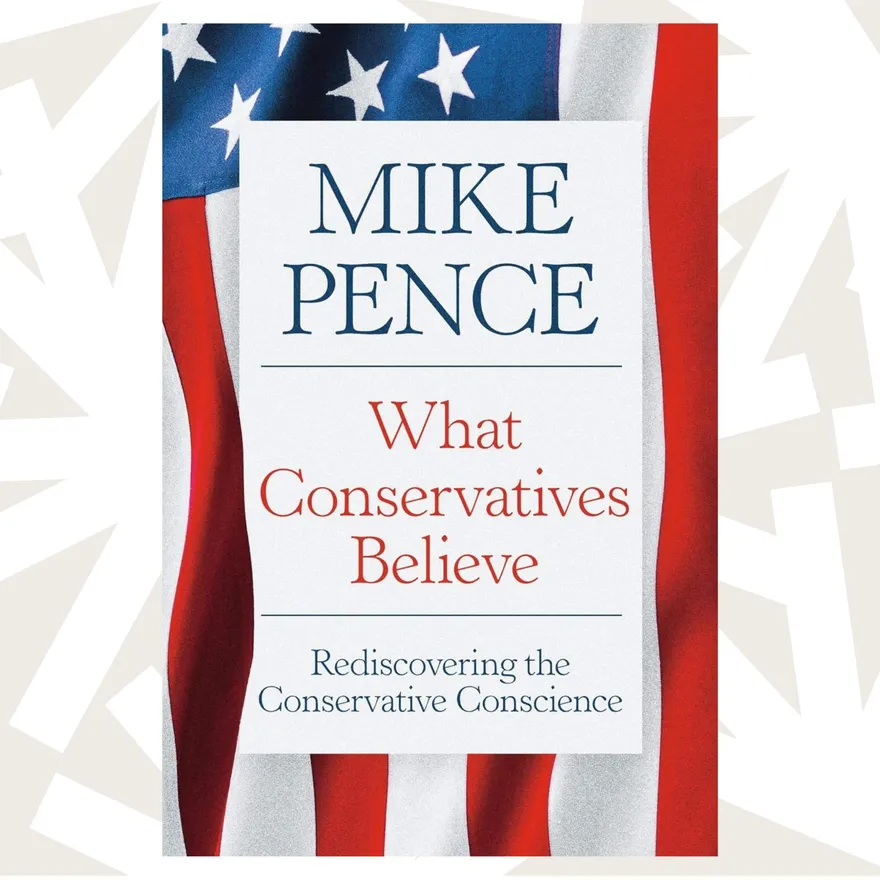

This is a preview of the Shortform summary of the Jul 14, 2026 episode of the NPR's Book of the Day
Sign up for Shortform to access the whole episode summary along with additional materials like counterarguments and context.
1-Page Summary
Economic Policy and Free Markets
Mike Pence addresses the growing tension between recent government interventions in the economy and traditional conservative support for free markets. He recalls that when the Trump administration announced it would take shares in Nippon's purchase of U.S. Steel, Senator Elizabeth Warren noted Trump had adopted her idea. Pence counters that government ownership in private enterprise isn't Warren's innovation—it originates with Karl Marx and represents a departure from conservative principles toward socialism.
Pence also highlights a troubling aspect of the administration's tariff regime: waivers granted to large corporations with White House connections while small businesses are excluded. When Steve Inskeep asks whether these waivers are reserved for companies close to the president, Pence confirms this, noting that lobbying fees in Washington increased tenfold in the first year of the administration. This political favoritism, he argues, undermines fair competition and hurts small businesses. Pence asserts that free markets and genuine competition—not government intervention—drive wage growth and employment expansion, offering tangible benefits to workers and families.
Individual Rights and Equality
Pence emphasizes that America is founded on the principle that all people are created equal, endowed with inalienable rights to life, liberty, and the pursuit of happiness. He firmly rejects the "one family, one vote" idea proposed by some on the political right, affirming instead that the United States upholds "one person, one vote" as a non-negotiable democratic principle. Pence also critiques the populist right's efforts to expand government programs into family life, arguing that families actually need policies rooted in conservative principles: higher wages, more economic opportunities, and more jobs.
Civil Rights and Voting Rights
Pence cites Barry Goldwater's eventual regret over opposing the Civil Rights Act of 1964, arguing that conservatives should embrace equality of opportunity based on respect for civil rights laws. He supports a recent Supreme Court decision stating that race cannot be considered when drawing congressional district lines, asserting that civil rights protections are for individuals rather than for ensuring particular group outcomes. However, Inskeep raises critical questions about whether such colorblind redistricting policies truly address the legacy of historical voter suppression, noting that legislatures can frame discriminatory intent as partisan rather than racial.
Traditional Conservatism Versus Populism
In his book, Pence outlines a clear contrast between his conservative philosophy and the populist shift within the Republican Party. He upholds traditional values such as free markets, individual rights, and limited government, while arguing that recent Republican trends reflect a populist approach favoring government intervention and political favoritism. The populist right's agenda has expanded into family life, promoting ideas like one-family-one-vote systems that contradict the traditional conservative emphasis on individual rights and personal autonomy.
1-Page Summary
Additional Materials
Clarifications
- The Trump administration taking shares in Nippon's purchase of U.S. Steel means the government acquired partial ownership in a private company. This is unusual because free-market conservatives typically oppose government involvement in private business operations. Such ownership can influence company decisions, blurring lines between public authority and private enterprise. Critics argue this approach resembles socialist policies, where the state controls or owns parts of the economy.
- Karl Marx was a 19th-century philosopher and economist who critiqued capitalism and advocated for a classless society. He argued that government or communal ownership of the means of production would eliminate exploitation by private owners. Socialism, influenced by Marx's ideas, promotes public or collective control over businesses rather than private ownership. This contrasts with free-market capitalism, where private individuals or companies own and operate enterprises.
- Tariffs are taxes on imported goods designed to protect domestic industries by making foreign products more expensive. Waivers allow certain companies to avoid paying these tariffs, often based on specific criteria or political influence. Granting waivers to well-connected corporations can create unfair advantages, distorting market competition. This practice may harm smaller businesses that must pay tariffs without exemptions.
- Lobbying fees are payments made to influence government decisions and policies. A tenfold increase indicates a sharp rise in spending to gain political access or favors. This surge suggests growing influence of wealthy or connected interests over legislation. It can undermine equal representation by favoring those who can afford expensive lobbying.
- The principle "one person, one vote" ensures that each individual citizen has an equal vote in elections, upholding democratic equality. "One family, one vote" would grant a single vote to an entire family unit, reducing individual voting power and undermining personal political rights. This distinction is crucial because it protects individual autonomy and prevents collective entities from dominating political decisions. Upholding "one person, one vote" maintains fairness and equal representation in a democracy.
- Barry Goldwater was a U.S. Senator and 1964 Republican presidential nominee who opposed the Civil Rights Act, mainly on constitutional grounds, arguing it infringed on states' rights. His opposition contributed to a political realignment, with many Southern voters shifting to the Republican Party. Later, Goldwater expressed regret, acknowledging the Act's importance in advancing civil rights and equality. His change reflects a broader conservative reassessment of civil rights issues over time.
- Race-based redistricting intentionally draws electoral boundaries to ensure minority groups have a fair chance to elect representatives, addressing historical discrimination. Colorblind redistricting ignores race entirely, focusing on other factors like geography or political affiliation. Critics argue colorblind maps can mask racial discrimination by using partisan justifications to dilute minority voting power. This manipulation, known as gerrymandering, can perpetuate voter suppression by weakening minority influence in elections.
- Traditional conservatism emphasizes limited government, free markets, individual rights, and preserving established institutions. Populism focuses on appealing to the concerns of ordinary people, often advocating for stronger government intervention and challenging elites. Within the Republican Party, populism tends to support policies that favor certain groups or use government power to address perceived economic or cultural grievances. This shift can lead to political favoritism and expanded government roles, contrasting with conservative principles of personal autonomy and market-driven solutions.
- Government intervention involves actions like regulations, subsidies, or ownership to influence the economy, often aiming to correct market failures or protect certain groups. Free markets rely on supply and demand with minimal government interference, promoting competition and innovation. Supporters of free markets argue that competition drives businesses to raise wages and create jobs to attract workers. Critics of intervention warn it can distort incentives, leading to inefficiencies and favoritism that may harm overall employment growth.
- Political favoritism occurs when government policies or benefits are selectively given to certain companies or individuals due to their connections or influence, rather than merit. This creates an uneven playing field, disadvantaging smaller businesses that lack such access. It can lead to reduced competition, as favored firms gain unfair advantages like subsidies, contracts, or regulatory exemptions. Over time, this undermines market efficiency and innovation, harming consumers and the overall economy.
Counterarguments
- Government intervention in the economy, such as taking shares in strategic industries, has historical precedent in both Democratic and Republican administrations (e.g., the 2008 financial crisis bailouts), and is not exclusively a Marxist or socialist concept.
- Some economists argue that targeted government intervention can stabilize markets, protect national security interests, or prevent monopolistic practices, which may ultimately benefit the broader economy.
- Tariff waivers and lobbying are longstanding features of U.S. economic policy, and issues of favoritism are not unique to any one administration or party.
- Free markets alone do not always guarantee equitable wage growth or employment expansion; government policies such as minimum wage laws, labor protections, and social safety nets have historically played a role in improving workers' conditions.
- The principle of "one person, one vote" is widely accepted, but some political theorists have proposed alternative voting systems (e.g., proportional representation) to address perceived shortcomings in representation, without necessarily undermining individual rights.
- While colorblind redistricting aims to treat all individuals equally, critics argue that ignoring race can perpetuate existing inequalities and fail to remedy the effects of historical discrimination.
- Expanding government programs into family life, such as paid family leave or child tax credits, has been shown in some countries to improve family well-being and economic security, challenging the notion that such policies are inherently at odds with conservative principles.
- The distinction between traditional conservatism and populism is not always clear-cut; some policies associated with populism, such as trade protectionism or support for domestic industries, have historical roots in earlier conservative movements.


Get access to the context and additional materials
Economic Policy and Free Markets
Mike Pence addresses the tension between recent government interventions in the economy and traditional conservative support for free markets, highlighting the implications for competition, small businesses, and American families.
Government Ownership and Intervention Depart From Conservatism, Align With Socialism
Pence recalls that when the Trump administration announced it would take shares in Nippon’s purchase of U.S. Steel, Senator Elizabeth Warren remarked that Donald Trump had adopted an idea she had previously proposed. Pence counters that the concept of government ownership in private enterprise is not unique to Warren, but originally came from Karl Marx. He emphasizes that state involvement in business represents a departure from conservative principles, aligning instead with socialist ideas. Government participation in enterprise undermines the conservative commitment to free markets and a limited state.
Tariff Waivers for Connected Corporations Undermine Competition and Hurt Small Businesses
Pence highlights a lesser-reported aspect of the administration's tariff regime: waivers granted to large corporations with close connections to the White House. This preferential treatment means that small businesses, including those in Indiana, are largely excluded. When Steve Inskeep asks whether these waivers are reserved for companies close to the president, Pence confirms this, noting that access to the White House results in accommodation or special consideration for those corporations. He points to a study from his organization, Advancing American Freedom, which found that lobbying fees in Washington, D.C., increased tenfold in the first ...
Here’s what you’ll find in our full summary
Economic Policy and Free Markets
Additional Materials
Counterarguments
- Government intervention in markets is not inherently socialist; many capitalist economies, including the United States, have a long history of selective government involvement to stabilize markets, protect strategic industries, or respond to crises.
- Temporary or targeted government ownership, such as during the 2008 financial crisis or in response to foreign acquisitions of key assets, can be used to protect national security or prevent economic disruption without representing a wholesale shift away from free market principles.
- Some economists argue that free markets alone do not always ensure fair competition, as large corporations can use their market power to stifle competition and harm small businesses, sometimes necessitating government intervention to maintain a level playing field.
- Tariff waivers and other forms of government support are sometimes used to mitigate unintended negative consequences of broader trade policies, and their allocation may be based on economic impact rather than solely on political connections.
- The increase in lobbying fees may reflect heightened regulatory complexity or business un ...
Actionables
- you can support local small businesses by intentionally shifting a portion of your regular purchases away from large corporations to independent shops, service providers, or online sellers, which helps foster genuine competition and reduces reliance on businesses that benefit from political favoritism.
- a practical way to encourage fair competition is to share your experiences with small businesses—both positive and negative—on public review platforms, helping level the playing field by giving them visibility that isn’t dependent on political connections.
- you can track and compare the price ...
Get access to the context and additional materials
Individual Rights and Equality
Equality and Inalienable Rights Should Be Conservative Foundations
Mike Pence emphasizes that the core of the nation is founded on the principle that “all men and women are created equal,” quoting the Declaration of Independence. He highlights that this belief comes from the founders’ conviction that individuals are endowed by their Creator with inalienable rights—life, liberty, and the pursuit of happiness. Pence underscores the importance of returning to these first principles, especially as America approaches its 250th anniversary. He suggests that reaffirming the value of equality remains essential as the nation celebrates its history.
"One Family, one Vote" Contradicts Democratic "one Person, one Vote"
Addressing the idea proposed by some on the political right of "one family, one vote," Pence firmly rejects it, affirming that the United States upholds "one person, one vote" as a non-negotiable democratic principle. He notes that Americans have bled and died for this foundational idea. Pence dismisses the notion that only the husband in a household should vote, advocating instead for the individual rights that democracy requires.
Pence also critiques the populist right’s efforts to expand government programs deeply into family life in an attempt to drive certain outcomes. He ...
Here’s what you’ll find in our full summary
Individual Rights and Equality
Additional Materials
Clarifications
- The Declaration of Independence, adopted in 1776, announced the American colonies' separation from British rule. Its phrase "all men are created equal" asserted that no person is inherently superior to another, challenging monarchic and aristocratic systems. This idea laid the foundation for American democracy and individual rights. Over time, the phrase has been interpreted to include all people, emphasizing universal equality.
- Inalienable rights are rights that cannot be taken away or surrendered because they are fundamental to human existence. The idea that these rights are endowed by a Creator means they are believed to come from a higher power, not granted by governments or humans. This concept establishes that such rights are universal and permanent, forming the basis for individual freedom and justice. It also implies that governments exist to protect these rights, not to grant or revoke them.
- America's 250th anniversary marks a major milestone since the Declaration of Independence in 1776. Such anniversaries prompt reflection on the nation's origins and core values. It is a moment to reaffirm commitments to foundational principles like equality and inalienable rights. This context strengthens calls to return to the ideals set by the founders.
- The phrase "one person, one vote" means each individual citizen has an equal vote in elections, ensuring democratic fairness. "One family, one vote" is a proposed idea suggesting that a household should have only one collective vote, which would reduce individual voting rights. This concept is controversial because it undermines individual equality and dilutes the voting power of each person, especially women and younger adults. Historically, "one person, one vote" has been a cornerstone of American democracy, protecting individual political rights.
- Many Americans fought and died in wars like the Revolutionary War and the Civil War to secure and protect democratic rights, including voting. The Civil Rights Movement also involved sacrifices to end racial discrimination in voting. These struggles helped establish and maintain the principle of "one person, one vote." This history underscores the value placed on individual voting rights in the U.S.
- Some populist right groups support expanding government programs like universal childcare, family leave, or education subsidies to influence social outcomes. These programs aim to provide more direct support and regulation within family life. Critics argue such expansions ...
Counterarguments
- While the Declaration of Independence asserts that "all men are created equal," the practical application of equality in American history has often fallen short, with systemic inequalities persisting for many groups.
- The founders' conception of inalienable rights did not originally extend to all people, including women, enslaved individuals, and Indigenous peoples, raising questions about the universality of these principles.
- The principle of "one person, one vote" has not always been upheld in practice, as evidenced by historical and ongoing issues such as voter suppression, gerrymandering, and disenfranchisement.
- Conservative economic policies do not universally lead to higher wages or more opportunities; critics argue that such policies can increase income inequality and reduce support for vulnerable populations.
- Some families may benefit from targeted government programs, such as child care support, health care, or paid family leave, which are not always prioritized in conservative policy fram ...


Get access to the context and additional materials
Civil Rights and Voting Rights
Civil Rights Act of 1964: A Conservative Legislative Achievement
Mike Pence cites Barry Goldwater, whose opposition to the Civil Rights Act of 1964 was a defining stance in conservative politics but who later admitted his regret. Pence highlights this change of heart as an example that even strong conservative figures can reconsider their positions on civil rights. He argues that conservatives should embrace and promote a vision of equality of opportunity based on respect for established civil rights laws, stating that this aligns with the core of the conservative movement.
Examine Supreme Court Decisions on Redistricting, Race-Conscious Policy, and Their Alignment With Civil Rights and Constitutional Intent
Supreme Court Ruling Bans Race in Redistricting, Highlighting Civil Rights For Individuals, Not Groups or Outcomes
Pence references a recent Supreme Court decision stating that race cannot be considered when drawing congressional district lines. He supports this decision’s legal foundation, noting it recognizes that civil rights protections are for individuals rather than for ensuring particular group outcomes.
Gerrymandering Issues: Districts Should Ignore Race for Civil Rights Protections
Pence asserts that ensuring race is not a factor in any aspect of partisan gerrymandering is proper. The emphasis, he states, should be on creating districts without regard to race to uphold civil rights protections for individuals.
Questions Persist On Whether Colorblind Redistricting Policies Address Historical Voter Suppression and if Legislatures Use Partisan Reasons to Mask Discriminator ...
Here’s what you’ll find in our full summary
Civil Rights and Voting Rights
Additional Materials
Counterarguments
- Some historians and legal scholars argue that the Civil Rights Act of 1964 was achieved through bipartisan efforts and significant liberal advocacy, rather than being primarily a conservative legislative achievement.
- Critics contend that a strict "colorblind" approach to redistricting can perpetuate existing racial inequalities by ignoring the historical and ongoing effects of discrimination.
- Many civil rights advocates maintain that group-based protections and remedies, such as majority-minority districts, are necessary to ensure meaningful representation for historically marginalized communities.
- Empirical studies have shown that partisan gerrymandering can disproportionately harm minority voters, even when race is not explicitly considered, thus undermining the intent of the Voting Rights Act.
- Some legal experts argue that the Supreme Court’s current interpretation may weaken protections against racial disenfranchisement by making it easier for legislatures to justify discriminatory pr ...
Actionables
- you can review your local voting district maps online and use a simple checklist to spot signs of potential gerrymandering or unfair boundaries, then share your findings with neighbors to encourage community awareness about fair representation
- By looking up your district maps and noting odd shapes or splits in communities, you can help others recognize when boundaries might not respect individual civil rights. Sharing your observations in a neighborhood group or with friends can spark conversations about fair districting and motivate others to pay attention during local elections.
- a practical way to promote equality of opportunity is to volunteer as a poll worker or observer during elections to ensure all voters are treated fairly, regardless of background
- Serving as a poll worker lets you see firsthand how voting procedures are carried out and gives you a chance to help anyone who faces barriers at the polls. You can also report any irregularities or concerns to local election officials, supporting the principle of equal access.
- you can write a short, clear lett ...

Get access to the context and additional materials
Traditional Conservatism Versus Populism
Pence's Book Contrasts Conservative Principles With Republican Populism
In his book, Mike Pence outlines a clear contrast between his own conservative philosophy and the populist shift occurring within the Republican Party. Pence upholds traditional conservative values such as free markets, individual rights, and limited government. He argues that recent trends within the Republican Party reflect a populist approach that favors government intervention and shows favoritism toward politically connected interests. This populism also raises questions about the value of individual voting rights—an area in which it sharply diverges from core conservative beliefs about individual liberty.
Populist Right's Expansion Into Family Life Rejects Individual Rights, Departing From Conservatism
The populist right's agenda has expanded into areas of family life, pushing for ideas such as a one-family-one-vote syst ...
Here’s what you’ll find in our full summary
Traditional Conservatism Versus Populism
Additional Materials
Counterarguments
- Some argue that populism is a response to perceived failures of traditional conservatism to address economic inequality and the needs of working-class Americans.
- Advocates of populist policies contend that limited government and free markets have sometimes led to corporate favoritism and neglect of ordinary citizens, necessitating targeted government intervention.
- The populist right's focus on family policy can be seen as an effort to strengthen social cohesion and address demographic challenges, rather than simply rejecting individual rights.
- Supporters of measures like one-family-one-vote argue that such proposals are intended to g ...
Actionables
- you can review your household or personal decision-making by listing recent choices (like purchases, voting, or family rules) and noting whether each was made individually or influenced by group or external pressures, then intentionally practice making at least one significant decision based solely on your own judgment to reinforce personal autonomy.
- a practical way to support individual rights in your community is to write a short, clear letter to a local official or school board member advocating for policies that protect personal choice and limit unnecessary government intervention, using specific examples from your daily life to illustrate your point.
- you ...

Get access to the context and additional materials


Create Summaries for anything on the web
Download the Shortform Chrome extension for your browser
