

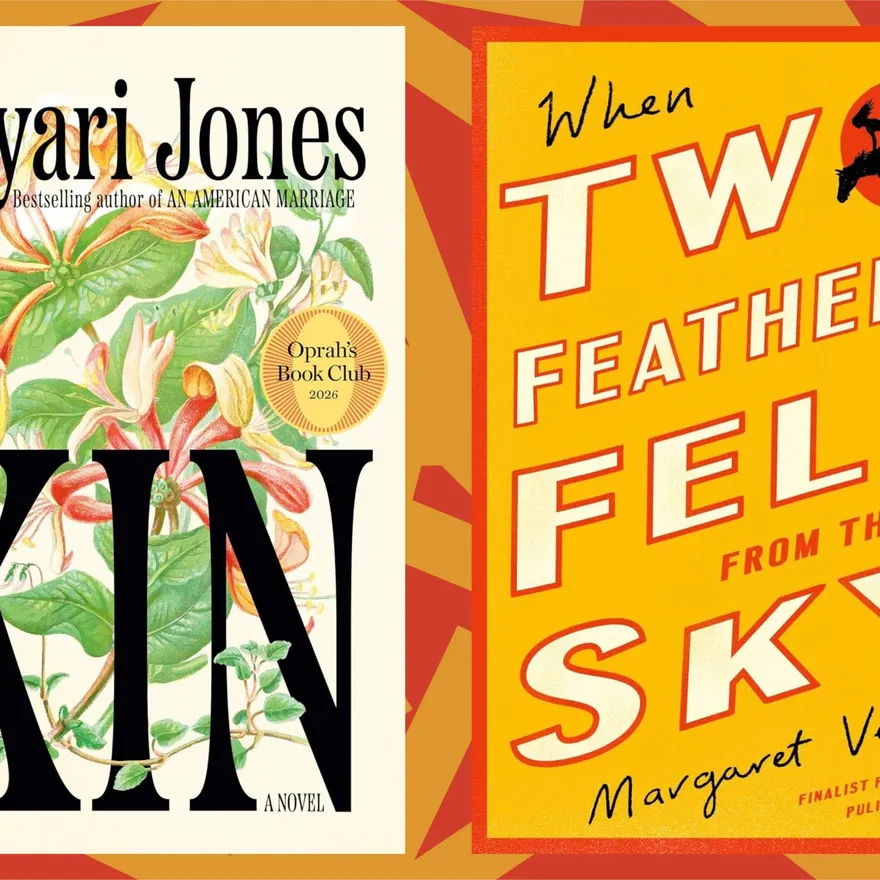
'Kin' and 'When Two Feathers Fell from the Sky' fictionalize the Jim Crow South
In this episode of NPR's Book of the Day, two novels that fictionalize the Jim Crow South are explored. Tayari Jones's "Kin" examines how segregation shaped the daily lives of Black women, from structural injustices like restricted mail delivery to the constant threat of violence. Margaret Verble's "When Two Feathers Fell from the Sky" centers on a Cherokee woman working as a horse diver in 1920s Tennessee, correcting historical narratives that erased Native American identities through official documentation and forced assimilation.
Both authors draw from personal and family histories to create authentic narratives. Jones discusses how historically Black colleges and universities like Spelman created opportunities for social mobility, while exploring themes of maternal loss and trauma. Verble uses her Cherokee heritage and childhood memories of living near the former Glendale Park Zoo to ground her story in documented history, addressing the generational trauma of cultural erasure her own mother experienced.

This is a preview of the Shortform summary of the Jul 10, 2026 episode of the NPR's Book of the Day
Sign up for Shortform to access the whole episode summary along with additional materials like counterarguments and context.
1-Page Summary
Historical Injustice and Correcting Narratives: Black Women in Jim Crow South, Native American Representation and Erasure
Tayari Jones's Novel Kin Examines Segregation's Impact on Black Women In the Jim Crow South
Jones's novel "Kin" explores how segregation in the Jim Crow South affected Black women through two intertwined stories. Segregation policies prevented Black residents from receiving mail at home, forcing long walks to the post office—a daily structural injustice. Black women faced compounded vulnerability from violence and male-perpetrated harm with little protection or recourse. The novel reveals how structural racism shaped daily experiences and restricted life paths, exposing how personal histories intertwine with larger systems of oppression.
Margaret Verble's Novel Centers Marginalized Native American Character, Corrects Misrepresentations of Cherokee History
Margaret Verble's "When Two Feathers Fell From the Sky" corrects racist narratives about Native American history. Drawing on her Cherokee heritage, Verble recounts how her mother—a fourth-grade teacher—was legally required to teach sanitized history that erased Cherokee experiences. The novel centers on Two Feathers, a Cherokee woman working as a horse diver at Glendale Park Zoo in the 1920s, based on actual performers whose identities have been erased from public memory. Verble highlights "annihilation by paper," a generational trauma where official documentation after 1907 classified even full-blood Cherokees as white, aiming to erase Cherokee identity. Her mother was raised in an environment where blending in meant survival, requiring silence about heritage—a history Verble's novel seeks to illuminate.
Significance of Historical Sites: 1926 Glendale Zoo, Tennessee & Honeysuckle, Louisiana
The Glendale Zoo in 1926 Reflects American Society's Pivotal Changes
The Glendale Zoo serves as a microcosm of national transformations during the Jazz Age. Verble and Shapiro note how the 1920s mirror contemporary times through significant division and social upheaval. Electricity and automobiles reshaped daily life, while the Scopes Monkey Trial exposed deep societal fissures. Verble's childhood memories of finding large animal bones sparked her fascination with this historical moment. Her research in the Nashville Tennessean archives confirmed that a hippopotamus lived at the zoo in 1926, validating her recollections and cementing the era for her narrative.
Honeysuckle, Louisiana Grounds the Narrative in Jim Crow Segregation
Jones models Honeysuckle on Oakdale, Louisiana, where her grandmother lived, reflecting Jim Crow realities. Black residents were barred from home mail delivery, forcing them to walk a mile to the post office—a legacy that persisted into the 1970s. Honeysuckle shapes the main characters' identities and understanding of race, belonging, and possibility before their paths diverge, demonstrating how Jim Crow southern towns continue to resonate in personal histories.
Maternal Influence: Shaping Protagonists' Lives Through Relationships, Loss, and Trauma
In "Kin," Annie and Vernice both experience maternal loss but respond differently. Vernice's mother is killed by her father, allowing Vernice to seek replacement maternal figures. Annie's mother abandoned the family, leaving Annie unable to let anyone else fill that void. Jones describes Annie as metaphorically reserving a place for her mother at the dinner table, fearing that accepting another would be betrayal. These divergent responses show how trauma carves unique pathways in children's lives.
Both girls are raised by maternal figures unprepared for motherhood—Vernice by her Aunt Irene, who was living child-free in Dayton, Ohio, and Annie by her grandmother. Jones notes that Black women are often portrayed in extremes, and the novel interrogates the reality of chosen versus obligatory motherhood. Neither caregiver provides the emotional attachment the girls need, highlighting challenges faced by those who become mothers by obligation.
Aunt Irene explicitly warns Vernice, "Don't ever let no man kill you," a statement rooted in family trauma. Jones expands on this shadow, noting that womanhood involves constant calculations of safety, with the possibility of violence shaping relationships and decisions.
Role of HBCUs in Black Mobility and Leadership: Focus On Spelman College
Jones emphasizes that Spelman College's role in Black social mobility is often misunderstood. During the 1940s and 1950s, many Spelman students worked as maids to pay tuition, a history overshadowed by alumni success. She shares how her family pooled money kept in a stocking, echoing older alumnae traditions. Jones argues that Atlanta's six historically Black colleges and universities didn't simply serve an existing Black middle class but created it, fostering leadership and professional advancement.
Through research including interviews with her nearly 100-year-old former advisor, Jones learned about students' economic circumstances and jobs. She reflects on Spelman traditions like white attire and chapel services, acknowledging their powerful role in shaping students' identity, pride, and trajectory toward upward mobility.
Personal and Family History in Fiction: Using Life Experiences for Authentic Narratives
Jones and Verble draw from personal backgrounds to create authentic fiction. Jones began writing about gentrification but shifted when she "met" characters Annie and Nisi, who seemed alive in the 1950s. After writing over a hundred pages of what she thought was backstory, she realized it was her real plot. Though doubting her capability in historical fiction, Jones describes feeling "blessed" and "being communicated with by something, someone unseen," trusting this process to embrace the historical context.
Verble was raised in a neighborhood built on the ruins of Glendale park zoo, walking daily past remnants like bear cages and old trolley tracks. This personal landscape grounded her narrative. Motivated to correct racist Cherokee narratives, she researched 1926 archives of the Nashville Tennessean to anchor her fiction in documented fact, fusing lived experience with rigorous archival work to ensure authenticity.
1-Page Summary
Additional Materials
Counterarguments
- While "Kin" highlights the structural oppression of Black women under Jim Crow, some historians argue that Black communities also developed strong networks of mutual aid, resilience, and agency that are sometimes underrepresented in narratives focused primarily on victimization.
- The focus on violence and vulnerability in Black women's lives during Jim Crow, while accurate, may risk overshadowing stories of resistance, leadership, and everyday joy that also characterized Black women's experiences.
- The concept of "annihilation by paper" regarding Cherokee identity is significant, but some scholars note that Native communities have maintained cultural continuity and identity through oral traditions, kinship, and community practices despite official erasure.
- The portrayal of Cherokee families as universally needing to "blend in" for survival may not account for the diversity of experiences among Native Americans, including those who maintained open cultural practices or resisted assimilation.
- The depiction of HBCUs as primarily responsible for creating the Black middle class may understate the role of Black entrepreneurship, religious institutions, and other community organizations in Black social mobility.
- Emphasizing the hardships of Spelman students working as maids could risk reinforcing stereotypes of Black women's labor, rather than highlighting the agency and determination involved in pursuing higher education under difficult circumstances.
- The use of personal and family history in fiction, while valuable for authenticity, may introduce subjective perspectives that do not fully represent broader historical realities or the diversity of experiences within Black and Native communities.
Actionables
- you can map out the daily routes and routines of women in your family or community, noting how access to services, safety, and mobility are shaped by local infrastructure and policies, then reflect on how these patterns echo or differ from historical restrictions—this helps you recognize ongoing structural barriers and advocate for practical improvements like safer walkways or better public services.
- a practical way to honor erased or marginalized histories is to create a simple family or neighborhood timeline that highlights moments of cultural silence, forced assimilation, or resilience, using stories, photos, or artifacts you gather from relatives or neighbors—this visual record can help you and others see the impact of generational trauma and celebrate acts of survival.
- you can start a personal journal or digital note where you document moments when traditions, attire, or rituals (like family gatherings or community events) have shaped your sense of identity or belonging, and periodically review these entries to notice patterns of pride, exclusion, or transformation—this helps you understand how collective practices influence your own opportunities and self-perception.
Get access to the context and additional materials
Historical Injustice and Correcting Narratives: Black Women in Jim Crow South, Native American Representation and Erasure
Tayari Jones's Novel Kin Examines Segregation's Impact on Black Women In the Jim Crow South Through two Girls' Intertwined Stories
Jones’s novel "Kin" explores how segregation in the Jim Crow South deeply affected the lives of Black women, focusing on the intertwined stories of two girls. Segregation policies barred Black residents from receiving mail at home, forcing them to take long walks to collect their letters at the post office, highlighting a daily, structural injustice. Black women faced compounded vulnerability—beyond the laws and customs of segregation, they were often targets of violence and male-perpetrated harm, leaving them exposed to risks with little protection or recourse. The novel’s narrative reveals how structural racism and limited opportunities not only restricted the life paths available to Black women, but also shaped their daily experiences, exposing how intertwined personal histories are with larger systems of oppression.
Margaret Verble's Novel Centers Marginalized Native American Character, Corrects Misrepresentations of Cherokee History
Margaret Verble’s novel, "When Two Feathers Fell From the Sky," is rooted in her effort to correct racist narratives about Native American history. Verble, drawing on her Cherokee heritage, recounts how her mother—a fourth-grade teacher with family still in Oklahoma—was required by law to teach a sanitized, racist account of history: that settlers "proclaimed this land theirs for the taking" and that "the taking entailed killing a lot of Indians." This compelled her mother, year after year, to perpetuate a faux history that erased and distorted the Cherokee experience.
In the novel, Verble centers the story on Two Feathers, a Cherokee woman working as a horse diver at Glendale Park Zoo in the 1920s, on loan from the Miller Brothers Wild West Show. The character is based on actual performers whose daring acts were advertised for their bravery, yet wh ...
Here’s what you’ll find in our full summary
Historical Injustice and Correcting Narratives: Black Women in Jim Crow South, Native American Representation and Erasure
Additional Materials
Counterarguments
- While novels like "Kin" and "When Two Feathers Fell From the Sky" provide valuable perspectives, they are works of fiction and may not capture the full complexity or diversity of historical experiences among Black women or Native Americans.
- The focus on structural injustice and erasure, while important, may risk overshadowing stories of agency, resilience, and community-building that also characterized the lives of Black women and Native Americans during these periods.
- Some historians argue that while policies like "annihilation by paper" were harmful, there were also instances of resistance, adaptation, and cultural preservation within Cherokee and other Native communities that are not always foregrounded in narratives of erasure.
- The depiction of forced assimilation and silence about heritage, though accurate for many, may not reflect the experiences of all Cherokee individuals or families, some of whom maintained cultural pr ...
Actionables
- you can map out the daily routes you take for basic needs (like groceries or mail) and compare them to historical routes forced on marginalized groups, then reflect on how access and convenience shape your sense of belonging and safety; for example, note how far you travel for essentials and imagine the impact if you had to walk double or triple that distance due to discriminatory policies.
- a practical way to recognize and counter erasure is to research the original names and histories of the land and neighborhoods where you live, then label them on your personal maps or address books; for instance, add the traditional Indigenous names alongside current street names in your phone contacts or on your home map.
- you can create a personal timeline that highlights moments when ...
Get access to the context and additional materials
Significance of Historical Sites: 1926 Glendale Zoo, Tennessee & Honeysuckle, Louisiana in American History
The Glendale Zoo in 1926 Encapsulates the Clash Between Tradition and Modernity During the Jazz Age, Reflecting American Society's Pivotal Changes
The Glendale Zoo of 1926 stands as a microcosm of broader national transformations. Margaret Verble and Ari Shapiro highlight how the 1920s mirror contemporary times due to significant division and social upheaval. Electricity and automobiles begin to reshape daily American life, while the Scopes Monkey Trial in Tennessee exposes deep fissures in society over issues like evolution. This trial didn’t just divide opinions but fractured friendships and marriages, reflecting the decade’s pervasive, contentious atmosphere.
Glendale Zoo Remnants Connect To Past In Suburb
Verble’s memories bring the Glendale Zoo’s magic to the present. The zoo becomes a bridge to the community’s suburban past, with its remnants evoking a sense of wonder within an imperfect world. As a child, Verble found large animal bones—believed to belong to a hippopotamus or rhinoceros—sparking her fascination with that historical moment.
Research Confirms Hippo At Glendale Zoo In 1926, Validating Verble's Memories For Storytelling
To confirm her memories, Verble searched the archives of the Nashville Tennessean and found news items from 1926, including evidence that a hippopotamus had lived at the zoo that year. This discovery validated her childhood recollections and cemented 1926 as the era for her narrative, enhancing the interplay of nostalgia, research, and historical veracity.
Honeysuckle, Louisiana, Modeled On Tayari Jones's Grandmother's Real Community, Grounds the Narrative in Jim Crow Segregation's Function in Small Southern Towns
Honeysuckle, Louisiana, is deeply tied to Tayari Jones’s personal history. She models the fictional town on Oakdale, Louisiana, where her grandmother lived, reflecting the realities of Jim Crow segregation in small southern communities.
Honeysuckle Symbolizes Jones's Family's Life in Segregated Louisiana, Where Mail Delivery Prohibitions Affected Black Residents' Routines
Jones recalls ...
Here’s what you’ll find in our full summary
Significance of Historical Sites: 1926 Glendale Zoo, Tennessee & Honeysuckle, Louisiana in American History
Additional Materials
Counterarguments
- While the Glendale Zoo is presented as a symbol of the clash between tradition and modernity, some may argue that its significance is more local than national, and it may not encapsulate broader societal changes as fully as suggested.
- The comparison between the 1920s and contemporary times may overlook important differences in context, scale, and the nature of social divisions.
- The impact of electricity and automobiles on daily life, though significant, was uneven across different regions and communities, and not all Americans experienced these changes simultaneously or equally.
- The Scopes Monkey Trial, while notable, may not have fractured society as deeply or universally as implied; its effects were more pronounced in certain regions and among specific groups.
- The sense of wonder associated with the Glendale Zoo’s remnants may be more reflective of individual nostalgia than a universally shared community sentiment.
- The validation of personal memories through archival research, while meaningful for storytelling, does not necessarily elevate the Glendale Zoo’s historical importance beyond local interest.
- The depiction of Honeysuckle as representative of all small southern towns under Jim Crow may risk oversimplifying th ...
Actionables
- you can create a personal timeline that marks when major technological or social changes (like getting your first smartphone or moving to a new neighborhood) shifted your daily routines, then reflect on how these changes affected your sense of tradition and belonging
- Think about moments when new technology or social norms changed how you lived, and jot down how you felt about those shifts. This helps you notice your own responses to change and how they echo larger historical patterns.
- a practical way to explore the impact of place and community on your identity is to write a short letter to your younger self describing how your hometown or neighborhood shaped your views on race, belonging, and possibility
- Be honest about both positive and negative influences, and consider how your environment affected your relationships and opportunities. This exercise can reveal hidden assumptions and help you see how your surroundings continue to influence you.
- you ...
Get access to the context and additional materials
Maternal Influence: Shaping Protagonists' Lives Through Relationships, Loss, and Trauma
...
Here’s what you’ll find in our full summary
Maternal Influence: Shaping Protagonists' Lives Through Relationships, Loss, and Trauma
Additional Materials
Counterarguments
- While maternal relationships can be influential, other relationships (such as paternal, sibling, or peer relationships) may play an equally or more significant role in shaping protagonists' lives.
- Not all protagonists experience loss or trauma as central to their development; some are shaped primarily by positive experiences or opportunities.
- Trauma is not always a defining factor in identity formation; resilience, agency, and personal choices can also be crucial ...
Actionables
- you can map out your own life story by drawing a timeline that highlights key maternal relationships, moments of loss, and experiences of trauma, then use colored markers to visually connect how these events influenced your decisions and personal growth; this helps you see patterns and connections you might not have noticed before.
- a practical way to explore the impact of relationships, loss, and trauma on your identity is to write a short letter to your younger self at three different ages, reflecting on how each of these factors shaped your mindset and choices at those times.
- you can set aside a weekly 10-minute reflection where yo ...
Get access to the context and additional materials
Annie and Vernice in Kin Face Maternal Loss and Develop Distinct Responses
Annie and Vernice, the young protagonists in Kin, both experience profound maternal loss, but their responses diverge. Vernice's journey begins after her mother is killed by her father in an act of domestic violence. With the certainty that her mother is gone forever, Vernice is able to seek out a replacement maternal figure, to fill the emotional void left in her life. In contrast, Annie is left with uncertainty—her mother abandoned the family, vanishing without explanation and leaving Annie haunted by her mother's absence. This ambiguity creates a psychological wound for Annie; as Tayari Jones describes, she metaphorically reserves a place for her mother at the dinner table, unable to allow anyone else to occupy that space, fearing it would be a betr ...
Here’s what you’ll find in our full summary
Annie and Vernice in Kin Face Maternal Loss and Develop Distinct Responses
Additional Materials
Counterarguments
- The text assumes that Vernice's acceptance of a new maternal figure is a direct result of the certainty of her mother's death, but some children may still struggle to accept substitute caregivers even with such certainty.
- The portrayal of Annie's inability to accept a new maternal figure as a psychological wound may overlook the possibility that her resistance is a form of agency or self-protection rather than solely a negative consequence.
- The analysis focuses on maternal loss but does not consider the potential influence of other familial or community relationships in shaping Annie and Vernice's responses.
- The text presents Annie and Vernice's responses as distinctly different, but in re ...
Actionables
- you can create a symbolic space in your home for absent or lost loved ones to acknowledge their impact while also making room for new supportive relationships; for example, set up a small shelf with a photo or object that represents your loved one, and next to it, place a welcoming item (like a candle or plant) to signify openness to new connections.
- a practical way to explore your comfort with accepting care from others is to keep a daily journal where you note moments when you accept or resist help, then reflect on what made you open or hesitant in each situation; over time, look for patterns and experiment with small changes, like saying yes to a simple offer of support.
- you can write a ...

Get access to the context and additional materials
Maternal Figures Raising Annie and Vernice Struggle With Chosen Motherhood and Providing the Necessary Emotional Attachment
Both girls are raised by maternal figures who struggle with the role thrust upon them. Vernice’s Aunt Irene, living a child-free life in Dayton, Ohio, is compelled to change her lifestyle after her mother's funeral to raise Vernice. Annie, meanwhile, is raised by her grandmother. Neither woman was prepared nor eager to provide the kind of emotional mothering the girls need. Tayari Jones points out that often Black women are portrayed in extremes—as either terrible mothers or endlessly nurturing ones—and the novel interrogates the reality and complexity of chosen versus obligatory motherhood.
Both Aunt Irene and Annie's grandmother exhibit emotional distance, unable or ...
Here’s what you’ll find in our full summary
Maternal Figures Raising Annie and Vernice Struggle With Chosen Motherhood and Providing the Necessary Emotional Attachment
Additional Materials
Counterarguments
- While Aunt Irene and Annie’s grandmother may struggle with emotional attachment, their willingness to take on caregiving responsibilities demonstrates a form of love and commitment that can be meaningful, even if it does not fit traditional notions of nurturing.
- The depiction of emotional distance may overlook the generational, cultural, or personal factors that shape expressions of care, especially in communities where survival and resilience are prioritized.
- The binary critique of Black motherhood in literature may not fully acknowledge the diversity of maternal experiences and representations that exist beyond extremes.
- Children can develop resilience and coping skills even in the absence of id ...
Actionables
- you can write a short letter to a caregiver from your past or present (even if you never send it) describing what kind of emotional support you needed or still need, which helps clarify your own needs and opens the door to self-advocacy or healing conversations
- This exercise lets you reflect on the difference between chosen and obligatory caregiving, and can help you process feelings about emotional distance or unmet needs.
- a practical way to explore the complexity of motherhood roles is to make a simple chart listing people in your life who have cared for you, noting whether their caregiving felt chosen or obligatory, and how that affected your sense of being nurtured
- Seeing these patterns visually can help you recognize how different caregiving dynamics have shaped your emotional experiences and rel ...
Get access to the context and additional materials
Aunt Irene's Warning to Vernice on Male Violence and Domestic Abuse
One of the stark realities conveyed in Kin is the shadow that violence from men casts over women's lives. Aunt Irene explicitly warns Vernice, "Don't ever let no man kill you," a statement deeply rooted in her own family's trauma. This warning later resonates powerfully in Vernice’s journey, especially when her future mother-in-law reassures her that her son will not harm her. The relief Vernice feels underlines the ever-present anxiety women navigate regarding safety and male violence.
Tayari Jones expands the implication of this shadow, reflecting that womanhood is shaped by constant calculations of saf ...
Here’s what you’ll find in our full summary
Aunt Irene's Warning to Vernice on Male Violence and Domestic Abuse
Additional Materials
Counterarguments
- While male violence is a serious and pervasive issue, not all men pose a threat, and many men actively work to challenge and prevent violence against women.
- The experience of calculating safety is not universal to all women; some may not feel this anxiety as acutely, depending on their personal circumstances, communities, or cultural backgrounds.
- Acts like offering to walk someone home can also be motivated by genuine care, friendship, or social convention, not solely by fear of male violence.
- The narrative may risk reinforcing a perception of women primarily as victims, which could overshadow st ...
Actionables
- You can create a personal safety audit by mapping out your daily routines and identifying moments or locations where you feel most vulnerable, then brainstorm small, realistic adjustments to increase your sense of security, such as changing walking routes, adjusting travel times, or sharing your location with a trusted friend during specific activities.
- A practical way to strengthen your support network is to set up a rotating check-in system with friends or family, where each person sends a quick message at agreed-upon times when traveling alone or entering unfamiliar environments, making safety a shared responsibility rather than an individual burden.
- You can keep a private jo ...

Get access to the context and additional materials
Role of Hbcus in Black Mobility and Leadership: Focus On Spelman College
Spelman College: A Catalyst for Black Middle-Class Opportunity and Social Mobility
Tayari Jones emphasizes that Spelman College’s role in Black social mobility is often misunderstood. She points out that observers frequently focus on the graduates as professionals and leaders, ignoring the reality that many Spelman students came from modest means. During the 1940s and 1950s, young women attending Spelman often worked as maids in white women's kitchens in order to earn the money to pay their tuition. Jones laments that this part of Spelman's and HBCU history has been lost to time, overshadowed by the success of alumni.
She shares a personal account: when she herself came to Spelman, all the money her family had pooled together was kept in a stocking, echoing the “savings in stockings” tradition recounted by older alumnae. This symbolized the sacrifices and resourcefulness required of Black families to secure educational opportunity for their daughters.
Jones notes that Atlanta is frequently called the "Black Mecca" due to its prominent Black middle class. However, she argues that the city’s six historically Black colleges and universities—including Spelman—did not simply serve an existing Black middle class, but were instrumental in creating it. These institutions fostered leadership, professional advancement, and social mobility, offering pathways for those who did not possess pre-existing wealth.
Spelman College Traditions: White Attire and Chapel Services Transform Students
For her historical novel, Jones conducted extensive research, including interviews with her nearly 100-year-old former college advisor, a Spelman graduate from the early 1950s. Through thei ...
Here’s what you’ll find in our full summary
Role of Hbcus in Black Mobility and Leadership: Focus On Spelman College
Additional Materials
Clarifications
- HBCUs are institutions established before 1964 primarily to serve the African American community during segregation. They provided access to higher education when most mainstream colleges excluded Black students. HBCUs have played a crucial role in developing Black professionals, leaders, and cultural identity. Today, they continue to support Black students' academic and social advancement.
- In the 1940s and 1950s, Black Americans faced systemic racism and segregation that limited economic and educational opportunities. Many Black families had low incomes and worked in service or labor jobs, making higher education financially challenging. Historically Black Colleges and Universities (HBCUs) provided critical access to education and professional training, fostering a Black middle class. This era laid the foundation for future civil rights advances and expanded social mobility for Black communities.
- Spelman College is the oldest historically Black liberal arts college for women in the United States. It has a strong reputation for academic excellence and leadership development among Black women. Spelman has produced a significant number of influential Black female leaders in various fields. Its focus on empowering Black women uniquely positions it within the broader HBCU community.
- The practice of "saving money in stockings" refers to a discreet way Black families historically hid and saved cash at home, often due to limited access to banks or mistrust of financial institutions. Stockings were common household items that could be easily concealed, protecting savings from theft or loss. This method symbolized the resourcefulness and sacrifice required to fund education and other opportunities. It also reflects broader themes of resilience and financial ingenuity in Black communities facing systemic economic barriers.
- The term "Black Mecca" refers to a city that offers exceptional opportunities for Black economic success, cultural expression, and political influence. Atlanta earned this nickname due to its large, prosperous Black middle and upper class, strong Black-owned businesses, and significant Black political leadership. The city has historically been a center for civil rights activism and Black higher education. These factors combine to make Atlanta a symbol of Black achievement and empowerment.
- Spelman College traditions like wearing white attire symbolize purity, unity, and a shared commitment to excellence among students. Chapel services provide a spiritual foundation, fostering community, reflection, and moral development. These rituals create a disciplined environment that encourages personal growth and resilience. Together, they reinforce a collective identity that supports students' confidence and leadership potential.
- During the mid-20th century, Black families faced systemic racism that limited economic opportunities and access to quality education. Segregation laws and discriminatory hiring practices kept many Black families in low-wage jobs, ma ...
Counterarguments
- While Spelman College and other HBCUs have played a significant role in Black social mobility, their impact has historically been limited by broader systemic barriers such as segregation, underfunding, and restricted access to resources compared to predominantly white institutions.
- The narrative of upward mobility through HBCUs may not fully account for the experiences of students who, despite their education, still faced significant discrimination in the job market and limited professional opportunities.
- Focusing on the sacrifices and resourcefulness of Black families can unintentionally romanticize economic hardship, potentially overshadowing the need for structural change and equitable funding in higher education.
- The traditions and rituals at Spelman, while meaningful for many, may not resonate with all students and could be perceived as exclusionary or outdated by some members of the student body.
- The emphasis on leadership and professional adv ...


Get access to the context and additional materials
Personal and Family History in Fiction: Using Life Experiences for Authentic Narratives
Writers Tayari Jones and Margaret Verble draw from their own backgrounds and family histories to create authentic and resonant fiction. They emphasize the importance of embracing lived experience and personal connections to craft narratives that speak to their communities and correct historical misrepresentations.
Tayari Jones Shifted Focus From a Gentrification Project To a 1950s Narrative, Realizing the Backstory Was the Main Plot
Tayari Jones began her novel with the intention of writing about gentrification but experienced a creative shift. She started writing freely, using only pencil and paper without a predetermined plan until she organically “met” her characters Annie and Nisi. Jones realized these characters seemed to be alive in the 1950s and concluded, "certainly they must be the parents of my real characters." After writing over a hundred pages, she recognized that what she initially thought was mere backstory was actually her real plot. Though she doubted her capability in the historical fiction genre, she accepted this new direction. Jones describes her breakthrough as feeling "blessed," believing she was "being communicated with by something, someone unseen." She chose to trust this process, embracing the historical context as central to her story and moving forward with faith in her instincts.
Margaret Verble's Upbringing on Glendale Zoo's Ruins and Cherokee Heritage Inspired When two Feathers Fell From the Sky
Margaret Verble’s upbringing played a central role in the inspiration for her novel When Two Feathers Fell From the Sky. She was raised in a neighborhood built on the ruins of the old Glendale park zoo. On her daily walk to Glendale Elementary School, Verble passed remnants of the p ...
Here’s what you’ll find in our full summary
Personal and Family History in Fiction: Using Life Experiences for Authentic Narratives
Additional Materials
Counterarguments
- Drawing heavily from personal or family history can risk limiting the universality of a narrative, potentially making it less accessible to readers outside the writer’s community or experience.
- Emphasizing lived experience and personal connections may inadvertently prioritize subjective truth over broader, more diverse perspectives.
- Relying on a sense of being "guided by an unseen force" in the creative process, while meaningful to the author, may not be a reliable or replicable method for all writers.
- Focusing on correcting historical misrepresentations through fiction, rather than nonfiction or scholarly work, may blur the l ...
Actionables
- you can set aside a week to write a short story or scene set in a decade you’ve never lived in, letting your characters’ personalities and choices determine the era as you go, rather than picking the time period first; this helps you discover unexpected narrative directions and practice letting character development guide your creative decisions.
- a practical way to ground your creative projects in authentic sensory detail is to take daily walks in your neighborhood, jotting down specific sights, sounds, and smells, then weaving these observations into your writing or storytelling to create a vivid sense of place.
- you can challenge yourself t ...
Get access to the context and additional materials

 1-Page Summary
- Historical Injustice and Correcting Narratives: Black Women in Jim Crow South, Native American Representation and Erasure
- Significance of Historical Sites: 1926 Glendale Zoo, Tennessee & Honeysuckle, Louisiana in American History
- Maternal Influence: Shaping Protagonists' Lives Through Relationships, Loss, and Trauma
- Annie and Vernice in Kin Face Maternal Loss and Develop Distinct Responses
- Maternal Figures Raising Annie and Vernice Struggle With Chosen Motherhood and Providing the Necessary Emotional Attachment
- Aunt Irene's Warning to Vernice on Male Violence and Domestic Abuse
- Role of Hbcus in Black Mobility and Leadership: Focus On Spelman College
- Personal and Family History in Fiction: Using Life Experiences for Authentic Narratives
Create Summaries for anything on the web
Download the Shortform Chrome extension for your browser
