

Eddie Glaude on the tension at the center of America's milestone birthdays
In this episode of NPR's Book of the Day, Eddie Glaude examines the fundamental contradiction at America's core: its identity as both a symbol of freedom and a white republic. Glaude traces how this tension has manifested throughout history, particularly during milestone anniversaries when the nation constructs its identity narratives. He explores the pattern of increased anti-Black violence and white supremacist movements coinciding with centennial celebrations, from the end of Reconstruction in 1876 to the Klan's prominence during the 1926 sesquicentennial.
The conversation also addresses how Black Americans developed their own commemorative calendar to mark freedom milestones, separate from national holidays that celebrated liberty while many remained enslaved. Glaude discusses the historical practice of erasing racial violence to maintain heroic national mythology and connects this to contemporary efforts to remove discussions of racism from public discourse. As the 250th anniversary approaches, he frames the moment as a crossroads requiring truthful storytelling about America's past and present.
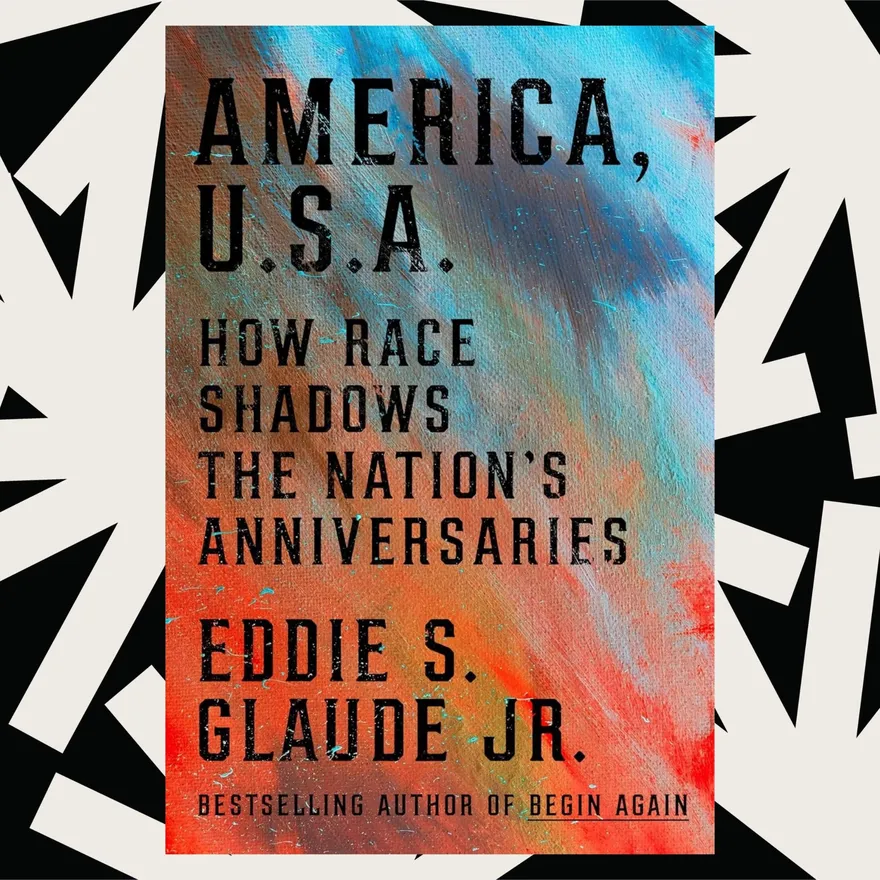

This is a preview of the Shortform summary of the Jul 9, 2026 episode of the NPR's Book of the Day
Sign up for Shortform to access the whole episode summary along with additional materials like counterarguments and context.
1-Page Summary
America's Paradox: Freedom vs. White Republic Roots
Eddie Glaude explores America's fundamental contradiction: its simultaneous identity as both a beacon of liberty and a white republic. This tension is embodied in W.E.B. Du Bois's concept of "double consciousness," which describes how Black Americans must see themselves through the eyes of those who despise them. Glaude argues this dynamic reflects America's own divided soul, creating "a kind of madness at the heart of the nation" that becomes especially visible during milestone anniversaries when Americans construct identity narratives.
The contradiction dates to the founding, exemplified by John Adams purportedly telling King George III, "We will not be your Negroes," while the Founders simultaneously upheld slavery. This foundational disparity continues to shape the nation's soul and the Black American experience.
Historical Pattern: Anniversaries Tied to Anti-Black Violence and White Supremacy
Glaude and Scott Tong discuss how significant national anniversaries have coincided with intensified anti-Black violence and white supremacist movements.
1876 Centennial and Reconstruction's Violent End
By 1876, white Americans had grown weary of Reconstruction, viewing it as federal overreach. Frederick Douglass warned in 1875 that Black gains would be dismantled as white divisions healed. He called those orchestrating these setbacks "the apostles of forgetfulness," highlighting the nation's eagerness to erase Black progress. This era saw the rise of "Lost Cause" mythology, epistemic violence that paved the way for Jim Crow as the country celebrated its centennial.
1926 Sesquicentennial and Klan Resurgence
The Ku Klux Klan, reborn in 1915, gained significant political power by the 1920s, with members in Congress shaping laws like the Johnson-Reed Immigration Act of 1924. Glaude notes this law restricting non-northern European immigration was essentially written by Klan members. During the 1926 sesquicentennial in Philadelphia, the Klan was granted space to hold its convention and burn a cross, epitomizing the nation's racial divisions and the ideology of white Anglo-Saxonism guiding both domestic and imperial policy.
Counter-Narratives: Black Americans' Alternative Commemorative Calendar
Black Americans developed their own commemorative calendar focused on freedom milestones. Glaude explains they observed July 5th (New York Abolition Day), August 1st (West Indian emancipation), and Juneteenth—deliberately distinct from national holidays to emphasize their own liberation journey and critique July 4th mythology that celebrated freedom while many remained enslaved.
Frederick Douglass's iconic July 5th, 1852 speech questioned what Independence Day meant to enslaved people, condemning the celebration as a sham. Speaking in the shadow of the Fugitive Slave Law of 1850, Douglass warned that slavery was "a serpent coiled in the belly, in the bosom of the nation" that threatened the country's survival.
Erasing History: Whitewashing Racism to Maintain National Mythology
Leaders have consistently constructed heroic national mythology while minimizing racial violence and oppression. Douglass recognized this as deliberate historical amnesia, calling its proponents "apostles of forgetfulness." The "Lost Cause" mythology exemplifies this epistemic violence, recasting Reconstruction's violent overthrow as regional restoration while glorifying Confederate leaders and obscuring white supremacist violence.
This tradition of erasure promotes a narrative of American moral perfection, as seen in President Calvin Coolidge's 1926 portrayal of the Revolution as fundamentally conservative and laying the foundation for national salvation. Such efforts continue today through campaigns to ban "divisive narratives" from public discourse, maintaining a false national unity at the cost of truth.
250th Anniversary Crisis: Contemporary Erasure and the Need for Truth
Tong references efforts to "remove museum exhibits on slavery, affirmative action," and Glaude characterizes this as a second iteration of "Lost Cause" strategy—an assault on national memory through manipulation of history. He argues that today's efforts pivot from idealized conservatism to ethnonationalism.
Under MAGA ideology, Glaude explains, America is presented as having achieved perfection at its founding as a white republic. Vance emphasizes America's identity comes from "blood and soil," explicitly rejecting the democratic creed in favor of white nationalism. This worldview abandons commitment to ongoing progress and claims perfection was already secured at founding.
Glaude shares a student's insight: perhaps hope is not what's required, but rather urgent, truthful storytelling "carried with love, but lit by rage." He describes the moment as a crossroads embodying both hopeful themes and somber acknowledgment of spiritual and racial pain, expressing faith in redemption's possibility while never forgetting the weight of historical violence.
1-Page Summary
Additional Materials
Counterarguments
- While America’s founding was deeply flawed regarding slavery and racial exclusion, the ideals articulated in founding documents (such as the Declaration of Independence) have provided a framework for later social justice movements and gradual expansion of rights.
- The concept of "double consciousness" is a powerful lens, but not all Black Americans may experience or interpret their identity in this way; experiences of race and identity are diverse and multifaceted.
- National anniversaries have also been occasions for progress and inclusion, such as the Civil Rights Act of 1964 being signed near the Fourth of July, and the 1963 March on Washington occurring during the centennial of the Emancipation Proclamation.
- The persistence of white supremacist movements is a serious issue, but it is not the only or inevitable outcome of American commemorative culture; many Americans use anniversaries to reflect critically and push for greater inclusion.
- The existence of alternative Black commemorative calendars demonstrates agency and resilience, but it also shows that American identity is not monolithic and can accommodate multiple narratives.
- Efforts to address or revise public history and education are not always motivated by white supremacy; some are driven by concerns about age-appropriateness, pedagogical approaches, or differing interpretations of historical complexity.
- The portrayal of all contemporary efforts to restrict certain narratives as a unified "Lost Cause" strategy may overlook the diversity of motivations and opinions among those involved.
- While some political figures emphasize ethnonationalist themes, many Americans—including conservatives—reject white nationalism and support a pluralistic vision of American identity.
- The idea that America is "perfected" at its founding is not universally held, even among those critical of certain progressive narratives; many Americans believe in ongoing national self-improvement.
- Calls for "truthful storytelling" are important, but there is legitimate debate about what constitutes historical truth, how to balance competing narratives, and how to foster national unity without erasing painful histories.
Actionables
- You can create a personal timeline that overlays national holidays with lesser-known Black freedom commemorations and family milestones, then reflect on how your own story fits into broader narratives of liberty and exclusion; for example, mark July 4th alongside Juneteenth and August 1st, and jot down memories or feelings each date evokes to notice patterns in your understanding of national identity.
- A practical way to challenge sanitized national myths is to keep a running journal where you document moments in daily life—news stories, conversations, or local events—that reveal contradictions between ideals of liberty and ongoing racial exclusion, then periodically review your entries to spot recurring themes and consider how these contradictions shape your community.
- You can practice urgent, truthful storytelling by writing short letters to your future self or loved ones describing how you witness or experience both hope and pain related to America’s racial history, focusing on honesty and emotional clarity rather than perfection, to build a habit of confronting difficult truths with compassion.


Get access to the context and additional materials
America's Paradox: Freedom vs. White Republic Roots ("Double Consciousness")
Eddie Glaude explores the fundamental contradiction at America’s core, grounded in its struggle between a self-image as both a beacon of liberty and a white republic. This internal tension is mirrored in the concept of "double consciousness," first articulated by W.E.B. Du Bois in 1903.
Nation Holds Conflicting Self-Images Creating Inner Turmoil
Double Consciousness: Black Americans' Self-Perception Through Oppressors' Eyes, Reflecting America's Divided Soul
Du Bois’s notion of double consciousness describes how Black Americans must see themselves through the eyes of those who despise them. Glaude argues that this dynamic stems directly from the United States’ own divided soul: a nation struggling to reconcile its simultaneous identities as a symbol of freedom and as a society rooted in white supremacy.
Country's Self-Image: Liberty Beacon & White Supremacy Paradox
America presents itself to the world as both a champion of liberty and as a white republic. Glaude asserts that holding these conflicting ideals produces an ineradicable contradiction, “a kind of madness at the heart of the nation,” making it impossible for Americans to maintain a consistent self-image without internal turmoil.
Contradiction Emerges In Milestone Celebrations as Americans Construct Identity Narratives
Glaude explains that this contradiction becomes especially apparent during milestone anniversaries, when Americans collectively reflect on the nation’s history and craft narratives to define themselves. At these moments, the tension between the story of freedom and the legacy of racial hierarchy bubbles to the surface.
Founders Weaponized Freedom While Enslaving, Revealing Amer ...
Here’s what you’ll find in our full summary
America's Paradox: Freedom vs. White Republic Roots ("Double Consciousness")
Additional Materials
Clarifications
- "Double consciousness" is a term coined by W.E.B. Du Bois in his 1903 work The Souls of Black Folk. It describes the internal conflict experienced by Black Americans who see themselves through their own perspective and through the prejudiced views of a racist society. This dual awareness creates a sense of fragmented identity and social alienation. Du Bois argued it complicates Black Americans' ability to develop a unified self-image within a society that devalues them.
- A "white republic" refers to a nation whose political and social systems prioritize white people’s power and identity. This concept highlights how racial hierarchy was embedded in America’s founding laws and institutions. It implies that citizenship, rights, and belonging were historically defined in ways that excluded or marginalized non-white groups. Understanding this helps explain ongoing racial inequalities and tensions in American society.
- The phrase "We will not be your Negroes" is attributed to John Adams as a metaphorical rejection of British colonial rule, equating political subjugation to slavery. It reflects the Founders' use of slavery imagery to argue for American independence while ignoring the contradiction of their own slaveholding. This statement highlights the irony of demanding freedom from Britain while denying it to enslaved Africans. It underscores the complex and often hypocritical rhetoric of liberty during the American Revolution.
- The paradox arises because America was founded on ideals of freedom and equality while simultaneously allowing slavery and racial discrimination. The nation's laws and social systems privileged white people, contradicting its proclaimed commitment to liberty. This contradiction created systemic racial inequalities that persist today. Understanding this helps explain ongoing racial tensions and debates about American identity.
- Milestone anniversaries, like the Fourth of July or the centennial of the Constitution, prompt collective reflection on national history. These events encourage people to celebrate shared values and achievements, but also highlight unresolved conflicts and contradictions. The narratives chosen during these times reveal which aspects of history are emphasized or downplayed, exposing tensions in national identity. This process makes visible the struggle between America's ideals and its historical realities.
- The Founders crafted the language of freedom to justify independence from Britain, emphasizing rights and liberty. However, many of them owned sl ...
Counterarguments
- While America’s founding involved contradictions, the ideals of liberty and equality articulated in founding documents have provided a framework for social progress and the eventual expansion of rights to marginalized groups.
- The concept of "double consciousness" is a powerful lens, but not all Black Americans may experience or interpret their identity in this way; individual experiences and perspectives can vary widely.
- The United States has undergone significant legal and social changes—such as the abolition of slavery, the Civil Rights Movement, and ongoing efforts toward racial equality—that demonstrate a capacity for self-correction and progress.
- The rhetoric of liberty used by the Founders, despite its inconsistencies, inspired global movements for independence and human rights, suggesting its impact extends beyond its original context.
- Some historians argue that ...

Get access to the context and additional materials
Historical Pattern at National Anniversaries: Milestone Celebrations' Ties to Anti-Black Violence, Jim Crow Consolidation, and White Supremacist Movements
Eddie Glaude and Scott Tong discuss how, during significant national anniversaries, the United States has often witnessed an intensification of anti-Black violence, consolidation of Jim Crow laws, and ascendance of white supremacist movements.
1876 Centennial Marked Diminished White Political Will, Leading To Reconstruction's Violent End and Jim Crow's Rise
Reconstruction's Unpopularity by Mid-1870s due to Perceived Federal Overreach
By 1876, the nation had grown weary of Reconstruction. Eddie Glaude notes that critics widely claimed it constituted federal overreach, spurring an all-out assault on the aims and ends of radical Reconstruction. By the mid-1870s, such resistance had rendered Reconstruction increasingly unpopular among white Americans.
Post-Civil War Reconciliation Led To Dismantling Black Gains, Douglass Warned
Frederick Douglass, in 1875, reflected on the period by saying that Black people gained freedom because of divisions among white men, and questioned what would happen now that those divisions had healed. Glaude explains that with the reconciliation of white Americans, there followed an era in which the Black advancements achieved during Reconstruction were systematically dismantled. Douglass referred to the architects of these setbacks as “the apostles of forgetfulness,” highlighting the nation’s eagerness to erase the memory of Black progress and civil rights.
"Reconstruction's Destruction: Epistemic Violence and 'Lost Cause' Mythology"
This process coincided with the rise of “Lost Cause” mythology and the deliberate misremembering of the Civil War, further fueling the epistemic violence that paved the way for Jim Crow. As the country celebrated its centennial in 1876, these forces coalesced to erase gains made by Black Americans, end Reconstruction violently, and consolidate white supremacy.
1926 Sesquicentennial: Amid Resurgence of White Supremacy and Racialized Immigration Policies
Klan's 1915 Rebirth Led To Political Clout By 1920s, With Members in Congress and Senate Shaping Laws
By the 1920s, white supremacist ideologies surged anew as the Ku Klux Klan experienced a powerful rebirth in 1915. The Klan amassed significant political influence, with its members serving in Congress and the Senate by the 1920s and actively shaping national policy.
Johnson-Reed Act of 1924 Set Quotas to Restrict Non-northern European Immigration, Drafted by Klan Members
This power is exemplified by the Johnson-Reed Immigration Act of 1924, which established strict quotas to restrict immigration from Southern, Eastern, and Central Europe. Glaude points out that the law was essential ...
Here’s what you’ll find in our full summary
Historical Pattern at National Anniversaries: Milestone Celebrations' Ties to Anti-Black Violence, Jim Crow Consolidation, and White Supremacist Movements
Additional Materials
Counterarguments
- While national anniversaries sometimes coincided with periods of intensified anti-Black violence and white supremacist activity, not all such anniversaries or celebrations directly caused or were responsible for these developments; correlation does not necessarily imply causation.
- The decline of Reconstruction and rise of Jim Crow were influenced by a complex interplay of political, economic, and social factors, including economic depression, political fatigue, and shifting national priorities, not solely by white reconciliation or national celebrations.
- The Johnson-Reed Act of 1924 was supported by a broad coalition in Congress, including individuals not affiliated with the Ku Klux Klan, and reflected widespread nativist sentiment of the era, not just Klan ideology.
- The presence of the Ku Klux Klan at the 1926 Sesquicentennial, while disturbing, was not universally accepted or celebrated; there was significant opposition and protest from various groups and individuals at the time.
- The concept of "epistemic violence" and ...
Actionables
- you can keep a personal timeline that tracks national anniversaries and major public commemorations, then note and reflect on any patterns of exclusion, erasure, or racial tension you observe in news, media, or local events during those times; this helps you recognize recurring cycles and stay alert to how history is remembered or misrepresented in your environment.
- a practical way to counteract historical misrepresentation is to compare how different sources (such as textbooks, documentaries, and museum exhibits) describe the same historical events, then jot down discrepancies and seek out perspectives from marginalized voices to fill in gaps; this builds your awareness of epistemic violence and helps you spot when narratives are being shaped to serve particular interests.
- you can cr ...


Get access to the context and additional materials
Counter-Narratives: African American Alternative Commemorative Calendars and Speeches
Black Americans' Freedom Milestones Commemorative Calendar
Eddie Glaude explains that alongside national holidays such as July 4th, Black Americans have developed their own commemorative calendar focused on freedom milestones. July 5th, known as New York Abolition Day, marked the end of slavery in New York State in 1827 and was celebrated among Black Americans in a manner similar to how Juneteenth is observed today. In addition to July 5th, Black communities observed other important dates: August 1st, commemorating West Indian emancipation in 1834, and Juneteenth, which marks the end of slavery in Texas. This evolving calendar allowed Black Americans to place primary emphasis on their own journey toward emancipation and liberty, distinct from the nation’s founding narrative.
The choice to commemorate July 5th, rather than July 4th, was deliberate. It offered a critique of the July 4th mythology that celebrated American freedom while many Black people remained enslaved. These alternative holidays created a collective memory rooted in Black liberation and resistance rather than national exceptionalism.
Douglass's 1852 Speech: Independence Day's Meaning to Enslaved People and National Hypocrisy
Scott Tong introduces Frederick Douglass’s iconic July 5th, 1852 speech, in which Douglass questions what Independence Day truly means to enslaved people. Douglass’s rhetorical line—"What to the American slave is your 4th of July? I answer.”—exemplifies early Black resistance to sanitized national narratives. In his speech, performed here by Phil Darius Wallace, Douglass condemns the celebration as a sham, emphasizing that for the e ...
Here’s what you’ll find in our full summary
Counter-Narratives: African American Alternative Commemorative Calendars and Speeches
Additional Materials
Counterarguments
- While alternative commemorative calendars highlight important milestones in Black American history, some argue that emphasizing separate holidays could unintentionally reinforce social divisions rather than promote national unity.
- The July 4th holiday, despite its historical limitations, has evolved for many Americans—including Black Americans—into a broader celebration of ideals such as freedom and equality, which some believe can be reclaimed and reinterpreted rather than rejected.
- Some historians note that the creation of alternative commemorative practices is not unique to Black Americans; many ethnic and cultural groups in the U.S. have developed their own traditions alongside national holidays, suggesting this is a common aspect of American pluralism rather than a uniquely oppositional act.
- Frederick Douglass himself, later in life, acknowledged progress made in American society and sometimes particip ...
Actionables
- You can mark your personal calendar with freedom milestones like July 5th, August 1st, and Juneteenth, and on those days, spend a few minutes reading or listening to a story about Black liberation or resistance to deepen your awareness of these histories.
- A practical way to challenge sanitized national narratives is to write a short reflection or journal entry each July 4th about what freedom means to you and how it relates to the ongoing struggle for justice, using Frederick Douglass’s questions as prompts.
- You can create a simp ...
Get access to the context and additional materials
Erasing History: Whitewashing Racism to Maintain a Mythological National Story
Leaders Construct a Heroic National Mythology Minimizing the History of Racial Violence and Oppression
Throughout American history, political and cultural leaders have sought to create a national mythology that emphasizes heroism and unity while minimizing or distorting the realities of racial violence and oppression. Frederick Douglass, writing in the 1870s, recognized and condemned this trend, referring to such leaders as "apostles of forgetfulness" for their efforts to erase or reinterpret the past in ways that made it more comfortable for mainstream society. Douglass saw this deliberate historical amnesia as an affront to the pursuit of truth and justice.
The fabrication of the "Lost Cause" mythology offers a stark example of this epistemic violence. After the Civil War, white Americans across the South and beyond revised the history and collective memory of the conflict and its aftermath. They recast the violent overthrow of Reconstruction not as the destruction of Black political power, but as a period of regional restoration and reconciliation. This revisionist narrative glorified Confederate leaders, downplayed the horrors of slavery, and obscured white supremacist violence that followed the war. By framing Reconstruction's violent end as a "necessary" restoration rather than acknowledging it as a deliberate campaign to strip Black Americans of newly won rights, proponents of the Lost Cause justified ongoing racial oppression and white dominance.
Erasing History Suppresses Discomfort and Promotes False National Perfection Origins
This tradition of erasing or smoothing over the nation’s historical violence serves not only to suppress collective discomfort but to promote a narrative of American moral and political perfection. President Calvin Coolidge's 1926 view of the American Revolution, which he described as fundamentally conservative and laying the foundation for national salvation, exemplifies t ...
Here’s what you’ll find in our full summary
Erasing History: Whitewashing Racism to Maintain a Mythological National Story
Additional Materials
Counterarguments
- While some leaders and groups have promoted mythologized versions of American history, there have also been significant efforts throughout U.S. history—by educators, historians, activists, and policymakers—to confront and teach about racial violence and oppression, indicating that the national narrative is not monolithic or universally whitewashed.
- The "Lost Cause" narrative, though influential in certain regions and periods, has been widely challenged and critiqued by mainstream historians, museums, and educational institutions, especially in recent decades.
- Some advocates for limiting certain historical content in schools argue that their intent is to promote age-appropriate education or to avoid politicization, rather than to erase history or perpetuate white supremacy.
- The portrayal of American history as heroic or unifying can serve as a source of national cohesion a ...
Actionables
- you can keep a personal timeline where you regularly add historical events, both well-known and lesser-known, that challenge simplified or mythologized versions of national history, noting how each event is typically remembered or forgotten in mainstream culture
- By building your own evolving record, you’ll notice patterns in what gets highlighted or erased, and you’ll become more aware of how narratives are shaped. For example, you might add entries about Reconstruction, the Tulsa Race Massacre, or the Chinese Exclusion Act, and jot down how you first learned about them (if at all).
- a practical way to counteract historical amnesia is to intentionally seek out and read firsthand accounts or primary sources from people whose voices were marginalized or erased, then summarize what you learned in a short paragraph for yourself
- This helps you recognize the difference between official narratives and lived experiences. For instance, after reading a speech by Frederick Douglass or a letter from a Black Union soldier, you could write a brief reflection on how their perspective contrasts with textbook versions of the same period. ...

Get access to the context and additional materials
250th Anniversary Crisis: Parallels to Historical Erasure and the Need for Truthful Storytelling
Scott Tong and Eddie Glaude discuss the current crisis surrounding America’s 250th anniversary by highlighting efforts to reshape national memory and connect these with historical patterns of erasure and myth-making.
Second Iteration of "Lost Cause" Strategy
Scott Tong references the White House’s move to "remove museum exhibits on slavery, affirmative action" as part of an active campaign to reshape the narrative of American history within the symbolic heart of the nation’s capital. Eddie Glaude draws a direct comparison to the historical “Lost Cause” strategy—an epistemic violence that seeks to rewrite history, erase national sins, and whitewash the country’s past. He characterizes this as not merely the violent physical act of “redemption” or the overthrow of Reconstruction and disenfranchisement of Black Americans, but as a sustained assault on national memory and what the country knows about itself through the manipulation of history books and public storytelling.
Glaude notes that contemporary erasure mirrors this earlier era. Where the first Lost Cause presented the American Revolution as conservative and the solution to America’s salvation lying in a return to its founding, today’s efforts, he argues, pivot from an idealized conservatism to a new brand of ethnonationalism.
Trump-Vance Vision Claims American Perfection Was Achieved As a White Republic at Founding, Rejecting Progress Toward a More Perfect Union
Glaude explains that under MAGA ideology, promoted by figures like Trump and Vance, America is presented as having achieved perfection at its founding—as a white republic. Any talk of moving “towards a more perfect union” is considered an affront because, as they frame it, perfection was already secured in the founding moment. For Trump, this worldview is deeply tied to himself; the celebration of the country’s anniversary becomes a celebration of Trumpism, portrayed as ushering in a supposed golden age. Vance, in particular, emphasizes that America’s foundational identity and salvation come not from its democratic creed but from “blood and soil,” doubling down on America as an explicitly white nation.
In this vision, these leaders abandon the nation’s formal commitment to ever-continuing progress and instead claim that the arc of the nation need not bend towards justice. They reject the idea of ongoing improvement in favor of an imagined return to the perfection of a white-dominated ...
Here’s what you’ll find in our full summary
250th Anniversary Crisis: Parallels to Historical Erasure and the Need for Truthful Storytelling
Additional Materials
Clarifications
- The “Lost Cause” strategy emerged after the American Civil War as a way for former Confederates to justify their defeat and romanticize the Southern cause. It falsely portrayed the Confederacy’s fight as noble and downplayed slavery as a central issue. This narrative sought to preserve white supremacy and resist Reconstruction efforts by rewriting history. It influenced education, monuments, and public memory to shape a sympathetic view of the Confederacy.
- Removing museum exhibits on slavery and affirmative action in the White House erases critical parts of American history that acknowledge systemic racism and efforts to address it. These exhibits serve as educational tools that confront the nation’s legacy of racial injustice. Their removal signals an attempt to sanitize or rewrite history to fit a more favorable, often exclusionary narrative. This act diminishes public understanding of the struggles and progress related to civil rights.
- Epistemic violence refers to harm done by controlling or distorting knowledge and narratives, often marginalizing certain groups. It involves suppressing or altering historical facts to maintain power structures. In rewriting history, it erases or changes truths to support dominant ideologies. This manipulation shapes collective memory and identity, influencing how societies understand themselves.
- The Lost Cause narrative reinterpreted the Civil War to portray the Confederacy's cause as noble and justified. It linked the American Revolution's ideals to a conservative vision that emphasized tradition and white supremacy. This connection framed the Revolution as a foundation for a racially exclusive nation. Thus, the Lost Cause used the Revolution to legitimize a revisionist history minimizing slavery and racial injustice.
- Ethnonationalism is a political ideology that defines a nation primarily by a shared ethnicity, culture, or race, often emphasizing exclusion of others. Conservatism generally focuses on preserving traditional institutions, values, and social order, without necessarily centering on ethnic identity. While conservatism can be inclusive of diverse groups, ethnonationalism prioritizes a specific ethnic group's dominance within the nation. This makes ethnonationalism more exclusive and identity-based compared to the broader, value-based focus of conservatism.
- MAGA, short for "Make America Great Again," is a political slogan popularized by Donald Trump during his 2016 presidential campaign. It emphasizes restoring America to a perceived former state of economic strength, national pride, and traditional values. The ideology often includes strong nationalism, skepticism of immigration, and a focus on law and order. Critics argue it sometimes promotes exclusionary or ethnonationalist ideas under the guise of patriotism.
- Vance refers to J.D. Vance, an author and political figure known for his book "Hillbilly Elegy" and his conservative views. He has become a prominent supporter of the MAGA (Make America Great Again) movement, aligning with its emphasis on traditional American values and nationalism. Vance promotes the idea that America's identity is rooted in a white, ethnonationalist foundation rather than its democratic ideals. His role includes advocating for policies and narratives that reinforce this vision of America.
- "Blood and soil" is a nationalist slogan originating in early 20th-century Germany, linking ethnicity ("blood") to homeland ("soil"). It promotes the idea that a nation's identity and purity depend on racial heritage tied to a specific territory. This ideology was central to Nazi racial policies and justified exclusion and violence against those deemed outsiders. In modern contexts, it signals ethnonationalism and exclusion based on race and ancestry.
- At its founding, America’s political and social systems largely excluded non-white people, especially Black enslaved people and Indigenous peoples, from rights and citizenship. The term “white republic” refers to this racial exclusivity embedded in laws and practices that privileged white men. This view is contested because it ignores the ongoing struggles and contributions of marginalized groups and the nation’s evolving ideals of equality and democracy. Critics argue America was never truly “perfect” at founding and has always been a site of conflict over inclusion and justice.
- The phrase “towards a more perfect union” comes from the Preamble to the U.S. Constitution, expressing the goal of continually improving the nation. It signifies an ongoing process of reform and progress in American democracy and society. Political ...
Counterarguments
- Some may argue that changes to museum exhibits or educational content are part of routine curatorial decisions and reflect evolving historical scholarship or public interest, rather than a coordinated campaign of erasure.
- Supporters of emphasizing America’s founding ideals may contend that focusing on positive aspects of the nation’s origins can foster unity and patriotism, rather than necessarily promoting ethnonationalism or whitewashing history.
- The assertion that MAGA ideology universally rejects progress or the idea of a “more perfect union” may not account for the diversity of views among its supporters, some of whom advocate for reforms or improvements within their own frameworks.
- References to “blood and soil” as a defining feature of Vance’s or Trump’s rhetoric may be interpreted differently by their supporters, who might argue that their focus is on cultural heritage or national ident ...

Get access to the context and additional materials

 1-Page Summary
- America's Paradox: Freedom vs. White Republic Roots ("Double Consciousness")
- Historical Pattern at National Anniversaries: Milestone Celebrations' Ties to Anti-Black Violence, Jim Crow Consolidation, and White Supremacist Movements
- Counter-Narratives: African American Alternative Commemorative Calendars and Speeches
- Erasing History: Whitewashing Racism to Maintain a Mythological National Story
- 250th Anniversary Crisis: Parallels to Historical Erasure and the Need for Truthful Storytelling
Create Summaries for anything on the web
Download the Shortform Chrome extension for your browser
