

Revisiting the story of the American Revolution with Rick Atkinson
In this episode of NPR's Book of the Day, Rick Atkinson challenges the romanticized view of the American Revolution, revealing the brutal reality of an eight-year conflict that claimed a staggering proportion of American lives and divided the nation internally. Atkinson examines George Washington's evolution as a leader, tracing how his initial contempt for his soldiers transformed into an understanding that effective leadership requires inspiration rather than coercion.
The episode also explores the contradictions inherent in the Revolutionary ideals, acknowledging both the Founders' genuine belief in equality and the severe limitations of that vision, which excluded enslaved people, women, and others. Atkinson draws connections between America's founding era and today's political landscape, suggesting that internal conflict has always been part of the nation's character and emphasizing the ongoing need for strong leadership during times of division.
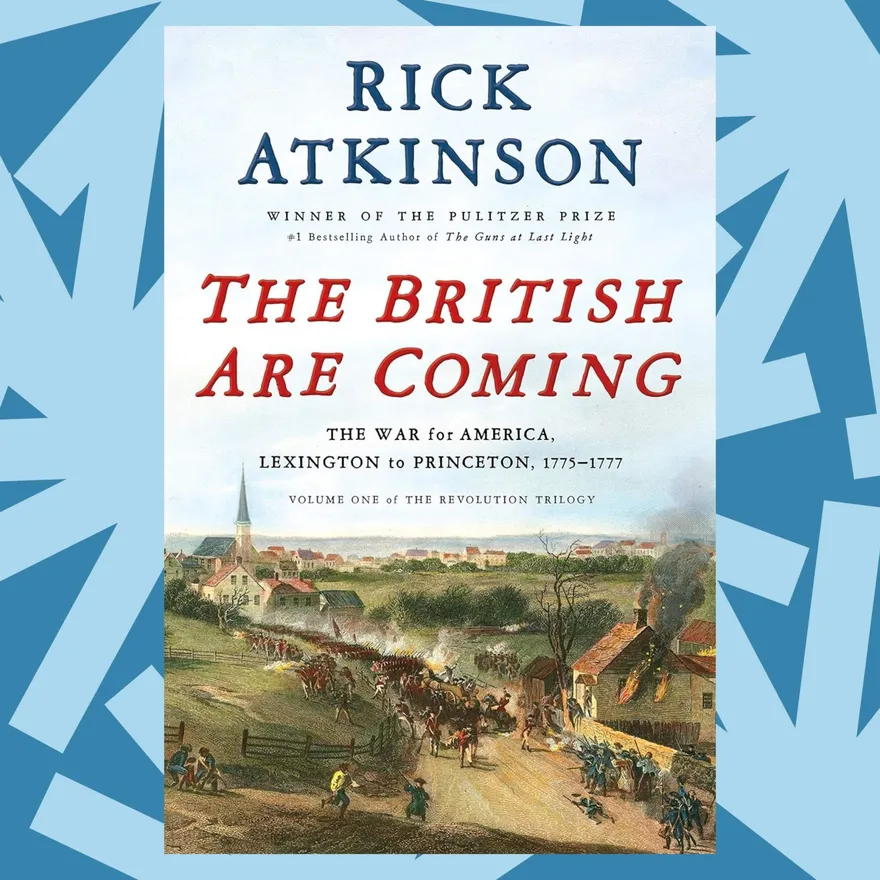

This is a preview of the Shortform summary of the Jul 8, 2026 episode of the NPR's Book of the Day
Sign up for Shortform to access the whole episode summary along with additional materials like counterarguments and context.
1-Page Summary
Historical Reality of the American Revolution
The American Revolution, often romanticized in cultural memory, was a brutal eight-year conflict marked by tremendous human sacrifice and internal division. The armed struggle began at Lexington and Concord when British forces, dispatched to seize colonial weapons, encountered a small militia. After an unidentified shot was fired, panicked British soldiers opened fire on the largely defenseless militiamen, killing eight and marking the bloody opening of the war. The conflict ultimately claimed between 25,000 and 35,000 American lives from a population of just 2.5 million—the highest proportional loss in American military history apart from the Civil War. Beyond fighting the British, the Revolution was also a civil war that pitted Americans against each other, leaving a legacy of division that challenges today's sanitized narrative.
George Washington's Leadership Transformation
When George Washington arrived in Cambridge in 1775 to command the Continental Army, he held clear contempt for his New England soldiers, viewing them as dirty and obstreperous. Rick Atkinson notes that Washington also lacked sophisticated tactical skills, particularly compared to gifted commanders like Napoleon. However, Washington's experience with the Continental Army fundamentally transformed his leadership philosophy. After the disastrous retreat across New Jersey and subsequent victory at Trenton in early 1777, Washington realized that "a people not used to being forced to do things will not be drove. They must be led." Atkinson explains that Washington's relationship with his troops enlarged and deepened him, teaching him that inspiration and empathetic engagement motivate soldiers far more than coercion—a realization that ultimately shaped both the army and Washington himself.
Revolutionary Ideals and the Reality of Inequality
Atkinson argues that the Founders genuinely believed in the Declaration of Independence's promise that "all men are created equal," even though this vision had severe limitations. Around 500,000 enslaved people, along with women and the indigent, were excluded from this equality. However, Atkinson emphasizes that the Founders aspired to more than just preserving a privileged society. Their writings demonstrate they envisioned a future beyond contemporary inequalities, and the Declaration became a framework for building institutions that could one day embody genuine egalitarian values—a vision unlike anything existing elsewhere in the world at that time.
Lessons for Modern America
Atkinson reflects on how the Revolutionary era offers guidance for today's political divisions and leadership challenges. He points out that America was born amid dispute, describing the people of 1775 as ornery and fractious, suggesting that internal conflict has always been integral to the nation's character. Despite facing even harsher periods throughout history, Americans have consistently overcome adversity. Atkinson encourages Americans to remember the sacrifices made 250 years ago and draw confidence from the nation's resilience. He also highlights the importance of exemplary leaders like Washington, Lincoln, and Eisenhower who guided the nation through crises. Atkinson believes it remains critical for Americans to demand good, noble, and accomplished leaders—an insistence that was evident in the revolutionary era and is just as necessary today.
1-Page Summary
Additional Materials
Counterarguments
- The characterization of the American Revolution as uniquely brutal and divisive may overlook the fact that many other revolutions and wars, both before and after, involved similar or greater levels of violence and internal conflict.
- The narrative that the British soldiers opened fire on "largely defenseless militiamen" at Lexington and Concord is debated among historians; some accounts suggest both sides were armed and tensions were high, making the situation more complex than portrayed.
- While the Revolution did result in significant proportional loss of life, the comparison to other conflicts may not account for civilian casualties or broader social impacts in later wars.
- The depiction of the Revolution as a civil war is accurate in some regions, but in others, the conflict was less fratricidal and more focused on opposition to British authority.
- The assertion that Washington lacked sophisticated tactical skills compared to Napoleon may be anachronistic, as Napoleon's military innovations came decades later and in a different context.
- The idea that the Founders "genuinely believed" in equality is contested; some historians argue that many Founders were primarily motivated by economic interests or the preservation of their own social status.
- The claim that the Declaration of Independence was unique in its egalitarian vision can be challenged by pointing to earlier or contemporary documents and philosophies advocating for equality, such as the English Bill of Rights or Enlightenment thinkers.
- The suggestion that Americans have always overcome adversity may gloss over periods of prolonged injustice, such as slavery, segregation, and the marginalization of various groups, which were not quickly or easily resolved.
- The emphasis on exemplary leaders like Washington, Lincoln, and Eisenhower may understate the importance of collective action, grassroots movements, and the contributions of ordinary citizens in shaping American history.
- The call to demand "good, noble, and accomplished leaders" may be idealistic, as political systems and public opinion often result in the election of leaders who do not meet these standards.
Actionables
- You can strengthen your own leadership by practicing empathy and inspiration in everyday situations, such as motivating family members or coworkers through encouragement and understanding rather than pressure or criticism; for example, when someone struggles with a task, ask about their challenges and offer support instead of insisting they meet expectations.
- A practical way to honor the sacrifices and internal divisions of the past is to initiate a personal reflection journal where you record moments when you face tough decisions or disagreements, noting how you navigate conflict and what values guide you, helping you build resilience and self-awareness over time.
- You can actively seek out and support leaders in your community or workplace who demonstrate integrity and empathy by writing letters of appreciation, nominating them for recognition, or simply voicing your support in group settings, reinforcing the importance of noble leadership in your environment.


Get access to the context and additional materials
Historical Reality of the American Revolution: Events, Campaigns, and Human Cost of the War
The American Revolution, often romanticized over almost 250 years, was a brutal and prolonged conflict marked by significant human sacrifice and internal division.
Beginning Of Armed Conflict at Lexington and Concord
The armed struggle began at Lexington and Concord with a British military mission aimed at seizing colonial weapons 18 miles from Boston. To fulfill this objective, the British dispatched a force of about 900 soldiers to Concord, where critical war materials such as cannons, muskets, and gunpowder were stockpiled. Twelve miles outside Boston, the troops encountered a small militia force in Lexington, numbering around 50 men. The confrontation escalated quickly: after a single, unidentified shot was fired, the British soldiers, panicking and without orders, opened fire on the militia. Most of the militia had their backs turned, resulting in a massacre that left eight colonial militiamen dead. Described as rebels at the time, these casualties marked the bloody opening of the Revolution. Following this clash, the British continued on to Concord, but by then, colonial forces had mobilized and were prepared for resistance.
American Revolution's Eight-Year Duration Had Highest Population Loss Proportion in American Military History Besides Civil War
The Revolutionary War lasted eight years, claiming at least 25,000 and perh ...
Here’s what you’ll find in our full summary
Historical Reality of the American Revolution: Events, Campaigns, and Human Cost of the War
Additional Materials
Counterarguments
- While the American Revolution was indeed violent, some historians argue that compared to other contemporary conflicts, such as the Napoleonic Wars or later 19th-century revolutions, the overall scale and brutality were relatively limited.
- The narrative that the Revolution was primarily a civil war is debated; while there were Loyalists and internal divisions, the majority of fighting was between colonial and British forces, and the scale of internecine violence varied by region.
- The casualty estimates for the American Revolution, while significant, are subject to scholarly debate, and some sources suggest lower figures for both military and civilian deaths.
- The idea that the Revolution’s violence has been universally sanitized in American memory is ...
Actionables
- you can keep a personal journal where you record moments of conflict, disagreement, or sacrifice in your own life, then reflect on how these experiences are often simplified or forgotten over time, helping you recognize and remember the complexity and cost of real struggles.
- a practical way to challenge romanticized versions of history is to read firsthand accounts or letters from people who lived through difficult events, then write a short summary or letter to yourself about the emotional and physical toll described, making the reality more tangible and less abstract. ...
Get access to the context and additional materials
From Disdain to Leadership: George Washington's New England Transformation
Washington's Prejudice Against New England Soldiers and Lack of Sophisticated Human-Centered Command
When George Washington first arrives in Cambridge to take command of the Continental Army in the summer of 1775, he holds clear contempt for the New England soldiers under his charge. As a Virginian, he views the New Englanders as dirty, obnoxious, and obstreperous, struggling to appreciate or connect with them. Washington also brings significant limitations as a military leader. According to Rick Atkinson, Washington lacks the refined skill of a tactical general and does not perceive the battlefield with the spatial and temporal acuity that more gifted commanders, such as Napoleon, possess. This initial combination of prejudice and tactical shortcomings marks the early period of his command.
Washington's Experience With the Continental Army Taught Him That Soldiers Respond To Inspiration Over Coercion
Washington’s tenure and trials with the Continental Army transform his leadership philosophy. After experiencing a near-collapse of the American cause—marked most notably by the disastrous retreat across New Jersey in late 1776—Washington manages to recover morale and momentum by recrossing the Delaware and capturing the Hessian garrison at Trenton in January 1777. Reflecting on these events, Washington observes, "a people not used to being forced to do things will not be drove. They must be led." This marks a pivotal realization for Washington about the character of his soldiers a ...
Here’s what you’ll find in our full summary
From Disdain to Leadership: George Washington's New England Transformation
Additional Materials
Counterarguments
- While Washington may have initially held some prejudices, evidence suggests he quickly recognized the necessity of unity and worked to bridge regional divides, indicating a more pragmatic approach than one solely defined by contempt.
- Washington’s tactical abilities, though sometimes criticized, were sufficient to achieve key strategic victories and maintain the army’s cohesion under extreme adversity, suggesting his leadership was effective even if not as refined as Napoleon’s.
- The comparison to Napoleon may be anachronistic, as Washington operated in a very different military and political context, and direct tactical comparisons may not fully account for the unique challenges he faced.
- Washington’s leadership style, while evolving, always included elements of inspiration and personal example, as seen in his willingness to share hardships with his troops from the outset.
- The transformation in Washingt ...
Actionables
- you can keep a daily log of your first impressions of people you interact with, then revisit those notes after a week to see if your initial judgments changed, helping you recognize and challenge your own biases in real time
- (For example, jot down your thoughts after meeting a new coworker or neighbor, then reflect later to see if your perspective shifted as you got to know them.)
- a practical way to strengthen empathetic leadership is to ask someone you supervise or collaborate with to anonymously share one thing they wish leaders understood about their experience, then use that feedback to adjust how you communicate or support them
- (For instance, if someone mentions they feel unheard during meetings, you might start inviting quieter voices to share their thoughts first.)
- you can set a monthly reminder to iden ...
Get access to the context and additional materials
Revolution's Ideals vs. Slavery/Inequality in America
Founders' Egalitarian Ideals in Declaration Despite Limited Application
Rick Atkinson argues that the Founders genuinely believed in the aspirational language of the Declaration of Independence: “we hold these truths to be self-evident, that all men are created equal, that they are endowed by their creator.” These words were sincere ideals, even if they were not fully realized at the time. However, Atkinson and Scott Simon acknowledge the severe limitations of this vision. The Declaration’s promise of equality did not extend to all people. Around 500,000 enslaved individuals out of a population of 2.5 million were excluded, as were women and the indigent. The founders’ egalitarian ideals were therefore profound but only applied to a select portion of society.
Revolution: Beyond Wealth For Slaveholders, Toward an Egalitarian Future
Atkinson notes that while some white slave owners in the South felt economically constrained by new restrictions, the Founders aspired to more than just preserving a privileged, slaveholding society. Their writi ...
Here’s what you’ll find in our full summary
Revolution's Ideals vs. Slavery/Inequality in America
Additional Materials
Counterarguments
- The sincerity of the Founders’ belief in egalitarian ideals is debatable, as many were active participants in and beneficiaries of slavery, suggesting their commitment to equality was limited or conditional.
- The Declaration’s language of equality may have been intended primarily as a political tool to unite colonists against Britain, rather than as a genuine commitment to universal human rights.
- The exclusion of large groups—enslaved people, women, and the poor—was not merely a limitation of the era but a deliberate choice that perpetuated existing hierarchies and injustices.
- The Revolution did not significantly improve the lives of enslaved people or other marginalized groups in its immediate aftermath; in some cases, conditions for enslaved people worsened as slavery became more entrenched in the South.
- The notion that the Declaration provided a framework for f ...
Actionables
- you can review the language and rules in your own social groups or organizations to spot and update any terms or practices that unintentionally exclude people, making sure everyone feels equally valued and included; for example, suggest using gender-neutral language in group chats or updating club guidelines to welcome people from all backgrounds.
- a practical way to recognize who might be left out of opportunities is to keep a simple journal for a week, noting who gets invited to participate in activities or decisions around you, then brainstorm small ways to include those who are often overlooked, such as inviting a quieter coworker to lunch or sharing resources with someone new to your community.
- you can set a recurring ...


Get access to the context and additional materials
Revolutionary Lessons For Modern America's Political Divisions and Leadership Challenges
Rick Atkinson reflects on how America’s revolutionary past offers lessons for navigating the country’s current political divisions and leadership crises.
Revolutionary-Era America's Contentious Nature Shows Internal Conflict At Founding
Atkinson points out that the nation was born amid dispute and contention. He describes the people of 1775 as ornery and fractious, emphasizing that internal conflict was present from the country’s very beginnings. This contentious spirit foreshadowed the political divisions the nation experiences today. Atkinson notes that Americans have historically been a disputative people, suggesting it is unsurprising to experience similar divisions in modern times. Despite founding-era disputes and divisions, the nation managed not just to survive but also to triumph, marking conflict as an integral yet ultimately productive aspect of the country’s birth.
America's History of Enduring Crises Gives Hope For Overcoming Current Challenges
Atkinson assures that today's difficulties, though significant, are not without precedent. He stresses that Americans have faced even harsher periods throughout national history and have consistently overcome adversity. The revolutionary era, with its existential perils, demanded immense sacrifice, laying a strong foundation that continues to support the nation. Atkinson encourages Americans to reflect on these past crises, remember the sacrifices made 250 years ago, and draw strength from the nation’s longstanding resilience. He argues that this history should give Americans confidence in their collective ability to confront and address the problems of the present.
Noble, Accomplished, Wise Leaders Guide Nations Through Crises; Demand Such Leadership Today
...
Here’s what you’ll find in our full summary
Revolutionary Lessons For Modern America's Political Divisions and Leadership Challenges
Additional Materials
Counterarguments
- While internal conflict was present at America's founding, the scale and nature of modern political divisions—amplified by technology, media, and polarization—may differ significantly from those of the 18th century, making direct comparisons potentially misleading.
- The notion that conflict is inherently productive overlooks periods in American history where division led to violence, regression, or long-term harm, such as the Civil War or eras of intense political repression.
- Emphasizing resilience and past triumphs may risk minimizing the seriousness or uniqueness of current challenges, which could require new approaches rather than reliance on historical precedent.
- The portrayal of past leaders as uniformly noble and accomplished can oversimplify history, as even revered figures like Washington and Lincoln were subject to criticism and controversy in their own times.
- The call to "dem ...
Actionables
- you can keep a weekly journal where you record moments of disagreement or conflict in your daily life, then reflect on how those moments led to better understanding, solutions, or personal growth, helping you see conflict as a productive force rather than something to avoid.
- a practical way to demand and recognize integrity in leadership is to create a personal checklist of qualities you value in leaders (such as honesty, accountability, and competence), then use it to evaluate public figures or candidates before supporting them, ensuring your choices align with your standards for noble leadership.
- you can set aside time each month to re ...



Get access to the context and additional materials

 1-Page Summary
- Historical Reality of the American Revolution: Events, Campaigns, and Human Cost of the War
- From Disdain to Leadership: George Washington's New England Transformation
- Revolution's Ideals vs. Slavery/Inequality in America
- Revolutionary Lessons For Modern America's Political Divisions and Leadership Challenges
Create Summaries for anything on the web
Download the Shortform Chrome extension for your browser
