

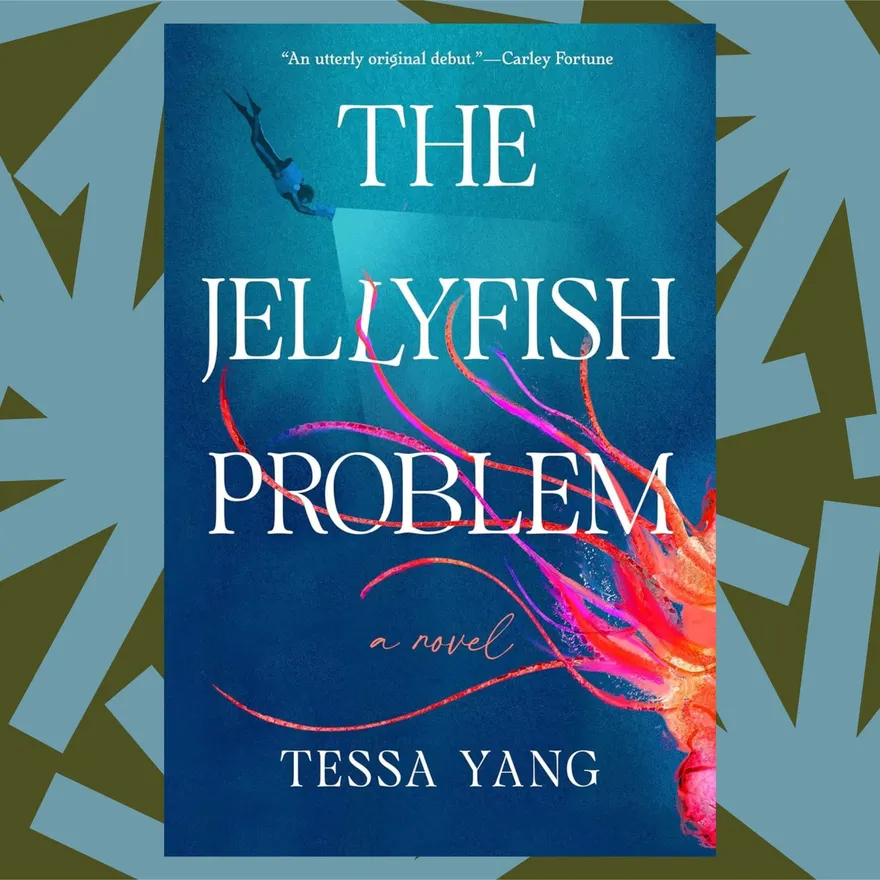
In 'The Jellyfish Problem,' an introverted scientist is called in to help an island
In this episode of NPR's Book of the Day, the discussion centers on Tessa Yang's novel about Jo, an introverted jellyfish scientist grappling with grief after losing her research partner, Aldo. When Nadia calls from a remote Maine island requesting help with a mysterious jellyfish named Clementine, Jo sees an opportunity to reconnect with her former love interest while confronting a creature that defies scientific explanation.
The conversation explores how both Jo and Clementine share the experience of being misunderstood—Jo by the people around her and Clementine by townspeople who view her as a threat rather than a creature in distress. Yang discusses her creative process, explaining her fascination with jellyfish as inherently alien beings that resist human emotional projection, making them perfect subjects for exploring themes of environmental degradation, the limits of scientific knowledge, and the challenge of empathizing with what we cannot understand.

This is a preview of the Shortform summary of the Jun 24, 2026 episode of the NPR's Book of the Day
Sign up for Shortform to access the whole episode summary along with additional materials like counterarguments and context.
1-Page Summary
Character Development and Grief
The story centers on Jo, a highly introverted scientist struggling with isolation and the profound grief of losing her best friend and research partner, Aldo, to drowning. Jo's narrative is driven by her longing for connection—particularly her unrequited love for Nadia, who unexpectedly calls from a remote Maine island seeking help with a jellyfish problem. While scientific curiosity plays a role, Jo's primary motivation is the hope of rekindling their relationship, though her self-blame over Aldo's death weighs heavily on her decisions.
Despite dying before the story begins, Aldo's influence shapes Jo's growth throughout. Jo frequently reflects on Aldo's open-minded, flexible approach to science, asking herself what he would do when facing the island's enigmatic jellyfish phenomenon. Through emulating Aldo's adaptable mindset, Jo transforms from someone driven by selfish motivations and rigid thinking into an individual achieving greater emotional maturity and openness.
The Misunderstood Monster
Both Jo and Clementine the jellyfish share a central struggle: being misunderstood. Elissa Nadworny describes Jo as brokenhearted in multiple ways, while Tessa Yang observes that Jo has been misunderstood her entire life, making her difficult for others to relate to. Similarly, Clementine is labeled a monster by townspeople who see her as an economic threat rather than a living creature deserving empathy.
The quest for understanding defines both characters' emotional arcs. Jo's journey involves learning vulnerability and seeking acceptance from Nadia, while Clementine's bioluminescent display—perceived as menacing—is actually a plea for help. The alien nature of jellyfish, creatures without recognizable facial features, serves as a metaphor for Jo's own incomprehensibility to others, reinforcing that being misunderstood can make it hard to be loved or accepted.
Blending Science With Mystery
Jo's identity as a jellyfish expert faces challenges when she encounters Clementine, whose behavior defies known biology. The core mystery asks whether Clementine is an ancient, invincible sea monster posing an existential threat to humanity, or simply a biological creature struggling in a degraded ocean, her luminescence signaling distress rather than danger.
Jo's growth centers on reconciling her scientific expertise with phenomena she cannot explain through biology alone. Coping with Aldo's loss, she's compelled to develop humility and acknowledge the limits of her knowledge, ultimately moving beyond rigid empiricism to accept wonder, mystery, and the unexplainable.
Creative Inspiration
Yang explains her attraction to jellyfish stems from their resistance to human emotional projection. Their alien anatomy—requiring observers to ask where the mouth or eyes are—makes them creatures we cannot relate to or understand emotionally. This inherent strangeness makes jellyfish ideal for depicting monsters, which Yang argues are defined by our inability to empathize with them.
Yang states she wanted her sea monster based on a real animal, resulting in a novel that fuses marine biology with magical elements. This combination transforms the narrative into one that raises questions about environmental degradation, human misunderstanding of nature, and the limits of scientific knowledge, encouraging readers to confront what is unknown in the natural world.
1-Page Summary
Additional Materials
Counterarguments
- The portrayal of Jo’s transformation from rigid to emotionally open may oversimplify the complexities of grief and personal growth, which often do not follow a linear or clear-cut path.
- The metaphor equating jellyfish’s alien anatomy with human emotional incomprehensibility could be seen as forced or reductive, as it risks anthropomorphizing animal traits for narrative convenience.
- The narrative’s emphasis on misunderstanding as a central struggle for both Jo and Clementine may overlook other possible interpretations of their isolation, such as systemic or environmental factors.
- The story’s blending of science and mystery might be criticized for potentially undermining scientific rigor by suggesting that embracing the unexplainable is always preferable to seeking empirical understanding.
- The depiction of townspeople as lacking empathy for Clementine could be viewed as one-dimensional, not accounting for legitimate economic or safety concerns that might motivate their fear.
- The focus on Jo’s unrequited love as her primary motivation may risk reducing her character’s agency or complexity, overshadowing her scientific expertise and other possible motivations.
- The narrative’s encouragement to “confront the unknown” in nature could be interpreted as romanticizing mystery at the expense of advocating for actionable environmental solutions.
Actionables
- you can practice seeing misunderstood people or things in your daily life from multiple perspectives by writing a short note each week about someone or something others label as “strange” or “threatening,” then brainstorm at least three possible reasons for their behavior or existence that invite empathy rather than fear; for example, consider why a neighbor keeps to themselves, or why a certain animal is disliked, and imagine their inner world or needs.
- a practical way to embrace uncertainty and wonder is to keep a “mystery log” where you jot down things you encounter that don’t make sense or defy your expectations, resisting the urge to immediately look up answers; revisit your list monthly to reflect on how sitting with the unknown changes your feelings about curiosity, humility, and control.
- you can experiment with communicating your own needs or feelings in nonverbal ways for a day—such as using art, movement, or light (like arranging lamps or colored objects)—to explore how others interpret your signals and to better understand the challenges of being “read” or empathized with when you feel misunderstood.
Get access to the context and additional materials
Character Development and Grief
The story explores how Jo's inner struggles, relationships, and the lasting impact of grief shape her development as she confronts both emotional and scientific mysteries.
Jo’s Struggles Drive the Narrative Through Loss and Isolation
Jo is characterized as a highly introverted, awkward scientist who has difficulty making and maintaining friendships, making the few she does have especially significant to her. Her narrative is deeply influenced by her longing to connect; her unrequited love for Nadia prompts her to abandon her current life when Nadia calls unexpectedly from a remote island in Maine seeking help with a jellyfish problem. While there is some scientific curiosity motivating Jo, her primary reason for going is the hope of rekindling a connection with Nadia. Overlaying her actions is profound grief and guilt over the recent drowning of her best friend and research partner, Aldo. Jo carries a heavy burden of self-blame for Aldo's death, which continually affects her emotions and decisions throughout her journey.
Aldo's Absence Shapes Jo's Growth Despite His Prior Death
Although Aldo dies before the story begins, his presence deeply influences Jo's character and growth. Jo frequently reflects on Aldo’s open-minded, scientific approach, often asking herself what Aldo would do in difficult or illogical situations—es ...
Here’s what you’ll find in our full summary
Character Development and Grief
Additional Materials
Counterarguments
- The text emphasizes Jo's introversion and awkwardness as central to her character, but it could be argued that these traits are not inherently obstacles to forming meaningful relationships or personal growth; many introverted individuals maintain deep connections and adapt well to challenges.
- The narrative suggests Jo's primary motivation is rekindling her connection with Nadia, yet her scientific curiosity is also mentioned and could be interpreted as equally or more significant, especially given her profession and the unusual nature of the jellyfish problem.
- The portrayal of Jo's grief and self-blame as continuously affecting her decisions may risk oversimplifying the complex and varied ways individuals process grief, which can include resilience, compartmentalization, or even positive motivation.
- The idea that Aldo's memory is the main catalyst for Jo's transformation could be challenged by considering that Jo's own agency, experiences on the island, or interactions with other characters might play equally ...
Actionables
- you can create a personal “flexibility challenge” by intentionally saying yes to one small, unexpected invitation or idea each week, helping you practice openness and adaptability in everyday life; for example, if a coworker suggests a lunch spot you’ve never tried or a friend proposes a new activity, agree to go even if it feels outside your comfort zone.
- a practical way to honor the influence of someone who shaped your thinking is to write a short letter to them (even if they’re no longer present), describing a recent situation where you used their approach or mindset, which helps reinforce their positive ...
Get access to the context and additional materials
The Misunderstood Monster
Jo and Clementine the Jellyfish Are Misunderstood and Hard to Love
Josephine Ness, or Jo, is introduced as a prickly scientist, described by Elissa Nadworny as someone who is brokenhearted in multiple ways when the story begins. Tessa Yang observes that Jo has been misunderstood her entire life, rendering her difficult for others to relate to or find likable.
Similarly, Clementine the jellyfish is labeled a monster by the townspeople, blamed for killing the summer tourism season and threatening the residents' economic interests. Unlike a beloved animal, Clementine is seen not as a living creature but as a threat, and the community’s fear and anger are directed toward her, rather than any attempt at empathy or understanding.
The Quest For Understanding Defines Both Characters' Emotional Arcs in the Novel
A central theme is the search for understanding and acceptance shared by both Jo and Clementine. Jo’s personal journey involves learning to be more open and vulnerable, particularly in seeking understanding and acceptance from Nadia. Her emotional arc is driven by a desire to shed her unrelatable, prickly exterior.
Meanwhile, Clementine’s story asks the audience to recognize her not as a monstrous threat but as an animal deserving empathy. Her bioluminescent display, which might be interpreted as menacing, is instead a plea for help—a sign that she too craves understanding, not destr ...
Here’s what you’ll find in our full summary
The Misunderstood Monster
Additional Materials
Counterarguments
- While Jo is described as misunderstood and unlikable, it is possible that her difficulties in connecting with others stem more from her own choices or behaviors rather than solely from others' inability to understand her.
- The townspeople's fear of Clementine may be justified from a practical standpoint, as the presence of a large jellyfish could pose real risks to public safety and the local economy, making their reaction more complex than simple lack of empathy.
- The metaphor equating Jo's emotional life with the alien nature of jellyfish may oversimplify human relationships, as people often find ways to connect despite differences or initial misunderstandings.
- The narrative centers on the importance of empathy, but it may underplay the le ...
Actionables
- you can keep a daily empathy log where you jot down moments when you felt misunderstood or noticed someone else being misjudged, then brainstorm one small action you could take to show understanding or support in a similar situation
- For example, if you see a coworker being left out of a conversation, you might invite them to join you for coffee or ask for their opinion in a group chat.
- a practical way to practice connecting with people who seem distant or hard to read is to set a weekly goal to start a gentle, open-ended conversation with someone you don’t know well, focusing on listening rather than fixing or judging
- For instance, you could ask a neighbor about their favorite childhood memory or a colleague about a hobby, then simply listen and thank them for sharing.
- you can create a personal “signal” ...


Get access to the context and additional materials
Blending Science With Mystery
The narrative explores how Jo, a dedicated scientist and jellyfish expert, must confront unexplainable phenomena that challenge the limits of empirical knowledge.
Jo's Expertise and Worldview Face Challenges From Unexplainable Phenomena
Jo is deeply identified with her role as a jellyfish scientist, described as something of a "know-it-all" who relies on empirical knowledge. She likens herself to the jellyfish she studies and loves, grounding her identity in the certainties of marine biology. However, when confronted with Clementine, a remarkable jellyfish, Jo discovers evidence suggesting this creature does not adhere to known jellyfish biology and behavior. This includes anecdotal reports that Clementine breaks all established rules, forcing Jo to question where her expertise applies and where it falls short.
Core Mystery: Clementine as Ancient Menace or Struggling Animal Adapting
Clementine: An Ancient, Invincible Sea Monster Haunting These Shores, Posing an Existential Threat to Human Life
The story raises the possibility that Clementine could be an ancient, invincible sea monster, representing an existential threat to humanity itself. This framing casts Clementine as a force of nature both mysterious and menacing, whose existence points to ancient powers haunting the modern world.
Clementine as a Biological Creature in a Degraded Ocean, Her Luminescence Signaling Distress, Not Danger
In contrast, Clementine might simply be a biological creature trying to survive in a degraded ocean. Instead of signaling danger, Clementine’s pulsating luminescence could be viewed as a sign of distress—a cry for help from a species under environmental strain. Jo is forced ...
Here’s what you’ll find in our full summary
Blending Science With Mystery
Additional Materials
Counterarguments
- The dichotomy between science and mystery may be overstated; many scientists embrace uncertainty and the unknown as part of the scientific process, rather than seeing them as threats to their identity.
- The framing of Clementine as either a monstrous threat or a distressed animal could be seen as reductive, overlooking the possibility that she might represent a natural but poorly understood phenomenon within the range of biological diversity.
- Jo’s characterization as a rigid empiricist may not reflect the diversity of attitudes among real scientists, many of whom are open to revising their views in light of new evidence.
- The narrative suggests that accepting wonder and mystery requires moving ...
Actionables
- you can keep a weekly "mystery log" where you jot down things in your daily life that defy your expectations or understanding, then reflect on how you react to not knowing the answers and what assumptions you bring to those moments
- This helps you notice your own tendencies toward certainty and gives you practice sitting with ambiguity, whether it's a strange behavior from a pet, an unexpected reaction from a friend, or a puzzling news story.
- a practical way to challenge your own expertise is to ask someone from a completely different background to explain how they see a topic you think you know well, then write down what surprises you and how it shifts your perspective
- For example, if you know a lot about cooking, ask a friend who dislikes cooking to describe their experience in the kitchen, and notice where your assumptions differ.
- you can create a "w ...
Get access to the context and additional materials
Creative Inspiration
Author Prefers Jellyfish for Its Resistance to Human Emotional Projection
Tessa Yang explains her attraction to jellyfish stems from their resistance to human emotional projection. She notes that when observing a jellyfish, one must ask fundamental questions such as where its mouth or eyes are. This alien anatomy disrupts human relatability, making jellyfish creatures that humans cannot see themselves in or understand on an emotional level. For Yang, this inherent strangeness and lack of familiar features make jellyfish ideal for depicting monsters. She argues that monsters are defined by their inability to be related to; they are entities we cannot project ourselves onto or empathize with.
Novel Fuses Marine Biology With Magical Elements Into Unique Narrative
Yang states that although she did not originally intend to write about a giant jellyfish, she wanted her sea monster to be based on a real animal. The result is a novel that blends scientific accuracy with an atmosphere of wonder and mystery. By using a real animal as the basis for her monster, Yang f ...
Here’s what you’ll find in our full summary
Creative Inspiration
Additional Materials
Counterarguments
- While jellyfish may resist traditional forms of human emotional projection, some cultures and artists have found ways to imbue them with symbolic meaning or emotional resonance, suggesting that complete resistance to projection is not universal.
- The idea that monsters must be entities we cannot relate to or empathize with is debatable; many classic monsters in literature and film are compelling precisely because they evoke empathy or reflect human fears and desires.
- Using a real animal as the basis for a monster may limit creative freedom compared to inventing a wholly fictional creature, potentially constraining the narrative's imaginative scope.
- Blending scientific accuracy with magical elements can risk undermining the credibility of the science for some readers, potentially leading to confusion about what is factual and what is fictional.
- The assertion t ...
Actionables
- you can pick an everyday object or animal you find hard to relate to and spend a few minutes sketching or describing it without using any human emotions or familiar traits, which helps you practice seeing the world without projecting your own perspective.
- a practical way to challenge your assumptions about the natural world is to write down three questions about a common animal or plant that you genuinely don’t know the answer to, then look up the answers and reflect on how your initial guesses were shaped by human-centric thinking.
- you can take a short walk in a loc ...


Get access to the context and additional materials


Create Summaries for anything on the web
Download the Shortform Chrome extension for your browser
