

Sen. Chris Murphy wants the left and right to fix the country’s 'spiritual rot'
In this episode of NPR's Book of the Day, Senator Chris Murphy discusses his perspective on the crisis facing American society. Murphy identifies six belief systems he views as undermining the nation's well-being—from profit-centered economics and consumption culture to credentialism and corruption. He connects these systems to rising rates of suicide, addiction, and political violence, arguing that Americans are experiencing a crisis of purpose and belonging.
Murphy explores how policy decisions from both parties have contributed to these problems and offers his analysis of what Democrats need to change in their messaging strategy. He argues that voters want bold solutions rather than incremental changes and that politicians must address the emotional dimensions of policy. The episode concludes with Murphy's thoughts on the potential for bipartisan cooperation to address what he calls the nation's "spiritual rot," emphasizing the need for both parties to prioritize healing over electoral victories.
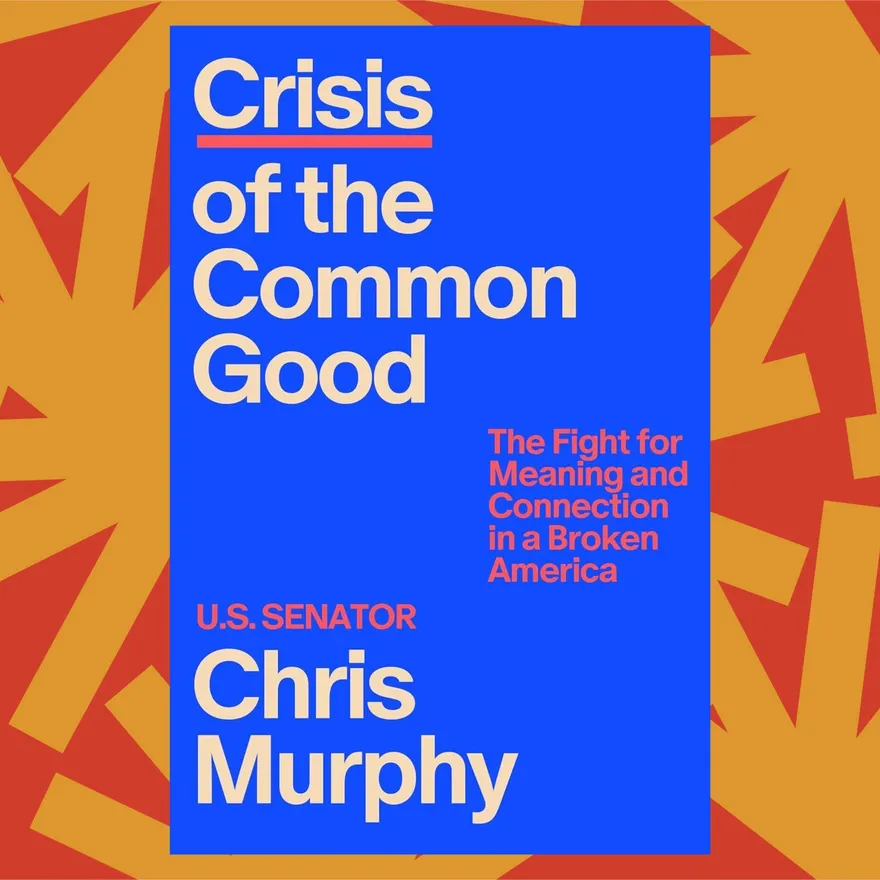

This is a preview of the Shortform summary of the Jun 23, 2026 episode of the NPR's Book of the Day
Sign up for Shortform to access the whole episode summary along with additional materials like counterarguments and context.
1-Page Summary
Six Destructive "Cults" Undermining American Society
Senator Chris Murphy identifies six damaging belief systems shaping American society and threatening its well-being. These pervasive ideologies reorder national priorities away from the common good, fueling instability and inequality.
Murphy describes the first cult as profit-centered economics, where the American economy is judged solely on corporate profits rather than workforce well-being. This places shareholder returns above employee security, resulting in stagnating wages and job insecurity. The second cult centers on consumption, replacing civic engagement with an identity based on purchasing power rather than community contribution.
The third destructive force is globalism—the belief that Americans should consider themselves global citizens rather than investing in local communities. This diminishes incentives to nurture unique community identities. Murphy then addresses the cult of technology, which assumes all technological advancement is beneficial despite harmful applications like social media that foster division and misinformation.
The cult of credentialism pushes college degrees as the primary marker of opportunity, dividing the nation into credentialed 'haves' and 'have-nots.' Finally, Murphy identifies the cult of corruption, which encourages those who win in politics or business to grab whatever they can, legitimizing unethical behavior and corroding public trust.
America's Spiritual and Social Crisis
Murphy discusses the profound crisis gripping America, pointing to rising rates of suicide, political violence, and addiction. He attributes these issues to deep uncertainty about individual purpose and community belonging. Murphy observes that fewer people wake up confident about their role in the world, and he links the surge in political violence to this existential disconnection. Rising addiction rates, he argues, reflect not just individual hardship but a loss of communal and spiritual bonds that once provided Americans with meaning.
Political and Policy Responsibility
Murphy explores how political decisions have impacted Americans' sense of fulfillment and happiness. He argues that both parties have stripped work of its purpose and dignity, severing the link between labor and fulfillment. Policymakers have also enacted measures that weakened community institutions and diminished opportunities for meaningful social connections. Murphy criticizes that government has prioritized economic outcomes over citizens' ability to pursue meaningful lives, failing the Declaration's promise to guarantee the right to pursue happiness.
Democratic Messaging Strategy
Murphy expresses concern that Democrats haven't learned from 2024: voters want bold policies, not incremental changes. People feel the economy and democracy are fundamentally rigged, so they distrust small solutions. Murphy highlights how Trump's messages succeed because they address voters' emotional states, promising to restore power and control. He wants Democrats to connect emotionally by framing policies like minimum wage increases as ways to restore personal power, not just economic fixes. Murphy argues Democrats should target corporations and billionaires—the actual sources of harm—rather than vulnerable groups like immigrants or LGBTQ individuals that Republicans scapegoat.
The Possibility of Bipartisan Unity
Murphy discusses the potential for Americans to overcome partisan divisions by addressing root spiritual issues. He argues that the nation's problems represent "spiritual rot" that transcends left-right divisions, offering opportunities for both parties to come together. Murphy emphasizes that both parties must acknowledge their roles in national dysfunction rather than simply focusing on winning the next election. The path forward, he says, requires prioritizing national healing over electoral victories, restoring shared values of community and mutual care, and shifting from "the me" back to "the we" that once characterized American society.
1-Page Summary
Additional Materials
Clarifications
- In this context, "cult" is used metaphorically to describe a strongly held belief system that dominates thinking and behavior like a religion, but without literal religious practices. It implies unquestioning devotion that can be harmful or misleading. The term highlights how these ideologies shape society and individual priorities rigidly. It does not mean an actual religious cult with rituals or a leader.
- Profit-centered economics prioritizes maximizing shareholder returns above all else, often at the expense of workers' wages, job security, and community well-being. It contrasts with stakeholder or inclusive economic models that balance the interests of employees, customers, communities, and the environment alongside profits. This approach can lead to income inequality and reduced social cohesion. It often ignores long-term societal impacts in favor of short-term financial gains.
- Consumption-based identity means people define themselves by what they buy or own rather than their role or contributions in society. This shifts focus from participating in community activities or civic duties to acquiring goods and status symbols. It can weaken social bonds and reduce collective responsibility. Over time, this leads to a society more focused on materialism than shared values or public good.
- Globalism refers to the idea that people and nations are interconnected beyond borders, emphasizing global cooperation and identity. It often promotes free trade, international institutions, and cultural exchange. Critics argue it can weaken local economies and traditions by prioritizing global markets and norms over community-specific needs. This may reduce local control and investment, leading to a loss of unique cultural and economic characteristics.
- Technology, especially social media, can spread misinformation rapidly, creating confusion and mistrust. It often amplifies extreme views, deepening political and social divisions. Social media platforms use algorithms that prioritize engaging content, which can promote sensationalism over truth. This environment can harm mental health by fostering anxiety, loneliness, and addiction.
- Credentialism is the overemphasis on formal educational qualifications as the main measure of a person's ability or worth. It can limit opportunities for those without degrees, regardless of their skills or experience. This creates social and economic divides by privileging degree holders and marginalizing others. It also pressures individuals to pursue costly education, sometimes without clear benefits.
- The "cult of corruption" refers to a culture where unethical behavior is normalized and rewarded in politics and business. It manifests as leaders prioritizing personal gain over public good, often through bribery, nepotism, or abuse of power. This erodes trust in institutions and weakens democratic accountability. Over time, it creates a cycle where corruption becomes expected and difficult to eradicate.
- A spiritual crisis involves a loss of meaning, purpose, and connection to something larger than oneself. This void can lead to feelings of isolation, despair, and hopelessness, which increase risks of suicide and addiction. Political violence can arise when people feel disconnected and powerless, seeking identity and purpose through extreme actions. Thus, spiritual disconnection weakens social bonds and mental resilience, fueling these societal problems.
- Political decisions over decades have shifted economic policies toward prioritizing profits and efficiency over worker well-being. This has led to job insecurity, wage stagnation, and weakened labor protections. As a result, many workers feel their labor is undervalued and disconnected from meaningful contribution. The loss of stable, fulfilling work erodes a sense of purpose and dignity traditionally tied to employment.
- Community institutions like local clubs, churches, and neighborhood organizations have been weakened by reduced funding, declining membership, and political neglect. This erosion diminishes social support networks that foster trust, cooperation, and shared identity. Without strong institutions, people feel isolated, reducing civic engagement and collective problem-solving. Ultimately, weakened community institutions undermine social cohesion and individual well-being.
- Governments often focus on metrics like GDP growth, stock market performance, and employment rates to measure success. These economic indicators prioritize financial stability and wealth creation over individual well-being. Policies may boost economic output but neglect factors like mental health, work-life balance, and social connections that contribute to happiness. This approach can lead to economic gains without improving, or even harming, citizens' overall life satisfaction.
- The 2024 election was a pivotal moment revealing voter frustration with slow or minimal policy changes. It showed that many Americans desire bold, transformative solutions rather than incremental adjustments. This election highlighted the emotional disconnect voters feel from traditional politics, favoring messages that promise empowerment and control. Democrats are urged to learn from this by adopting more ambitious, emotionally resonant strategies.
- Voters distrust small policy solutions because they often see these measures as insufficient to address deep-rooted economic and social problems. Many believe that political and economic systems favor wealthy elites and corporations, limiting real change. This perception is reinforced by repeated instances of corruption, inequality, and unfulfilled promises. As a result, people feel the system is rigged against their interests and demand bold, transformative actions.
- Trump's messaging resonates emotionally by tapping into feelings of loss, fear, and frustration among voters. He promises to restore a sense of control and power that many feel has been taken away by economic and social changes. His rhetoric often targets perceived threats to identity and status, creating a strong us-versus-them dynamic. This emotional appeal makes his message feel urgent and personal, beyond policy details.
- Democrats aim to connect economic policies to voters' feelings of control over their lives, not just financial gains. This approach recognizes that people want dignity and influence, not only higher wages. By framing policies like minimum wage increases as empowering, Democrats seek to address emotional needs for respect and autonomy. This strategy counters narratives that focus solely on economic metrics, making policies more relatable and motivating.
- Corporations and billionaires often hold disproportionate economic and political power, influencing policies to favor their interests. This can lead to wealth inequality, reduced worker protections, and weakened social safety nets. Their influence may prioritize profit over public welfare, contributing to social and economic instability. Critics argue this undermines democracy by limiting equal opportunity and access to resources.
- "Spiritual rot" refers to a deep moral and cultural decay affecting society's core values and sense of purpose. It goes beyond political disagreements, impacting how people relate to each other and their communities. This decay weakens trust, empathy, and shared identity, which are essential for social cohesion. Addressing it requires healing collective wounds rather than focusing solely on partisan conflicts.
- Bipartisan unity means cooperation between the two main political parties despite their differences. It focuses on common goals and shared values rather than winning elections or opposing each other. This approach aims to heal divisions by prioritizing the nation's well-being over party interests. It requires both sides to acknowledge their role in problems and work together for solutions.
- The shift from individualism ("the me") to collective identity ("the we") refers to moving focus from personal goals and self-interest toward shared community values and mutual support. Individualism emphasizes independence and personal success, while collective identity stresses cooperation and social responsibility. This change aims to rebuild social bonds and a sense of belonging that strengthen society. It counters isolation by fostering unity and common purpose.
Counterarguments
- The focus on profit-centered economics has also driven innovation, economic growth, and global competitiveness, which have contributed to higher living standards and technological advancements benefiting society as a whole.
- Consumption-based identity can be seen as a reflection of individual freedom and personal choice, which are core American values; civic engagement and consumerism are not necessarily mutually exclusive.
- Globalism has enabled economic prosperity, cultural exchange, and international cooperation, which can strengthen local communities through new opportunities and broadened perspectives.
- Technological advancements have brought significant benefits, such as improved healthcare, communication, and access to information; the negative effects of technology are often the result of misuse rather than inherent flaws.
- Credentialism can serve as a meritocratic system that rewards hard work and achievement, providing a clear pathway for social mobility and economic advancement.
- The existence of corruption is not unique to the United States or to recent times; many institutions have robust checks and balances to deter and punish unethical behavior.
- Rising rates of suicide, addiction, and political violence are complex phenomena with multiple contributing factors, including mental health, economic changes, and social media, not solely a loss of community or spiritual bonds.
- Many Americans still find purpose and fulfillment in their work and communities, and there are numerous examples of strong local institutions and civic engagement across the country.
- Government policies have also expanded opportunities for meaningful lives through social safety nets, civil rights protections, and investments in education and healthcare.
- Incremental policy changes can be more sustainable and less disruptive than sweeping reforms, allowing for adjustment and consensus-building.
- Emotional appeals in political messaging can risk oversimplifying complex issues and may not always lead to effective or just policy outcomes.
- Targeting corporations and billionaires as sources of harm may overlook the positive contributions they make to the economy, job creation, and philanthropy.
- Emphasizing collective identity over individualism may risk suppressing personal freedoms and diversity of thought, which are also foundational American values.
- Bipartisan unity is often difficult to achieve due to genuine ideological differences and diverse interests among the American populace.


Get access to the context and additional materials
The six Destructive "Cults" Undermining American Society
Senator Chris Murphy identifies six damaging "cults" that shape American society and threaten its long-term well-being. These pervasive belief systems reorder national priorities away from the common good, fueling instability and inequality.
Profit-Centered Economics Prioritizes Corporate Gains Over Workforce Well-Being
Murphy describes the first cult as the pervasive belief that the value of the American economy should be judged solely on how much profit companies generate, rather than on the health and well-being of the workforce. This ideology places shareholder returns above the needs and security of employees, encouraging practices that may boost short-term earnings at the cost of long-term prosperity and social cohesion.
Shareholder Returns Prioritized Over Employee Well-Being
Economic policies and corporate governance decisions increasingly focus on maximizing shareholder value, often resulting in stagnating wages, job insecurity, and neglect of workplace health, undermining workers’ quality of life.
Consumption-Based Identity Frames Purchasing Power As Patriotic Citizenship
The second cult centers on consumption: the notion that being a good American means buying more goods and services. This worldview replaces the idea of citizenship as active community contribution with an identity based on purchasing power and material acquisition.
Americans Validate Through Buying Rather Than Community Contribution
Rather than celebrating civic engagement, this orientation validates Americans through their ability to buy and display consumer goods, neglecting civic responsibility and weakening communal ties.
Globalism Detaches From Local Community Character
Murphy cites the cult of globalism as the third destructive force: the belief that Americans should consider themselves citizens of the world rather than investing in the health and uniqueness of their local communities.
Global Citizenship Reduces Investment in Local Health and Cultural Distinctiveness
A global focus can come at the expense of local well-being and distinctiveness, as it may diminish incentives to nurture unique community identities and invest in the vitality of local places.
Technology Is Assumed Universally Beneficial Despite Harmful Applications
The cult of technology, according to Murphy, is the widespread faith that technological advancement is always positive. Yet innovations such as social media have proven that technology can inflict major societal harm.
Social Media Innovation Can Harm Society
Despite the benefits of connectivity, platforms can foster division, misinformation, and mental health crises, challenging the assumption that all technologi ...
Here’s what you’ll find in our full summary
The six Destructive "Cults" Undermining American Society
Additional Materials
Clarifications
- The term "cult" here is used metaphorically to describe strongly held belief systems that influence behavior and thinking like religious cults do. It highlights how these ideas can dominate society and resist criticism despite potential harm. This usage emphasizes the intensity and exclusivity of adherence rather than literal religious practice. It draws attention to the social and psychological power of these ideologies.
- Profit-centered economics focuses primarily on maximizing financial returns for shareholders, often prioritizing short-term gains over other considerations. In contrast, alternative economic values emphasize broader goals like worker welfare, environmental sustainability, and social equity. These approaches advocate balancing profit with the well-being of employees, communities, and long-term economic health. This shift challenges the idea that corporate success should be measured solely by immediate financial performance.
- "Shareholder returns" refer to the profits and dividends that investors receive from owning company stock. "Workforce well-being" involves the health, job security, fair wages, and overall quality of life of employees. Prioritizing shareholder returns often leads companies to cut costs, sometimes by reducing employee benefits or wages. This can harm workers and create long-term instability despite short-term financial gains for investors.
- Consumption-based identity links a person's social value to their ability to buy goods, equating spending with success and belonging. This idea ties patriotism to economic activity, suggesting that purchasing domestic products supports the nation. It shifts focus from civic duties like voting or volunteering to consumer behavior as a form of national loyalty. This can weaken community bonds by prioritizing materialism over collective well-being.
- Globalism refers to the increasing interconnectedness and interdependence of countries through trade, culture, and politics. It often promotes policies and perspectives that prioritize global cooperation and markets over local traditions and economies. This can lead to reduced support for local businesses, cultural practices, and community-specific needs. As a result, local identities and economic resilience may weaken under global pressures.
- Technological advancement is often seen as inherently good because it can improve efficiency, communication, and access to information. However, some technologies, like social media, can spread misinformation rapidly and create echo chambers that deepen social divisions. They can also contribute to mental health issues by fostering addiction, anxiety, and depression. These negative effects challenge the belief that all technological progress is beneficial.
- Credentialism is the overe ...
Counterarguments
- Profit-centered economics and shareholder value maximization have driven significant economic growth, innovation, and global competitiveness, which can benefit society as a whole through job creation and increased standards of living.
- Consumption-based identity can reflect individual freedom and economic empowerment, allowing people to express themselves and support industries and jobs through their purchasing choices.
- Globalism has facilitated international cooperation, economic development, and cultural exchange, which can enrich local communities and provide opportunities that would not exist in isolation.
- Technological advancement has led to major improvements in health, communication, productivity, and quality of life; many harms are due to misuse or lack of regulation rather than technology itself.
- Credentialism can s ...


Get access to the context and additional materials
America's Spiritual and Social Crisis
Chris Murphy discusses the profound spiritual and social crisis gripping America, pointing to rising rates of self-harm, suicide, political violence, and addiction. He argues that these issues stem from a deep uncertainty about individual purpose and community belonging.
Citizens Lack Purpose and Place, Creating Despair
Rising Suicide and Self-Harm Reflect Uncertainty in Role and Meaning
Murphy observes that more Americans face rising rates of self-harm and suicide. He attributes these increases to a growing sense that fewer people wake up each day feeling confident about their role in the world or their overall purpose and meaning.
Political Violence Stems From Existential Disconnection
Murphy links the surge in political violence to the same root cause: citizens experiencing an existential disconnection. Without a clear understanding of their place in society, some individuals channel their internal despair into outward expressions of anger and violence.
Ad ...
Here’s what you’ll find in our full summary
America's Spiritual and Social Crisis
Additional Materials
Clarifications
- Existential disconnection refers to a feeling of being disconnected from a meaningful sense of purpose or identity in life. When people lack this connection, they may feel isolated, powerless, and frustrated. This emotional turmoil can lead some to express their pain through political violence as a way to assert control or seek recognition. Such violence is often a misguided attempt to fill the void created by their lost sense of belonging and meaning.
- "Spiritual emptiness" in a national context refers to a widespread lack of deeper meaning, purpose, or connection beyond material or superficial concerns. It often means people feel disconnected from shared values, traditions, or a sense of belonging that once unified communities. This emptiness can lead to feelings of isolation, hopelessness, and a search for fulfillment in unhealthy ways. It reflects a collective loss of guiding principles that support mental and emotional well-being.
- Individual purpose refers to a person's sense of meaning and direction in life, often linked to personal goals and values. Community belonging means feeling accepted and connected within a social group, providing support and identity. These concepts are measured through surveys assessing life satisfaction, sense of meaning, social integration, and feelings of acceptance. Psychological scales like the Purpose in Life test and Social Connectedness scale are commonly used tools.
- Spiritual and social crises create feelings of emptiness and isolation, which can lead individuals to seek relief through harmful behaviors. Self-harm and addiction often serve as coping mechanisms to manage emotional pain and a lack of connection. When people feel disconnected from community and purpose, they may struggle to find healthier ways to address their distress. These behaviors reflect deeper unmet needs for meaning, belonging, and support.
- Political violence can stem from feelings of powerlessness and alienation, leading individuals to act out their frustration. When people lack a sense of belonging or purpose, they may seek control or recognition through aggressive means. This internal despair fuels anger that is projected outward as violence. Such behavior often reflects deeper psychological and social disconnection rather than purely ideological motives ...
Counterarguments
- While rising rates of self-harm, suicide, and addiction are concerning, attributing them primarily to a "spiritual crisis" may overlook other significant factors such as economic inequality, lack of access to mental health care, and social determinants of health.
- Political violence can be influenced by factors such as polarization, misinformation, and historical grievances, not solely by existential disconnection or lack of purpose.
- The decline in traditional community bonds may be offset by the rise of new forms of community and connection, including online communities and diverse social networks.
- Substance abuse is a complex issue wit ...
Get access to the context and additional materials
Political and Policy Responsibility
Chris Murphy explores how political decisions and government policies have impacted Americans’ sense of fulfillment, relationships, and happiness.
Both Parties Have Eroded Work's Purpose and Dignity
Murphy argues that actions taken by both political parties have systematically stripped work of its purpose and dignity. He explains that government decisions have severed the link between labor and the sense of fulfillment people once derived from their jobs.
Policymakers Hinder Positive Relationships and Social Connections
Murphy also notes that these policy choices have made it much harder for individuals to form positive connections, friendships, and relationships. He points out that policymakers have enacted measures that weakened community institutions and diminished opportunities for meaningful social connections.
Government Fail ...
Here’s what you’ll find in our full summary
Political and Policy Responsibility
Additional Materials
Clarifications
- Both parties have supported policies like deregulation, outsourcing, and weakening labor unions, which reduced job security and worker influence. They have also promoted automation and gig economy models, leading to unstable, low-benefit jobs. Tax and trade policies often favored corporations over workers, limiting wage growth and career advancement. These actions collectively diminished workers' sense of value and fulfillment in their roles.
- The "link between labor and the sense of fulfillment" refers to the idea that work can provide personal satisfaction beyond just earning money. Historically, many people found meaning in their jobs through creativity, skill use, and contributing to society. When this connection weakens, work feels like a chore rather than a source of pride or purpose. Changes in job quality, work conditions, or economic structures can disrupt this fulfilling relationship.
- Policymakers have weakened community institutions by reducing funding for local organizations like libraries, schools, and recreational centers. They have also enacted zoning laws and urban development projects that disrupt neighborhood cohesion. Additionally, cuts to social programs have limited support networks that foster community engagement. These actions diminish spaces and resources where people build social ties.
- Measures that have diminished opportunities for social connections include policies that reduce funding for community centers, libraries, and public parks. Zoning laws and urban planning decisions have sometimes prioritized commercial development over communal spaces. Welfare and labor policies can limit time and resources people have for social activities. Additionally, cuts to public transportation reduce access to social venues, isolating individuals.
- The Declaration of Independence, adopted in 1776, asserts that all people have unalienable rights, including "Life, Liberty, and the p ...
Counterarguments
- While some government policies may have impacted the nature of work, many individuals still find purpose and dignity in their jobs, suggesting that fulfillment from work is not universally eroded.
- The decline in community institutions and social connections can also be attributed to broader societal changes such as technological advancements, urbanization, and shifting cultural norms, not solely to government policy.
- Economic growth and stability, which governments often prioritize, can provide the foundation for individual autonomy and opportunities for meaningful lives.
- The responsibility for forming positive relationships and community ...



Get access to the context and additional materials
Democratic Messaging Strategy
Democrats Need Bold Policies, Not Incremental Changes, to Resonate With Voters
Chris Murphy expresses concern that Democrats haven't learned the essential lesson from 2024: voters are not interested in marginal, incremental changes. He explains that people across the country feel that the economy, culture, and democracy are fundamentally rigged. As a result, they distrust solutions that appear too small or inadequate to address these broad, systemic problems.
Democratic Messaging Should Evoke Emotions By Showing how Policies Restore Personal Power
Murphy highlights how Donald Trump’s messages, though ineffective as actual policy, succeed because they address voters’ emotional states. Trump talks about tariffs and immigration as ways to restore voters’ sense of power and control over their lives. Murphy wants Democrats to approach their messaging similarly, connecting emotionally with voters by demonstrating that policies like a large increase in the minimum wage are not just economic fixes but ways for people to regain control and agency in their lives. He notes that low wages force people into impossible choices between essentials like medicine and tuition, and Democrats should frame their solutions as a restoration of personal power.
Target Corporations and Billionaires, Not Vulnerable Groups
Murphy arg ...
Here’s what you’ll find in our full summary
Democratic Messaging Strategy
Additional Materials
Counterarguments
- Bold, transformative policies can be politically risky and may alienate moderate or swing voters who prefer gradual change or are wary of large-scale reforms.
- Incremental changes, while less dramatic, can be more feasible to implement and sustain, especially in a divided government or closely contested Congress.
- Emotional messaging may resonate with some voters but can also be perceived as manipulative or lacking in substantive policy detail.
- Focusing messaging on restoring personal power may not address the diverse priorities of all voter groups, some of whom may prioritize stability, security, or other values.
- Targeting corporations and billionaires as adversaries could be seen as overly simplistic or divisive, potentially alienating business-friendly voters or donors.
- Adversarial and confrontational politics may contribute to furthe ...
Actionables
- you can reframe everyday conversations about economic or political issues by focusing on how proposed changes would give people more control over their own lives, such as discussing how a policy could let someone choose a job that fits their family needs instead of being stuck in a low-wage position.
- a practical way to personalize your advocacy is to write short, emotional stories or social media posts about moments when you or someone you know felt powerless due to economic systems, then connect those stories to the need for bold changes that target corporate or billionaire influence.
- you can shift ...
Get access to the context and additional materials
The Possibility of Bipartisan Unity
Chris Murphy discusses the potential for Americans to overcome deep partisan divisions by addressing root spiritual and societal issues, rather than continuing cycles of political conflict.
Addressing Spiritual Disconnection Can Unite Americans Across Partisan Lines
Murphy argues that the sources of widespread discontent in the United States go beyond traditional left-right divisions. He describes the nation's problems as a form of "spiritual rot," and contends that if Americans seriously examine what makes people feel so bad in the country, they’ll find that the solutions can actually unite them rather than divide them. Murphy sees "lots of opportunities for right and left to come together" around addressing these spiritual needs, suggesting that the paths to national healing transcend party affiliation.
Path Forward: Both Parties Must Acknowledge Role in Dysfunction, Not Focus On Winning Next Election
Murphy emphasizes the need for both the Democratic and Republican parties to recognize how each has contributed to the nation's dysfunction. He cautions against falling into the trap of seeking only electoral victories, stating that the most important task is not simply to "beat Trump electorally," but to fix the underlying spiritual problems afflicting the nation. According to Murphy, understanding the ways both parties have helped fracture the country offers a genuine opportunity for repair, shifting focus from ...
Here’s what you’ll find in our full summary
The Possibility of Bipartisan Unity
Additional Materials
Clarifications
- "Spiritual rot" refers to a deep moral and emotional decay within society, where people feel disconnected from purpose, values, and each other. It suggests that beyond political disagreements, there is a loss of shared meaning and trust that weakens social bonds. This decay contributes to national dysfunction by fostering division, cynicism, and a lack of collective responsibility. Addressing this "rot" means healing these underlying emotional and ethical fractures to restore unity.
- "Spiritual disconnection" refers to a sense of alienation or loss of meaning in life, often linked to a lack of purpose, community, or moral grounding. It can manifest as widespread feelings of loneliness, anxiety, and distrust within society. This disconnection may lead to social fragmentation, reduced empathy, and increased polarization. Addressing it involves fostering deeper connections, shared values, and a sense of belonging.
- Traditional political divisions focus on policy disagreements and party ideologies, such as economic or social issues. Spiritual and societal issues refer to deeper feelings of disconnection, lack of purpose, and community breakdown that affect people's well-being beyond politics. These issues influence how people engage with politics but are rooted in emotional and cultural experiences rather than specific policies. Addressing spiritual and societal problems aims to heal underlying causes of division, potentially bridging partisan gaps.
- Both parties have contributed to dysfunction by prioritizing partisan victories over compromise, deepening political polarization. Democrats have sometimes pushed policies without bipartisan support, causing backlash and gridlock. Republicans have occasionally resisted cooperation, focusing on obstructing opposing agendas. Both have engaged in negative campaigning, eroding public trust and increasing division.
- An "individualistic, election-focused mindset" prioritizes personal or party gain, often valuing winning political power over collective well-being. Shifting to "community, meaning, and mutual care" means emphasizing shared responsibilities, social bonds, and the common good beyond just political contests. This approach encourages cooperation and empathy to address societal problems together. It seeks to rebuild trust and connection among people rather than deepen divisions.
- Historically, America emphasized community and collective effort during times like the Great Depression and World War II, when citizens united for common goals. The New Deal policies and wartime rationing reflected a focus on shared sacrifice over individual gain. Civic movements in the 1960s also highlighted collective responsibility for social justice. These periods contrast with more recent trends toward individualism and political polarization.
- Concrete steps to address spiritual and societal problems include fostering open, respectful dialogue across political divides to build empathy. Communities can invest in progra ...
Counterarguments
- The concept of "spiritual rot" is subjective and may not resonate with all Americans, particularly those who view national issues primarily through economic, structural, or policy lenses rather than spiritual or communal ones.
- Deep partisan divisions are often rooted in substantive policy disagreements (e.g., on healthcare, immigration, reproductive rights) that cannot be bridged solely by appeals to shared values or spiritual healing.
- Calls for unity and mutual responsibility can sometimes obscure or minimize real power imbalances and injustices that require direct political action and accountability, not just reconciliation.
- The idea that both parties are equally responsible for national dysfunction may be seen as a false equivalence, as some argue that one party or faction has played a more significant role in recent polarization or democratic backsliding.
- Prioritizing unity and healing over electoral victories could risk demobilizing necessary political engagement, especially for marginalized groups whos ...
Get access to the context and additional materials


Create Summaries for anything on the web
Download the Shortform Chrome extension for your browser
