

Two romance books give opposite takes on love, relationships and the absence of both
In this episode of NPR's Book of the Day, two novels offer contrasting perspectives on modern relationships. Hallie Blassingame's "They All Fall in Love at the End" explores polyamory as a serious philosophical approach to relationships, following a Black woman in Washington, D.C., who navigates opening her long-term partnership. Meanwhile, Lily Meyer discusses "The End of Romance," which examines how its protagonist, shaped by intergenerational trauma, attempts to reject traditional romantic structures entirely as a form of protection—a strategy that ultimately proves unsustainable.
The conversation addresses broader themes of representation in fiction, including the scarcity of polyamorous Black women characters and happy Jewish relationships in American Jewish literature. Both authors discuss how personal experience, trauma, and political context shape their work, with Blassingame drawing on her own journey with non-monogamy and the turbulent political landscape of recent years. The episode explores the tension between intellectual theories about love and the messy realities of lived emotional experience.
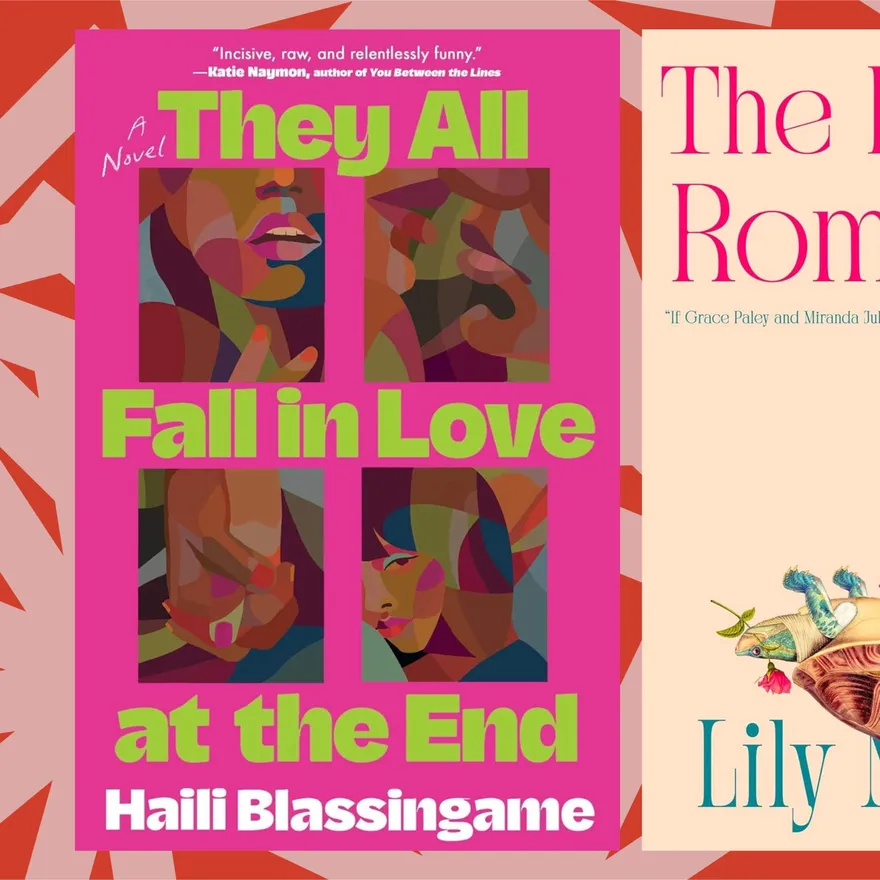

This is a preview of the Shortform summary of the Jun 19, 2026 episode of the NPR's Book of the Day
Sign up for Shortform to access the whole episode summary along with additional materials like counterarguments and context.
1-Page Summary
Unconventional Approaches to Love and Relationships
Polyamory as Philosophy, Not a Plot Device
In "They All Fall in Love at the End," Hallie Blassingame examines polyamory as a serious relationship modality rather than a narrative flourish. The novel follows Kat and Jay, a couple together for six years when Kat suggests opening their relationship. Blassingame presents polyamory as a complex philosophical question requiring the unlearning and relearning of relational norms. She acknowledges the challenge of forging a polyamorous path with little cultural modeling, comparing it to how queer communities often build relational frameworks from scratch.
Rejection of Romance as a Protective Philosophical Framework
Sylvie Broder's novel "The End of Romance" takes a contrasting approach by examining the constraints of traditional heterosexual romance. As Lily Meyer explains, Sylvie believes these conventions are so limiting for women that she develops a radical solution: keeping relationships hidden from everyone to prevent societal expectations from shaping or damaging them. While Meyer acknowledges Sylvie's critique identifies real issues, she contends that Sylvie's solution of eradicating romance entirely is ultimately unworkable and inhuman. The novel demonstrates how Sylvie's extreme rejection of romance wounds herself and damages her relationships, showing that total denial of romance as a framework is impractical and emotionally hollow.
Representation and the Search For Self in Fiction
Scarcity of Polyamorous Black Women Characters in Literature
Blassingame discusses her motivation for creating Kat, a young Black woman exploring polyamory, as part of her personal search for representation. She was looking for a "map" for living a life she hadn't seen reflected anywhere else. Kat embodies self-determined action and prioritizes her own desires, representing a rare portrayal of confidence and agency for women of color in mainstream fiction.
Lack of Positive Jewish Relationships in American Jewish Literature
Meyer highlights another dimension of representation: the rarity of novels within American Jewish literature depicting two Jewish characters in a happy, stable, meaningful relationship. Though she identifies strongly with the American Jewish literary tradition and cites Roth, Singer, Lori Colwin, and Grace Paley as influences, Meyer intentionally chose to write such relationships to expand this lineage and represent varieties of American Jewish experience not often depicted.
Tension Between Intellectual Theory and Lived Experience
Limitations Of Intellectualizing Love and Relationships As Self-Protection
Sylvie attempts to use philosophy as emotional armor after experiencing trauma and an abusive marriage. She becomes convinced that she cannot rely on love or desire for safety, building a personal philosophy to make love predictable and controllable. However, Meyer makes clear that Sylvie's lived experiences continually disrupt this theory-driven approach, showing that emotions are resistant to theorizing and cannot be tamed by philosophy alone.
Three-Way Struggle: Mind, Body, Emotional Experience
Meyer crafts Sylvie to embody a conflict between mind, body, and emotional life as three distinct forces. Sylvie's mind craves safety and philosophical certainty, her body seeks pleasure and connection, but she often neglects her emotions entirely. This emotional life becomes the neglected "third corner" that operates independently and disrupts her attempts at controlling relationships. The novel demonstrates that theory alone cannot dictate or guard against the realities of love and emotional life.
How Trauma, Experience, and Identity Shape Characters and Story
Transformation of Memoir Into Fictionalized Life Narratives
Blassingame draws on her own story of non-monogamy, previously shared in a New York Times Modern Love essay, as inspiration for her novel. Kat shares many demographic traits with Blassingame—both are young Black women, DC natives, and daughters of federal workers—but the novel's events are fictional. Blassingame uses her characters "like dolls" to play out "what if" scenarios, maintaining emotional authenticity while exploring alternative paths she didn't actually pursue.
Blassingame's five-year writing process, from age 25 to 30, dramatically altered her understanding of polyamory and romantic possibility. She no longer practices polyamory and has been single for several years, joking that while at 25 she managed three boyfriends, at 30 she struggles to find even one. She sees these shifts as natural: writing the book gave her some answers, but new, different questions persist.
Impact of Familial Trauma on Romantic Philosophy and Character Psychology
Elissa Nadworny introduces Sylvie Broder, whose grandparents are Holocaust survivors and whose emotionally cold parents pass on trauma. Meyer adds that when Sylvie's grandparents die during her teenage years, her high school boyfriend Jonah appears to rescue her but ultimately becomes controlling and emotionally abusive. After escaping her marriage, Sylvie turns to philosophy, pursuing a PhD focused on theorizing the end of romance as emotional protection—an intellectual system designed to ensure she's never as vulnerable to abuse again.
Social and Political Contexts in Fiction
Impossibility Of Separating Fiction From Political Reality
Blassingame discusses writing "They All Fall In Love At the End" amid the turbulence of the 2024 Trump election and its aftermath. She describes how the novel serves as archival work, capturing the lived history and frenetic energy of Washington, D.C., which became "ground zero" for the second Trump administration. Through protagonist Cat's eyes, the novel explores election chaos, campus protests, and fears of immigration raids, emphasizing the sensation of the "ground shifting beneath your feet."
Coping Mechanisms and Creative Outlets Within Constraints
Blassingame explains that her work as a journalist at WAMU made it impossible to detach from the political climate, and this impossibility seeped into her fiction. She states that being able to step back from politics is a privilege not afforded to everyone. Writing fiction became her outlet, enabling her to process current events beyond the formal bounds of newsroom journalism and provide a perspective shaped directly by the intensity of the time.
1-Page Summary
Additional Materials
Counterarguments
- While polyamory is presented as a complex philosophical modality, some critics argue that it can also reinforce existing power imbalances or emotional insecurities, and that its challenges are not always adequately addressed by philosophical frameworks alone.
- The comparison between polyamory and queer relational frameworks may overlook the distinct historical, social, and political struggles faced by queer communities, which are not always analogous to those encountered by polyamorous individuals.
- The idea that hiding relationships to avoid societal expectations is unworkable may not account for individuals in cultures or situations where secrecy is a necessary form of self-protection.
- The assertion that total rejection of romance is emotionally damaging may not apply to aromantic individuals or those who find fulfillment outside of romantic frameworks.
- While Kat’s portrayal as a confident, self-determined Black woman is rare and valuable, some may argue that focusing on exceptional agency can inadvertently set unrealistic standards or overlook the diversity of Black women’s experiences.
- The claim that American Jewish literature rarely depicts happy, stable Jewish relationships may not fully acknowledge the breadth of contemporary Jewish writing, which includes more positive representations in recent years.
- The critique that intellectualizing love is ineffective may not recognize that for some individuals, philosophical or analytical approaches to relationships provide genuine comfort and clarity.
- The narrative that familial trauma shapes romantic philosophy is valid, but some may argue that not all individuals with traumatic backgrounds develop similar coping mechanisms or philosophies.
- The assertion that fiction cannot be separated from political reality may be challenged by those who view fiction as a space for escapism or universal themes that transcend specific political contexts.
- The idea that detachment from politics is a privilege may not account for individuals who, due to trauma or burnout, must disengage from political realities for their own well-being.
Actionables
- you can create a personal relationship norms journal to track and reflect on the relational expectations you’ve absorbed from family, media, and culture, then experiment with rewriting or discarding those that don’t serve your current values or desires; for example, note when you feel pressure to act a certain way in relationships and brainstorm alternative responses that feel more authentic.
- a practical way to challenge the limits of traditional romance is to set aside a week where you intentionally avoid discussing your relationships with others, observing how secrecy or privacy changes your feelings, behaviors, and sense of agency, then record your insights about which societal expectations you actually value and which you’d prefer to leave behind.
- you can map out your emotional, intellectual, and physical needs on a single page, then use color-coding or symbols to identify where these needs align or conflict in your relationships, helping you notice patterns and make more conscious choices about which needs to prioritize or negotiate.
Get access to the context and additional materials
Unconventional Approaches to Love and Relationships (Polyamory, Romance Rejection)
Polyamory as Philosophy, Not a Plot Device
In "They All Fall in Love at the End," Hallie Blassingame examines polyamory not as a narrative flourish but as a serious relationship modality. The protagonist, a woman who cannot be confined to loving just one person, wrestles with polyamory as a paradigm—an alternative to monogamy that is more than an "antagonist" or reaction to traditional structures. Blassingame’s novel pushes beyond the usual depiction of polyamory as a daring lifestyle choice; instead, it presents the practice as a complex philosophical question and relational foundation.
Blassingame acknowledges the challenge of forging a polyamorous path with little cultural modeling, much like queer communities often build relational frameworks from scratch. The book’s central couple, Kat and Jay, have been together for six years when Kat suggests opening their relationship. Jay is hesitant, and both find themselves months into an arrangement that has complicated what once seemed straightforward. The story captures their struggle to unlearn and relearn relational norms, exploring the daily uncertainties and messiness that come with building new ways of loving. Rather than viewing polyamory as sensational, Blassingame wants readers to see it as a deliberate, ongoing act of philosophical and emotional reconstruction.
Rejection of Romance as a Protective Philosophical Framework
Sylvie Broder’s novel "The End of Romance" offers a contrasting perspective by examining the constraints of traditional heterosexual romance, especially the institution of marriage. As described by Lily Meyer, Sylvie holds that these conventions are so limiting for women that any relationship subject to them is either doomed or will ultimately harm women. To escape these pressures, Sylvie develops a radical solution: she believes the only way to have a genuine relationship is to keep it hidden from friends, colleagues, and even family, so that societal expectations cannot shape or damage it.
Meyer acknowledges that Sylvie' ...
Here’s what you’ll find in our full summary
Unconventional Approaches to Love and Relationships (Polyamory, Romance Rejection)
Additional Materials
Clarifications
- Polyamory as a philosophical and relational modality means it is a way of thinking about love and relationships that challenges traditional norms. It involves questioning assumptions about exclusivity, commitment, and emotional boundaries. This approach requires ongoing reflection and negotiation, not just following a set lifestyle pattern. It emphasizes intentionality and ethical communication as core principles.
- "Unlearning and relearning relational norms" means letting go of traditional ideas about love, exclusivity, and jealousy that are common in monogamous relationships. It involves questioning assumptions like one partner being "the only one" and redefining boundaries and communication styles. This process helps individuals create new ways to build trust, respect, and intimacy that fit polyamorous dynamics. It is essential because cultural scripts for relationships often do not address the complexities of loving multiple people simultaneously.
- Queer communities have historically lacked widely accepted models for relationships outside heteronormative marriage, so they often create new ways to define and practice intimacy. Similarly, polyamory challenges traditional monogamous norms and requires individuals to develop personalized rules and understandings. Both involve intentional, often experimental approaches to forming connections that resist mainstream expectations. This process is about inventing relational languages and structures that reflect diverse identities and desires.
- Romance rejection is a philosophical stance that critiques traditional romantic norms and often rejects romantic relationships altogether. It questions the societal expectations and emotional roles imposed by conventional romance, aiming to avoid harm or constraint. This approach can serve as a protective mechanism against vulnerability and social pressure. However, it may also lead to emotional isolation or difficulty forming deep connections.
- Traditional heterosexual romance and marriage have historically involved gender roles that often limit women's autonomy and opportunities. Women have frequently been expected to prioritize caregiving and emotional labor, sometimes at the expense of personal growth or freedom. These roles can reinforce power imbalances, making women vulnerable to control or dependency. Critics argue that such structures can perpetuate inequality and restrict women's full participation in society.
- Societal expectations often define women’s roles narrowly, limiting their identities to stereotypes like "victim" or "caretaker." These labels can simplify complex experiences, ignoring individual strength and agency. Being seen primarily as a victim can pressure women to conform to certain behaviors or moral standards. This reduces their full humanity and can hinder personal empowerment and diverse self-expression.
- The strategy of keeping relationships hidden aims to protect them from external judgment and societal norms that might impose expectations or constraints. By avoiding public acknowledgment, individuals hope to maintain autonomy and prevent their relationships from being shaped or criticized by cultural standards. This approach assumes that secrecy can shield emotional bonds from harm caused by social pressures. However, it often leads to isolation and difficulty in fully expressing or validating the relationship.
- Rejecting romance and victimhood often stems from a desire to avoid societal roles that limit personal freedom and self-expression. Emotionally, it can be a way to protect oneself from vulnerability, judgment, or imposed expectations. Philosophically, it challenges traditional narratives that define identity ...
Counterarguments
- While Blassingame frames polyamory as a philosophical and relational modality, some critics argue that polyamory is not inherently more "philosophical" than monogamy; both are valid relationship choices shaped by personal preference and context.
- The lack of cultural modeling for polyamory can be seen as a challenge, but it may also foster creativity and individualized relationship structures that are not bound by tradition.
- The emotional complexity and uncertainty described in polyamorous relationships are not unique to polyamory; monogamous relationships can also involve significant emotional labor and negotiation.
- Some people find fulfillment and security in traditional monogamous structures and may view the push toward alternative models as unnecessary or unappealing for their own lives.
- The critique of traditional romance and marriage as inherently harmful to women may overlook the agency of individuals who find empowerment and satisfaction within those frameworks.
- Keeping relationships hidden to avoid societal pressures, as proposed by Sylvie Broder, could be seen as isolating and may prevent individuals from receiving su ...


Get access to the context and additional materials
Representation and the Search For Self in Fiction
Scarcity of Polyamorous Black Women Characters in Literature
Hallie Blassingame discusses her motivation for writing by emphasizing the personal search for representation in stories, movies, and shows. She created Kat, a young Black woman exploring polyamory, in an effort to find a “map” for living a life that she had not seen reflected anywhere else. Blassingame says she was searching for a way to navigate a path she’d never seen anyone like herself take.
Kat embodies a tradition of self-determined action, acting boldly and prioritizing her own desires and self-actualization. Though some may call such a character “unlikable,” Blassingame considers Kat’s bravado and self-focus a rare and necessary portrayal of confidence and agency for women of color in mainstream fiction. Blassingame set out to write a character exemplifying this kind of empowered self-authorship, expanding the kinds of Black female lives found in literature.
Lack of Positive Jewish Relationships in American Jewish Literature
Lily Meyer highlights another dimension of representation: the rarity of novels within American Jewish literature that depict two Jewish characters in a happy, stable, meaningful, or sexually fulfilling relationship. Meyer, who identifies strongly with the American Jewish literary tradition and cites Roth, Singer, Lori Colwin, and Grace Paley as major influences, intentionally chose to write such relationships in her work to contribute to an ...
Here’s what you’ll find in our full summary
Representation and the Search For Self in Fiction
Additional Materials
Counterarguments
- While the pursuit of representation is valuable, some may argue that focusing on highly specific identities or experiences (such as polyamorous Black women) could risk narrowing the audience or making stories less relatable to a broader readership.
- The emphasis on self-determined, bold, and self-focused characters as inherently positive may overlook the value of more communal, interdependent, or traditionally “likable” traits, which can also be empowering or meaningful for women of color.
- The assertion that positive Jewish relationships are rare in American Jewish literature may not fully account for the diversity of the genre, as some works—though perhaps less prominent—do depict such relationships.
- Expanding representation by focusing on positive portrayals may risk idealizing or flattening complex experienc ...
Actionables
- you can keep a weekly journal where you note moments in books, shows, or daily life that reflect or miss out on empowered, self-authored characters from underrepresented backgrounds, then jot down a few lines imagining how those moments could be rewritten to center agency and joy
- This helps you notice gaps in representation and practice envisioning richer, more diverse stories, even if you’re not a writer.
- a practical way to expand positive portrayals is to create a personal reading or viewing list focused on stories that feature joyful, self-determined relationships among people from backgrounds you rarely see depicted positively, and share your recommendations with friends or online communities
- This not only broadens your own perspective but also helps others discover and support more inclusive narratives.
- you can start a s ...
Get access to the context and additional materials
Tension Between Intellectual Theory and Lived Experience
The story of Sylvie Broder exemplifies the struggle between intellectual frameworks and the unpredictable nature of lived emotional experience, particularly in the realm of love and relationships.
Limitations Of Intellectualizing Love and Relationships As Self-Protection
Sylvie attempts to use philosophy as a form of emotional armor. After the traumatic loss of her grandparents as a teenager and her subsequent relationship with Jonah, which began as what felt like a rescue but ultimately was part of her ongoing distress, Sylvie loses trust in love. She becomes convinced that she cannot rely on love or even on desire and sex to provide safety. Instead, she builds a personal philosophy aimed at making love safe—a way to prevent the harm she experienced in her abusive marriage from recurring. For Sylvie, rationalizing relationships becomes a survival strategy, an intellectual barrier against future emotional pain.
However, Sylvie’s lived experiences continually disrupt this theory-driven approach. Despite her conviction that she can predict and control her emotions by thinking her way through relationships, she finds that emotions are resistant to theorizing and cannot be tamed by philosophy alone. The attempt to intellectualize everything, Meyer makes clear, is not a path to happiness, fulfillment, or what Sylvie might call liberation. The novel illustrates that relying solely on intellectual scaffolding for safety is not sufficient for navigating the complexities of love and intimacy.
Three-Way Struggle: Mind, Body, Emotional Experience
Lily Meyer crafts Sylvie to embody a conflict not just between mind and body—a classic philosophical problem—but also to introduce the emotional life as a third, equally powerful force with its own agenda. Sylvie’s mind craves safety, privacy, and the orderliness that philosophy promises. Her body seeks pleasure, sex, and connection, and she is very comfortable and natural in her sexuality, a characteristic that some readers have questioned but which Meyer insists should be seen as normal for female characters, no less than it is for male characters in literature.
Yet, in focusing so intently on the debate between the mind’s desire for philoso ...
Here’s what you’ll find in our full summary
Tension Between Intellectual Theory and Lived Experience
Additional Materials
Counterarguments
- While intellectualizing emotions may not guarantee happiness, it can provide valuable tools for self-reflection, boundary-setting, and resilience, especially for those recovering from trauma.
- Some individuals do find genuine comfort and stability in philosophical or rational frameworks, suggesting that intellectual approaches can be adaptive rather than merely defensive.
- The dichotomy between mind, body, and emotion may be overstated; in practice, these aspects of self often interact fluidly and supportively rather than being in constant conflict.
- The portrayal of Sylvie’s neglect of her emotional life as inherently problematic may overlook the possibility that different people process and prioritize emotions in diverse, equally valid ways.
- Intellectualizing relationships does not necessarily preclu ...
Actionables
- you can set aside ten minutes each day to write down a recent emotional reaction you had in a relationship, then describe how your mind, body, and emotions each responded differently, helping you notice where your intellectual habits might override or ignore your feelings
- For example, after an argument, jot down what you thought (mind), how your body felt (body), and what emotions surfaced (emotional experience), then look for patterns where you rationalize or suppress certain feelings.
- a practical way to balance intellectual analysis with emotional awareness is to schedule a weekly “emotion check-in” where you pause and ask yourself three questions: what am I feeling right now, what do I want to do about it, and what story am I telling myself about it
- For instance, if you feel anxious about a date, notice the anxiety, consider what action you want to take (like reaching out or taking a walk), and identify any narratives (such as “I always mess up relationships”) that might be shaping your response.
- you ...
Get access to the context and additional materials
How Trauma, Experience, and Identity Shape Characters and Story
Transformation of Memoir Into Fictionalized Life Narratives
Hallie Blassingame's Character Kat Reflects Autobiographical Details From Nyt Essay
Hallie Blassingame draws on her own story of non-monogamy, previously shared in a New York Times Modern Love essay, as inspiration for her novel. Kat, her protagonist, is not strictly autobiographical, but shares many key demographic traits with Blassingame herself: both are young Black women, DC natives, daughters of federal workers, and have experience working in restaurants. Kat is also in an open relationship, mirroring Blassingame’s earlier life.
Blassingame Uses Characters "Like Dolls," Exploring "What if" Versions of Her Life, Creating Distance Between Author and Character While Maintaining Emotional Authenticity
While Kat borrows from Blassingame's life, the events of the novel are fictional. Blassingame deliberately creates distance between herself and Kat. She clarifies that situations like involvement with her boyfriend's best friend never happened, stating, “I definitely did not like get with my boyfriend’s best friend and his girlfriend. Like that never happened just to put that on the record.” Blassingame uses her characters “like dolls” to play out “what if” scenarios, allowing her to maintain emotional authenticity while exploring alternative paths she did not actually pursue.
Generational Shifts and Evolving Perspectives on Romantic Aspirations
Blassingame Reflects On how Five Years of Novel-Writing Altered Her Understanding of Polyamory and Romantic Possibility Amid Changing Circumstances
Blassingame’s process of writing the novel spanned from age 25 to 30, a period she describes as substantial in terms of personal growth. She highlights the ways her life has shifted—joking about new health issues and the fact that, while at 25 she considered managing three boyfriends, at 30 she struggles to find even one. Her material circumstances and beliefs about love have changed dramatically; she no longer practices polyamory and has been single for several years. Blassingame reflects that although her desires and questions at age 25 were valid, turning 30 has brought on new worries, such as whether she will have children. She sees these shifts as a natural progression: writing the book gave her some answers, but new, different questions persist.
Impact of Familial Trauma on Romantic Philosophy and Character Psychology
Sylvie Broder's Grandparents Are Holocaust Survivors, and Her Emotionally Cold Parents Pass On Trauma, Making Her Vulnerable to Abuse in Her Marriage to Jonah
Elissa Nadworny introduces Sylvie Broder, whose family history of trauma shapes her emotional life. Sylvie’s grandparents, Holocaust survivors, and her ...
Here’s what you’ll find in our full summary
How Trauma, Experience, and Identity Shape Characters and Story
Additional Materials
Counterarguments
- While Blassingame’s use of autobiographical details may add authenticity, it could also risk limiting the imaginative scope of her fiction by anchoring it too closely to her own experiences.
- The focus on demographic similarities between Kat and Blassingame might inadvertently reinforce the expectation that authors of color must write protagonists who mirror their own identities, potentially narrowing the perceived range of stories they can tell.
- The portrayal of polyamory as a phase that is outgrown may unintentionally reinforce stereotypes that non-monogamy is only for the young or is inherently unstable, which does not reflect the experiences of all people practicing polyamory.
- Blassingame’s approach of using characters “like dolls” to explore “what if” scenarios could be seen as emotionally distancing, potentially making it harder for some readers to fully connect with the characters’ experiences.
- The narrative that trauma from family history directly leads to vulnerability in abusive relationships, as in Sylvie’s case, may oversimplify the complex factors that contribute to abuse and risk pathologizing survivo ...
Actionables
- you can write a short story or scene where you give a character your own background and traits, but make them face a major life decision you haven’t encountered, then reflect on how their choices differ from what you imagine you’d do—this helps you explore alternative paths and understand your own values.
- a practical way to examine how your beliefs about love and relationships have changed is to create a timeline of your romantic life, noting key shifts in your desires, boundaries, and priorities at different ages, and then jot down questions or concerns you have now that you didn’t before.
- you can identify a personal vulnera ...
Get access to the context and additional materials
Social and Political Contexts in Fiction
Impossibility Of Separating Fiction From Political Reality
Hallie Blassingame discusses the inevitable entanglement of fiction with political reality, especially while writing "They All Fall In Love At the End" amid the turbulence of the 2024 Trump election and its aftermath. Blassingame describes how the novel is not merely a narrative but also serves as archival work, capturing the lived history and frenetic energy of Washington, D.C. during this period. She notes that D.C. became "ground zero" for the second Trump administration, seeing the impact of political events before they rippled out to the rest of the country. Through the protagonist Cat’s eyes, the novel explores the climate of election chaos, the tension and activism sparked by on-campus protests, and the pervasive fears of immigration enforcement raids. Blassingame gives details such as a plane crash into the Potomac, emphasizing the sense of upheaval and the feeling that “the ground is shifting beneath your feet,” a sensation shared by everyone in the city.
Coping Mechanisms and Creative Outlets Within Constraints
Blassingame explains that her work as a journalist at WAMU in D.C. made it impossible to detach from the political climate, and this impossibility seeped into her fiction. She found herself unable to pivot away from politics while attempting to write her novel, describing how her mind constant ...
Here’s what you’ll find in our full summary
Social and Political Contexts in Fiction
Additional Materials
Counterarguments
- While fiction often reflects political realities, it is possible for some works to intentionally avoid or minimize political themes, focusing instead on universal or personal experiences that transcend specific political contexts.
- Not all readers or writers view fiction as archival or documentary; many see it primarily as entertainment, escapism, or a means to explore timeless human concerns rather than as a record of political history.
- The perception of Washington, D.C. as "ground zero" for national political events may overlook the significance of political developments and activism occurring in other regions of the country.
- Some individuals are able to compartmentalize or disengage from political realities, even in charged environments, and may find creative inspiration in non-political aspects of life.
- The assertion that political disengagement is always a privile ...
Actionables
- you can keep a daily log of how current political events or news stories show up in your everyday life, noting even small moments like overheard conversations or changes in your neighborhood, to see firsthand how political realities intersect with personal experience
- This helps you recognize the ways politics shape your environment and relationships, even if you don't consider yourself politically active. For example, jot down how a new policy affects your commute, or how a protest changes the mood at your local coffee shop.
- a practical way to process political stress is to write short fictional scenes or dialogues inspired by your own reactions to the news, focusing on how characters might cope or adapt in similar situations
- This lets you creatively explore your feelings and responses without needing to stick to facts or journalistic objectivity. For instance, imagine a character navigating a tense family dinner after a major political event, or invent a brief story about someone finding unexpected support during a protest.
- you can create a personal archive by saving h ...
Get access to the context and additional materials

 1-Page Summary
- Unconventional Approaches to Love and Relationships (Polyamory, Romance Rejection)
- Representation and the Search For Self in Fiction
- Tension Between Intellectual Theory and Lived Experience
- How Trauma, Experience, and Identity Shape Characters and Story
- Social and Political Contexts in Fiction
Create Summaries for anything on the web
Download the Shortform Chrome extension for your browser
