

In 'Stolen Revolution,' six Iranians share perspectives on modern Iran and its future
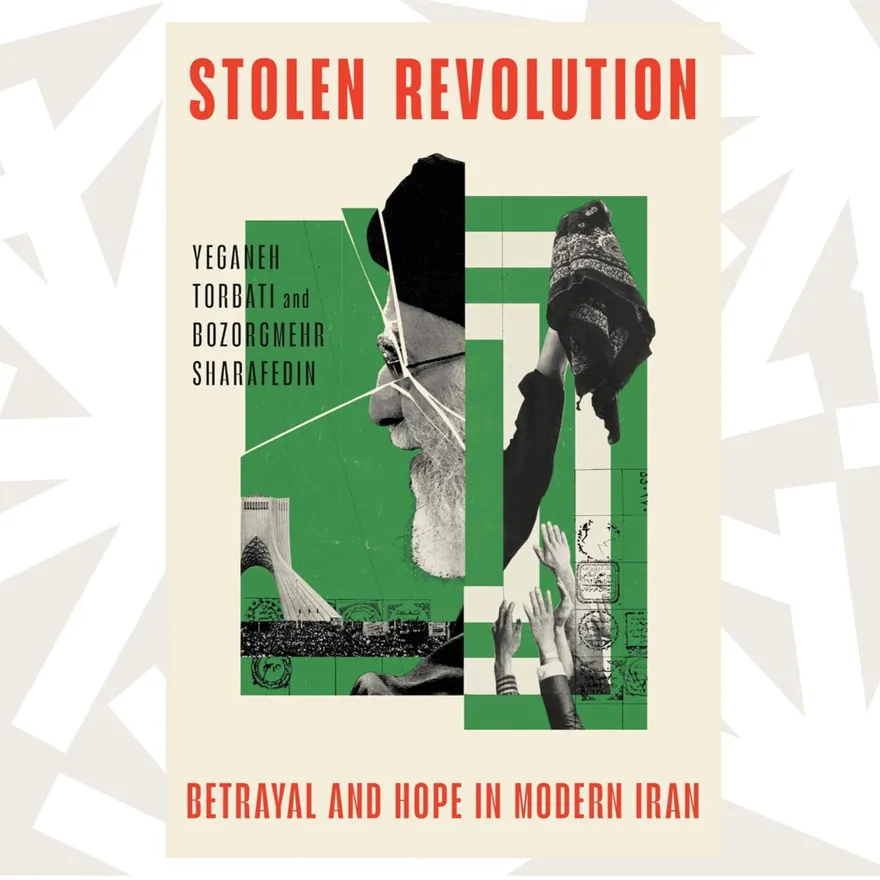
In this episode of NPR's Book of the Day, Yeganeh Torbati discusses her book featuring six Iranians whose stories reveal the complexities of modern Iran often absent from mainstream media. The conversation explores how the 1979 Iranian Revolution's promises of social justice and political freedom gave way to authoritarian control, leaving many Iranians disillusioned with both internal reform efforts and hopes for external intervention.
Torbati explains how her book centers diverse voices—from a disillusioned cleric to Gen Z women—representing different visions for Iran's future. The episode examines the despair resulting from failed reforms, the regime's surveillance capabilities, and fragmented opposition movements, while also acknowledging how Iranians continue to find moments of normalcy and joy through culture and social connection. The discussion provides perspective on why meaningful political change has proven elusive despite decades of pressure from both inside and outside the country.

This is a preview of the Shortform summary of the Jun 18, 2026 episode of the NPR's Book of the Day
Sign up for Shortform to access the whole episode summary along with additional materials like counterarguments and context.
1-Page Summary
1979 Iranian Revolution: Broken Promises of Social Justice and Political Freedom
The 1979 Iranian Revolution initially inspired widespread hope for social justice, equality, and political freedom across Iranian society. The book follows a cleric and devoted revolutionary whose journey illustrates the early attraction to these promises of change and reform. However, as the Islamic Republic consolidated power, revolutionary ideals began to erode in favor of authoritarian control. The cleric, once a true believer who rose to great power, eventually became disillusioned as he witnessed the betrayal of the movement's original vision. In the 1990s, many Iranians attempted reform through existing political structures by electing moderates, but these efforts proved ineffective as the regime resisted meaningful change. The initial hope for justice and freedom was replaced by widespread disillusionment with a system that no longer represented the values that originally inspired the revolution.
Iranian Voices Missing In Mainstream Media: Importance of Diverse Narratives
Despite frequent international headlines about Iran, ordinary Iranian voices are often absent from mainstream media coverage, resulting in an incomplete understanding of the nation. Yeganeh Torbati notes that this absence is particularly acute during internet blackouts, when the media predominantly mirrors the government's perspective rather than reflecting the spectrum of daily life. Mainstream coverage tends to amplify extreme voices while ignoring the quiet, everyday individuals navigating Iran's complexities.
To counter these oversimplifications, Torbati and her co-author center their narrative on six Iranians from different generations and backgrounds—including a cleric who fell from power, a poet-activist, a businessman, and Gen Z women who grew up after the revolution. These figures reveal the many layers of Iranian society and present diverging visions for Iran's future, from complete overthrow of the Islamic Republic to reform from within to restoration of the monarchy. Capturing these authentic voices required over five years of building trust, as the authors fully recognized the real dangers Iranians face in speaking openly. Some interviewees have relocated outside Iran, while others still inside made the deliberate choice to be identified, expressing a strong desire for the world to know their stories.
Despair in Iran Amid Failed Reforms, External Pressures, and Political Events
Iran is marked by pervasive despair due to failed reform efforts and ineffective external interventions. Torbati explains that Iranians who supported reformists in the 1990s found their efforts stymied by entrenched power structures, leading many to believe they have exhausted all available avenues for change. This chronic obstruction has spurred doubts about whether incremental reforms can ever challenge the regime.
As a result, some Iranians have turned their attention to external forces, hoping that international pressure or military intervention might dislodge the ruling regime. However, Torbati notes that this hope has also been disappointed, as recent conflicts have not led to meaningful political change inside Iran. Despite the political stagnation, life continues vibrantly. Mary Louise Kelly references Tehran's cultural scene, including sold-out rock concerts and young hipsters in cafés. Torbati emphasizes that even in deeply challenging circumstances, people find ways to cultivate moments of joy and normalcy through music, culture, and social activities.
Iran's Authoritarianism: Power, Resilience, and Ineffective Change Approaches
Iran's authoritarian system wields significant power through advanced surveillance technology that enables the regime to efficiently monitor dissent and maintain control. Years of repression have fragmented opposition movements inside Iran, while diaspora members outside the country also struggle to unite into an effective force. The Iranian regime demonstrates persistent resistance to reform pressure, hardening against both internal and external attempts at change. Despite expectations of transformation, power structures remain fundamentally unchanged and resistant to revolution or outside intervention.
1-Page Summary
Additional Materials
Counterarguments
- While the 1979 Iranian Revolution did inspire hope for social justice and freedom, some argue that the revolution was also driven by anti-Western sentiment and a desire for Islamic governance, not just liberal ideals.
- The narrative of widespread disillusionment may overlook segments of Iranian society who continue to support the Islamic Republic or who have benefited from its policies.
- The failure of reform efforts in the 1990s is sometimes attributed not only to regime resistance but also to internal divisions among reformists and lack of cohesive strategy.
- Although mainstream media coverage of Iran is often criticized for lacking ordinary voices, some international outlets and independent journalists have made significant efforts to include diverse Iranian perspectives.
- The portrayal of Iranian society as dominated by despair may understate the resilience, adaptability, and ongoing activism of many Iranians who continue to seek change in creative ways.
- The effectiveness of external pressure or intervention is debated; some analysts argue that sanctions and international isolation have sometimes strengthened hardliners rather than weakening the regime.
- The depiction of opposition movements as fragmented does not account for recent instances of mass protest and solidarity among different groups within Iran.
- The assertion that power structures remain fundamentally unchanged may not fully acknowledge incremental social and cultural shifts, especially among younger generations.
Actionables
- you can broaden your understanding of complex societies by following and comparing multiple independent social media accounts run by ordinary people from different backgrounds, then keeping a private journal where you note the differences in daily life, hopes, and frustrations they share, helping you recognize the diversity and nuance often missing from mainstream narratives.
- a practical way to support authentic voices is to regularly send anonymous, encouraging messages or small digital gifts (like e-books or music) to creators or individuals who share personal stories from restrictive environments, showing solidarity and helping them feel seen without putting them at risk.
- you can cultivate resilience and joy in your own life by intentionally scheduling small, meaningful cultural or social rituals—like listening to music from different cultures, cooking a new dish, or hosting a virtual movie night with friends—to remind yourself that vibrant community and creativity can persist even in challenging circumstances.


Get access to the context and additional materials
1979 Iranian Revolution: Broken Promises of Social Justice and Political Freedom
Revolution Inspired Hope and Commitment Across Iranian Society
The 1979 Iranian Revolution was initially inspired by dreams of social justice, equality, independence, and political freedom. Across Iranian society, there was widespread hope and a strong commitment to these ideals. The book tells the story of a cleric, a devoted follower of the revolution's founder, whose rise to power exemplifies early revolutionaries' attraction to the promise of change and reform. The cleric’s journey allows readers to see through his eyes both the hope the revolution inspired and why he, along with many others, believed so deeply in its ideals for a just and equitable society, with political freedoms and genuine national independence.
Revolutionary Promises Erode as the Islamic Republic Consolidates Power and Fails to Deliver Its Vision
However, as the Islamic Republic consolidated its power after 1979, the revolutionary promises began to erode. The system increasingly prioritized authoritarian control over justice and equality. The cleric, once an ardent believer in the revolution’s vision and an individual who rose to great power, eventually became disillusioned as he witnessed the betrayal of the movement’s original ideals. The story shows how the very people who championed the revolution grew dismayed as they saw the government depart from the values of social justice, equity, and freedom that motivated them.
Ineffective Internal Reform In Reve ...
Here’s what you’ll find in our full summary
1979 Iranian Revolution: Broken Promises of Social Justice and Political Freedom
Additional Materials
Counterarguments
- While the revolution did not fulfill all its promises, some argue that it succeeded in achieving national independence by reducing foreign influence, particularly that of the United States and Britain.
- Supporters of the Islamic Republic contend that the revolution brought about significant social reforms, such as expanded access to education and healthcare, especially in rural areas.
- Some believe that the revolution’s emphasis on Islamic values provided a sense of cultural and national identity that was lacking under the previous regime.
- Others argue that the failure of reform efforts in the 1990s was due in part to external pressures, such as economic sancti ...
Actionables
- You can regularly review the values and ideals that motivate your own commitments, then set a monthly reminder to check if your actions and choices still align with those values, adjusting your behavior if you notice drift or disillusionment. For example, if you value fairness and independence, reflect on recent decisions at work or home and identify any compromises, then brainstorm small changes to realign with your principles.
- A practical way to avoid disillusionment with group efforts is to create a personal accountability log where you track promises or goals made by any group or organization you support, noting progress and setbacks, and using this record to decide whether to continue your involvement or seek alternative ways to pursue your ideals. For instance, if a community group promises transparency but falls short, document these instances and consider whether to raise concerns or shift your ...

Get access to the context and additional materials
Iranian Voices Missing In Mainstream Media: Importance of Diverse Narratives
Despite the frequent appearance of Iran in international headlines, the voices of ordinary Iranians are often glaringly absent from mainstream media coverage. This absence shapes an incomplete and distorted understanding of the nation, especially as coverage tends to echo official government positions or amplify the extremes rather than reflect the spectrum of daily life within the country.
Iranian Understanding Distorted by Scarce Firsthand Accounts
The lack of firsthand testimonies from Iranian citizens results in media that predominantly mirrors the government's perspective, particularly during periods when the internet is shut down in Iran, making real-time communication and reporting nearly impossible. Yeganeh Torbati recognizes this issue, emphasizing that, during such blackouts, it would have been extremely difficult to gather in-depth accounts for their book, which relied on prolonged, candid conversations with Iranians via internet connections.
Mainstream coverage tends to amplify extreme voices—often those with the loudest or most radical views—leading to a fragmented and often superficial Western understanding of Iranian society. Quiet, everyday individuals navigating the complexities of life in Iran rarely get a platform, leaving the outside world with a one-dimensional view centered on either staunch government propagandists or outspoken dissidents.
Six Diverse Iranians Illustrate the Complexity of Modern Life
In an effort to counter these oversimplifications, Torbati and her co-author center their narrative on six Iranians who embody the diversity and complexity of the country. The selected individuals come from different generations, professions, and political backgrounds. Among them are a cleric loyal to the revolution's founder, who ultimately falls from power; a poet-activist who participates in both the reform and green movements; a businessman offering insight into modern corruption and pressures facing Iran’s private sector; and Gen Z women who grew up after the 1979 revolution and never shared the earlier faith in the Islamic Republic. The stories of these figures reveal the many layers of Iranian society, illustrating not only the nuanced beliefs and struggles that shape citizens' lives, but also the evolving attitudes toward faith, politics, and the nation’s future across generations.
These characters present diverging visions for Iran’s future—ranging from desire for the complete overthrow of the Islamic Republic, to attempts at reform from withi ...
Here’s what you’ll find in our full summary
Iranian Voices Missing In Mainstream Media: Importance of Diverse Narratives
Additional Materials
Counterarguments
- While mainstream media may not always feature ordinary Iranians, some outlets and independent journalists do make efforts to include diverse Iranian perspectives, especially through diaspora voices and social media reporting.
- The focus on government positions or extreme voices is not unique to Iran; it is a common limitation in international reporting on many countries due to access, safety, and editorial constraints.
- The challenges of obtaining firsthand accounts are not solely due to media neglect but also stem from real risks to sources, government censorship, and logistical barriers, which can make comprehensive coverage difficult or even unethical.
- Highlighting six individuals, while valuable, may still not fully capture the vast diversity and complexity of Iranian society, and the selection process itself can introduce bias.
- The assertion that Western perceptions are primarily shaped by media coverage may overlook the influence of academic r ...
Actionables
- you can follow and interact with social media accounts run by ordinary Iranians who share daily life updates, then regularly share or summarize their posts with your own network to broaden the range of Iranian perspectives others see
- By amplifying firsthand, everyday experiences—like photos of local markets, family gatherings, or personal reflections on current events—you help counteract the dominance of official or extreme narratives and introduce more nuanced stories to your circles.
- a practical way to deepen your understanding is to keep a personal journal where you note and reflect on the diversity of Iranian voices you encounter, tracking how your perceptions shift over time
- For example, after reading a blog post by a young Iranian entrepreneur or watching a video diary from a student, jot down what surprised you, what challenged your assumptions, and how these stories differ from mainstream headlines.
- you can joi ...
Get access to the context and additional materials
Despair in Iran Amid Failed Reforms, External Pressures, and Political Events
Iran is marked by a pervasive sense of despair due to failed reform efforts, stubborn power structures, and ineffective external interventions. Yet, despite ongoing political stagnation, many Iranians continue to find meaning and joy in their culture and social lives.
Iranians Conclude Reforms and Elections Can't Bring Change
During the 1990s, Iranians who supported moderate reformists attempted to achieve incremental change by electing moderates and reformists. Yeganeh Torbati notes that this approach was ultimately stymied by the entrenched power structure, which refused to allow significant reforms. Over time, a segment of Iranian society has come to believe they have exhausted all available avenues for change. They feel that they have tried everything—electing reformists, participating in elections, supporting moderate voices—but the government continually refuses to enact real change. This chronic obstruction has spurred growing doubts about whether incremental reforms can ever truly challenge the regime.
Iranians Hope Military Intervention Spurs Regime Change
As a result of these dashed hopes, some Iranians have turned their attention to the possibility of external forces bringing about change. Torbati describes how, particularly during times of conflict, a notable subset of Iranians became hopeful that external pressure or even military intervention might be the only way to dislodge the ruling regime. However, this hope has also been disappointed. Many who favored such intervention now express frustration and resignation, as recent wars and international pressures have not led to meaningful political change inside Iran. The lack of clear signals of regime collapse or reform has only deepened their sense of helplessness.
Amid Despair, I ...
Here’s what you’ll find in our full summary
Despair in Iran Amid Failed Reforms, External Pressures, and Political Events
Additional Materials
Clarifications
- In the 1990s, Iran saw a rise in reformist politicians aiming to introduce political freedoms and social reforms within the Islamic Republic framework. President Mohammad Khatami, elected in 1997, symbolized this movement with promises of greater press freedom, rule of law, and civil society development. However, powerful conservative institutions like the Guardian Council and the Supreme Leader limited these reforms by blocking legislation and disqualifying reformist candidates. This resistance prevented significant changes, leading to widespread disillusionment among reform supporters.
- Moderate reformists in Iran are political figures who seek gradual changes within the existing Islamic Republic framework, aiming to increase political freedoms and social reforms without overthrowing the system. Their efforts were obstructed by powerful conservative institutions like the Guardian Council and the Supreme Leader, who control key aspects of governance and vet candidates. These bodies block reformist legislation and disqualify reformist candidates to maintain the status quo. This entrenched power structure limits the reformists' ability to implement meaningful change.
- "Entrenched power structures" in Iran refer to the deeply rooted institutions and authorities, such as the Supreme Leader, the Revolutionary Guard, and conservative clerics, that hold significant control over political, military, and judicial systems. These entities operate independently of elected officials and resist reforms that could diminish their influence. Their dominance limits the effectiveness of elected reformists and maintains the status quo. This concentration of power creates barriers to political change and reform.
- External interventions refer to actions by foreign governments or international bodies aimed at influencing Iran's political system, including sanctions, diplomatic pressure, or military threats. These efforts often fail because Iran's leadership maintains strong internal control and nationalistic support, resisting outside influence. Additionally, external pressures can strengthen hardliners by fostering a siege mentality among the population. Consequently, such interventions rarely produce the intended political reforms or regime change.
- Some Iranians hope for military intervention because they see internal reform efforts as blocked by powerful hardliners. Historical events like the 1953 CIA-backed coup against Prime Minister Mossadegh contribute to a complex view of foreign involvement. Additionally, ongoing international sanctions and conflicts have heightened desires for external pressure to force regime change. This hope reflects frustration with domestic political stagnation and a belief that only outside forces can break the status quo.
- The rock concert in Tehran symbolizes a form of cultural resistance and youth expression under restrictive political conditions. It reflects the desire of young Iranians to connect with global trends and assert their identity despite government censorship. Such events often occur unofficially or semi-clandestinely, highlighting the tension between state control and personal freedom. This cultural vibrancy contrasts with the political despair described in the text.
- In Tehran, "hipsters" are typically young people who embrace alternative lifestyles, fashion, and music, often as a form of subtle resistance to conservative social norms. They gather in cafés and cultural spaces that serve as hubs for creative expression and social interaction. This youth culture blends global influences with local traditions, fostering a sense of identity and community. Their activities provide a way to asse ...
Counterarguments
- While many Iranians feel despair over failed reforms, there are still segments of society actively engaged in political activism and civil society efforts, suggesting that hope for change has not been universally extinguished.
- The narrative of total reform failure may overlook incremental social and economic changes that have occurred in Iran, even if political reforms have stalled.
- Not all Iranians support or desire external intervention; many view foreign involvement, especially military, as potentially destabilizing or harmful to national sovereignty.
- The persistence of cultural and social vibrancy in Iran could be interpreted as a form of resilience and subtle resistance, rather than merely a coping mechanism amid despair.
- Some analysts argue that international pressures, such ...
Get access to the context and additional materials
Iran's Authoritarianism: Power, Resilience, and Ineffective Change Approaches
Iran's State Wields Advanced Control and Surveillance Tools, Challenging to Counter
Iran's authoritarian system wields significant power, far surpassing the capabilities of pre-1979 regimes. The Iranian state now possesses advanced tools for monitoring, controlling, and suppressing dissent, particularly through surveillance technology that the Shah did not have at his disposal. This technological edge enables the regime to efficiently monitor dissent and leverage its resources to maintain control, even exacting revenge against those it perceives as internal adversaries. With the current Supreme Leader also named Khamenei, the system has grown both more entrenched and unwavering, displaying a readiness to act forcefully against perceived threats from within.
Iran Opposition and Diaspora Struggle to Unify
Inside Iran, years of repression have significantly fragmented opposition movements, making it difficult for these groups to form a cohesive resistance. Outside the country, members of the opposition and the broader diaspora also face obstacles to uniting into a force capable of effectively influencing outcomes within Iran. The enduring impact of the regime's internal suppression and the complex ...
Here’s what you’ll find in our full summary
Iran's Authoritarianism: Power, Resilience, and Ineffective Change Approaches
Additional Materials
Counterarguments
- While Iran's surveillance capabilities have increased, technological advancements have also enabled dissidents to organize and communicate more effectively through encrypted apps and social media, sometimes outpacing state censorship.
- Despite fragmentation, opposition movements inside Iran have periodically demonstrated the ability to mobilize large-scale protests, indicating that repression has not entirely eliminated collective action.
- The Iranian diaspora, though divided, has succeeded in raising international awareness and advocating for human rights, which has influenced foreign policy discussions and global perceptions of the regime.
- There have been instances of limited reforms and policy shifts within the Iranian system, such as changes in social regula ...
Actionables
- you can practice recognizing and mapping power structures in your own workplace or community to better understand how authority and surveillance shape group dynamics; for example, sketch out who holds decision-making power, who monitors behavior, and how information flows, then reflect on how this affects dissent or innovation.
- a practical way to strengthen fragmented groups is to create a simple, anonymous online suggestion box for any community or group you belong to, allowing members to safely share concerns or ideas without fear of reprisal, which can help surface hidden issues and foster unity.
- you can experiment with building b ...
Get access to the context and additional materials

 1-Page Summary
- 1979 Iranian Revolution: Broken Promises of Social Justice and Political Freedom
- Iranian Voices Missing In Mainstream Media: Importance of Diverse Narratives
- Despair in Iran Amid Failed Reforms, External Pressures, and Political Events
- Iran's Authoritarianism: Power, Resilience, and Ineffective Change Approaches
Create Summaries for anything on the web
Download the Shortform Chrome extension for your browser
