

R.F. Kuang says there’s 'quite a lot' of herself in 'Katabasis' protagonist Alice
In this episode of NPR's Book of the Day, author R.F. Kuang discusses how her personal experiences shaped her novel, particularly drawing from the emotional turmoil she faced while supporting her husband through a sudden illness during their PhD studies. Kuang explains how she channeled this difficult period into her protagonist Alice, creating prose that reflects mental distress through its chaotic structure and density of references.
The conversation explores Kuang's approach to depicting magic as a rigorous academic discipline rather than something effortless or wondrous, mirroring the grueling reality of PhD research. Kuang also addresses the toxic dynamics of abusive mentorship in academia and the myth of the brilliant yet cruel advisor. Additionally, she discusses her approach to representing Asian characters authentically, pushing back against the notion that centering marginalized protagonists should be considered experimental or particularly brave.
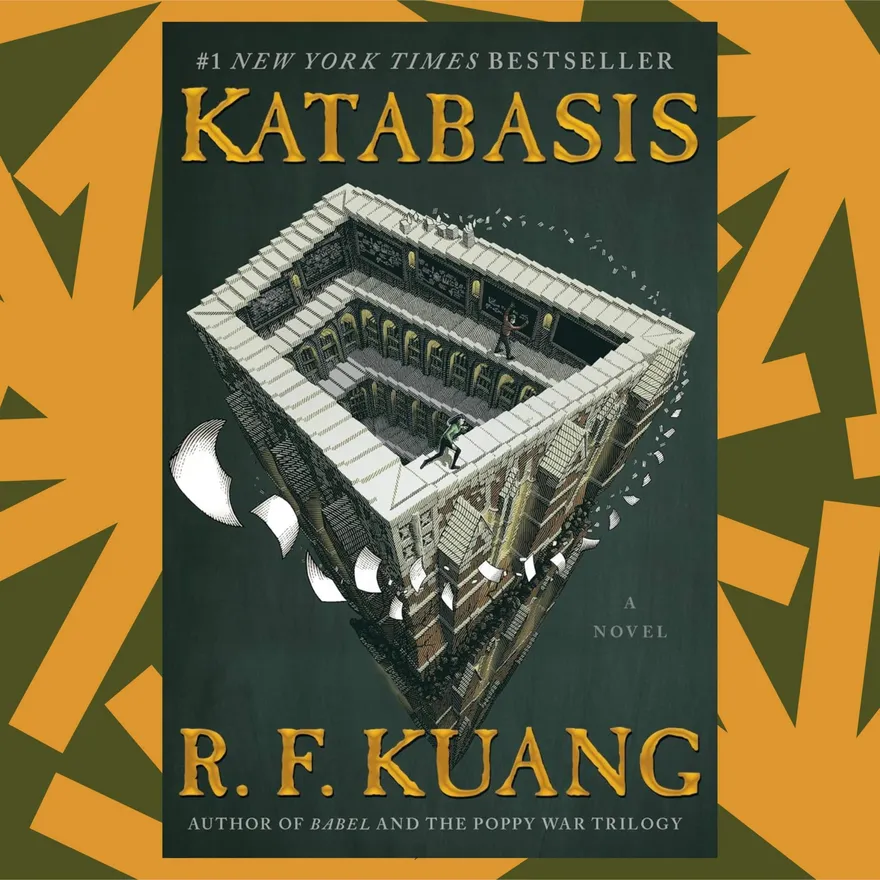

This is a preview of the Shortform summary of the Jun 16, 2026 episode of the NPR's Book of the Day
Sign up for Shortform to access the whole episode summary along with additional materials like counterarguments and context.
1-Page Summary
Personal Inspiration From Academic Life and Health Challenges
R.F. Kuang draws from her own academic experiences and personal health challenges to shape the emotional landscape of her novel. When she and her husband began their PhDs, his sudden illness during their first semester sent Kuang into depression as she shuttled between New Haven and Boston supporting him. This period of hardship became the emotional foundation for her story, as she realized she was putting her characters through the same journey to hell she was experiencing.
The protagonist Alice expresses feelings of being betrayed by her own mind—something Kuang also felt during this time. Her prose intentionally reflects this mental distress through jarring, chaotic structure crowded with references, because that's how living in both Alice's and Kuang's minds felt. Peter, Alice's co-protagonist, is inspired by Kuang's husband, infused with his humor, intelligence, and unique perspective.
Despite these emotional overlaps, Kuang maintains critical distance from her characters, clarifying that Alice's problems aren't identical to her own. Writing from Alice's viewpoint was therapeutic, allowing Kuang to process trauma through her characters without being overwhelmed. Now that both she and her husband are in a healthier place, rereading her book feels strange and painful—a reminder of how dark her mental state was, but also a source of gratitude for their recovery.
Magic Conceptualized As a Rigorous, Research-Based Academic Discipline
Emiko Tamagawa observes that most popular depictions of magic present it as wondrous and effortless, but Kuang rejects this portrayal. As an academic herself, Kuang approaches magic as a plausible field of study that must be researched, experimented on, and incrementally mastered—never neat or easy, with no one possessing all the answers.
In Kuang's magic system, magic is built on logic paradoxes requiring years of disciplined research and problem-solving. She likens the pursuit of magical knowledge to the arduous journey of PhD students—a "hopeless but dogged life" of searching for a precious insight amidst years of exhaustive work that often seems fruitless. Alice's magical studies reflect this grueling reality, mirroring PhD candidates' determination and incremental progress. Kuang's academic background lends authenticity to this depiction, making the study of magic feel painstaking, realistic, and deeply challenging.
Toxic Mentorship and the Myth of the Abusive, Brilliant Advisor
Kuang's novel interrogates the pervasive myth of the abusive yet brilliant advisor, particularly within academia. The thesis advisor in her story personifies the entrenched myth of the male genius—globally renowned, innovative, and idolized, yet wielding emotional, psychological, and physical cruelty against his students. He uses his reputation to shield himself from scrutiny and justify his actions.
Kuang draws on the film Whiplash to illustrate how victims rationalize their suffering, believing enduring cruelty proves their specialness and is the necessary price for greatness. This logic traps students in a cycle of abuse, convincing them their endurance differentiates them. Alice and Peter's relationship with their advisor reveals this complex psychology—they simultaneously despise and adore him, willing to metaphorically "travel to hell" for him. Despite feeling trapped by years of investment, they laugh off their suffering and recommit to rescuing him, highlighting the corrosive power of toxic mentorship.
Nuanced Asian Character Representation Beyond Checkboxes
Kuang emphasizes that contemporary narratives should move beyond simple representational checklists and focus on nuanced, authentic portrayals that reflect lived experience. She approaches Alice's Asian background with a light touch, resisting the impulse to make her ethnic identity a heavy-handed statement. Instead, Alice's heritage is subtly integrated, informing her perspective without solely defining her.
Kuang expresses frustration at being praised as "brave and progressive" for centering a woman of color, pointing out it would be harder to write a white protagonist since she's never been white herself. She challenges the notion that white male protagonists should be the default and rejects the idea that centering marginalized characters is inherently experimental. Drawing on her own experience, Kuang creates marginalized protagonists naturally and authentically, avoiding virtue-signaling or tokenism and resulting in representation that feels honest and genuinely complex.
1-Page Summary
Additional Materials
Counterarguments
- While Kuang's depiction of magic as a rigorous academic discipline offers realism, some readers may find that it removes the sense of wonder and escapism traditionally associated with fantasy, potentially making the narrative less appealing to those seeking magical awe.
- The use of personal trauma as a foundation for fiction can risk blurring boundaries between author and character, which may lead to readers conflating the two or misinterpreting the intent behind certain narrative choices.
- Kuang's rejection of popular magical tropes in favor of academic realism may inadvertently alienate readers who prefer more traditional or whimsical portrayals of magic.
- The focus on toxic mentorship and abusive advisors, while important, could be seen as reinforcing negative stereotypes about academia, potentially overshadowing positive mentoring relationships that also exist.
- Kuang's subtle approach to representing Alice's Asian heritage may not satisfy all readers seeking more explicit engagement with issues of race and identity, and some may feel that important cultural aspects are underexplored.
- The assertion that writing a white protagonist would be harder for Kuang may not resonate with all writers or readers, as experiences with writing outside one's identity can vary widely.
- While Kuang aims to avoid tokenism, some critics might argue that any focus on identity in publishing is inevitably shaped by market and social pressures, making true authenticity difficult to achieve.
Actionables
- you can experiment with expressing your own emotional states through the structure and style of your personal writing, such as journaling or creative stories, by intentionally varying sentence length, pacing, and reference density to mirror your mental landscape; for example, use fragmented sentences and rapid topic shifts to capture anxiety, or long, meandering paragraphs to reflect exhaustion.
- a practical way to challenge default assumptions about who gets centered in stories is to write a short scene or dialogue where the protagonist’s background, identity, or perspective is different from your own, focusing on their everyday experiences and motivations rather than making their identity the main topic; this helps you practice authentic, nuanced representation.
- you can reflect on your own experiences with mentorship or authority figures by mapping out a timeline of your interactions, noting moments of support and moments of discomfort or harm, and then writing a brief reflection on how these experiences shaped your sense of self-worth and ambition; this helps you recognize patterns and consider healthier boundaries in future relationships.
Get access to the context and additional materials
Personal Inspiration From Academic Life and Health Challenges
R.F. Kuang draws deeply from her own academic experiences and personal health challenges to shape the emotional landscape and characters in her novel.
Kuang Used Her Graduate Experiences to Portray Characters' Struggles
Kuang's Depression During Husband's Illness and Phd Journey
When Kuang began writing the book, both she and her then-boyfriend (now husband) started their PhDs simultaneously. Their initial excitement quickly turned into hardship as her husband became very ill during their first semester. Kuang describes that period as a nightmare—regularly driving between New Haven and Boston, going through deep depression, and supporting her partner through his illness. The hardship of that time shaped the emotional terrain of her story, as she realized she was putting her characters through a journey to hell that reflected her own struggles.
Alice Reflects Kuang's Experience of Feeling Betrayed by Her Mind; Kuang's Jarring, Chaotic Prose Captures the Mental Distress
The protagonist Alice expresses feelings of being betrayed by her own mind, a sensation Kuang also felt at the start of writing the novel. Kuang’s prose reflects this mental distress through its jarring, chaotic structure, crowded with references that seem on the verge of exploding—an intentional style because that’s how living in both Alice’s and Kuang’s minds felt during this period.
Peter, Alice’s co-protagonist, is inspired by Kuang’s husband. Kuang infuses Peter with her love for her husband’s humor, intelligence, and unique perspective, stating that, to a considerable extent, he is based on her partner.
Kuang Distances Herself From Her Characters' Experiences
Despite emotional overlap, Kuang maintains a critical distance from her characters. She clarifies that Alice's problems and experiences are not identical to her own; though both share intense emotions and perspectives, their issues are distinct. Kuang indicates that writing ...
Here’s what you’ll find in our full summary
Personal Inspiration From Academic Life and Health Challenges
Additional Materials
Counterarguments
- While Kuang’s personal experiences inform her novel, some readers may feel that heavy reliance on autobiographical elements can limit the universality or imaginative scope of the fiction.
- The depiction of mental distress through chaotic prose might alienate or confuse readers who prefer clarity or more traditional narrative structures.
- Kuang’s assertion of maintaining critical distance from her characters could be questioned, as the strong emotional overlap may blur the line between fiction and memoir for some readers.
- The therapeutic use of writing about trauma is not universally effective; for some writers or readers, revisiting ...
Actionables
- you can keep a daily log of your emotional state and physical health, then use the patterns you notice to inspire creative writing or art that captures your unique experiences and feelings, helping you process and externalize them.
- a practical way to maintain perspective during tough times is to write letters to your future self describing your current challenges and emotions, then revisit them months later to reflect on your growth and resilience.
- you can experiment with intentionally changin ...
Get access to the context and additional materials
Magic Conceptualized As a Rigorous, Research-Based Academic Discipline
Kuang Treats Magic As an Academic Field, Rejecting Its Conventional Portrayal As Wondrous and Easy
Emiko Tamagawa observes that most popular depictions of magic, such as in "Harry Potter," present it as wondrous and often effortless, something joyous or even gifted to individuals. In contrast, R.F. Kuang rejects this portrayal. As an academic herself, Kuang approaches magic as a plausibly real field of study—one that must be deciphered, researched, experimented on, and incrementally mastered. She emphasizes that magic is not neat or easy and that it's impossible for anyone to ever possess all the answers.
Kuang's Magic System Relies On Paradoxes Requiring Years of Research and Problem-Solving
In Kuang’s magic system, especially as depicted in katabasis, magic is built on logic paradoxes. Understanding and employing this magic requires years of disciplined research and problem-solving. Rather than provide instant gratification, the study of magic in her world demands sustained effort and a willingness to encounter numerous dead ends before discovering anything valuable.
Pursuing Magical Knowledge in Katabasis Mirrors Doctoral Research—Years Of Exhausting Dead Ends Before a Valuable Discovery, if Any
Kuang likens the pursuit of magical knowledge in katabasis to the arduous journey of PhD students. She describes it as a "hopeless but dogged life" of persistently searching for a small yet precious insight—a grain of sand that is a diamond in the rust—amidst years of exhaustive work that often seems fruitless.
Magic System's Complexity Mirrors Academia's Thankless Grind
Alice's Magical Studies Reflect Phd Candidates' Determination and Incremental Progress
For Alice, the protagonis ...
Here’s what you’ll find in our full summary
Magic Conceptualized As a Rigorous, Research-Based Academic Discipline
Additional Materials
Counterarguments
- Some readers may find that treating magic as a rigorous academic discipline removes the sense of wonder and escapism that makes fantasy appealing to many.
- The portrayal of magic as exclusively difficult and research-based could be seen as limiting, potentially excluding alternative cultural or folkloric traditions where magic is intuitive, communal, or spiritual rather than academic.
- Emphasizing the parallels between magic and academic research might make the narrative less accessible or enjoyable for readers who are not interested in or familiar with academic environments.
- The focus on the arduous, incre ...
Actionables
- you can treat any new skill or hobby as a research project by keeping a dedicated notebook where you log every attempt, mistake, and small breakthrough, just like a scientist tracking experiments, so you build a record of incremental progress and learn from dead ends.
- a practical way to embrace complexity is to pick a challenging puzzle, riddle, or paradox each week and spend time wrestling with it, accepting that you may not solve it but will develop patience and comfort with uncertainty.
- you can simulate the emotional ups and do ...


Get access to the context and additional materials
Toxic Mentorship and the Myth of the Abusive, Brilliant Advisor
R.F. Kuang’s Katabasis interrogates the pervasive myth of the abusive yet brilliant advisor, especially within academia, exploring the psyche of those caught under their tutelage and the broader cultural forces at play.
Kuang Examines the Abusive Genius Mentor Phenomenon
The Thesis Advisor in Katabasis as the Myth of the Male Genius in Academia: A Globally Renowned, Brilliant Figure Engaging In Emotional, Psychological, and Physical Cruelty and Abuse
Kuang’s novel centers on a thesis advisor who personifies the entrenched myth of the male genius in academia—globally renowned, innovative, and perpetually idolized. This advisor exerts emotional, psychological, and even physical cruelty and abuse on his students. He wields his reputation to shield himself from scrutiny and to justify his actions, reinforcing the toxic archetype where greatness is inextricably linked to suffering.
Kuang Uses Whiplash to Illustrate Victims' Logic: Suffering Shows Specialness, and Cruelty Is the Price of Greatness
Kuang draws on the film Whiplash to deepen this examination. She illustrates how victims of such mentorship rationalize their suffering: they believe enduring cruelty is proof of their specialness and a necessary price for achieving greatness. This logic entraps students within a cycle of abuse, convincing them their endurance differentiates them and earns them a place in the pantheon of the advisor's successful protégés.
Alice and Peter's Complex Relationship With Their Advisor Reveals the Psychology of Student Resentment and Affection
Characters Despise yet Adore Their Thesis Advisor, Willing to Travel To Hell For Him, Highlighting Manipulative Mentorship's Profound Emotional Entanglement
The relationship Alice and Peter have with their thesis advisor encapsulates the layered emotional dynamics fostered by manipulative mentorship. They are simultaneously embittered and enthralled—resentful for years of cruelty and yet emotionally tethered by the belief in their advisor’s uniqu ...
Here’s what you’ll find in our full summary
Toxic Mentorship and the Myth of the Abusive, Brilliant Advisor
Additional Materials
Counterarguments
- While abusive mentorship is a real and serious problem, many successful academic advisors foster supportive, respectful, and collaborative environments, demonstrating that greatness and innovation do not require cruelty or abuse.
- The myth of the "abusive genius" may be less pervasive in some academic fields or institutions, where mentorship standards and accountability measures have improved in recent years.
- Some students may interpret demanding or rigorous mentorship as abusive when, in fact, it is intended to challenge them academically without crossing ethical or emotional boundaries.
- The narrative focus on abusive mentorship risks overshadowing positive examples and may inadvertently discourage students from seeking mentorship or pursuing academic careers.
- The psychological entanglement described in the novel may not be universal; many students recognize toxic dynamics and choose to leave or report abusive advisors.
- Referencing W ...
Actionables
- You can keep a private log of your emotional responses after meetings or interactions with mentors or authority figures to spot patterns of discomfort, self-blame, or rationalization of mistreatment. This helps you recognize if you’re excusing harmful behavior as necessary for success, and lets you track how your feelings change over time.
- A practical way to challenge the myth that suffering is required for achievement is to write down examples of people you admire who reached success through supportive, healthy relationships, then reflect on what made those relationships positive and how you can seek or foster similar dynamics in your own life.
- You c ...


Get access to the context and additional materials
Nuanced Asian Character Representation Beyond Checkboxes
R.F. Kuang emphasizes that contemporary narratives should move beyond simple representational checklists and instead focus on nuanced, authentic portrayals of Asian characters that reflect lived experience and complex social dynamics.
Kuang Avoids Using Her Characters' Racial and Ethnic Identities As Political Tools
Asian Background Lightly Woven Into Alice's Characterization
Kuang approaches her protagonist Alice’s background with a light touch, choosing to linger only on those aspects Alice herself finds important. She resists the impulse to make Alice’s ethnic identity a heavy-handed statement. Instead, Alice’s Asian heritage is subtly integrated into her character, informing her perspective but never purely defining her or shaping her solely as a vehicle for political commentary.
Kuang Argues Centering Marginalized Characters Should Be Default, Not a Brave, Progressive Departure From White Male Protagonists
Kuang expresses frustration at being praised as “brave and progressive” for centering a woman of color in her work. She points out it would be more difficult for her to write a white protagonist, having never been white herself. Kuang challenges the notion that white male protagonists should be the default and considers it misguided to view works centering marginalized characters as inherently experimental or as pushing the boundaries of craft. For her, the question shouldn’t be "why choose to write about marginalized characters?" but rather why the default expectation remains otherwise.
Kuang Crafts Complex Asian Characters Shaped by Their Backgrounds Without Reducing Them To Identity-Focused Narratives
Kuang Crafts Nuanced Characters Whose Backgrounds Generate Complex Peer Interactions
Kuang deliberately avoids reducing her characters' identities to a set of representational tropes. Instead, she presents ...
Here’s what you’ll find in our full summary
Nuanced Asian Character Representation Beyond Checkboxes
Additional Materials
Counterarguments
- Some readers may argue that subtle integration of ethnic identity risks underrepresenting or minimizing the significance of cultural heritage, especially for audiences seeking explicit affirmation or exploration of their backgrounds.
- The avoidance of overt political commentary could be seen as a missed opportunity to address pressing social issues or to use literature as a tool for advocacy and awareness.
- While Kuang finds it more natural to write from her own lived experience, some critics might contend that writers should challenge themselves to authentically portray characters outside their own identities, fostering empathy and broader representation.
- The assertion that centering marginalized characters should be the default may overlook the value of diverse storytelling approaches, including those that intentionally foreground or interrogate identity as a central theme.
- Some may argue that, in certain contexts, expli ...
Actionables
- you can write a short scene or journal entry about a character from your own background, focusing on their everyday decisions, relationships, and quirks, rather than their identity or how others perceive them, to practice authentic, nuanced portrayal.
- a practical way to challenge default assumptions is to swap the main character’s background in a favorite story you know well, then imagine how their motivations, friendships, or conflicts might shift in subtle, realistic ways without making their identity the central issue.
- you can reflect on a rec ...
Get access to the context and additional materials


Create Summaries for anything on the web
Download the Shortform Chrome extension for your browser
