

In 'Keeper of My Kin,' Ada Ferrer struggles with being her mother's "chosen one"
In this episode of NPR's Book of the Day, historian Ada Ferrer discusses her memoir about family separation during the Cuban Revolution. After her mother's death in 2020, Ferrer discovered a box of letters that revealed the painful story of her brother Polí, who was left behind in Cuba when their mother fled to America with infant Ada in 1963. The brothers and sisters would not reunite for nearly two decades.
Ferrer grapples with her position as the "chosen one"—the child who was taken to America and given opportunities her brother was denied. She explores the lasting trauma this separation created and connects her family's experience to the broader pattern of family fragmentation that affects immigrant communities worldwide. The episode examines how the Cuban Revolution and US-Cuban relations forced impossible choices on families and created wounds that persist across generations.
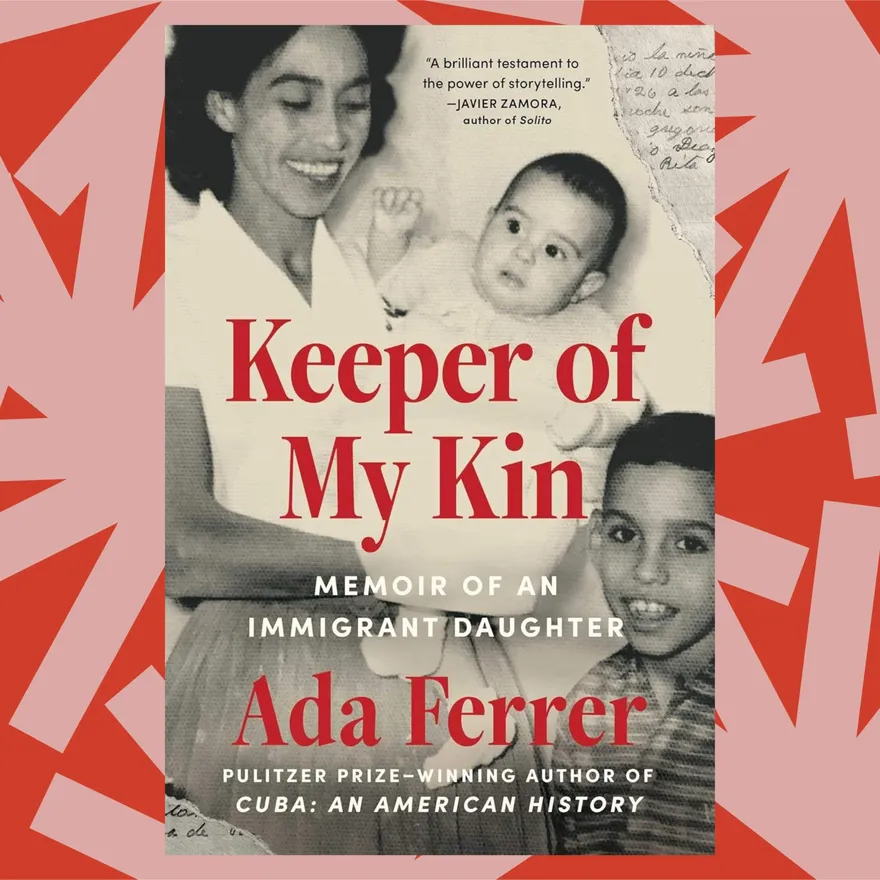

This is a preview of the Shortform summary of the Jun 10, 2026 episode of the NPR's Book of the Day
Sign up for Shortform to access the whole episode summary along with additional materials like counterarguments and context.
1-Page Summary
Emotional Impact of Family Separation During Cuban Revolution Across Generations
In April 1963, Adela abruptly left Havana with her infant daughter Ada, leaving her son Polí behind. When he came home that evening, his grandmother and aunts initially told him his mother had traveled to care for a sick relative. Less than a week later, they revealed the truth: she had left Cuba. Polí, just shy of nine and a half years old, cried every night, clinging to his mother's house dress. Due to his father's restrictions, he couldn't reunite with his mother until the 1980 Mariel boatlift—nearly two decades later. Ada Ferrer, his sister, recalls how this trauma shaped her brother's entire life, leaving a lasting wound on their family that continues to define them years after the original separation.
Discovery of Letters and Understanding Family Story
After her mother's death in 2020, Ada discovered a box of letters in her mother's closet—envelopes bundled with gold curling ribbon, the same kind her mother used for Christmas presents. The letters, spanning from 1963 to 1979, chronicle Polí's childhood and adolescence without his mother. Ada describes them as excruciating to read, with childish handwriting and spelling errors revealing his trauma despite his attempts to appear composed. One phrase particularly captures Polí's vulnerability: "Mommy, if you only knew how happy I get when a letter arrives from there. I get so happy that sometimes it makes me sad." This bittersweet confession gives profound insight into the emotional complexities of their fractured family story.
Ada's Burden as America's "Chosen One"
Ada reflects on how her life is shaped by her mother's decision to bring her to America while leaving her brother behind. She recognizes herself as the "chosen one," crediting her education and success to being taken out of Cuba—a path that starkly contrasts with her brother's suffering. Ada describes this as a kind of "original sin": her privilege came at the cost of her brother's trauma and deprivation. She's left questioning whether her devotion to studying Cuban history can ever truly confront the guilt she feels for her escape and her brother's corresponding loss.
Cuban Immigration and US-Cuban Relations: Historical Context
The Cuban Revolution forced families to choose between staying or leaving, and as borders closed, reunification became nearly impossible. Ada recounts that her mother initially believed the separation would be temporary, expecting Polí's father to eventually allow their son to leave Cuba. However, this never happened. It wasn't until the Mariel boatlift of 1980—when approximately 125,000 Cubans escaped to Florida—that the family finally reunited after two decades of forced separation.
Universal Patterns of Family Separation Experienced by Immigrants
Ada emphasizes that family separation is a universal aspect of immigration affecting diverse communities beyond just Cubans. Many immigrant families face tough decisions driven by challenging circumstances, and limited resources force families to leave in incomplete units. Reunification is never guaranteed, nor is its timing predictable. Ada underscores that this persistent uncertainty creates generational trauma, with the "wake of family separation" leaving enduring marks on families and communities throughout the world.
1-Page Summary
Additional Materials
Counterarguments
- While the trauma of family separation is emphasized, some individuals in similar situations have demonstrated resilience and found ways to build fulfilling lives despite such hardships.
- The narrative centers on the emotional costs of separation, but for some families, migration and separation have ultimately led to improved opportunities and outcomes for future generations.
- The concept of "original sin" regarding Ada's privilege may not resonate with all readers; some may view her achievements as a testament to her mother's difficult but ultimately beneficial decision.
- The text presents family separation as universally traumatic, but the degree and nature of trauma can vary widely depending on individual circumstances, coping mechanisms, and support systems.
- The focus on generational trauma may overlook stories of healing, adaptation, and positive transformation that also occur within immigrant families.
- While the letters reveal Polí's vulnerability, they also demonstrate his ability to maintain a relationship with his mother and express his emotions, which can be seen as a form of emotional strength.
- The narrative highlights the unpredictability of reunification, but some families have successfully navigated immigration systems and reunited more quickly, suggesting that outcomes are not universally dire.
Actionables
- you can create a private family timeline by gathering stories, photos, and memories from relatives about past separations or migrations, then add your own reflections on how these events shaped your family’s relationships and emotional patterns—this helps you recognize generational impacts and fosters honest conversations about loss and resilience.
- a practical way to address feelings of guilt or privilege related to family migration is to write a letter to a family member (living or deceased) expressing your emotions, questions, and hopes for healing, then keep it in a personal journal or share it with someone you trust to process complex feelings and seek reconciliation.
- you can set aside a regular time (such as once a month) to check in with distant or separated family members through a simple phone call, message, or video chat, focusing on sharing everyday life updates and emotional support, which helps maintain bonds and reduces the sense of ongoing separation.
Get access to the context and additional materials
Emotional Impact of Family Separation During Cuban Revolution Across Generations
Adela's Sudden Exit With Infant, Leaving Son in Havana
In April 1963, Adela abruptly left Havana with her infant daughter, leaving her son, Polí, behind. When Polí came home for dinner that evening, he found his mother and baby sister missing. His grandmother and aunts initially told him they had traveled to the countryside for a few days to care for an ailing relative, so he was not immediately worried. Less than a week later, the family revealed the painful truth: they had left Cuba. Every night, Polí clung to his mother’s house dress and cried. He was just one month shy of nine and a half years old. Due to his father's restrictions, Polí was unable to leave Cuba and reunite with his mother until the 1980 Mariel boatlift, nearly two decades later.
Decades-Long Familial Psychological Consequences Post-Separation
Polí’s childhood and youth were profoundly marked by his mother's absence. The ...
Here’s what you’ll find in our full summary
Emotional Impact of Family Separation During Cuban Revolution Across Generations
Additional Materials
Counterarguments
- While the emotional impact on Polí is described as profound and lasting, individual responses to family separation can vary widely; not all children or families experience such enduring trauma under similar circumstances.
- The narrative centers on the negative consequences of Adela's decision, but it does not consider possible reasons or pressures that may have compelled her to leave, such as safety concerns or hopes for a better future for her children.
- The account is based on family recollections and personal perspectives, which may emphasize certain emotional aspects while overlooking other coping mechanisms or sources of resilience within the family.
- The text attributes ongoing family dynamics and identity ...
Actionables
- you can create a simple family timeline that visually maps out major separations, reunions, and migrations in your family history to better understand how these events may have shaped relationships and emotional patterns; use sticky notes or a notebook to mark key dates and feelings associated with each event, then reflect on any recurring themes or impacts you notice.
- a practical way to address lingering effects of family separation is to write a letter (even if you never send it) to a family member affected by a past separation, expressing thoughts, questions, or emotions you wish you could have shared at the time; this can help process unresolved feelings and clarify how the experience influences your current relationshi ...
Get access to the context and additional materials
Discovery of Letters by Ada's Brother Pauli and Their Role In Understanding Family Story
Ada Ferrer uncovers crucial pieces of her family's story through a box of letters discovered after her mother's death in 2020, shedding light on her brother Polí's childhood and their family's painful separation.
Ada Discovered Her Brother's Letters Stored In Her Mother's Closet
After her mother's passing, Ada describes finding a clear plastic box with a white lid in her mother's closet. Inside, she discovered a stack of envelopes bundled together with gold curling ribbon—the same type her mother used to wrap Christmas presents, highlighting the emotional value attached to their contents.
Bundled Letters Tied With Gold Ribbon Highlight Emotional Significance
The carefully bundled letters vividly illustrate the significance these correspondences held for her mother. The ribbon, a festive touch, underscores the intimacy and special care with which the letters were preserved.
Correspondence From 1963-1979 on Her Brother's Cuban Childhood and Adolescence Without Maternal Care
The letters begin with one dated May 4th, 1963, less than a week after Ada and her mother left Cuba, and continue through 1979. These correspondences chronicle Polí's life during his childhood and adolescence, spent mostly without the presence of his mother. Across these years, Polí wrote regularly, documenting not only his growth and milestones but also the continuous emotional strain of maternal absence as he came of age.
Primary Source: Polí's Inner World and Coping With Loss
The box of letters serves as a primary source for understanding Polí’s private experiences and the strategies he used to cope with his loss.
Child's Handwriting, Spelling, and Grammar Show Trauma Despite Attempts to Appear Composed For Absent Mother
Ada describes the letters as excruciating to read, with Polí’s childish handwriting ...
Here’s what you’ll find in our full summary
Discovery of Letters by Ada's Brother Pauli and Their Role In Understanding Family Story
Additional Materials
Counterarguments
- While the letters provide valuable insight into Polí’s experiences, they represent only one perspective and may not fully capture the complexities of the family’s situation or the experiences of other family members.
- The emotional significance inferred from the gold ribbon and careful bundling is interpretive; it is possible that the mother used the ribbon out of habit or convenience rather than as a deliberate act of sentimentality.
- The interpretation of Polí’s handwriting and grammar as evidence of trauma is subjective; such features could also be attributed to his age and normal developmental stage at the time of writing.
- The letters, as curated and preserved by the mother, may reflect a selective narrative, potentially omitting other cor ...
Actionables
- you can create a private family memory box by gathering letters, cards, or small mementos from different family members and bundling them with meaningful materials (like a favorite ribbon or fabric), then write a short note explaining why each item matters to you or your family, helping future generations understand emotional connections and family history.
- a practical way to understand a loved one’s perspective during a difficult time is to write a series of letters to yourself from their imagined point of view, using their likely language, handwriting style, and emotional tone, which can help you empathize with their experiences and feelings.
- you can ...


Get access to the context and additional materials
Ada's Burden as America's "Chosen one"
Ada Ferrer reflects on how her life is shaped by her mother's decision to bring her to the United States, leaving her brother behind in Cuba. She recognizes herself as America's "chosen one," feeling her success and flourishing in America are inextricably linked to that pivotal decision, which also caused her brother great suffering.
Ada's Devotion to Cuban History as Penance
Ada's Path: Success, Education, and Life in America
Ada credits her achievements—her education, her success, her life in America—to her mother taking her out of Cuba. This path of opportunity starkly contrasts with what her brother endured.
Original Sin: Her Privilege vs. Her Brother's Suffering
Ada describes this defining moment as a kind of "original sin." Her success is rooted in her mother's choice, a choice that simultaneously abandoned her brother to a life of trauma and deprivation. She experiences guilt as the one chosen to leave, acutely aware that every opportunity she received came at the cost of her brother’s longtime suffering.
Ada's Guilt: Her Privilege vs. Her Brother's Deprivation
Ada’s guilt centers on this privilege. Wh ...
Here’s what you’ll find in our full summary
Ada's Burden as America's "Chosen one"
Additional Materials
Counterarguments
- While Ada feels her success is directly linked to her mother's decision, it is possible that her achievements are also the result of her own efforts, talents, and resilience, rather than solely the product of circumstance.
- The concept of "original sin" may overstate personal responsibility for circumstances beyond Ada's control, as she was a child and not the decision-maker in the family's migration.
- Guilt over benefiting from opportunities unavailable to others is a common immigrant experience, but it does not necessarily require atonement or penance, especially when the individual had no agency in the original decision.
- Ada's devotion to Cuban history can be seen as a positive way to honor her heritage and family, rather than merely an attempt to expiate guilt.
- The suffering of her brother, while tragic, is ultimately the result of broader political and historica ...
Actionables
- you can write a private letter to a family member or friend reflecting on a pivotal decision that shaped your life and explore how it affected others, helping you process complex feelings about privilege, guilt, or separation
- This exercise lets you articulate your emotions and recognize the ripple effects of life-changing choices, even if you never send the letter. For example, you might write to a sibling about how moving to a new country impacted both your opportunities and their experiences, or to a parent about how their decisions influenced your path and relationships.
- a practical way to honor the sacrifices or losses tied to your own opportunities is to create a small, recurring ritual—such as lighting a candle or setting aside a moment each week—to acknowledge those who were left behind or affected by your good fortune
- This simple act can help you stay mindful of your family legacy and the emotional weight it carries, while also providing a space to process gratitude and sorrow. For instance, you might dedicate a few minutes every Sunday to remember someone whose life diverged from yours due to a family decision.
- you can start a ...


Get access to the context and additional materials
Cuban Immigration and US-Cuban Relations: Historical and Political Context
Cuban Revolution Forced Families to Stay or Leave
The Cuban Revolution introduced chaos and significant political upheaval, forcing families to make the difficult choice of staying in Cuba or leaving for a new life abroad. As the revolution advanced, borders closed and shifting political dynamics hindered the reunification of separated families. The strained relations between the United States and Cuba further erected barriers that prevented families from returning or bringing loved ones out of Cuba.
Adela Thought the Separation Was Temporary, Expecting Her First Husband to Allow Their Son to Leave Cuba
Ada recounts that her mother, Adela, initially believed her separation from her son, Polí, would be short-lived. She assumed that after she left Cuba with Ada, Polí's father would eventually relent and allow their son to leave the country and join them. However, this expectation was never realized. Polí’s father never changed his mind, which resulted in a family fragme ...
Here’s what you’ll find in our full summary
Cuban Immigration and US-Cuban Relations: Historical and Political Context
Additional Materials
Counterarguments
- While the Cuban Revolution did cause upheaval, some families chose to stay in Cuba out of ideological support for the new government or due to improved access to healthcare and education.
- Not all family separations were solely due to government policy; personal decisions and family dynamics, such as Polí’s father’s refusal, also played a significant role.
- The United States’ own immigration policies, including quotas and restrictions, contributed to the difficulty of family reunification, not just Cuban government actions.
- Some Cubans who remained in Cuba experienced social and econ ...
Actionables
- you can create a personal family migration timeline to visualize and better understand how political events might have shaped your own family's movements and separations, using a simple notebook or digital tool to map out key dates, locations, and decisions across generations.
- a practical way to strengthen connections with distant or separated relatives is to set up a recurring, low-pressure communication ritual, like sending a monthly voice message or photo update, to maintain bonds even when reunification isn't possible.
- you can research and document the specific leg ...
Get access to the context and additional materials
Universal Patterns of Family Separation Experienced by Immigrants
Ada emphasizes that the experience of family separation is a universal aspect of immigration and displacement, affecting diverse communities well beyond just Cubans.
Family Separation Often Results From Immigration and Displacement Beyond the Cuban Experience
Many immigrant families around the world face tough decisions as they seek safety or better opportunities. These choices are driven by challenging circumstances, and not everyone can leave their country together. It is common for departures to be fraught with difficulty, and reunification is never guaranteed, nor is its timing predictable. These are recurring themes in immigrant narratives: painful departures, uncertainty about the future, and incomplete family journeys.
Common Patterns in Immigrant Narratives: Difficult Departures and Uncertain Reunifications
Ada points out that few families have the resources to leave together in full. The result is that some relatives inevitably remain behind, waiting in hope for an uncertain reunion. This resonates across immigrant experiences in the US, Latin America, and globally.
Immigrant Families Face Tough Choices Due to Constraints
Immigrant families are often forced by limited resources to make the difficult choice to depart in incomplete units. These constraints ensure that separation is a nearly universal experience for those displaced by necessity.
Family Reunification Uncertainty Creates Generational Trauma
When families cannot migrate together, the repercussions are felt not just ...
Here’s what you’ll find in our full summary
Universal Patterns of Family Separation Experienced by Immigrants
Additional Materials
Clarifications
- Families often face financial limitations that prevent all members from affording travel or legal fees simultaneously. Political instability, violence, or persecution may force urgent departures, making coordinated migration impossible. Immigration laws and visa restrictions can delay or block family members from entering a country together. Additionally, logistical challenges like finding safe routes or securing housing can cause staggered migration.
- "Incomplete family departures" and "incomplete units" refer to situations where not all family members migrate together at the same time. This often happens because of financial, legal, or logistical barriers that prevent everyone from leaving simultaneously. As a result, some relatives stay behind in the home country while others move abroad. This separation can cause emotional strain and uncertainty about when or if the family will reunite.
- Family reunification after immigration often involves complex legal processes, including visa applications and lengthy government approvals. Financial costs and bureaucratic delays can extend separation for years. Emotional challenges arise from prolonged uncertainty and adapting to new cultural environments. Additionally, changing immigration policies can unpredictably affect reunification timelines.
- Family separation disrupts emotional bonds and stability, causing stress and anxiety that affect both parents and children. This trauma can alter brain development and emotional regulation in children, impacting their mental health long-term. The unresolved pain and loss often pass down through family stories and behaviors, influencing future generations. These effects can hinder social, educational, and economic opportunities for descendants.
- Family separation disrupts social networks, weakening community support systems. It can lead to economic hardship as families lose income or caregiving members. Emotional stress from separation often increases mental health issues within communities. Over time, these effects hinder social cohesion and cultural continuity globally.
- Immigration and displacement affect millions wo ...
Counterarguments
- While family separation is a significant aspect of many immigration experiences, there are cases where entire families are able to migrate together, especially through family reunification programs or when resources and legal pathways are available.
- Some immigrant communities have strong support networks or policies in place that facilitate family unity, reducing the prevalence or duration of separation.
- Not all immigrant narratives center on trauma or generational harm; some families report resilience, strengthened bonds, or positive outcomes despite initial separation.
- The degree and impact of family separation ...
Get access to the context and additional materials

 1-Page Summary
- Emotional Impact of Family Separation During Cuban Revolution Across Generations
- Discovery of Letters by Ada's Brother Pauli and Their Role In Understanding Family Story
- Ada's Burden as America's "Chosen one"
- Cuban Immigration and US-Cuban Relations: Historical and Political Context
- Universal Patterns of Family Separation Experienced by Immigrants
Create Summaries for anything on the web
Download the Shortform Chrome extension for your browser
