

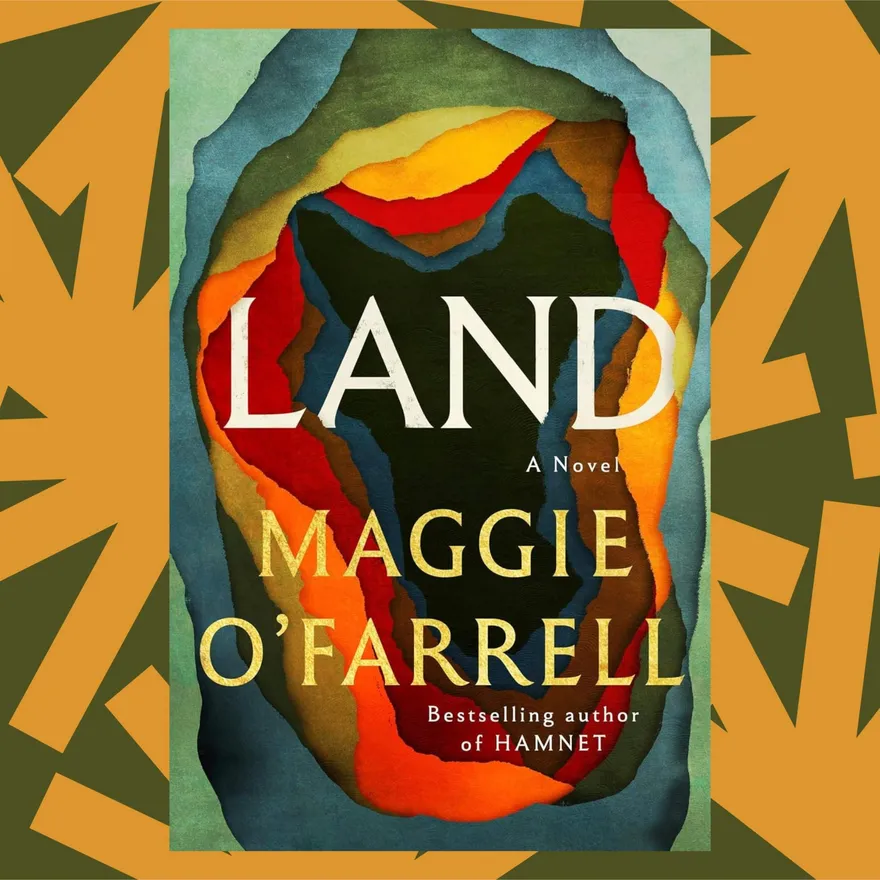
Maggie O'Farrell's novel 'Land' takes readers to a famine-ravaged yet resilient Ireland
In this episode of NPR's Book of the Day, author Maggie O'Farrell discusses her novel about post-famine Ireland and the survivors who rebuilt their lives in the wake of devastation. The story follows a surveyor and his son who discover a sacred well while mapping the Irish countryside, leading to an unexpected transformation and a family's decision to settle on abandoned land. O'Farrell draws from her own family history—her great-great-grandfather worked for the British Ordnance Survey—to craft this narrative.
The conversation explores O'Farrell's approach to historical fiction, emphasizing her focus on emotional truth and universal human experience rather than historical documentation alone. She discusses the cultural significance of sacred wells in Ireland, their connection to pre-Christian traditions, and how they serve as bridges across time in her narrative. The episode examines themes of resilience, recovery, and the enduring human capacity to rebuild after trauma.

This is a preview of the Shortform summary of the Jun 9, 2026 episode of the NPR's Book of the Day
Sign up for Shortform to access the whole episode summary along with additional materials like counterarguments and context.
1-Page Summary
Plot and Structure of "Land"
Maggie O'Farrell's novel is set in 1865 in post-famine Ireland under British rule. Tomas, a surveyor working for the British Ordnance Survey, is mapping a western Ireland peninsula with his young son Liam. While surveying, they discover a sacred spring hidden in a copse of woods—an ancient well that predates Christianity, linked to pagan Ireland's worship of water spirits. After both drink from the well, Tomas undergoes a profound transformation. Previously rendered nearly mute by the trauma of famine-decimated Ireland, he becomes unexpectedly verbose, unsettling his son with this dramatic personality shift. Convinced that their future lies near the well, Tomas persuades his family—his wife Fina and their children—to settle in an abandoned cottage nearby, believing the mystical spring will restore what famine and loss have eroded.
Influence of Great-Great-Grandfather and Great Famine
O'Farrell's novel draws from her own family history, specifically her great-great-grandfather who worked for the British Ordnance Survey mapping post-Famine Ireland. She reflects on the emotional complexity of documenting villages wiped out by the Famine, though she's unable to trace his individual contributions since Irish survey workers weren't permitted to sign their work. For years, O'Farrell struggled to find an entry point into this story until a breakthrough came on a train ride from Belfast to Dublin. She realized the narrative's emotional core rested in the imagined father-son relationship between the surveyor and his apprentice son, rather than in historical documentation alone.
Rebuilding: Irish Recovery Post-Famine
While historical narratives often focus on the million who died or emigrated during the Great Famine, O'Farrell shifts attention to the survivors who remained in Ireland. She explores how these individuals carried on and rebuilt their lives and communities with resilience. Her characters Tomas and Fina endure starvation and loss but choose to face the challenge of rebuilding in their native land. Their decision to settle on abandoned land represents both a reclamation of their connection to Irish earth and a refusal to let trauma dictate their future, demonstrating the enduring spirit of those who survived Ireland's great hunger.
Significance of Sacred Wells in Irish Culture
O'Farrell explains that sacred wells are widespread throughout Ireland, with almost every town having at least one significant well or spring. While many are now linked to Christianity, their origins stretch back to pagan, pre-Christian Ireland when Druids and Bronze Age peoples worshipped water spirits. The sacred well in her narrative serves as a bridge connecting present-day characters with ancient Ireland's inhabitants and spiritual traditions, allowing characters like Tomas to connect across time to countless generations of Irish people and embodying Ireland's historical continuity.
How Historical Fiction Conveys Timeless Human Experience
O'Farrell emphasizes that she doesn't approach historical novels as history lessons. Instead, she treats them as contemporary narratives, focusing on characters, their experiences, and emotional truths rather than historical facts for their own sake. She observes that while the world changes dramatically over 150 years, human hearts and minds remain fundamentally the same. Historical fiction connects past and present by showing that emotions like suffering, love, resilience, and the search for meaning are universal, demonstrating that the core of human experience persists throughout history.
1-Page Summary
Additional Materials
Counterarguments
- While O'Farrell emphasizes the resilience of survivors who remained in Ireland after the Famine, some critics might argue that focusing on individual or familial recovery risks underplaying the broader, long-term social and economic devastation that persisted in rural Ireland for generations.
- The use of a mystical or supernatural element (the sacred well) as a catalyst for Tomas's transformation could be seen as detracting from the psychological realism of trauma recovery, potentially oversimplifying the complex effects of famine and loss.
- By centering the narrative on a family with the agency to reclaim land and rebuild, the novel may not fully represent the experiences of those who were unable to recover or who continued to face systemic oppression and poverty.
- The portrayal of sacred wells as a bridge to Ireland's ancient past, while evocative, might be critiqued for romanticizing or essentializing Irish cultural continuity, potentially glossing over the ways in which traditions have changed or been reinterpreted over time.
- O'Farrell's approach to historical fiction, prioritizing emotional truth over historical accuracy, could be challenged by those who believe that historical novels have a responsibility to adhere more closely to documented facts, especially when dealing with sensitive subjects like the Great Famine.
Actionables
- you can create a simple family or personal map marking places that hold emotional or spiritual significance to you, then reflect on how these locations shape your sense of identity and continuity, much like sacred wells connected generations in Ireland.
- a practical way to explore emotional transformation is to keep a daily journal where you record moments when your environment or rituals (like a walk, a favorite spot, or a meaningful object) shift your mood or communication style, helping you notice how place and tradition influence your inner life.
- you can write a short story or letter from the perspective of someone in your family or community who lived through a challenging time, focusing on how they rebuilt or found meaning afterward, to better understand resilience and the universal drive to reclaim connection after loss.
Get access to the context and additional materials
Plot and Structure of "Land" - Surveyor and Son Map Post-Famine Ireland, Sacred Well Transforms Protagonist
Tomas, a Mapmaker for British Forces, and His Son Liam Survey a Western Ireland Peninsula Post-Famine
Set in 1865, in post-famine Ireland under British rule, Tomas is a surveyor assigned by British soldiers to map a peninsula in the west of Ireland. He is accompanied by his young son, Liam. While carefully surveying a copse of woods for the Ordnance Survey, Tomas and Liam discover a sacred spring—an ancient well hidden among the trees. Tomas, recognizing the significance and mystery of their find, explains to Liam that the well is older than all of them, older even than the soil itself, linking their discovery to a lineage that predates Christianity and hints at the worship of water spirits from pagan Ireland. Both drink deeply from the well, setting the stage for transformations to come.
Sacred Well Transforms Tomas's Emotional Reserve and Suffering
The act of drinking from the sacred spring fundamentally alters Tomas. Initially described as a man of few words, rendered nearly mute by the trauma and suffering he endured in famine-decimated Ireland, Tomas experiences a profound change at the well. The ancient water connects him to something timeless, a state before civilization, and cracks open his long-standing emotional reserve. Where Tomas was formerly taciturn, he becomes unexpectedly and dramatically verbose. This shift unsettles his son Liam, who must adjust to his father's new personality—a man now overflowing with w ...
Here’s what you’ll find in our full summary
Plot and Structure of "Land" - Surveyor and Son Map Post-Famine Ireland, Sacred Well Transforms Protagonist
Additional Materials
Counterarguments
- The narrative centers on a mystical transformation triggered by the sacred well, which may be seen as relying on supernatural elements rather than exploring psychological or social explanations for Tomas’s change.
- The story frames the well as a source of healing and reconnection, but it could be argued that recovery from trauma and famine might require more practical or communal efforts rather than mystical intervention.
- The depiction of Tomas’s transformation may oversimplify the complexities of trauma recovery, suggesting a sudden and total change rather than a gradual process.
- The focus on a single family’s mystical healing could be seen as neglecting the broader historical and social realities faced by post-famine Irish communities.
- The narrative’s emphasis on pre-Christ ...
Actionables
- you can identify a natural spot near your home—like a stream, pond, or old tree—and visit it regularly with a family member, using the time to share stories or memories that you haven’t talked about before, letting the environment prompt deeper conversation and emotional openness.
- a practical way to reconnect with family after hardship is to create a simple ritual around a shared activity in nature, such as collecting water from a local spring or walking a specific trail together, using the ritual as a way to mark a new chapter and encourage healing dialogue.
- you can keep a small ...

Get access to the context and additional materials
Influence of Great-Great-Grandfather and Great Famine
O'farrell's Novel Is Based On Her Great-Great-Grandfather, a British Ordnance Survey Surveyor in Post-Famine Ireland
Maggie O’Farrell’s novel draws from her own family's connection to Ireland's great famine, specifically focusing on the few facts known about her great-great-grandfather. He worked for the British Ordnance Survey during the second revision of Irish maps just after the Great Famine. O’Farrell reflects on the emotional complexity of this task: her ancestor, having witnessed the cataclysm of the Famine, was then responsible for documenting the drastic changes it brought to Ireland’s physical and human geography. Villages wiped out by the Famine had to be recorded for posterity, an act both historical and haunting. Although O’Farrell has searched to learn more about his specific contributions, her efforts are stymied by the policy of the time—Irish Ordnance Survey workers in the mid-19th century were not permitted to sign their work, leaving her unable to trace his individual legacy on the maps.
Author Developed Story Concept on Train Ride, Connecting Great-Great-Grandfather's Tale Through Father-Son Relationship
For a long time, O’Farrell struggled to find an entry point into her ancestor’s story, repeatedly facing cr ...
Here’s what you’ll find in our full summary
Influence of Great-Great-Grandfather and Great Famine
Additional Materials
Counterarguments
- While O’Farrell’s novel is inspired by her great-great-grandfather’s role as a surveyor, the lack of specific historical records about his individual contributions means the narrative relies heavily on imagination rather than verifiable fact.
- The focus on a personal family connection may risk overshadowing the broader collective experiences and suffering of the Irish population during and after the Great Famine.
- Emphasizing the father-son relationship as the emotional core could be seen as a literary device that shifts attention away f ...
Actionables
- you can walk through your local area and sketch or photograph places that have changed or disappeared, then write a short reflection on how these changes might have affected families or communities, helping you connect personal stories to physical spaces.
- a practical way to explore family history is to ask relatives about ancestors whose stories are incomplete or undocumented, then imagine and write a scene or letter from their perspective, focusing on an emotional relationship rather than just facts.
- you can take ...

Get access to the context and additional materials
Rebuilding: Irish Recovery Post-Famine
O'farrell Focused On Survivors Who Neither Died Nor Emigrated, Shifting Attention From Documented Tales of Death and Departure
Ireland in 1865 remained under British rule, scarred by the catastrophe of the Great Famine, during which a million Irish starved to death and countless others emigrated in search of survival. Maggie O’Farrell reflects on how historical narratives often center on those who died or left their homeland. While these stories of tragedy and departure are important and widely documented, O’Farrell shifts attention to those who neither died nor emigrated—the survivors who remained in Ireland. Her interest lies in how these individuals carried on, struggled to emerge from the long shadow of the famine, and strove to rebuild both their lives and their communities with resilience.
Tomas and Fina Endure Famine's Horrors While Navigating Life Amid Trauma's Shadow
O’Farrell’s novel highlights characters like Tomas and Fina, who endure the horrors of starvation and loss but choose to face the challenge of rebuilding in their native land. The couple seeks meaning and purpose after unimaginable trauma, endeavoring to create a life amid lingering devastatio ...
Here’s what you’ll find in our full summary
Rebuilding: Irish Recovery Post-Famine
Additional Materials
Counterarguments
- Focusing on survivors who remained in Ireland may risk underrepresenting the profound impact and significance of emigration and death, which shaped Irish society and diaspora communities worldwide.
- Highlighting resilience and rebuilding could unintentionally downplay the ongoing hardships, poverty, and systemic injustices that persisted for decades after the famine.
- The narrative of reclaiming land and forging hope may not reflect the experiences of all survivors, many of whom continued to face dispossession, discrimination, and limited opportunities.
- Emphasizing individual agency and determination might overlook the structural and political f ...
Actionables
- you can create a personal resilience journal to document times when you faced hardship and the small steps you took to rebuild or move forward, helping you recognize your own capacity for endurance and growth.
- a practical way to honor overlooked stories of survival is to interview older relatives or community members about how they coped with difficult periods, then write a short reflection on what you learned about perseverance and rebuilding.
- you can symbolically reclaim a sens ...

Get access to the context and additional materials
Significance of Sacred Wells in Irish Culture and History
Sacred Wells and Springs Permeate Ireland, With Almost Every Town Having a Culturally Significant Site
Maggie O'Farrell explains that sacred wells are a widespread feature throughout Ireland, remarking that almost every town or village boasts at least one significant well or spring. Today, many of these wells are linked to Christianity and Catholicism, serving as sites for spiritual rituals and devotion. However, their origins stretch back to pagan, pre-Christian Ireland—long before Catholicism took root on the island. Ancient Druids and Bronze Age peoples once worshipped water spirits at these wells, reflecting a reverence for nature and the divine that predates organized religion by millennia.
Sacred Spring Connects Present-Day Characters With Ancient Ireland's Inhabitants and Spiritual Traditions, Transcending Time and Mortality
O'Farrell notes the importance of including a sacred well in her narrative, as it serves as Martha's connection to the ver ...
Here’s what you’ll find in our full summary
Significance of Sacred Wells in Irish Culture and History
Additional Materials
Counterarguments
- While sacred wells are widespread in Ireland, not every town or village necessarily has a well that is actively recognized or maintained as culturally significant today.
- The association of wells with Christianity and Catholicism may have overshadowed or replaced many of the original pagan practices, leading to a loss or transformation of earlier traditions rather than a seamless continuity.
- The idea that sacred wells universally reflect a deep respect for nature and the divine may not account for the diversity of beliefs and practices among different communities throughout Irish history.
- The symbolic use of sacred wells in literature or narratives may not resonate with all readers or accurately reflect the lived experiences of contemporary Irish people.
- Some historians argue that the exten ...
Actionables
- you can create a personal ritual by collecting a small bowl of water from a local natural source and setting aside a quiet moment each week to reflect on your connection to nature and the generations who valued water as sacred, reinforcing a sense of continuity and reverence in your daily life.
- a practical way to connect with Ireland’s ancient spiritual traditions is to keep a simple journal where you record your thoughts, dreams, or feelings after spending time near water—such as a stream, pond, or even a rainstorm—using these entries to explore how water influences your sense of belonging and spirituality.
- you can deepen your appreciati ...

Get access to the context and additional materials
How Historical Fiction Conveys Timeless Human Experience
O'farrell Highlights Emotions and Relationships in Historical Novels, Not History Lessons
Maggie O'Farrell explains that when she writes a book set in the past, she avoids approaching it as a "historical novel" with the intention of delivering a history lesson. Instead, she treats it as a contemporary narrative, focusing on the characters, their experiences, and the emotional truths that connect them. O'Farrell prioritizes emotional authenticity, allowing readers to access history through the timeless lens of feelings and relationships rather than facts or events. This approach means that the core of her stories centers on what her characters have lived through and the context of their lives, rather than historical details for their own sake.
Despite 150 Years of Change, Human Hearts and Minds Remain Unchanged
O'Farrell observes that while the world can become unrecognizable after 150 years of change, human hearts and minds remain fundamentally the same. Readers are able to see their own struggl ...
Here’s what you’ll find in our full summary
How Historical Fiction Conveys Timeless Human Experience
Additional Materials
Counterarguments
- Prioritizing emotional authenticity over historical accuracy can risk misrepresenting or oversimplifying the complexities of past societies and events.
- Focusing mainly on universal emotions may downplay or ignore the significant cultural, social, and historical differences that shape human experience across eras.
- Treating historical fiction as contemporary narrative might lead to anachronisms or impose modern values and perspectives onto historical characters, potentially distorting the past.
- Some readers and scholars value historical fiction specifically for its ability to illuminate lesser-known historical facts and contexts, which may be neglected ...
Actionables
- you can write a short letter to your future self describing a current emotional challenge, then imagine how someone from a different era might have faced a similar feeling, helping you see the universality of your experience across time
- Think about a worry, hope, or joy you have now, and then picture how someone living 100 or 200 years ago might have felt the same way, even if their circumstances were different. This exercise helps you connect your emotions to those of people in the past, making history feel more personal and relatable.
- a practical way to deepen empathy for others is to ask an older family member or friend about a meaningful emotional experience from their youth, then reflect on how their feelings mirror your own, regardless of the historical context
- Listen for the emotions behind their story—like love, loss, or ambition—and notice how those feelings echo your own, even if the details differ. This helps you recognize the timelessness of human emotions and strengthens your connection to people from differe ...

Get access to the context and additional materials

 1-Page Summary
- Plot and Structure of "Land" - Surveyor and Son Map Post-Famine Ireland, Sacred Well Transforms Protagonist
- Influence of Great-Great-Grandfather and Great Famine
- Rebuilding: Irish Recovery Post-Famine
- Significance of Sacred Wells in Irish Culture and History
- How Historical Fiction Conveys Timeless Human Experience
Create Summaries for anything on the web
Download the Shortform Chrome extension for your browser
