

Two new books ask: What would you do if you encountered alien life?
In this episode of NPR's Book of the Day, two separate conversations explore how humans imagine encounters with alien life. Steven Rowley discusses his novel about a husband who vanishes in a beam of light after thirty years of marriage, using this absurdist premise to examine the daily choices required to sustain long-term relationships and the tension between comfort and complacency. The episode also features Neil deGrasse Tyson, who examines how human ego shapes our assumptions about extraterrestrial life—from expecting aliens to look humanoid to believing they would prioritize contact with humans over other Earth species.
Both conversations reveal how our imagination of alien encounters reflects our own preoccupations. Rowley uses science fiction as metaphor to explore commitment, marriage equality, and the vulnerability required for honest communication in relationships. Tyson addresses the anthropocentric fallacies in how we envision alien biology, communication, and motivations, suggesting that math and science would serve as universal languages while cautioning against assuming aliens would share human customs or interests.
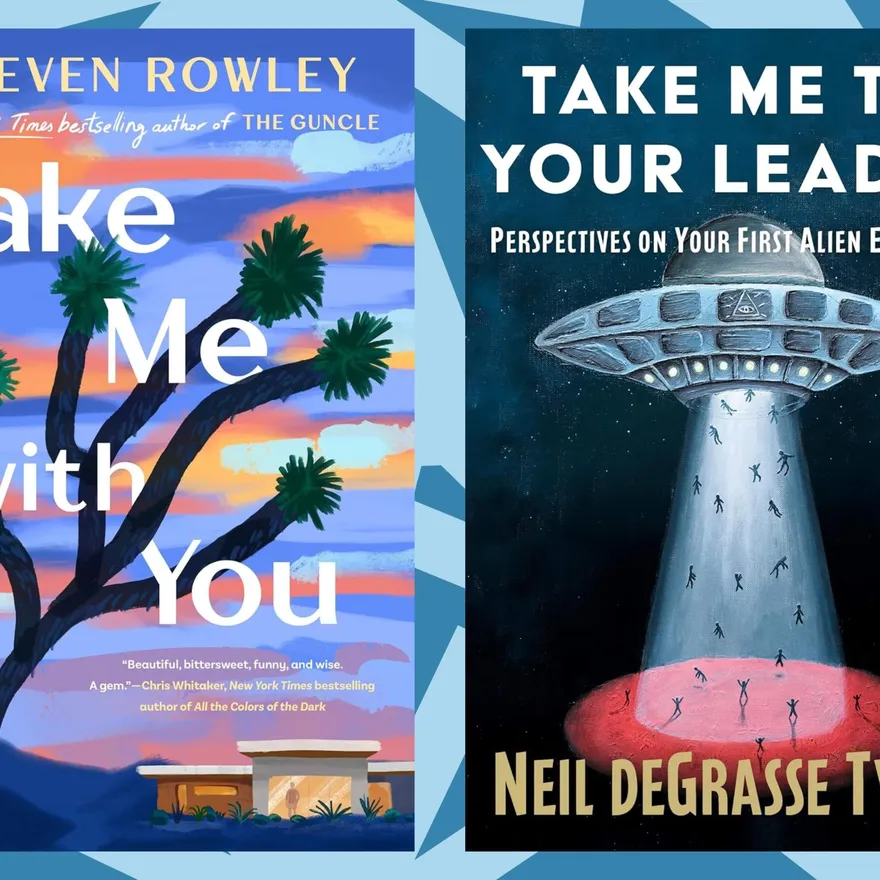

This is a preview of the Shortform summary of the Jun 5, 2026 episode of the NPR's Book of the Day
Sign up for Shortform to access the whole episode summary along with additional materials like counterarguments and context.
1-Page Summary
Commitment and Choosing Long-Term Love
Steven Rowley and Ayesha Rascoe discuss the complexities of long-term relationships, exploring themes of commitment, complacency, and marriage equality.
Marriage: A Continuous Commitment Choice
Rowley emphasizes that marriage is defined not just by the initial vows, but by daily choices to recommit—"a fresh set of vows every day." He uses the metaphor of aliens and bright light to contrast the brilliance of new love with the "comfortable old sweater" of settled comfort, suggesting couples need to occasionally see their partners with fresh eyes to avoid taking them for granted.
Rascoe observes that the novel's protagonists, Jesse and Norman, recognize tensions in their marriage but avoid confronting them, fearing such conversations might threaten the relationship. Rowley dramatizes this through Norman's dramatic departure—vanishing in a beam of light after thirty years together, forcing the couple to face questions about their future and whether to recommit.
Marriage Equality: Inclusivity in the Same Institution
Rowley recalls coming out in the early 1990s, when marriage equality seemed impossible. For him, "marriage equality" means expanding the same institution to include more people with identical rules and expectations, not creating a separate institution. Exploring universal relationship challenges through a queer lens illustrates the shared human nature of long-term love.
Anthropocentrism and Ego In Imagining Aliens
Neil deGrasse Tyson and Scott Simon discuss how human ego shapes our imagination about extraterrestrial life, leading to illogical assumptions.
Humans Envision Aliens as Bipedal Humanoid Beings
Tyson highlights that Hollywood typically depicts aliens as humanoid with heads, eyes, noses, and mouths—a manifestation of ego. He points out that beings evolving on different planets would have no DNA in common with humans and might not share any similarity at all, making these depictions illogical.
Humans Overestimate Their Importance To Aliens
Tyson addresses the egotism underlying the assumption that humans would be prime objects of alien curiosity. He observes that if aliens valued superlative qualities—intelligence, flight, or regeneration—they'd likely be more interested in whales, condors, or newts than in humans. Our lack of truly extraordinary qualities makes it absurd to assume we'd top an alien's priority list.
Humans Assume Aliens Would Adopt Human Customs
Tyson cautions against assuming aliens would share basic human customs like handshaking, which isn't even universal among humans—it's rarely used in China, for example. To assume aliens would understand this gesture is absurd and reflects ego-driven thinking that imagines them in human form.
Communication, Vulnerability, and Honesty in Relationships
Rowley emphasizes that communication is fundamental to healthy relationships. In the story, Jesse and Norman recognize issues but avoid confrontation, allowing grievances to linger. Only through the extreme circumstance of alien abduction are they compelled to address avoided issues, illustrating that avoidance merely delays necessary conversations.
The novel uses absurdist humor to help Jesse, a humor professor, cope with his husband's disappearance. This humor provides a unique way for Jesse to explore vulnerability, confront difficult emotions, and ultimately heal despite others' disbelief.
Scientific Considerations for Alien Contact and Communication
Tyson emphasizes the importance of science and math as foundations for meaningful interaction with extraterrestrial life.
Math and Science: Universal Languages
Tyson advocates for using concepts like the Pythagorean theorem, prime numbers, and the periodic table to communicate with aliens. These represent universal languages of the cosmos, allowing humans to demonstrate understanding worthy of recognition by advanced species. While aliens may use different symbols, the underlying organizational patterns are universally recognizable.
Aliens Would Likely Prefer Cultural Figures Over Political Leaders
Tyson speculates that Earth's constant radio signals could lead extraterrestrials to perceive celebrities like Taylor Swift or Oprah Winfrey as humanity's leaders. If aliens monitored our broadcasts, these pop culture icons might appear central to Earth's civilization, highlighting potential misunderstandings based on incomplete information.
Remote Observation Questions the Necessity of Physical Visits
Simon raises a practical consideration—if aliens can listen to Earth's radio signals, why would they require physical visits? Tyson echoes this sentiment, characterizing the belief that extraterrestrials would undertake interstellar travel specifically to visit Earth as a reflection of human ego.
Metaphor and Absurdist Humor Explore Existential Themes
Rowley's novel uses metaphor and absurdist humor to probe existential questions, drawing inspiration from personal experience.
Alien Abduction as a Metaphor For Questioning Life's Fulfillment
The novel's premise arose from a debate Rowley had with his husband about a hypothetical UFO offering urgent passage to the unknown—would you go or stay? His husband was eager to leave, while Rowley wrestled with the implication: wasn't their life together enough? This scenario becomes a metaphor for questioning fulfillment and the tension between the unknown and present commitments.
Rowley acknowledges weaving real-life details from his marriage into the novel, believing genuine details add authenticity and emotional depth. In the story, Norman isn't forcibly abducted but becomes a willing participant—a hitchhiker—on the spacecraft. Rowley likens Norman's choice to relationship dynamics: sometimes individuals must make hard choices to separate temporarily, not as permanent breakup but as self-exploration that can lead to recommitment or new understanding.
1-Page Summary
Additional Materials
Counterarguments
- The idea that marriage requires daily, active recommitment may not resonate with all couples; some may find stability and satisfaction in routine without conscious daily recommitment.
- Viewing partners with "fresh perspectives" is not always necessary or practical for every relationship; some couples thrive on predictability and comfort.
- Avoiding confrontation of marital tensions is sometimes a conscious, mutually agreed-upon strategy to maintain peace, and not all couples experience negative consequences from this approach.
- Dramatic or extreme events are not the only or even primary catalysts for addressing unresolved issues; many couples resolve conflicts through gradual, everyday communication.
- The definition of marriage equality as inclusion within the same institution is contested; some advocate for alternative relationship structures or legal frameworks outside traditional marriage.
- Exploring relationship challenges through a queer lens may not always highlight universal experiences, as cultural, social, and individual differences can significantly shape relationship dynamics.
- The assertion that human imagination about aliens is primarily shaped by ego overlooks the influence of narrative convenience, artistic tradition, and the limitations of human cognition.
- While science and mathematics are proposed as universal languages, there is no guarantee that extraterrestrial intelligence would recognize or interpret these concepts similarly, given potentially radically different cognitive frameworks.
- The assumption that aliens would misinterpret celebrities as leaders based on radio broadcasts presumes a human-like approach to information processing and cultural interpretation.
- Temporary separation or self-exploration within relationships is not universally beneficial; for some, it may lead to permanent separation or emotional distress rather than recommitment or understanding.
Actionables
- You can set a recurring reminder to write a short note each day about one new thing you appreciate about your partner, then share it with them at the end of the week to foster daily recommitment and fresh perspectives.
- A practical way to address avoided tensions is to schedule a monthly “awkward conversation hour” where both partners bring up one uncomfortable topic, using a timer to ensure each person gets equal time to speak without interruption.
- You can use absurdist humor as a tool for vulnerability by inventing and sharing a playful, imaginary scenario (like how you’d handle an alien misunderstanding your relationship) to spark honest conversations about your real feelings and fears in a low-pressure way.
Get access to the context and additional materials
Commitment and Choosing Long-Term Love
Steven Rowley and Ayesha Rascoe discuss the complexities and enduring decisions at the heart of long-term relationships and marriage, focusing on themes of commitment, the challenges of complacency, and the universality of marriage equality.
Marriage: A Continuous Commitment Choice
Marriage, according to Rowley, is not defined solely by the vows made at the altar, but by a series of daily choices to recommit. He emphasizes that in any long-term relationship, couples must wake each morning and consciously decide to stay, making “a fresh set of vows every day.” Rascoe echoes this sentiment, observing that love is an active, ongoing decision reaffirmed repeatedly over time.
Metaphor of Bright Light: Viewing Long-Term Partners With Fresh Eyes, Not As "Comfortable Old Sweaters"
Rowley uses the metaphor of aliens and the bright, otherworldly light in his story to explore long-term love. He contrasts the initial brilliance of new love—the way partners look at each other while first falling in love—with the settled comfort that can develop over decades, describing it as “a comfortable old sweater.” The metaphorical bright light represents the need to occasionally see one’s partner with fresh eyes and not take their presence for granted, rekindling the sense of wonder that accompanied the relationship’s early days.
Relationships Stagnate When Couples Avoid Tensions and Remain Complacent
Rascoe observes that Jesse and Norman, the novel’s protagonists, both recognize tensions in their marriage but avoid confronting them, fearing that doing so might threaten the union itself. This avoidance is common; couples sometimes remain complacent and refrain from difficult conversations to preserve the relationship’s stability, but at the risk of stagnation.
Rowley dramatizes this through Norman’s decision to leave Jesse in a dramatic fashion—not by quietly departing, but by vanishing in a beam of otherworldly light. After thirty years together, the couple finds itself stuck, forcing them to face questions about their future. The image of Norman disappearing “spreading his arms like Christ” after decades of shared life, la ...
Here’s what you’ll find in our full summary
Commitment and Choosing Long-Term Love
Additional Materials
Clarifications
- The metaphor of aliens and bright, otherworldly light symbolizes seeing a partner with fresh perspective, as if viewing them anew from an outsider’s viewpoint. Aliens represent unfamiliarity and wonder, contrasting with the routine familiarity in long-term relationships. The light suggests clarity and revelation, encouraging partners to rediscover each other’s uniqueness. This imagery highlights the effort needed to maintain excitement and appreciation over time.
- The image of Norman disappearing “spreading his arms like Christ” evokes the symbolism of sacrifice and transcendence associated with Christ’s crucifixion pose. It suggests Norman’s departure is both a profound, sacrificial act and a moment of transformation or redemption. This gesture highlights the emotional and spiritual weight of leaving after a long shared life. It underscores themes of suffering, forgiveness, and the hope for renewal in their relationship.
- Steven Rowley coming out in the early 1990s refers to when he publicly acknowledged his sexual orientation during a time when LGBTQ+ rights were limited. At that time, same-sex marriage was not legally recognized in most places, making marriage equality a distant goal. His personal experience highlights the social and legal challenges faced by LGBTQ+ individuals seeking equal marriage rights. This background underscores the significance of marriage equality as an expansion of existing marriage laws to include same-sex couples.
- Marriage equality means allowing same-sex couples to marry under the same legal framework as opposite-sex couples. It does not create a new type of marriage but extends existing marriage laws and rights to all couples regardless of gender. This ensures equal access to benefits, responsibilities, and social recognition. Treating marriage as one institution promotes fairness and inclusivity.
- Jesse and Norman are fictional characters from Steven Rowley’s novel, which explores the dynamics of a long-term same-sex relationship. Their story highlights the emotional complexities and challenges faced by couples over decades together. The novel uses their relationship to examine themes of love, commitment, and the struggle against complacency. Their experiences serve as a narrative vehicle to discuss broader issues in long-term partnerships.
- Complacency in relationships occurs when partners stop actively working on their connection, leading to emotional stagnation. Couples often a ...
Counterarguments
- Some people believe that the stability and comfort found in long-term relationships, even if it resembles a "comfortable old sweater," is a positive outcome rather than something to be avoided or rekindled.
- Not all couples feel the need to consciously recommit daily; for some, the initial vows and a general sense of loyalty are sufficient to sustain the relationship.
- For some individuals, love is experienced as a feeling rather than an ongoing decision or action, and they may not relate to the idea of love as a daily choice.
- Avoiding certain tensions or difficult conversations can sometimes be a pragmatic choice that preserves harmony, especially if the issues are minor or unlikely to be resolved.
- Dramatic events or crises are not always necessary or beneficial for relationship growth; gradual change and mutual adaptation can also foster renewal.
- Some critics argue that the institution of marriage itself is inherently flawed ...
Get access to the context and additional materials
Anthropocentrism and Ego In Imagining Aliens
Neil deGrasse Tyson and Scott Simon discuss how human imagination about extraterrestrial life is shaped by ego and a deeply anthropocentric worldview, leading to illogical assumptions about alien appearance and behavior.
Humans Envision Aliens as Bipedal Beings With Heads, Eyes, Noses, and Mouths
Hollywood and popular culture frequently depict aliens as humanoid, with bodies featuring a head, two eyes, a nose, mouth, ears, neck, shoulders, arms, legs, and a torso. Tyson highlights this pattern as a manifestation of ego, pointing out that people assume humanity forms the model standard for intelligent life—even though any beings evolving on entirely different planets would have developed along separate biological lines with no DNA in common with humans, and may not share any similarity at all. Tyson remarks that only occasionally do films offer aliens with highly inventive or truly alien anatomies, revealing a limited imagination rooted in human self-importance.
Hollywood Films Assume Aliens Evolve to Match the Human Form
Hollywood perpetuates this notion by often presenting aliens that closely resemble humans, reinforcing the mistaken belief that alien evolution would naturally produce humanlike features.
Alien Appearance Assumptions Are Illogical
Tyson argues this is illogical since evolutionary pressures on other worlds, with completely different environments and genetic material, would almost certainly yield creatures unrecognizable by human standards.
Humans Overestimate Their Importance To Aliens, Assuming They're Worthy of Study or Abduction
Tyson directly addresses the egotism underlying the common trope that humans would be the chief objects of alien curiosity, deserving of abduction or study. He observes that if aliens valued superlative qualities—such as intelligence, flight, or regenerative powers—they would likely be more interested in many Earth animals than in humans. For instance, if intelligence is prized, whales, with their large brains, would be prime candidates. If flight is valued, condors would attract attention. If regeneration is admired, newts or crustaceans would be worthier of study. Tyson underscores that our lack of such superlative abilities belies the assumption that humans should top an alien's priority list. This overestimation, he says, comes from emotional centricity and unchecked ego.
Alien Interests: Whales For Brains, Condors For Flight, Newts For Regeneration
Aliens might focus on whales for intelligence, condors for flight, or newts for their regenerative abilities, making humans comparatively unremarkable unless aliens have a specific reason for interest.
Human Ego In Assuming We're the Prime Object of Alien Curiosity, Lacking Superlative Qualities
Tyson stresses that it is only human ego that imagines us as the main object of alien fascination, despite our lack of truly extraordinary qualities compared to other Earth species.
Humans Assume Aliens Would Adopt Human Customs Like Handshaking, Though It's Not Universal
Tyson cautio ...
Here’s what you’ll find in our full summary
Anthropocentrism and Ego In Imagining Aliens
Additional Materials
Clarifications
- Anthropocentrism is the belief that humans are the central or most important entities in the universe. It causes people to interpret unknown phenomena, like aliens, through a human-centered lens. This bias limits creativity by making us imagine extraterrestrials as human-like in form and behavior. Overcoming anthropocentrism requires recognizing that alien life could be fundamentally different from anything on Earth.
- Evolutionary pressures depend on a planet's environment, such as gravity, atmosphere, and available resources. Different conditions favor traits that improve survival and reproduction in that specific context. Over time, these pressures shape organisms' anatomy to suit their unique habitats. Since other planets have distinct environments, alien life would evolve forms unlike Earth's creatures.
- DNA (deoxyribonucleic acid) is the molecule that carries genetic instructions for the development and functioning of all known living organisms on Earth. It determines an organism's traits by encoding proteins through sequences of four chemical bases. Biological similarity between species is often measured by comparing their DNA sequences, reflecting shared ancestry. Aliens evolving independently would likely have no DNA or a completely different genetic system, making them biologically dissimilar to humans.
- "Superlative qualities" are exceptional traits that stand out as the best or most advanced in a category, like intelligence or physical ability. Aliens might be interested in these traits to learn about unique adaptations or to gain advantages for themselves. On Earth, different animals excel in different superlative qualities, such as whales in intelligence or condors in flight. This concept helps challenge the assumption that humans are the most important or interesting species to extraterrestrials.
- Whales have large, complex brains and exhibit advanced behaviors like communication and problem-solving, indicating high intelligence. Condors are among the largest flying birds, capable of soaring long distances using air currents with minimal energy. Newts and some crustaceans can regenerate lost body parts, such as limbs or tails, a rare biological ability. These traits make them examples of superlative qualities that might interest hypothetical aliens more than humans.
- Handshaking is a social gesture used to greet, show respect, or finalize agreements in many cultu ...
Counterarguments
- The depiction of humanoid aliens in popular culture may be influenced more by practical constraints (such as costume design, special effects budgets, and the need for actors to portray aliens) than by ego or anthropocentrism alone.
- Some scientists argue that certain features (like bilateral symmetry, sensory organs, or manipulatory appendages) could be common among intelligent life forms due to convergent evolution, making humanoid forms not entirely illogical.
- The assumption that aliens would not be interested in humans overlooks the unique aspects of human culture, technology, and social organization, which could be of interest to extraterrestrial observers.
- Projecting human customs onto aliens in fiction can serve as a nar ...


Get access to the context and additional materials
Communication, Vulnerability, and Honesty in Relationships
Steven Rowley emphasizes that communication is fundamental to healthy relationships. In the story, both Jesse and Norman are aware of underlying issues in their relationship, but they choose to avoid confrontation. This avoidance of open dialogue allows minor grievances and unresolved conflicts to linger, making it harder to resolve them over time.
Open Dialogue Is Key to Healthy Relationships and Preventing Grievances
Jesse and Norman Recognize Issues but Avoid Confrontation
Jesse and Norman understand that problems exist between them, but neither is willing to initiate an honest conversation.
Alien Abduction Forces Characters to Address Avoided Issues, Showing That Avoidance Delays Necessary Conversations
It is only through the extreme circumstance of an alien abduction that the characters are compelled to confront the issues they had sidestepped. This situation illustrates that avoiding difficult conversations merely delays the inevitable, forcing necessary but postponed reckonings at inopportune or heightened moments.
Novel Uses Humor, Particularly Absurdist Humor, to Help the Protagonist Cope With Trauma and Confusion
Jesse, a Humor Professor, Navigates His Husband's Alien Abduction Using Humor As a Tool
Je ...
Here’s what you’ll find in our full summary
Communication, Vulnerability, and Honesty in Relationships
Additional Materials
Counterarguments
- While communication is important, some relationships may function well with less frequent or less direct communication, depending on the personalities and cultural backgrounds of those involved.
- Avoiding confrontation does not always lead to negative outcomes; in some cases, giving space and time can allow emotions to settle and prevent escalation.
- Not all unresolved conflicts necessarily become harder to resolve over time; some issues may diminish in significance or resolve themselves naturally.
- Extreme circumstances forcing confrontation may not always lead to productive or healthy outcomes; stress and trauma can sometimes exacerbate misunderstandings or cause additional harm.
- Humor as a coping mechanism is not universally effective; for some individuals, it may serve as a way to avoid processing emotions or may be perceived a ...
Actionables
- you can schedule a monthly “minor grievances” check-in with a partner or close friend to air out small annoyances before they build up, using a timer to keep each person’s turn brief and focused so the conversation feels manageable and non-confrontational
- set aside 10 minutes each month where both of you share anything that’s been bothering you, no matter how trivial, and agree to listen without interrupting or defending. This helps prevent issues from festering and makes open dialogue a regular, low-pressure habit.
- a practical way to use humor for emotional processing is to keep a “ridiculous reframe” journal where you rewrite stressful or confusing events from your day as if they were scenes in an absurd comedy
- after a tough moment, jot down a version where the situation takes a bizarre or silly turn—like imagining your boss as an alien or your argument happening in zero gravity. This helps you gain distance from the emotion and makes it easier to talk about difficult feelings with others.
- yo ...

Get access to the context and additional materials
Scientific Considerations for Alien Contact and Communication
When considering how humans might communicate with extraterrestrial life, Neil deGrasse Tyson emphasizes the importance of science and math as the foundation for any meaningful interaction. He also offers insight into how aliens might interpret human society and questions the logic and motivation behind potential visits to Earth.
Math and Science: Universal Languages Bridging Human-Extraterrestrial Gaps
Tyson advocates for using scientific and mathematical concepts to communicate with aliens, citing examples such as the Pythagorean theorem, prime numbers, and the periodic table of elements. He argues that these concepts represent the universal languages of the cosmos, allowing humans to demonstrate a level of understanding worthy of recognition by an advanced extraterrestrial species. Although extraterrestrials may not use the same symbols as humans, Tyson notes that the underlying organizations—such as groupings and patterns in the periodic table—are universally recognizable as frameworks describing the laws of the universe.
Aliens Visiting Earth Would Likely Prefer Influential Cultural Figures Over Political Leaders
Tyson challenges the notion that aliens would seek out national political leaders if they arrived on Earth. Instead, he speculates that Earth's constant stream of radio signals could lead extraterrestrials to perceive celebrities like Taylor Swift or Oprah Winfrey as humanity’s leaders or most significant cultural figures. If aliens monitored our broadcasts, these pop culture icons—portrayed as objects of adulation and focus—might appear central to Earth's civilization. This possibility highlights a potential for misunderstanding: aliens could misinterpret our society’s hierarchy and values based on the incomplete or entertainment-focused information embedded in radio and television transmissions.
Aliens ...
Here’s what you’ll find in our full summary
Scientific Considerations for Alien Contact and Communication
Additional Materials
Counterarguments
- The assumption that mathematics and science are "universal languages" may not hold if extraterrestrial cognition or perception is fundamentally different from human understanding, potentially making even basic mathematical concepts unrecognizable or irrelevant to them.
- The idea that aliens would recognize human cultural figures from radio signals presumes they can interpret human languages, cultural context, and media formats, which may not be the case.
- The focus on radio signals as the primary means of remote observation overlooks the possibility that advanced extraterrestrial civilizations might use entirely different technologies or methods for information gathering, making human broadcasts less significant or even undetectable.
- The belief that aliens would not visit Earth physically because remote observation is more efficient assumes that efficiency is a primary motivator for extraterrestrial actions, which may not align with their values, goals, or technological capabilities.
- The suggestion that interpreti ...
Actionables
- you can practice explaining basic scientific or mathematical ideas using only patterns, visuals, or physical objects instead of words or symbols, to get comfortable with communicating concepts in a way that could be understood by anyone, regardless of language or culture; for example, use pebbles to show prime numbers or arrange sticks to demonstrate geometric relationships.
- a practical way to reflect on how outsiders might interpret your online presence is to review your social media profiles and public posts as if you were an alien observer, then adjust what you share to better represent your values or interests beyond entertainment and celebrity culture.
- you can experiment ...


Get access to the context and additional materials
Metaphor and Absurdist Humor Explore Existential Themes
Steven Rowley’s novel uses metaphor and absurdist humor to probe deep existential questions, drawing inspiration directly from personal experience and authentic emotional exchanges.
Alien Abduction as a Metaphor For Questioning Life's Fulfillment
The central premise of the novel arises from a heated debate Rowley had with his husband. They found themselves repeatedly circling the hypothetical: if a UFO suddenly appeared in their backyard, offering urgent passage to the unknown, would you instinctively go, or would you stay? Rowley’s husband was adamantly in the camp of leaving, eager for discovery, while Rowley was left wrestling with the implication—wasn’t the life they’d built together enough to make someone stay? This scenario becomes a metaphor for questioning life's fulfillment and confronting the perennial tension between the lure of the unknown and the comforts or commitments of the present.
Inspired by Debates With Partner On Choosing Between Current Life and the Unknown
Personal Relationship Details Ground the Novel in Authentic Emotional Experiences
Rowley acknowledges weaving real-life details from his marriage into the fabric of the novel. While he reassures readers that the narrative isn’t a direct portrait of his own relationship, he believes that including genuine details—those that can’t simply be invented—adds authenticity and emotional depth to the story, making the exploration of existential choices feel more vivid and lived-in.
Norman's Choice to Board an Alien Spacecraft Mirrors Real-Life Relationship Decisions to Stay, Leave, or Recommit After Stagnation
In the story, the protagonist Norman isn’t forcibly abducted by alien ...
Here’s what you’ll find in our full summary
Metaphor and Absurdist Humor Explore Existential Themes
Additional Materials
Counterarguments
- While metaphor and absurdist humor can be effective tools for exploring existential questions, some readers may find that such approaches trivialize or obscure the seriousness of the themes.
- The use of a UFO abduction as a metaphor for relationship choices might not resonate with all readers, potentially making the existential themes feel less relatable or grounded.
- Incorporating personal relationship details can add authenticity, but it may also risk alienating readers who do not share similar experiences or perspectives.
- The focus on individual choice and self-exploration in the context of relationships may overlook broader social, cultural, or systemic factors that influence such decisions.
- Some may argue that the absurdist premise det ...
Actionables
- you can use playful metaphors to talk through tough relationship decisions with your partner, like comparing a big move or career change to boarding a spaceship or staying on Earth, which can make serious conversations less intimidating and spark creative thinking about your options.
- a practical way to explore your own comfort with uncertainty is to write a short, absurd story where you or your relationship faces an outlandish choice (like joining a circus or living underwater), then discuss with your partner which option you’d pick and why, revealing hidden hopes or fears about change.
- you can keep a shared j ...
Get access to the context and additional materials


Create Summaries for anything on the web
Download the Shortform Chrome extension for your browser
