

Two new books about writing break down the creative process
In this episode of NPR's Book of the Day, the podcast explores two new books that examine the craft of writing from different angles. Lucy Ives discusses her collection of writing prompts designed to develop creative skills and facilitate self-discovery, emphasizing how the physical act of writing engages the body and mind to unlock unexpected creative insights. Mac Barnett argues for recognizing children's literature as sophisticated art that deserves critical respect, challenging the common misconception that books for young readers are simpler or less valuable than adult literature.
The episode covers how writing involves holistic engagement beyond pure intention, the importance of creating space for unexpected discoveries in one's practice, and the need to expand the boundaries of children's literature. Barnett uses examples like "Goodnight Moon" to illustrate the complexity and artistry present in books for children, while also addressing the dismissive attitudes that authors in this genre often face.
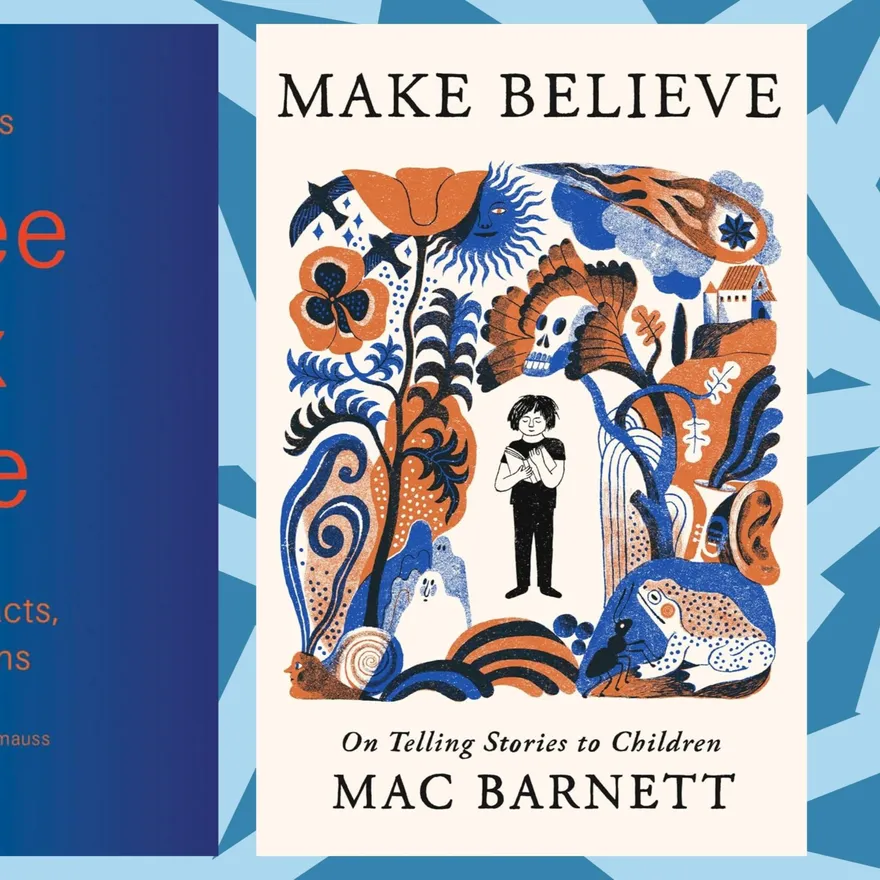

This is a preview of the Shortform summary of the May 29, 2026 episode of the NPR's Book of the Day
Sign up for Shortform to access the whole episode summary along with additional materials like counterarguments and context.
1-Page Summary
Creative Development and Self-Discovery Writing Prompts
Lucy Ives's book of writing prompts stems from her own journey learning to write in her twenties and later teaching writing. Her collection offers a year's worth of exercises, including prompt number 60, "werewolf," which asks writers to compose from a non-human animal's perspective. Ives notes that while the prompts can help develop publishable work, they're also meant to be enjoyed as literature—as literary objects akin to poems or philosophical meditations that can serve as tools for introspection and self-discovery.
Ives observes that writing emerges from a dynamic interaction between the brain, body, arms, hands, and fingers. By being attentive to this act, she believes writers can tap into rare creative energy and find insights not accessible through everyday thinking. Regarding writing environments, Ives maintains that writers can thrive anywhere—from silence to bustling cafés—and encourages experimentation. She suggests that the best writing may even arise during moments of reluctance or time scarcity, when less commonly accessed faculties yield unexpected results.
Children's Literature as Sophisticated Art Deserving Critical Respect
Mac Barnett argues that children's books are often undervalued and dismissed as simple entertainment, when they're actually sophisticated art worthy of serious critical respect. He addresses how people frequently ask when he will write a "real book," implicitly suggesting adult books are more important. Barnett relates a story about Ursula Nordstrom—editor behind "Where the Wild Things Are" and "Goodnight Moon"—who rejected the notion that adult books are superior. He also describes the condescension children's authors face, with people assuming writing kids' books must be easy or that it requires less intellect than writing for adults.
Barnett emphasizes that children's books aren't limited to teaching morals or following traditional narratives. He points to Margaret Wise Brown's "Goodnight Moon" as a radical example of sophistication in children's literature, arguing that Brown is one of the great modernist poets. The book functions as an experimental illustrated poem filled with destabilizing choices: elements disappear and reappear, a page says "Goodnight Nobody" accompanied by a blank picture, and the rhythm intentionally soothes with sounds like "mush." Barnett explains that the book's power lies in acknowledging bedtime's complicated nature—both eerie and comforting, scary and manageable—proving that children can grasp such complexity.
The Philosophy of Writing As an Engaged Process
Writing involves a holistic engagement of body, mind, and hands, enabling writers to uncover surprise and energy. The physical act of writing—the way hands grip the pen, the body's posture, the rhythm of breathing—shapes meaning in ways that transcend pure intention. Movement is central to creativity, as physical gestures channel thought into form, unlocking reservoirs of creativity inaccessible through thought alone. Sensory and physical awareness heightens the writing process, encouraging receptivity to ideas beyond conscious thought.
A fertile writing practice depends on willingness to encounter the unexpected. Deep attention is a catalyst for creativity and self-awareness, steering the process away from rote repetition toward conscious creation. The act of writing can summon joy and release similar to the relief that follows fear—when writers experience these moments of revelation, the work gains emotional resonance that transcends the individual act of writing.
Challenge Dismissive Attitudes and Expand Literary Boundaries
Barnett references Sturgeon's Law—that "90% of everything is crud"—to explain how dismissals of children's books often unfairly target the entire category. He emphasizes that critics and readers should recognize that children's literature, like all genres, contains a wide range of quality, and dismissing it wholesale is unjust.
Barnett advocates for expanding the scope of children's literature, calling for more books, more kinds of books, and more voices. He spends time in school libraries guiding children to discover books by people from different backgrounds, places, and eras, highlighting how reading diverse perspectives cultivates empathy. He stresses that authors and educators must challenge dismissive attitudes toward children's literature, ensuring that what young readers encounter matches their natural sophistication.
1-Page Summary
Additional Materials
Counterarguments
- While writing prompts can foster creativity, some writers may find them restrictive or formulaic, potentially stifling original thought or personal voice.
- The emphasis on the physical act of writing may not resonate with all writers, especially those who primarily compose digitally or who have physical disabilities that affect traditional writing methods.
- The idea that the best writing arises during reluctance or time scarcity may not apply universally; some writers produce their strongest work through careful planning and ample time.
- Although children's literature can be sophisticated, not all children's books aim for or achieve artistic complexity, and some are intentionally simple to suit developmental needs.
- The assertion that children's books are as intellectually demanding to write as adult books may not reflect the experiences of all authors, as the intended audience and content constraints can differ significantly.
- While expanding the diversity of children's literature is valuable, there can be challenges in ensuring quality and age-appropriateness across a broader range of voices and topics.
- Some educators and parents may prioritize clear moral lessons or traditional narratives in children's books, believing these are more beneficial for young readers' development.
- The holistic, body-centered philosophy of writing may not be universally accepted; some writers and theorists emphasize cognitive or linguistic aspects over physical engagement.
Actionables
- you can create a weekly ritual where you write a short piece using only your non-dominant hand to heighten physical awareness and unlock unexpected creative ideas, then reflect on how the physical challenge changes your writing style or emotional tone.
- a practical way to deepen respect for children's literature is to read a picture book from a culture different from your own, then jot down a list of emotions, themes, or questions it raises for you as an adult, noticing the sophistication and nuance you might have missed as a child.
- you can set aside ten minutes after reading any children's book to write a brief letter to the author (even if you never send it), describing how the book challenged your assumptions about what children's literature can achieve, and how it might influence your own reading or storytelling habits.


Get access to the context and additional materials
Creative Development and Self-Discovery Writing Prompts
Lucy Ives Designed Her Book Of Writing Exercises Based On Her Writing and Teaching Process
Lucy Ives’s book of writing prompts emerges from her own journey in learning how to write. In her twenties, Ives developed prompts to teach herself writing. Later, as a writing teacher, she conducted experiments in her classes by offering brief exercises to her students. Over time, she saw the value in sharing these prompts more widely, culminating in this book, which offers a year’s worth of prompts. Among them is prompt number 60, “werewolf,” which asks writers to compose from the point of view of a non-human animal. This exercise reflects her emphasis on creative stories told from unusual perspectives.
Writing Prompts Serve Multiple Purposes Beyond Generating Publishable Work, Acting As Tools For Reflection, Self-Discovery, and Philosophical Thought
Ives notes that, while the prompts can help writers develop work for publication, the book is also meant to be enjoyed simply as literature. She sees the prompts as literary objects, akin to poems or brief philosophical meditations. They can be read for inspiration or used as a means for introspection and discovery. According to Ives, writing can reveal aspects about the writer, offering a route to self-knowledge.
"Writing Stems From Brain-Body-Hand Interaction, Unlocking Energy and Creativity"
Ives observes that writing is not purely an act of making thoughts permanent; it emerges from a dynamic interaction between the brain, body, arms, hands, and fingers. Writing becomes a process of arriving at meaning through words. Ives believes that, by being attentive to the act of writing, a person can tap into rare and valuable creative ene ...
Here’s what you’ll find in our full summary
Creative Development and Self-Discovery Writing Prompts
Additional Materials
Counterarguments
- While writing prompts can foster creativity, some writers may find them restrictive or formulaic, potentially stifling original thought.
- Not all writers benefit equally from prompts; some may prefer unstructured free writing or other methods for inspiration and self-discovery.
- The idea that writing can be appreciated as a literary object in itself may not resonate with those who view prompts as purely utilitarian tools.
- The emphasis on self-discovery through writing may not apply to writers who approach writing as a craft or profession rather than a means of introspection.
- The notion that there is no ideal writing environment may overlook the fact that some individuals require specific conditions (such as silence or solitude) to be productive, and experimentation may not always yield positive results.
- T ...
Actionables
- you can create a weekly “perspective swap” challenge by choosing an everyday object or experience and writing a short piece from the viewpoint of something unexpected, like a traffic light, a gust of wind, or a forgotten sock, to stretch your imagination and notice overlooked details in daily life.
- a practical way to explore how your body influences your writing is to experiment with writing the same prompt using different physical positions—try standing, lying down, writing with your non-dominant hand, or even pacing while dictating—to see how your thoughts and style shift with your body’s involvement.
- you can set a timer for five minut ...

Get access to the context and additional materials
Children's Literature as Sophisticated Art Deserving Critical Respect
Children’s books are often undervalued and dismissed as simple entertainment, but Mac Barnett and others argue that children’s literature is a sophisticated art form worthy of serious, critical respect.
Children's Books Dismissed As Simple Entertainment, Not Complex Literature
Children's Literature Devalued As Less Legitimate or Significant Than Adult Books
Barnett addresses the widespread tendency to think of children's literature as insignificant compared to adult literature. He mentions that people frequently ask him when he will write a “real book,” implicitly asserting that adult books are inherently more important and prestigious. He relates a story about Ursula Nordstrom—the celebrated editor behind "Where the Wild Things Are," "Harriet the Spy," and "Goodnight Moon"—who, when congratulated for being offered a chance to edit adult books, dismissed the offer by contrasting the "dead, dull, finished adults" with the vibrancy of creating for children. For Barnett and Nordstrom, the suggestion that children's books are a lesser field is both misguided and disrespectful.
Assumptions in Children's Literature: Easy, Childlike Authors, Merely Cute
Barnett describes the condescension that children’s authors face: people joke that writing kids’ books must be easy or that the job is "cute," and often treat the authors themselves as big kids. He explains that people frequently assume that anyone can write a kid's book or that crafting literature for children requires less intellect or effort than writing for adults.
Books For Children: Complex Ideas for Young Minds
Children's Literature Can Innovate Beyond Traditional Storytelling, Lessons, or Morals
Barnett emphasizes that children's books are not limited to teaching morals or lessons, nor do they need to follow traditional narrative conventions. He insists that picture books don’t even have to contain a story—sometimes they simply evoke an idea, a feeling, or a fleeting moment. Part of the artistry in children’s literature is about “opening the aperture” for what the form can do, allowing for poetry, observation, ambiguity, and innovation beyond didactic aims.
Picture Books: Vehicles for Complex Ideas and Artistic Expression
Barnett references editor Ursula Nordstrom’s philosophy of “taking kids as they are,” meaning books should acknowledge the real, nuanced lives and moral complexities of children, not just serve to mold them into future adults. Books for children can capture sophisticated emotions and experiences, embracing the strange, the ambiguous, and the paradoxical in ways that resonate with young readers’ complex inner lives.
Margaret Wise Brown Shows Children's Literature Can Use Modernist Techniques For Sophistication and Depth
"Goodnight Moon" Functions as a Modernist Illustrated Poem, Using Destabilizing Techniques Like Disappearing Elements, Absent Pictures, and Unstable Rhythm For Comfort and Complexity
Barnett points to Margaret Wise Brown and her book "Goodnight Moon" as a radical example of the sophistication possible in children’s literature. He argues that Brown is one of the great modernist poets, with "Goodnight Moon" functioning as an experimental illustrated poem rather than a conventional bedtime story. The book is filled with destabilizing artistic choices: a balloon hovers in an odd place, elements like laundry disappear and reappear, and characters—like the old lady who is actually a bunny—move in and out of the room.
The narrative and illustrations both play with uncertainty and surprise. At one point, the page says “Goodnight Nobody,” accompanied by a blank picture—an encounter with absence, void, and the sublime. This is followed by “Goodnight Mu ...
Here’s what you’ll find in our full summary
Children's Literature as Sophisticated Art Deserving Critical Respect
Additional Materials
Counterarguments
- While some children’s books are sophisticated and innovative, a significant portion of the market consists of formulaic or didactic works that do not exhibit the same artistic ambition or complexity as the best examples.
- The primary audience for children’s literature is, by definition, children, whose cognitive and emotional development may necessitate simpler language, themes, and structures compared to adult literature.
- The commercial nature of much children’s publishing can prioritize marketability and accessibility over artistic experimentation or depth.
- The brevity and visual reliance of many picture books can limit the scope for narrative and thematic complexity compared to longer adult works.
- The cultural and educational function of children’s books—to teach basic values, language, and social norms—can sometimes take precedence over artistic innovation.
- The enduring popularity of certain children’s books may be due in p ...
Actionables
- you can read a picture book or children’s novel and jot down every moment that feels ambiguous, emotionally complex, or unconventional, then reflect on how these moments mirror real-life feelings or situations you’ve experienced, helping you recognize the depth and artistry in children’s literature.
- a practical way to challenge assumptions about children’s books is to swap a favorite children’s book with a friend or family member and discuss together what sophisticated themes, emotions, or artistic choices you each notice, focusing on elements that go beyond simple storytelling or moral lessons.
- you can create a personal rea ...
Get access to the context and additional materials
The Philosophy of Writing As an Engaged Process of Body, Mind, and Hands to Uncover Surprise and Energy
Writing is not merely a cerebral activity; it involves a holistic engagement of body, mind, and hands. This interconnected process enables writers to uncover surprise and energy, making the act of writing a profound means of discovering meaning.
Writing Is an Embodied Practice Using the Brain, Arms, and Fingers to Produce Meaning Beyond Intention
The physical act of writing begins as an embodied practice, where the brain, arms, and fingers work in concert. Each movement—the way the hands grip the pen or strike the keys, the posture of the body, the rhythm of breathing—shapes the creation of meaning in ways that transcend pure intention. The act of writing is marked by a flow that can reflect tensions, excitement, or calm within the body, often translating sensory experiences directly onto the page.
Movement in Writing: A Key to the Creative Process
Movement is central to creativity in writing. Whether through the sweeping motion of a pen across paper or the taps at a keyboard, physical gestures channel thought into tangible form. The dynamic between motion and mental focus unlocks reservoirs of creativity inaccessible through thought alone. Writing while walking, standing, or gesturing can also stimulate new ideas, as the body’s rhythms attune the mind to unexpected associations and nuances.
Sensory and Physical Focus In Writing Uncovers Hidden Creativity Beyond Mental Exercises
Sensory and physical awareness heightens the writing process, encouraging receptivity to ideas that exist just beyond conscious thought. Focusing on the texture of paper, the sensation of fingers moving, or the sound of words being read aloud activates creative paths distinct from purely mental exercises. This approach accesses a layer of the subconscious, allowing surprise and unplanned insights to emerge, often invigorating the writing with authenticity and vigor.
The Writing Process Thrives On Openness To Unexpected Discoveries in Language and Form
A fertile writing practice depends on a willingness to encounter the unexpected. Approaching language and form with curiosity rather than strict control invites discovery, sustaining both the writing and the writer’s motivation. The interplay between expectation and emergence ensures that each session at the desk or notebook remains charged with possibility.
Attention Enhances Creativity and Consciousness In Writing
Deep attention is a catalyst for creativity and self-awareness. When writers attune themselves closely to words, sensations, and rhythms, they align with the potential for language to surprise an ...
Here’s what you’ll find in our full summary
The Philosophy of Writing As an Engaged Process of Body, Mind, and Hands to Uncover Surprise and Energy
Additional Materials
Clarifications
- Writing as an "embodied practice" means that writing is not just a mental activity but involves physical sensations and movements that influence thought. Neuroscience shows that bodily actions can shape cognitive processes, making ideas emerge through interaction with the environment. This concept draws from theories in embodied cognition, which argue that mind and body are deeply interconnected in creating meaning. Thus, writing engages sensory and motor systems alongside mental focus to produce richer creative outcomes.
- Physical movements affect neural pathways linked to focus and emotion, shaping thought patterns during writing. A firm hand grip can increase tension, influencing word choice and tone, while relaxed posture promotes fluidity and openness. Breathing rhythms regulate stress and cognitive clarity, enabling deeper mental engagement. These bodily states subtly guide the writer’s expressive decisions, embedding meaning beyond conscious intent.
- Writing can mirror bodily states because physical sensations influence mental focus and emotional tone. For example, muscle tension may create sharper, more abrupt writing, while calmness can produce smoother, flowing sentences. This happens because the nervous system links body and mind, affecting how thoughts are expressed. Thus, the body's condition subtly shapes the style and energy of written words.
- Physical movement engages the brain's motor and sensory areas, which are linked to creative thinking. This bodily activity can bypass conscious, linear thought, allowing subconscious ideas to surface. Movement also helps reduce mental blocks by shifting focus and stimulating neural connections. Thus, writing motions can trigger insights that pure mental effort might not reach.
- Physical movement, like walking or gesturing, activates neural pathways that enhance cognitive flexibility. This bodily activity increases blood flow and oxygen to the brain, boosting alertness and creative thinking. Rhythmic motions can synchronize brain waves, fostering a state conducive to idea generation. Thus, moving while writing helps integrate bodily sensations with mental processes, sparking novel insights.
- Sensory awareness engages the brain's sensory and motor areas, creating richer neural connections that support creativity. Physical sensations can bypass conscious thought, tapping into subconscious ideas and emotions. This multisensory input helps generate novel associations and insights that purely mental focus might miss. Thus, sensory experiences act as catalysts for deeper, more spontaneous creative thinking.
- Sensory and physical focus in writing engages parts of the brain linked to intuition and emotion, bypassing purely logical thought. This engagement can trigger memories, feelings, and ideas that are not immediately accessible through conscious effort. By tuning into bodily sensations and sensory details, writers tap into these deeper mental layers, often revealing unexpected insights. This process helps bring subconscious material into conscious awareness, enriching the creative output.
- The dynamic between expectation and emergence refers to the balance between what a writer anticipates creating and the new, unplanned ideas that arise during writing. Expectation guides the initial direction, while emergence allows spontaneous insights to reshape the work. This tension keeps writing flexible and open to innovation. Embracing both helps writers discover unexpected meanings and forms.
- Deep attention involves fully immersing oneself in the sensory and emotional details of writing, which sharpens perception and opens new creative pathways. This focused awareness helps writers notice s ...
Counterarguments
- While writing can involve physical engagement, many writers produce meaningful work primarily through mental processes, with minimal conscious attention to bodily sensations or movements.
- Some highly effective writing is accomplished through digital dictation or voice-to-text technology, which reduces or eliminates the role of hands and traditional physical writing gestures.
- For some individuals, especially those with physical disabilities, the embodied aspects of writing may be less accessible or relevant, yet they can still achieve creativity and depth in their work.
- The emphasis on sensory and physical awareness may not resonate with writers who find their creativity sparked more by abstract thought, research, or intellectual exploration.
- Not all writing benefits from openness to surprise or lack of control; certain genres (e.g., technical writing, legal documents) require precision, planning, and adherence to established forms.
- The claim that physical movement unlocks creativity inaccessible through thought alone may not hold tru ...
Get access to the context and additional materials
Challenge Dismissive Attitudes and Expand Literary Boundaries For Children's Books
Children's literature often faces dismissive attitudes that undervalue its complexity and richness. Mac Barnett and Elissa Nadworny discuss the importance of challenging these attitudes and advocating for broader, more inclusive children's books that reflect the diversity and sophistication of young readers.
Biases Undervalue Children's Literature Without Fairly Assessing Its Quality
Barnett references Sturgeon’s Law—the idea that “90% of everything is crud”—to explain how dismissals of children’s books often unfairly target the entire category, rather than individual works. He regrets having written that a high percentage (around 94.7%) of kids’ books are "crud," recognizing that this characterization can be hurtful to people who create children’s literature. Barnett clarifies that the critique is not about children’s books specifically, but about how all genres have both exceptional and lesser works. He emphasizes that critics and readers should recognize that children’s literature, like all other genres, contains a wide range of quality and creativity, and dismissing it wholesale is unjust.
Broadening Children's Literature: Celebrating Diverse Voices and Perspectives
Barnett passionately advocates for expanding the scope of children’s literature rather than narrowing it. He calls for more books, more kinds of books, and more voices—arguing that true literary vitality comes from diversity in authors, subjects, and approaches. Barnett spends significant time in school libraries, guiding children to discover books written by people from different backgrounds, places, and eras. He tells children to look at these books from people who care about different things, highlighting how reading stories from a variety of perspectives can cultivate empathy and broaden their ...
Here’s what you’ll find in our full summary
Challenge Dismissive Attitudes and Expand Literary Boundaries For Children's Books
Additional Materials
Counterarguments
- While children's literature can be complex and rich, much of it is intentionally simplified to suit the developmental stage of its audience, which may limit its literary depth compared to adult literature.
- The primary purpose of many children's books is to entertain or teach basic concepts, which can result in formulaic or didactic works that may not appeal to adult literary standards.
- The commercial nature of the children's book market sometimes prioritizes trends, branding, or merchandise tie-ins over literary quality.
- Not all children are naturally sophisticated readers; some may benefit more from straightforward, accessible stories rather than exposure to a wide range of complex or diverse literature.
- The push for diversity and inclusion, ...
Actionables
- you can create a personal reading log where you rate and review children’s books using the same criteria you’d use for adult literature, noting creativity, depth, and emotional impact to challenge your own assumptions and recognize quality across genres
- (for example, after reading a picture book, jot down what surprised you, how it compares to your favorite adult books, and whether it offered new perspectives or emotional resonance)
- a practical way to broaden your perspective is to set a monthly goal to read children’s books from authors of different backgrounds, countries, or time periods, then reflect on how each book expands your understanding of the world and empathy for others
- (for example, choose one book each from a different continent or decade, and after each, write a short note about what you learned about that culture or era) ...
Get access to the context and additional materials

 1-Page Summary
- Creative Development and Self-Discovery Writing Prompts
- Children's Literature as Sophisticated Art Deserving Critical Respect
- The Philosophy of Writing As an Engaged Process of Body, Mind, and Hands to Uncover Surprise and Energy
- Challenge Dismissive Attitudes and Expand Literary Boundaries For Children's Books
Create Summaries for anything on the web
Download the Shortform Chrome extension for your browser
