

In 'Homebound,' an epic journey through multiverses begins with a single video game
In this episode of NPR's Book of the Day, author Portia Elan discusses her novel "Homebound," which spans 600 years and multiple worlds while exploring universal questions of identity and belonging. The narrative connects three distinct eras—1980s Cincinnati, a virtual world in 2090, and a flooded dystopian future in 2586—through an unfinished video game and characters searching for self-understanding and community.
Elan shares how her personal experiences with feeling like an outsider shaped the book's scope, and explains why she believes these fundamental human struggles transcend time and circumstance. The conversation covers the development of major characters who each confront alienation differently, the role of religion and storytelling in maintaining community amid environmental collapse, and how individual acts of care offer hope despite systemic challenges. The episode examines how one person's creative decision can ripple across centuries while core human needs remain constant.
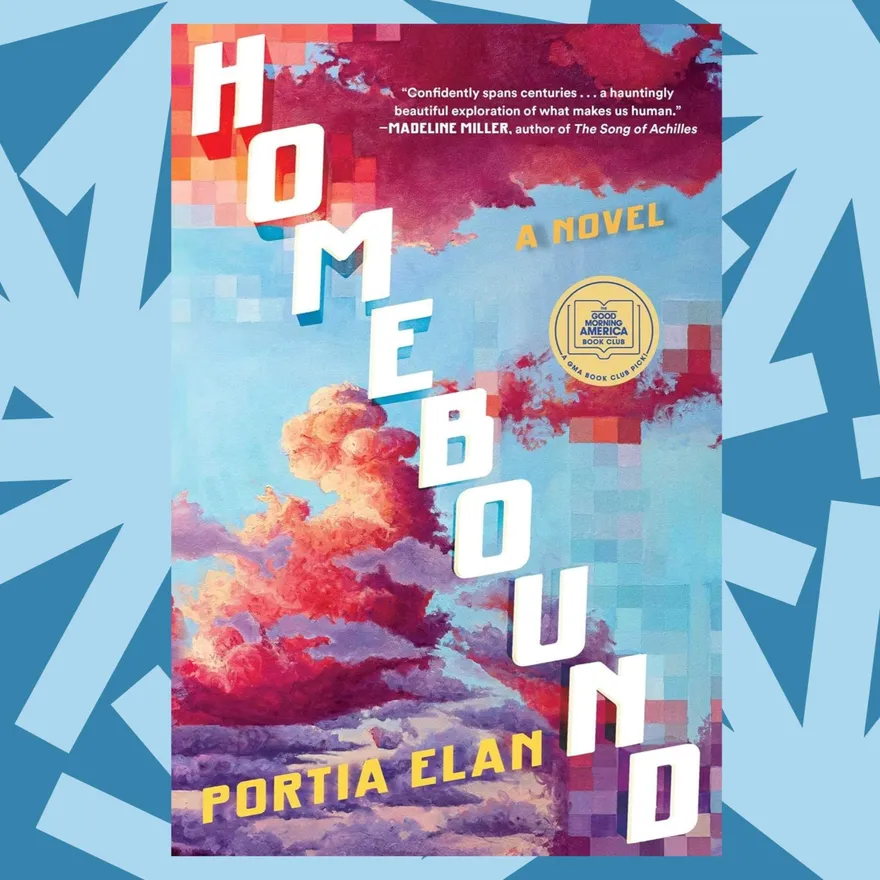

This is a preview of the Shortform summary of the May 20, 2026 episode of the NPR's Book of the Day
Sign up for Shortform to access the whole episode summary along with additional materials like counterarguments and context.
1-Page Summary
Universal Themes Across 600 Years
Portia Elan's novel "Homebound" explores universal questions of identity and belonging through characters living in disparate eras and worlds. The story centers on the timeless human struggles of understanding oneself and finding community, suggesting that these challenges transcend technology, circumstance, and centuries.
Identity and Community Remain Constant Despite Circumstances
Elan describes "Homebound" as a tale of characters across time and space all trying to answer, "Who am I and where do I belong?" For example, Bex grapples with her sexuality in 1980s Cincinnati, while other characters face similar existential questions 500 years later on a flooded world. Scott Detrow notes that despite differences in their realities, all characters are united by the same human need for self-knowledge and acceptance. A central thread is the search for people who "see me the way that I want to be seen" and "can be trusted with my vulnerable parts."
Author's Connection to Outsider Themes
Elan's personal connection to outsider feelings deeply informs the narrative scope. She sensed from the outset that Bex's vulnerability was a question she shared herself, and realizing the universality of these experiences, she understood the story needed to reach beyond Bex's 1980s world into the distant future. Elan believes feelings of being an outsider are timeless, allowing the book's narrative to bridge gaps of time, culture, and circumstance.
Character Development From Outsider Perspectives
The story deeply examines characters who live as outsiders, each confronting alienation and developing unique strategies for survival and connection.
Major Characters Address Outsider Status Through Different Mechanisms
Bex experiences alienation rooted in her queer identity during the early 1980s, when acknowledging such identities wasn't widely accepted. Yasiko is presented as a fiercely independent survivor in a harsh, futuristic world who, much like Han Solo, resists forming emotional bonds. Haya, a possibly sentient robot, embodies outsider status as both participant and observer, watching civilizations come and go across centuries. Debate persists among readers about whether Haya is truly sentient, but as "one of one," it embodies solitude and ambiguous consciousness.
Yasiko's Arc: From Self-Sufficiency To Connection
Yasiko's narrative arc centers on her gradual transformation from extreme self-reliance toward embracing vulnerability. Her journey encourages her to reconsider the value of trust and the possibilities for meaningful relationships, ultimately redefining her notions of community and security.
Flooded Dystopia: Religion and Storytelling Central to Survival
Future Society Transformed by Environmental Collapse
The novel takes place in 2586, where environmental collapse has led to a flooded world with modern society erased. Detrow reflects on how overwhelmingly pessimistic the depicted world is, with only fragmented clues remaining of what once was.
Religion and Storytelling Anchor Community
For Yasiko and her crew, an evolved form of Judaism serves as an anchor amid chaos. Elan describes religion as a powerful repository of stories, offering individuals a way to access history and meaning. As people become more nomadic and endangered, religion's central practice evolves into direct storytelling, essential for maintaining communal bonds. Elan stresses how stories enable communities to feel part of something greater, connecting them to ancestors and future generations. In the face of disaster and erasure, keeping stories alive—through religion, ritual, or fragments like an unfinished 1980s video game—offers continuity, identity, and hope.
Author's Hopeful View on Future Challenges
Balancing Fears With Hope
Elan acknowledges feelings of fear regarding overwhelming institutional forces, but tempers this pessimism with hope drawn from her experiences as a public librarian and high school teacher. In both roles, she witnessed people extending significant care to strangers, offering optimism that despite daunting challenges, people are capable of connection and compassion.
Individuals Ensuring Ethics Within Systems
The narrative highlights how powerful figures sometimes exploit systems for personal gain, yet individuals within these compromised structures frequently step up to ensure the just course prevails. Elan suggests that while systemic pessimism is justified, meaningful hope springs from personal and communal acts of resistance and care.
Novel Bridging Timelines via a Video Game's Legacy
Three Temporal Settings Linked by Bex's Unfinished Game
"Homebound" unfolds across three eras: Cincinnati in 1983, a virtual gaming world in 2090, and the mid-Atlantic Ocean in 2586. It begins with Bex, who faces the decision to complete her deceased uncle's unfinished computer game—a choice that resonates throughout the next six centuries. This narrative structure demonstrates how one individual's decision can ripple forward to impact generations while preserving emotional authenticity across increasingly alien settings.
Multi-Timeline Explores Fundamental Human Questions
By weaving together three temporal locations, "Homebound" allows characters and readers to explore evolving questions of belonging, identity, and community. As settings transform drastically, the core concerns and emotional realities of characters remain recognizable, highlighting how human needs and dilemmas transcend centuries.
1-Page Summary
Additional Materials
Counterarguments
- While "Homebound" emphasizes the universality of identity and belonging, some critics might argue that the novel underrepresents the ways in which historical and cultural contexts fundamentally shape these experiences, making them less universal than portrayed.
- The focus on outsider perspectives may risk reinforcing a binary between insiders and outsiders, potentially oversimplifying the complexities of social belonging and exclusion.
- The narrative's hopeful outlook on individual acts of resistance and care within compromised systems could be seen as overly optimistic, possibly downplaying the entrenched power of systemic forces and the limitations of individual agency.
- The depiction of religion as a universally positive force for community and continuity may not account for the ways in which religious traditions can also be sources of division or exclusion.
- The idea that core human needs and dilemmas remain constant across centuries might be challenged by those who believe that technological, social, and environmental changes can fundamentally alter what people value or struggle with.
- The use of a single individual's decision (Bex's choice to complete a game) as a narrative device for intergenerational impact could be critiqued as an oversimplification of how history and legacy actually function, which often involve collective rather than individual actions.
Actionables
- you can create a personal timeline that highlights moments when you felt like an outsider or struggled with belonging, then add notes about what helped you move forward or connect with others during those times; this helps you recognize patterns and identify strategies that work for you in different circumstances.
- a practical way to strengthen your sense of community is to start a shared story chain with friends or family, where each person adds a short segment about a character searching for belonging, allowing everyone to contribute their perspective and see how collective storytelling builds connection.
- you can choose a meaningful story, ritual, or tradition from your background and adapt it for your current life—such as updating a family recipe for your dietary needs or reimagining a holiday tradition for your living situation—to maintain continuity and identity even as your environment changes.
Get access to the context and additional materials
Universal Themes of Identity, Belonging, and Vulnerability Across 600 Years
Portia Elan’s novel "Homebound" explores universal questions of identity and belonging, threading these themes through characters living in disparate eras and worlds. The story centers on the timeless human struggles of understanding oneself and finding community, suggesting that these challenges transcend technology, circumstance, and even centuries.
Identity and Community Acceptance Remain Constant Despite Circumstances and Technology
Elan describes "Homebound" as a tale of characters across time and space all trying to answer, “Who am I and where do I belong?” She identifies this search for identity and belonging as the animating force of the story. For example, Bex, a character in 1980s Cincinnati coming to terms with her sexuality and the reality that her uncle is also gay during a time when such matters were not spoken of openly, grapples with acceptance and the desire to be understood. Scott Detrow points out that Bex’s experiences and existential questions closely mirror those of other characters, such as someone on a flooded world steering a ship 500 years later. Despite differences in their realities, all are united by the same human need for self-knowledge and acceptance.
A central thread is the search for people who “see me the way that I want to be seen” and “can be trusted with my vulnerable parts.” Elan emphasizes that trusting others with one’s true self and finding mutual recognition are desires that every person has felt at some point—regardless of era, environment, or social context.
Author's Link to Outsider Themes Influenced Century-Spanning Narrative
Elan’s personal connection to outsider feelings deeply informs the narrative scope of "Homebound." She sensed from the outset that Bex’s vulnerability and sense of not belonging was al ...
Here’s what you’ll find in our full summary
Universal Themes of Identity, Belonging, and Vulnerability Across 600 Years
Additional Materials
Counterarguments
- While "Homebound" emphasizes the universality of identity and belonging, some critics argue that the experience of these themes is heavily shaped by specific historical, cultural, and social contexts, making true universality difficult to achieve in literature.
- The assertion that feelings of being an outsider are timeless may overlook the ways in which societal structures and norms have changed, potentially altering the nature and intensity of such feelings across eras.
- The focus on individual vulnerability and self-knowledge may reflect a contemporary, Western perspective on identity, which might not resonate equally with readers from collectivist or non-Western cultures.
- By centering the narrative on personal emotional journeys, the novel may underrepresent the impact of systemic forces ...
Actionables
- you can keep a weeklong “identity snapshot” journal where you jot down moments each day when you feel most yourself and least yourself, then review your notes to spot patterns about what environments, people, or activities help you feel seen and accepted
- Write a few sentences each night about when you felt comfortable or out of place, and what triggered those feelings. After a week, look for common threads—maybe you feel most at ease during solo walks or when talking with a certain friend. Use these insights to seek out more of what supports your sense of belonging.
- a practical way to explore mutual recognition is to swap “about me” letters with a trusted friend, each describing how you see yourself and how you hope to be seen, then discuss together where your self-perceptions and their perceptions overlap or differ
- This can reveal surprising gaps or affirmations, helping you understand how others view your vulnerabilities and strengths, and opening up conversations about ...
Get access to the context and additional materials
Character Development From Outsider Perspectives: Bex, Yasiko, and Haya
The story deeply examines characters who live as outsiders, each confronting alienation or separation and developing unique strategies for survival and connection. The major characters—Bex, Yasiko, and Haya—address their outsider status through different mechanisms and patterns in their relationships.
Major Characters Face Alienation or Separation, Addressing Outsider Status Through Different Survival Mechanisms and Relationship Patterns
Bex's Outsider Status Arises From Her Queer Identity During a Time When It Couldn't Be Openly Acknowledged In Society
Bex experiences alienation rooted in her queer identity during the early 1980s—a period when acknowledging such identities was not widely accepted or discussed. The narrative traces her realization of her sexuality and the recognition that her uncle shares this experience, heightening her sense of being an outsider in a society where people “didn’t say out loud that much” about being gay.
Yasiko, an Independent Survivor in Her Harsh World, Avoids Vulnerability and Emotional Connection, Making Her a Han Solo-Like Figure
Yasiko is presented as a fiercely independent survivor in a harsh, futuristic world. Much like Han Solo, she is described as a “crusty” character who resists forming emotional bonds, wary of vulnerability. Survival has meant Yasiko cannot, or does not feel she can, reveal her true emotions, resulting in a guarded, isolated existence. Her station as an outsider comes not from societal rejection, but from her determined self-sufficiency and reluctance to open up.
Haya, a Possibly Sentient Robot, Embodies Outsider Status, Observing Civilizations Evolve and Deteriorate Over Centuries, With Readers Interpreting Its Ambiguous Consciousness
Haya, the non-human character, further develops the theme of outsider status from a unique angle. As a possibly sentient robot, Haya's loneliness is underscored by its role as both participant and observer, watching civilizations and people come and go across centuries. Debate persists among readers and even the creators about whether Haya is truly sentient, or whether consciousness is merely a proje ...
Here’s what you’ll find in our full summary
Character Development From Outsider Perspectives: Bex, Yasiko, and Haya
Additional Materials
Counterarguments
- The portrayal of Bex’s alienation as primarily rooted in her queer identity during the 1980s may overlook other intersecting factors (such as race, class, or family dynamics) that could also contribute to her outsider status.
- Yasiko’s avoidance of vulnerability and emotional connection is attributed to self-sufficiency, but this characterization risks reinforcing the trope that independence and emotional guardedness are inherently linked, potentially oversimplifying the complexity of trauma or survival strategies.
- The comparison of Yasiko to Han Solo may limit the interpretation of her character by framing her development within a familiar archetype, rather than allowing for a more nuanced or original exploration of her outsider status.
- The ambiguity surrounding Haya’s sentience and consciousness, while thematically rich, may frustrate rea ...
Actionables
- you can keep a daily log of moments when you feel like an outsider and note the specific strategies you use to cope or connect, then experiment with one new approach each week, such as reaching out to someone with a shared experience or expressing vulnerability in a safe way, to see how it changes your sense of belonging.
- a practical way to explore the ambiguity of consciousness and connection is to write a short letter to yourself from the perspective of an observer (real or imagined), reflecting on your actions and feelings as if you were a unique being witnessing your own evolution, which can help clarify your sense of self and solitu ...
Get access to the context and additional materials
Flooded Dystopia: Religion, Judaism, and Storytelling Central to Survival
Future Society Transformed by Environmental Collapse, Contemporary Civilization Erased
The novel takes place in a dystopian future set in the year 2586, where environmental collapse has led to a flooded world. Modern society has been erased, leaving only fragmented clues and remnants for survivors to piece together what once was. Scott Detrow reflects on how the world depicted is overwhelmingly pessimistic and how readers are left to wonder about the meaning behind the remnants the characters encounter, with the contemporary civilization essentially gone.
Religion as an Evolved Form of Judaism Anchors Community Identity and Personal Grounding in a Changing World
For Yasiko and her crew, religion—specifically an evolved form of Judaism—serves as an anchor amid the chaos of their nomadic existence. Portia Elan describes religion in the novel as a powerful repository and keeper of stories, offering individuals a way to access history and meaning in their disrupted reality. Ritual and storytelling, rooted in future Jewish practices, provide continuity and a vital sense of grounding. As Yasiko participates in religious rituals, these acts connect her both to ancestral legacies and her relationships with others in her current community. Elan emphasizes that, over generations and as people become more nomadic and endangered, religion’s central practice evolves into direct, person-to-person storytelling, which becomes essential for maintaining intergenerational and communal bonds.
Storytelling Is Sacred, Preserving Meaning, History, and Human Connection in the Future
Storytelling in this future society is more than ent ...
Here’s what you’ll find in our full summary
Flooded Dystopia: Religion, Judaism, and Storytelling Central to Survival
Additional Materials
Counterarguments
- The focus on an evolved form of Judaism as the central religion may overlook the potential for religious pluralism or the survival and adaptation of other faith traditions in a post-apocalyptic world.
- The portrayal of storytelling and ritual as universally grounding and positive may not account for individuals or groups who find meaning, identity, or hope through other means, such as scientific inquiry, technological innovation, or secular philosophies.
- The narrative’s emphasis on pessimism and loss could be critiqued for underrepresenting human adaptability, resilience, and the possibility of new forms of civilization or progress emerging from catastrophe.
- The idea that storytelling alone can preserve the "core of human existence" may be challenged by the argument that material conditions, social str ...
Actionables
- you can create a personal or family “artifact box” by collecting everyday objects, handwritten notes, and small mementos, then writing short stories or explanations for each item to help future generations understand your life and values in case of major change or loss
- This activity turns ordinary items into meaningful relics, encouraging you to reflect on what you want to preserve and how you want to be remembered. For example, you might include a favorite recipe card, a ticket stub from a memorable event, or a photo with a note about its significance.
- a practical way to strengthen community bonds is to start a regular story exchange with friends or family, where each person shares a personal or ancestral story in a casual setting, focusing on how these stories connect you to your roots and each other
- This can be as simple as sharing stories over dinner or during a walk, and you can rotate who shares each time. Over time, this builds a living archive of experiences and helps everyone feel more connected, even if you move or circumstances change.
- you can design a simple ritu ...


Get access to the context and additional materials
Author's Hopeful View on Future Challenges of Connection, Care, and Community
Portia Elan Views the Future Realistically, Balancing Fears With Hope in Human Care and Community
Portia Elan acknowledges feelings of fear when reflecting on the future, especially in the face of large institutional forces and systems that often seem overwhelming or impossible to counter. Her exposure to and experience within these big entities occasionally results in a pessimistic outlook regarding their impact and the apparent powerlessness of individuals to address systemic problems.
However, Elan tempers this pessimism with hope drawn from her direct experiences as both a public librarian and a high school teacher. In both roles, she often witnessed people extending significant care to strangers and to individuals with whom they had no formal relationship or obligation. Elan observes that acts of genuine care and the ability to build community with one another offer a source of optimism for the future, providing reassurance that despite daunting challenges, people are capable of connection and compassion.
Powerful Figures Exploiting Systems, Individuals Ensuring Ethics
The narrative also highlights how powerful figures—such as billionaires—sometimes manipulate systems for personal gain, bendin ...
Here’s what you’ll find in our full summary
Author's Hopeful View on Future Challenges of Connection, Care, and Community
Additional Materials
Counterarguments
- While individual acts of care and community-building are valuable, they may not be sufficient to address or dismantle deeply entrenched systemic problems, which often require large-scale policy changes and collective action.
- The persistence of ethical individuals within flawed systems does not always lead to meaningful change, as institutional inertia and power imbalances can neutralize or co-opt such efforts.
- Emphasizing hope derived from personal experiences may risk underestimating the scale and complexity of systemic injustices, potentially leading to complacency or a focus on small-scale solutions at the expense of broader reform.
- The narrative may overstate the frequency or impact of individuals ensuring ethi ...
Actionables
- You can create a personal “care log” by jotting down small, everyday moments when you or others show kindness to strangers, then review it weekly to remind yourself of the ongoing presence of compassion and ethical action in daily life; for example, note when someone holds a door, helps with directions, or checks in on a neighbor.
- A practical way to counter feelings of powerlessness is to set a recurring reminder to perform one anonymous act of support for someone in your community each week, such as leaving an encouraging note in a public place or paying for someone’s coffee, reinforcing the idea that individual actions matter even within large systems.
- You can strengthen your sense of ethical responsibility by d ...


Get access to the context and additional materials
Novel Bridging Timelines via a Video Game's Legacy From 1980s to 2586
Narrative Architecture Uses Three Temporal Settings Linked by Bex's Unfinished 1983 Video Game
The novel "Homebound" unfolds across three distinct eras: Cincinnati in 1983, a virtual gaming world in 2090, and a location in the mid-Atlantic Ocean during 2586. It begins in the 1980s with Bex, a young woman grieving the death of her beloved uncle, who has left her his unfinished computer game as a legacy. Bex faces the decision to complete this game, and her choice resonates throughout the next six centuries, shaping events and lives far into the future. This narrative structure not only demonstrates how one individual's decision in the past can ripple forward to impact generations, but it also anchors each timeline emotionally through Bex’s original experience.
The novel fluidly transitions from the familiar, relatable world of the 1980s to unfamiliar and transforming future worlds in 2090 and 2586. Despite increasingly alien settings, the story preserves emotional authenticity and character relatability, ensuring that readers remain invested in each era and its inhabitants.
Multi-Timeline Explores Fundamental Human Questions On Belonging, Identity, and Community Across Transformed Social and Environmental Contexts
By weaving together three temporal locations—Cincinnati in 1983, the 2090 virtual ...
Here’s what you’ll find in our full summary
Novel Bridging Timelines via a Video Game's Legacy From 1980s to 2586
Additional Materials
Counterarguments
- While the novel claims to maintain emotional authenticity and character relatability across vastly different eras, some readers may find it difficult to connect with characters in the more distant or unfamiliar future settings.
- The idea that a single individual's decision can have a ripple effect lasting six centuries may be seen as an overstatement, potentially oversimplifying the complexity of historical causality.
- The use of a multi-timeline structure, though ambitious, can sometimes fragment the narrative, making it harder for readers to become fully invested in any one timeline or set of characters.
- The assertion that core human concerns remain unchanged across centuries could be challenged by arguing that soc ...
Actionables
- you can write a short letter to your future self or descendants describing a current decision you’re facing, then imagine and jot down how this choice might impact people decades or centuries from now, helping you recognize the potential long-term ripple effects of your actions.
- a practical way to explore emotional continuity across time is to keep a journal where you record your feelings and dilemmas, then periodically revisit older entries to notice which core concerns persist, regardless of changing circumstances in your life.
- you can create a simple timeline on paper or digitally, ...
Get access to the context and additional materials

 1-Page Summary
- Universal Themes of Identity, Belonging, and Vulnerability Across 600 Years
- Character Development From Outsider Perspectives: Bex, Yasiko, and Haya
- Flooded Dystopia: Religion, Judaism, and Storytelling Central to Survival
- Author's Hopeful View on Future Challenges of Connection, Care, and Community
- Novel Bridging Timelines via a Video Game's Legacy From 1980s to 2586
Create Summaries for anything on the web
Download the Shortform Chrome extension for your browser
