

'The People Can Fly' examines the history of Black prodigies from poets to professors
In this episode of NPR's Book of the Day, Michel Martin and Joshua Bennett explore how society's limited definitions of brilliance and giftedness fail to recognize diverse forms of human potential. Bennett discusses how the current framework prioritizes monetizable skills like math and music while overlooking talents in arts and other non-traditional areas, and he shares how he nearly fell through educational cracks without crucial interventions from his community.
The conversation examines the particular challenges Black prodigies face due to historical narratives that denied Black intellectual capacity, as well as the additional burden of feeling they must represent their entire race. Bennett also reflects on his experiences with his neurodivergent brother, explaining how this relationship expanded his understanding of intelligence beyond conventional markers. Throughout, the episode emphasizes that talent alone is insufficient without sustained support from family, community, and institutions.
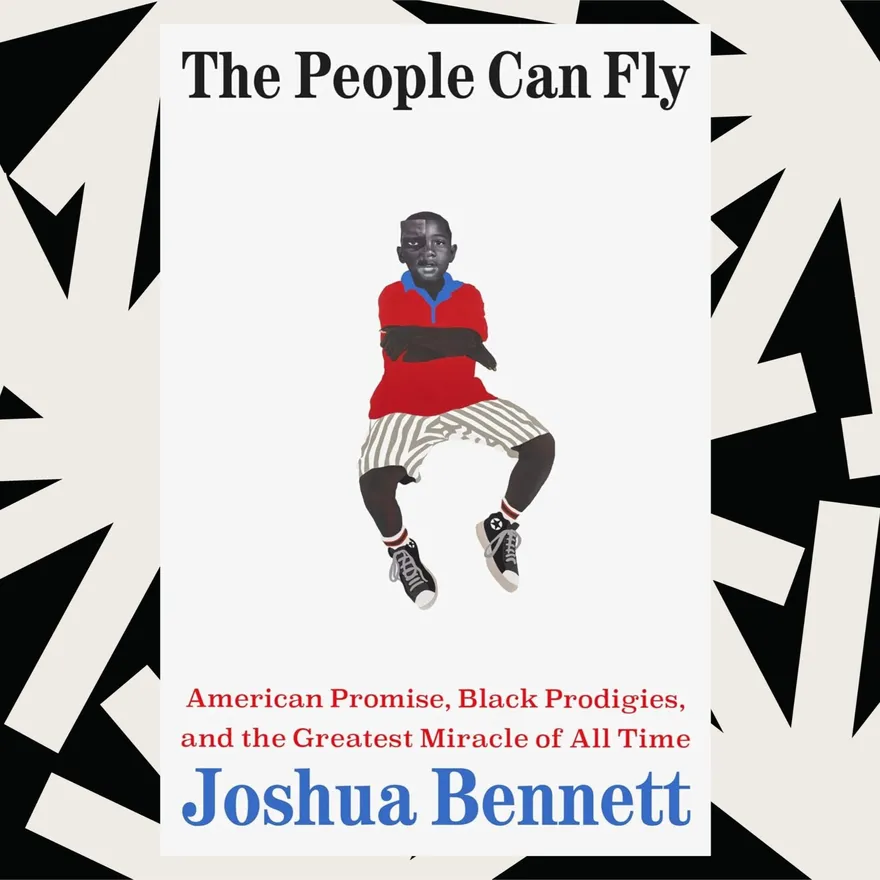

This is a preview of the Shortform summary of the May 19, 2026 episode of the NPR's Book of the Day
Sign up for Shortform to access the whole episode summary along with additional materials like counterarguments and context.
1-Page Summary
Broadening the Definition of Brilliance and Giftedness
Joshua Bennett and Michel Martin discuss how society's narrow definitions of brilliance and giftedness fail to recognize diverse forms of human potential.
Cultural View of Brilliance Focuses On Monetizable Skills
Martin questions whether society's recognition of giftedness is more about what can be monetized than what truly makes a difference. The dominant view elevates skills in math, music, and linguistics—disciplines with measurable results that lead to elite college admissions or financial independence. Bennett points out this focus leaves out talented painters, dancers, and playwrights whose gifts don't align with traditional academic paths. He shares that he nearly fell through systemic cracks at various stages of his education, surviving only through crucial interventions from teachers, parents, and community members.
Martin notes that prodigies can shift collective expectations about human potential. By redefining brilliance to encompass a wider array of human capabilities beyond narrow academic markers, society can better support students whose strengths aren't reflected in conventional metrics.
Challenges Black Prodigies Face From Historical Racism
Black Prodigies Paradox
Bennett explains that Black prodigies face unique challenges stemming from historical narratives denying Black intellectual life. Systems like slavery and segregation were built on the false premise that Black people lacked intellectual capacity, creating a fundamental tension with the documented existence of Black prodigies. He references figures like Thomas Fuller, an enslaved man with extraordinary mathematical ability, and Phillis Wheatley, who published poetry showcasing vast intellect while enslaved, demonstrating how their talents contradicted narratives denying Black humanity and cognition.
Navigating Racial Representation Pressures
Bennett shares that from a young age, his mother taught him school would be an "elaborate labyrinth" where he'd need to constantly anticipate biases. Black prodigies often feel responsible for proving not only their own capacity but also acting as representatives of their race, adding psychological labor to their education while working against entrenched perceptions.
Impact of Family, Community, and Institutional Support
Bennett's reflections highlight how family, community, and institutional support are essential for talented individuals navigating elite educational pathways.
Talent Alone Doesn't Ensure Success
Bennett notes that even exceptionally talented students can fall through the cracks without sustained support. He describes the importance of having advocates—a "cloud of witnesses"—in competitive, predominantly white institutions, where supporters prove vital to student survival. His own experience included a daily two-hour commute to an elite private school, leaving him exhausted while adapting to an unfamiliar environment. With his mother being the only family member to attend college, he lacked guidance on navigating elite spaces.
Bennett's experiences illustrate how structural inequalities mean brilliant individuals need protection and guidance to persist through doubt and discouragement, demonstrating that talent alone is insufficient without networks of support.
Recognizing Diverse Intelligences, Including Neurodivergence
Bennett and Martin discuss how society's narrow conception of intelligence fails to capture the full spectrum of giftedness, particularly in neurodivergent individuals.
Growing Up With Neurodivergent Family Expands Understanding of Giftedness
Martin notes that Bennett devotes a chapter to his younger brother Levi, diagnosed with autism spectrum disorder at age three. Bennett explains that growing up with Levi profoundly expanded his understanding of what constitutes a valuable and gifted life. Witnessing his brother excel in areas not traditionally recognized as intelligence markers demonstrated that brilliance exists outside conventional definitions. He points out that limited vocabulary around disability overlooks neurodivergent brilliance.
Bennett observes that mainstream definitions favor eloquence and math or science skills, ignoring other intelligence forms. He stresses that neurodivergent individuals think, learn, and create in fundamentally different ways from neurotypical modes. By widening recognition of neurodivergent thinking, Bennett argues, we see beautiful moments of intelligence that traditional frameworks ignore, revealing that human potential runs deeper and more varied than standard measures suggest.
1-Page Summary
Additional Materials
Counterarguments
- While society often prioritizes monetizable skills, this focus can be justified by the need to prepare individuals for economic self-sufficiency and societal contribution, which are practical concerns for families and educational systems.
- Traditional academic markers such as math and language skills are emphasized because they are more easily measured and standardized, allowing for fairer comparisons and resource allocation in large, diverse populations.
- The existence of specialized schools, scholarships, and programs for the arts and other non-traditional talents suggests that society does recognize and support a broader range of giftedness than the text implies.
- The pressure felt by Black prodigies to represent their race, while real, is not unique to Black individuals; members of other minority or underrepresented groups may experience similar pressures in elite spaces.
- Family, community, and institutional support are important for all students, not just those who are exceptionally talented or from marginalized backgrounds.
- The argument that neurodivergent forms of intelligence are overlooked may not fully acknowledge recent educational reforms and increased awareness, which have led to more inclusive practices and recognition of neurodiversity in many schools and workplaces.
- Emphasizing broader definitions of giftedness could risk diluting the term to the point where it loses practical meaning or usefulness for identifying and supporting individuals with exceptional needs.
Actionables
- you can keep a weekly log of moments when you notice unique talents or creative problem-solving in yourself or others that don’t fit traditional definitions of intelligence, then share these observations with friends or family to spark conversations about overlooked forms of brilliance; for example, jot down when someone invents a new game, finds a clever way to resolve a conflict, or expresses themselves through an unconventional art form.
- a practical way to support diverse giftedness is to intentionally seek out and recommend books, movies, or online content created by people from underrepresented backgrounds or with neurodivergent perspectives, then discuss what new forms of intelligence or creativity you noticed; for instance, after watching a film by a neurodivergent director, talk with a friend about how the storytelling or visuals challenged your assumptions about what counts as genius.
- you can create a personal encouragement file where you collect notes, messages, or reminders of times you or someone you know overcame doubt or discouragement with the help of others, and revisit it when you or someone in your circle faces challenges; for example, save a text from a friend who cheered you on during a tough project, or write down a memory of a family member supporting your creative interests.


Get access to the context and additional materials
Broadening the Definition of Brilliance and Giftedness
Joshua Bennett and Michel Martin reflect on how current cultural definitions of brilliance and giftedness are too narrow, pushing society to reconsider what true giftedness means and how it is recognized.
Cultural View of Brilliance Focuses On Monetizable Skills, Not Full Human Potential
Michel Martin questions whether society’s recognition of giftedness is more about what can be monetized or measured than about what can truly make a difference. The dominant view of brilliance tends to elevate skills in areas like math, music, and linguistics—disciplines often associated with measurable results that lead to elite college admissions or financial independence. As Bennett points out, this focus leaves out talented individuals such as painters, musicians, playwrights, and dancers, whose gifts do not always align with traditional academic paths or guarantee a stable, lucrative future.
This societal focus on measurable intelligence means those who excel in visual arts, dance, and other less conventional disciplines often do not receive the same recognition or support as those whose abilities are aligned with clear academic or monetary outcomes. Talented individuals can fall through systemic cracks due to the lack of support and recognition within elite education systems, as Bennett explains through personal experience. He highlights that, at various pivotal stages in his life—from early childhood through graduate school—he nearly fell through those cracks and only succeeded due to crucial interventions from teachers, parents, and community members.
Redefining Brilliance Recognizes Genuine Giftedness Across Diverse Human Capabilities and Intelligence Forms Beyond Traditional Academic and Professional Markers
Martin notes that prodigies are ...
Here’s what you’ll find in our full summary
Broadening the Definition of Brilliance and Giftedness
Additional Materials
Clarifications
- "Monetizable skills" are abilities that can be directly turned into income or financial gain. In giftedness, these are talents valued because they lead to jobs or careers with clear economic rewards. Examples include skills in math or technology that are in high demand in the job market. This focus often overlooks talents that don't easily translate into money but have cultural or personal value.
- Math, music, and linguistics are often seen as dominant measures of brilliance because they involve clear, structured systems with definable rules and outcomes. These fields produce quantifiable results, such as test scores or performances, making talent easier to assess objectively. Historically, educational and professional institutions have prioritized these areas for their perceived intellectual rigor and economic value. This focus shapes societal views on intelligence and success, reinforcing their dominance as markers of giftedness.
- Measurable intelligence refers to cognitive abilities that can be quantified through standardized tests, such as IQ tests or academic exams. These assessments typically evaluate skills like logical reasoning, verbal comprehension, mathematical ability, and memory. They provide numerical scores intended to represent an individual's intellectual capacity relative to others. However, these tests often overlook creative, emotional, and practical forms of intelligence.
- "Systemic cracks" refer to flaws or gaps within elite education systems that fail to identify, support, or nurture all types of gifted students. These cracks often arise because the systems prioritize traditional academic skills and overlook talents in less conventional areas. As a result, students with unique or non-traditional abilities may not receive adequate resources or opportunities. This can lead to talented individuals being overlooked or underserved despite their potential.
- Crucial interventions are specific actions by teachers, parents, or community members that provide support or opportunities to help a gifted individual succeed. Examples include recognizing a child's unique talents early, offering mentorship, providing access to resources or specialized programs, and advocating for the student's needs within educational systems. These interventions help prevent talented individuals from being overlooked or unsupported due to nontraditional skills. They create pathways for growth that might not exist in standard academic environments.
- Prodigies are individuals who demonstrate exceptional skills or talents far beyond their age group, making them rare or "statistical outliers" in the population. Because they achieve extraordinary feats, they challenge common beliefs about human abilities and potential. Their existence can inspire changes in how society defines and values intelligence and talent. This influence can lead to broader acceptance of diverse forms of giftedness.
- Different forms of intelligence refer to varied ways people understand and interact with the world, such as emotional, musical, spatial, b ...
Counterarguments
- While broadening the definition of giftedness is valuable, measurable skills are often emphasized because they provide objective criteria for resource allocation and assessment, which can be necessary in competitive educational and professional environments.
- The focus on monetizable or measurable skills may reflect societal needs for economic productivity and innovation, which are important for collective well-being and progress.
- Traditional academic markers have been developed over time to identify and nurture talents that are in high demand and have clear pathways to societal contribution, which can justify their prominence.
- Expanding definitions of brilliance could risk diluting the concept of giftedness, making it harder to identify and support individuals with truly exceptional abilities in any domain.
- Some non-traditional talents, such as those in the arts, do receive significant recognition and support through specialized schools, ...

Get access to the context and additional materials
Challenges Black Prodigies Face From Historical Racism and Intellectual Life Denial
Black Prodigies Paradox: Systems Like Slavery and Segregation Based On False Premise of No Black Intellectual Life
Joshua Bennett explains that a core challenge for Black prodigies stems from long-standing historical narratives which deny Black people’s intellectual and interior lives. He highlights that systems like chattel slavery, Jim Crow, and segregation were constructed around the false premise that Black people lacked intellectual capacity or cultural depth. This creates a fundamental tension: on the one hand, these oppressive systems dismissed Black intellectual life; on the other, history records the existence of Black prodigies whose achievements contradict such narratives.
Bennett references prodigies like Thomas Fuller, an enslaved man known for his extraordinary mathematical ability, to illustrate this contradiction. Fuller’s talent—his ability to perform complex calculations in his head—stood in direct opposition to the notion that enslaved people had no intellect. Similarly, historical figures like Phillis Wheatley embody this tension. Wheatley, though enslaved, published a book of poetry that showcased her vast intellect and imagination, clarifying that genius and deep creativity could and did exist amid the violent denial of Black humanity and cognition.
Black Prodigies: Navigating Racial Representation Pressures
Black students, especially those identified as prodigies, face unique challenges when navigating academic institutions. Bennett shares his personal experience that, from a very young age, his mother taught him that school would be an “elaborate labyrinth”—a space where he would always need to be cognizant of how teachers perceived him. This environment positioned B ...
Here’s what you’ll find in our full summary
Challenges Black Prodigies Face From Historical Racism and Intellectual Life Denial
Additional Materials
Counterarguments
- While historical narratives often denied Black intellectual life, there were also periods and individuals within dominant cultures who recognized and celebrated Black achievements, though these acknowledgments were not always widespread or sustained.
- The experiences of Black prodigies are not monolithic; some may not feel the same level of racial representation pressure, depending on their personal backgrounds, communities, or educational environments.
- Other marginalized groups have also faced similar pressures of representation and psychological labor in academic settings, suggesting that these challenges are not unique to Black prodigies.
- Some educational institutions and teachers have made significant efforts to recognize and support Black intellectual achievement, espe ...
Actionables
- you can keep a weekly journal where you document and reflect on moments when you notice assumptions about intellectual ability or cultural depth—either in yourself or others—to become more aware of how these narratives persist and how you might challenge them in daily interactions
- Write down specific situations, such as a comment in a meeting or a portrayal in media, and note your reactions and any steps you took or could take to counter those assumptions.
- a practical way to support Black intellectual life is to intentionally seek out and share works by Black thinkers, artists, and innovators in your everyday conversations and social media, especially those whose stories are less known
- For example, recommend a book, poem, or scientific achievement by a Black creator to a friend, or post a short summary of a historical Black figure’s contribution on your feed, making sure to highlight their intellectual and creative depth.
- you can practice active listening and affirmation when Black co ...

Get access to the context and additional materials
Impact of Family, Community, and Institutional Support on Individual Success
Joshua Bennett’s reflections highlight the essential role of family, community, and institutional support in enabling talented individuals to navigate elite educational pathways.
Talent Alone Doesn't Ensure Success on Elite Educational Pathways
Bennett notes that even exceptionally talented students can fall through the cracks in the absence of sustained support. He shares his personal journey, recalling that at every step—from early childhood through college and graduate school—he or people close to him risked being left behind. The “courageous interventions” of teachers, parents, and community members were necessary at pivotal moments, demonstrating that innate ability is not enough without continued encouragement and advocacy.
"Cloud of Witnesses" Advocates for Talented Individuals in Competitive, Predominantly White Institutions, Proving Essential To Their Survival
Bennett describes the importance of having advocates—a “cloud of witnesses”—in competitive, predominantly white institutions. These supporters not only cheer on talented students but are also vital to their survival in spaces where they might otherwise feel isolated or out of place.
Support Systems For Students Traveling To Private Schools: Transportation, Fatigue, and Cultural Displacement
Bennett’s own experience as a student at an elite private school in New York involved a daily two-hour commute via two buses and a train. The long journey left him exhausted and added another layer of challenge, on top of adapting to an unfamiliar environment with little precedent in his family for navigating such institutions. The fatigue and sense of cultural displacement underscore the need for robust support systems to help students manage both logistical and emotional challenges.
Success Relies On More Than Just Talent
The presence of family members with experience in higher educati ...
Here’s what you’ll find in our full summary
Impact of Family, Community, and Institutional Support on Individual Success
Additional Materials
Counterarguments
- While support systems are beneficial, some individuals succeed in elite educational pathways primarily through personal resilience, self-motivation, and adaptability, even in the absence of strong external support.
- There are examples of students from underrepresented backgrounds who have thrived in elite institutions without significant family or community guidance, suggesting that individual agency can sometimes compensate for a lack of support.
- Institutional efforts to provide support may not always be necessary for every talented student, as some may prefer or benefit from greater independence and self-reliance.
- The emphasis on structural barriers and the need for support networks may ...
Actionables
- you can create a simple “support map” by listing people in your life who could offer different types of help (emotional, academic, logistical) and then reach out to one person each week to strengthen those connections, so you have a clearer sense of who to turn to when challenges arise.
- a practical way to reduce feelings of isolation in unfamiliar environments is to set a recurring reminder to check in with someone from your background or community, even if it’s just a quick text or call, to maintain a sense of belonging and shared experience.
- you can keep a “challenge log” where y ...

Get access to the context and additional materials
Recognizing Diverse Intelligences, Including Neurodivergence, as Giftedness
Joshua Bennett and Michel Martin discuss how society’s narrow conception of intelligence fails to capture the full spectrum of giftedness, particularly as seen in neurodivergent individuals.
Growing Up With Neurodivergent Family, Especially an Autistic Sibling, Expands Understanding of Meaningful Giftedness and Intelligence
Michel Martin notes that Bennett devotes an entire chapter of his book to his younger brother Levi, who was diagnosed with autism spectrum disorder at age three. Bennett explains that growing up with neurodivergent family members, especially Levi, profoundly expanded his understanding of what constitutes a valuable, imaginative, and gifted life. Witnessing his brother work through subjects and skills that were, at times, immensely difficult, and seeing him ultimately triumph, proved that intelligence extends beyond conventional cognitive measures.
Neurodivergent Individuals Excel, Proving Intelligence Extends Beyond Conventional Cognitive Measures
Bennett recalls observing Levi excel in areas not traditionally recognized as markers of intelligence. These achievements, he says, demonstrate that brilliance and value can exist outside of society’s conventional definitions.
Limited Vocabulary on Disability and Neurodivergence Overlooks Neurodivergent Brilliance and Value
He also points out the inadequacy of the vocabulary used to discuss people with disabilities and neurodivergence. The prevailing language fails to capture the brilliance and richness of neurodivergent lives, as well as variations in intelligence among neurotypical individuals.
Society's Definition of Intelligence Favors Eloquence and Math/Science Skills, Ignoring Other Intelligence Forms
Bennett observes that mainstream definitions of intelligence tend to favor those who can speak eloquently on demand or display genius in math and science. Those who do not fit these standards are often overlooked as intelligent or gifted.
...
Here’s what you’ll find in our full summary
Recognizing Diverse Intelligences, Including Neurodivergence, as Giftedness
Additional Materials
Counterarguments
- While expanding definitions of intelligence is valuable, standardized measures (such as those focusing on math, science, and verbal skills) are often used because they have predictive validity for certain academic and professional outcomes.
- The concept of "giftedness" may lose practical meaning if it is broadened too much, potentially diluting resources and support for individuals who meet established criteria for gifted programs.
- Not all neurodivergent traits or behaviors are necessarily indicative of intelligence or giftedness; some may simply reflect differences without conferring particular cognitive advantages.
- The current vocabulary and frameworks for discussing intelligence and disability are evolving, and some argue that precision and clarity are needed to ensure effective communication and support.
- Emphasi ...
Actionables
- you can keep a weekly intelligence journal where you record moments when you or others demonstrate strengths or problem-solving in ways that aren’t typically labeled as “smart,” such as noticing patterns in music, navigating social situations, or inventing new routines for daily tasks; over time, this helps you recognize and value diverse forms of intelligence in your environment.
- a practical way to expand your vocabulary around intelligence is to create a personal glossary, adding new words or phrases each week that describe unique ways of thinking, learning, or creating that you observe in yourself or others, such as “pattern connector” or “sensory innovator,” and use these terms in conversations to shift how you and those around you talk about intelligence.
- you can set up a monthly “different minds” challenge ...



Get access to the context and additional materials

 1-Page Summary
- Broadening the Definition of Brilliance and Giftedness
- Challenges Black Prodigies Face From Historical Racism and Intellectual Life Denial
- Impact of Family, Community, and Institutional Support on Individual Success
- Recognizing Diverse Intelligences, Including Neurodivergence, as Giftedness
Create Summaries for anything on the web
Download the Shortform Chrome extension for your browser
