

Revisiting 'Whalefall,' the underwater thriller from Pulitzer winner Daniel Kraus
In this episode of NPR's Book of the Day, Pulitzer Prize-winning author Daniel Kraus discusses his 2023 novel "Whale Fall," which follows a teenage diver trapped inside a whale with limited oxygen. Kraus explains his structural techniques—including chapters that count down the protagonist's remaining air supply—and how they create urgency and immerse readers in the survival story. The conversation explores how Kraus uses the biological concept of whale fall as a metaphor for death and legacy.
The episode examines the novel's central father-son conflict, where protagonist Jay confronts unresolved grief over his late father while fighting to survive. Kraus discusses the difference between mercy and forgiveness, and how personal experiences with loss—including deaths in his own life—shaped the book's meditation on mortality and meaning. The conversation touches on how the novel questions whether our lives create legacies worthy of their impact.
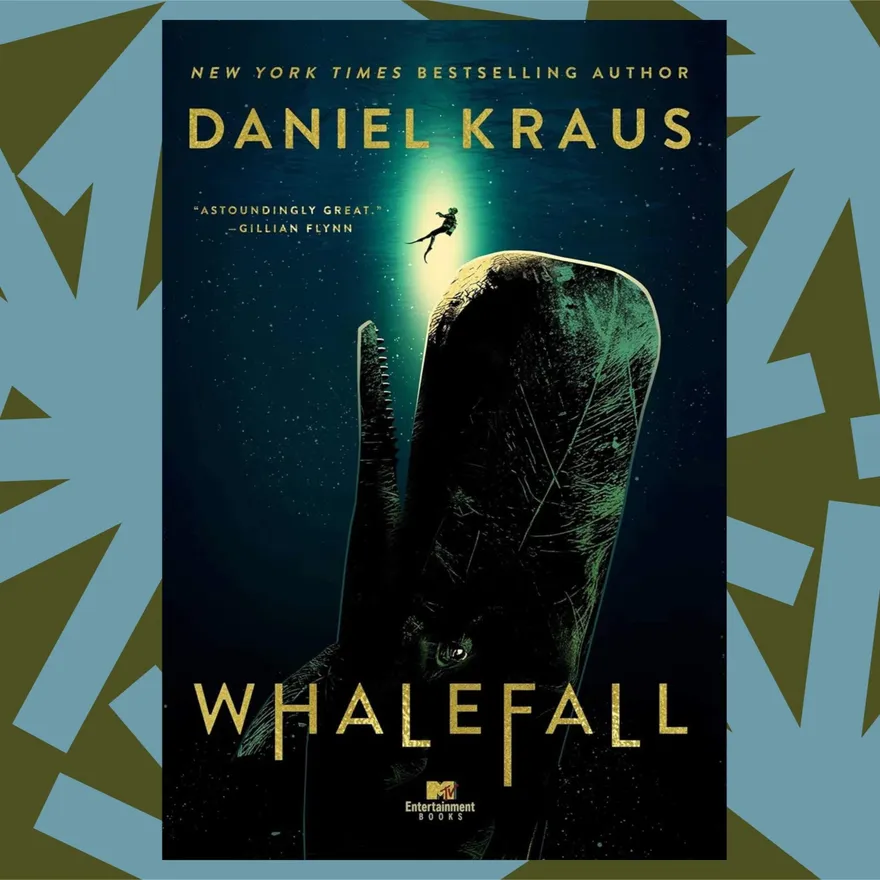

This is a preview of the Shortform summary of the May 18, 2026 episode of the NPR's Book of the Day
Sign up for Shortform to access the whole episode summary along with additional materials like counterarguments and context.
1-Page Summary
Innovative Narrative Structure
Daniel Kraus's 2023 novel "Whale Fall" employs inventive structural techniques to deepen reader engagement. The story follows a 17-year-old diver trapped with only an hour of oxygen, with each chapter beginning with a heading that displays his remaining air supply. Kraus uses short chapters to mimic gasping for air, forcing readers to viscerally experience the protagonist's desperation alongside him. The narrative alternates between present-day survival scenes inside the whale and flashbacks, providing brief emotional reprieve before plunging back into high-stakes action.
This structural innovation is a signature element of Kraus's work. His Pulitzer-winning novel "Angel Down" is written as a continuous sentence spanning the entire book, blending horror, magical realism, and science fiction. His willingness to embrace unconventional literary forms has become central to his storytelling approach.
Death and Legacy Through Whale Fall
Kraus uses the concept of whale fall as a metaphor for death and legacy. He explains that when a whale sinks to the ocean floor, its decomposing body sustains deep-sea ecosystems for centuries, symbolizing how death can foster new life. For Kraus, the most meaningful deaths leave behind something significant—family, art, or intangible impact on others.
The novel follows protagonist Jay, whose father is already dead, as he grapples with unresolved grief while fighting for his own survival. Through Jay's struggle, Kraus poses an existential question: are our lives significant enough to justify their own "whale fall"? The story becomes a meditation on whether our lives create meaningful legacies.
Father-Son Conflict at the Emotional Core
The fraught relationship between Jay and his father Mitt drives the narrative. Mitt, a diving legend, attempted to remake his son in his own image, but Jay resisted and eventually left to escape his father's influence. During Jay's absence, Mitt developed cancer and died without the two ever reconciling.
Inside the whale, Jay's extreme conditions—methane exposure, injuries, and panic—cause him to psychologically merge the whale with his father. Ayesha Rascoe notes that this reflects how parents can metaphorically "swallow" their children, consuming their existence whether the child tries to meet or escape parental expectations.
Kraus acknowledges that while Mitt caused more harm than Jay, both share responsibility for their estrangement. Jay's journey within the whale forces him to confront both the harmful and loving moments with his father, making reconciliation central to his emotional survival and potential escape.
Mercy Over Forgiveness
Kraus structures his novel into two sections—"Truth" and "Mercy"—inspired by the Book of Jonah. The "Truth" section confronts the realities of harm between Jay and Mitt, while "Mercy" explores whether understanding is possible without absolving guilt. Kraus emphasizes that reconciliation differs from simple forgiveness or acceptance, requiring instead a complex acknowledgment of wrongs without minimizing pain.
He suggests that clarity, especially when facing mortality, can lead to mercy rather than judgment. The novel explores whether humans can show compassion to those who've hurt us when recognizing our own capacity for wrongdoing, though Kraus doesn't claim to offer easy answers.
Personal Loss as Creative Inspiration
At 48, Kraus drew on recent experiences with mortality—losing a close friend and his father-in-law, and facing his sister's impending death—to shape the novel's themes. These losses made him reflect on what constitutes a "good death" and transformed abstract philosophical questions about legacy into urgent, resonant material for artistic exploration.
Kraus explains that witnessing death up close gave the narrative emotional depth and authenticity. The novel becomes a meditation on whether we've lived lives worthy of a whale fall, examining how grief, loss, and the pursuit of meaning converge when individuals must ultimately confront themselves at life's end.
1-Page Summary
Additional Materials
Counterarguments
- While inventive structural techniques can enhance engagement for some readers, others may find such devices (e.g., chapter headings with remaining air supply, short chapters) distracting or gimmicky, potentially detracting from immersion in the story.
- Alternating between present-day action and flashbacks, though intended to provide emotional reprieve, may disrupt narrative momentum or make it harder for some readers to maintain emotional investment in the protagonist's immediate predicament.
- Unconventional literary forms, such as a novel written as a continuous sentence, may alienate readers who prefer traditional narrative structures or find experimental formats inaccessible.
- The metaphor of whale fall as legacy, while evocative, may not resonate with all readers, especially those who view death and legacy through different cultural or philosophical lenses.
- The focus on a fraught father-son relationship as the emotional core may feel overly familiar or trope-driven to readers seeking more original or diverse family dynamics.
- The psychological merging of the whale and the father, while thematically rich, could be perceived as heavy-handed or lacking subtlety by some readers.
- The novel's emphasis on reconciliation and mercy, rather than forgiveness or justice, may not align with all readers' values or experiences, particularly those who believe some harms should not be met with mercy.
- Drawing heavily on personal loss for creative inspiration can lend authenticity, but may also risk making the narrative feel insular or less universally relatable for readers with different life experiences.
Actionables
- you can track your emotional state during challenging conversations by jotting down a single word or number at regular intervals, mirroring the idea of monitoring air supply, to notice how your feelings shift and when you need a break or support
- For example, during a tough talk with a family member, pause every ten minutes to write down your stress level or a word describing your mood, helping you recognize emotional patterns and manage tension before it escalates.
- a practical way to explore your own legacy is to write a brief note each week about one way your actions positively affected someone else, then reflect monthly on how these small impacts accumulate over time
- For instance, you might note when you helped a neighbor, encouraged a friend, or shared a skill, and at the end of the month, review these notes to see the ripple effect of your presence in others’ lives.
- you can experiment with alternating between recalling a difficult memory and a comforting one when reflecting on a strained relationship, to balance emotional intensity and gain a fuller perspective
- For example, if thinking about a parent brings up pain, intentionally follow that memory with a moment when you felt supported or loved, helping you acknowledge both harm and care as part of the relationship’s complexity.
Get access to the context and additional materials
Literary Structure and Innovative Narrative Techniques
Daniel Kraus’s work demonstrates a commitment to inventive narrative forms, utilizing structure and pacing to deepen reader engagement and emotional resonance.
Chapter Breaks Mimic Gasps to Highlight Protagonist's Depleting Oxygen Supply
In his 2023 novel "Whale Fall," Kraus crafts chapter breaks to mimic the sensation of gasping for air, directly mirroring the protagonist’s urgent fight for survival. The main character, a 17-year-old diver trapped with only an hour of oxygen, faces mounting desperation as each chapter begins with a heading displaying his remaining oxygen supply. This device not only infuses every moment with tension and urgency but also forces readers to constantly reckon with the diver’s dwindling chances.
Kraus intensifies this effect with short chapters, compelling readers to "gasp" alongside the protagonist. The pacing alternates between scenes inside the whale—where the diver struggles for life—and flashbacks to earlier times, providing narrative and emotional reprieve. These alternating chapters allow readers brief moments to "breathe" before plunging back into the high-stakes action, directly integrating the experience of oxygen depletion into the structure of the story itself.
Krauss's Unconventional Structural Choices as a Signature Element
Structural innovation is a hallmark of Kraus’s writing. In "Whale Fall," chapter length serves as a pacing device, making readers viscerally aware of time slipping away. Some c ...
Here’s what you’ll find in our full summary
Literary Structure and Innovative Narrative Techniques
Additional Materials
Counterarguments
- While inventive narrative structures can enhance engagement for some readers, others may find such techniques distracting or gimmicky, potentially detracting from immersion in the story.
- The use of short chapters and single-sentence chapters to mimic panic or urgency may disrupt narrative flow for readers who prefer more traditional pacing and development.
- Alternating between high-tension scenes and flashbacks could interrupt the momentum of the main plot, making it harder for some readers to maintain emotional investment in the protagonist’s immediate predicament.
- Structural experimentation, such as writing an entire novel in a single sentence ("Angel Down"), may be seen as prioritizing form over substance, potentially alienating readers who value clari ...
Actionables
- you can experiment with structuring your daily journal or to-do list using time-based headings, such as noting the exact time or countdowns for each entry, to create a sense of urgency and help you stay focused on tasks.
- a practical way to heighten emotional engagement in your personal writing is to alternate between present-moment reflections and brief flashbacks, using short entries for intense moments and longer ones for calmer periods, mimicking natural cycles of stress and r ...
Get access to the context and additional materials
Whale Fall: Death and Legacy Themes
Daniel Kraus centers his novel on the concept of whale fall, using it as a compelling metaphor for death, legacy, and the enduring impact of a life.
Whale Decay on Ocean Floor Spurs New Life, Metaphor for Meaningful Death and Impact
Whale Decomposition Sustains Ecosystems, Showcasing Life From Death
Kraus explains that a whale fall occurs when a giant whale sinks to the bottom of the ocean, and its decomposing corpse creates centuries’ worth of life for deep-sea ecosystems. This process becomes a symbol of how death can foster new existence and growth, transforming a single being’s end into the origin of myriad life forms.
The Best Deaths Create Meaning Through Legacy, Family, Art, or the Intangible Impact on Others
In Kraus's view, the most meaningful deaths are those that leave behind something significant. This might be a direct biological legacy, such as family, creative contributions like art, or simply the lasting, intangible effect a person has had on others. The whale fall stands as a metaphor for this kind of enduring legacy—the way individual lives, when ended, can continue giving to the world in profound ways.
Grappling With Mortality: From Deceased Father to Son's Survival Struggle
Jay Faces Mortality and Processes Unresolved Grief Over His Father's Death
Kraus’s narrative begins with the protagonist Jay's father already dead, setting the stage for a meditation on mortality, unresolved grief, and the search for meaning in the aftermath of loss. Jay must confront the reality of his fa ...
Here’s what you’ll find in our full summary
Whale Fall: Death and Legacy Themes
Additional Materials
Counterarguments
- The whale fall metaphor, while evocative, may oversimplify the complexities of human legacy and the diverse ways people find or create meaning in life and death.
- Not all deaths or lives result in a clear or positive legacy, and some individuals may not leave behind a tangible or intangible impact, challenging the universality of the metaphor.
- The focus on legacy and impact could unintentionally marginalize those who, due to circumstances beyond their control, are unable to leave a significant mark, raising questions about the value of lives that do not fit this narrative.
- The metaphor of whale fall is rooted in a natural, ecological process, which may not fully capture the emotional, cultural, and social dimensions of human mortality and grief.
- Some readers may find the exi ...
Actionables
- you can create a personal legacy map by drawing a simple diagram that connects your daily actions, habits, and relationships to the positive effects they might have on others, helping you visualize how your life could nourish future growth much like a whale fall sustains an ecosystem
- (for example, map out how teaching a friend a skill could lead them to help someone else, or how a kind gesture might ripple through your community).
- a practical way to reflect on your enduring impact is to write a short letter to someone you care about, sharing a lesson, story, or value you hope they’ll remember and pass on, then give it to them or keep it somewhere safe for the future
- (for example, write to a younger family member about a challenge you overcame and what you learned, or share a favorite family recipe with a note about ...
Get access to the context and additional materials
Troubled Father-Son Relationship as Emotional Core
At the heart of the narrative is the fraught relationship between Jay and his father Mitt, defined by conflict, estrangement, and the lingering need for reconciliation.
Jay and Father Mitt's Conflict: Opposing Values Lead To Estrangement
Diving Legend Mitt Sought to Remake Son Jay, Who Rejected This Path
Mitt is described as a man of the sea and a local diving legend, but also someone who felt unfulfilled by domestic life. He yearned to be at sea and attempted to mold his son Jay in his own image. Jay, however, resisted his father's attempts to define his path and did not want to become the man Mitt envisioned.
Jay Leaves to Escape His Father, Coinciding With Mitt's Illness and Death, Preventing Reconciliation Before His Father's Passing
The resulting tension and the harm caused by Mitt ultimately lead to estrangement. Jay leaves home to escape his father's influence. During this absence, Mitt develops cancer and dies. Jay never visits him on his deathbed, which leaves their relationship unresolved and loaded with regret.
Whale as Psychological Manifestation of Father in Jay's Mind
Jay Conflates the Whale With His Father Due to Methane Exposure, Injuries, and Panic Inside Its Stomach, Projecting His Paternal Relationship Onto the Creature
After Jay is swallowed by a whale, the extreme conditions—methane fumes, injuries, and panic—lead him to psychologically merge the whale with memories of his father. The whale becomes a stand-in for Mitt, as both figure into the same waters and embody inescapable aspects of Jay’s life.
Parental "Swallowing": Influence Consumes Child's Existence
Ayesha Rascoe expands on this metaphor, noting that a parent can metaphorically "swallow" a child whole, consuming their existence whether the child tries to live up to—or run away from—the parent’s expectations. Both Jay’s lived experience and his psychological ordeal inside the whale reflect how he is consumed by who his father was and the impact of his father’s influence and shortcomings.
A Narrative of Reconciliation: A Father and Son Confront Mutual Wrongdoings and Regrets For Resolution
...
Here’s what you’ll find in our full summary
Troubled Father-Son Relationship as Emotional Core
Additional Materials
Counterarguments
- The narrative may overemphasize the father's negative influence, potentially oversimplifying the complexity of parent-child relationships by focusing primarily on harm and estrangement.
- The metaphor of the whale as a stand-in for the father could be seen as heavy-handed or lacking subtlety, potentially reducing the psychological nuance of Jay's experience.
- The story's framing of reconciliation as essential for emotional resolution may not reflect all real-life experiences, as some individuals find peace without reconciliation.
- The idea that both parties are responsible for estrangement, even if one caused more harm, could be challenged as unfairly dist ...
Actionables
- you can write a two-sided letter where you first express the ways you felt shaped or consumed by a parent’s expectations, then flip the page and write from their perspective, imagining their hopes, disappointments, and regrets, to help you see both sides of the relationship and move toward emotional resolution.
- a practical way to acknowledge both harm and connection is to create a timeline of your relationship with a parent, marking moments of conflict and moments of care with different colors, so you can visually recognize the complexity and avoid focusing only on pain or only on positive memories.
- you can set aside a specif ...
Get access to the context and additional materials
Reconciliation and Mercy as Opposed To Simple Forgiveness
Daniel Kraus explores the idea that reconciliation is distinct from simple acts of forgiveness, letting go, or acceptance. His novel is structured to reflect the depth and complexity of reconciling with others, especially in the face of past harms.
Reconciliation as a Complex Process Without Forgiveness, Letting Go, or Acceptance
Kraus divides his novel into two sections, "Truth" and "Mercy," a structure inspired by his reading of the Book of Jonah. This framework serves as a way to engage with the difficult process of acknowledging wrongs, rather than offering easy absolution.
Two-part Structure of Novel, Derived From Book of Jonah: "Truth" and "Mercy" – Framework For Acknowledging Wrongs Vs. Choosing Mercy
Kraus explains that the first section, "Truth," deals with the factual realities and harms caused between the characters Jay and Mitt. He is clear that the story does not present these harms as equal—Mitt was worse to Jay than Jay was to Mitt—but insists on confronting both sets of truths. The second section, "Mercy," is presented as an opportunity to respond to these truths differently, providing a path to understanding without excusing guilt or minimizing the pain caused.
Truth Addresses the Harms and Realities, While Mercy Seeks Understanding Without Absolving Guilt
The novel’s structure demands a reckoning with the facts of what happened, but by shifting to the section titled "Mercy," it begins to question whether it is possible, or even desirable, to move toward understanding the shared ugliness of human actions. "Mercy" does not erase guilt but rather promotes a more nuanced response to wrongdoing.
Mercy Arises In Clarity, Especially At Life's End, Recognizing Shared Wrongdoing
Kraus suggests that clarity, particularly near the end of life, can lead to mercy rather than judgment. The story asks if recognition of our own faul ...
Here’s what you’ll find in our full summary
Reconciliation and Mercy as Opposed To Simple Forgiveness
Additional Materials
Counterarguments
- Some may argue that separating reconciliation from forgiveness, letting go, or acceptance is artificial, as these processes are often intertwined in real-life relationships and healing.
- The emphasis on mercy arising primarily at the end of life could be seen as limiting, as many people experience and extend mercy throughout their lives, not just when facing mortality.
- The novel’s focus on mutual acknowledgment of wrongdoing might risk creating a false equivalence between harms, even if the text claims to avoid this, potentially minimizing the experiences of those more deeply harmed.
- Some readers may believe that understanding and mercy are not always appropriate responses to serious wrongdoing, especially in cases involving abuse or systemic injustice, where accountability and justice may be prioritized over reconcilia ...
Actionables
- you can set aside a weekly “truth and mercy” reflection time to write down a recent conflict, first listing the concrete facts and harms (truth), then exploring how you might respond with understanding or mercy without excusing anyone’s actions (mercy); this helps you practice distinguishing between acknowledging harm and offering compassion.
- a practical way to prepare for future reconciliation is to keep a private log of your own mistakes and moments of judgment, then periodically review it to notice patterns and build empathy for others’ flaws, making it easier to approach difficult conversations with humility.
- yo ...
Get access to the context and additional materials
Loss and Mortality as Inspiration for the Novel
Daniel Kraus draws on deeply personal experiences with mortality to inform the themes and emotional currents of his novel, stating that these moments of loss became central to its premise.
Krauss Found Inspiration In Recent Experiences of Mortality Within His Circle
At 48, Krauss Confronted Loss Through the Deaths of a Close Friend, His Father-In-law, and His Sister's Impending Death, Central Themes to the Novel
Kraus explains that, at the age of 48, he has reached a stage in life where people close to him are starting to die. Recently, he lost a good friend and his father-in-law, and his sister is dying, with very little time left. These cumulative experiences of loss have been directly influential in shaping the novel’s engagement with mortality, making death and the process of saying goodbye integral themes.
Loss-Inspired Reflection on Whale Fall and Quality of Death Enriched the Premise of a Character Swallowed by a Whale
These encounters with mortality made Kraus reflect on the concept of "whale fall"—the ecological phenomenon of a whale’s carcass nourishing deep sea life—and consider what constitutes a “good death.” This contemplation collided creatively with the novel’s high-concept idea of a character being swallowed by a whale. The symbolism of being engulfed relates not only to the literal event, but also to being consumed by life’s losses and regrets.
Reflections on a Meaningful Death: Insights From Witnessing Mortality and End-of-life Regrets
Experience With Death Transformed Philosophical Questions About Legacy and Life's Worth Into Urgent, Resonant Material for Artistic Exploration
Kraus shares that witnessing death up close transformed abstract philosophical questions about one's legacy and the worth of a life into urgent, resonant ...
Here’s what you’ll find in our full summary
Loss and Mortality as Inspiration for the Novel
Additional Materials
Counterarguments
- While Kraus’s personal experiences with mortality inform his novel, some readers may feel that relying heavily on autobiographical grief can risk narrowing the universality of the story, making it less accessible to those with different experiences.
- The metaphor of "whale fall" and being swallowed by a whale, while evocative, may not resonate with all readers, who might find the symbolism overly literal or disconnected from their own understandings of loss and mortality.
- Some critics might argue that focusing on death and grief as central themes could overshadow other important aspects of life, such as resilience, joy, or recovery, potentially leading to a narrative that feels unbalanced or overly somber.
- The idea of a “good death” and deserving a profound ending like a whale fall could be seen as problematic, as it may uninten ...
Actionables
- you can write a private letter to someone you’ve lost or are losing, focusing on what you wish you’d said or want to say, then reflect on how this shapes your understanding of saying goodbye and your own legacy; this helps you process grief and clarify what matters most in your relationships.
- a practical way to explore your feelings about mortality is to create a simple timeline of your life’s most meaningful moments and regrets, then jot down what you’d want to be remembered for and what you’d still like to change; this encourages honest self-reflection about your life’s worth and direction.
- you can spend time in nature observing how li ...
Get access to the context and additional materials


Create Summaries for anything on the web
Download the Shortform Chrome extension for your browser
