

Reflecting on 30 years of 'The Golden Compass' with Sir Philip Pullman
In this episode of NPR's Book of the Day, Sir Philip Pullman reflects on his fiction, particularly exploring the symbolic significance of daemons and Dust in his work. Pullman explains how daemons—external manifestations of the soul—reveal fundamental aspects of human nature and identity, while Dust represents consciousness, creativity, and maturation. The conversation also examines Pullman's critique of institutional power when it's used to control rather than serve people.
The episode traces Lyra's journey from an adventurous child in "The Golden Compass" to a wounded adult in "The Book of Dust" trilogy, exploring themes of imagination, self-discovery, and psychological healing. Pullman also discusses his interest in panpsychism and the nature of consciousness, suggesting that his exploration of these philosophical questions may not be finished. The discussion offers insight into how Pullman uses fantasy to examine questions about identity, authority, and what makes life meaningful.
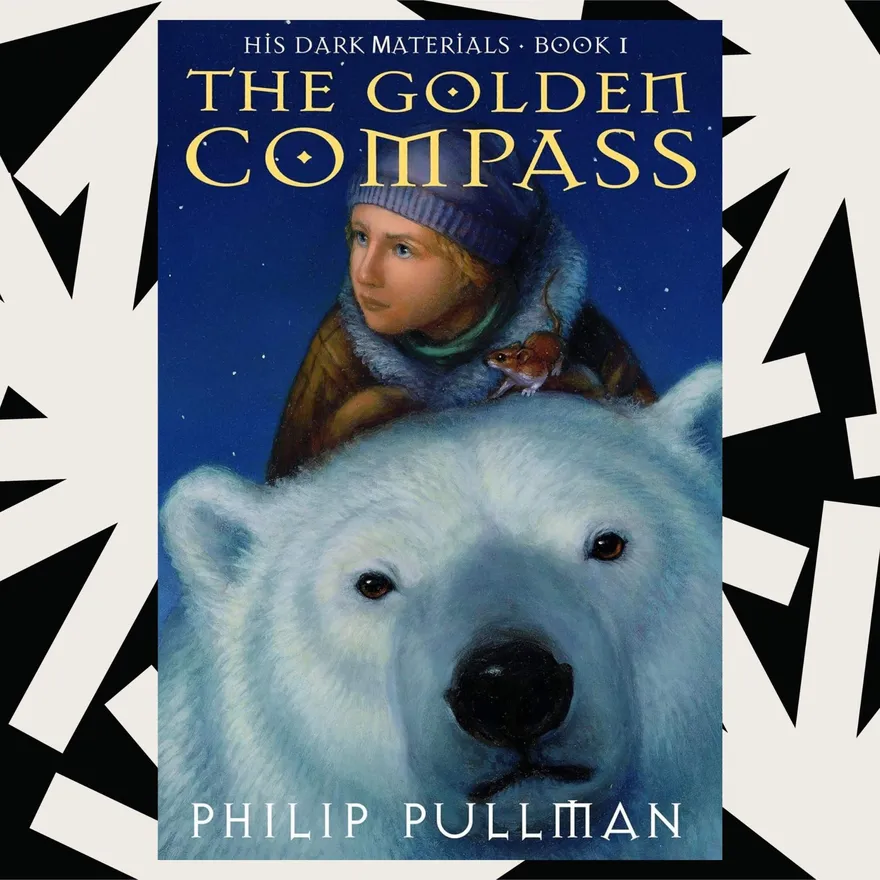

This is a preview of the Shortform summary of the May 14, 2026 episode of the NPR's Book of the Day
Sign up for Shortform to access the whole episode summary along with additional materials like counterarguments and context.
1-Page Summary
Demons and Dust: Symbols of Soul and Consciousness in Pullman's Fiction
Philip Pullman's fiction uses demons and Dust to explore profound questions about identity, innocence, experience, and consciousness.
Demons Reveal Essential Truths About Human Nature
Pullman explains that demons arose from a practical storytelling need, inspired by the Greek "daimon"—a guiding spirit like Socrates' daimonic voice. He wanted Lyra to have a companion she could interact with dramatically without introducing additional human characters. In Lyra's world, every human has a demon—a physical manifestation of the soul that cannot be separated without causing severe psychological harm.
Demons serve a crucial symbolic function. Children's demons shapeshift into any animal form, representing the fluid possibilities of childhood. Upon puberty, the demon settles into one permanent form, marking the irreversible transition from innocence to experience. This fixed form reveals essential truths about personality—for instance, a snake demon suggests subtlety and refinement rather than evil.
The concept proves generative for storytelling. Pullman explores scenarios where demons become ill, disappear, or conflict with their humans, depicting deep psychological wounds and illustrating that harmony with one's inner self is vital for well-being.
Dust Symbolizes Consciousness, Creativity, and Maturation
Pullman connects Dust to William Blake's philosophy, especially the tension between innocence and experience. In his narrative, Dust embodies consciousness, curiosity, creativity, maturation, and love—the mysterious force linking imagination to creative vitality.
The Magisterium fears Dust because it represents self-awareness and independent thought that threaten their control. Their hostility is a metaphor for any authority's resistance to the unpredictable forces of creativity and growth.
Pullman's Critique of Religion and Institutional Power
Pullman offers a pointed critique of how institutional power, especially when cloaked in religious authority, can become corrupt and oppressive.
Pullman Contrasts Personal Belief with Institutional Control
Pullman clarifies that his concern isn't with personal beliefs but with institutional actions. He states, "What troubles me about religion is not what people believe, but what they do to gain power over other people." The problem emerges when belief systems are manipulated to enforce conformity and dominance.
Pullman critiques the union of religion and political authority, explaining that when institutions act "in the name of God," they can justify any action beyond moral scrutiny. Indira Lakshmanan describes Pullman's fictional Magisterium as a corrupt religious institution that prioritizes authority over human flourishing, fearing anything that challenges their control.
Lyra's Evolution: From Adventurous Child to Wounded Adult
Lyra transforms from a bold, adventurous child to a wounded adult struggling to reconnect with her imagination and truest self.
Lyra's Coming-of-Age Journey
Lyra begins as a rebellious pre-adolescent in "The Golden Compass," seeking to rescue a kidnapped friend while uncovering a sinister plot by the Magisterium. Her adventures form the core of the "His Dark Materials" trilogy, with the conclusion seeing her return to Oxford to face an uncertain future.
The Book of Dust Explores Lyra's Adult Struggles
Pullman's second trilogy, "The Book of Dust," examines the psychological toll of Lyra's earlier adventures. In "The Rose Field," adult Lyra is separated from her demon Pantalaimon, symbolizing her disconnection from imagination and her authentic self. Pantalaimon accuses her of losing her imagination and leaves to search for it, forcing Lyra on a difficult journey of self-discovery.
Pullman reveals that Lyra's quest is about rediscovering imagination—the true essence of Dust and conscious life itself. By the end, Lyra succeeds in reacquiring her imagination, showing that imagination remains at the core of what makes life meaningful.
Exploring Consciousness and Panpsychism
Pullman's narratives probe profound questions about consciousness. Lakshmanan highlights the notion of panpsychism in Pullman's work—the idea that every particle might possess some degree of consciousness. Pullman draws inspiration from dark matter, hoping science wouldn't resolve its mystery before he finished writing. Dust represents consciousness, imagination, and awareness, though the distinction between its story meaning and possible real-world correlations remains unresolved.
Lakshmanan asks whether these philosophical explorations might lead Pullman to revisit Lyra's world. Pullman acknowledges he might not be finished with these characters and questions, stating that some things still need settling. The evolution of panpsychism and the nature of consciousness remain fascinating inquiries for him, leaving space for future stories exploring universal consciousness and the connections between being and reality.
1-Page Summary
Additional Materials
Counterarguments
- Some critics argue that Pullman's depiction of religious institutions as uniformly corrupt and oppressive is overly simplistic and does not account for the diversity and positive contributions of real-world religious organizations.
- The symbolism of demons as external manifestations of the soul may be seen as reductive, potentially oversimplifying the complexity of human psychology and identity.
- The idea that imagination and creativity are inherently in conflict with authority or institutions may overlook examples where institutions have fostered or protected creative expression.
- Pullman's use of panpsychism as a narrative device is philosophically controversial and not widely accepted among scientists or philosophers of mind.
- The narrative focus on the loss and reacquisition of imagination as the central struggle of adulthood may not resonate with all readers, some of whom may find meaning and fulfillment through other aspects of life.
- The portrayal of Dust as a force representing consciousness and creativity is ambiguous and may be criticized for lacking clear definition or scientific grounding.
Actionables
- you can create a daily check-in ritual where you imagine your own inner companion as a shape-shifting animal that reflects your current mood or state of mind, helping you notice shifts in your identity and emotional well-being over time; for example, if you feel curious and energetic, you might picture a fox, while on anxious days, you might see a small bird, allowing you to track and reflect on your personal growth and transitions.
- a practical way to challenge institutional authority in your daily life is to keep a private log of moments when you notice rules or expectations that seem to suppress creativity, curiosity, or independent thought, then brainstorm small, safe ways to question or gently subvert these norms—such as suggesting a new approach at work or respectfully asking why a rule exists.
- you can nurture your imagination and sense of wonder by setting aside ten minutes each week to write or voice-record a short story or scenario that explores what it would be like if everyday objects or places had their own consciousness, encouraging you to see the world with fresh eyes and deepen your appreciation for creativity and awareness.


Get access to the context and additional materials
Demons and Dust as Symbols of Soul, Innocence, Experience, and Consciousness in Fiction
Philip Pullman’s fiction uses the concepts of demons and Dust to symbolize aspects of the soul, innocence and experience, and the evolution of consciousness. Both motifs allow Pullman to explore profound questions of identity, creativity, and the cost of growth.
Demons Reveal Essential Truths About Human Nature and Identity
Philip Pullman shares that the idea of demons arose from his practical need as a storyteller, inspired by the Greek word “daimon”—a lesser god or guiding spirit as in Socrates’ daimonic voice. Pullman wanted to create dramatic interactions for Lyra without introducing additional human characters that might detract from her central role. He thus imagined a guardian-angel-like or spirit-animal companion visible and tangible to everyone in Lyra’s world, with whom Lyra could talk, argue, and share crucial moments—making the narrative more dynamic and emotionally resonant.
In Lyra's world, every human has a demon, which is a physical and visible manifestation of the soul. This demon cannot be separated from its human without causing great psychological harm—a foundational truth that underscores their deep existential connection.
Demons play a crucial symbolic role. For children, their demons are shapeshifters, able to assume any animal form, representing the open, innocent, and fluid possibilities of childhood. Upon reaching puberty, the demon settles into one permanent form, signifying the irreversible transition from innocence to experience. This fixed form reveals essential truths about the individual. For instance, a demon taking the form of a snake does not denote evil but suggests a subtle, quiet, and refined personality, as opposed to a loud or obvious one.
The demon concept proves generative for storytelling. Pullman explores what happens to a person if their demon becomes ill, disappears, or if the human is in conflict with it. Such scenarios open up possibilities for depicting deep psychological wounds, illustrating that harmony with one’s inner self is vital for well-being. Pullman’s evolving treatment of demons allows him, even through the end of his trilogy, to discover new dimensions and meanings in his own imaginative creation.
Dust Symbolizes Consciousness, Creativity, Knowledge, Maturation, and Love
Pullman connects the symbolism of Dust to the philosophi ...
Here’s what you’ll find in our full summary
Demons and Dust as Symbols of Soul, Innocence, Experience, and Consciousness in Fiction
Additional Materials
Counterarguments
- Some critics argue that Pullman’s depiction of demons as external manifestations of the soul may oversimplify the complexity of human psychology by assigning fixed traits to individuals based on their demon’s settled form.
- The symbolism of Dust as inherently positive (creativity, knowledge, love) could be seen as one-sided, potentially neglecting the ambiguous or destructive aspects of consciousness and experience.
- The narrative’s framing of the Magisterium as wholly antagonistic to Dust and self-awareness has been critiqued for presenting a binary view of authority versus individuality, which may not account for the nuanced roles institutions can play in fostering creativity or knowledge.
- The association of puberty with the loss of innoc ...
Actionables
- you can create a daily journal where you describe your current mood, thoughts, or challenges as if they were embodied by an animal or creature, helping you externalize and better understand your inner state and personal growth over time
- (for example, if you feel adaptable and curious one day, you might write about a fox companion; if you feel steady and protective another day, you might describe a bear—this helps you notice patterns and shifts in your identity and emotional landscape).
- a practical way to explore your transition from innocence to experience is to write a letter to your younger self and another to your future self, reflecting on how your core traits have evolved and what you hope remains constant as you mature
- (this exercise helps you recognize which aspects of your personality have settled and which remain fluid, mirroring the symbolic settling of a demon).
- you can set aside time e ...

Get access to the context and additional materials
Pullman's Critique of Religion and Power's Corrupting Influence on Institutions
Philip Pullman offers a pointed critique of the ways in which institutional power, especially when cloaked in religious authority, can become corrupt and oppressive. His work highlights the dangers inherent when institutions use religion as a tool for control rather than as a framework for personal belief and ethical living.
Pullman Contrasts Personal Beliefs and Institutional Power Using Religion For Control and Domination
Pullman's Focus Is on Institutional Actions For Power and Conformity, Not Individual Beliefs
Pullman clarifies that his concern is not with individuals' personal beliefs, but with the actions institutions take to assert control. He states, "What troubles me about religion is not what people believe, but what they do to gain power over other people." For Pullman, the problem emerges not at the level of faith but when belief systems are manipulated to enforce conformity and dominance over others.
Religion and Political Power: Justifying Actions Beyond Moral Scrutiny
Pullman critiques the union of religion and political authority, explaining, "The real difficulty comes when religion meets power, or acquires power, political power." In Pullman's view, as soon as an institution begins to act "in the name of God," it can justify any action, escaping moral scrutiny. This convergence enables those in power to act without opposition, as questioning their authority is framed as opposition to divine will itself.
Magisterium in Pullman's Universe: A Portrait of Religious Corruption Prioritizing Authority Over Human Flourishing
Indira Lakshmanan describes the world of Pullman’s fiction, in which ...
Here’s what you’ll find in our full summary
Pullman's Critique of Religion and Power's Corrupting Influence on Institutions
Additional Materials
Clarifications
- Philip Pullman is a British author best known for his fantasy series "His Dark Materials." His work often explores themes of religion, authority, and individual freedom. Pullman is recognized for challenging traditional religious and institutional power structures through his storytelling. He is also a public intellectual who frequently comments on the role of religion in society.
- The Magisterium is a powerful religious organization in Philip Pullman’s "His Dark Materials" series. It acts as a totalitarian regime, controlling knowledge and suppressing dissent. The institution enforces strict dogma and censors ideas that threaten its authority. Its role symbolizes the dangers of combining religious authority with political power.
- In Pullman's "His Dark Materials" series, Dust is a mysterious, conscious particle linked to human consciousness and original sin. It symbolizes knowledge, experience, and the soul's connection to the universe. The Magisterium fears Dust because it challenges their control by representing free will and curiosity. Dust's significance lies in its role as a bridge between the physical and spiritual worlds.
- Throughout history, many political rulers have used religion to legitimize their authority and unify their subjects. Religious institutions often held significant social and political power, influencing laws and governance. This fusion sometimes led to abuses, as dissent against rulers was framed as heresy or blasphemy. Such dynamics created environments where questioning authority was dangerous, reinforcing institutional control.
- Personal religious belief refers to an individual's private faith, values, and spiritual experiences. Institutional religious authority involves organized bodies, like churches or religious governments, that establish rules and doctrines for followers. Institutions often wield power by enforcing conformity and controlling behavior under the guise of religious legitimacy. This can lead to the use of religion as a tool for social or political control, distinct from personal faith.
- Institutions use religion to enforce conformity by setting strict rules based on religious doctrines that members must follow. They often claim these rules are divinely mandated, discouraging questioning or d ...
Counterarguments
- Not all religious institutions become corrupt or oppressive when they gain power; many have historically promoted social justice, education, and humanitarian efforts.
- The union of religion and political power has, in some contexts, led to positive social reforms and the protection of human rights.
- Individuals within religious institutions often act out of genuine faith and a desire to serve others, rather than a drive for control or conformity.
- The portrayal of religious institutions as primarily self-serving or oppressive may overlook the diversity and complexity of religious organizations and their roles in society.
- Fictional representations like the Magisterium are not di ...


Get access to the context and additional materials
Lyra's Evolution: Adventurous Child to Wounded Adult Discovering Imagination
Lyra, the protagonist of Philip Pullman's fantastical universe, embarks on a journey that transforms her from a bold, adventurous child to a wounded adult struggling to reconnect with her imagination and her truest self.
Lyra's Quest to Rescue a Friend Conflicts With the Magisterium's Agenda
Lyra's Adventures in the Golden Compass Trilogy: A Coming-Of-age Journey Challenging Authority and Uncovering Conspiracies
Lyra begins as a precocious, rebellious pre-adolescent abandoned by her powerful parents and raised as an orphan inside an Oxford University college. Her story, introduced in "The Golden Compass," follows her as she seeks to find a kidnapped friend, encountering talking animal companions and stumbling upon a sinister plot to sever children from their animal dæmons. These adventures form the core of Pullman’s trilogy, where Lyra's coming-of-age unfolds amid her challenges to authority and uncovering of dark conspiracies orchestrated by the oppressive Magisterium. The trilogy, "His Dark Materials," has captivated readers with its epic tale of self-discovery and resistance to the status quo.
Trilogy's Conclusion: Lyra Returns to Oxford, Facing Post-Transformative Future
At the trilogy’s conclusion, Lyra returns to Oxford after her extraordinary adventures. Faced with the prospect of resuming an ordinary life after transformative events, she finds herself at a crossroads, setting the stage for her continued evolution.
The Book of Dust Explores how Extraordinary Adventures Leave Lasting Wounds, Highlighting Lyra's Adult Struggles
Later Books in the Book of Dust Series Depict a Damaged Lyra, Separated From Pantalaimon, On a Difficult Journey Toward Self-Discovery, Especially In the Rose Field
Pullman’s second trilogy, "The Book of Dust," delves into the psychological toll of Lyra’s earlier adventures. In the most recent books, particularly "The Rose Field," Lyra is now an adult grappling with deep personal wounds. She is separated from Pantalaimon, her beloved dæmon, and must embark on a difficult hero’s journey, struggling with her internal beliefs and sense of self. The adult Lyra is portrayed as a profoundly damaged character navigating a new quest—not just in the external world, but within her own psyche.
Lyra's Separation From Her Demon Symbolizes Her Disconnection From Imagination, Wonder, and Authentic ...
Here’s what you’ll find in our full summary
Lyra's Evolution: Adventurous Child to Wounded Adult Discovering Imagination
Additional Materials
Counterarguments
- Some readers may argue that Lyra’s transformation from adventurous child to wounded adult is not as fully developed or convincing in "The Book of Dust" as it is in the original trilogy, with some critics feeling her adult characterization lacks the depth or continuity expected.
- The depiction of Lyra’s separation from Pantalaimon as a symbol for loss of imagination and self may be seen as overly literal or simplistic by some, potentially reducing the complexity of adult psychological struggles.
- The focus on imagination as the essence of Dust and conscious life could be interpreted as narrowing the broader philosophical and theological themes present in "His Dark Materials," which originally engaged with issues of authority, free will, and the nature of the soul.
- Some fans and critics have expressed disappointment that the later books revisit Lyra’s internal struggles rather than expanding the external world-building and adventure that characterized the origi ...
Actionables
- you can schedule a weekly “imagination hour” where you deliberately set aside time to do something playful and creative that you haven’t tried since childhood, like inventing a game, drawing imaginary creatures, or making up stories, to reconnect with your sense of wonder and creativity.
- a practical way to notice and challenge your own “Magisterium”—the internalized voices of authority or conformity—is to keep a daily log of moments when you feel pressured to suppress your ideas or curiosity, then write a short response as if you were defending your right to imagine and question.
- you can create a simple ritual for transitions, such as ...
Get access to the context and additional materials
Exploring Consciousness, Imagination, and Panpsychism
Pullman Explores Unresolved Profound Questions About Consciousness in His Narratives and Scientific Understanding
Philip Pullman’s narratives continually probe unresolved and profound questions about consciousness. Indira Lakshmanan highlights the notion of panpsychism in Pullman’s work—specifically, the idea that every particle, or at least every living particle, might possess some degree of consciousness. In the “Book of Dust” trilogy, Pullman explores panpsychism by suggesting that consciousness could inhere in matter itself.
Pullman draws inspiration from scientific mysteries, notably dark matter. At the outset of his writing, he was motivated by the idea of dark matter as the missing matter in the universe that affects gravitation. He hoped that science would not resolve the mystery of dark matter before he finished his book. Even as scientific understanding advances, Pullman notes that crucial questions about what dark matter—or “Dust”—represents remain unsettled.
Dust, as conceived in Pullman’s universe, stands for consciousness, imagination, and awareness. Yet the distinction between what Dust means within the story and the possible physical forces or particles correlating in the real world remains mysterious and unresolved.
Pullman Explores Philosophical Questions, Leaving Room for Future Stories on Consciousness, Imagination, and Reality
Lakshmanan asks Pullman whether these philosophical explorations might lead him to revisit Lyra’s world. Pullman acknowledges ...
Here’s what you’ll find in our full summary
Exploring Consciousness, Imagination, and Panpsychism
Additional Materials
Counterarguments
- The notion of panpsychism, while philosophically intriguing, lacks empirical evidence and is not widely accepted within the scientific community.
- Using dark matter as a metaphor for consciousness may conflate scientific concepts with speculative philosophy, potentially leading to misunderstandings about the nature of scientific inquiry.
- The unresolved nature of "Dust" in Pullman’s universe, while effective for storytelling, may frustrate readers seeking more concrete or scientifically grounded explanations.
- The idea that every particle or living particle possesses consciousness is controversial and challenges prevailing neuroscientific and philosophical understandings of consciousness, which typically associate it with complex biological systems.
- Some critics may argue that Pullman’s blending of scienti ...
Actionables
- you can keep a daily log where you briefly note moments when you sense awareness or intention in non-human things (like a plant turning toward light or a device behaving unexpectedly), then reflect on how these observations shift your sense of what consciousness might be
- This helps you personally explore the idea that consciousness could exist in matter or living particles, and lets you notice patterns in your own thinking about awareness.
- a practical way to engage with unresolved mysteries is to write down one big question about consciousness or imagination that intrigues you, then set a timer for five minutes to brainstorm wild, creative answers without worrying about logic or correctness
- This exercise encourages you to embrace uncertainty and let your imagination roam, mirroring the open-ended exploration of consciousness and scientific myste ...
Get access to the context and additional materials

 1-Page Summary
- Demons and Dust as Symbols of Soul, Innocence, Experience, and Consciousness in Fiction
- Pullman's Critique of Religion and Power's Corrupting Influence on Institutions
- Lyra's Evolution: Adventurous Child to Wounded Adult Discovering Imagination
- Exploring Consciousness, Imagination, and Panpsychism
Create Summaries for anything on the web
Download the Shortform Chrome extension for your browser
