

In 'The Future is Peace,' tourism paves a way forward for Israelis and Palestinians
In this episode of NPR's Book of the Day, Maoz Inon and Aziz Abu-Sarah discuss their unlikely partnership and their book exploring tourism as a path to peace between Israelis and Palestinians. Both men have experienced profound personal loss—Maoz lost his parents in the October 7th Hamas attacks, while Aziz lost his brother to Israeli forces as a child. Rather than seeking revenge, they chose to forge an alliance based on shared humanity and a commitment to peacebuilding.
The conversation covers how travel and tourism can break down walls of ignorance, the social costs both men face for their peace advocacy, and the importance of mutual historical understanding between Israelis and Palestinians. Drawing on examples from other historically intractable conflicts, they argue that peace is not only possible but inevitable, emphasizing that the real question is how many lives will be lost before it arrives.
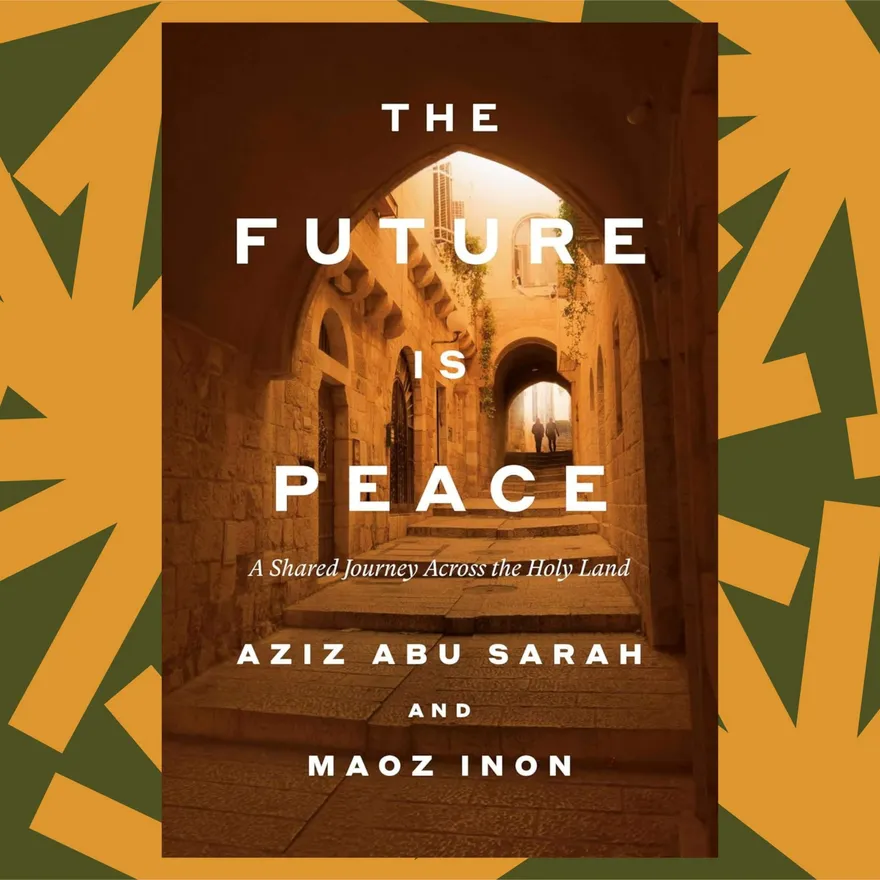

This is a preview of the Shortform summary of the May 13, 2026 episode of the NPR's Book of the Day
Sign up for Shortform to access the whole episode summary along with additional materials like counterarguments and context.
1-Page Summary
Personal Transformation Through Grief and Forgiveness
Maoz Inon lost his parents in the Hamas attacks of October 7th when their kibbutz was stormed and their home burned. Rather than seeking vengeance, he experienced a vision of collective mourning where humanity's tears could wash away blood and create a path to peace. Aziz Abu-Sarah lost his older brother Taysir to Israeli forces as a child, which initially filled him with anger. However, after meeting a Jewish Israeli teacher who recognized his humanity and Palestinian identity, he realized the true division isn't between Israelis and Palestinians, but between those dedicated to justice, equality, and peace and those who are not.
During Maoz's darkest hours of grief, Aziz reached out with compassion—a message Maoz describes as a lifeline that saved him from drowning. Maoz reflects that while he lost his parents and many friends, he gained Aziz as a brother. Both men chose to forge an alliance rather than perpetuate cycles of hatred, recognizing the humanity of individuals instead of maintaining animosity based on group identity.
Travel and Tourism as Peacebuilding Tools
Maoz reflects on traveling the world twice with his wife Shlomit and a profound realization during a 2014 stay with an indigenous family in Ecuador. Despite knowing so much about communities elsewhere, they didn't have a single Palestinian friend back home in Israel. Maoz describes living "within walls of ignorance," which breed fear and hatred. This led them to see tourism as a means to "open gates" and enable Israelis and Palestinians to meet as equals and discover common ground.
Aziz provides examples of transformative relationships through shared work. During one Israeli election, Israeli tour guides offered their votes to Palestinian co-guides who had no voting rights, acknowledging their shared fate. In another instance, an Israeli Jewish couple chose their Palestinian tour guide friend to officiate their wedding, transcending religious and ethnic divisions.
However, pursuing peace comes with social costs. Maoz recounts facing criticism from Jewish-Israeli friends, colleagues, and family who accused him of betrayal. Aziz similarly receives criticism from Palestinians who question working with Israelis during difficult times like the situation in Gaza. Both argue that peacebuilding demands not just dialogue but action that challenges injustice.
Mutual Historical Understanding
Aziz recounts when his father questioned whether the Holocaust happened during a peace meeting. Israeli peace activist Rami'l-Hanan, whose daughter died in a suicide bombing and whose father survived Auschwitz, invited Aziz's father to visit the Holocaust Museum with no pressure to agree, only to listen. All 70 Palestinians present agreed to visit, and the experience was emotionally challenging. This openness led Israelis to reciprocally visit a Palestinian village destroyed in 1948, creating space for deeper conversations.
Aziz emphasizes that Israelis must likewise acknowledge the Nakba—the 1948 displacement of 750,000 Palestinians—which many continue to ignore or deny. Maoz affirms this denial, stating plainly that Israelis he grew up with are ignoring the Nakba. Despite these diverging historical perspectives, both stress that peace doesn't require complete agreement on history. Instead, their work focuses on the future as a place for both peoples to exercise agency and create meaningful change.
The Feasibility and Inevitability of Peace
Maoz asserts that history proves all conflicts eventually end, regardless of duration. According to Maoz, this pattern shows peace is inevitable, and the essential questions are when it will happen and how many lives will be lost before it does. Aziz highlights lessons from historically intractable conflicts like Northern Ireland, South Africa, and the Egypt-Israel peace agreement. In each case, just prior to peace agreements, public sentiment overwhelmingly doubted resolution was possible—yet every conflict was eventually solved.
Drawing on extensive experience in conflict zones, Aziz emphasizes the Israeli-Palestinian conflict is not uniquely unsolvable. Through founding Interact, their joint organization dedicated to studying and advancing peace processes, they demonstrate that trust-building and pursuit of shared goals are possible even amid violence and trauma. Their relationship itself models that conflict is not an inevitable or permanent condition, but one that can be consciously addressed and resolved through human agency and cooperation.
1-Page Summary
Additional Materials
Counterarguments
- While individual acts of forgiveness and bridge-building are admirable, they may not address the structural and systemic inequalities that perpetuate the conflict.
- Tourism as a peacebuilding tool can sometimes be criticized for promoting "normalization" without addressing underlying injustices or power imbalances.
- Some critics argue that focusing on interpersonal relationships and dialogue can inadvertently depoliticize the conflict and shift attention away from necessary political solutions.
- The assertion that "all conflicts eventually end" may be seen as overly optimistic or dismissive of the unique complexities and duration of the Israeli-Palestinian conflict.
- Acts of mutual recognition and understanding, such as visiting sites of historical trauma, are important but may not be sufficient to change broader societal attitudes or policies.
- The idea that peace does not require agreement on historical narratives may be challenged by those who believe that acknowledgment and accountability for past injustices are prerequisites for genuine reconciliation.
- Some Palestinians and Israelis view cross-community initiatives with suspicion, seeing them as undermining their respective national causes or as a form of betrayal.
- The examples provided focus on individuals and small groups, which may not be representative of broader societal attitudes or capable of scaling up to effect widespread change.
Actionables
- you can reach out to someone from a community you’ve never interacted with and invite them to share a meal or coffee, focusing on listening to their personal story rather than discussing politics or history; this helps break down walls of ignorance and builds genuine human connection.
- a practical way to challenge inherited narratives is to read a memoir or watch a documentary created by someone from the “other side” of a conflict, then write a short reflection on how their experiences compare to your assumptions, and share this reflection with a friend or family member to spark a new conversation.
- you can create a small “peace ledger” where you record every time you choose empathy over anger in daily interactions, noting what triggered your reaction and how you responded differently; over time, this helps you notice patterns and reinforces conscious choices that support peacebuilding in your own relationships.
Get access to the context and additional materials
Personal Transformation Through Grief and Forgiveness
Authors Experienced Loss yet Chose Reconciliation Over Vengeance
Maoz Inon recounts the devastating loss of his parents in the Hamas attacks of October 7th. Their kibbutz was stormed, his parents were shot, and their home burned to the ground. Despite the enormity of this grief, rather than seeking vengeance, Maoz experienced a vision of collective mourning and healing. Through his tears, he envisioned all of humanity sharing in his pain, with their tears washing away blood and creating a purified ground—a symbolic path to peace and reconciliation.
Aziz Abu-Sarah describes the loss of his beloved older brother, Taysir, who was killed by Israeli forces when Aziz was a child. This loss originally filled Aziz with anger and a desire for vengeance, but years later, during a Hebrew class, he met an Israeli teacher—a Jewish woman—who recognized his humanity and Palestinian identity. Her kindness and recognition helped him understand the fallacy of rigid divisions between groups. Aziz realized that the true division lies between those dedicated to justice, equality, and peace and those who are not, rather than between Israelis and Palestinians.
Both men chose to recognize the humanity of individuals instead of perpetuating animosity based on group identity.
Message Sparks Partnership in Darkness
During the darkest hours of mourning his parents, Maoz received a message from Aziz, who reached out with compassion. Maoz describes this message as more than digital communication—it was a lifeline that saved him from drowning in grief. Maoz reflects that although he lost his parents and many childhood friends, he gained Aziz as a brother. Rather than allowing their losses to lead to a cycle of revenge, both men saw the ...
Here’s what you’ll find in our full summary
Personal Transformation Through Grief and Forgiveness
Additional Materials
Counterarguments
- While reconciliation and forgiveness are admirable, some may argue that justice and accountability for perpetrators are necessary for true healing and prevention of future violence.
- The emphasis on transcending group identities may risk overlooking the structural and systemic inequalities that contribute to ongoing conflict.
- Not all individuals affected by violence may be emotionally or psychologically able to choose reconciliation over vengeance, and expecting this response could be seen as unrealistic or dismissive of their pain.
- The narrative may unintentionally place the burden of peace and reconciliation on victims rather than addressing the responsibilities of those who commit or enable violence.
- Focusing on individual transformation an ...
Actionables
- you can write a letter of empathy to someone from a group you’ve felt distant from, focusing on shared human experiences like loss or hope, to practice seeing beyond group identities and foster personal connection.
- a practical way to challenge “us versus them” thinking is to keep a daily journal where you note moments when you catch yourself making assumptions about others based on group labels, then intentionally reframe those thoughts by identifying what you might have in common with them as individuals.
- you can create a small ritual for yourself—such as lighting a c ...
Get access to the context and additional materials
Travel and Tourism as Peacebuilding Tools
Travel and tourism can be powerful tools for peacebuilding by fostering direct contact and shared experiences between individuals from divided communities. Through these interactions, ignorance, fear, and hatred can be dismantled, paving the way for true coexistence and understanding.
Direct Contact and Shared Experiences Bridge Cultural Divides and Dismantle Ignorance
Maoz Inon reflects on traveling the world twice with his wife, Shlomit, and how these journeys brought about a profound realization. While staying with an indigenous family in Ecuador in 2014, they learned about the family's lifestyle, culture, heritage, and food. Inon recognized an irony: despite knowing so much about indigenous communities elsewhere, they did not have even a single Palestinian friend back home in Israel. They lived "within walls," both literally and metaphorically. Inon describes these as "walls of ignorance," which breed fear and lead to hatred—the prevailing reality in their society. This revelation led them to decide that tourism could be used as a means to "open gates" and break down these barriers, enabling Israelis and Palestinians to meet as equals and discover common ground. Through travel and shared experiences, they saw that the walls of separation were actively preventing understanding and dialogue, and that tourism could be a vehicle for changing this reality. When both sides engage as partners, Israelis and Palestinians can see each other as allies instead of enemies.
Peacebuilding Examples: Shared Work as Transformative Relationships
Aziz Abu-Sarah provides specific examples of how shared work and tourism can create transformative relationships. For instance, during one Israeli election, Israeli guides recognized that their Palestinian co-guides, though impacted by Israeli policies, had no right to vote. As a gesture of solidarity, some Israeli guides offered their votes to their Palestinian counterparts, acknowledging their shared fate and the importance of Palestinians' voices.
Another powerful story involves an Israeli Jewish couple searching for a rabbi to officiate their wedding. They realized their closest friend was not a rabbi, but a Palestinian tour guide. They chose him to officiate the Jewish wedding, an act that transcended religious and ethnic divisions. These untold stories reveal that, through genuine cooperation and friendship, people from both communities can move beyond enmity and begin to see one another as partners.
Peacebuilding's Social Costs: Bridging Divides Seen As Betrayal
Pursuing ...
Here’s what you’ll find in our full summary
Travel and Tourism as Peacebuilding Tools
Additional Materials
Clarifications
- The Israeli-Palestinian conflict is a long-standing struggle over land and national identity in the region historically known as Palestine. It began in the early 20th century with competing Jewish and Arab nationalist movements, escalating after the establishment of Israel in 1948, which Palestinians call the Nakba (catastrophe) due to mass displacement. The conflict involves disputes over borders, refugees, security, and mutual recognition, leading to repeated violence and failed peace efforts. Deep-seated historical grievances and differing narratives continue to fuel tensions between Israelis and Palestinians.
- The Nakba, meaning "catastrophe" in Arabic, refers to the mass displacement of Palestinians during the 1948 Arab-Israeli War. Over 700,000 Palestinians were forced to flee or were expelled from their homes, leading to a long-lasting refugee crisis. It is a central event in Palestinian collective memory and identity, symbolizing loss and injustice. The Nakba remains a deeply sensitive and contested issue in Israeli-Palestinian relations.
- Palestinians who are citizens of Israel have the right to vote in Israeli elections. However, Palestinians living in the occupied territories of the West Bank and Gaza Strip do not have Israeli citizenship and therefore cannot vote in Israeli national elections. These territories are under different administrative and legal control, limiting political rights for their residents. This distinction causes disparities in political participation between Palestinians inside Israel and those in the occupied territories.
- Israeli society is deeply divided along ethnic, religious, and national lines, primarily between Jewish and Palestinian populations. Education systems are largely separate, with Jewish and Arab schools following different curricula that often omit or present conflicting historical narratives. This segregation reinforces social divides and limits mutual understanding between communities. These divisions contribute to persistent mistrust and hinder peacebuilding efforts.
- Peacebuilding between Israelis and Palestinians faces challenges like deep-rooted historical grievances and ongoing political conflict. Social pressures often label peace efforts as betrayal, causing isolation or backlash from one’s own community. Structural inequalities and differing narratives about events like the Nakba complicate mutual understanding. Security concerns and violence also pose risks to trust-building and sustained cooperation.
- "Walls of ignorance" and "walls of separation" are metaphors for social and psychological barriers that prevent understanding and connection between groups. These "walls" represent prejudices, stereotypes, and lack of knowledge that isolate communities from each other. They contribute to fear, mistrust, and hostility by keeping people divided and uninformed about each other's lives and perspectives. Breaking down these walls involves fostering direct interaction and empathy to build mutual respect and peace.
- Tourism in conflict zones allows people from opposing sides to meet in neutral, informal settings, reducing stereotypes and humanizing "the oth ...
Actionables
- you can join or start a virtual pen-pal exchange with individuals from communities in conflict, focusing on sharing daily life stories and cultural traditions to foster empathy and break down stereotypes; for example, exchange recipes, music playlists, or photos of local celebrations to highlight commonalities and differences in a personal, low-pressure way.
- a practical way to challenge entrenched narratives is to regularly seek out and share news articles, books, or films created by people from both sides of a conflict, then discuss your reflections with friends or family to encourage nuanced conversations and question one-sided per ...

Get access to the context and additional materials
Mutual Historical Understanding
Mutual understanding of historical trauma is necessary for Israeli-Palestinian dialogue. Both sides must recognize the pivotal events in each other's collective memory to foster genuine engagement and peacebuilding.
Palestinians Must Acknowledge Holocaust History for Israeli Dialogue
Aziz Abu-Sarah recounts an experience where his father, reflecting a broader skepticism found in some Palestinian communities, openly questioned whether the Holocaust happened during a peace meeting. In response, peace activist Rami'l-Hanan—an Israeli who had lost his daughter in a suicide bombing and whose father survived Auschwitz—invited Aziz’s father to visit the Holocaust Museum, assuring him there was no pressure to agree or believe, only to listen.
Aziz’s father agreed to this invitation, as did 70 Palestinians present at the gathering. The visit proved emotionally challenging, with people crying throughout the day and asking very difficult questions. This openness led to a reciprocal gesture from Israelis in attendance, expressing their willingness to learn about Palestinian history. They asked to visit a Palestinian village destroyed in 1948, an experience facilitated by Palestinians from that village. Both exchanges, though difficult, created space for deeper conversations—demonstrating that such dialogues are necessary for genuine peace.
Israelis Must Acknowledge the Nakba: The 1948 Displacement of 750,000 Palestinians
Aziz emphasizes that Israelis must likewise confront and acknowledge the Nakba—the 1948 displacement of 750,000 Palestinians—which many Israelis continue to ignore or deny in the national narrative. Maoz Inon affirms this denial, stating plainly that Israelis, including those he grew up with, are for a fact ignoring the Nakba. Recognizing the Nakba requires Israelis to confront painful truths about their nation’s founding and the ongoing impact of this event on Palestinian lives.
Facilitating Israeli-Palestinian engagement, like the reciprocal visits descri ...
Here’s what you’ll find in our full summary
Mutual Historical Understanding
Additional Materials
Counterarguments
- Mutual understanding of historical trauma, while valuable, is not always a prerequisite for successful political negotiations or peace agreements; some peace processes have advanced without full mutual recognition of historical narratives.
- Emphasizing mutual recognition of trauma may risk creating a false equivalence between the Holocaust and the Nakba, which are distinct in causes, scale, and historical context.
- Some argue that focusing on historical grievances can entrench divisions rather than foster forward-looking solutions, potentially hindering pragmatic steps toward peace.
- There is a perspective that prioritizing present and future coexistence, rights, and security may be more productive than centering dialogue on historical acknowledgment.
- Not all members of either society may be willing or able to engage in reciprocal historical exchanges, and making such engagement a precondition for dialogue could exclude important voices or stall progress.
- The expectation that entire communities must collectively acknowledge specific historical events m ...
Actionables
- you can invite a friend or acquaintance from a different background to swap personal family stories about how historical events shaped your families, focusing on listening without correcting or debating, to practice mutual recognition of each other's collective memories
- This helps you experience firsthand how pivotal events are remembered differently and builds empathy for perspectives outside your own.
- a practical way to deepen your understanding is to read a memoir or watch a documentary from the other community’s perspective, then write down three questions or reflections that challenge your assumptions, and share them with someone from your own community
- This encourages you to confront difficult truths and opens up space for honest conversations about history within your circles.
- you can create a simple timeline on paper or digitally that ...
Get access to the context and additional materials
The Feasibility and Inevitability of Peace
All Conflicts Ultimately Conclude
Maoz Inon asserts that history proves all conflicts eventually end, regardless of how long they last—whether days, weeks, months, years, decades, or even centuries. According to Inon, this historical pattern shows that peace is inevitable, and “history is with us.” He contends that the essential questions are not about whether a conflict will end, but rather when it will happen and how many lives will be lost before it does. By reframing peace as inevitable, the focus shifts to the timeline and the interim human cost before resolution is achieved.
Historical Precedents: Intractable Conflicts Achieving Peace
Aziz Abu-Sarah highlights the lessons learned from historically intractable conflicts that ultimately achieved peace. He points to instances such as Northern Ireland, South Africa, and the peace agreement between Egypt and Israel to illustrate his point. Aziz notes that in each of these cases, just prior to the actual peace agreements, public sentiment overwhelmingly doubted that resolution was possible. People believed peace was impossible—echoing the current skepticism over the Israeli-Palestinian conflict. Yet, every one of those conflicts was eventually solved. To bring insights from these historical precedents to the present, Aziz and Maoz founded Interact, a joint organization dedicated to the study and advancement of peace processes for the current conflict.
Personal Experience Shows Israeli-Palestinian ...
Here’s what you’ll find in our full summary
The Feasibility and Inevitability of Peace
Additional Materials
Clarifications
- Maoz Inon is an Israeli peace activist and former soldier known for his work in promoting dialogue and reconciliation between Israelis and Palestinians. Aziz Abu-Sarah is a Palestinian peace advocate and former political prisoner who focuses on conflict resolution and human rights. Both have extensive experience in grassroots peacebuilding and have collaborated to foster mutual understanding. Their backgrounds give them unique perspectives and credibility in addressing the Israeli-Palestinian conflict.
- Interact is an organization founded by Aziz Abu-Sarah and Maoz Inon focused on advancing peace processes. Its mission is to study conflict resolution and promote trust-building between opposing groups. Activities include research, dialogue facilitation, and collaborative projects aimed at fostering cooperation in conflict zones. Interact serves as a practical model for peace through joint efforts and shared goals.
- The Northern Ireland conflict, known as "The Troubles," was a violent sectarian struggle from the late 1960s to 1998 between mainly Protestant unionists and mainly Catholic nationalists. South Africa's apartheid system enforced racial segregation and oppression until the early 1990s, ending with democratic elections and Nelson Mandela's presidency. The Egypt-Israel conflict included multiple wars, culminating in the 1979 Camp David Accords, where Egypt became the first Arab country to officially recognize Israel and establish peace. Each peace process involved difficult negotiations, shifts in public opinion, and significant political compromises.
- The Israeli-Palestinian conflict is often seen as uniquely difficult due to its deep historical roots, involving competing national identities and claims to the same land. It includes complex religious, political, and cultural dimensions that fuel strong emotions on both sides. Multiple failed peace attempts and ongoing violence have entrenched mistrust and skepticism about resolution. Additionally, external geopolitical interests and internal divisions further complicate negotiations.
- "Intractable conflicts" are disputes that seem very difficult or impossible to resolve because they involve deep-rooted issues, strong emotions, or long histories. "Public sentiment" refers to the general feelings, opinions, or attitudes held by the majority of people in a society about a particular issue. These sentiments can influence political decisions and the likelihood of peace or conflict. Understanding these terms helps explain why some conflicts appear unsolvable and why shifts in public opinion are crucial for peace processes.
- Historical evidence shows that many long-standing conflicts, such as the Hundred Years' War and the Cold War, eventually ended through negotiation or changing circumstances. Even deeply rooted disputes like apartheid in South Africa concluded with peaceful transitions. These examples demonstrate that persistent conflicts can reach resolution despite prolonged hostility. The pattern suggests that no conflict is permanently unresolvable.
- Trust-building in conflict zones involves overcoming deep-seated fear, trauma, and suspicion between opposing groups. It requires consistent, transparent communication and small cooperative actions to demonstrate reliability and goodwill. Challenges include ongoing violence, political pressur ...
Counterarguments
- While many conflicts have ended, some have persisted for centuries or remain unresolved, such as the Korean conflict or the Kashmir dispute, challenging the assertion that all conflicts inevitably conclude.
- The inevitability of peace is not universally accepted; some historians and political scientists argue that certain conflicts can become "frozen" or dormant rather than truly resolved.
- The examples of Northern Ireland, South Africa, and Egypt-Israel are not directly analogous to all conflicts, as each had unique circumstances, leadership, and external pressures that may not be present in other cases.
- Some conflicts have ended not through negotiated peace but through the decisive victory of one side or the suppression of one group, which may not constitute genuine peace.
- The Israeli-Palestinian conflict has unique complexities, including issues of identity, religion, territory, and external actors, which may make it more difficult to resolve than other historical conflicts.
- Trust-building and cooperation, while possible, ...
Get access to the context and additional materials


Create Summaries for anything on the web
Download the Shortform Chrome extension for your browser
